China's food supply is not impacted by the U.S. tariffs as the country has focused on self-sufficiency with strong domestic grain production, while imports from the United States account for only a small proportion, an official from the National Development and Reform Commission (NDRC) told a press conference in Beijing on Monday.
Zhao Chenxin, deputy head of the NDRC, stressed that the so-called "reciprocal tariffs" imposed by the U.S. will not threaten China's national food security, saying the country is now largely self-reliant in this regard.
"In terms of food, we always uphold the national food security strategy that focuses on self-sufficiency based on domestic grain production and ensures production capacity, moderate imports, and scientific and technological support. We have exercised the most strict farmland protection system and implemented the food crop production strategy of improving farmland management and increasing the application of technology. We continue to enhance our overall grain production capacity, improve a food circulation system, strengthen government reserves management, and promote the diversification of import sources," he said.
The official also noted that China's grain production has seen stable development for a number of years while the annual grain output in fact reached a record high in 2024, with a grain harvest of over 700 million tonnes (over 700 billion kilograms) being recorded, according to data from the National Bureau of Statistics.
"Our grain production has secured a bumper harvest for 21 years in a row. In 2024, our grain production for the first time exceeded 1.4 trillion jin (700 billion kilograms). Currently, the per capita share of grain in China is over 500 kilograms, much higher than the international food security line of 400 kilograms. Basic self-sufficiency in grain and absolute security in staple foods has been achieved. Indeed, we can ensure that the 'rice bowl' (food supply) of the Chinese people will always be firmly held in our own hands," he said.
Zhao also said that the tariffs imposed by the Trump administration will not cause huge disruption in terms of food security, noting that there are alternative options while stressing that U.S. imports do not make up a significant share in this field.
"In 2024, the imports of sorghum, corn, soybeans, and other grains from the United States accounted for a very small proportion of China's domestic grain consumption, and most of these were primarily used as animal feed. They are easy to find alternative with sufficient supply in the international market. At the same time, we also have sufficient domestic grain reserve resources. Even if China does not purchase feed grains and oil from the United States, our food supply will not be impacted," he said.
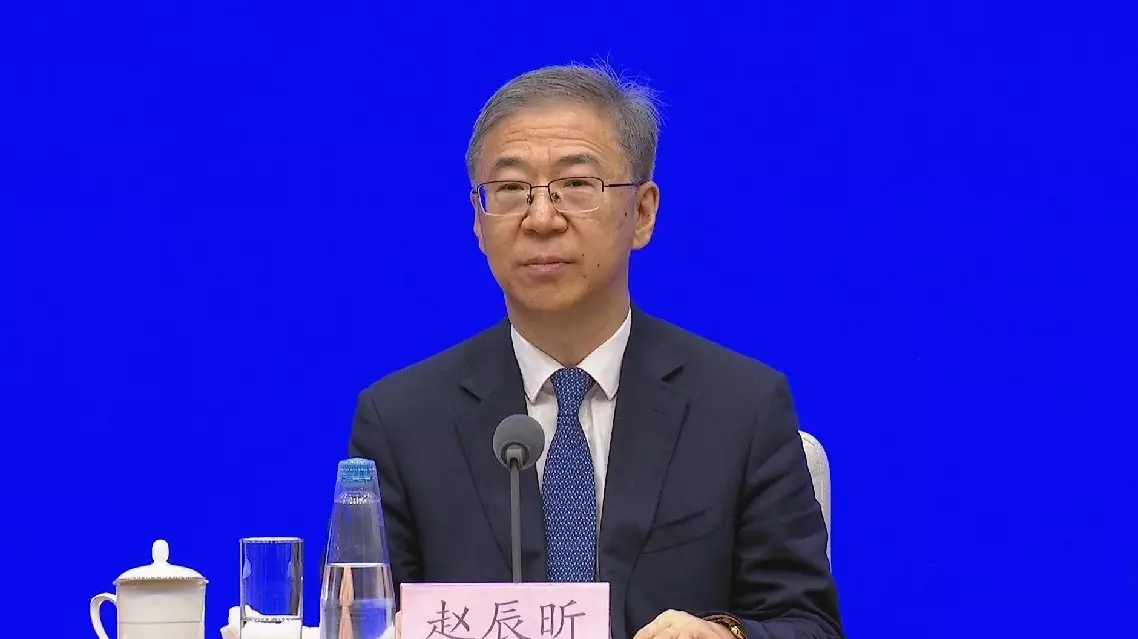
China's food security not impacted by US tariffs as country focuses on self-sufficiency: NDRC official
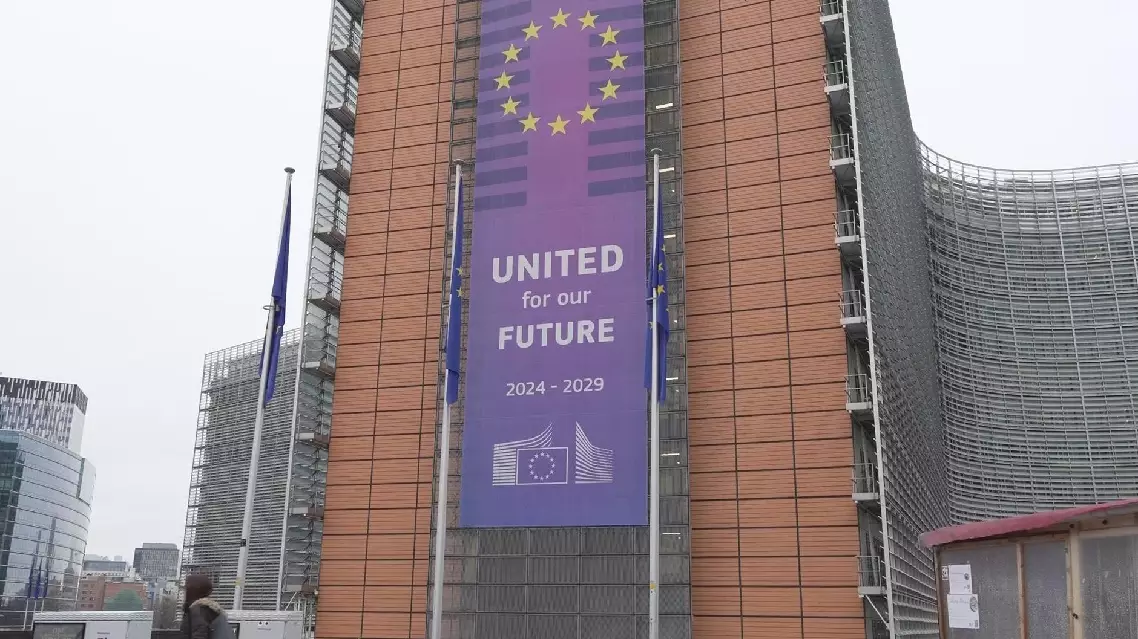
The European Union(EU)and France have reaffirmed their support for Denmark's sovereignty over Greenland as concerns are growing over security in the Arctic following the recent statements made by U.S. President Donald Trump regarding the strategically important island.
Speaking at a press conference in Brussels on Wednesday, European Commission President Ursula von der Leyen said that "Greenland belongs to its people, so it's up to Denmark and Greenland, and only to them, to decide on matters that are concerning Denmark and Greenland."
Noting that the EU is in contact with the Danish government, Von der Leyen stressed that security in the Arctic region is a key issue of concern to the EU.
Also on Wednesday, the European Parliament's political group leaders issued a statement, condemning the remarks made by the Trump administration regarding Greenland and terming them as a "blatant" challenge to international law and to the sovereignty of NATO member Denmark.
They urged the EU institutions to define "concrete and tangible" support for Denmark and Greenland, and stressed that decisions concerning Greenland belong to Denmark and Greenland alone.
"External attempts to alter the status quo are unacceptable," the leaders said.
In a related development, a group of 23 lawmakers sent a letter to European Parliament President Roberta Metsola on Wednesday, emphasizing that if the United States continues to threaten Denmark's autonomous territory, the European Parliament should suspend debates and votes on trade agreements with the United States.
Currently, the European Parliament is deliberating on removing most U.S. import tariffs and maintaining zero-tariff policies on U.S. lobster, with a vote scheduled for January 26 and 27.
Meanwhile, French government spokeswoman Maud Bregeon, citing President Emmanuel Macron, warned on Wednesday that any infringement on Danish sovereignty over Greenland would trigger "unprecedented" consequences.
"If the sovereignty of a European ally were affected, the cascading consequences would be unprecedented," said Bregeon.
"we are closely monitoring the situation and will stand firmly with Denmark to defend its sovereignty," the spokeswoman said.
On the same day, French Prime Minister Sebastien Lecornu noted the need for serious consideration of recent U.S. signals concerning Greenland.
Lecornu reaffirmed France's "full solidarity with Denmark and the legitimate authorities of Greenland," adding that safeguarding the sovereignty of other countries is an important foundation for safeguarding one's own sovereignty.
Furthermore, French Foreign Minister Jean-Noel Barrot announced on Wednesday that France will open a consulate in Greenland on February 6, calling the move a "political signal" over the strategic Danish territory.
The foreign minister said that the U.S. plan of buying Greenland is "absurd" and that this "blackmail" should stop.
He reiterated that France and Europe will continue to support Denmark.
Greenland, the world's largest island, is a self-governing territory within the Kingdom of Denmark, while Denmark retains authority over defense and foreign policy. The United States maintains a military base on the island.
Since his first term, Trump has repeatedly expressed a desire to acquire Greenland. Both Greenland and Denmark have made clear that the island is not for sale. The White House said last week that Trump will not rule out the use of force.
EU, France reaffirm support for Denmark's sovereignty over Greenland