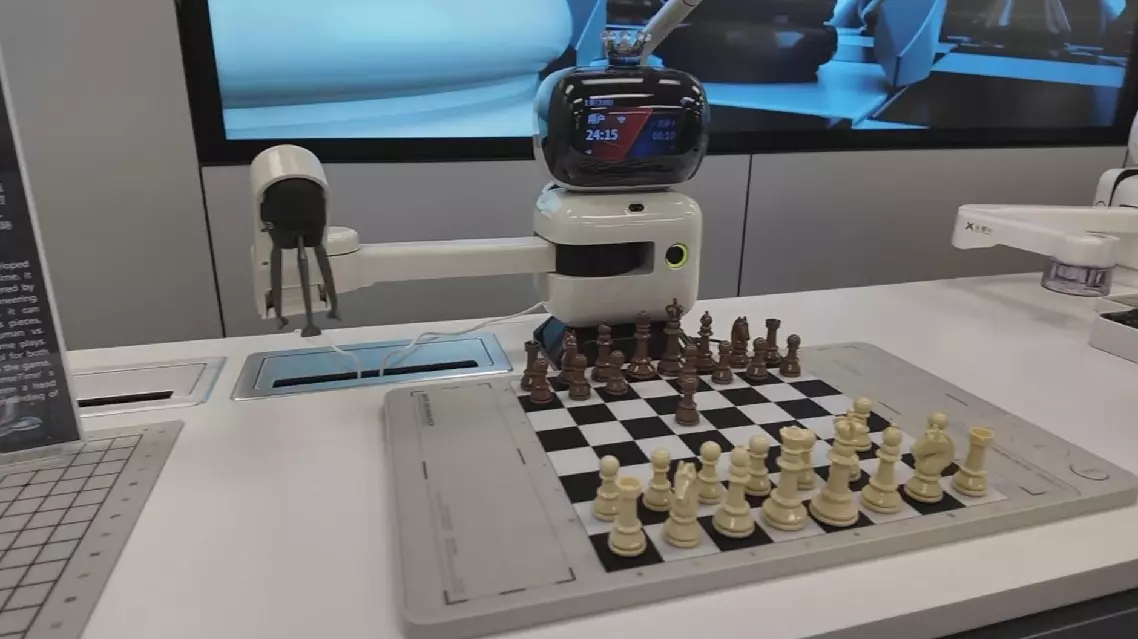
Hong Kong is positioning itself as a rising leader in artificial intelligence (AI), driven by a record talent pool, robust government backing, and a "dual circulation" model that bridges Chinese mainland and global markets to fuel innovation and growth.
Amid global tech tensions and escalating geopolitical challenges, Hong Kong's AI sector remains on an upward trajectory, with nearly 4,700 startups now calling the city home -- marking a 10 percent year-on-year increase.
This growth is powered by two key drivers: a top-tier talent pool and relentless innovation, supported by 30 billion Hong Kong dollars in government funding dedicated to AI development.
At a media event on Saturday, Shen Xiaoyong, co-founder and CEO of SmartMore, a smart manufacturing startup, warned that global competition in the sector would continue to intensify.
"China-US or East-West competition will intensify further, with no major easing expected as we foresaw years ago. So, we have been focusing on innovation, develop leading, indispensable products," said Shen Xiaoyong, whose company is pioneering the future of smart factories.
Founded in 2019, SmartMore has developed an intelligent manufacturing inspection system that learns and adapts to different environments, improving efficiency through automated quality control, task management, and materials tracking.
Meanwhile, SenseTime, another leader in AI-powered computer vision, continues to attract top-tier global talent.
"We recruit global top-tier talent for advanced AI R and D and deployment. In Hong Kong, 66 percent of our team holds master's degrees or above, with over 70 percent in R and D, mirroring our global talent structure," said Jane Zhang, chief human resources officer at SenseTime.
Despite challenges posed by escalating tech wars, Hong Kong's AI sector has demonstrated resilience, driven by strategic foresight and historical adaptability.
"Over two years ago, certain countries explicitly introduced technologically unfriendly policies targeting Hong Kong. At that time, I quoted an ancient Chinese saying to express my view: 'No mountain can block the river, it keeps flowing east.' This symbolizes how the broader global trend of 'the East rising while the West declines' cannot be altered by the policies of a few nations," said Sun Dong, Secretary for Innovation Technology and Industry at HKSAR Government.
As global trade and technological challenges continue, Hong Kong's unique blend of innovation, talent, and government support is enabling its AI sector to thrive, positioning the city as a key player in the global technology landscape.
Hong Kong's AI sector soars with record talent pool despite global headwinds
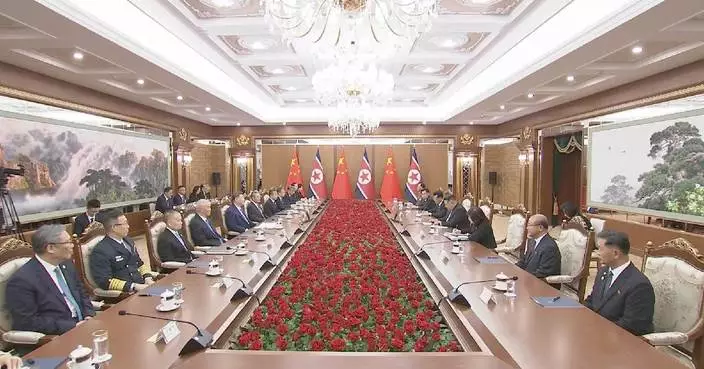
Xi Jinping, general secretary of the Communist Party of China (CPC) Central Committee and Chinese president, said on Monday that the relationship between China and the Democratic People's Republic of Korea (DPRK) stands at a new historical starting point.
Xi arrived in the DPRK capital of Pyongyang earlier on Monday to begin a two-day state visit at the invitation of Kim Jong Un, general secretary of the Workers' Party of Korea and president of the State Affairs of the DPRK, marking his first trip to the country in seven years.
Delivering a speech at a welcome banquet hosted by Kim, Xi pointed out that China and the DPRK, linked by mountains and rivers and sharing a common future, have seen their traditional friendship passed down across generations and grow ever stronger over time through the test of the evolving international landscape.
This year marks the 65th anniversary of the China-DPRK Treaty of Friendship, Cooperation and Mutual Assistance, and the China-DPRK relationship stands at a new historical starting point, Xi said, noting that he has reached important consensus with Kim during his visit.
From the strategic perspective of the future and destiny of socialism, both leaders have agreed to seize the general trend of the times, respond to the shared aspirations of the two peoples, strengthen high-level exchanges, deepen strategic communication, expand practical cooperation, enhance people-to-people bonds, promote the high-level development of China-DPRK relations, jointly open up brighter prospects for the socialist cause of both countries, and contribute to the continuous progress of human society, Xi said.
The successful convening of the Ninth Congress of the WPK this year has made strategic plans and major arrangements for the long-term development of the Party and the country's cause, ushering in a new period of comprehensive development of the DPRK's socialist cause, Xi said.
As good neighbors, good friends and good comrades, the Chinese side sincerely wishes that, under the strong leadership of the Central Committee of the WPK headed by General Secretary Kim, the DPRK people will successfully accomplish the goals and tasks set by the Ninth Congress of the WPK and make constant new achievements in the socialist cause of the DPRK, Xi said.
On behalf of the WPK, the government and the people of the DPRK, Kim extended the warmest welcome to Xi on his visit. Kim said that Pyongyang was filled with an atmosphere of friendship on this special day as the DPRK's Party, government and people warmly welcomed their most distinguished guest.
Noting that Xi's first overseas trip of the year had brought him to the DPRK, Kim said this fully demonstrated the great importance Xi attached to developing relations between the two parties and the two countries, and constituted the most valuable support for the DPRK's socialist cause.
Noting the meeting with Xi came nine months after their previous meeting, Kim said that during this meeting, they reached important consensus on further advancing DPRK-China relations with new contemporary connotations in light of new changing circumstances, and exchanged views on international and regional issues of mutual concern, which will surely accelerate the development of the DPRK-China friendship with profound historical traditions, and contribute to peace and stability in the region and the world.
The DPRK people take heartfelt joy in the remarkable achievements made by the brotherly Chinese people, Kim said, expressing belief that under the leadership of the CPC with Xi at its core, the great Chinese people will surely create greater achievements in building a great modern socialist country in all respects, realizing the Second Centenary Goal, and completing the new journey toward the great rejuvenation of the Chinese nation.
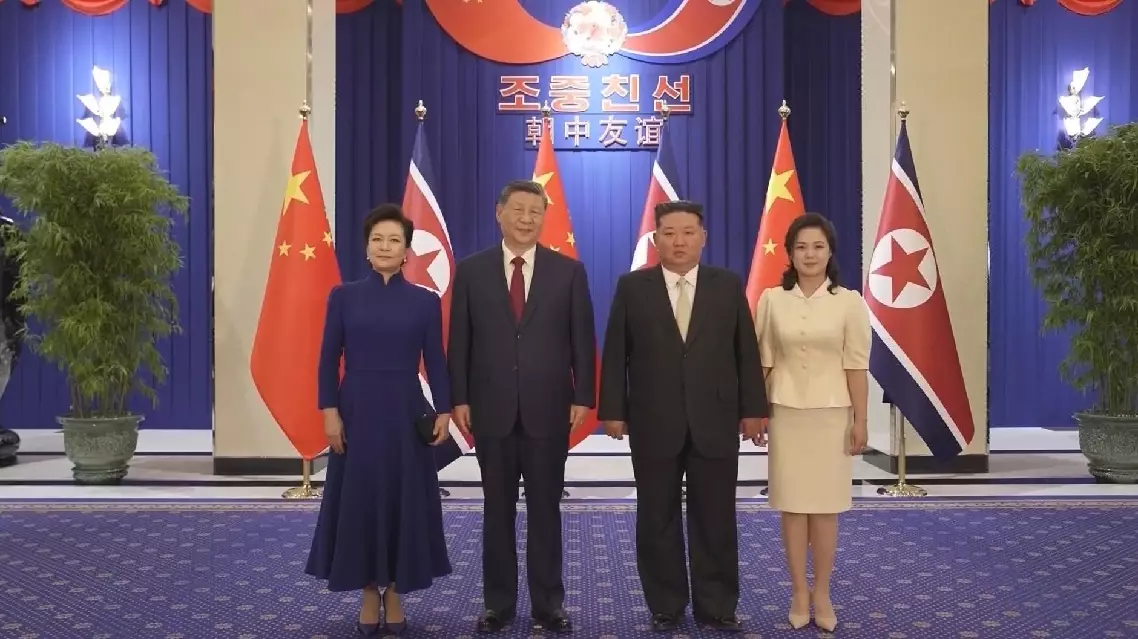
Xi says China-DPRK ties stand at new historical starting point