WASHINGTON (AP) — A federal judge on Tuesday ordered the Trump administration to restore $12 million that Congress appropriated for Radio Free Europe, a pro-democracy media outlet at risk of going dark for the first time in 75 years.
U.S. District Judge Royce Lamberth also tucked a lesson on the three branches of government inside Tuesday's ruling, cautioning that the system of checks and balances established by the U.S. Constitution must remain intact if the nation is going to continue to thrive.
Lamberth granted the temporary restraining order for the U.S. Agency for Global Media to disburse money for April 2025 for Radio Free Europe/Radio Liberty pending the outcome of a lawsuit seeking to keep the station on the air. He said the Trump administration could not unilaterally revoke funding approved by Congress.
“In interviews, podcasts, and op-eds, people from both inside and outside government have variously accused the courts — myself included — of fomenting a constitutional crisis, usurping the Article II powers of the Presidency, undercutting the popular will, or dictating how Executive agencies can and should be run,” wrote Lamberth, who was appointed by President Ronald Reagan.
Those notions reflect a “fundamental misunderstanding” of the role of the federal judiciary and of the Constitution itself, he said.
“Reasonable people can reach different conclusions in complicated legal disputes such as this,” Lamberth wrote, and that's why the appellate courts exist. The administration could also ask Congress to pull back the funds, he noted.
Attorneys for the media outlet say President Donald Trump’s administration has terminated nearly all of its contracts with freelance journalists, missed payments on leases and furloughed 122 employees. They warn that more employees will be furloughed and more contracts will be canceled on May 1 if funding isn’t restored.
“By the end of May, RFE/RL will be forced to cancel the contracts supporting its core live news broadcasting and reporting operations. In June 2025, RFE/RL will almost entirely cease its operations,” plaintiffs’ lawyers wrote.
Government attorneys argued that the judge doesn’t have jurisdiction over what amounts to a contract dispute that belongs in the Court of Federal Claims.
“Plaintiff seeks to place this Court as the arbiter of the grant agreement terms between the parties. But doing so would put the Court in an improper policymaking role,” they wrote.
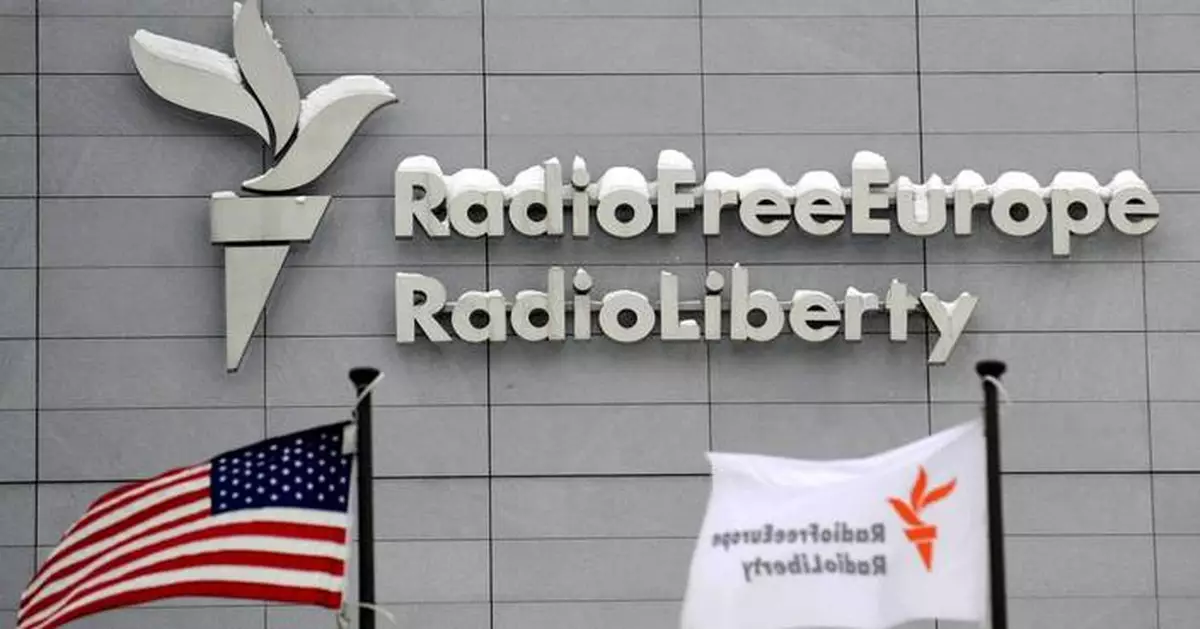
Radio Free Europe/Radio Liberty started broadcasting during the Cold War. Its programs are aired in 27 languages in 23 countries across Eastern Europe, Central Asia and the Middle East. Its corporate headquarters are in Washington; its journalistic headquarters are based in the Czech Republic.
The Trump administration has tried to make deep cuts at other government-operated, pro-democracy media outlets, including Voice of America.
On April 22, however, Lamberth agreed to block the administration from dismantling Voice of America. The judge ruled that the administration illegally required Voice of America to cease operations for the first time since its World War II-era inception.
Congress makes the laws, but they must be signed by the president to take effect, Lamberth wrote in Tuesday's ruling, and that's exactly what happened in March when Trump signed the continuing resolution that allocated the grant funding to the government-operated media outlets.
Federal judges take an oath to render their decisions impartially, and Lamberth said he doesn't have a stake in the outcome of this case. He also said he doesn't have any animosity toward the president nor loyalty to the media outlets.
But the role of the courts is to interpret the laws of the Constitution and declare what the law is, he said — and unlike the executive branch, the courts have no means to independently enforce those laws.
By issuing the ruling, “I am humbly fulfilling my small part in this very constitutional paradigm – a framework that has propelled the United States to heights of greatness, liberty and prosperity unparalleled in the history of the world for nearly 250 years,” Lamberth wrote. "If our nation is to thrive for another 250 years, each co-equal branch of government must be willing to courageously exert the authority entrusted to it by our Founders.”
__
Associated Press writers Lindsay Whitehurst and Rebecca Boone contributed to this story.
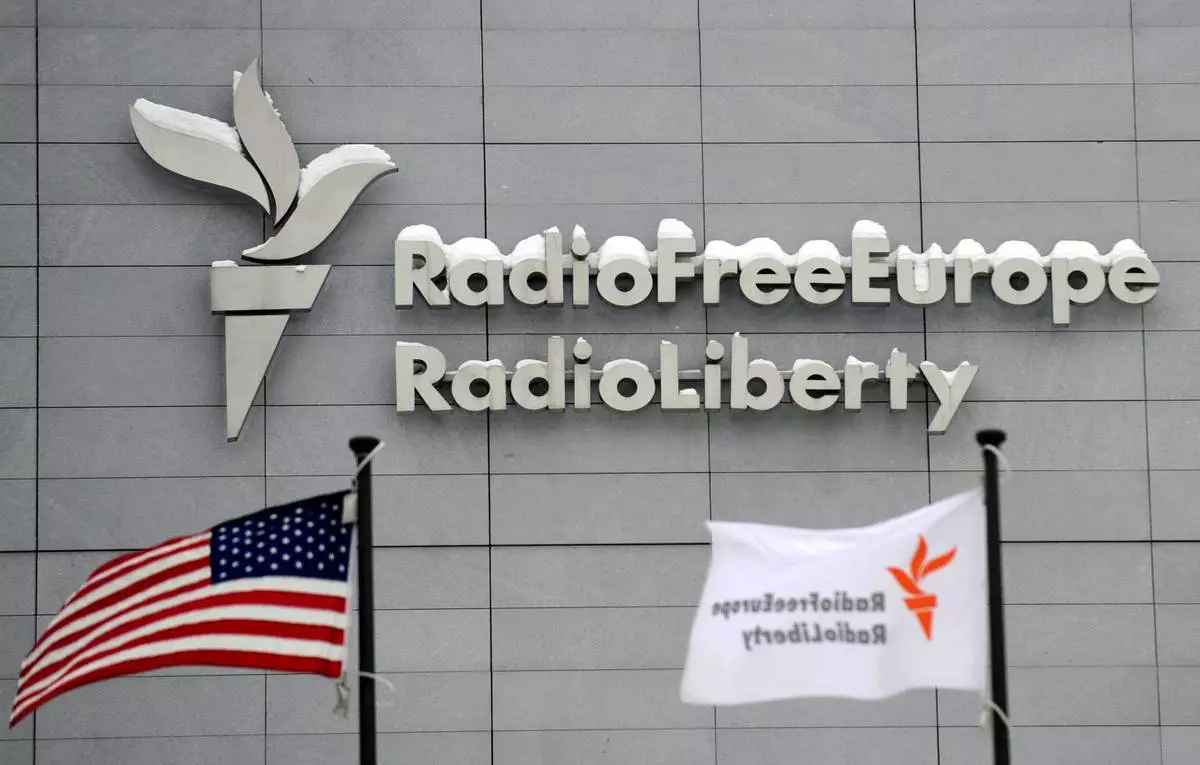
FILE - The headquarters of Radio Free Europe/Radio Liberty is seen with the United States flag in the foreground, Jan. 15, 2010, in Prague. (Michal Kamaryt/CTK via AP, File)
MINNEAPOLIS (AP) — A judge on Wednesday gave the Trump administration time to respond to a request to suspend an immigration crackdown in Minnesota, while the Pentagon looked for military lawyers to join what has become a chaotic law enforcement effort in the state.
Plumes of tear gas, bursts of chemical irritants and the screech of protest whistles have become common on the streets of Minneapolis, especially since an immigration agent fatally shot Renee Good in the head on Jan. 7 as she drove away.
Agents have yanked people from cars and homes and been confronted by angry bystanders who are demanding that officers pack up and leave.
“What we need most of all right now is a pause. The temperature needs to be lowered," state Assistant Attorney General Brian Carter said during the first hearing in a lawsuit filed by Minnesota and the cities of Minneapolis and St. Paul.
Local leaders say the government is violating free speech and other constitutional rights with the surge of law enforcement. U.S. District Judge Katherine Menendez promised to keep the case “on the front burner” and gave the U.S. Justice Department until Monday to file a response to a request for a restraining order.
The judge said these are "grave and important matters,” and that there are few legal precedents to apply to some of the key points in the case.
Justice Department attorney Andrew Warden suggested the approach set by Menendez was appropriate.
The judge is also handling a separate lawsuit challenging the tactics used by Immigration and Customs Enforcement and other federal officers when they encounter protesters and observers. A decision could be released this week.
The Department of Homeland Security says it has made more than 2,000 arrests in the state since early December and is vowing to not back down. The Pentagon is preparing to send military lawyers to Minneapolis to assist.
CNN, citing an email circulating in the military, says Defense Secretary Pete Hegseth is asking the branches to identify 40 lawyers known as judge advocate general officers or JAGs, and 25 of them will serve as special assistant U.S. attorneys in Minneapolis.
Pentagon spokesperson Kingsley Wilson appeared to confirm the CNN report by posting it on X with a comment that the military “is proud to support” the Justice Department.
The Pentagon did not immediately respond to emails from The Associated Press seeking more details.
It’s the latest step by the Trump administration to dispatch military and civilian attorneys to areas where federal immigration operations are taking place. The Pentagon last week sent 20 lawyers to Memphis, U.S. Attorney D. Michael Dunavant said.
Mark Nevitt, an associate professor at Emory University School of Law and a former Navy JAG, said there's concern that the assignments are taking lawyers away from the military justice system.
“There are not many JAGs but there are over one million members of the military, and they all need legal support,” he said.
Jonathan Ross, the Immigration and Customs Enforcement officer who killed Good, suffered internal bleeding to his torso during the encounter, a Homeland Security official told The Associated Press.
The official spoke to AP on condition of anonymity in order to discuss Ross’ medical condition. The official did not provide details about the severity of the injuries, and the agency did not respond to questions about the extent of the bleeding, exactly how he suffered the injury, when it was diagnosed or his medical treatment.
There are many causes of internal bleeding, and they vary in severity from bruising to significant blood loss. Video from the scene showed Ross and other officers walking without obvious difficulty after Good was shot and her Honda Pilot crashed into other vehicles.
She was killed after three ICE officers surrounded her SUV on a snowy street a few blocks from her home.
Bystander video shows one officer ordering Good to open the door and grabbing the handle. As the vehicle begins to move forward, Ross, standing in front, raises his weapon and fires at least three shots at close range. He steps back as the SUV advances and turns.
Homeland Security Secretary Kristi Noem has said Ross was struck by the vehicle and that Good was using her SUV as a weapon — a self-defense claim that has been deeply criticized by Minnesota officials.
Chris Madel, an attorney for Ross, declined to comment on any injuries.
Good’s family, meanwhile, has hired a law firm, Romanucci & Blandin, that represented George Floyd’s family in a $27 million settlement with Minneapolis. Floyd, who was Black, died after a white police officer pinned his neck to the ground in the street in May 2020.
The firm said Good was following orders to move her car when she was shot. It said it would conduct its own investigation and publicly share what it learns.
“They do not want her used as a political pawn,” the firm said, referring to Good and her family, “but rather as an agent of peace for all.”
Waving signs reading “Love Melts ICE” and “DE-ICE MN,” hundreds of teenagers left school in St. Paul and marched in freezing temperatures to the state Capitol for a protest and rally.
The University of Minnesota, meanwhile, informed its 50,000-plus students that there could be online options for some classes when the new term starts next week. President Rebecca Cunningham noted that “violence and protests have come to our doorstep.” The campus sits next to the main Somali neighborhood in Minneapolis.
Associated Press reporters Julie Watson in San Diego, California; Rebecca Santana in Washington, D.C.; Ed White in Detroit; Giovanna Dell’Orto in Minneapolis; and Graham Lee Brewer in Oklahoma City, Oklahoma, contributed.
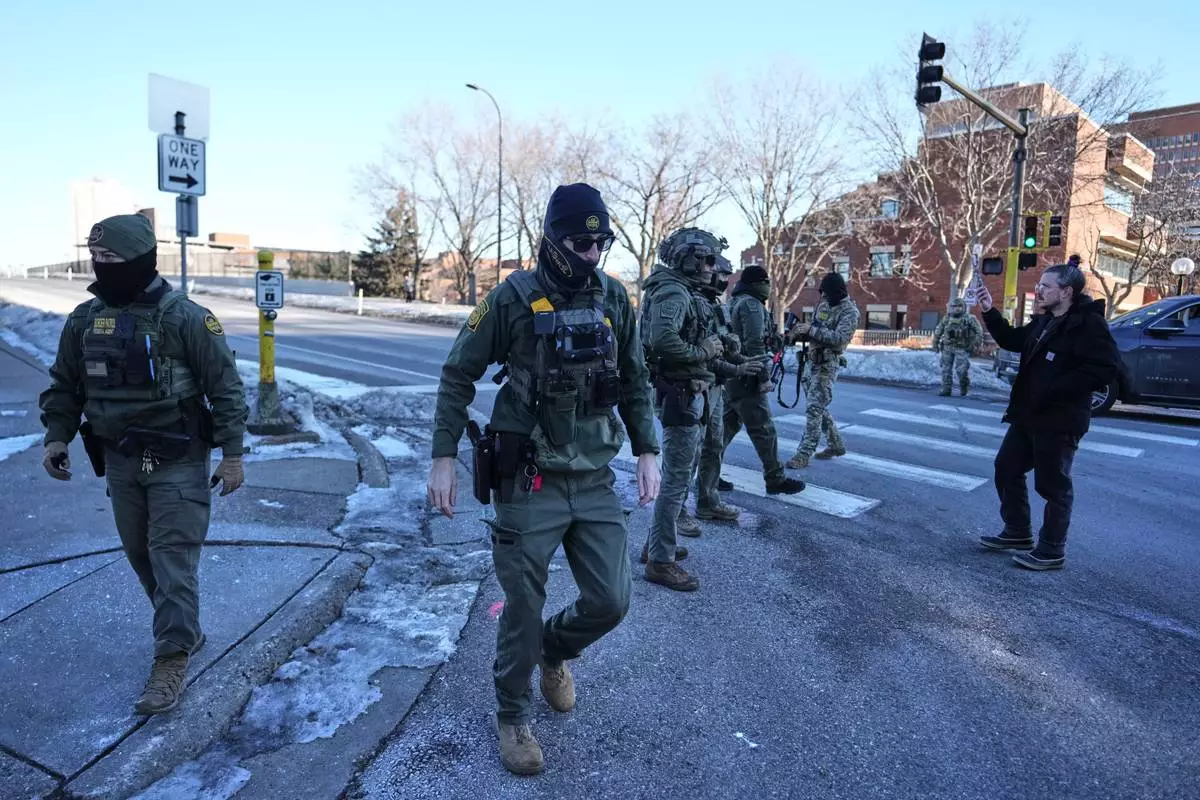
Federal immigration officers are seen Wednesday, Jan. 14, 2026, in Minneapolis. (AP Photo/Abbie Parr)
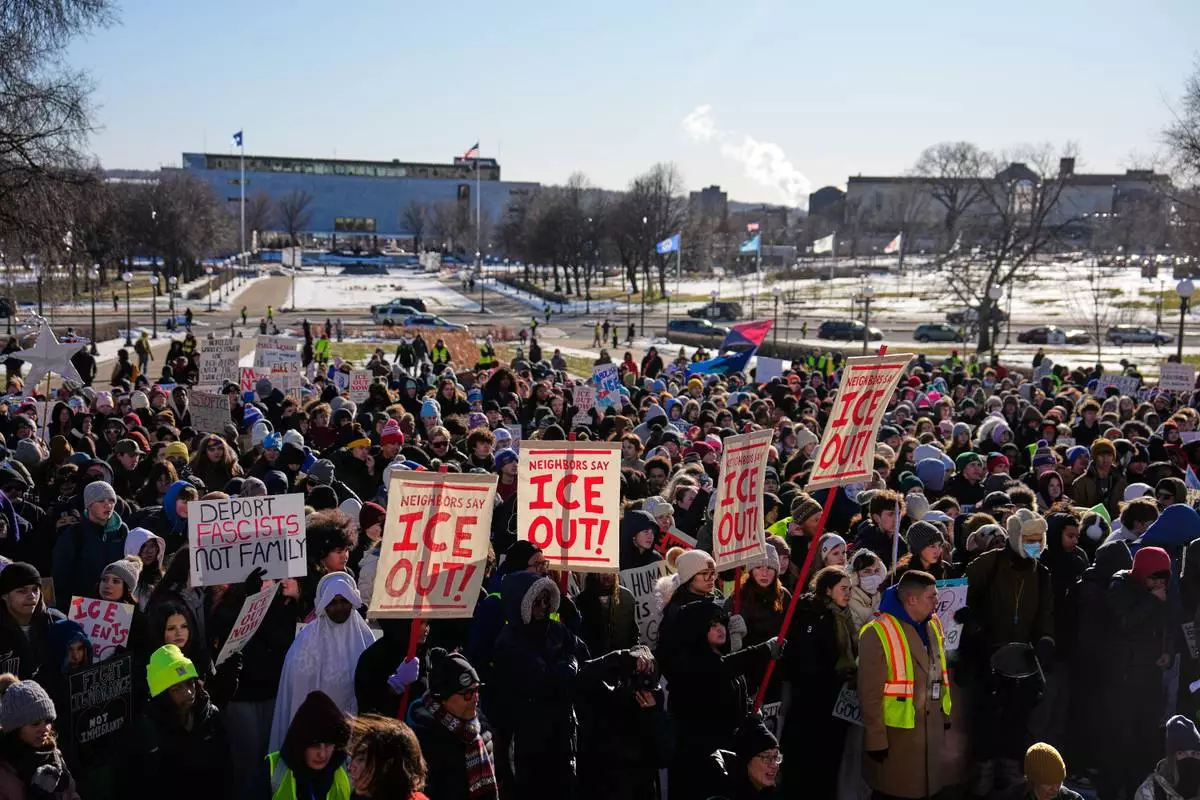
Hundreds of protesters gather in front of the Minnesota State Capitol in response to the death of Renee Good, who was fatally shot by an ICE officer last week, Wednesday, Jan. 14, 2026, in St. Paul, Minn. (AP Photo/John Locher)
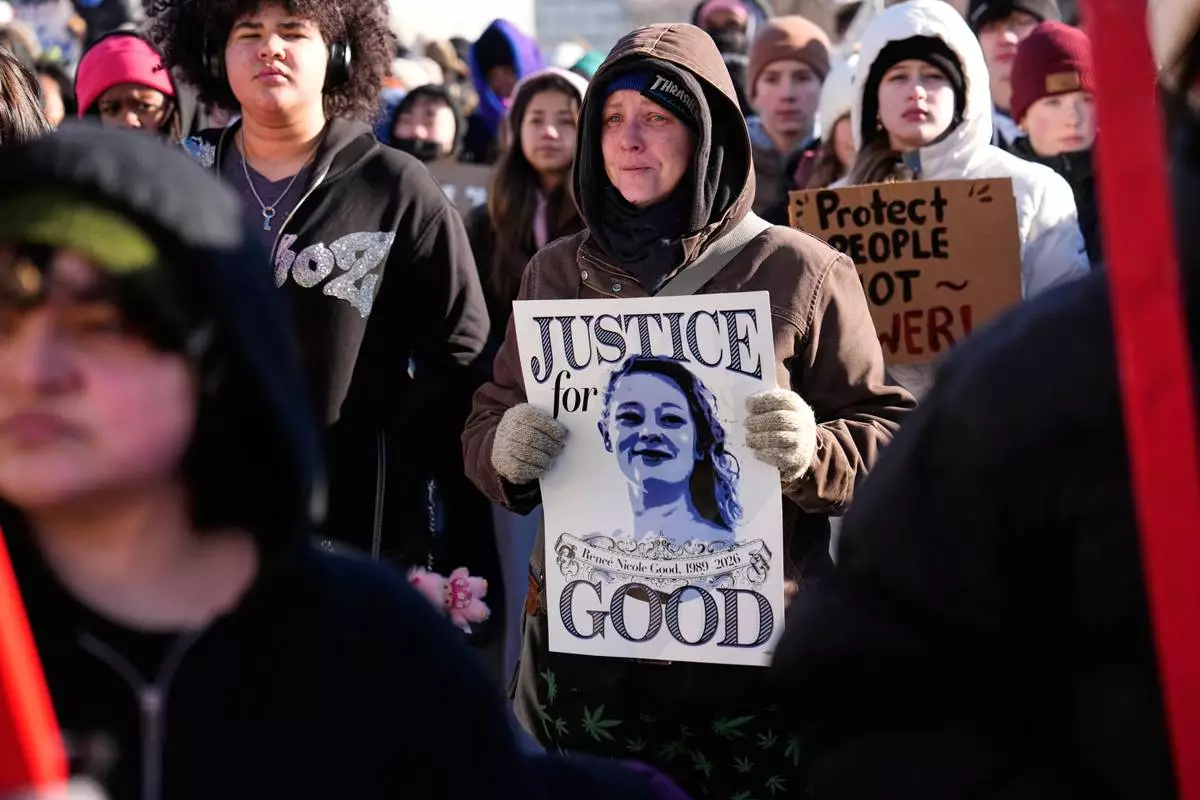
Protesters gather in front of the Minnesota State Capitol in response to the death of Renee Good, who was fatally shot by an ICE officer last week, Wednesday, Jan. 14, 2026, in St. Paul, Minn. (AP Photo/John Locher)
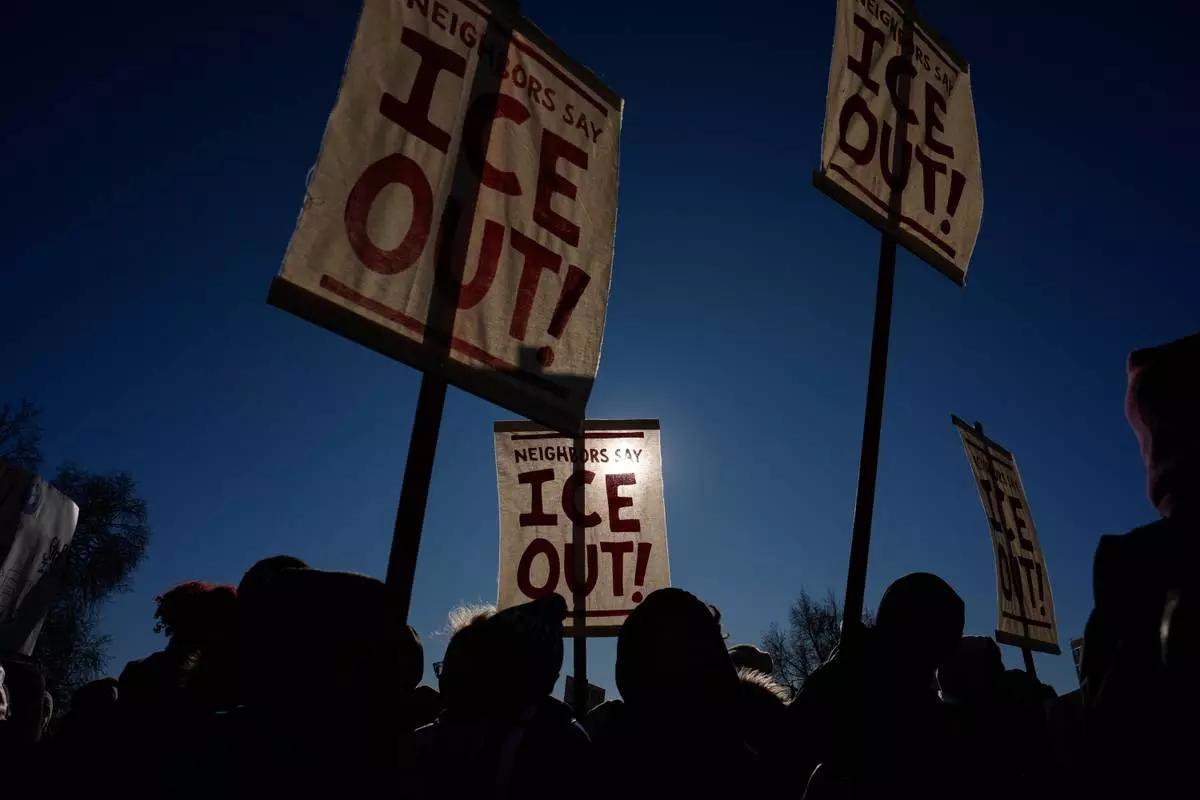
Protesters gather in front of the Minnesota State Capitol in response to the death of Renee Good, who was fatally shot by an ICE officer last week, Wednesday, Jan. 14, 2026, in St. Paul, Minn. (AP Photo/John Locher)
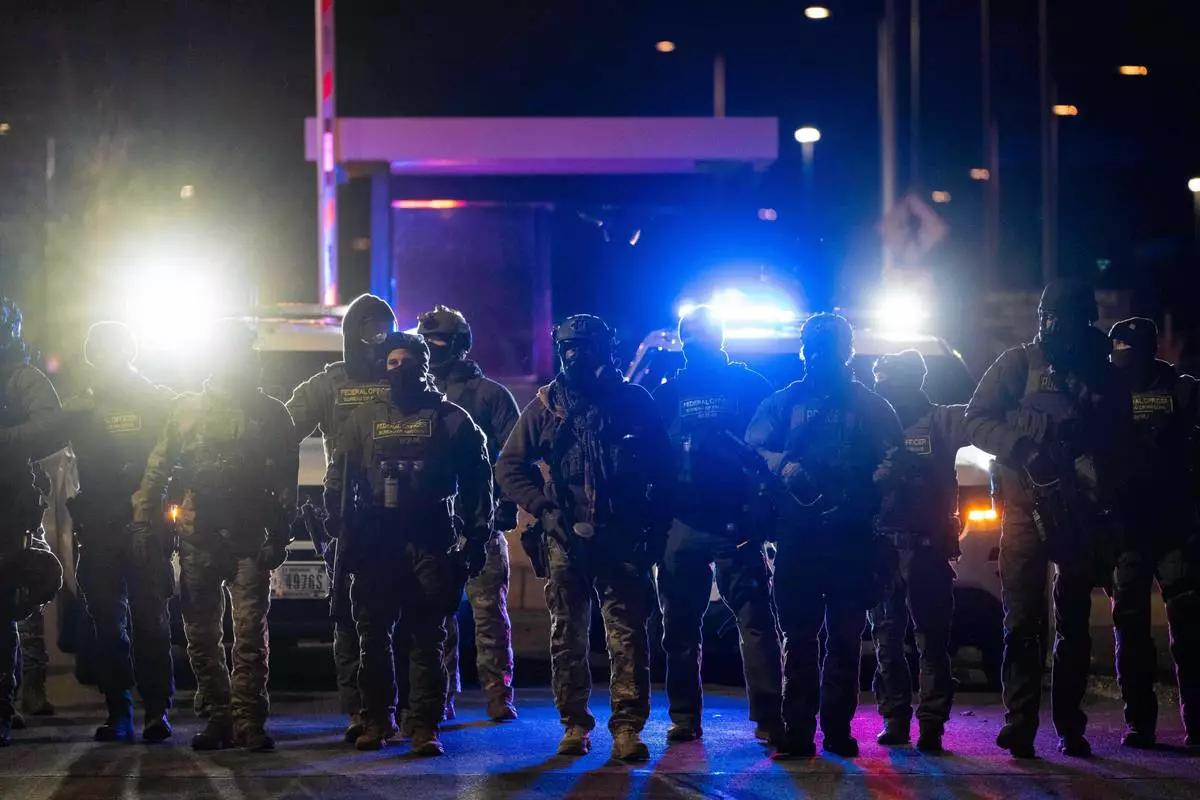
Federal officers stand guard after detaining people outside of Bishop Henry Whipple Federal Building, Tuesday, Jan. 13, 2026, in Minneapolis. (AP Photo/Adam Gray)
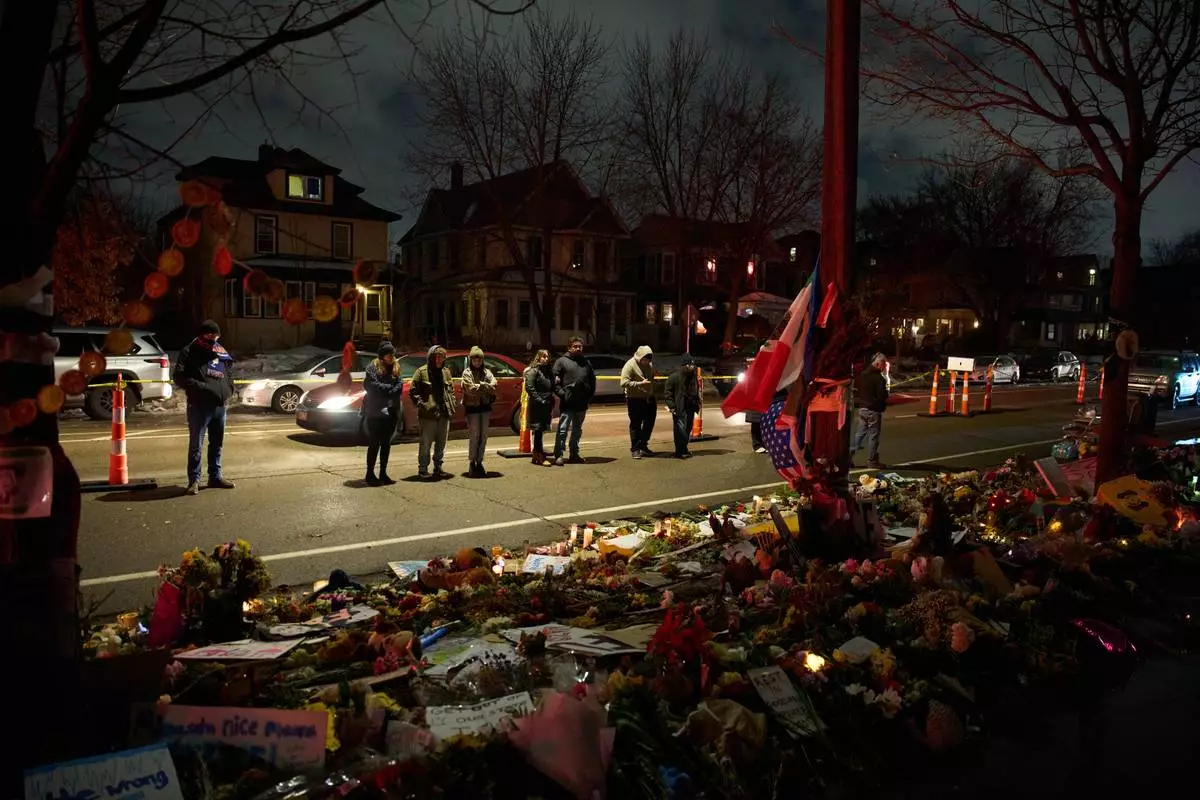
People visits a makeshift memorial for Renee Good, who was fatally shot by an ICE officer last week, Tuesday, Jan. 13, 2026, in Minneapolis. (AP Photo/John Locher)
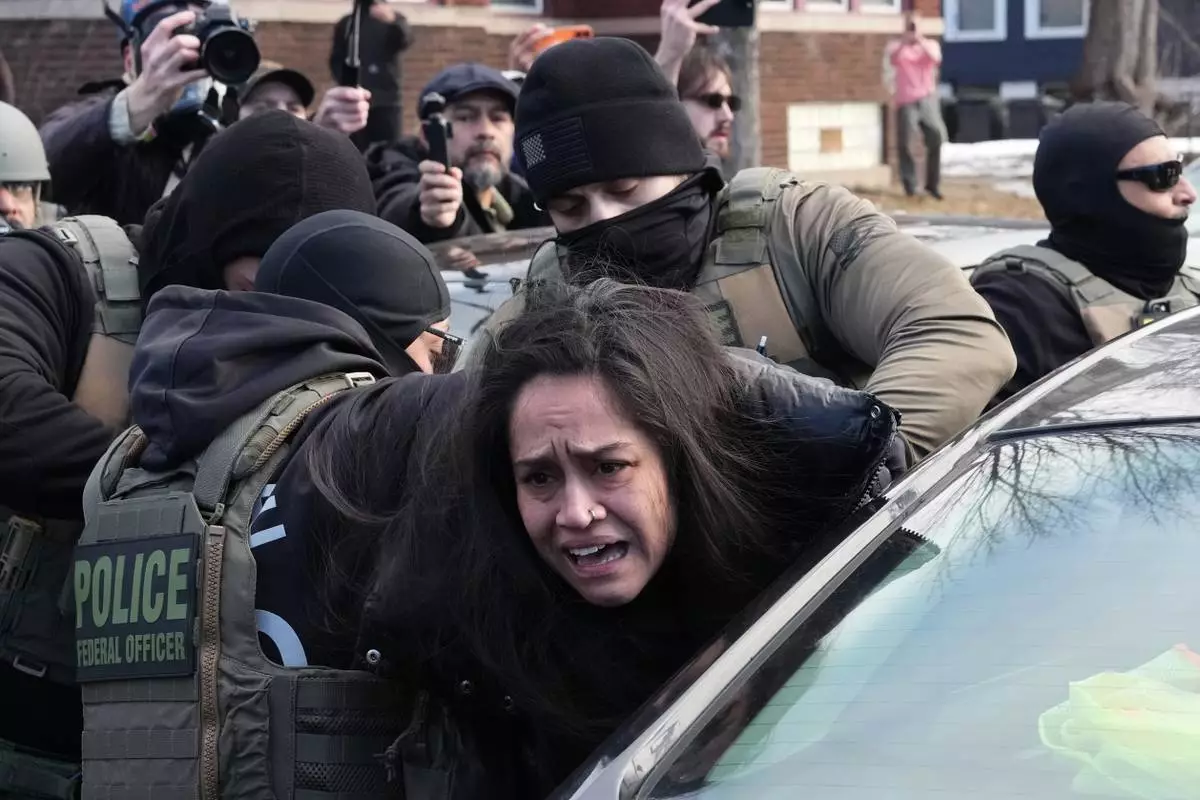
A person is detained by federal agents near the scene where Renee Good was fatally shot by an ICE officer last week, Tuesday, Jan. 13, 2026, in Minneapolis. (AP Photo/Adam Gray)