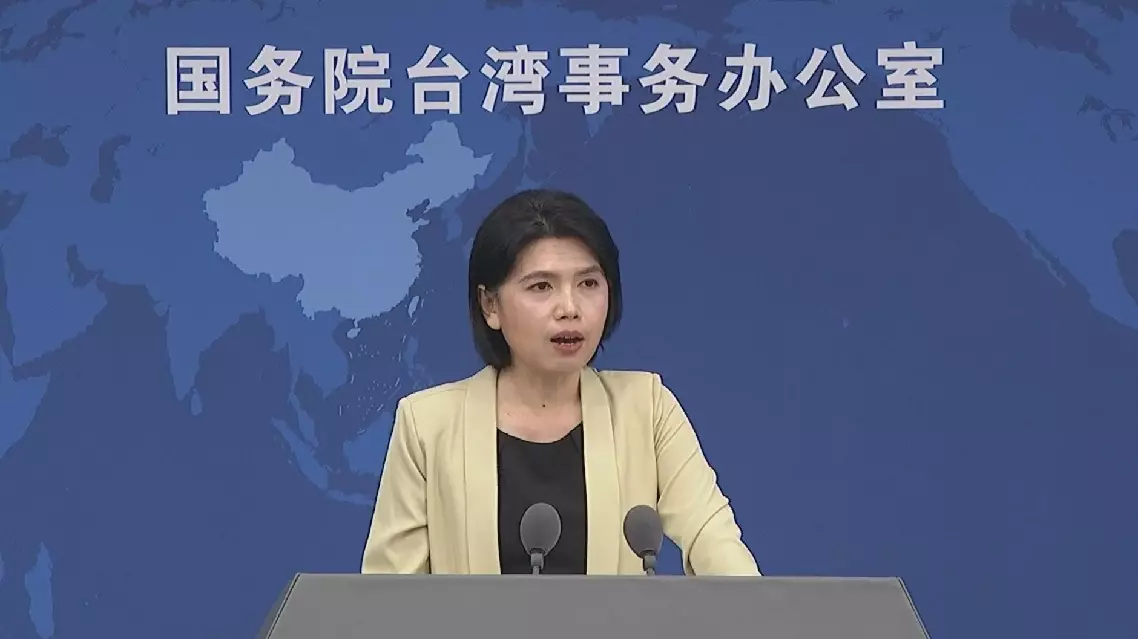
A spokeswoman for the State Council Taiwan Affairs Office Wednesday lashed out at Taiwan's Democratic Progressive Party (DPP) authorities for tightening policies on Taiwan residents' access to mainland residence permits, calling it an attempt to disrupt cross-Strait exchanges.
Zhu Fenglian, the spokeswoman, made the statement at a press briefing in Beijing in response to recent announcements by the DPP authorities that Taiwan residents would lose their Taiwan identity if they obtain residence permits on the mainland.
According to Zhu, the mainland has for years issued various permits to compatriots from Taiwan, all designed to promote cross-Strait exchanges.
She clarified that neither the permits for compatriots from Taiwan nor the residence permits requires mainland's residence permits.
"The mainland side has remained committed to actively advancing cross-Strait exchanges and cooperation, doing its utmost to provide convenience for compatriots from Taiwan traveling to the mainland and supporting their development there. Taiwan residents holding a permit for compatriots from Taiwan can travel to and from the mainland at any time within its five-year period of validity. Those holding a residence permit can enjoy various basic public services, as well as conveniences in accommodation, transportation, and more in accordance with law. Additionally, the personal information of permit holders is effectively and legally protected. These polices have proven to be widely praised by compatriots from Taiwan, and the documents are becoming increasingly popular, with many finding them useful, practical and easy to use," Zhu said.
Zhu also pounded the DPP authorities for their secessionist scheme, accusing them of deliberately undermining cross-Strait exchanges and sowing division.
"The DPP authorities stubbornly maintain their attempt seeking Taiwan's secession from the country, undermining normal cross-Strait exchanges and personnel exchanges, and attempting to push for 'decoupling, chain break and flow reduction' between the two sides. They have kept engaging in political manipulation, deliberately confusing various types of permits and intimidating compatriots in Taiwan from applying for them. Their aim is to create a 'green terror' to hinder and disrupt closer ties between the people on both sides, deceiving the public on the island and trying to push for Taiwan's secession from the country with a closed door. This regressive behavior has increasingly drawn strong dissatisfaction and firm opposition from the general public on the island," she said.
DPP authorities slammed for disrupting cross-Strait exchanges