WASHINGTON (AP) — Detailed Army plans for a potential military parade on President Donald Trump's birthday in June call for more than 6,600 soldiers, at least 150 vehicles, 50 helicopters, seven bands and possibly a couple thousand civilians, The Associated Press has learned.
The planning documents, obtained by the AP, are dated April 29 and 30 and have not been publicly released. They represent the Army's most recent blueprint for its long-planned 250th anniversary festival on the National Mall and the newly added element — a large military parade that Trump has long wanted but is still being discussed.
The Army anniversary just happens to coincide with Trump’s 79th birthday on June 14.
While the slides do not include any price estimates, it would likely cost tens of millions of dollars to put on a parade of that size. Costs would include the movement of military vehicles, equipment, aircraft and troops from across the country to Washington and the need to feed and house thousands of service members.
High costs halted Trump's push for a parade in his first term, and the tanks and other heavy vehicles that are part of the Army's latest plans have raised concerns from city officials about damage to roads.
Asked about plans for a parade, Army spokesman Steve Warren said Thursday that no final decisions have been made.
Col. Dave Butler, another Army spokesman, added that the Army is excited about the plans for its anniversary.
“We want to make it into an event that the entire nation can celebrate with us,” said Butler. “We want Americans to know their Army and their soldiers. A parade might become part of that, and we think that will be an excellent addition to what we already have planned.”
Others familiar with the documents, who spoke on condition of anonymity because the plans have not been finalized, said they represent the Army's plans as it prepares for any White House approval of the parade. The White House did not immediately respond to a request for comment.
There has been no formal approval yet. Changes to the plans have been made in recent weeks and more are likely.
In a Truth Social post Thursday night that did not mention the June 14 plans, Trump wrote, “We are going to start celebrating our victories again!” He vowed to rename May 8, now known as Victory in Europe Day, as “Victory Day for World War II,” and to change November 11, Veterans Day, to “Victory Day for World War I.”
Much of the equipment would have to be brought in by train or flown in.
Some equipment and troops were already going to be included in the Army's birthday celebration, which has been in the works for more than a year. The festival was set to involve an array of activities and displays on the National Mall, including a fitness competition, climbing wall, armored vehicles, Humvees, helicopters and other equipment.
A parade, however, would increase the equipment and troops involved. According to the plans, as many as 6,300 of the service members would be marching in the parade, while the remainder would be responsible for other tasks and support.
The Army's early festival plans did not include a parade, but officials confirmed last month that the Army had started discussions about adding one.
The plans say the parade would showcase the Army’s 250 years of service and foresee bringing in soldiers from at least 11 corps and divisions nationwide. Those could include a Stryker battalion with two companies of Stryker vehicles, a tank battalion and two companies of tanks, an infantry battalion with Bradley vehicles, Paladin artillery vehicles, Howitzers and infantry vehicles.
There would be seven Army bands and a parachute jump by the Golden Knights. And documents suggest that civilian participants would include historical vehicles and aircraft and two bands, along with people from veterans groups, military colleges and reenactor organizations.
According to the plan, the parade would be classified as a national special security event, and that request has been submitted by the National Park Service and is under review.
And it is expected that the evening parade would be followed by a concert and fireworks.
One of the documents raises concerns about some limitations, which include where troops would be housed and “significant concerns regarding security requirements” as equipment flows into the city. It says the biggest unknown so far is which units would be participating.
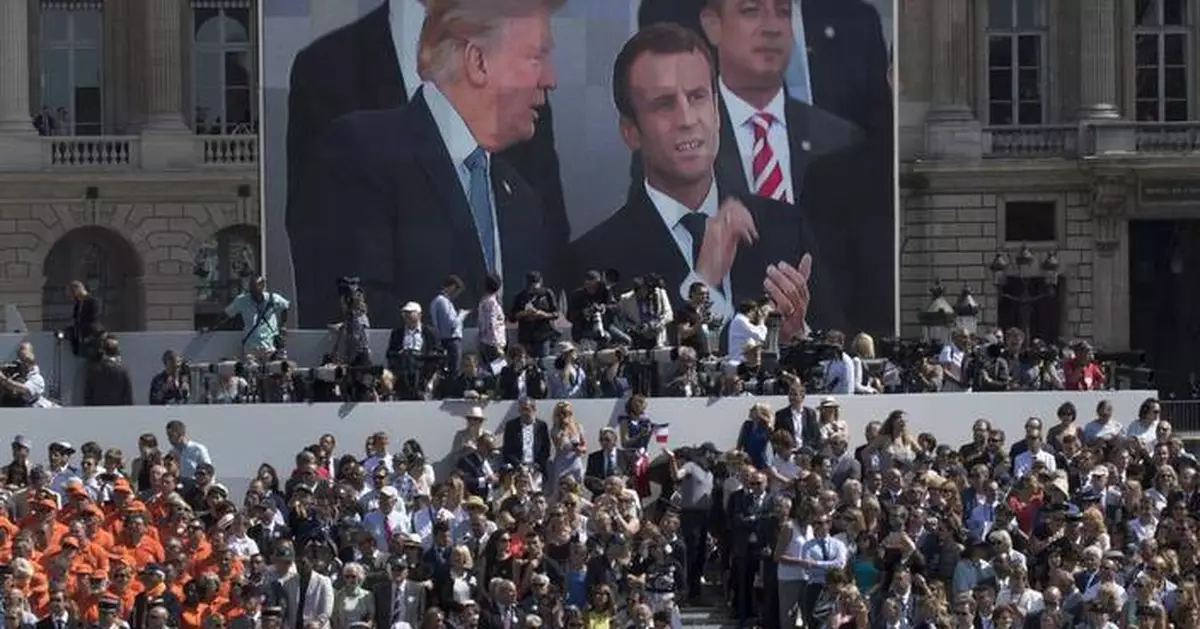
In his first term, Trump proposed having a parade after seeing one in France on Bastille Day in 2017. Trump said that after watching the two-hour procession along the famed Champs-Elysees that he wanted an even grander one on Pennsylvania Avenue.
That plan was ultimately dumped due to the huge costs — with one estimate of a $92 million price tag — and other logistical issues. Among those were objections from city officials who said including tanks and other heavy armored vehicles would tear up the roads.
Trump said in a social media post in 2018 that he was canceling the event over the costs and accused local politicians of price gouging.
This year, as plans progressed for the Army to host its birthday festival in Washington, talk about a parade began anew.
D.C. Mayor Muriel Bowser acknowledged in April that the administration reached out to the city about holding a parade on June 14 that would stretch from Arlington, Virginia, where the Pentagon and Arlington National Cemetery are located, across the Potomac River and into Washington.
Bowser at the time said she didn’t know if the event was being “characterized as a military parade” but added that tanks rolling through the city’s streets “would not be good.”
“If military tanks were used, they should be accompanied with many millions of dollars to repair the roads,” she said.
In 2018, the Pentagon appeared to agree. A memo from the defense secretary's staff said plans for the parade — at that time — would include only wheeled vehicles and no tanks to minimize damage to local infrastructure.
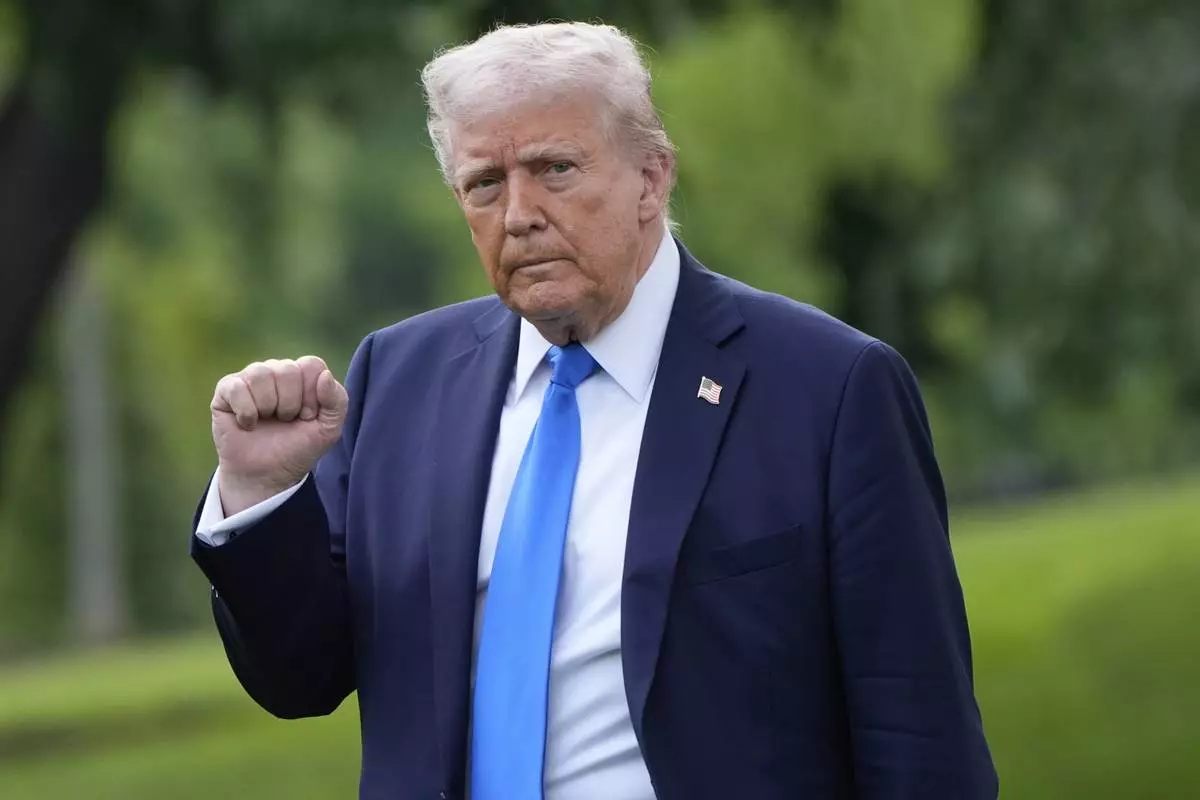
President Donald Trump gestures as he walks from the Oval Office to depart on Marine One from the South Lawn of the White House, Thursday, May 1, 2025, in Washington. (AP Photo/Alex Brandon)
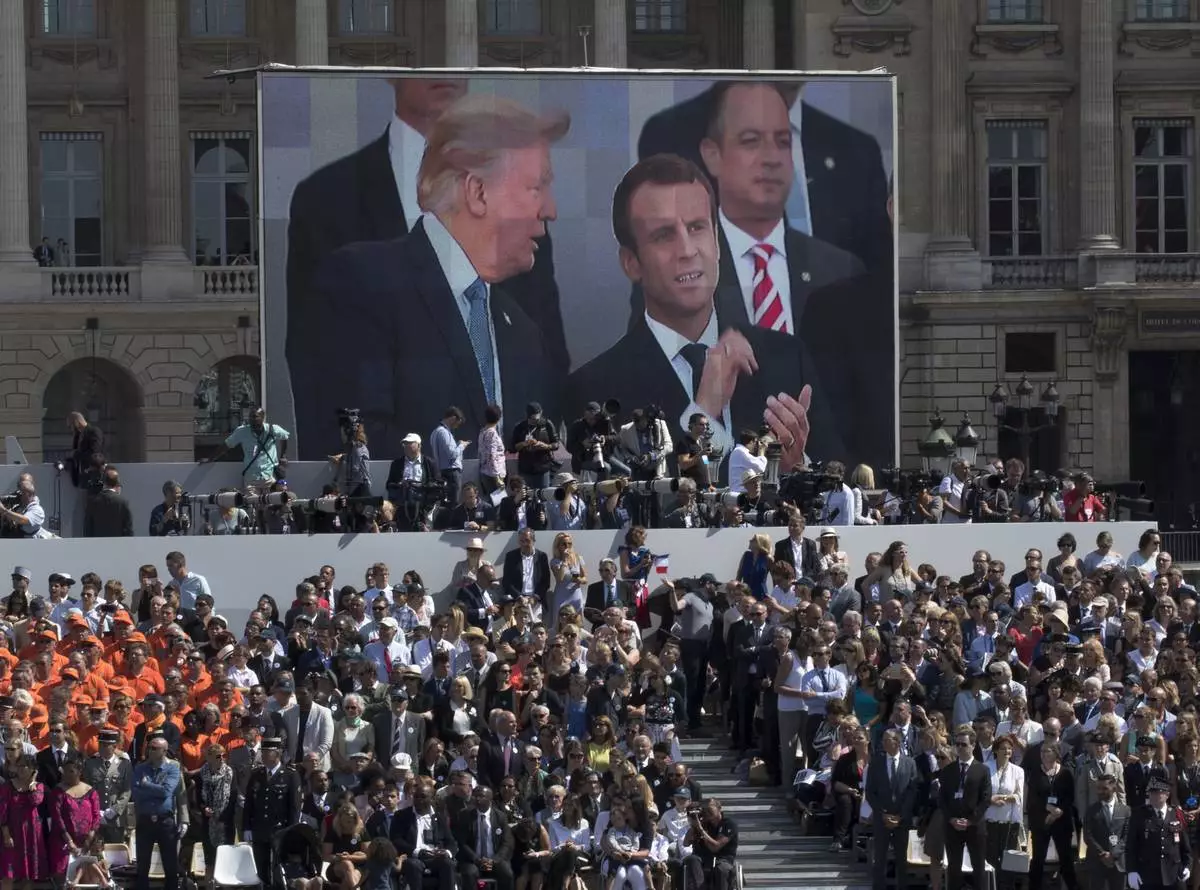
FILE - President Donald Trump, pictured on screen from left, French President Emmanuel Macron and White House Chief of Staff Reince Priebus watch a Bastille Day parade on the Champs Elysees avenue in Paris, July 14, 2017. (AP Photo/Carolyn Kaster, File)