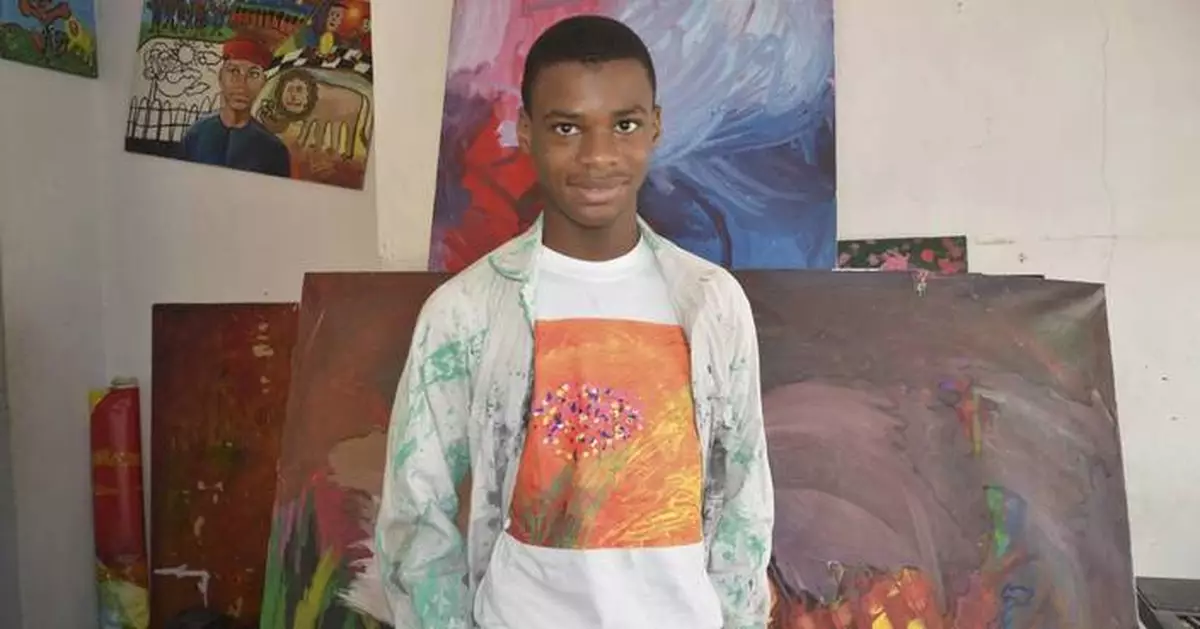
ABUJA, Nigeria (AP) — A 15-year-old Nigerian has set a Guinness World Record for the world’s largest art canvas to raise awareness for autism.
Kanyeyachukwu Tagbo-Okeke, who is autistic, executed a painting featuring a multi-colored ribbon — the symbol for autism — surrounded by emojis, covering 12,304 square meters. That's a lot bigger than a typical soccer field, which is 7,140 square meters.
Click to Gallery

Kanyeyachukwu Tagbo-Okeke, Centre, a 15 year-old autistic artist who won the Guinness World Record for the largest art canvas, attends the World Autism Day in Abuja, Nigeria, Wednesday, April 2, 2025. (AP Photo/David Durowaiye)
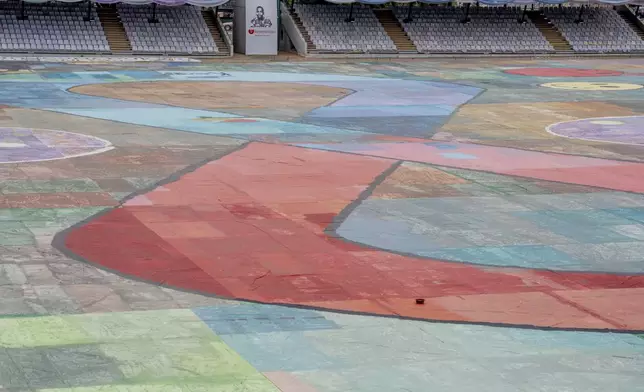
An Ariel view of the canvas painting by Kanyeyachukwu Tagbo-Okeke, a 15-year-old autistic artist who won the Guinness World Record for the largest art canvas, on display at the Eagle Square on World Autism Day in Abuja, Nigeria, Wednesday, April 2, 2025. (AP Photo/David Durowaiye)
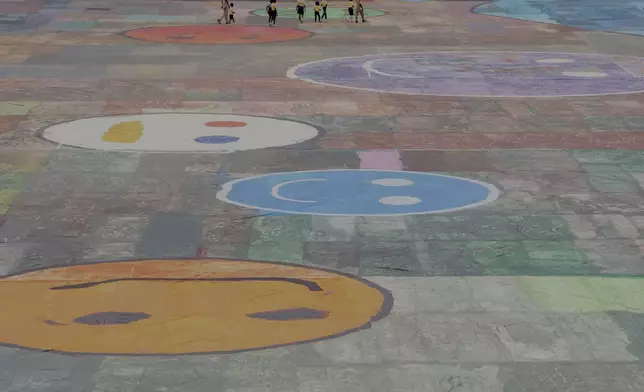
An Ariel view of the canvas painting by Kanyeyachukwu Tagbo-Okeke, a 15-year-old autistic artist who won the Guinness World Record for the largest art canvas, on display at the Eagle Square on World Autism Day in Abuja, Nigeria, Wednesday, April 2, 2025. (AP Photo/David Durowaiye)
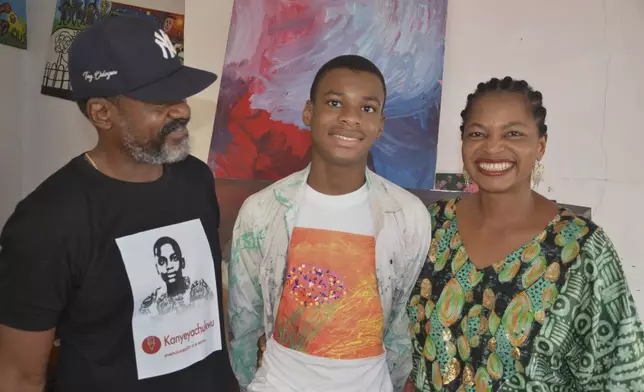
Kanyeyachukwu Tagbo Okeke, a 15 year-old autistic Nigerian, who set a Guinness World Record for the world's largest art canvas, is photograph with his parents in Abuja, Nigeria, Friday, April 18, 2025. (AP Photo/Olamikan Gbemiga)

Kanyeyachukwu Tagbo Okeke, a 15 year-old autistic Nigerian, who set a Guinness World Record for the world's largest art canvas, is photograph during an interview in Abuja, Nigeria, Friday, April 18, 2025. (AP Photo/Olamikan Gbemiga)
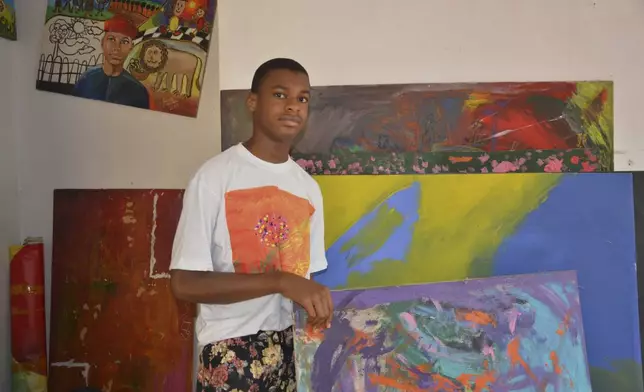
Kanyeyachukwu Tagbo Okeke, a 15 year-old autistic Nigerian, who set a Guinness World Record for the world's largest art canvas, is photograph during an interview in Abuja, Nigeria, Friday, April 18, 2025. (AP Photo/Olamikan Gbemiga)
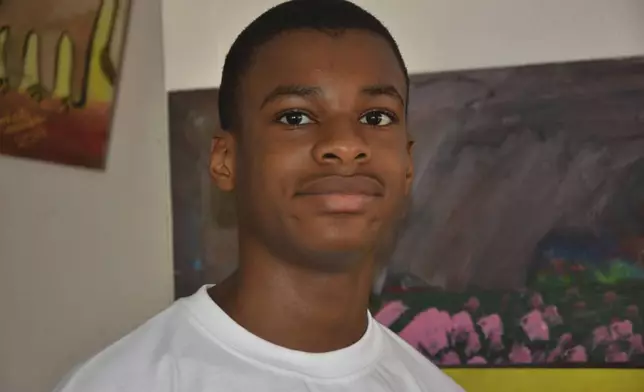
Kanyeyachukwu Tagbo Okeke, a 15 year-old autistic Nigerian, who set a Guinness World Record for the world's largest art canvas, is photograph during an interview in Abuja, Nigeria, Friday, April 18, 2025. (AP Photo/Olamikan Gbemiga)

An Ariel view of the canvas painting by Kanyeyachukwu Tagbo-Okeke, a 15-year-old autistic artist who won the Guinness World Record for the largest art canvas, on display at the Eagle Square on World Autism Day in Abuja, Nigeria, Wednesday, April 2, 2025. (AP Photo/David Durowaiye)

Kanyeyachukwu Tagbo Okeke, a 15 year-old autistic Nigerian, who set a Guinness World Record for the world's largest art canvas, is photograph during an interview in Abuja, Nigeria, Friday, April 18, 2025. (AP Photo/Olamikan Gbemiga)
The massive painting is aimed at highlighting the spectrum disorder and challenges that people like him face amid stigma and limited resources in Nigeria.
“I felt fine. Happy. Just fine,” said Tagbo-Okeke, whose disorder limits his speech.
His artwork eclipsed that of Emad Salehi, the previous world record holder, who was nearly three times older at 42 when he set the record with a 9,652-square meter canvas.
The artwork, created in November 2024, was unveiled and officially recognized by the Guinness World Record organizers in Nigeria’s capital of Abuja during the World Autism Acceptance Day in April.
Nigeria’s art and culture minister Hannatu Musawa said Tagbo-Okeke's artwork is “a beacon of hope and inspiration” for people with autism.
“We recognize the unique abilities and potential of individuals with autism and are dedicated to providing opportunities for them to thrive in the creative industries,” Musawa added.
Born in Canada before moving to Nigeria, Tagbo-Okeke's upbringing has been challenging, his family said. His father told The Associated Press during a recent interview that there was often fear, confusion and sadness along the way.
“Not being able to communicate with your son or have regular activities you could have with any other child is quite depressing,” Tagbo Okeke said.
Many people on the spectrum face stigma and limited resources in Nigeria, but Tagbo-Okeke's family was determined to give him the best support.
The young artist's record-breaking attempt, accompanied by a campaign tagged “Impossibility is a Myth," was widely celebrated among Nigerians, partly because of his young age.
“We felt an overwhelming sense of relief and pride, knowing the countless hours and months of effort he poured into breaking the record,” his mother Silvia said.
Many young people in Nigeria have attempted to break the Guinness World Record in recent years. At least seven Nigerians have broken world records in the past three years, including Hilda Baci, who won the longest cooking marathon and Tunde Onakoya, who played the longest chess marathon.
Kanyeyachukwu’s world record attempt also sought to raise funds for the Zeebah Foundation, a nonprofit focusing on providing support to those on the spectrum and their families.
While there are no official records from within Nigeria, about 1 in 100 children worldwide is autistic, according to the World Health Organization.
Like in many other countries, autism is often not diagnosed in Nigeria until in older years.
The lack of reliable data on autism, adequate awareness and government support for the spectrum disorder are some of the biggest challenges autistic people face in Nigeria, said Stanley Effah, founder of the Ferdinand Effah Music Heritage Foundation.
Effah, whose child is autistic, said his foundation is planning to launch an annual musical concert featuring major artists as part of efforts to raise awareness about autism in Nigeria.
Access to stem cell therapy for autistic children should also be included under the Nigerian National Health Insurance plan as a way to improve their care, Effah said.
Kanyeyachukwu's mother said more government support was key to provide those on the spectrum the care they need early on in life.
Kanyeyachukwu was only diagnosed in Canada after years of failed attempts in Nigeria, the father said. The diagnosis paved the way to properly support him, including his love for drawing, discovered at the age of 4.
“We’ve done a lot of work with him,” he said. "Kanye can tidy his room, he can wash his clothes — all of this is because of early intervention. If left alone, he definitely would not be able to do these things.”
For more on Africa and development: https://apnews.com/hub/africa-pulse
The Associated Press receives financial support for global health and development coverage in Africa from the Gates Foundation. The AP is solely responsible for all content. Find AP’s standards for working with philanthropies, a list of supporters and funded coverage areas at AP.org.

Kanyeyachukwu Tagbo-Okeke, Centre, a 15 year-old autistic artist who won the Guinness World Record for the largest art canvas, attends the World Autism Day in Abuja, Nigeria, Wednesday, April 2, 2025. (AP Photo/David Durowaiye)
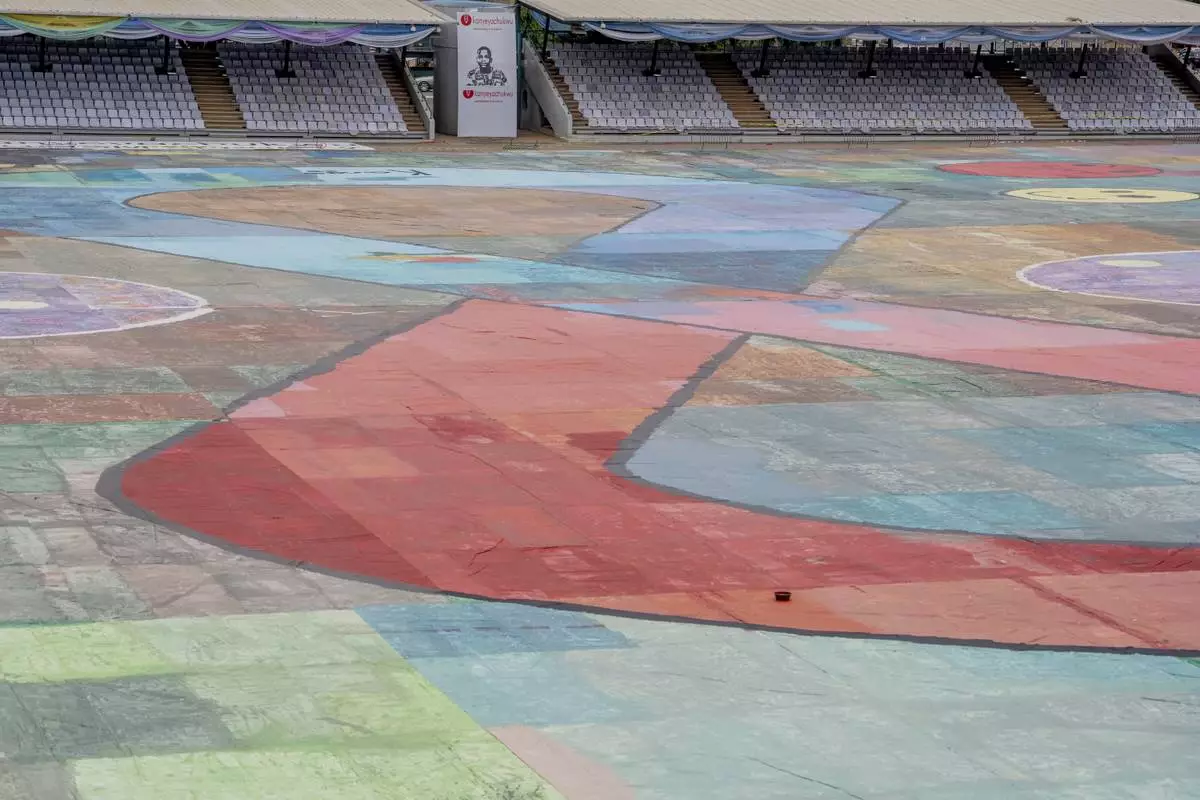
An Ariel view of the canvas painting by Kanyeyachukwu Tagbo-Okeke, a 15-year-old autistic artist who won the Guinness World Record for the largest art canvas, on display at the Eagle Square on World Autism Day in Abuja, Nigeria, Wednesday, April 2, 2025. (AP Photo/David Durowaiye)

An Ariel view of the canvas painting by Kanyeyachukwu Tagbo-Okeke, a 15-year-old autistic artist who won the Guinness World Record for the largest art canvas, on display at the Eagle Square on World Autism Day in Abuja, Nigeria, Wednesday, April 2, 2025. (AP Photo/David Durowaiye)
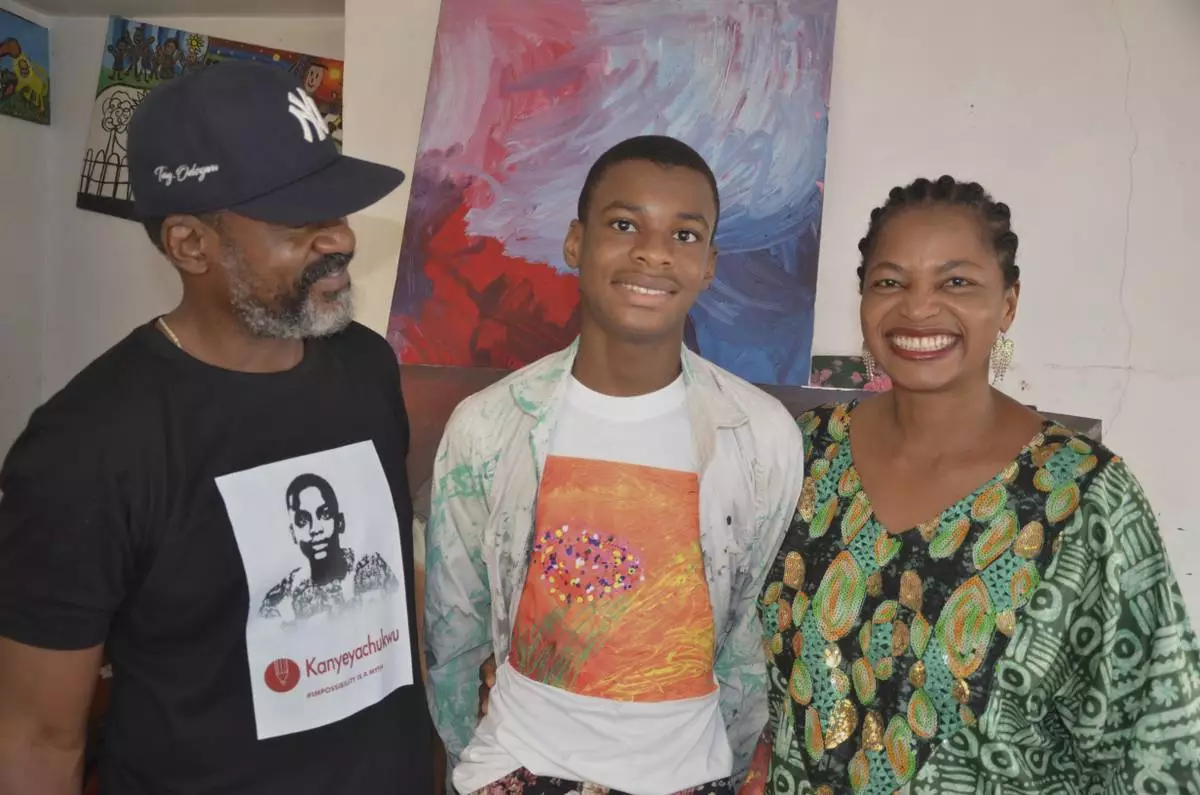
Kanyeyachukwu Tagbo Okeke, a 15 year-old autistic Nigerian, who set a Guinness World Record for the world's largest art canvas, is photograph with his parents in Abuja, Nigeria, Friday, April 18, 2025. (AP Photo/Olamikan Gbemiga)

Kanyeyachukwu Tagbo Okeke, a 15 year-old autistic Nigerian, who set a Guinness World Record for the world's largest art canvas, is photograph during an interview in Abuja, Nigeria, Friday, April 18, 2025. (AP Photo/Olamikan Gbemiga)
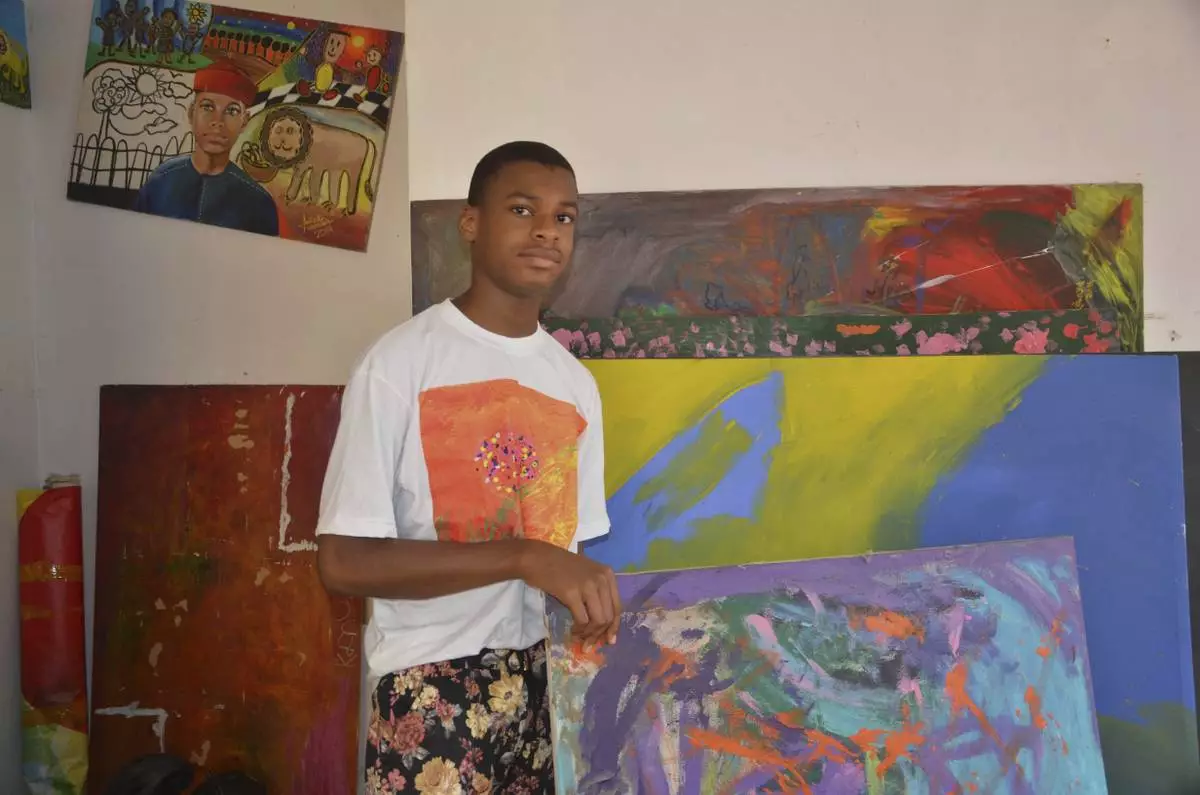
Kanyeyachukwu Tagbo Okeke, a 15 year-old autistic Nigerian, who set a Guinness World Record for the world's largest art canvas, is photograph during an interview in Abuja, Nigeria, Friday, April 18, 2025. (AP Photo/Olamikan Gbemiga)
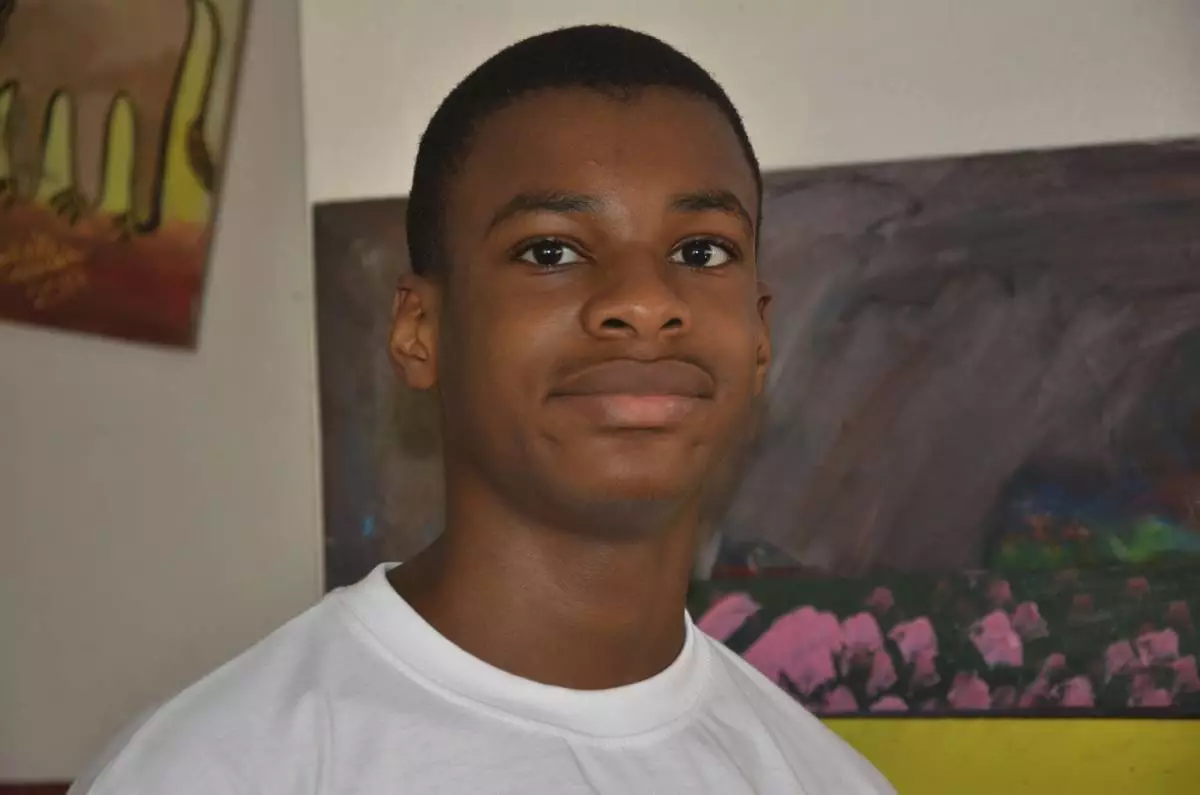
Kanyeyachukwu Tagbo Okeke, a 15 year-old autistic Nigerian, who set a Guinness World Record for the world's largest art canvas, is photograph during an interview in Abuja, Nigeria, Friday, April 18, 2025. (AP Photo/Olamikan Gbemiga)

An Ariel view of the canvas painting by Kanyeyachukwu Tagbo-Okeke, a 15-year-old autistic artist who won the Guinness World Record for the largest art canvas, on display at the Eagle Square on World Autism Day in Abuja, Nigeria, Wednesday, April 2, 2025. (AP Photo/David Durowaiye)

Kanyeyachukwu Tagbo Okeke, a 15 year-old autistic Nigerian, who set a Guinness World Record for the world's largest art canvas, is photograph during an interview in Abuja, Nigeria, Friday, April 18, 2025. (AP Photo/Olamikan Gbemiga)