Drones have been used to transport gear and remove wastes in Mount Qomolangma, making the earth summit safer and more efficient for climbing guides at the world's highest peak.
For the first time during the 2025 Qomolangma climbing season, cargo drones are used to help sherpas transport equipment to the higher camps, avoiding the dangerous Khumbu Icefall that has claimed nearly 50 lives since 1953. Drones will also collect and return wastes to the base camp.
"The sherpas, who are called icefall doctors, go to the Khumbu Icefall. They send out the coordinates. They go empty-handed. We supply the ladders, ropes, snow bars, everything within like one to two minutes. That's the one condition. The other condition is, one of the people, or the human beings, on Camp One, they stay over there. We send our drone empty-handed, having a small payload on the ceiling. So they hook up the garbage and we bring back to the base camp. That's how the whole process goes," said Milan Pandey, co-founder of Airlift Technology, a local drone-mapping start-up.
Drones that Airlift Technology uses were those tested last year. Weighing 45 kilograms and powered by two 12-kilogram batteries, each drone is able to carry a load of 25 kilograms.
It can complete a round trip from the base camp to Camp One in the Nepal side in less than 10 minutes, a big improvement over the six-hour journey required by porters and making it very popular among outfitters at the base camp.
"Actually the technology, if we do in the mountaineering sector like this way, is going to be really a benefit for sherpa. Because as we are, our company is leading the fixing to the summit (of Qomolangma) this year, so the drone helped us to carry the ropes to Camp One. So we have dropped already like lots of flights to the Camp One with the fixing materials," said Pemba Rinjin Sherpa, field operation manager of 8K Expeditions.
Traditionally, sherpas had to navigate the dangerous Khumbu Icefall to transport supplies and remove trash up and down the mountain.
The use of these drones minimizes their exposure to hazardous terrain, while being far more environment friendly and cheaper than helicopters.
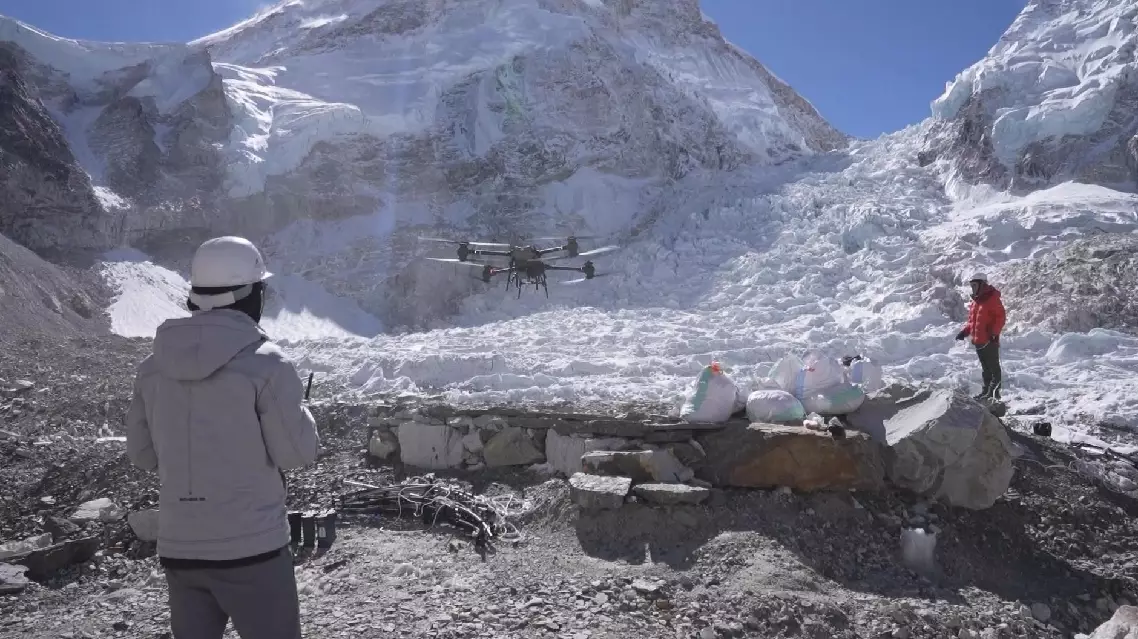
Drones used to transport gear, remove wastes on Mount Qomolangma
Two steel plants in Iran's Isfahan and Khuzestan provinces came under separate U.S. and Israeli attacks on Friday, the semi-official Fars news agency reported.
The report said that the plants attacked belong to the Khuzestan Steel Company and Mobarakeh Steel Company, with rescuers dispatched immediately after the strikes.
According to Fars, the Mobarakeh plant was hit at an electricity substation and its alloy steel production line, while the Khuzestan facility sustained damage to a number of warehouses.
Isfahan's deputy governor for security and law enforcement affairs, Akbar Salehi, said that at least one person was killed and two others were injured in the attack on the steel complex in the central province, the official news agency IRNA reported.
Salehi added that the plant was operating at the time, with staff present.
In Khuzestan, deputy governor for security affairs Valiollah Hayati confirmed that U.S. and Israeli warplanes carried out the strikes, according to Fars.
From Thursday to Friday, explosions were reported in Iran's capital Tehran, the central cities of Qom and Isfahan, as well as the southern city of Shiraz. The previous round of U.S.-Israeli attacks on Isfahan and Qom has already resulted in more than 40 deaths.
Since the outbreak of the conflict on Feb 28, U.S.-Israeli attacks have caused over 1,900 deaths in Iran and at least 20,000 injuries. In addition, 17 Red Crescent centers in Iran have been attacked, about 289 medical facilities damaged, and around 600 schools and educational institutions affected, according to the International Federation of Red Cross and Red Crescent Societies delegation in Iran on Friday.
Also on Friday, Iran's Islamic Revolutionary Guard Corps (IRGC) issued two statements regarding the regional situation. In the first statement, the IRGC emphasized that the Strait of Hormuz is now closed, and any attempt to pass through the strait will be met with severe retaliation. The statement pointed out that any ships traveling to or from "ports of the U.S. and its allies and supporters," regardless of their destination or route, are prohibited from passing through the Strait of Hormuz.
In the second statement, the IRGC stressed that U.S. forces in some areas are attempting to use civilian zones as cover, and Iran will continue to take action against U.S. and Israeli-related targets. The IRGC called on people in West Asian countries to stay away from areas where U.S. troops are stationed to avoid potential risks.
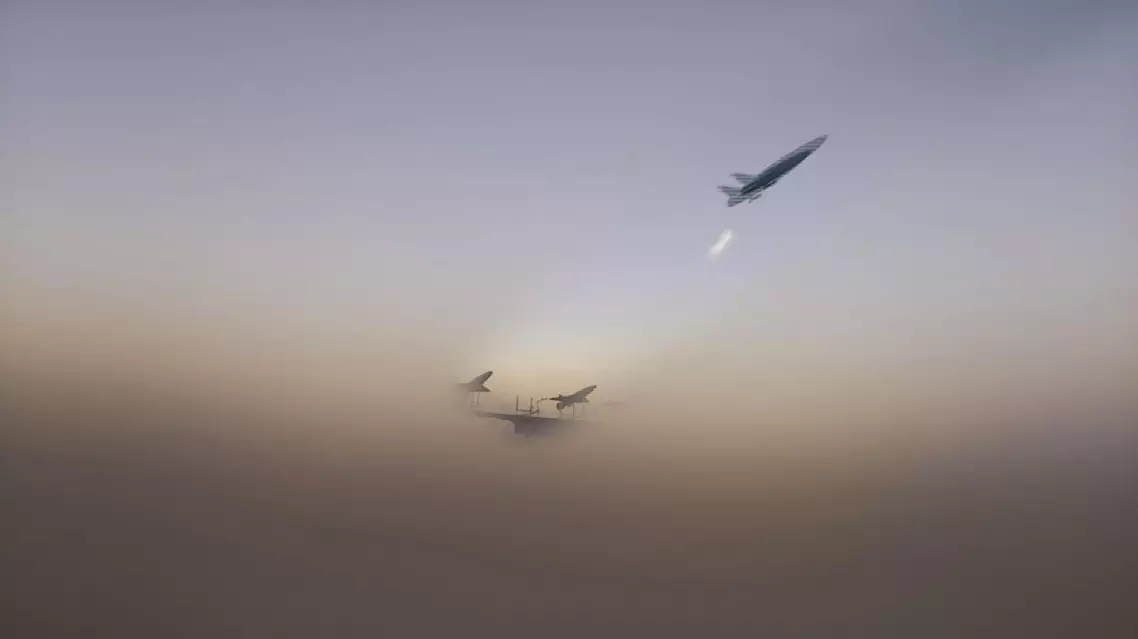
On the same day, the Iranian army issued a statement, saying that Israeli military logistics and transportation facilities located in Tel Aviv were attacked by swarms of Iranian military drones.
The IRNA reported on Friday that 71,356 residential units and 20,399 commercial ones have been damaged across Iran since the beginning of the conflict, which has also resulted in the deaths of 212 children and 240 women.
On Feb 28, Israel and the United States launched joint attacks on Tehran and several other Iranian cities, killing Iran's then Supreme Leader Ali Khamenei, along with senior military commanders and civilians. Iran responded with waves of missile and drone strikes targeting Israel and U.S. bases and assets in the Middle East.
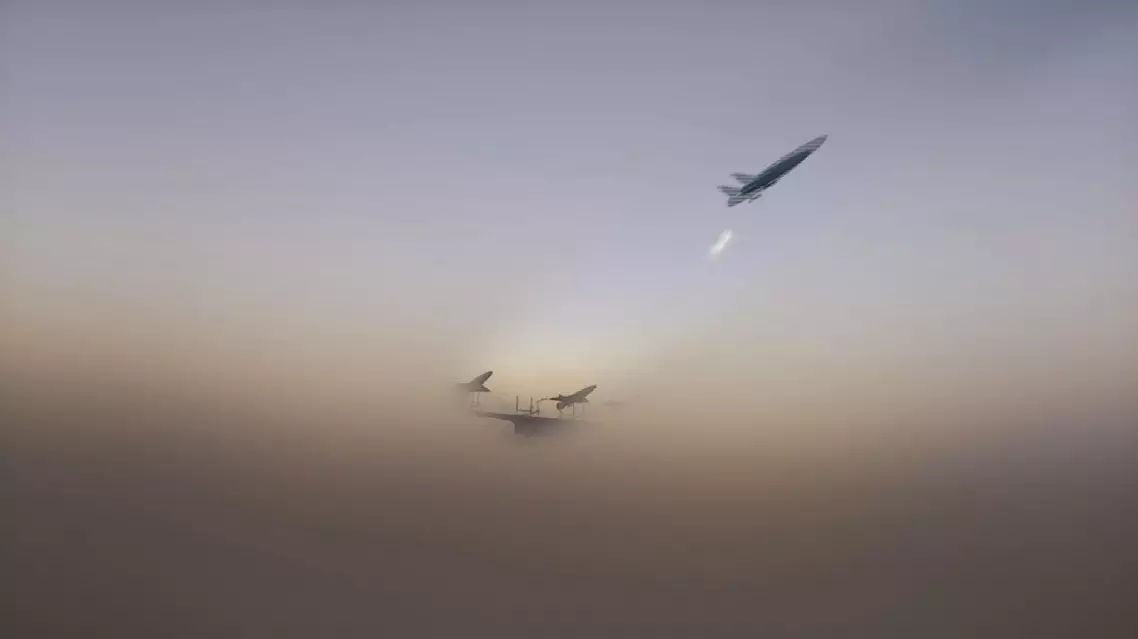
Two steel plants in central, southwestern Iran attacked by US, Israel
Two steel plants in central, southwestern Iran attacked by US, Israel