WARSAW, Poland--(BUSINESS WIRE)--May 2, 2025--
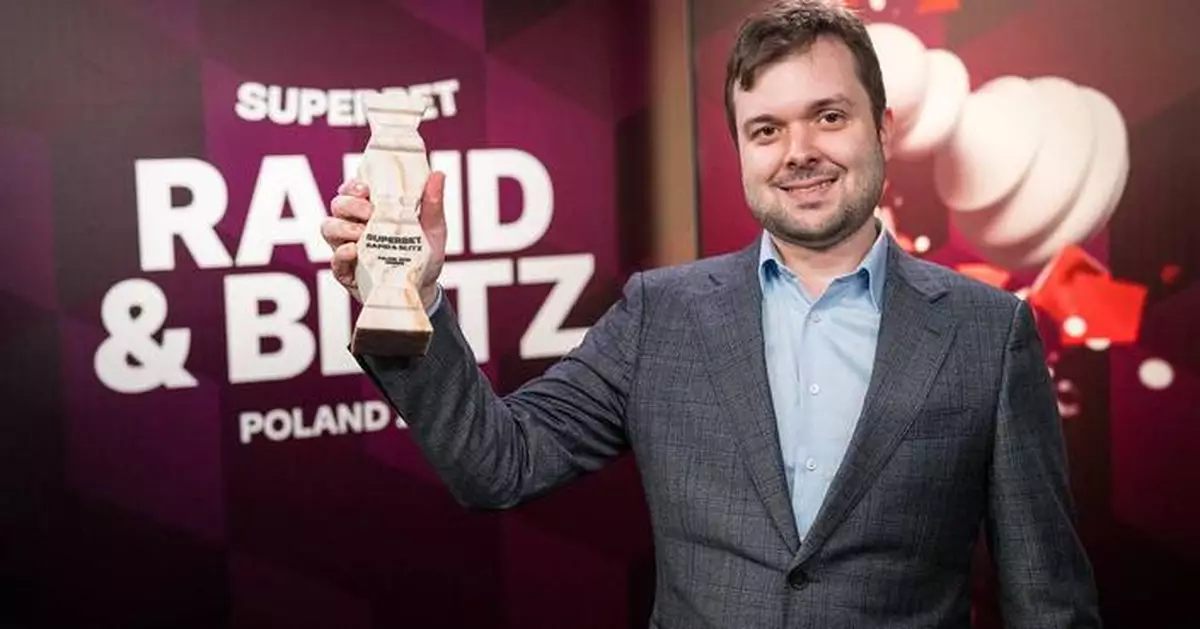
The first leg of the Grand Chess Tour (GCT) came to a thrilling conclusion as wildcard Grandmaster (GM) Vladimir Fedoseev from Slovenia delivered a strong performance to win Superbet Poland Rapid & Blitz with three rounds to spare, finishing five points ahead of the field and taking home the top prize of $40,000.
This press release features multimedia. View the full release here: https://www.businesswire.com/news/home/20250502270134/en/
“Congratulations to GM Vladimir Fedoseev for his win at Superbet Rapid & Blitz Poland! And well done to all the players for delivering such exciting games. Events like the GCT inspire individuals from all walks of life to take up chess, and that’s truly remarkable,” said Augusta Dragic, President of the Superbet Foundation.
GM Maxime Vachier-Lagrave finished in second place, taking home a prize of $30,000, followed by GM Praggnanandhaa Rameshbabu who took third place and $25,000.
“It’s an incredibly satisfying feeling—though at times, it’s hard to believe it’s really happening to me. Everything seemed to flow naturally, and I believe luck played a big role in my success. Huge congratulations to the organizers and the sponsors—this was the best tournament I’ve played in so far,” said Fedoseev.
“It was a pleasure to congratulate Vladimir on his commanding performance and well-deserved victory at the Superbet Poland Rapid & Blitz. His win made for a thrilling start to our 10th anniversary season on this year’s Grand Chess Tour,” said Michael Khodarkovsky, GCT Executive Director.
The second GCT leg, Superbet Chess Classic Romania sponsored by the Superbet Foundation, begins on Wednesday, May 7 with live commentary from GMs Yasser Seirawan, Cristian Chirila and Peter Svidler, International Master Nazi Paikidze and Women Grandmaster (WGM) Anastasia Karlovich starting at 7:00 a.m. CDT. Tune in to the Saint Louis Chess Club's Twitch & YouTube channels.
The remaining 2025 tour schedule will feature:
GCT participants are currently competing for a recently increased prize purse of $1.6 million over the course of the 2025 season. The prize fund for each of the two classical tournaments will be $350,000 and $175,000 per event for rapid and blitz. Top four finishers of the regular season of five tournaments will compete for the purse of additional $350,000 in the knockout matches at the GCT finals.
For more information, visit grandchesstour.org.
Grand Chess Tour
Grand Chess Tour is a circuit of international events, each demonstrating the highest level of organization for the world's best players. The legendary Garry Kasparov, one of the world's greatest ambassadors for chess, inspired the Grand Chess Tour and helped solidify the partnership between the organizers. All Grand Chess Tour 2024 events will comply with local and regional COVID-19 restrictions. For more information about the tour, please visit grandchesstour.org.
Superbet Foundation
The Superbet Foundation, a non-profit organization, is responsible for coordinating the Corporate Social Responsibility initiatives of the Superbet Group. Our goal is to support the advancement of health, education, and sports initiatives, with a special emphasis on promoting the game of chess and its myriad benefits within all the communities we serve.
Saint Louis Chess Club
The Saint Louis Chess Club is a non-profit, 501(c)(3) organization that is committed to making chess an important part of our community. In addition to providing a forum for the community to play tournaments and casual games, the club also offers chess improvement classes, beginner lessons and special lectures. Recognizing the cognitive and behavioral benefits of chess, the Saint Louis Chess Club is committed to supporting those chess programs that already exist in area schools while encouraging the development of new in-school and after-school programs. For more information, visit saintlouischessclub.org.
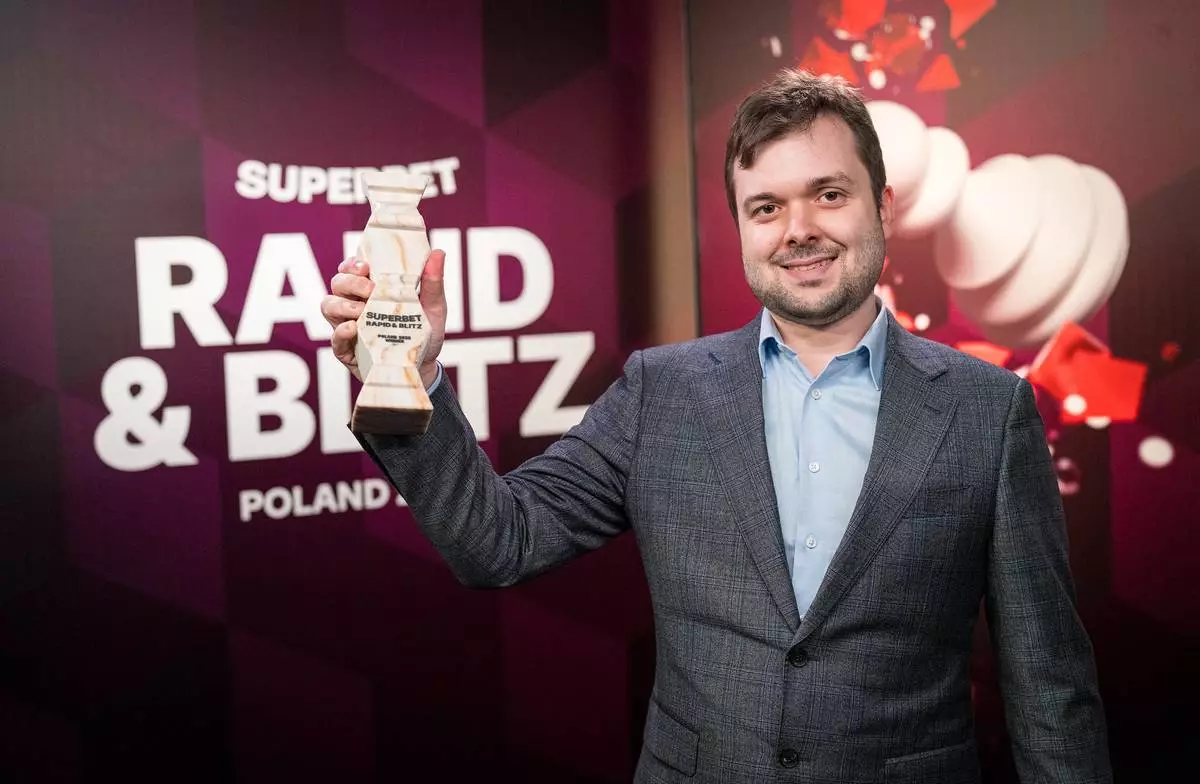
Grandmaster Vladimir Fedoseev wins the first leg of the Grand Chess Tour, taking the Superbet Poland Rapid & Blitz title and $40,000 prize.
MADRID (AP) — Venezuelans living in Spain are watching the events unfold back home with a mix of awe, joy and fear.
Some 600,000 Venezuelans live in Spain, home to the largest population anywhere outside the Americas. Many fled political persecution and violence but also the country’s collapsing economy.
A majority live in the capital, Madrid, working in hospitals, restaurants, cafes, nursing homes and elsewhere. While some Venezuelan migrants have established deep roots and lives in the Iberian nation, others have just arrived.
Here is what three of them had to say about the future of Venezuela since U.S. forces deposed Nicolás Maduro.
David Vallenilla woke up to text messages from a cousin on Jan. 3 informing him “that they invaded Venezuela.” The 65-year-old from Caracas lives alone in a tidy apartment in the south of Madrid with two Daschunds and a handful of birds. He was in disbelief.
“In that moment, I wanted certainty,” Vallenilla said, “certainty about what they were telling me.”
In June 2017, Vallenilla’s son, a 22-year-old nursing student in Caracas named David José, was shot point-blank by a Venezuelan soldier after taking part in a protest near a military air base in the capital. He later died from his injuries. Video footage of the incident was widely publicized, turning his son’s death into an emblematic case of the Maduro government’s repression against protesters that year.
After demanding answers for his son’s death, Vallenilla, too, started receiving threats and decided two years later to move to Spain with the help of a nongovernmental organization.
On the day of Maduro’s capture, Vallenilla said his phone was flooded with messages about his son.
“Many told me, ‘Now David will be resting in peace. David must be happy in heaven,’” he said. “But don't think it was easy: I spent the whole day crying.”
Vallenilla is watching the events in Venezuela unfold with skepticism but also hope. He fears more violence, but says he has hope the Trump administration can effect the change that Venezuelans like his son tried to obtain through elections, popular protests and international institutions.
“Nothing will bring back my son. But the fact that some justice has begun to be served for those responsible helps me see a light at the end of the tunnel. Besides, I also hope for a free Venezuela.”
Journalist Carleth Morales first came to Madrid a quarter-century ago when Hugo Chávez was reelected as Venezuela's president in 2000 under a new constitution.
The 54-year-old wanted to study and return home, taking a break of sorts in Madrid as she sensed a political and economic environment that was growing more and more challenging.
“I left with the intention of getting more qualified, of studying, and of returning because I understood that the country was going through a process of adaptation between what we had known before and, well, Chávez and his new policies," Morales said. "But I had no idea that we were going to reach the point we did.”
In 2015, Morales founded an organization of Venezuelan journalists in Spain, which today has hundreds of members.
The morning U.S. forces captured Maduro, Morales said she woke up to a barrage of missed calls from friends and family in Venezuela.
“Of course, we hope to recover a democratic country, a free country, a country where human rights are respected,” Morales said. “But it’s difficult to think that as a Venezuelan when we’ve lived through so many things and suffered so much.”
Morales sees it as unlikely that she would return home, having spent more than two decades in Spain, but she said she hopes her daughters can one day view Venezuela as a viable option.
“I once heard a colleague say, ‘I work for Venezuela so that my children will see it as a life opportunity.’ And I adopted that phrase as my own. So perhaps in a few years it won’t be me who enjoys a democratic Venezuela, but my daughters.”
For two weeks, Verónica Noya has waited for her phone to ring with the news that her husband and brother have been freed.
Noya’s husband, Venezuelan army Capt. Antonio Sequea, was imprisoned in 2020 after having taken part in a military incursion to oust Maduro. She said he remains in solitary confinement in the El Rodeo prison in Caracas. For 20 months, Noya has been unable to communicate with him or her brother, who was also arrested for taking part in the same plot.
“That’s when my nightmare began,” Noya said.
Venezuelan authorities have said hundreds of political prisoners have been released since Maduro's capture, while rights groups have said the real number is a fraction of that. Noya has waited in agony to hear anything about her four relatives, including her husband's mother, who remain imprisoned.
Meanwhile, she has struggled with what to tell her children when they ask about their father's whereabouts. They left Venezuela scrambling and decided to come to Spain because family roots in the country meant that Noya already had a Spanish passport.
Still, she hopes to return to her country.
“I’m Venezuelan above all else,” Noya said. “And I dream of seeing a newly democratic country."
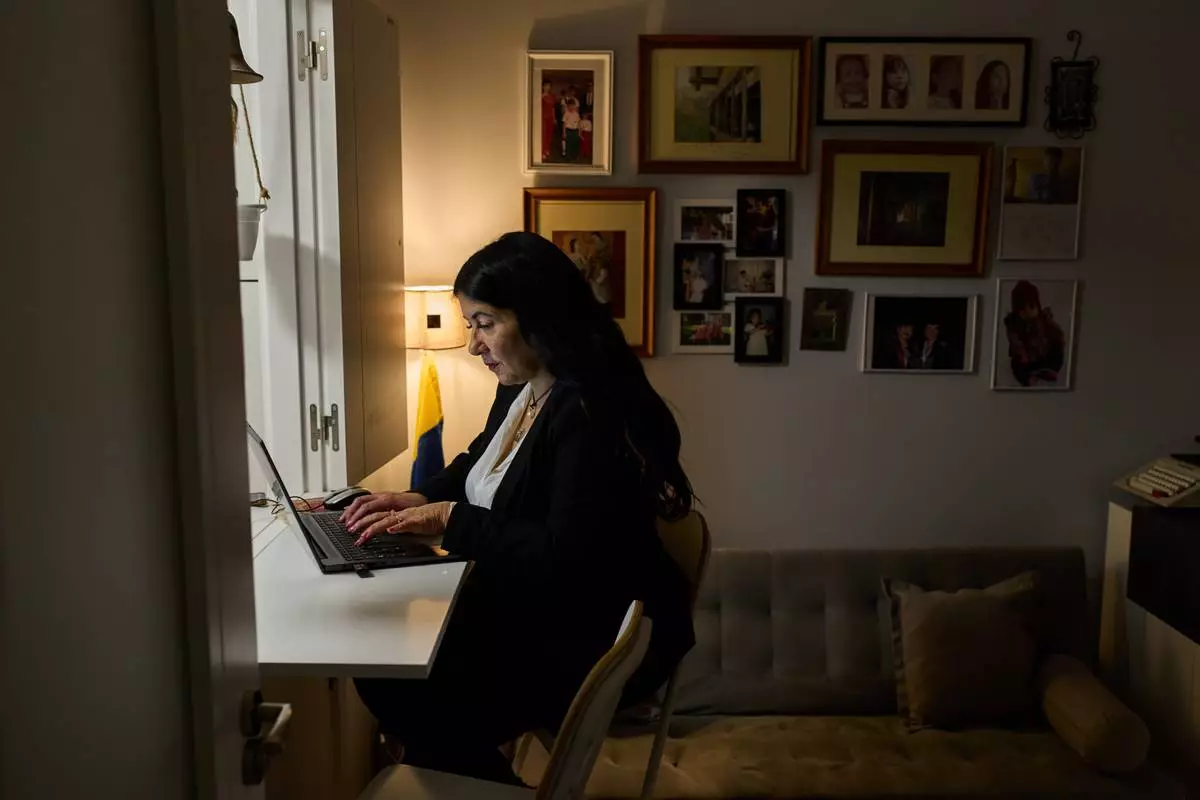
Venezuelan journalist Caleth Morales works in her apartment's kitchen in Madrid, Wednesday, Jan. 14, 2026. (AP Photo/Bernat Armangue)
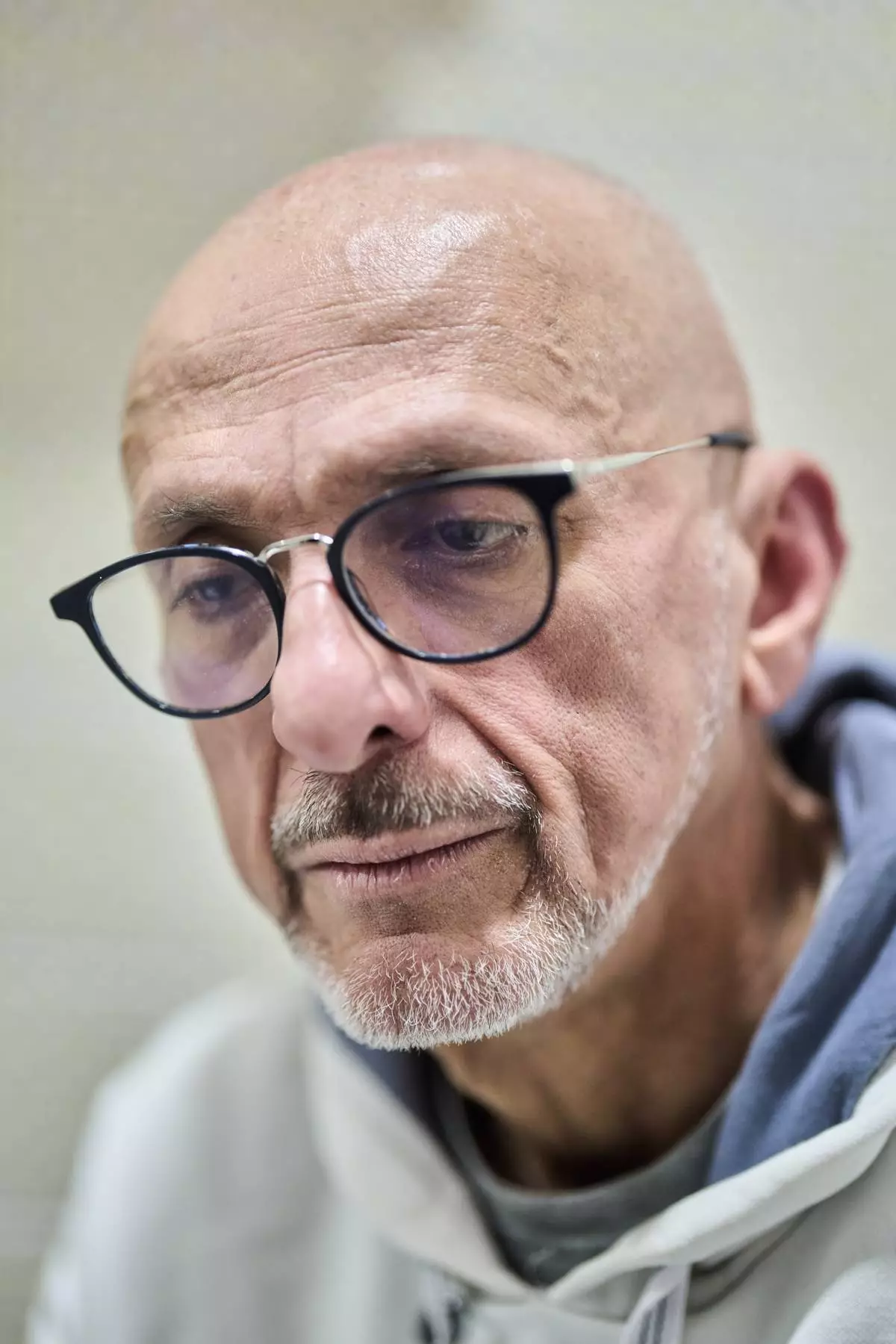
David Vallenilla, father of the late David José Vallenilla Luis, sits in his apartment's kitchen in Madrid, Tuesday, Jan. 13, 2026. (AP Photo/Bernat Armangue)
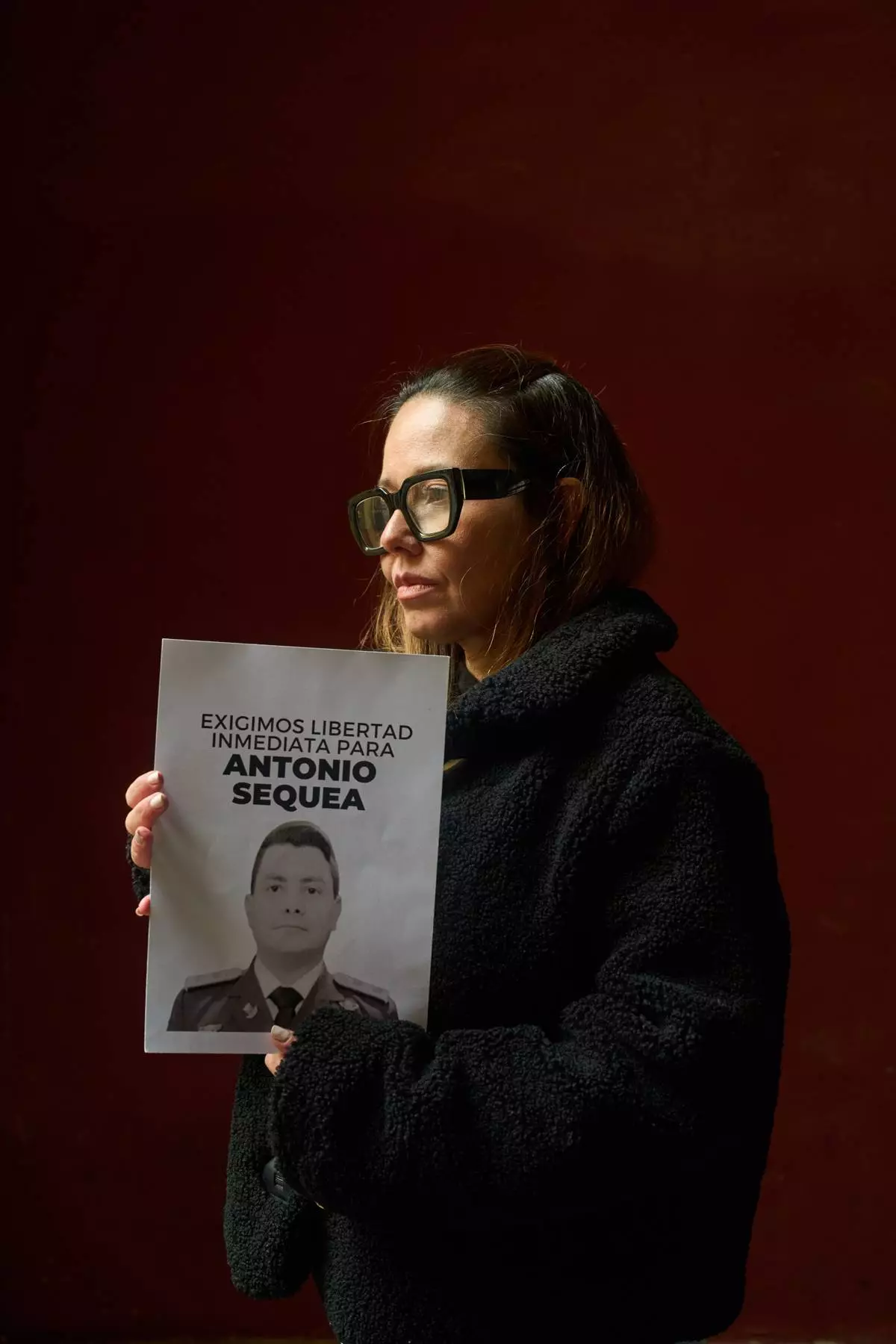
Veronica Noya holds a picture of her husband Antonio Sequea in Madrid, Thursday, Jan. 15, 2026. (AP Photo/Bernat Armangue)
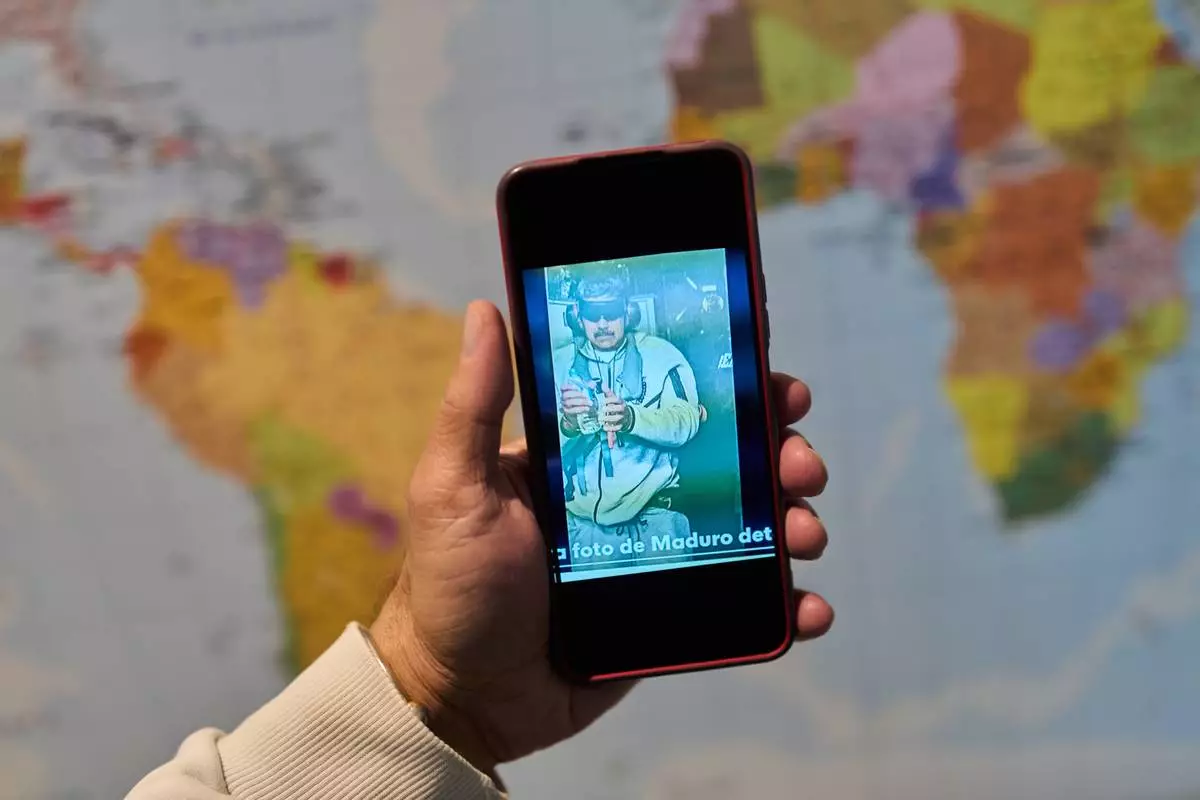
David Vallenilla holds a picture of deposed President Nicolas Maduro, blindfolded and handcuffed, during an interview with The Associated Press at his home in Madrid, Tuesday, Jan. 13, 2026. (AP Photo/Bernat Armangue)
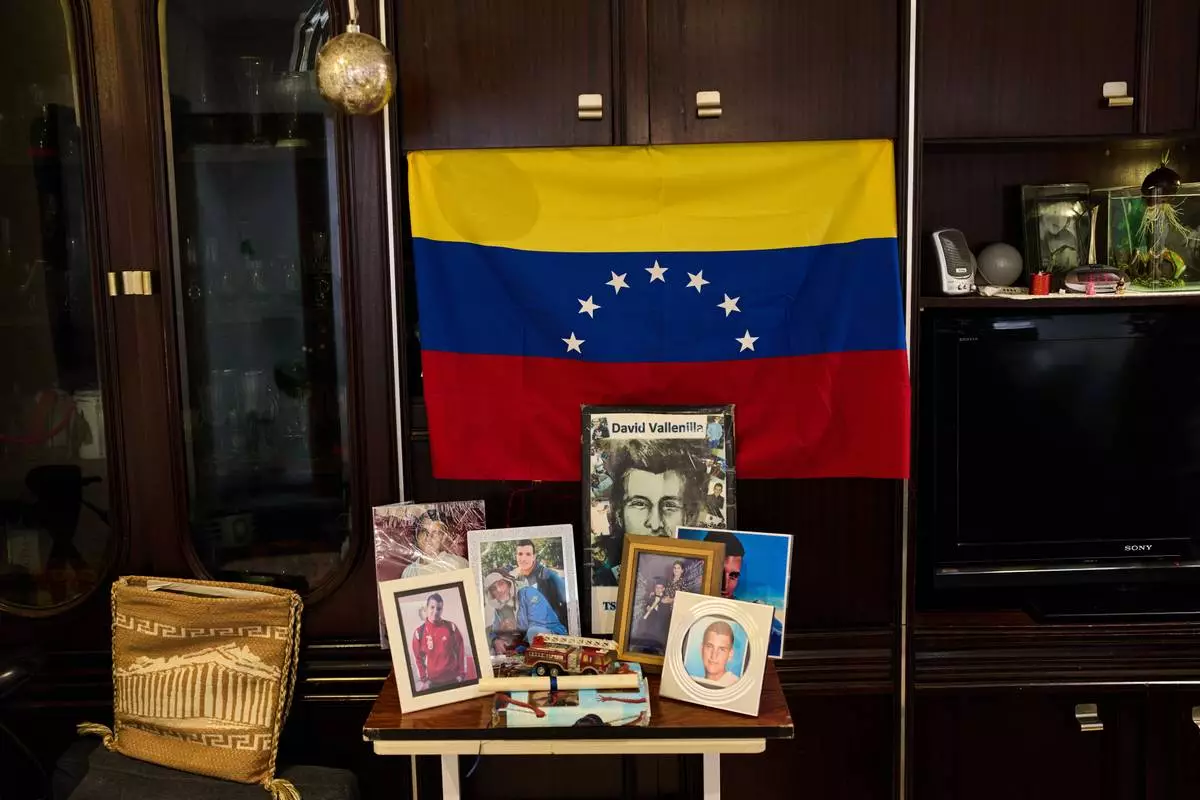
Pictures of the late David José Vallenilla Luis are placed in the living room of his father, David José Vallenilla, in Madrid, Tuesday, Jan. 13, 2026. (AP Photo/Bernat Armangue)