The ancient city of Kashgar in northwest China's Xinjiang Uygur Autonomous Region is embracing a tourist boom during the five-day May Day holiday beginning on Thursday.
On Thursday alone, the city welcomed more than 170,000 visitors.
"This is my first time to visit Kashgar. This ancient city has a very strong historical and cultural vibe, beautiful songs and dances, various delicacies, and special ethnic costumes, all very attractive to me," said Li Ling, a tourist from northwest China's Shaanxi Province.
To enrich the experience of tourists, the city has newly launched live dramas featuring stories of a local blacksmith and a legendary wise man, offering visitors immersive cultural experiences.
"I'm very happy to be here in Kashgar. I especially love the culture here," said tourist Liu Fengping from central China's Hunan Province. The city has also made continued efforts to upgrade its infrastructure and improve tourists' experience.
"We have upgraded the roads, plants, lights and toilets of the scenic area this year, and newly built some popular points of interest and local-style streets, so that the tourists can have more fun in the ancient city and have a great experience," said Adila Ailaiti, an official from the tourism promotion office of the ancient city's management committee.
Located in southwestern Xinjiang, Kashgar served as a vital transportation hub connecting China with Central Asia and South Asia in ancient times. The confluence of diverse ethnic cultures in this region has given rise to a wealth of historical and cultural treasures.
Today, Kashgar has harnessed its cultural and geographical advantages, transforming into a unique tourist destination that blends history and modernity.

Ancient city in China's Xinjiang embraces tourist boom during May Day holiday

Ancient city in China's Xinjiang embraces tourist boom during May Day holiday
The 2026 Beijing Xiangshan Forum Navigator Meeting has provided a platform for dialogue over confrontation amid escalating global unrest and regional tensions, said a Chinese defense researcher at the forum.
More than 120 defense officials, experts and scholars from 43 countries and international organizations have gathered for the three-day meeting, which opened on Friday.
"I think it reflects everyone's concern about the current situation, and there is a particular need to find solutions through communication and dialogue. The current international situation serves as a platform for addressing respective security concerns, especially given the serious problems that have arisen in global security governance. Therefore, we must both confront its risks and challenges and seek solutions," said Li Shuyin, director of Beijing Xiangshan Forum secretariat office, also a researcher at the People's Liberation Army (PLA) Academy of Military Science, during an exclusive interview with China Central Television (CCTV).
Under the theme of "Global Security Governance: Challenges and Approaches," the meeting was designed with four sub-topics: international order and the international rule of law, new challenges to Asia-Pacific security, responsibility for maintaining global common security, and risk management of the military applications of emerging technologies.
Faced with the current severe situation of deficits in peace, development, security, and governance, representatives from various countries hope to find effective solutions through dialogue, according to Li.
"Our first topic is international order and the rule of law. We know that the international order has become somewhat disordered because some countries believe that might makes right and try to govern according to their own ideology. They use international rules and law only when it suits them and discard them when it doesn't. I think this is closely related. Asia-Pacific security has always been a recurring topic at the Beijing Xiangshan Forum. It is the main engine of the global economy and an important part of the world's geopolitical landscape. For example, some countries have already abandoned some of the lessons of their past and are now taking risks again. This poses a threat to regional security and stability, which requires our high vigilance," said Li.
Li said that all countries, regardless of size or strength, have the right to pursue security, while also bearing corresponding responsibilities, and the meeting creates more opportunities for conversation to eliminate misunderstandings and enhance mutual trust.
"The international forum is neither a policy maker nor an implementer; it provides a platform for equal dialogue, consensus building, and resolving differences. It offers more venues for expressing viewpoints, enhances mutual trust, and creates more opportunities for peace," said Li.
The navigator meeting, a key forward-looking event for the main forum, is co-hosted by the China Association for Military Science and the China Institute for International Strategic Studies. It aims to build an open, inclusive, and equal international platform for security dialogue, and make an intellectual contribution to improving global security governance and building a more just and equitable international order through multilateral discussions and in-depth exchanges, said the Chinese Ministry of National Defense.
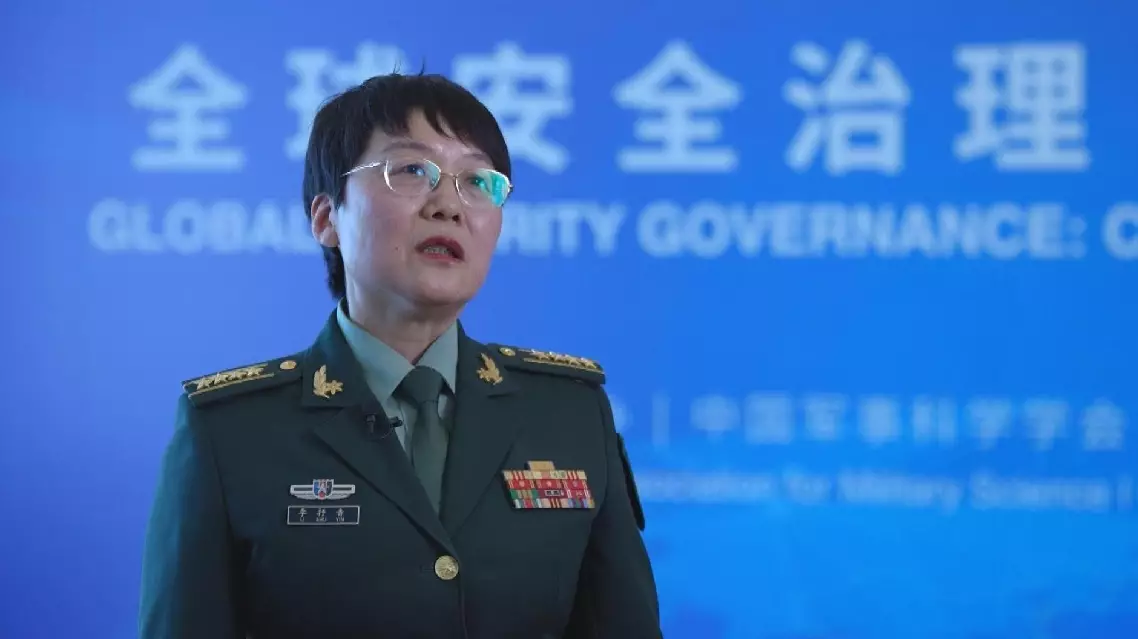
Xiangshan Forum navigator meeting in Beijing fosters dialog over confrontation: official