Rapid development of robotic technologies in China have enabled many scenic spots in the country to use robots to refresh and enrich tourists' experience.
The Enshi Grand Canyon in central China's Hubei Province has introduced several robot-related experiences during the May Day holiday.
At one site, the scenic area invited some 20 robot teams from universities and tech companies for races. An interactive zone is also set up for tourists to tentatively control the robots to perform various missions.
The Enshi Grand Canyon also uses robot dogs for other tasks. For one thing, the mechanic dogs have replaced porters to carry supplies and garbage, which has become another "landscape" in the scenic area.
"Now with the robot dogs, it's convenient to carry things, not to say they save the labor," said a porter at the scenic spot.
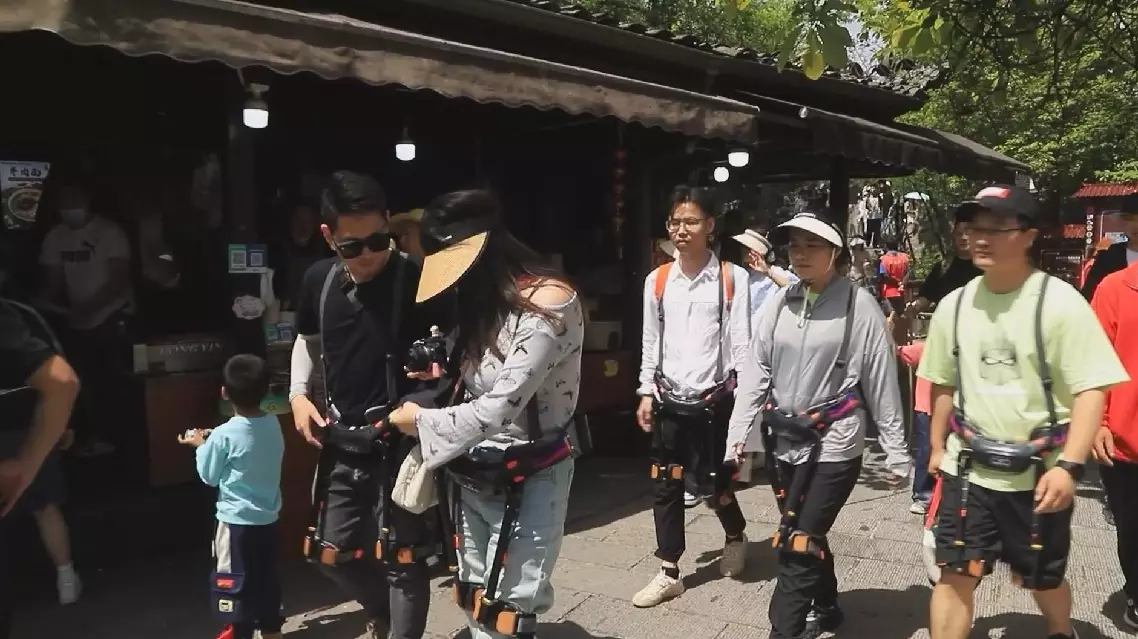
Like many other mountain parks in the country, the Enshi Grand Canyon also offers AI-enhanced exoskeleton robots for rent.
Exoskeleton robots help tourists climb faster while saving physical ordeal, making mountain climbing a much more pleasant and relaxed experience for tourists.
"I climbed up here pretty easily, but climbing up on my own could be really tough. Wearing this feels like I'm not walking on my own; it's like someone is helping me walk," said a tourist at the Enshi Grand Canyon.
Robots refresh tourists' experience in scenic areas

A taxi fleet has been offering free rides to residents and victims in the wake of the recent catastrophic residential building fire in Hong Kong, one of the region's deadliest disasters in decades.
The fire, which broke out at the Wang Fuk Court residential complex in Tai Po on November 26, had claimed 160 lives by Tuesday, with six people still listed as missing, according to authorities.
In response, the "Big Bee" taxi fleet, operated by Sino Development (International) Company, joined several volunteer groups in providing free rides for affected residents.
Beyond transporting displaced survivors, the fleet also assisted in moving donated supplies and volunteers to and from the area.
"In the first few days, drivers came to the site voluntarily to offer help. There were many firefighters and rescuers on site. During the ten days from December 1 to 10, we offered about 100 free rides daily on average, serving roughly 300 residents and fire victims each day," said Sam Wong, founder and CEO of Sino Development (International) Company.
"We are very willing to take part in this effort. Every driver is," said Lui Kai-wa, a taxi driver.
As most displaced residents have now been relocated through government coordination, volunteer taxi drivers are gradually returning to their regular routes.
More than 2,500 displaced residents have moved into transitional housing units, with Hong Kong's Transport Department providing additional public transport services to meet commuting needs.
"There is a gradual decrease in usage, as much of the transportation need for people and supplies has already been completed. Demand is clearly declining," Lui said.
Wong also praised the government's role in the relief work.
"Over the past few days, we've seen the government carry out a tremendous amount of work, especially in response to such a big and serious disaster. Its role has been very significant," Wong said.
Taxi feet offers free rides to residents, victims in wake of deadly Hong Kong residential building fire