Since the outbreak of the latest large-scale Israeli-Palestinian conflict, temporary "field hospitals" have emerged in Gaza Strip as emergency medical facilities, initially intended to support the main public hospitals hit by airstrikes. However, due to widespread destruction of Gaza's medical system by Israeli forces, these field hospitals have become the last line of defense for the public, facing increasing operational challenges amid the ongoing blockade.
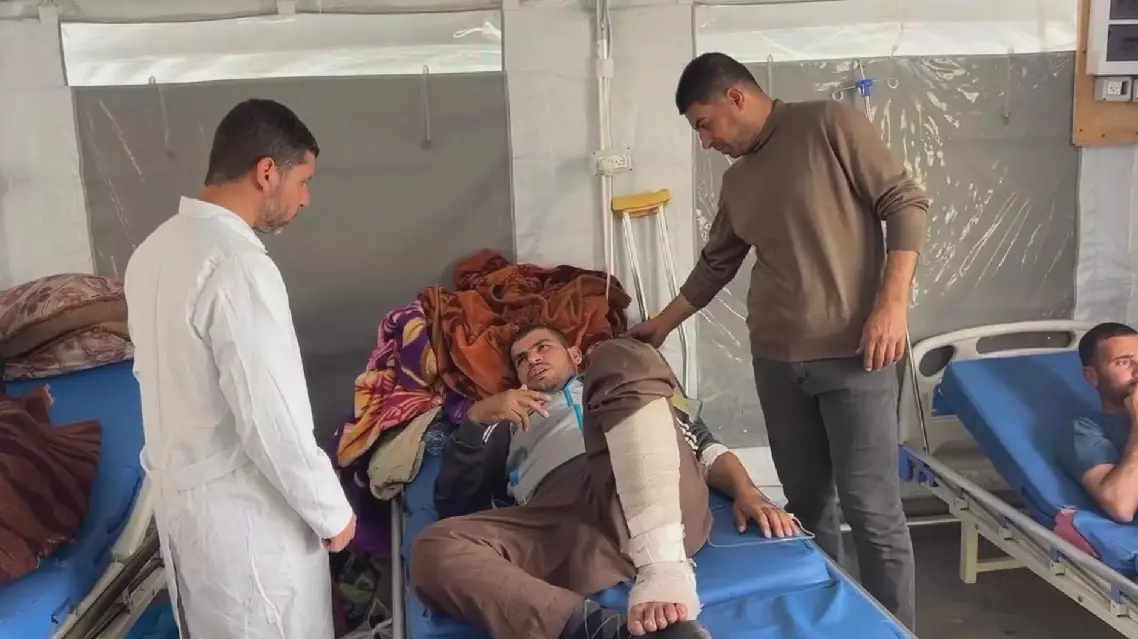
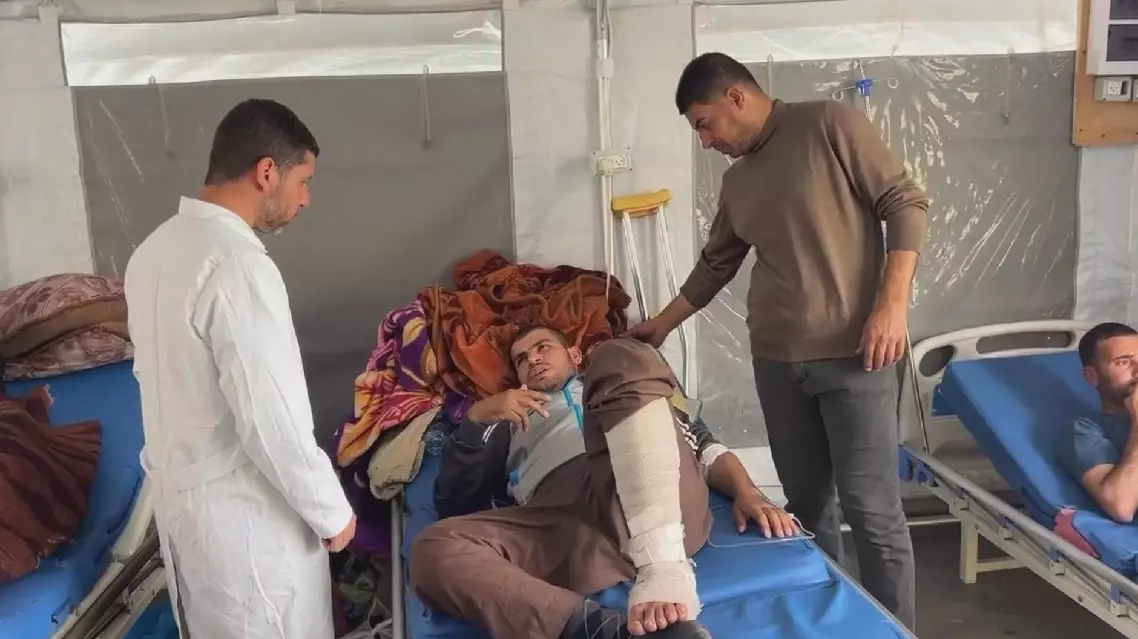
The Abu Yusuf al-Najjar hospital in Khan Younis is one of the field hospitals providing medical services to the displaced. Its predecessor was a public hospital of the same name located in Rafah, which was the only public medical institution in the area. The hospital was destroyed by Israeli forces in July 2024. Subsequently, the Gaza Health Ministry urgently relocated some medical staff and equipment to Khan Yunis, where a temporary hospital was set up near the ruins.
Click to Gallery
Field hospitals struggle to provide medical service for Gazans during blockade
Field hospitals struggle to provide medical service for Gazans during blockade

Field hospitals struggle to provide medical service for Gazans during blockade
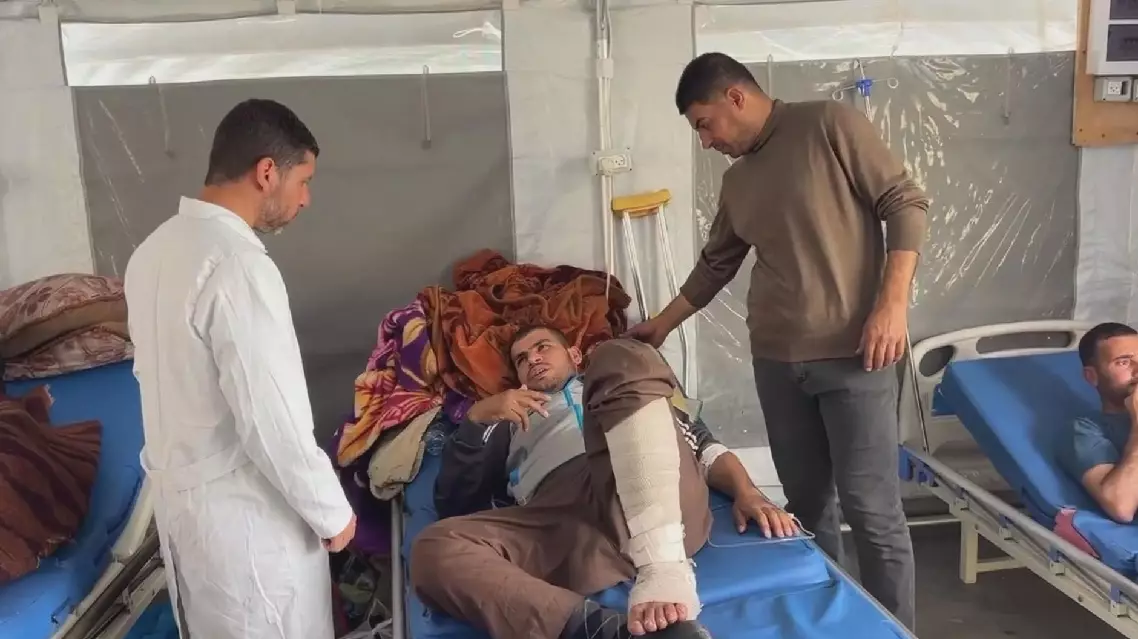
Field hospitals struggle to provide medical service for Gazans during blockade
"Each of these tents can accommodate eight patients, which is far below any medical standard and cannot ensure basic nursing quality. There are no emergency medications inside the tents, nor are there facilities like those in regular departments. In winter, it's bitterly cold, and in summer, it's unbearably hot and stuffy. Flies and insects are everywhere. Additionally, there is no oxygen supply. We can only use the most primitive methods to treat patients," said Mohammed Al-Shanti, head of the nursing department of the Abu Yusuf al-Najjar field hospital.
Despite the harsh conditions, the hospital still provides medical services to over 700 patients on average every day. However, limited to only eight tents, the hospital can accommodate a maximum of just over 60 patients for overnight stays each night.
Israel closed all crossing points into Gaza since early March, preventing the delivery of humanitarian aid, and the supply of medicines became critically scarce.
Iyad Abu Mandil, who had been receiving treatment at the hospital, was expected to be discharged after his initial amputation due to an infection. However, due to the severe shortage of medicines, his condition worsened, leading to a relapse and the need for a second amputation.
"I’m being discharged now, but I have to buy the bandages, gauze, and some basic medicines myself at the pharmacy because this hospital doesn't have them. It can barely sustain itself. The prices at the pharmacy are shockingly high, often several times more expensive than usual," said Mandil.
The shortage of essential medical supplies has become a critical issue, exacerbating the suffering of patients like Mandil. With the ongoing conflict and the devastating impact on Gaza's healthcare infrastructure, these temporary medical centers are facing increasing pressure.
"Currently, there are about 10 field hospitals across Gaza, and their combined medical capacity is only equivalent to that of one general public hospital. After Israel violated the ceasefire agreement, these field hospitals had to struggle to resume operation. Now, like public hospitals, they are overcrowded. The ongoing blockade has not only put public hospitals in a difficult situation but has also severely restricted the operation of the field hospitals," said Marwan Al-Hamus, director of the Abu Yusuf al-Najjar field hospital.
Israel resumed intensive strikes on Gaza on March 18, following the collapse of a two-month ceasefire. At least 2,436 Palestinians have since been killed and 6,450 others injured, Gaza-based health authorities said in a statement on Sunday.
Field hospitals struggle to provide medical service for Gazans during blockade
Field hospitals struggle to provide medical service for Gazans during blockade
Field hospitals struggle to provide medical service for Gazans during blockade
Field hospitals struggle to provide medical service for Gazans during blockade