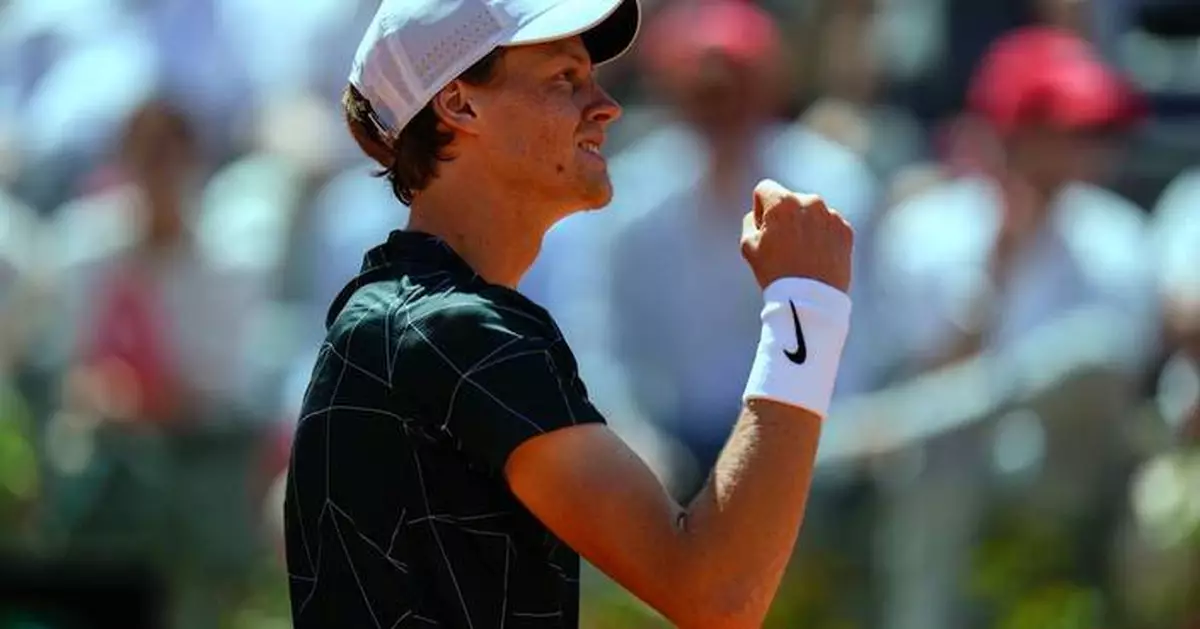
ROME (AP) — Rarely has an athlete been welcomed back from a doping ban with so much fanfare.
Top-ranked tennis player Jannik Sinner was treated to a stadium filled with nearly 5,000 fans for his first practice session at the Italian Open on Monday — the day his three-month banishment from the sport expired.
Click to Gallery
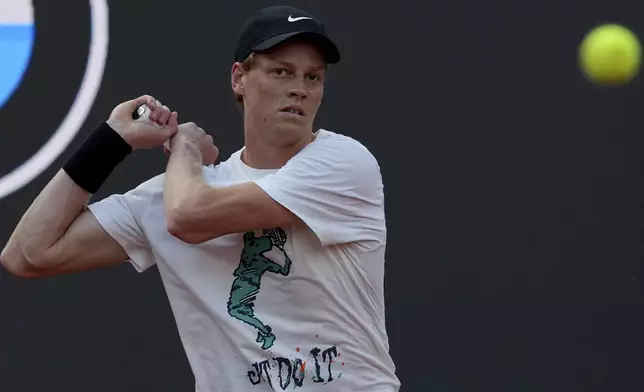
Jannik Sinner attends a training ahead of the Italian Open in Rome, Monday, May 5, 2025. (Alfredo Falcone/LaPresse via AP)
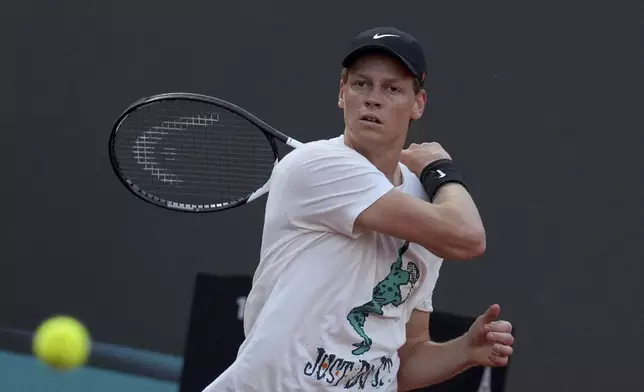
Jannik Sinner attends a training ahead of the Italian Open in Rome, Monday, May 5, 2025. (Alfredo Falcone/LaPresse via AP)
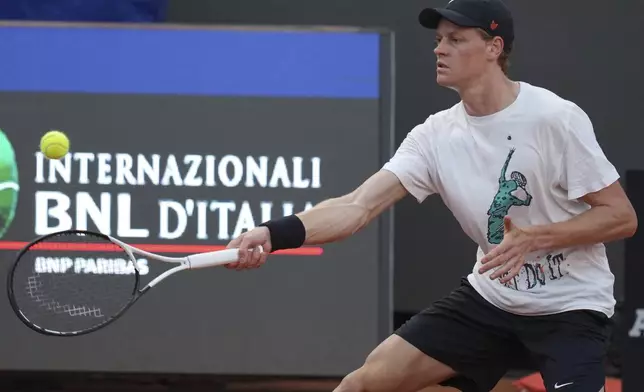
Jannik Sinner attends a training ahead of the Italian Open in Rome, Monday, May 5, 2025. (Alfredo Falcone/LaPresse via AP)
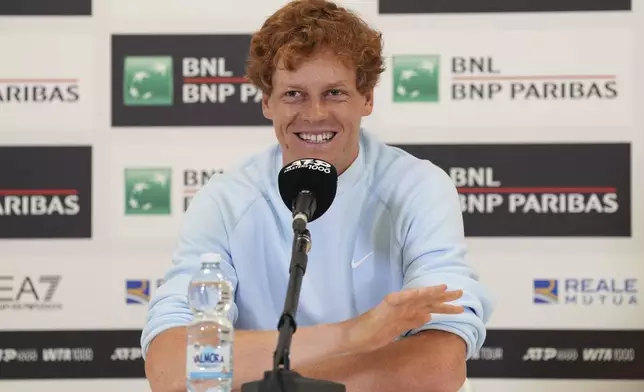
Italy's Jannik Sinner speaks during a press conference ahead of the Italian Open, in Rome, Monday May 5, 2025. (Alfredo Falcone/LaPresse via AP)
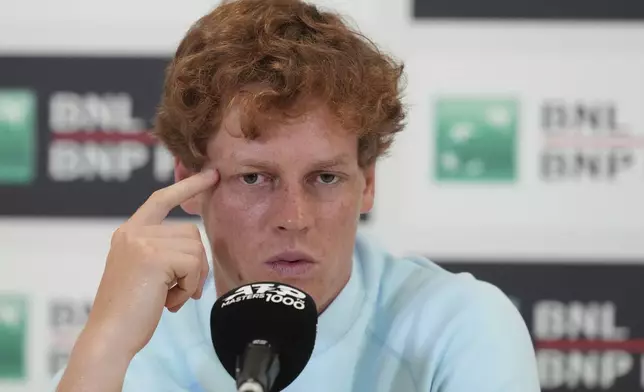
Italy's Jannik Sinner speaks during a press conference ahead of the Italian Open, in Rome, Monday May 5, 2025. (Alfredo Falcone/LaPresse via AP)
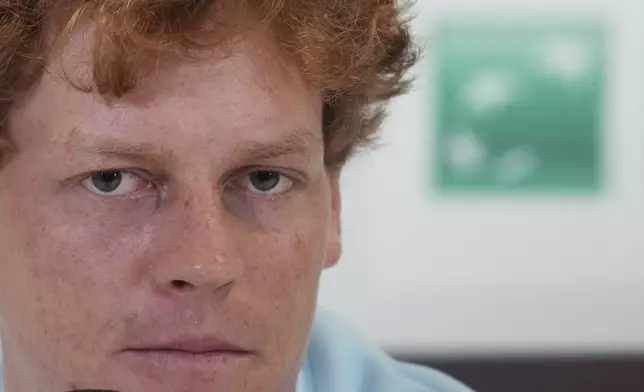
Italy's Jannik Sinner attends a press conference ahead of the Italian Open, in Rome, Monday May 5, 2025. (Alfredo Falcone/LaPresse via AP)
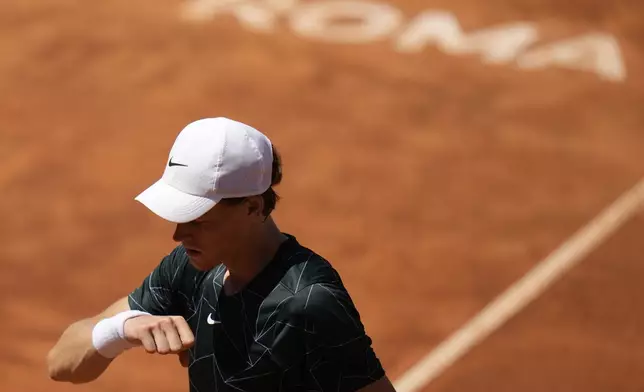
FILE - Italy's Jannik Sinner reacts after losing a point during his match against Greece's Stefanos Tsitsipas at the Italian Open tennis tournament, in Rome, May 13, 2022. (AP Photo/Alessandra Tarantino, File)
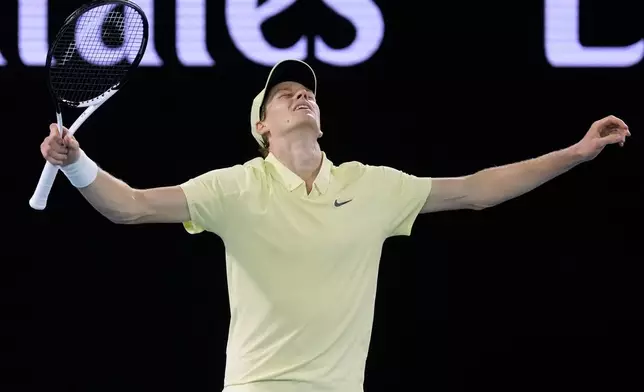
FILE - Jannik Sinner of Italy celebrates after defeating Alexander Zverev of Germany in the men's singles final at the Australian Open tennis championship in Melbourne, Australia, Jan. 26, 2025. (AP Photo/Asanka Brendon Ratnayake, File)
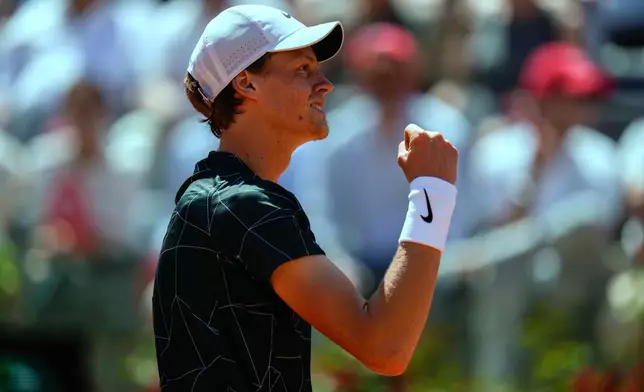
FILE - Italy's Jannik Sinner celebrates after winning a point to Greece's Stefanos Tsitsipas during their match at the Italian Open tennis tournament, in Rome, May 13, 2022. (AP Photo/Alessandra Tarantino, File)
The training session — which was shown live on local TV — came after Sinner was the most celebrated player in a ceremony to honor the Italian teams that swept the Davis Cup and Billie Jean King Cup last year.
Both trophies were on hand and the Campo Centrale crowd belted out Italy’s national anthem.
It's the first time that Italy has had a No. 1 player for its home tournament. Still, Sinner was at a loss to explain why he attracts so much attention.
“I don’t know. Honestly, I think I’m a simple 23-year-old kid. I’m good at playing tennis but I’m not changing the world,” he said. “I always remember that I come from a small town of 2,000 people. Being here in Rome and playing in front of so many people is a big deal.”
With a conclave to elect a new pope set to begin just down the road at the Vatican on Wednesday, Sinner’s return prompted local headlines that declared “Habemus Sinner” — a variant of the Latin words “Habemus Papam!” that are announced from the balcony of St. Peter’s Basilica when a pope is elected.
The scene at the Foro Italico came in sharp contrast to how Sinner felt back in February when he received a three-month ban in a settlement with the World Anti-Doping Agency.
“At the start I was a bit confused because I didn’t know exactly what I wanted to do,” Sinner said. “Then I went home and stayed with my family. I tried to understand better what was really important to me.
“I know how many sacrifices I made and my daily routine was always practice, practice, practice. But at that moment I didn’t have any of that. I came to understand that what’s important to me are the people by your side. That they give you the strength to move forward and continue smiling.”
Besides his family in the German-speaking Alto Adige region of northern Italy, Sinner also spent more time with friends at home in Monaco, participated in other sports like cycling, and then only gradually came back to tennis.
“We went about a month without touching (a racket) and then we restarted really softly,” Sinner said. “When we started pushing more, blisters developed on my hands. That was something I hadn’t experienced in a long time.”
The settlement was made after WADA appealed a decision last year by the International Tennis Integrity Agency to fully exonerate Sinner for what it deemed to be an accidental contamination by a banned anabolic steroid in March 2024.
The settlement raised questions, since it conveniently allowed Sinner not to miss any Grand Slams and return at his home tournament.
The Italian Open is the last big clay-court event before the French Open, which starts on May 25.
“I didn’t want to do it in the beginning, and also it was a bit not easy for me to accept it, because I know what really happened,” Sinner said of the ban. “But sometimes we have to choose the best in a very bad moment, and that’s what we did. So it’s all over now. So I’m happy to play tennis again.”
Many fellow pros feel Sinner was treated too lightly.
Serena Williams told Time magazine she “would have gotten 20 years” if she was involved in a similar case: “Let’s be honest. I would have gotten Grand Slams taken away from me.”
“I just arrived 45 minutes ago," Sinner said. "I haven’t seen so many (other players). It’s all fine at the moment, but I haven´t seen most of them.”
Sinner hasn’t played a match since January when he won his second straight Australian Open title.
After a first-round bye in Rome, he will be play his opening match on Saturday against No. 99 Mariano Navone or 18-year-old Italian wild card Federico Cinà.
The last Italian man to win the Rome title was Adriano Panatta in 1976.
“It’s a very, very low expectation tournament in general for me,” Sinner said. “It’s a very strange feeling again in the beginning to be around so many people and attention. But it’s nice to be back.”
AP tennis: https://apnews.com/hub/tennis
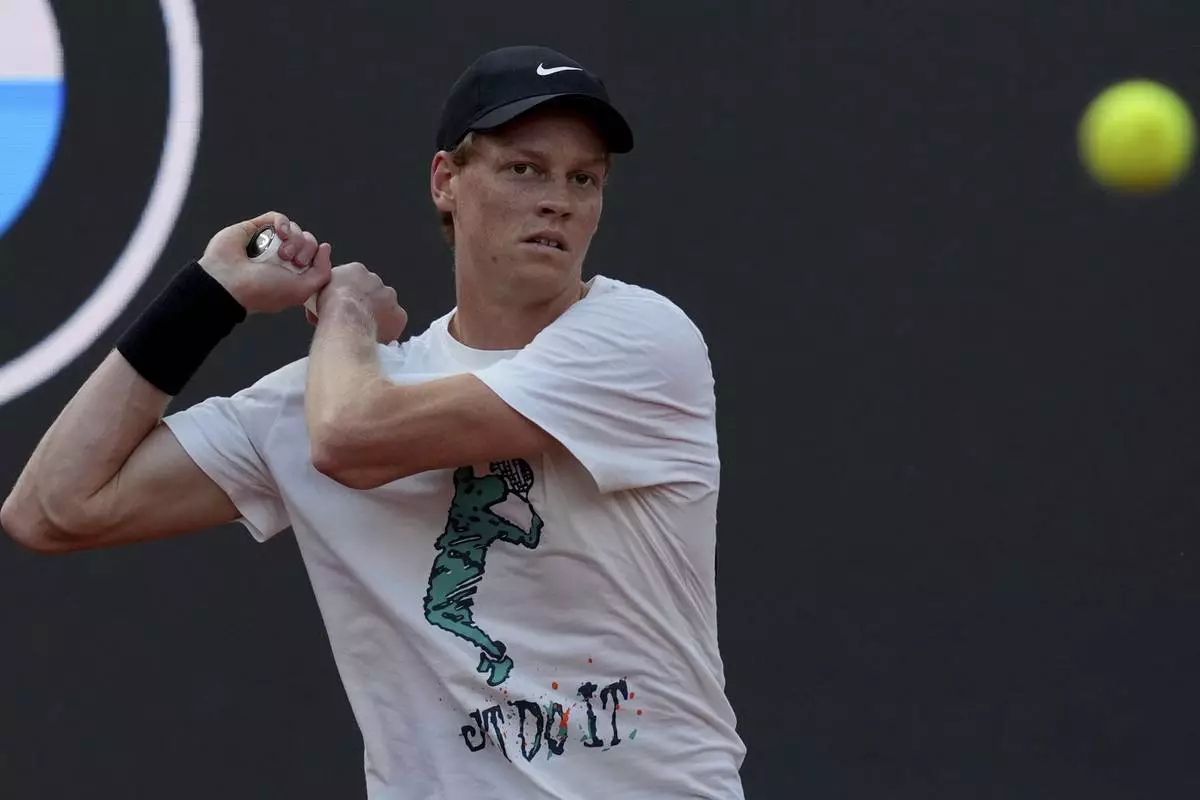
Jannik Sinner attends a training ahead of the Italian Open in Rome, Monday, May 5, 2025. (Alfredo Falcone/LaPresse via AP)
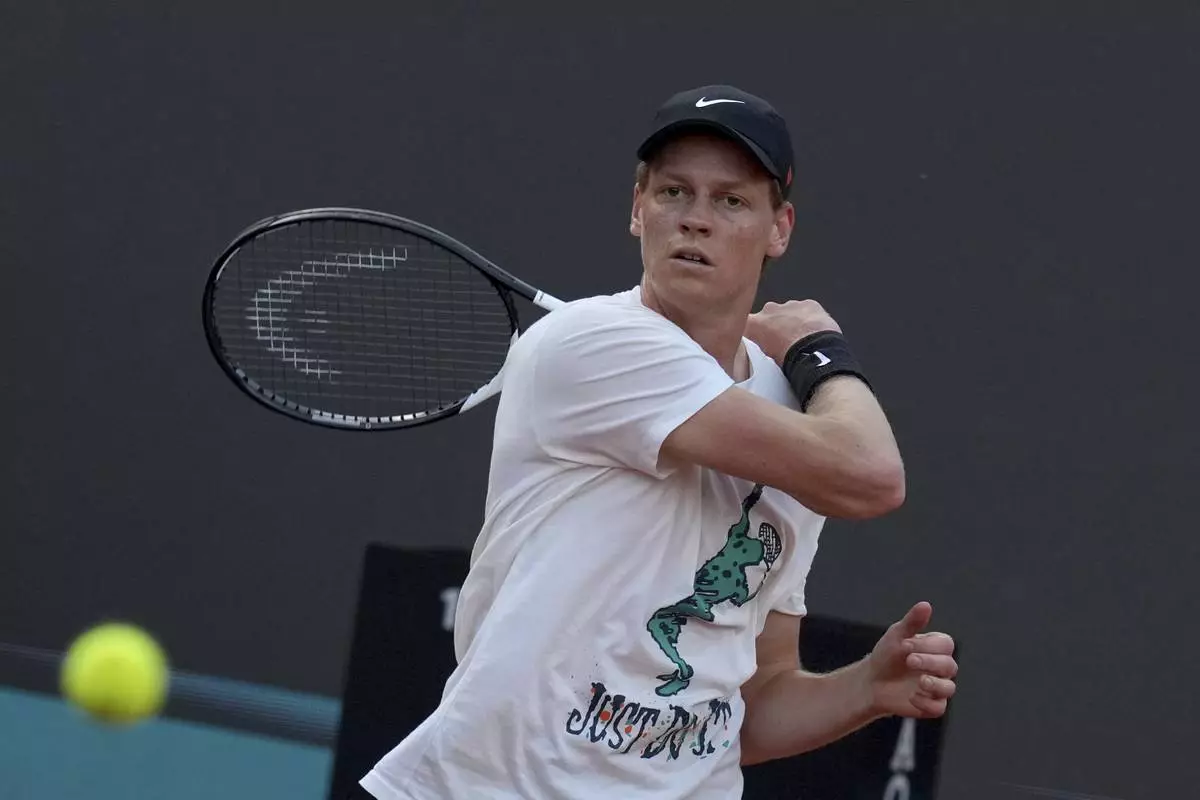
Jannik Sinner attends a training ahead of the Italian Open in Rome, Monday, May 5, 2025. (Alfredo Falcone/LaPresse via AP)
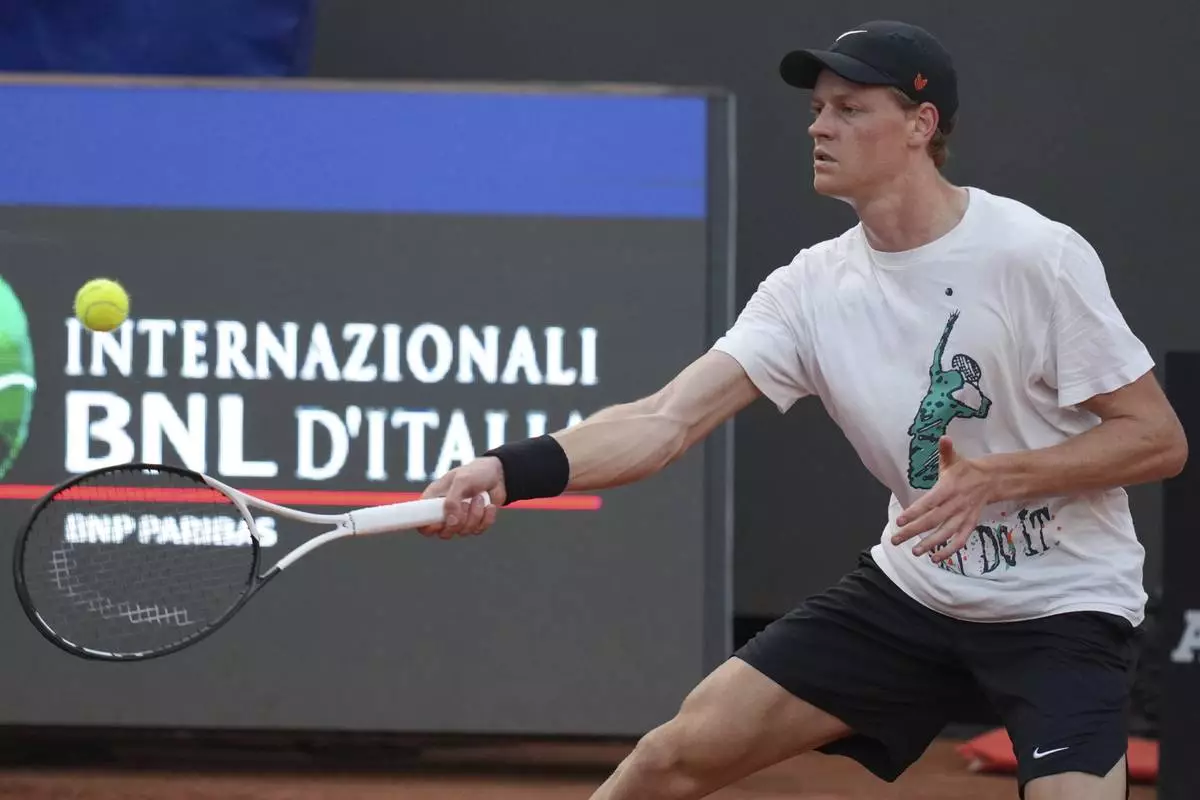
Jannik Sinner attends a training ahead of the Italian Open in Rome, Monday, May 5, 2025. (Alfredo Falcone/LaPresse via AP)
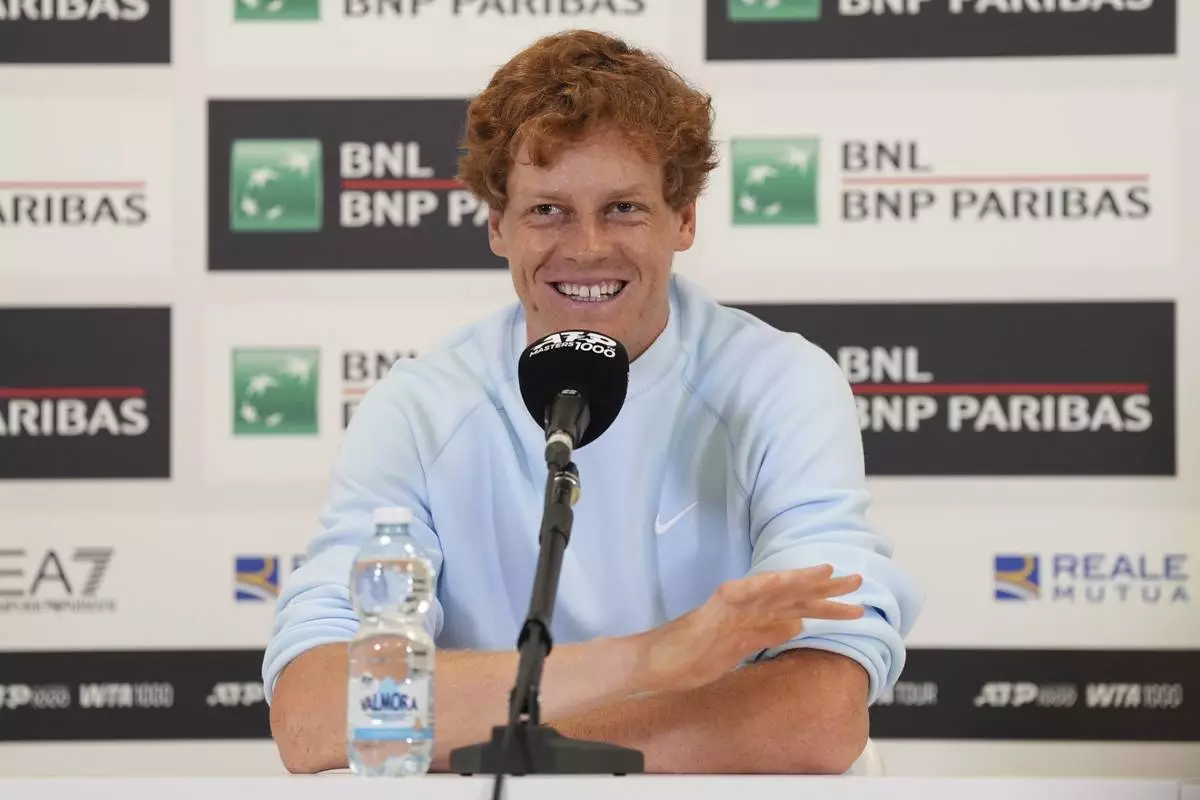
Italy's Jannik Sinner speaks during a press conference ahead of the Italian Open, in Rome, Monday May 5, 2025. (Alfredo Falcone/LaPresse via AP)
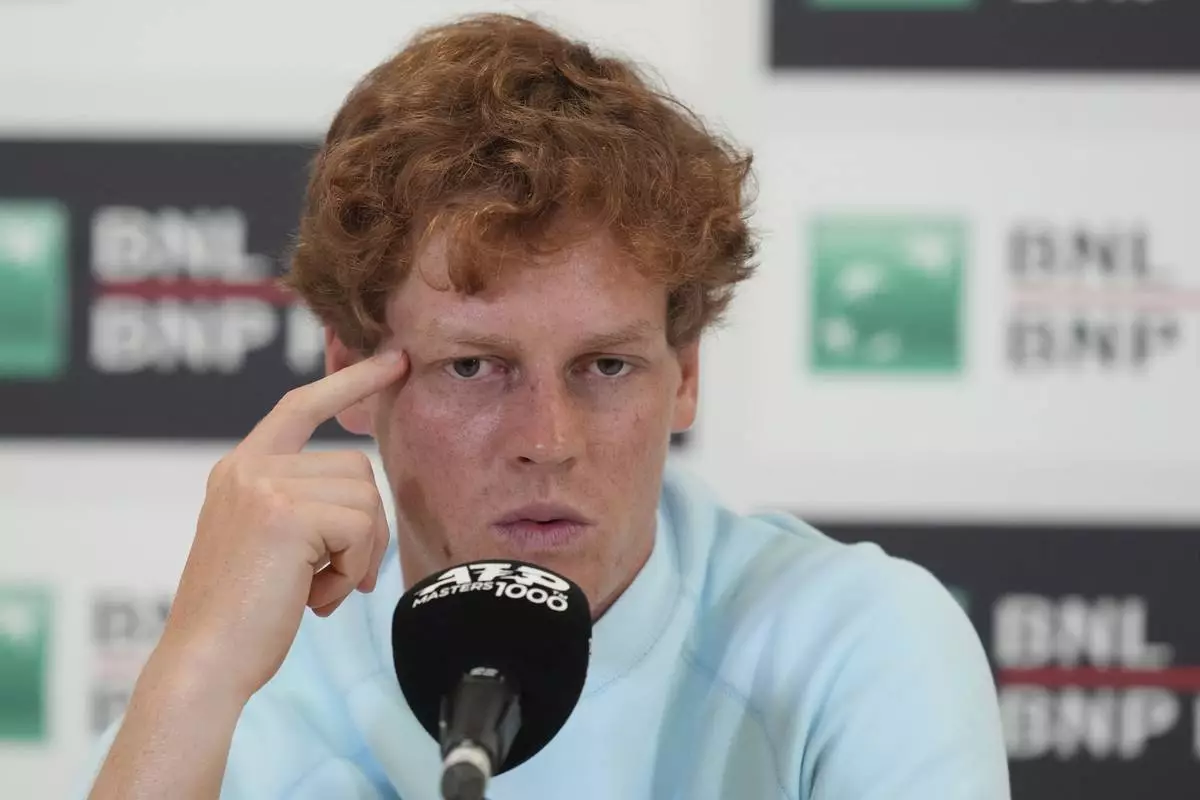
Italy's Jannik Sinner speaks during a press conference ahead of the Italian Open, in Rome, Monday May 5, 2025. (Alfredo Falcone/LaPresse via AP)
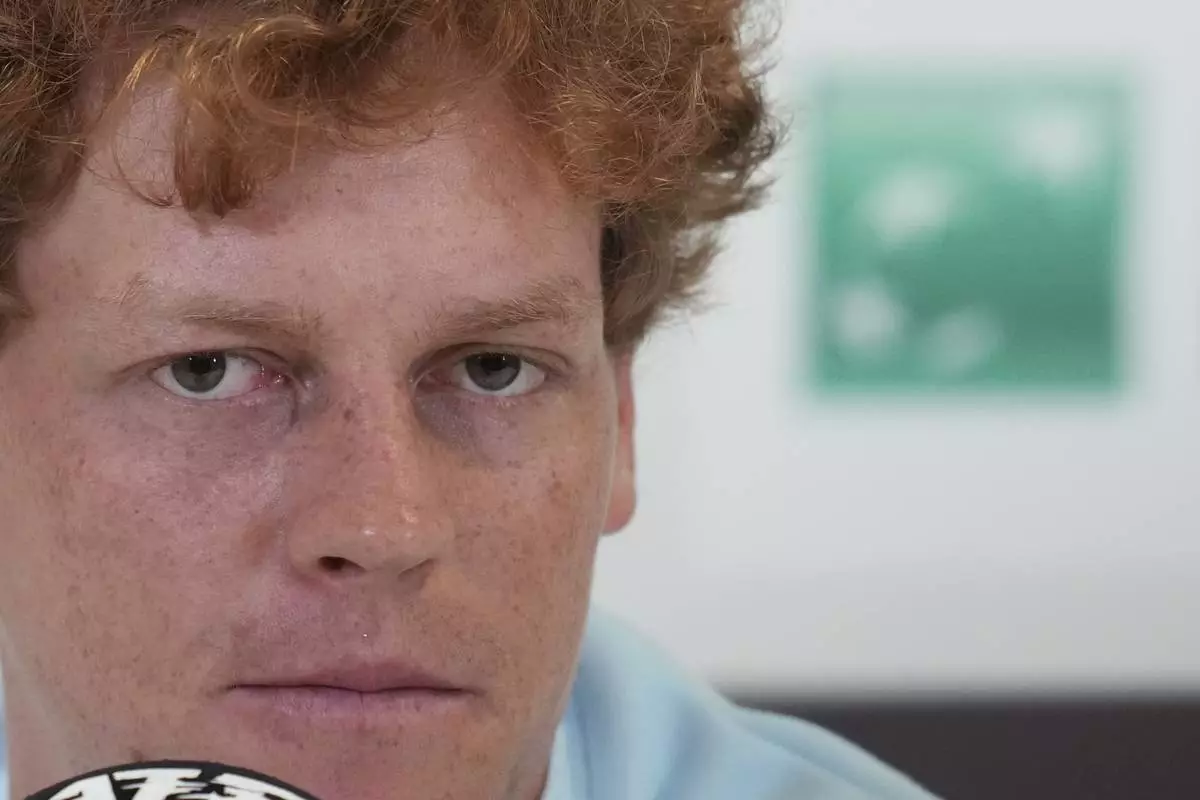
Italy's Jannik Sinner attends a press conference ahead of the Italian Open, in Rome, Monday May 5, 2025. (Alfredo Falcone/LaPresse via AP)
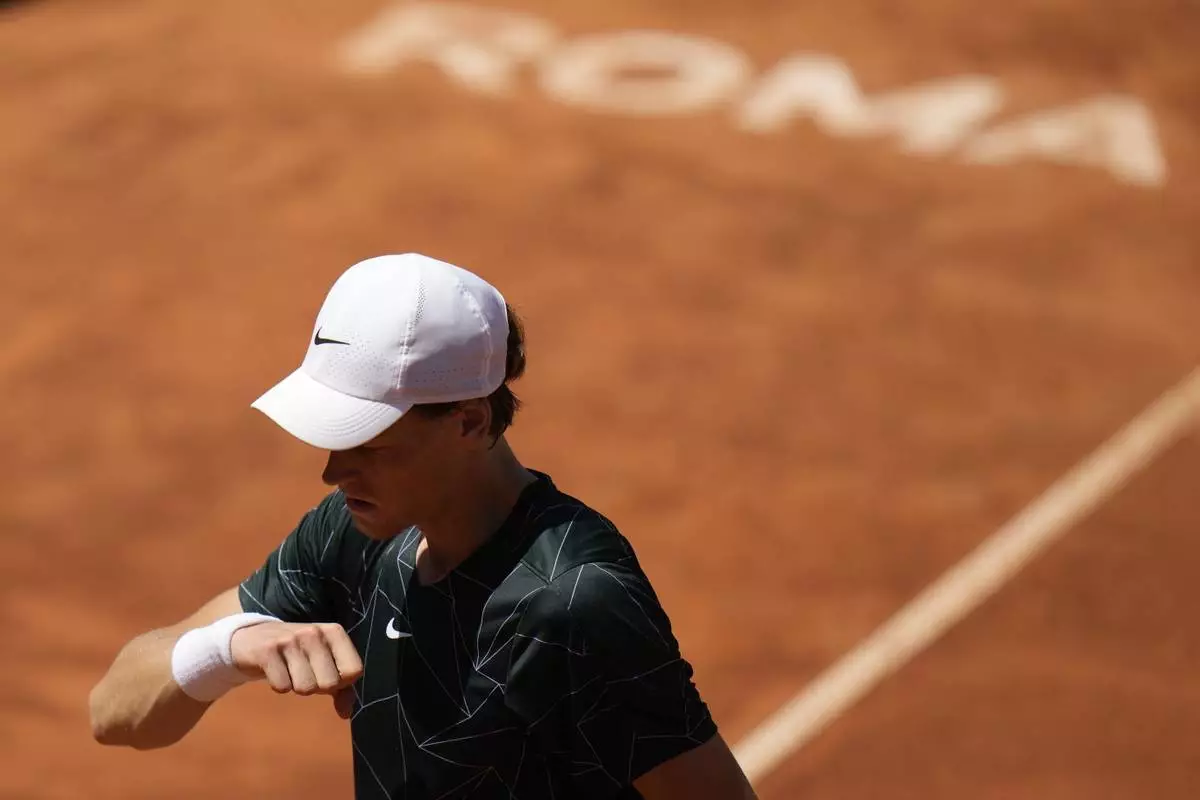
FILE - Italy's Jannik Sinner reacts after losing a point during his match against Greece's Stefanos Tsitsipas at the Italian Open tennis tournament, in Rome, May 13, 2022. (AP Photo/Alessandra Tarantino, File)
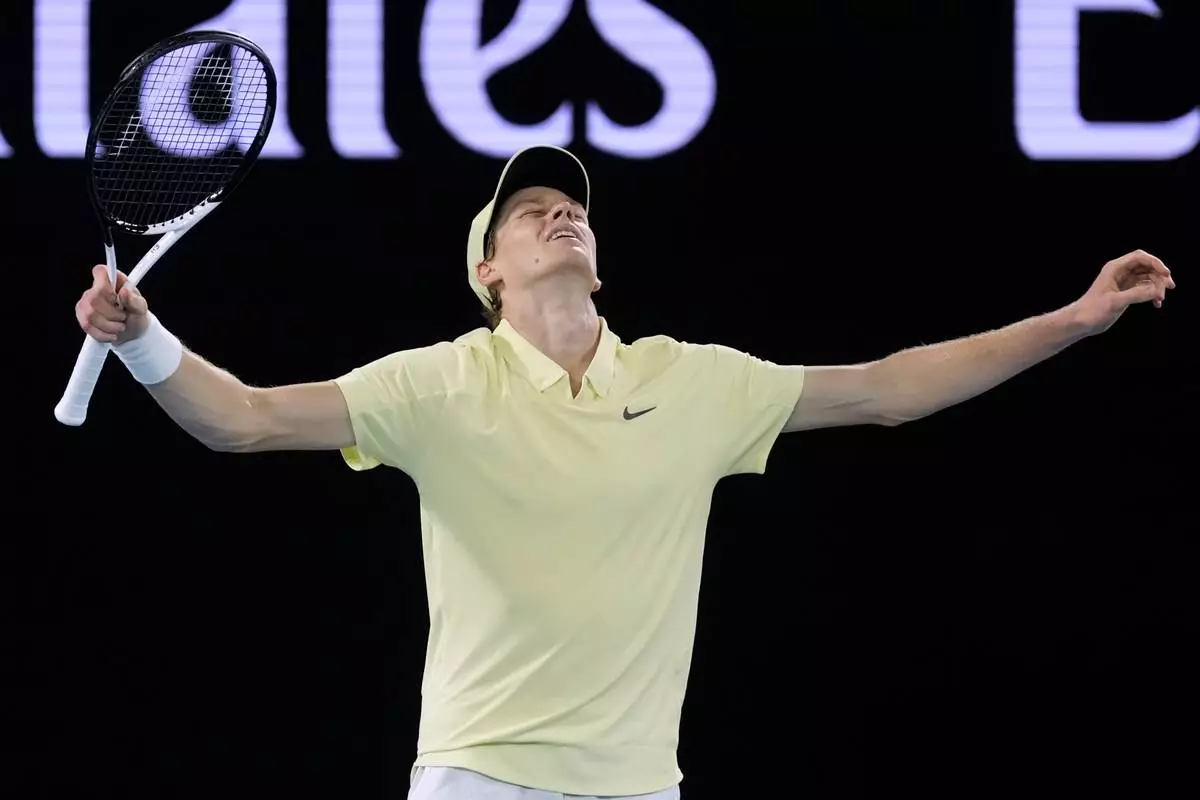
FILE - Jannik Sinner of Italy celebrates after defeating Alexander Zverev of Germany in the men's singles final at the Australian Open tennis championship in Melbourne, Australia, Jan. 26, 2025. (AP Photo/Asanka Brendon Ratnayake, File)
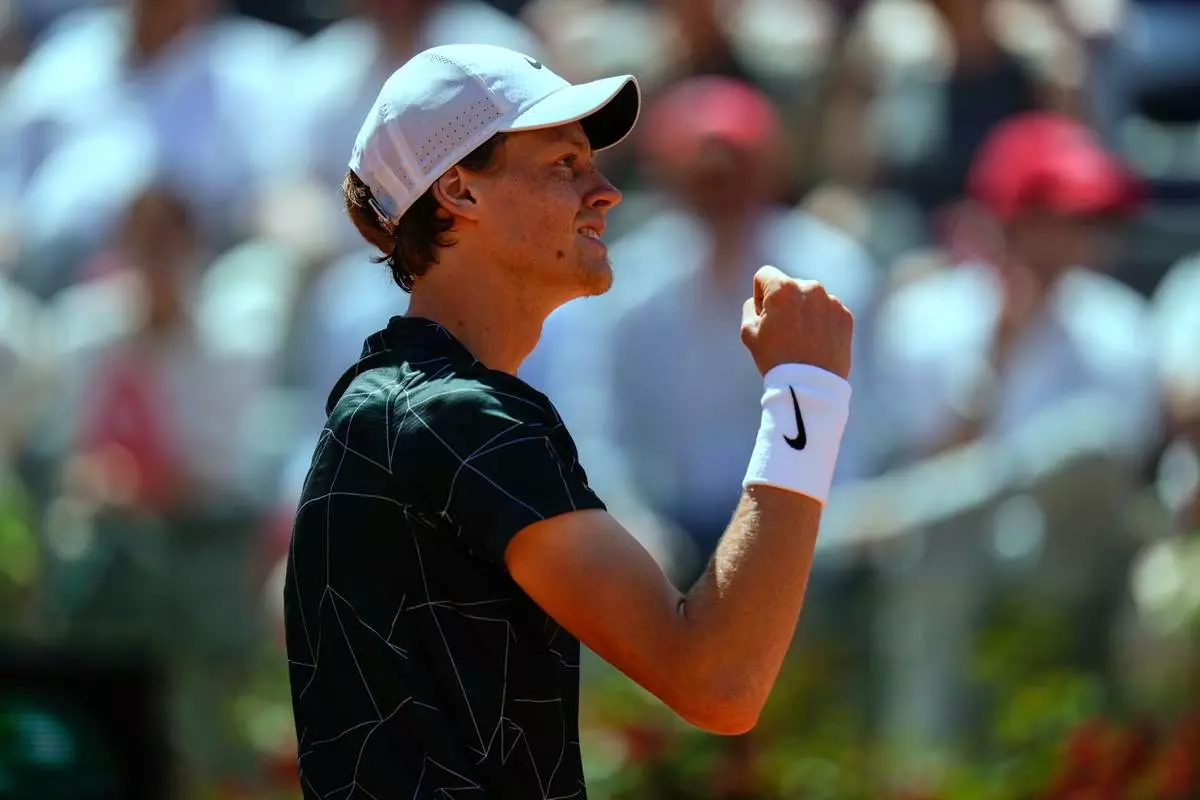
FILE - Italy's Jannik Sinner celebrates after winning a point to Greece's Stefanos Tsitsipas during their match at the Italian Open tennis tournament, in Rome, May 13, 2022. (AP Photo/Alessandra Tarantino, File)