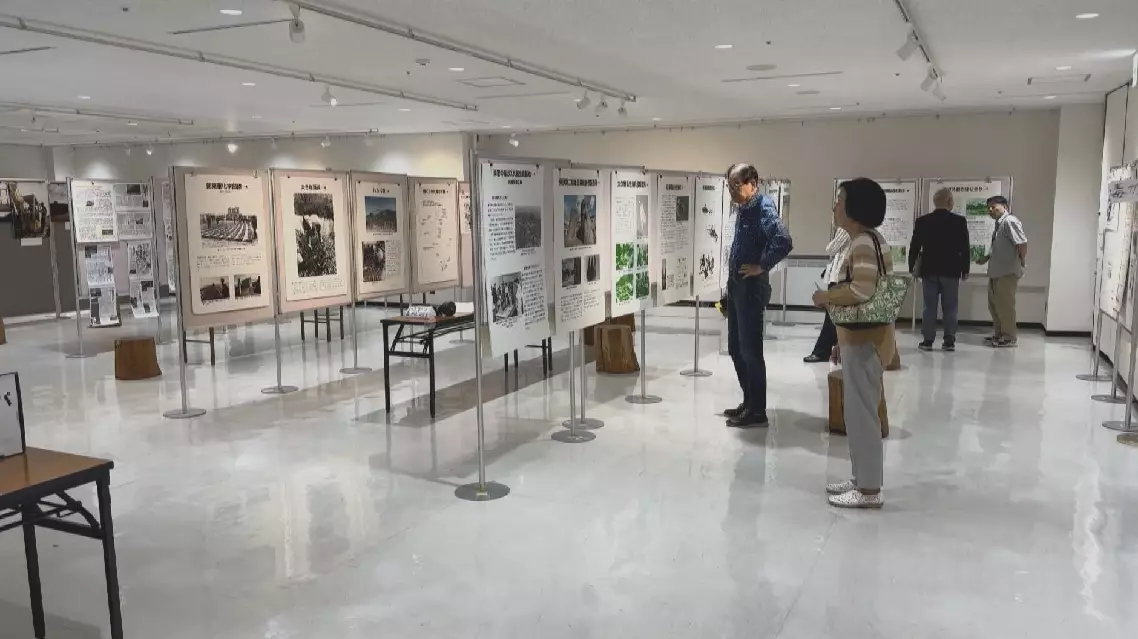
A special exhibition exposing the gruesome chemical warfare launched by imperial Japan in its invasion of China during World War II is underway in Yokohama, Kanagawa Prefecture.
The exhibition focuses on the Japanese army's use of toxic gases against Chinese people during WWII and the danger posed by its abandoned chemical weapons, shedding light on an indelible and significant chapter in history for Japanese society.
By showcasing historical photos and documents, the exhibition uncovers the process of the Japanese troops' development, manufacturing, and large-scale deployment of chemical weapons in China, as well as the historical reality of conducting gas warfare in multiple locations and abandoning chemical weapons en masse.
Many Japanese visitors to the exhibition expressed shock and indignation at their country's grave crimes in the past.
"When I was in primary and junior high school, I hardly ever came across any information about gas warfare. I had no idea it actually happened. Well, it's hard to know where to start. It's just so wrong. As a Japanese, I feel extremely ashamed. I am really enraged to learn that Japan once did such a thing," said a visitor.
The exhibition organizers expressed their hope that through this exhibition, more people can learn about the crimes committed by the invading Japanese army in China, deeply reflect on the sufferings brought by the war, and urge the Japanese government to face up to history and take responsibility.
"Just a few days ago during a parliamentary inquiry, when Ishiba Shigeru was asked about this matter, he prevaricated and refused acknowledge such a thing and evaded the question by saying that Japan had never used poisonous gas. This only makes it more necessary for us to let the public know what really happened in history," said Tadashi Kojima, a representative of the exhibition organizer.
"In fact, the relevant documents and official papers have been preserved. The files about Unit 731 and gas experiments do exist. However, the Japanese government has not disclosed these contents to its people. They have sealed the key information and refused to make them public. We hope to change this situation, and make Japan admit what it did, sincerely apologize and promise that it will never wage war again," Shinji Goi, another representative of the event organizer, continued.
Unit 731 was a top-secret biological and chemical warfare research base established in Harbin City of northeast China's Heilongjiang Province as the nerve center for Japanese biological warfare in China and Southeast Asia during World War II. At least 3,000 people were used for human experimentation by Unit 731, and Japan's biological weapons killed more than 300,000 people across China.
The year 2025 marks the 80th anniversary of the victory of the Chinese People's War of Resistance against Japanese Aggression and the World Anti-Fascist War.
Chemical warfare-themed exhibition tries to force national reckoning about Japan's WWII aggression