WASHINGTON (AP) — Pushing forward with its mass deportation agenda, President Donald Trump's administration said Monday that it would pay $1,000 to immigrants who are in the United States illegally and return to their home country voluntarily.
The Department of Homeland Security said in a news release that it would also pay for travel assistance — and that people who use an app called CBP Home to tell the government they plan to return home will be “deprioritized” for detention and removal by immigration enforcement.
“If you are here illegally, self-deportation is the best, safest and most cost-effective way to leave the United States to avoid arrest," Secretary Kristi Noem said. “DHS is now offering illegal aliens financial travel assistance and a stipend to return to their home country through the CBP Home App.”
The department said it had already paid for a plane ticket for one migrant to return home to Honduras from Chicago and said more tickets have been booked for this week and next.
Trump made immigration enforcement and the mass deportation of immigrants in the United States illegally a centerpiece of his campaign, and he is following through during the first months of his administration. But it is a costly, resource-intensive endeavor.
While the Republican administration is asking Congress for a massive increase in resources for the Immigration and Customs Enforcement department responsible for removing people from the country, it’s also pushing people in the country illegally to “self-deport.”
It has coupled this self-deportation push with television ads threatening action against people in the U.S. illegally and social media images showing immigration enforcement arrests and migrants being sent to a prison in El Salvador.
The Trump administration has often portrayed self-deportation as a way for migrants to preserve their ability to return to the United States someday, and the president himself suggested it on Monday while speaking to reporters at the White House. He said immigrants who “self-deport” and leave the U.S. might have a chance to return legally eventually “if they’re good people” and “love our country.”
“And if they aren’t, they won’t,” Trump said.
But Aaron Reichlen-Melnick, a senior fellow at the American Immigration Council, which advocates for immigrants, said there’s a lot for migrants to be cautious about in the latest offer from Homeland Security.
He said it’s often worse for people to leave the country and not fight their case in immigration court, especially if they’re already in removal proceedings. He said if migrants are in removal proceedings and don’t show up in court they can automatically get a deportation order and leaving the country usually counts as abandoning many applications for relief including asylum applications.
And Homeland Security is not indicating that it is closely coordinating with the immigration courts so that there are no repercussions for people in immigration court if they leave, he said.
“People’s immigration status is not as simple as this makes it out to be," Reichlen-Melnick said.
He questioned where Homeland Security would get the money and the authorization to make the payments — and he suggested they are necessary because the administration can't arrest and remove as many people as it has promised so it has to encourage people to do it on their own.
“They’re not getting their numbers," he said.
As part of its self-deportation effort, the Trump administration has transformed an app that had been used by the Biden administration to allow nearly 1 million migrants to schedule appointments to enter the country into a tool to help migrants return home. Under the Biden administration, it was called CBP One; now it's dubbed CBP Home.
Homeland Security said “thousands” of migrants have used the app to self-deport.
But Mark Krikorian, who heads the Center for Immigration Studies, which advocates for less immigration, said he doesn’t see the offer of paying people to go home as an admission that something in the Trump administration’s immigration enforcement agenda isn’t working.
Considering the millions of people who are in the country illegally, he said, it’s impossible to deport all of them so the administration has to combine its own enforcement efforts with encouraging people to go home voluntarily.
Krikorian said he supports the idea of paying migrants to leave although he questioned how it would work in reality.
“How do you make sure that they’ve actually gone home? Do you make them sign an agreement where they agree not to challenge their removal if they were to come back?” he questioned. “The execution matters, but the concept is sound.”
Other countries have tried various iterations of paying migrants to return home.
There's a reason it's attractive to governments wanting to encourage migrants to go. It costs less to buy someone a plane ticket and some incentive money than it does to pay to find them, detain them if necessary, wait for the courts to rule on their case and then send them home.
The Department of Homeland Security said that it costs $17,121 to arrest, detain and remove someone in the U.S. illegally.
Voluntary returns also don't require extensive government-to-government negotiations to get a country to take back its citizens, which can be a major benefit. There are a number of countries that either don't take back their own citizens who are being returned by U.S. immigration enforcement officials or make that process challenging.
A 2011 study by the Migration Policy Institute and the European University Institute found that there were about 128 programs — often referred to as pay-to-go programs — around the world.
But the study found that, with a few exceptions such as one program to return people in the 1990s from Germany to Bosnia, these voluntary return programs generally failed at encouraging large numbers of people to go home.
It is not clear whether these programs resulted in migrants who took the payments actually staying in their home countries and not trying to emigrate again.

FILE - Migrants walk into Mexico after being deported from the U.S., at El Chaparral pedestrian border bridge in Tijuana, Mexico, Jan. 21, 2025. (AP Photo/Felix Marquez, File)

FILE - Homeland Security Secretary Kristi Noem speaks during a news conference, April 9, 2025, in Washington. (AP Photo/Alex Brandon, File)

President Donald Trump gestures from the stairs of Air Force One upon his arrival at Joint Base Andrews, Md., Sunday, May 4, 2025. (AP Photo/Luis M. Alvarez)
WASHINGTON (AP) — Senate Democratic leaders believe they have a path to winning the majority in November, though it's one with very little wiggle room.
The party got a new burst of confidence when former Rep. Mary Peltola announced Monday she'll run for the Senate in Alaska. Her bid gives Democrats a critical fourth candidate with statewide recognition in states where Republican senators are seeking reelection this year. Nationally, Democrats must net four seats to edge Republicans out of the majority.
That possibility looked all but impossible at the start of last year. And while the outlook has somewhat improved as 2026 begins, Democrats still almost certainly must sweep those four seats. First they must settle some contentious primaries, the mark of a party still struggling with its way forward after Republicans took full control of Washington in 2024. Importantly, they must also beat back challenges to incumbents in some of the most competitive states on the map.
And though some of Senate Minority Leader Chuck Schumer's top Democratic Senate recruits were lauded for their statewide success in pivotal states, some are nearly 70 or older, hardly the key to a lasting Democratic transformation.
Republicans doubt the chances Democrats can pull off such a task, considering most of the 2026 contests are in states that Donald Trump easily won in 2024.
Still, independent voters have drifted in Democrats' direction over the past year, according to a new Gallup poll, a slight breeze at Democrats' back they didn't expect a year ago when there was little path at all.
“I say it’s a much wider path than the skeptics think, and a much wider path than it was three months ago and certainly a year ago,” Schumer told The Associated Press Tuesday.
Republicans currently hold 53 seats, while the Democratic caucus has 47 members, including two independents.
Schumer argues that Peltola, elected twice statewide to Alaska's at-large House seat, puts the typically Republican-leaning state in play as a potential pickup for Democrats.
It's a development similar to other states where Schumer believes Democrats have recruited strong candidates: former three-term Sen. Sherrod Brown in Ohio, former two-term Gov. Roy Cooper in North Carolina and two-term Gov. Janet Mills in Maine.
But they hardly represent a quartet of guarantees. Brown, a longtime pro-labor progressive in increasingly GOP-leaning Ohio, and Peltola, who was elected during a special election in 2022, both lost reelection in 2024. Mills, finishing her second term as governor, faces a competitive primary challenge from progressive veteran and oyster farmer Graham Platner.
None of the four had runaway popularity with voters in their states in 2024. Right around half of voters had somewhat or very favorable views of all of them, with Cooper slightly higher and Brown slightly lower, according to AP VoteCast, a survey of the electorate.
Age remains another issue. After President Joe Biden, in his early 80s, withdrew from the 2024 race amid concerns he was too old to serve, Democratic Senate leadership hasn't changed course. Schumer, 75, has recruited candidates who are older, with several top recruits – including Mills and Brown – well into their 70s.
“Voters sent a very clear message in 2024 that they’re sick of the gerontocracy. They’re sick of Democrats putting up old candidates and that they want some new blood,” said Lis Smith, a national Democratic strategist. “And some of the recruits, like in Maine, seem to completely ignore the message that voters sent in 2024.”
Schumer said winning back the Senate is paramount over all else.
“It's not young versus old. It's not left versus center. It's who can best win in the states,” he said. “So, these are all really good candidates, and I don't think you look at them through one narrow prism. You look at who can win.”
Before Democrats can test their general-election appeal, they must navigate some primaries that highlight lingering divisions within the party.
Platner, who has been endorsed by independent Sen. Bernie Sanders of Vermont, has demonstrated formidable fundraising for his Maine contest, despite controversies surrounding past social media posts and a tattoo linked to Nazi imagery. Some Democrats worry his insurgent appeal could be a liability in November if he is the nominee.
In Michigan, Democratic Sen. Gary Peters' retirement has opened a seat in a state Trump carried narrowly. Republicans have unified behind former Rep. Mike Rogers, while Democrats face a crowded August primary after failing to recruit Gov. Gretchen Whitmer.
Crowded or contentious primaries are also playing out in Minnesota, Texas and Iowa, forcing Democrats to devote resources even in states not central to their path to a majority.
Sen. Chris Van Hollen is part of an informal group of Democratic senators known as Fight Club that has been openly critical of party leadership’s approach to the midterms. Van Hollen said the group has objected to what it sees as the Senate Democrats’ campaign arm — controlled by Schumer — “wading into certain Democratic primaries.”
“So, yes, we’re taking a look at all of them,” Van Hollen said of endorsing more progressive candidates.
Betsy Ankney, political director for the National Republican Senatorial Committee in 2020, acknowledged Democrats’ desire to make the case for competitiveness but characterized Trump’s presidential victories in Alaska and Ohio in 2024 — by 13 and 11 percentage point margins, respectively — as enormous hurdles.
She said Republicans are “rightly focused, on real tangible targets in Georgia, in Michigan," calling them “very real pickup opportunities.”
Democrats’ shot at the majority almost certainly depends on Sen. Jon Ossoff winning reelection in Georgia, where Trump won in 2024 by 2.2 percentage points, and holding Michigan, where Peters' retirement creates an open seat in a state Trump carried by 1.4 percentage points.
"It’s not just about where the Democrats can play. It’s about where we can play, too,” Ankney said.
Despite the challenges, Democrats see reasons for optimism in the broader political climate.
A new Gallup survey found 47% of U.S. adults now identify with or lean toward the Democrats, while 42% are Republicans or lean Republican. That gives Democrats the advantage in party affiliation for the first time since Trump’s first term.
But the data strongly suggests that independents are moving toward Democrats because of their souring attitude toward Trump, rather than greater goodwill toward Democrats. The Democratic Party’s favorability is still low, and Gallup’s analysis found that, as more Americans identify as independents, they tend to gravitate toward the party that is out of political power — whether it’s the Democrats or the Republicans.
Still, that appears to be a dynamic in Democrats' favor, as economic unease creeps into the election year with little time before the feelings lock into voters' political thinking, veteran Republican pollster Ed Goeas said.
“That creates an environment that will affect these Senate races,” Goeas said, predicting House Republicans could lose their majority. He said Republicans are assuming the economy and the political environment are going to be better.
“I think they are going to end up getting frustrated going into the summer because, first of all, the economy is not on all levels improving. It’s going to be a target-rich environment for Democrats," he said.
“It’s going to be close.”
Beaumont reported from Des Moines, Iowa. Associated Press writer Amelia Thomson DeVeaux in Washington contributed to this report.
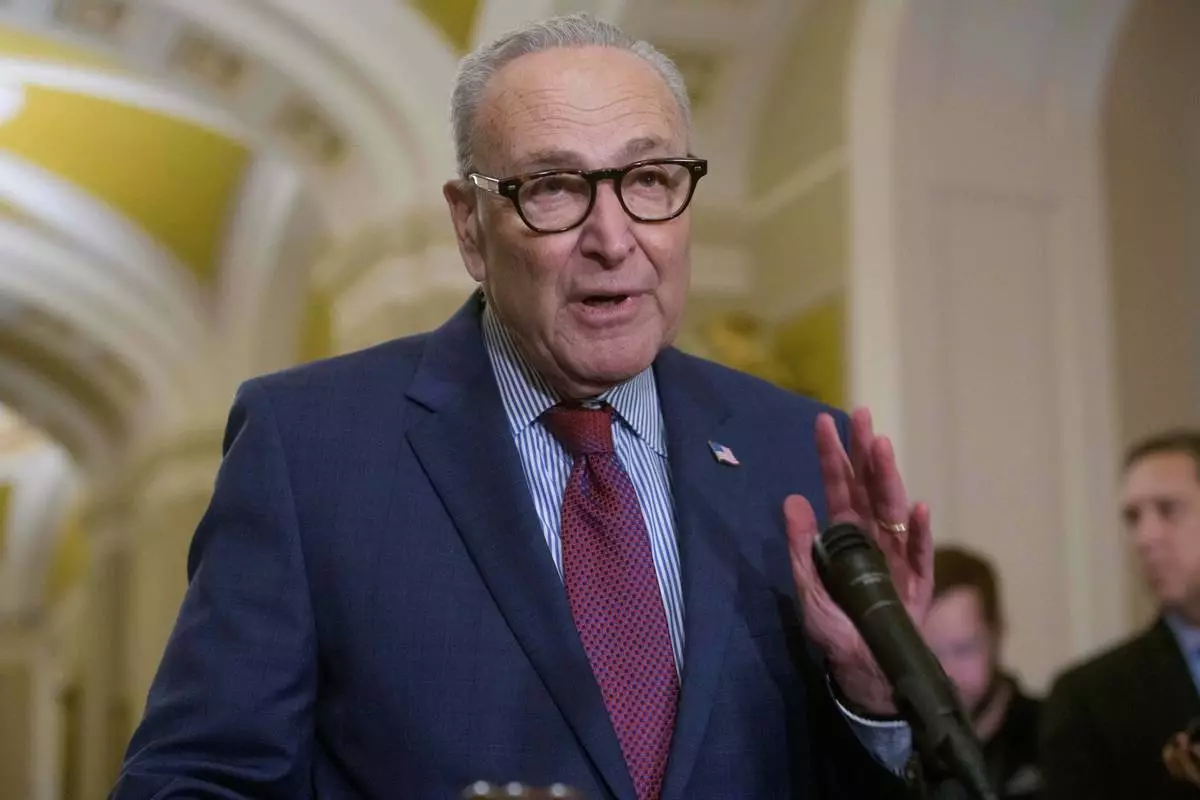
Senate Minority Leader Chuck Schumer, D-N.Y., speaks during the Senate Democrat policy luncheon news conference at the Capitol, Tuesday, Jan. 13, 2026, in Washington. (AP Photo/Rod Lamkey, Jr.)
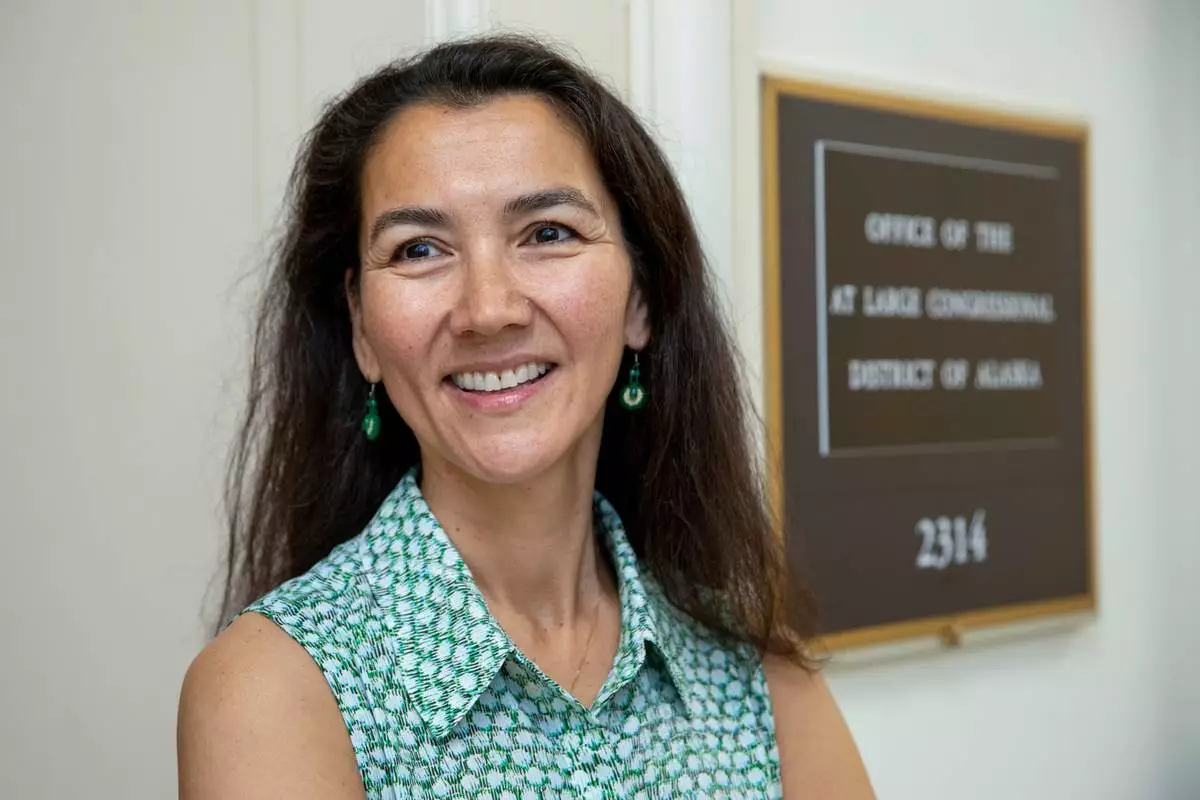
FILE - Rep.-elect Mary Peltola, D-Alaska, is interviewed on Capitol Hill in Washington, Sept. 12, 2022. (AP Photo/Amanda Andrade-Rhoades, File)