Chinese engineers are rapidly expanding the application scenarios for robots across various industries from agriculture to elderly caring.
Zhejiang Sci-Tech University developed the tea-picking robot in east China's Zhejiang Province's Hangzhou City. The robot works diligently amidst a picturesque tea field, showcasing its unique ability to recognize and select tea leaves precisely. Its standout feature lies in its meticulous simulation of the manual tea-picking, minimizing damage to the tenderest leaves.
So far, the robot for mechanical tea-picking is still at the experimental stage, with a success rate exceeding 87 percent.
There are also quadruped robots running agilely at the tea garden, serving as "deliverymen" of tea leaves. These various technological elements are bringing new ways for tea growing.
"I feel very amazed. It will make tea-picking much less strenuous for the pickers," said Pan Yaxin, a visitor. Tea-picking robots have now emerged as a sought-after alternative solution. Intelligent robots are sparking an agricultural revolution in the country.
In east China's Jiangsu Province's Nanjing City, the first humanoid robot with explosion-proof certification is currently undergoing skill practice. Equipped with a toolbox containing various tools such as electric drills and saws, the robot can replace humans to conduct inspections and troubleshoot issues effectively by utilizing multimodal technologies under high environmental risks.
In addition, Hebei University of Technology has developed a humanoid robot offering senior care services with the assistance of engineers for several years. The robot can now extend its long arms to securely lift one person from a bed and transfer to a wheelchair.
"For example, the two arms can carry a total load of 90 kilograms. Each joint of the robot can bend and rotate like a human being, achieving two degrees of freedom. Our next step is to better integrate touch and vision, enabling better interaction with people while ensuring safety," said Liu Jixiao, associate professor of the School of Mechanical Engineering, Hebei University of Technology.

Chinese engineers speed up expanding robots application scenarios
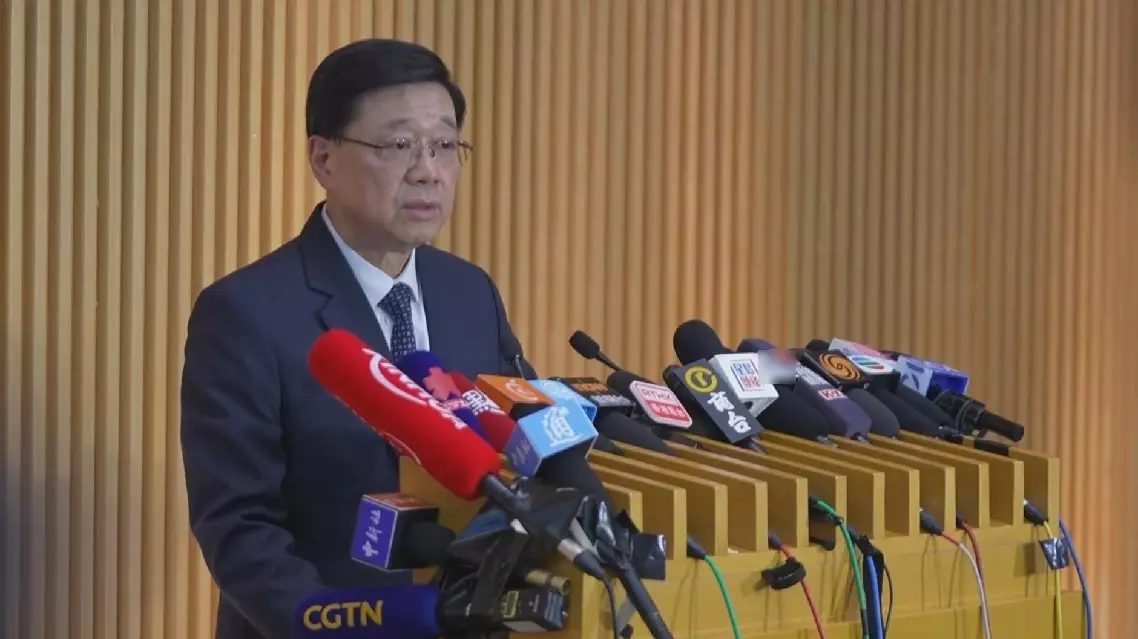
John Lee, chief executive of China's Hong Kong Special Administrative Region (HKSAR), announced on Friday that an independent committee will have nine months to investigate the Wang Fuk Court fire that occurred in late November.
The fire, which erupted on November 26 in Tai Po, has claimed 160 lives as of 16:00 Tuesday, with six people still reported missing, according to authorities.
At a press conference, Lee said the committee will be led by Judge David Lok, chairman of the Electoral Affairs Commission, and will also include Legislative Council Finance Committee Chairman Chan Kin-por and outgoing MTR Corporation Chairman Rex Auyeung Pak-kuen.
"Nine months is a very challenging time indeed, but I want to solve the problem as quickly as possible. So I want to give what I regard as a time frame -- realistic -- provided the independent committee is given sufficient means to maneuver, while ensuring the examination is just. They can streamline procedure and be given more flexibility so that they can finish their work within the nine months. And I also have given them a reserve power. That is, if the independent committee considers, by examining all these complicated issues, there may be one which they think, by exercising the powers that is given to a statutory commissioner of inquiry, will help them complete their work, then I'm very willing to consider a recommendation by the independent commission to seek appointing them as the commission of inquiry," Lee said.
Lee noted that the committee's investigation will focus on the causes and circumstances of the fire, and whether systemic issues exist in large-scale building management and renovation projects.
The committee will also examine whether the current regulations and penalties are sufficient in these two areas and will make relevant recommendations. The investigation reports are expected to be made public.
Speaking to reporters on Friday, David Lok stressed the need for fairness and impartiality in the investigation, saying that he would refrain from commenting on the investigation until the committee completes its work.
"During this period, I hope everyone understands that although this is a committee, I am leading this work in my capacity as a judge. Judges must also adhere to certain professional principles, including being fair and impartial. We need to conduct rational analysis based on facts before making any factual judgments or recommendations; we cannot be emotional. Furthermore, we cannot have a pre-established position. In fact, before every judge hears a case, we should ideally start with a blank slate and cannot have a predetermined stance," said Lok.
"So today, if you ask me for my views on certain matters or how we will conduct the investigation, I’m afraid I won't be able to answer as freely as I could when I was at the Electoral Affairs Commission. But I hope all media friends and residents understand that I do not wish to evade questions; it is simply that some questions at this stage are inappropriate for the committee chair to answer. Therefore, during the investigation, I do not expect to speak with you again until our work is completed," he said.
Investigation into Tai Po fire to conclude within nine months: HKSAR chief executive