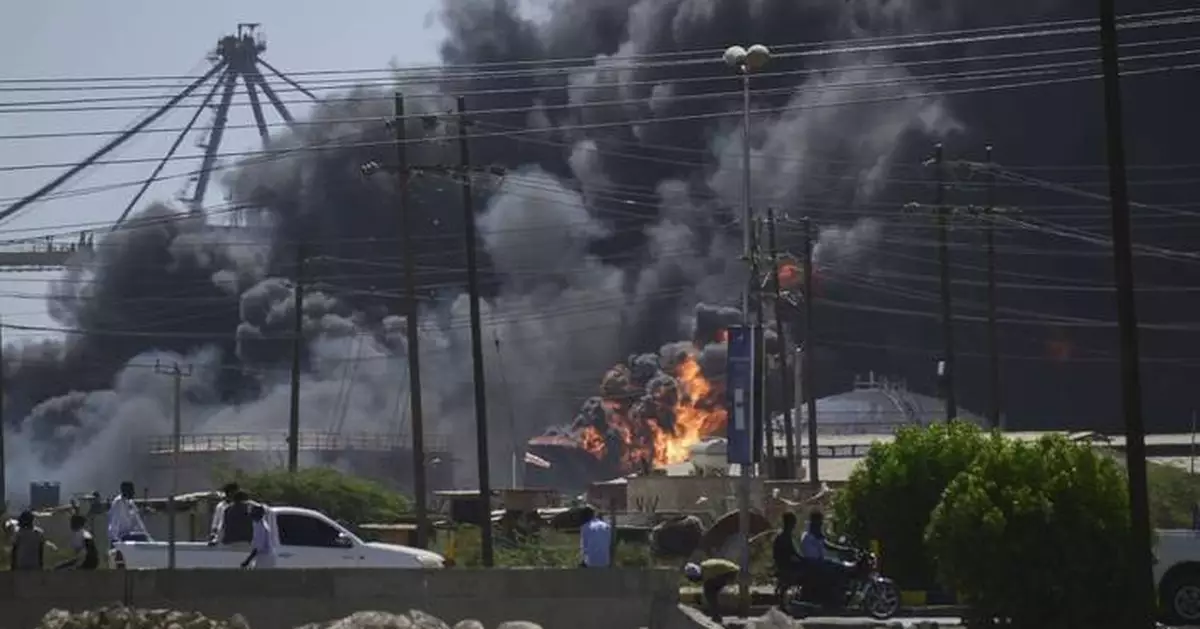
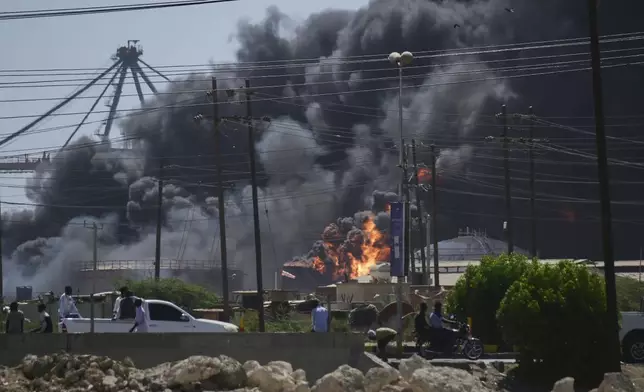
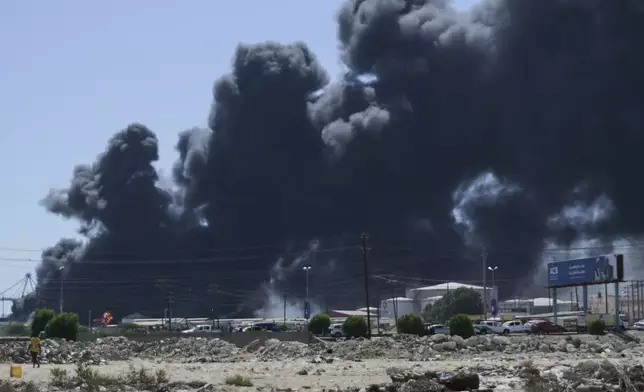
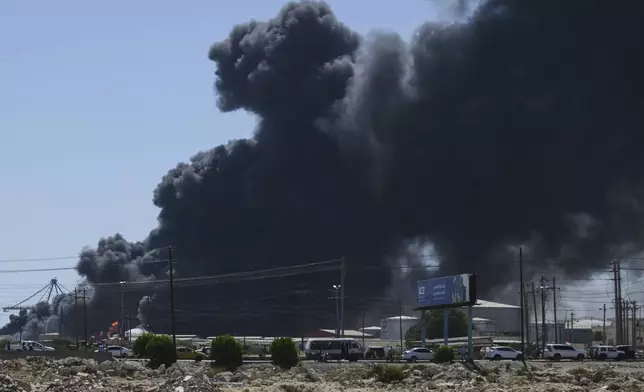
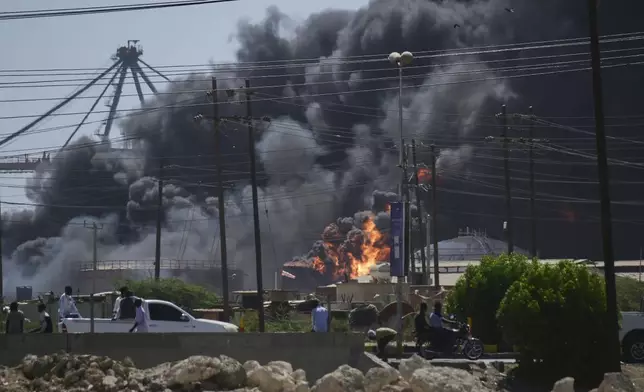
CAIRO (AP) — Sudan’s paramilitary unleashed drones on the Red Sea city of Port Sudan early Tuesday, hitting key targets there, including the airport, the port and a hotel, military officials said. The barrage was the second such attack this week on a city that had been a hub for people fleeing Sudan's two-year war.
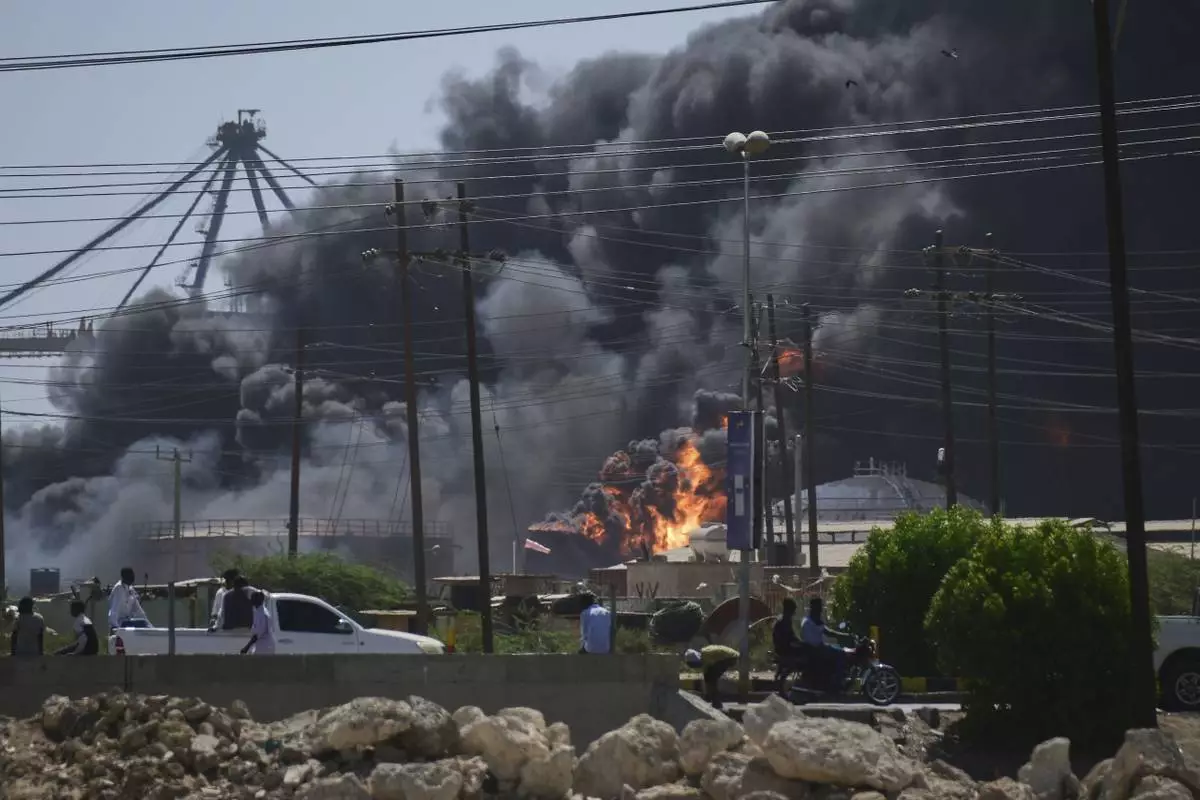
There was no immediate word on casualties or the extent of damage. Local media reported loud sounds of explosions and fires at the port and the airport. Footage circulating online showed thick smoke rising over the area.
Click to Gallery
Smoke billows after drone strikes by the paramilitary Rapid Support Forces (RSF) targeted the northern port in the Red Sea city of Port Sudan, Sudan, Tuesday, May 6, 2025. (AP Photo)
Smoke billows after drone strikes by the paramilitary Rapid Support Forces (RSF) targeted the northern port in the Red Sea city of Port Sudan, Sudan, Tuesday, May 6, 2025. (AP Photo)
Smoke billows after drone strikes by the paramilitary Rapid Support Forces (RSF) targeted the northern port in the Red Sea city of Port Sudan, Sudan, Tuesday, May 6, 2025. (AP Photo)
Smoke billows after drone strikes by the paramilitary Rapid Support Forces (RSF) targeted the northern port in the Red Sea city of Port Sudan, Sudan, Tuesday, May 6, 2025. (AP Photo)
The attack on Port Sudan, which also serves as an interim seat for Sudan's military-allied government, underscores that after two years of fighting, the military and the paramilitary Rapid Support Forces are still capable of threatening each other’s territory.
The RSF drones struck early in the morning, said two Sudanese military officials, speaking on condition of anonymity because they were not authorized to talk to the media.
Information Minister Khalid Aleiser visited the southern part of the port, where he said fuel tanks were hit in the attack. He slammed the United Arab Emirates, saying it was arming the paramilitary RSF.
“We will continue our legitimate battle,” he said as flames and thick smoke billowed behind him.
The UAE rejected the accusation and condemned the attacks. In comments to The Associated Press, the country’s Foreign Ministry on the Sudanese government “to de-escalate, disengage and negotiate” to end the war.
Later Tuesday, Sudan’s Security and Defence Council, the highest decision-making body in the military-backed government, said it was severing ties with the UAE over its alleged support of the RSF.
In a statement, the council, chaired by military chief Gen. Abdel-Fattah Burhan, said it was recalling its diplomatic mission to the wealthy Arab Gulf nation.
Abdel-Rahman al-Nour, a Port Sudan resident, said he woke up to strong explosions and saw fires and plumes of black smoke rising over the port. Msha’ashir Ahmed, a local journalist living in Port Sudan, said fires were still burning late Tuesday morning in the southern vicinity of the maritime port.
The attack apparently disrupted air traffic at the airport, with Cairo airport data in neighboring Egypt showing that three Port Sudan-bound flights were canceled on Tuesday.
Satellite images from Planet Labs PBC taken Tuesday show several fuel tanks ablaze about 6 kilometers (3.7 miles) southeast of downtown Port Sudan, on a farm identified as belonging to the state-owned Sudan National Petroleum Corp. Thick black smoke is seen rising into the sky.
Other tanks burned at the Port Sudan refinery at the city's port as well, satellite images showed.
This was not the first time the oil industry was targeted. In January, fighting around Sudan’s largest oil refinery set it ablaze as Sudan’s military ultimately pushed the RSF from the site north of the capital, Khartoum.
The RSF did not release any statements on the attack. On Sunday, the paramilitary force struck Port Sudan for the first time in the war, briefly disrupting air traffic in the city’s airport, which has been the main entry point for the country in the last two years.
A military ammunition warehouse in the Othman Daqna airbase in the city was also hit, setting off a fire that burned for two days.
Clementine Nkweta-Salami, the U.N. humanitarian coordinator in Sudan, expressed concerns Tuesday about the attacks on Port Sudan civilian infrastructure, calling them “serious violations of international humanitarian law.”
“Such attacks will deepen humanitarian suffering and needs, as well as exacerbate the already severe access and logistical challenges,” she said in a statement.
When the fighting in Sudan broke out, the focus of the battles initially was in Khartoum, which turned into a war zone. Within weeks, Port Sudan, about 800 kilometers (500 miles) to the east of Khartoum, turned into a safe haven for the displaced and those fleeing the war. Many aid missions and U.N. agencies moved their offices there.
The attacks on Port Sudan are also seen as retaliation after the Sudanese military earlier this month struck the Nyala airport in South Darfur, which the paramilitary RSF has turned into a base and where it gets shipments of arms, including drones.
A U.N. panel of experts said in 2024 that cargo planes carrying weapons, ammunition and medical support to the RSF flew from the UAE's capital, Abu Dhabi. The UAE denies the claim. Sudan's military is backed by Egypt.
Sudan plunged into chaos in April 2023, when simmering tensions between the military and the RSF exploded into open warfare in Khartoum. From there, the fighting spread to other parts of the country.
Since then, at least 24,000 people have been killed, though the number is likely far higher. The war has driven about 13 million people from their homes, including four million who crossed into neighboring countries. It also pushed parts of the country into famine.
The fighting has been marked by atrocities including mass rape and ethnically motivated killings that amount to war crimes and crimes against humanity, especially in the western Darfur region, according to the United Nations and international rights groups.
Associated Press writer Jon Gambrell in Dubai, United Arab Emirates, contributed to this report.
Smoke billows after drone strikes by the paramilitary Rapid Support Forces (RSF) targeted the northern port in the Red Sea city of Port Sudan, Sudan, Tuesday, May 6, 2025. (AP Photo)
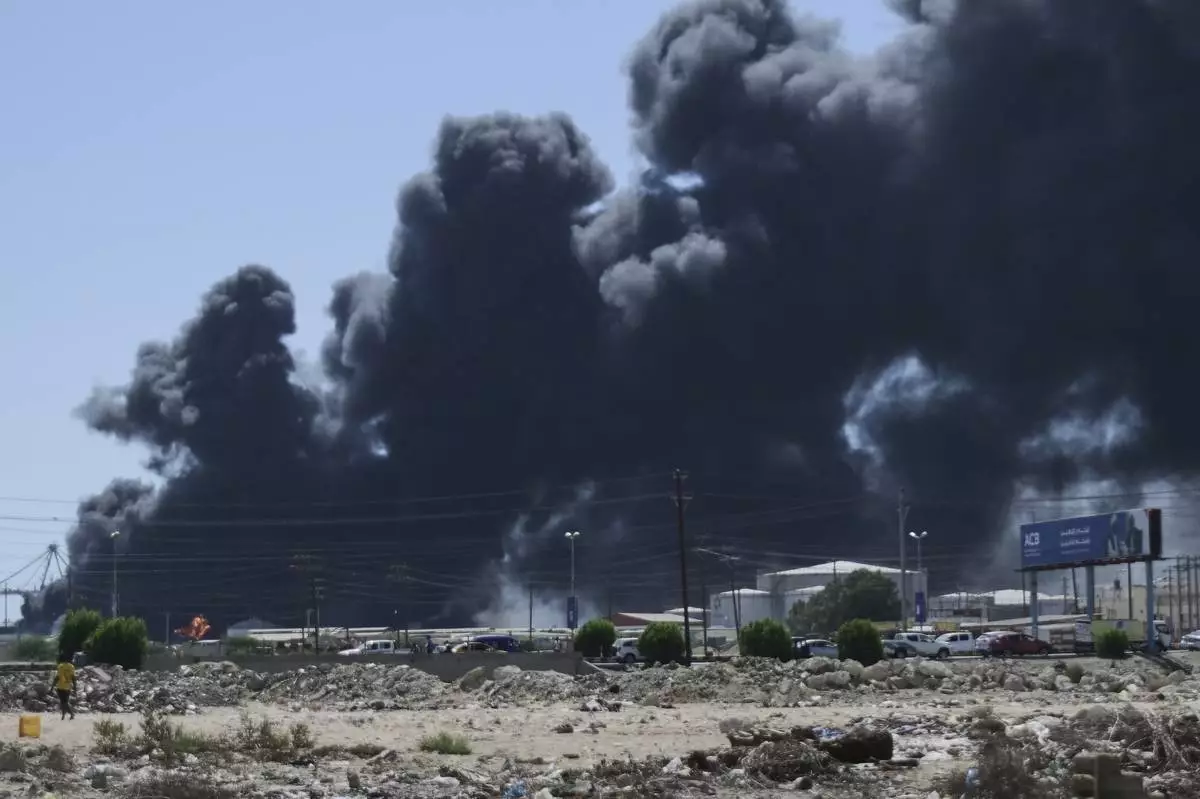
Smoke billows after drone strikes by the paramilitary Rapid Support Forces (RSF) targeted the northern port in the Red Sea city of Port Sudan, Sudan, Tuesday, May 6, 2025. (AP Photo)
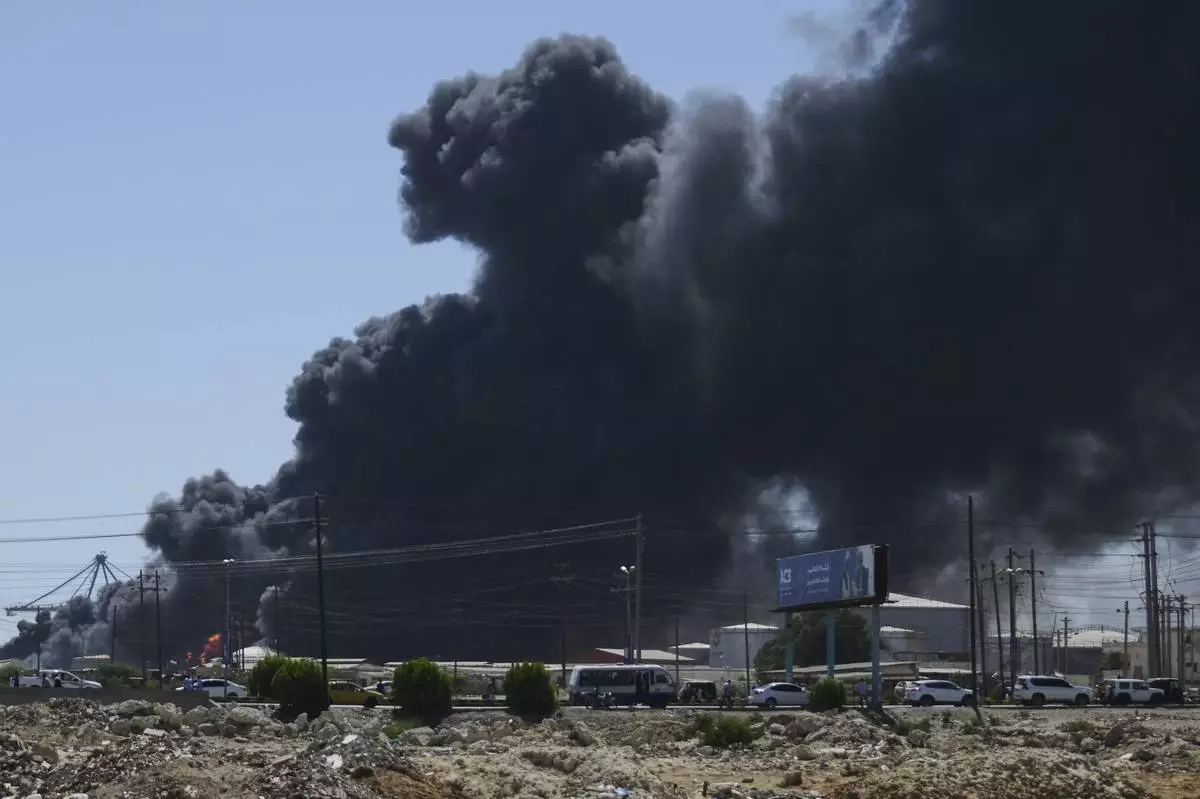
Smoke billows after drone strikes by the paramilitary Rapid Support Forces (RSF) targeted the northern port in the Red Sea city of Port Sudan, Sudan, Tuesday, May 6, 2025. (AP Photo)
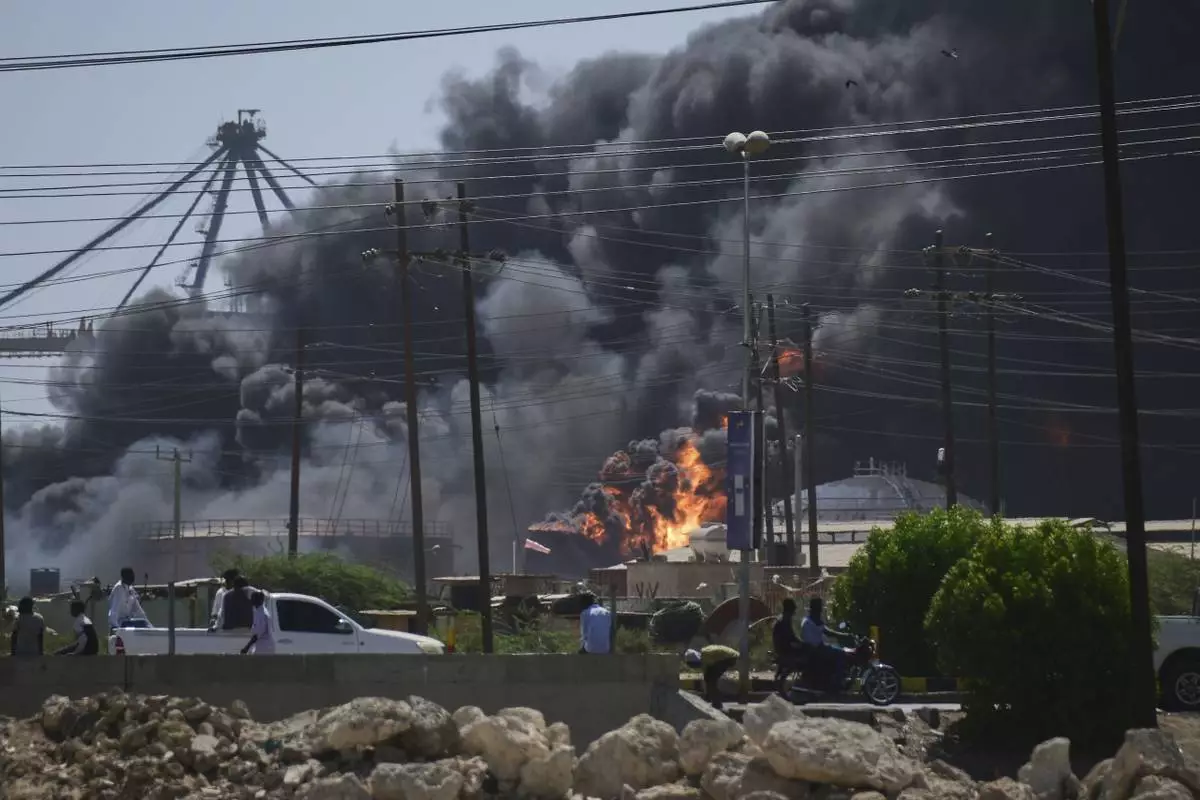
Smoke billows after drone strikes by the paramilitary Rapid Support Forces (RSF) targeted the northern port in the Red Sea city of Port Sudan, Sudan, Tuesday, May 6, 2025. (AP Photo)
SANTIAGO, Chile (AP) — As Chileans head to vote on Sunday, even detractors of ultra-conservative former lawmaker José Antonio Kast say the candidate whose radical ideas lost him the past two elections is now almost certain to become Chile’s next leader.
Kast’s meaningful lead in the polls over his rival in the presidential runoff, communist Jeannette Jara, shows how the hard-liner agitating for mass deportations of immigrants has seized the mantle of the traditional right in a country that once defined its post-dictatorship democratic revival with a vow to contain such political forces.
But much is also up for grabs about Chile’s political direction.
Kast's claim to a popular mandate depends on his margin of victory on Sunday over Jara, the center-left governing party candidate who narrowly beat him in the first round of elections last month.
Although various right-wing parties won around 70% of the vote in that election, substantial support for a populist center-right candidate who described himself as an alternative to Kast’s “fascism” revealed that, between the contrasting ideologies of the front-runners, sit hundreds of thousands of centrist voters with no real representation.
“Both are too extreme for me,” said Juan Carlos Pileo, 44, who plans to cast a blank ballot Sunday, as voting is now mandatory in Chile’s elections. “I can’t trust someone who says she’s a communist to be moderate. And I can’t trust someone who exaggerates the amount of crime we have in this country and blames immigrants to be fair and respectful.”
It remains a question whether Kast, an admirer of U.S. President Donald Trump, can implement his more grandiose promises.
They include slashing $6 billion in public spending over just 18 months without eliminating social benefits, deporting over 300,000 immigrants in Chile with no legal status and expanding the powers of the army to fight organized crime in a country still haunted by Gen. Augusto Pinochet’sbloody military dictatorship from 1973 to 1990.
For one, Kast’s far-right Republican Party lacks a majority in Congress, meaning that he’ll need to negotiate with moderate right-wing forces that could bristle at those proposals, significantly shaping policy and his own legacy.
Political compromises could temper Kast’s radicalism, but also jeopardize his position with voters who expect him to deliver quickly on his law-and-order campaign promises.
At each campaign event, Kast has taken to ticking off the number of days remaining until Chile's March 11 presidential inauguration, warning they should get out before they'll "have to leave with just the clothes on their backs.”
Jorge Rubio, 63, a Chilean banker in downtown Santiago, the capital, said he's “also counting down the days.”
“That’s why we’re voting for Kast," he said.
As the pandemic shuttered borders, transnational criminal organizations like Tren de Aragua seized illegal migration routes to gain a foothold in Chile, long considered among Latin America's safest countries. Homicides hit a record high in 2022, the first year of President Gabriel Boric’s tenure.
Kast insists that Boric’s government is too soft on immigration and crime, which the far-right leader argues are connected although the data does not necessarily support his narrative. Boric’s approval rating has plummeted, standing now at just 30%.
Yet many say the firebrand former student protester who came to power in 2021 pledging to transform Chile's market-led economy, has risen to the occasion. Boric went from criticizing the use of police force on the campaign trial to pouring money into the security forces. He sent the military to reinforce Chile's northern border, stiffened penalties for organized crime and created the country's first public security ministry.
Chile's homicide rate is now falling, about on par with the rate in the United States. That has done nothing to change Chileans' feelings of profound insecurity.
In Libya, where fractious militias jostle for political power, over 70% of people feel safe walking alone at night, according to a recent Gallup survey of 144 countries.
In Chile, just 39% of people do, around the same as in Ecuador, which is now in the midst of a violent, drug-driven crime wave.
As Boric's former minister of labor, Jara became popular for passing some of the administration's most important welfare measures.
That matters little now. Voters' concerns have forced her to switch gears. She has vowed to toughen border security, register undocumented migrants, tackle money laundering and step up police raids.
But promises to restore law and order are more persuasive coming from an insurgent outsider who has made security a key part of his agenda for years.
“Kast has been smart and strategic in focusing on migration and security," said Lucía Dammert, a sociologist and Boric’s first chief of staff. “It has been very difficult for the Jara campaign to move him away from those issues.”
Learning from his previous two failed presidential runs, Kast has avoided topics that fire up his critics — such as his German-born father’s Nazi past, his nostalgia for Pinochet's dictatorship and his opposition to same-sex marriage and abortion.
When asked, Kast says only that his values remain the same. His supporters, including voters who previously spurned him over his social conservatism, now say that abstract human rights concerns come after their need for safety on the streets.
“It's not very nice to hear that he's going to separate immigrant children from their parents, it's sad, that's going to be a problem for me,” said Natacha Feliz, a 27-year-old immigrant from the Dominican Republic referring to a recent interview in which Kast said immigrant parents without legal status who didn’t self-deport would be obliged to hand their kids over to the state.
“But this is happening everywhere, not just in Chile. Let's just hope that our security situation improves."
Associated Press writer Nayara Batschke in Santiago, Chile, contributed to this report.
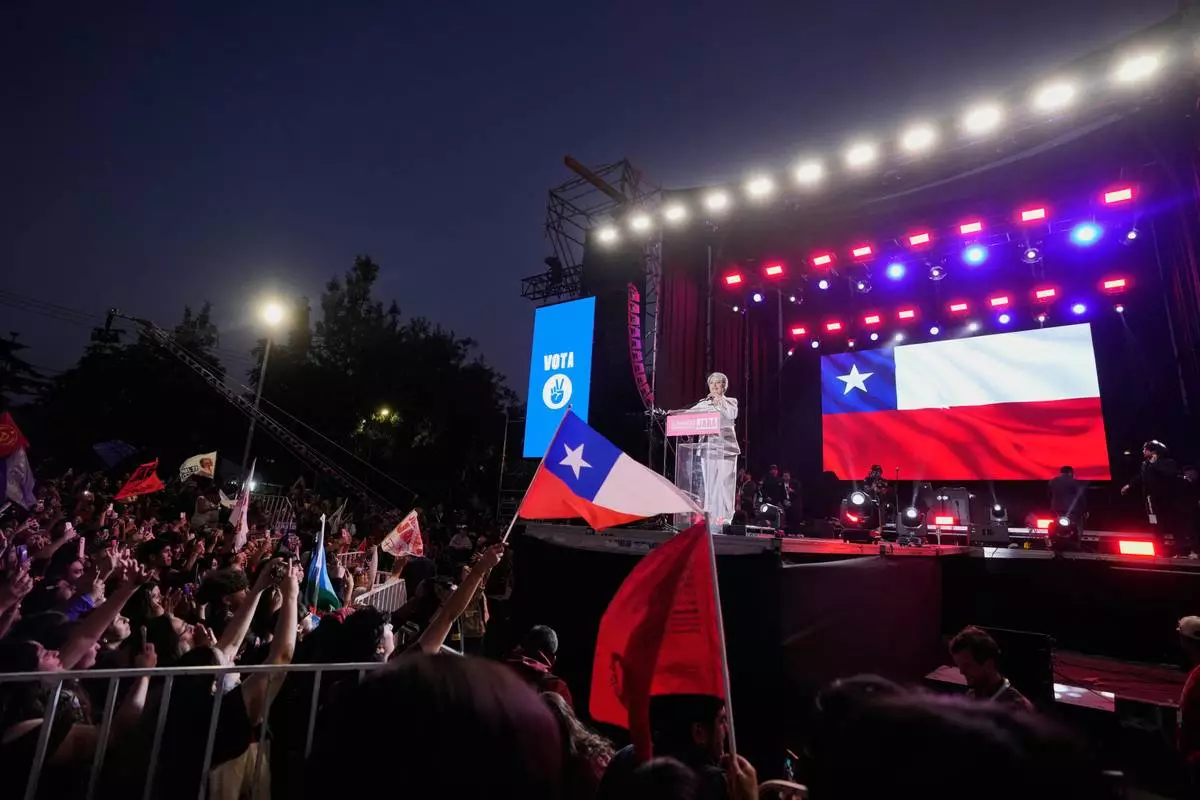
Presidential candidate Jeannette Jara of the Unidad por Chile coalition addresses supporters during a rally ahead of the presidential runoff election in Santiago, Chile, Wednesday, Dec. 10, 2025. (AP Photo/Natacha Pisarenko)
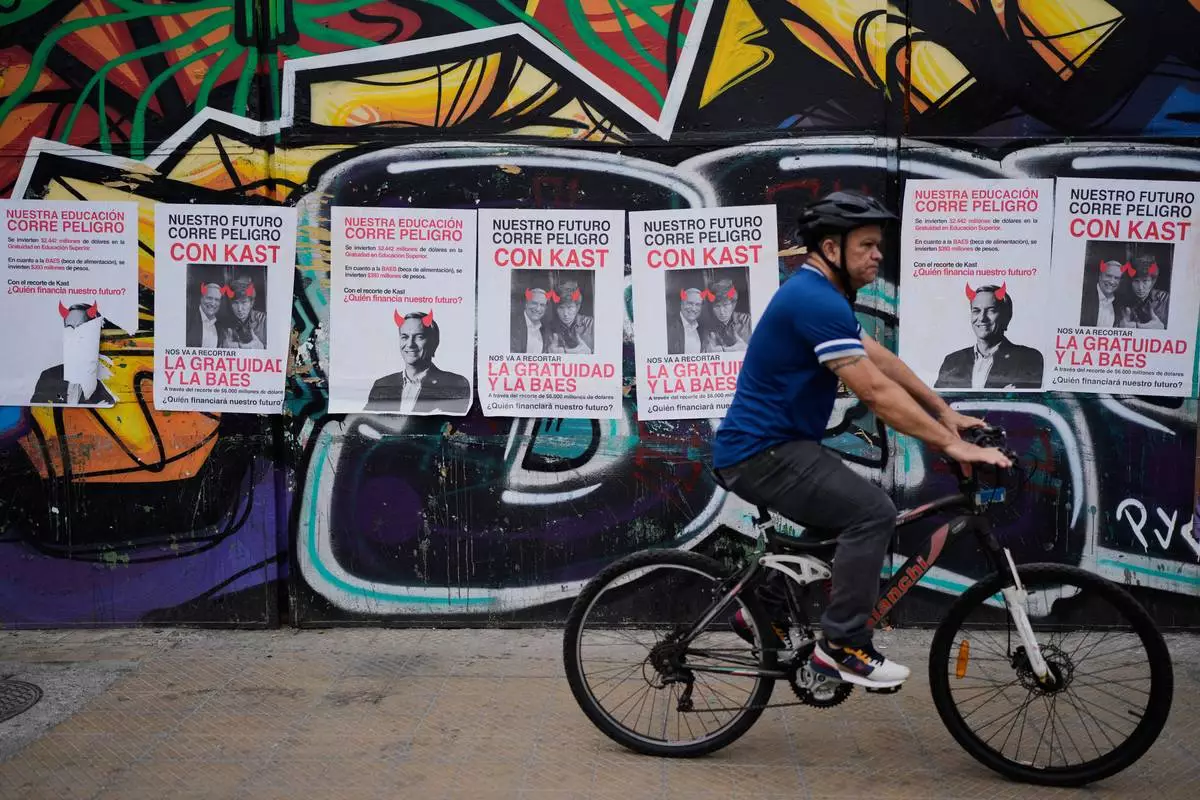
A man cycles past campaign ads for presidential candidate Jose Antonio Kast and Argentina's President Javier Milei reading in Spanish "Our future is in danger" ahead of the presidential runoff election in Santiago, Chile, Friday, Dec. 12, 2025. (AP Photo/Natacha Pisarenko)
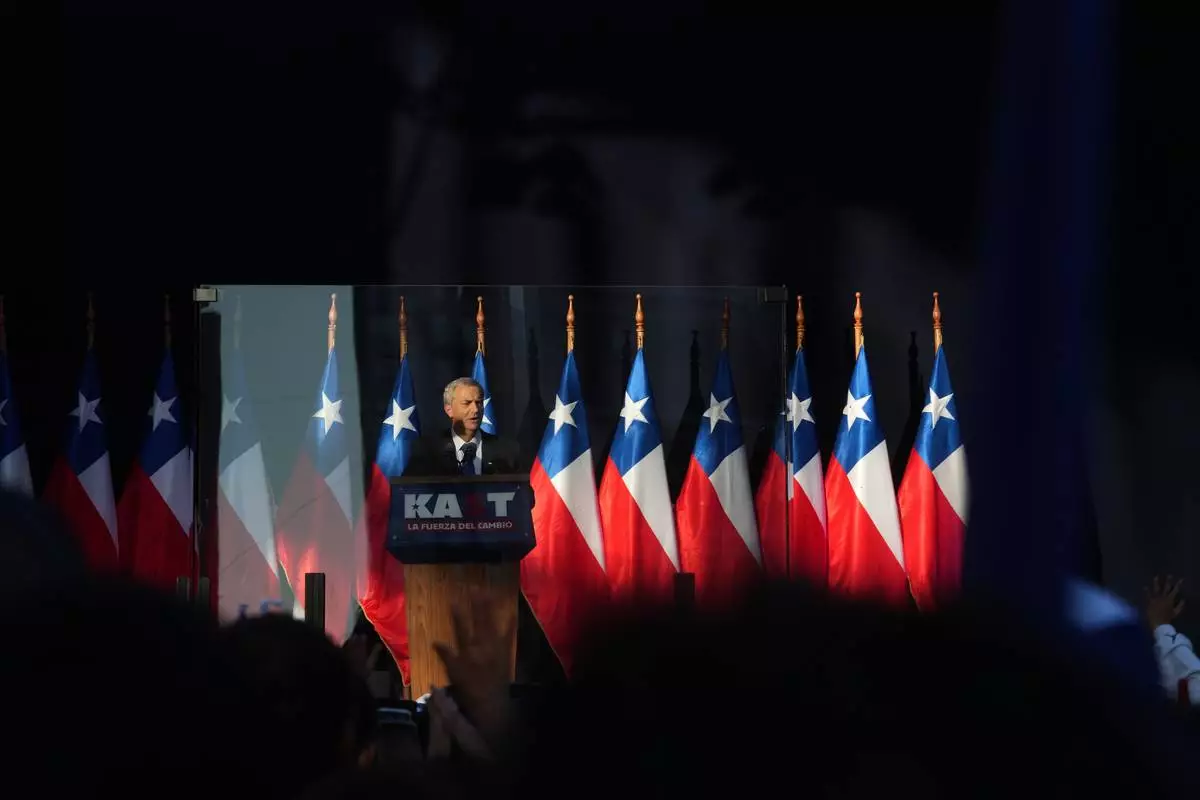
Presidential candidate Jose Antonio Kast of the Republican Party addresses supporters, from behind a protective glass panel, during a rally ahead of the runoff election in Temuco, Chile, Thursday, Dec. 11, 2025. (AP Photo/Esteban Felix)
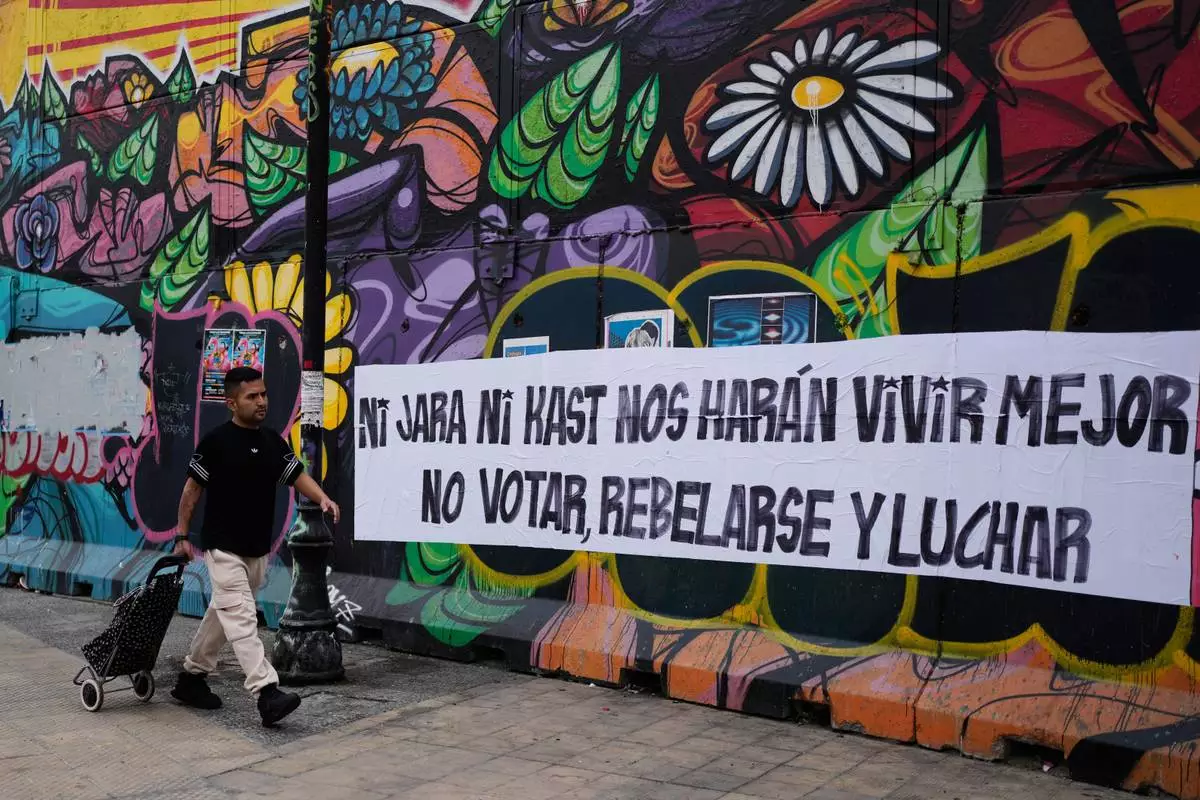
A campaign banner reads in Spanish "Neither Jara nor Kast will make our lives better, don't vote, rebel and fight" ahead of the presidential runoff election in Santiago, Chile, Friday, Dec. 12, 2025. (AP Photo/Natacha Pisarenko)

Presidential candidates Jose Antonio Kast of the Republican Party and Jeannette Jara of the Unity for Chile coalition shake hands during a debate ahead of runoff elections in Santiago, Chile, Tuesday, Dec. 9, 2025. (AP Photo/Esteban Felix)