DULUTH, Minn. & KNOXVILLE, Tenn.--(BUSINESS WIRE)--May 6, 2025--
Cirrus (Cirrus Aircraft Ltd.) today announced the new SR Series G7+ featuring Safe Return™ Emergency Autoland by Garmin®, the world’s first FAA-approved autonomous emergency landing system in a single-engine piston aircraft. With the integration of this technology, anyone in the cabin can activate Safe Return™ Emergency Autoland with the touch of a button in the event of an emergency, commanding the aircraft to navigate to a suitable nearby airport and land autonomously. This advancement in aviation safety provides pilots and passengers of the world’s best-selling high-performance single-engine piston aircraft with an automated emergency landing option in the event of pilot incapacitation or a similar in-flight emergency. Cirrus is currently delivering the SR Series G7+ with Safe Return™ Emergency Autoland.
Click to Gallery


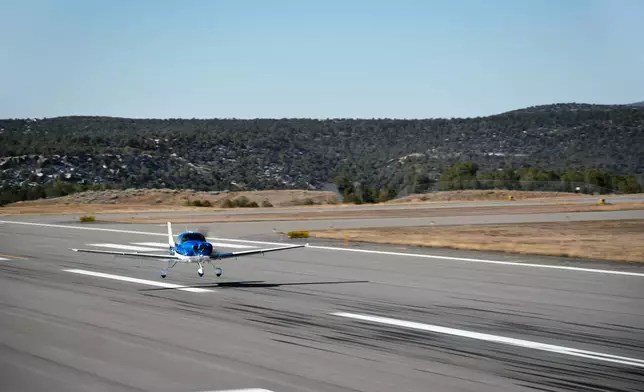
With a single push of a button, Safe Return™ Emergency Autoland takes control of the aircraft, communicates with air traffic control, navigates to the nearest suitable airport while avoiding terrain and adverse weather, autonomously lands the aircraft bringing it to a complete stop, shuts down the engine and stops the propeller so that passengers can exit the aircraft safely.
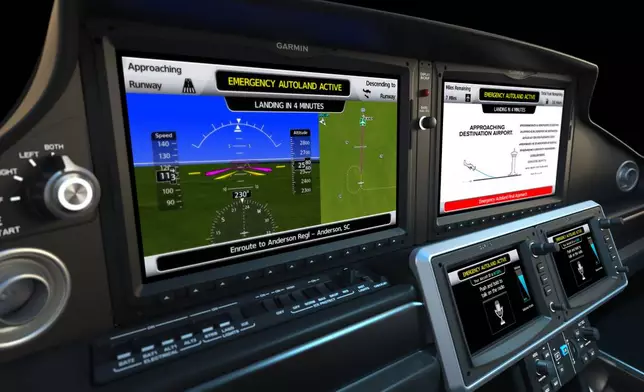
Safe Return™ Emergency Autoland is now activated and clear information is displayed on the Perspective Touch+™ touch screen flight deck. Passengers can press the microphone icon on the flight display to speak directly to air traffic control.
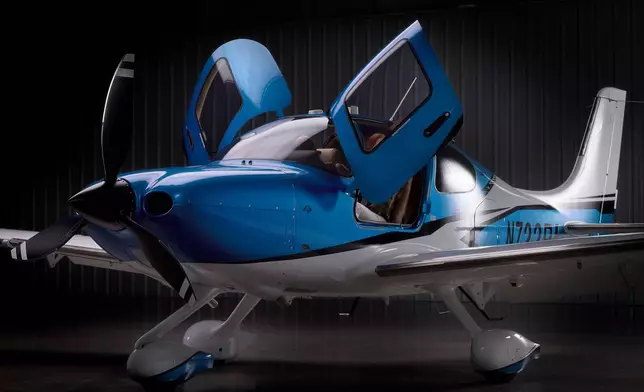
Introducing the new Cirrus SR Series G7+ featuring Safe Return™ Emergency Autoland by Garmin® the world’s first FAA-approved autonomous emergency landing system in a single-engine piston aircraft.
Once activated, Safe Return™ Emergency Autoland uses advanced algorithms and sensors to autonomously fly to the nearest suitable airport, notify air traffic control, communicate with passengers, navigate terrain, obstacles and weather, and then safely land the aircraft bringing it to a full stop and shutting down the engine.
This press release features multimedia. View the full release here: https://www.businesswire.com/news/home/20250506576550/en/
The SR Series G7+ introduces more new features, including Automatic Database Updates enabled by Cirrus IQ PRO™ for pilot convenience, Runway Occupancy Awareness for safety and Smart Pitot Heat powered by the Perspective Touch+™ flight deck for reduced pilot workload. Together, these features combined with Safe Return™ Emergency Autoland and the company’s signature Cirrus Airframe Parachute System® (CAPS®), bring to market the SR Series G7+, a robust aircraft embedded with advanced technology, automation and safety innovations.
“We’re excited to introduce the SR Series G7+, the aircraft that anyone can land in the event of an emergency with the touch of a single button,” said Zean Nielsen, Chief Executive Officer of Cirrus. “As the largest personal aircraft manufacturer in the world, delivering approximately 600 SR Series aircraft per year, the addition of Safe Return™ Emergency Autoland on a single-engine piston aircraft brings technology previously only available on larger turbine and turboprop aircraft to a greater number of pilots, spouses and their passengers for added peace of mind. The SR Series G7+ launch, along with our expanding ecosystem and Cirrus IQ™ platform, underscores our commitment to safety and relentless pursuit of innovation.”
Cirrus has historically led the industry in making safety innovations such as the Cirrus Airframe Parachute System® (CAPS®) and now Safe Return™ Emergency Autoland as standard equipment. With over 10,000 SR Series aircraft manufactured and 17 million flight hours accumulated since 1999, Cirrus continues to grow the industry and invent solutions that make flying safer and more approachable.
Safe Return™ Emergency Autoland
The Safe Return™ Emergency Autoland system uses a combination of advanced sensors, sophisticated algorithms and automated flight control systems to enable the aircraft to autonomously land safely without pilot input. With a single push of a button, the system takes control of the aircraft, communicates with air traffic control, navigates to the nearest suitable airport while avoiding terrain and adverse weather, autonomously lands the aircraft bringing it to a complete stop, shuts down the engine and stops the propeller so that passengers can exit the aircraft safely.
Safe Return™ Emergency Autoland Activation:
Safe Return™ Emergency Autoland can be activated both manually and automatically. Anyone in the cabin can activate Safe Return™ Emergency Autoland at the press of a button. If a pilot is alone or those in the cabin are unable to activate it manually, Safe Return™ Emergency Autoland is designed to activate automatically if the system determines that the pilot is flying erratically or is unresponsive. Safe Return™ Emergency Autoland can be disconnected by pressing the autopilot disconnect button at any time the pilot decides.
Additional SR Series G7+ Features
With the SR Series G7+, Automatic Database Updates powered by Cirrus IQ PRO™ are now available through a subscription in the Cirrus IQ™ app for connected aircraft owners. Automatic Database Updates allow owners to receive automatic avionics database updates via Wi-Fi or LTE to ensure the most current and accurate data for navigation. These updates can occur while the aircraft is powered off and the owner is away from the aircraft. When the aircraft is powered up, essential databases are automatically synchronized across compatible avionics.
Runway Occupancy Awareness leverages ADS-B traffic data to predict and alert pilots of potential runway incursions from nearby airborne aircraft or other aircraft on or approaching the runway. Visual and aural alerts are provided on the pilot’s primary flight display and 3D SafeTaxi™ map to maximize situational awareness, a safety feature that is especially useful at busy airports.
Smart Pitot Heat is enabled by systems integration through Perspective Touch+™ to reduce pilot workload and automate the flying experience. The system performs a self-test before every flight and automatically turns on or off in flight depending on outside air temperatures, making it one less system to manage.
Cirrus Safety Innovation Philosophy
Cirrus has a long history of revolutionizing aviation safety and remains steadfast in its mission to continuously innovate, remove barriers of entry and invite more people to experience Personal Aviation™ with safety and peace of mind built into every aircraft. From advancing avionics systems to exploring autonomous flight, Cirrus is committed to manufacturing aircraft that not only meet today’s needs but also anticipate tomorrow’s challenges.
By adding the Safe Return™ Emergency Autoland system to the SR Series G7+, Cirrus is helping to ensure that pilots and their passengers can travel with a greater sense of security, knowing that if there is an in-flight emergency, their aircraft has the capability to respond autonomously.
To learn more about the SR Series G7+ with Safe Return™ Emergency Autoland, please visit cirrusaircraft.com/sr-series.
About Cirrus
Cirrus is the recognized global leader in Personal Aviation™ and the maker of the best-selling SR Series piston aircraft and the Vision Jet®, the world’s first single-engine Personal Jet™, and the recipient of the Robert J. Collier Trophy. Founded in 1984, the company has redefined aviation performance, comfort and safety with innovations like the Cirrus Airframe Parachute System® (CAPS®) – the first FAA-certified whole-airframe parachute safety system included as standard equipment on an aircraft. To date, worldwide flight time on Cirrus aircraft is 18 million hours, and 270 people have returned home safely to their families as a result of the inclusion of CAPS as a standard feature on all Cirrus aircraft. The company has seven locations in the United States, including Duluth, Minnesota; Grand Forks, North Dakota; Greater Dallas, Texas; Greater Phoenix, Arizona; Greater Orlando, Florida; Knoxville, Tennessee and Benton Harbor, Michigan. Learn more at cirrusaircraft.com.
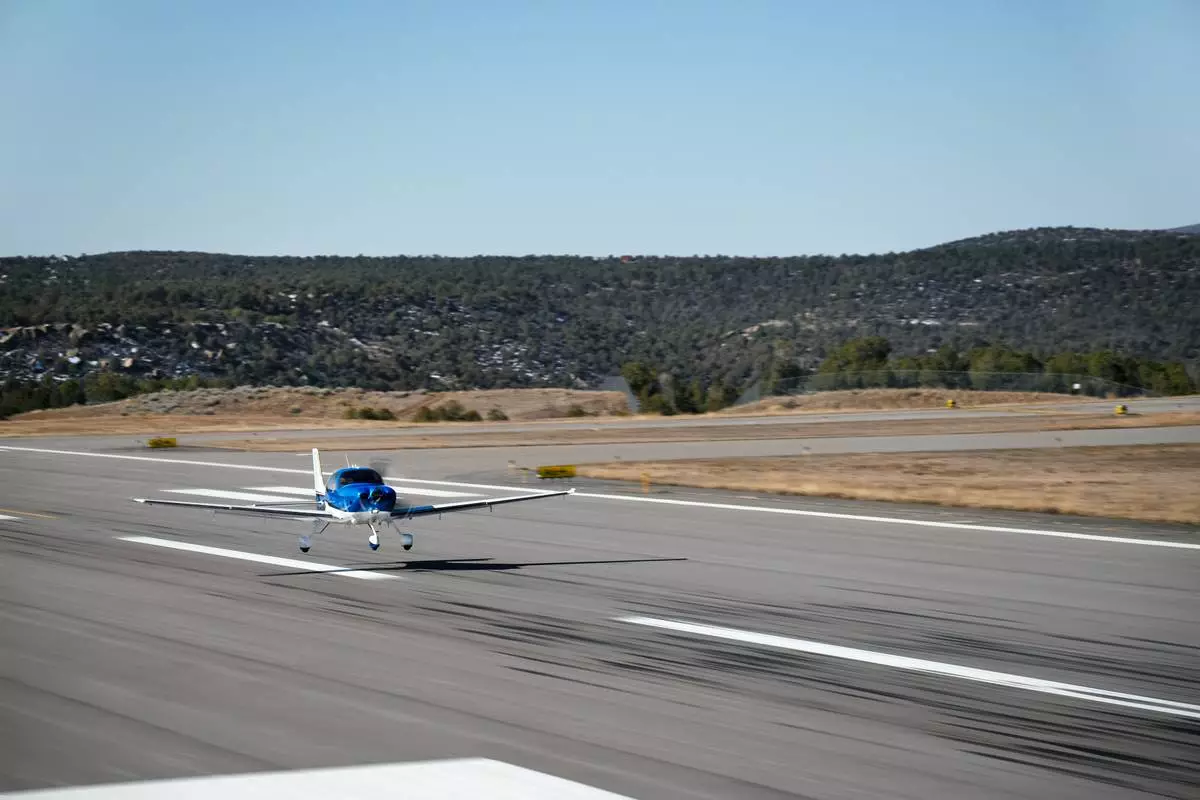
With a single push of a button, Safe Return™ Emergency Autoland takes control of the aircraft, communicates with air traffic control, navigates to the nearest suitable airport while avoiding terrain and adverse weather, autonomously lands the aircraft bringing it to a complete stop, shuts down the engine and stops the propeller so that passengers can exit the aircraft safely.
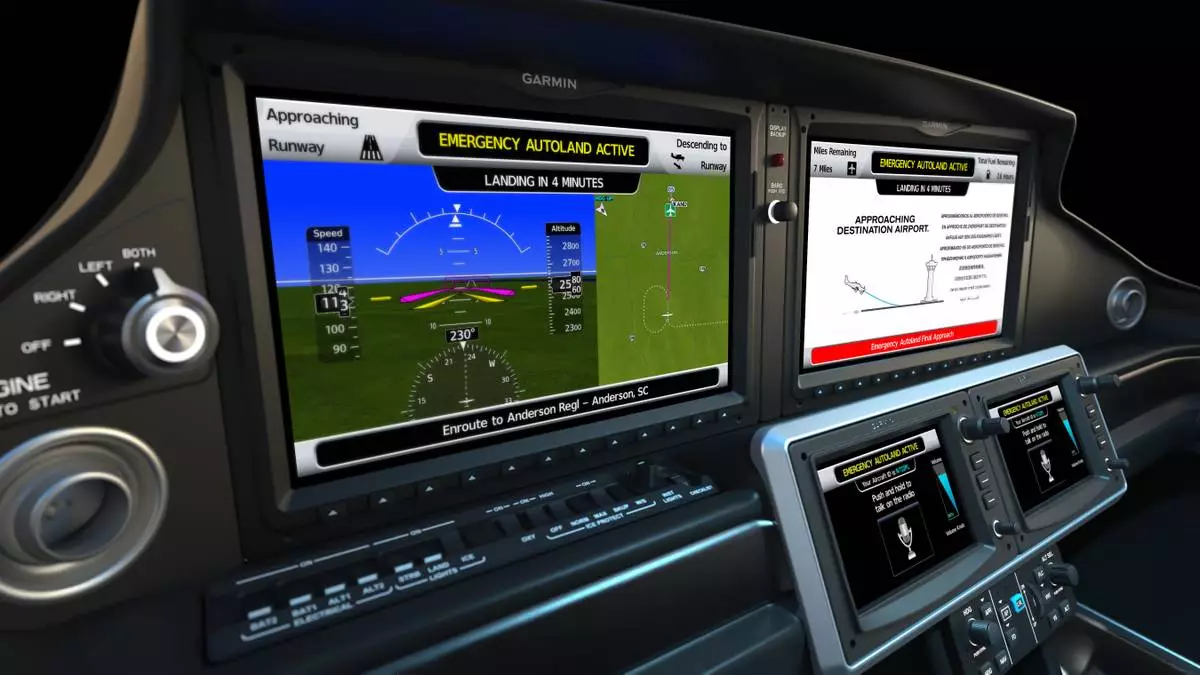
Safe Return™ Emergency Autoland is now activated and clear information is displayed on the Perspective Touch+™ touch screen flight deck. Passengers can press the microphone icon on the flight display to speak directly to air traffic control.
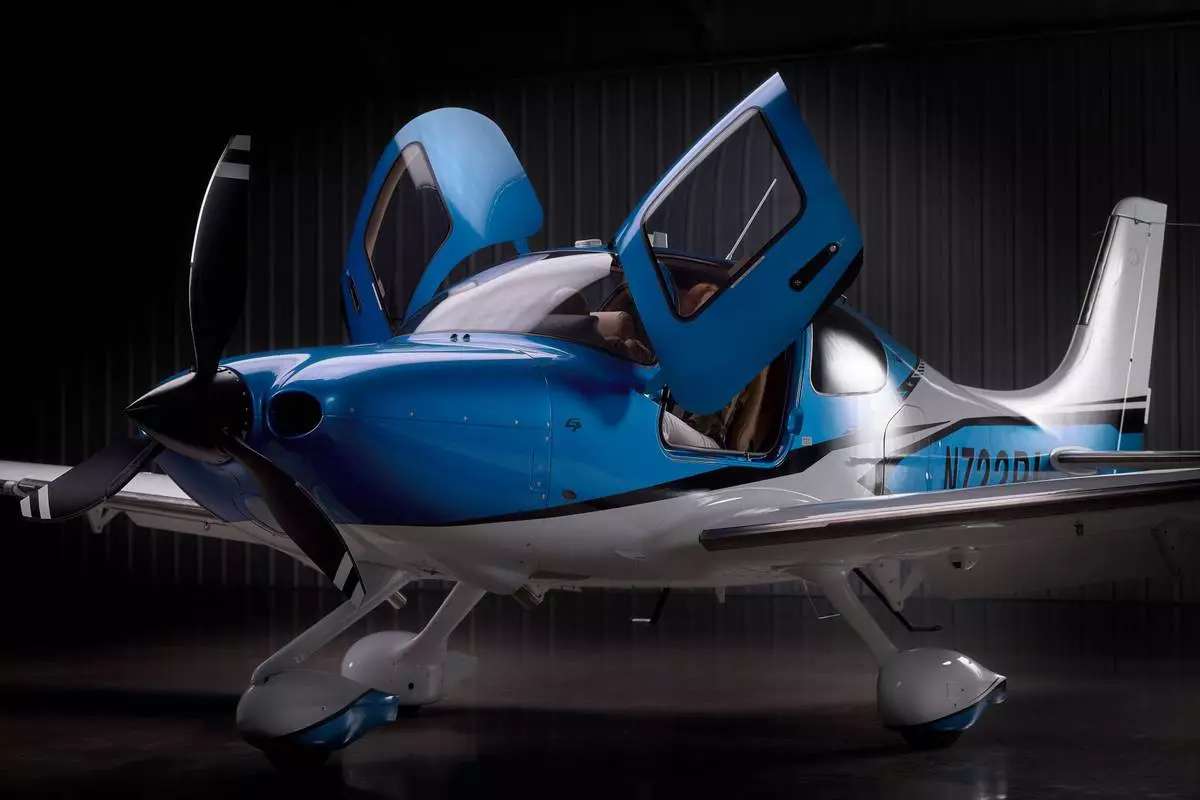
Introducing the new Cirrus SR Series G7+ featuring Safe Return™ Emergency Autoland by Garmin® the world’s first FAA-approved autonomous emergency landing system in a single-engine piston aircraft.
Once activated, Safe Return™ Emergency Autoland uses advanced algorithms and sensors to autonomously fly to the nearest suitable airport, notify air traffic control, communicate with passengers, navigate terrain, obstacles and weather, and then safely land the aircraft bringing it to a full stop and shutting down the engine.