MINNEAPOLIS--(BUSINESS WIRE)--May 6, 2025--
Infios, a global leader in adaptable supply chain execution, today announced that it has been positioned as a Leader in the 2025 Gartner Magic Quadrant for Warehouse Management Systems (WMS) for the seventh consecutive year. Infios was recognized for its Ability to Execute and Completeness of Vision in the warehouse management space. Infios rebranded in March 2025 and is noted as Infios (Körber) in this report.
This press release features multimedia. View the full release here: https://www.businesswire.com/news/home/20250506287889/en/
The Gartner Magic Quadrant for WMS evaluates “the WMS products across a range of criteria, including technology, functionality and usability. We consider the depth and flexibility of core capabilities such as receiving, put-away, picking, shipping, replenishment, quality assurance and cycle counting.” Leaders in the WMS market are present in a high percentage of new WMS deals, win a significant number of them and have a large and growing customer base.
“Our team's unwavering commitment to innovation and customer success are driving the future of supply chain execution at Infios,” said Ed Auriemma, CEO of Infios. “We're pushing the boundaries of what's possible, helping our clients navigate increasingly complex global supply chain challenges. Our rise to one of the highest positions on the Ability to Execute axis reflects our mission to deliver solutions that not only meet today's needs but anticipate tomorrow's opportunities."
Infios integrates order management, warehousing and fulfillment and transportation management into a comprehensive suite of solutions, equipping businesses with the tools they need to navigate today’s complex supply chain landscape. Infios is dedicated to its customers, evolving with them to provide scalable, adaptable solutions that meet their changing needs. This flexibility enables customers to optimize every aspect of their operations with versatile, scalable, and future-ready capabilities.
“Infios’s software has a no-limit technology to the kind of creativity we can express in driving efficiency and adding clientele. We look forward to creating things together here… through the combination of what we love doing and Infios enables us to do,” said Julian Van Erlach, SVP Global Supply Chain at FabFitFun. “I would, without reservation, recommend Infios.”
View a complimentary copy of the 2025 Gartner Magic Quadrant for Warehouse Management Systems (WMS) report here.
*Source: Gartner, “2025 Magic Quadrant for Warehouse Management Systems,” Simon Tunstall, Dwight Klappich, Rishabh Narang, Federica Stufano 1 May 2025.
GARTNER is a registered trademark and service mark of Gartner and Magic Quadrant is a registered trademark of Gartner, Inc. and/or its affiliates in the U.S. and internationally and are used herein with permission. All rights reserved.
Gartner does not endorse any vendor, product or service depicted in its research publications, and does not advise technology users to select only those vendors with the highest ratings or other designation. Gartner research publications consist of the opinions of Gartner’s research organization and should not be construed as statements of fact. Gartner disclaims all warranties, expressed or implied, with respect to this research, including any warranties of merchantability or fitness for a particular purpose.
*Infios (Körber), formally known as HighJump, was recognized as a Leader in the 2019 Magic Quadrant for Warehouse Management Tools.
About Infios
Infios is a global leader in supply chain execution, relentlessly making supply chains better - every single day. With a portfolio of adaptable solutions, we empower businesses of all sizes to simplify operations, optimize efficiency, and drive measurable impact. Infios serves more than 5,000 customers across 70 countries, delivering adaptable and innovative technologies that evolve with changing business needs. Our deep expertise and commitment to purposeful innovation help businesses turn supply chains into a competitive advantage, building resilience and shaping a more sustainable future. Infios is a joint venture of international technology provider Körber and global investment firm KKR.
Learn more at Infios.com.
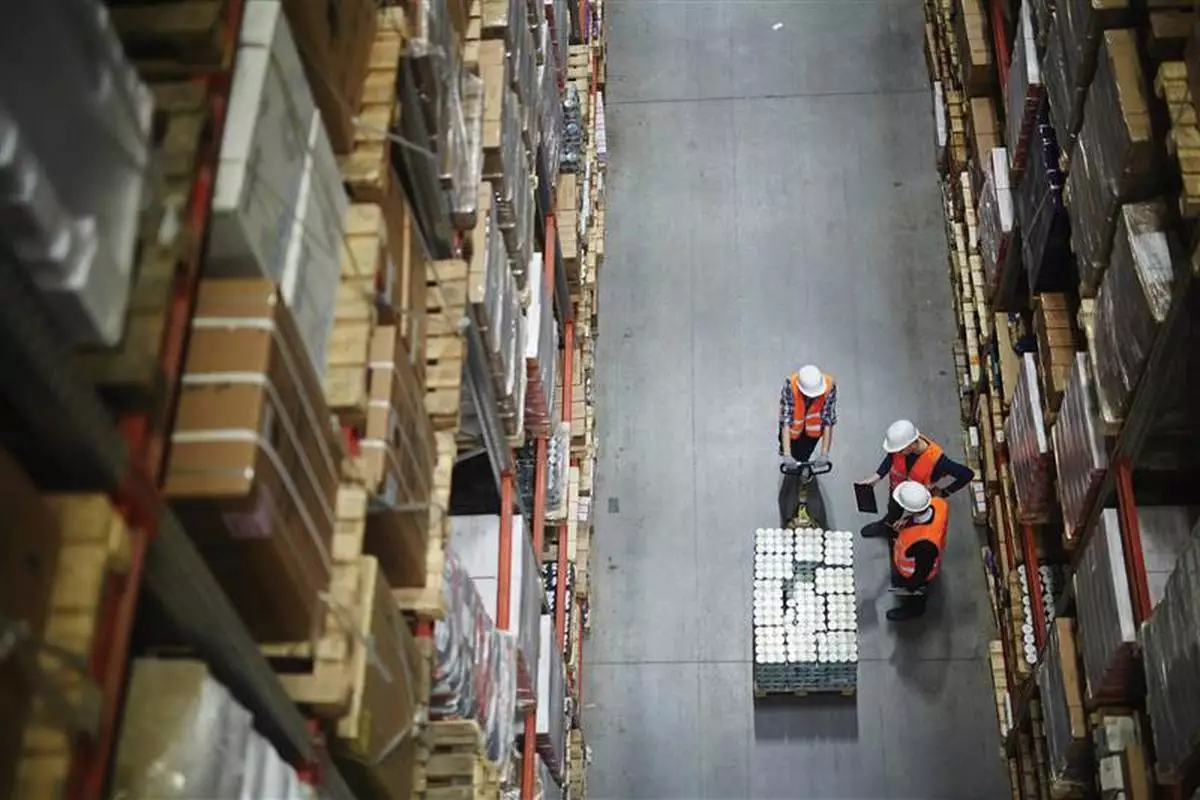
Infios Named a Leader in 2025 Gartner® Magic Quadrant for Warehouse Management Systems for Seventh Consecutive Year*
WASHINGTON (AP) — President Donald Trump is facing warnings from foes and allies alike that he’s getting boxed in on the Iran war, a conflict he sold as a brief military incursion but that has since settled into a holding pattern.
It's been nearly a week since U.S. and Iranian negotiators reached a tentative agreement to extend the ceasefire in the conflict by 60 days and start a new round of talks on Iran’s nuclear program that required Trump's signoff.
But Trump has called for unspecified changes to the agreement and Iranian officials — perhaps calculating that the Republican president is reluctant to restart the bombardment after burning through key weapons systems — are showing no signs they'll give in to new demands.
A series of strikes by the U.S. and Iran this week has raised fresh concern the ceasefire could collapse. Trump on Wednesday downplayed the significance.
“It’s a different part of the world," Trump told reporters in the Oval Office. "You know, I’d say in that part of the world, a ceasefire is when you’re shooting in a more moderate manner.”
The shaky moment follows repeated claims by Trump since a 14-day ceasefire was agreed to on April 7 — following 38 days of U.S. and Israel bombing of Iran — that a deal is just days away and the Iranian side is begging to come to a settlement. Trump on Wednesday said it was possible something could come together “over the weekend.”
Without an interim settlement in place to reopen the Strait of Hormuz, global energy prices remain elevated and are adding to anxieties around the world about the impact of rising costs spurred by the 3-month-old conflict on the cost of food, fuel and other goods.
After a string of reports this week that Iran was shutting down talks, Trump told CNBC he "couldn't care less” if the negotiations had bogged down and even mused they had become “boring.”
There's growing concern inside the administration and among key advisers and allies that Trump now finds himself in a bind, according to a U.S. official and another person familiar with the administration’s internal deliberations, both of whom spoke to The Associated Press on the condition of anonymity to discuss private conversations.
He's buffeted by Democrats seizing on oil prices and warnings from hawkish members of his base that an early exit from the conflict would amount to capitulation.
Trump is privately hearing from other Republican lawmakers as well as Pentagon officials and Gulf allies that a return to the bombing campaign is a bad idea.
Those advising against returning to military action note the U.S. has burned through munitions at too fast a rate. It could take three years to replenish some key weapons systems.
Meanwhile, Gulf allies are worried Iran will retaliate against them and their critical infrastructure and energy interests and further set back their economies.
At the same time, Trump has bristled at the idea of accepting a deal that resembles the 2015 nuclear agreement brokered by Democrat Barack Obama's administration, which restricted Iran’s nuclear program in exchange for lifting international economic sanctions.
Trump during his first term abandoned the pact, which he said had failed to permanently stop Iran’s nuclear program, ignored Iran’s ballistic-missile development and did not penalize Iran for supporting militant proxy groups across the Middle East.
Now, Trump, according to those familiar with internal deliberations, has made clear he feels strongly he can't make “a bad deal” and is acutely aware he's at risk of tarnishing his legacy if he missteps.
White House spokeswoman Anna Kelly dismissed the notion Trump has been boxed in or there's any concern within the administration about the pace of talks.
Israeli and hawkish allies in Washington have made the case to Trump that a deal at this point would amount to unconditional surrender, urging him to ratchet up economic pressure on Iran and back Israel's assault on the Hezbollah militant group in Lebanon.
But Trump earlier this week in a heated call with Israeli Prime Minister Benjamin Netanyahu demanded Israel stand down, and on Wednesday, Israel and Lebanon said they agreed to renew a ceasefire. Hezbollah was not part of the Israel-Lebanon talks, which have been held at the ambassadorial level in Washington since the beginning of last month, and the militant group has denounced the agreement.
Remaining in the current status quo with Tehran — neither a full resumption of hostilities nor sealing an interim agreement to restart nuclear talks — is a situation Iran appears better poised to exploit, argued Behnam Ben Taleblu, a senior fellow at the hawkish Washington think tank Foundation for Defense of Democracies.
Despite being the weaker party, Iran appears to be calculating that the longer the holding pattern lasts, the better the chances are it can “box in” Trump, he added.
“Either way, Tehran appears more resolute than ever to not provide Trump with a victory image, hence why it isn’t budging on the battlefield or negotiating table,” Taleblu said.
At the same time, Democrats are trying to capitalize on Trump's handling of the unpopular war ahead of November's midterm elections. The House of Representatives on Wednesday for the first time passed a symbolic resolution calling for a halt in military action against Iran, with four Republican lawmakers joining Democrats in the rebuke of Trump’s war.
The president has dismissed the House vote as “meaningless."
“The Democrats are fueled by Trump Derangement Syndrome,” Trump fumed in a social media post. “The four Republicans, that’s a whole other story - They’re GRANDSTANDERS! They should be ashamed of themselves.”
During hours of hearings on Capitol Hill on Tuesday and Wednesday with Secretary of State Marco Rubio, Democrats laced into Trump for discounting the economic impact of the conflict on Americans and for failing to anticipate Iran would shutter the Strait.
In one tense exchange, New Jersey Democratic Sen. Cory Booker pointed to the unsteady ceasefire as a sign Iran has the upper hand.
“We are the strongest nation on the planet Earth, and we’re in a stalemate with Iran,” Booker said. “And now we’re begging to get back into a deal that you all trashed in the first place.”
Rubio dismissed the criticism, underscoring that Iran has been placed on its heels with the strikes, which have taken out multiple layers of senior leadership and left Iran's economy in shambles.
“There’s no one begging,” Rubio responded. “I don’t know where you’re getting this perception that Iran is stronger.”
Another Democrat, Sen. Chris Van Hollen of Maryland, homed in on Trump's comments last month that voter anxiety about the cost of living was “not even a little bit” of a motivating factor for him to reach a deal to end the war.
The president continues to downplay the rising costs for Americans at the pump and predict that gas prices would fall sharply after the conflict ends.
Christopher Borick, the director of the Muhlenberg College Institute of Public Opinion in Pennsylvania, said that Democrats running in swing districts around the country are already zeroing in on Trump's rhetoric on the war's impact on Americans' pocketbooks.
“There's significant risk in having this thing drag on for Republicans,” Borick said. “But for Republicans in some of these tough swing districts, there's a case to be made to rip the bandage off now, get some easing in the oil markets and hope there's enough time for voters to turn the page.”
Associated Press writers Farnoush Amiri in New York and Lisa Mascaro contributed to this report.
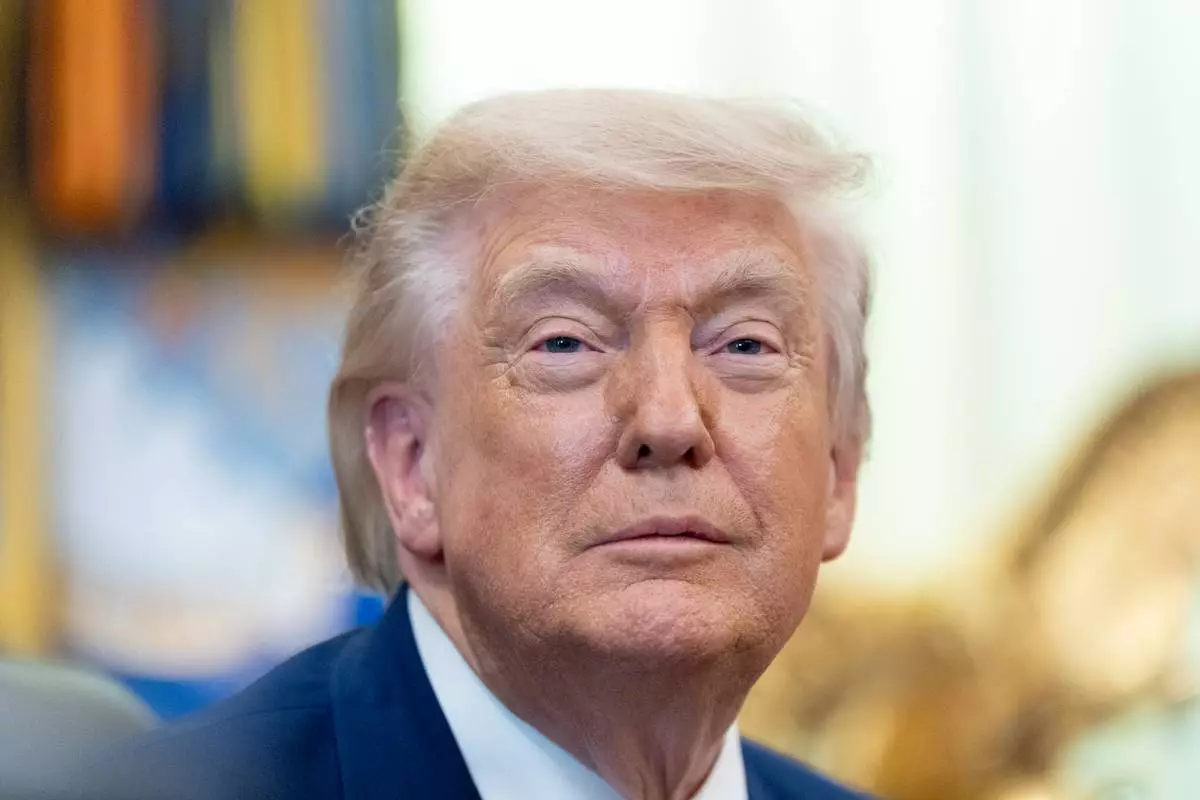
President Donald Trump speaks in the Oval Office of the White House, Wednesday, June 3, 2026, in Washington. (AP Photo/Alex Brandon)
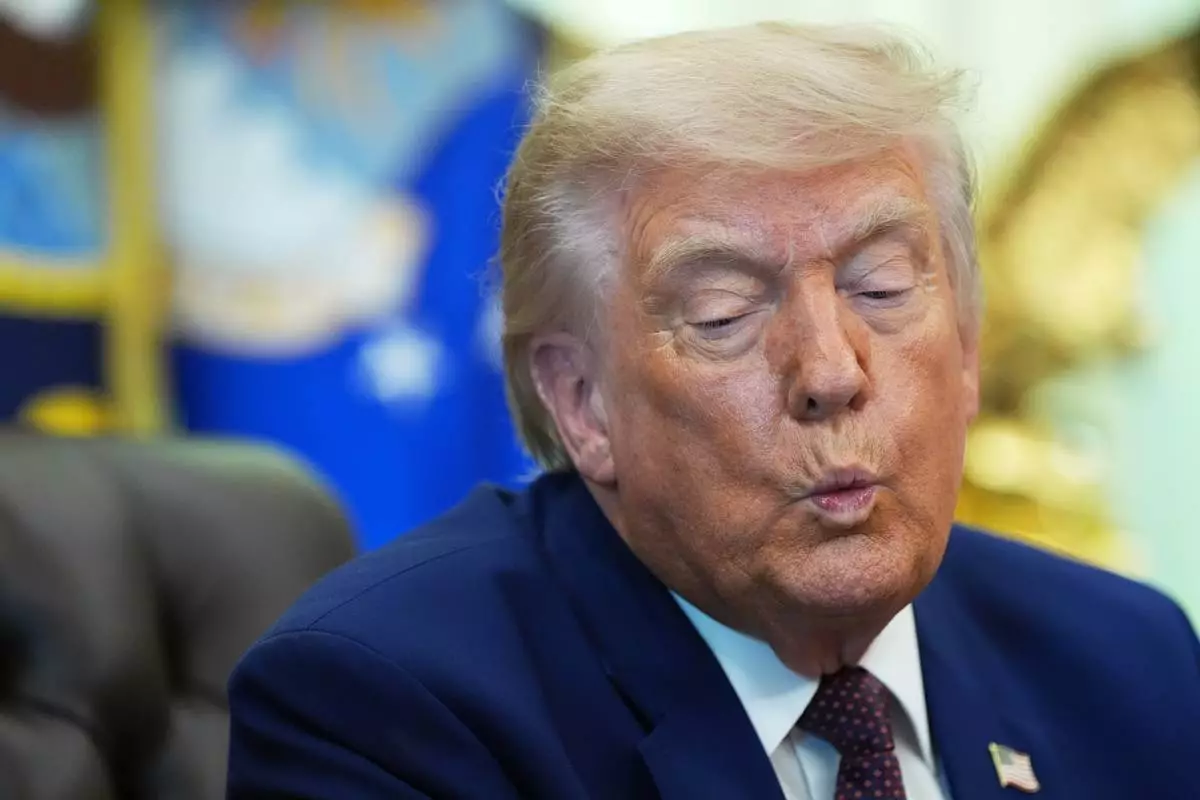
President Donald Trump speaks in the Oval Office of the White House, Wednesday, June 3, 2026, in Washington. (AP Photo/Alex Brandon)