PITTSBURGH (AP) — Andrew McCutchen hasn't had the conversation with 7-year-old son Steel yet, but the Pittsburgh Pirates star knows it's probably coming at some point.
Steel, already playing in a youth baseball league, will probably come home at one point and ask his five-time All-Star father if he can have whatever hot item his teammates might be wearing during a given spring.
Click to Gallery
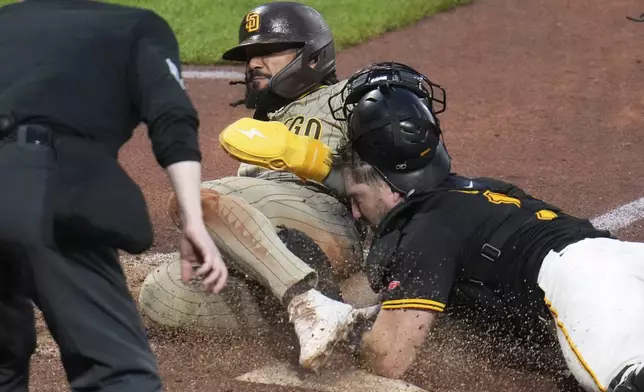
San Diego Padres' Fernando Tatis Jr., left, scores before Pittsburgh Pirates catcher Joey Bart can apply the tag on a wild pitch by pitcher David Bednar during the ninth inning of a baseball game in Pittsburgh, Saturday, May 3, 2025. (AP Photo/Gene J. Puskar)
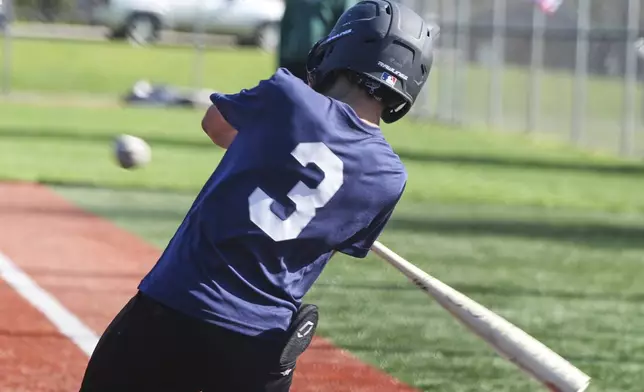
Youth ballplayer Josiah Jones bats during youth baseball game in Monroeville, Pa., with his sliding matt in his back pocket on April 27, 2025. (AP Photo/Gene J. Puskar)
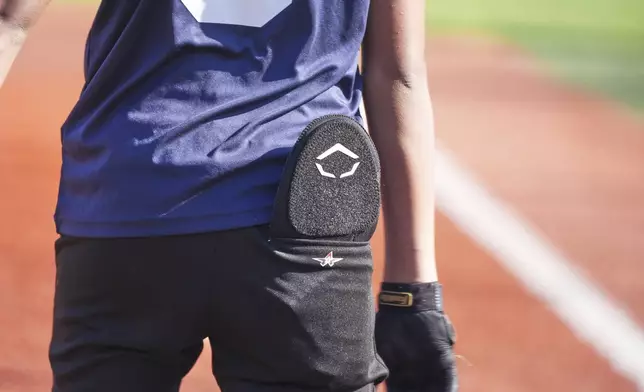
Youth ballplayer Josiah Jones bats during youth baseball game in Monroeville, Pa., with his sliding matt in his back pocket on April 27, 2025. (AP Photo/Gene J. Puskar)
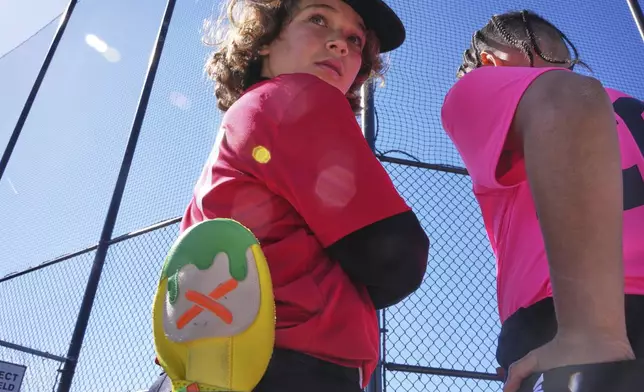
CORRECTS SPELLING TO COLES NOT COLE Youth ballplayer Grayson Coles, left, waits for his game to get underway with his Savannah Banana sliding mitt in his back pocket on April 27, 2025 in Monroeville, Pa. (AP Photo/Gene J. Puskar)
McCutchen plans to accommodate Steel up to a point. The oldest of McCutchen’s four children is already rocking an arm sleeve, just the way dad does.
Yet if Steel is hoping his father will spring for a sliding mitt — a padded glove a player can slip over one of their hands to protect it should the hand get stepped on while diving headfirst for a base — he probably shouldn't get his hopes up.
McCutchen, who has stolen 220 bases at the major league level, has never worn one. And he's quick to point out the next time the cleat of a fielder mashes his hand will also be the first.
Still, the 38-year-old understands. Once upon a time, he was a 20-something who epitomized baseball cool, from his dreadlocks (long since shorn) to his goatee to his rope chain to the occasional skull cap he wore underneath his batting helmet, all of it designed to accentuate McCutchen's innate blend of talent and charisma.
“It's all about the drip,” McCutchen said with a smile.
Even if the “drip” (Gen Z slang for stylish clothes and their accessories) emphasizes fashion over function, particularly when it comes to the gloves — which look a bit like oven mitts — that are becoming just as ubiquitous in the Little Leagues as they are in the major leagues.
Former major leaguer Scott Podsednik (career stolen base total: 309) is credited with “inventing” the sliding mitt during the late stages of his 11-year career.
Tired of having his hand stepped on, Podsednik worked with a hand therapist for a solution. The initial mitts were relatively simple. A 2009 picture of Podsednik sliding into second base shows his left hand covered in what looks like a padded modified batting glove, all wrapped in black to match the trim on his Chicago White Sox uniform.
Things have gotten considerably more intricate over the years. Google “sliding mitt designs” and you'll find themes ranging from the American flag to an ice cream cone to aliens to a poop emoji ( yes, really ).
Scott McMillen, a lawyer in the Chicago area, had no plans to get into the baseball accessory business. He first took notice of sliding mitts when his son Braydon, then 10, pointed out one of his teammates had one and said basically, “Oh hey dad, wouldn't it be nice if I had one, too.”
They headed to a local sporting goods store, where McMillen was surprised at the variety available.
That was around 2021. By early 2024, McMillen had launched “ Goat'd,” a specialty baseball accessory company with everything from sliding mitts to batting gloves to arm sleeves to headbands and more, many of them religiously inspired.
Sales during their first full year? Over 1 million units.
“We were surprised at how large the marketplace is,” McMillen said.
Maybe he shouldn't have been.
Youth sports have bounced back from the COVID-19 pandemic. The Aspen Institute's 2024 State of Play report noted that the participation levels in sports among children ages 6-17 were the highest they’ve been since 2015. Baseball's numbers have steadied following a decline. Little League International told The Associated Press last fall that more than 2 million kids played baseball or softball under its umbrella across the world, an uptick over 2019.
Many of those kids are also fans of the game, some of whom may have noticed their favorite major leaguer sporting a mitt when they're on the bases. Yes, that was San Diego Padres star Fernando Tatis Jr. sliding across home plate ( feetfirst, by the way ) with a bright yellow mitt on his left hand in the ninth inning of a 2-1 win over Pittsburgh last weekend.
It's one of the many ways in which the game has evolved over the years. When McMillen grew up, there wasn't much swag to go around.
“We had our baseball uniform and our glove (and) everyone looked the same, everyone was the same,” he said. “Now, everyone wants to express themselves individually. The best way to do that without acting like a clown is to wear something that shows people who you are.”
Self-expression, however, doesn't exactly come cheap, particularly in an era when top-of-the-line bats are $400 or more. What amounts to an entry-level sliding mitt can go for $40, but Goat'd and others have versions that can fetch double that.
That hasn't stopped sales from being brisk, and McMillen points out it's not merely a luxury item.
“We don’t play football with 1940s safety equipment,” he said. “You feel better in the (batter's) box when you have something that protects you, right? With a sliding mitt, it's also like, ‘Hey this is fun. It’s cool. I want to be like my fave high school player, like my favorite college player.’”
It's becoming increasingly common for McMillen and other members of the company's staff to spot Goat'd gear at the field. In recent months, they've popped up in youth tournaments from Georgia to Las Vegas, sometimes in the back pockets of players as young as 6 or 7. McMillen can't help but shake his head to see his product become part of the time-honored tradition of kids imitating their heroes.
Which is good for business and, oh by the way, probably unnecessary.
Here's the thing: In most — if not all — youth baseball leagues, headfirst slides that would require a player to stretch out their hand to secure the bag are illegal.
In Little League, for example, stealing bases for players 12 and under is rare because the player can take off only after the ball has reached the batter. And even if they do bolt for the next base, they have to slide feetfirst. The only times in Little League that a baserunner can dive headfirst toward a base is when they are returning to it while in a rundown or during a pickoff attempt, both of which are also rare.
That doesn't stop the players from wanting a sliding mitt. It also doesn't stop their parents from buying them, all part of the pressure to “keep up with the Jones” that has practically been a part of youth sports culture since the first time somebody came to practice with a batting glove or wristbands.
It's a phenomenon Chelsea Cahill and her family has known for years. The longtime educator who lives just east of Columbus, Ohio, has spent most of the last decade shuttling her three boys from practice to games to tournaments.
What she and her husband have learned over the years is that some trends come and go, but the pressure to have the right stuff remains.
“There's always that feeling of ‘This is the next new thing' or ‘This is what you’ve got to get,’” Cahill said.
They appeased their sons up to a point, but only up to a point.
Last summer their youngest son Braxton, then 11, and the rest of the kids on his travel team kept pestering their parents to buy sliding mitts. Entering the final tournament, the team moms decided to give in.
Sort of.
Rather than plop down that kind of money for something they didn't actually need, the moms headed to a local dollar store and bought them actual oven mitts — the kind used to pull tonight's dinner from out of the oven. Average retail price? Less than a cup of coffee at the gas station.
Oh, and the kids loved them, and wore them during the game. Cahill posted video of them playing with the mitts stuck in their back pocket to her TikTok account. The video is now at 12 million views and counting.
“They thought it was hilarious, but we didn’t really think they would wear them for the rest of the tournament,” Cahill said. “We were wrong. They really embraced it!”
Among viewers of that TikTok, by the way, were the people at Goat'd, who sent Braxton a couple of mitts as a result.
The good news is, Cahill now won't have to buy one for Braxton this spring. Yet there's also something else she has learned through the years: This time in her boys' lives is fleeting.
For proof, just look at her calendar. Her two older sons — the ones who played travel baseball just like Braxton, and asked for all the cool stuff their teammates had, just like Braxton has — gave up baseball by the time they got to high school.
Her advice to parents who might be feeling the financial pinch of what it takes to play these days: Relax.
“We've learned as parents is to stop taking it so seriously,” she said. “They’re kids. Let them have fun.”
A day after hundreds of members of the Monroeville Baseball and Softball Association marched through the Pittsburgh suburb's well-appointed community park, the regular season is in full swing.
All four fields are alive with the chatter of coaches, parents and boys and girls aged anywhere from 5-12.
Over on Field 1, the Rays are in the middle of their season opener. Playing first base, Josiah Jones has his glove at the ready, with a black sliding mitt noticeably sticking out of his left back pocket.
Per the league rules, the Rays and the other players at the “Bronco” level (ages 11-12), play actual full-on baseball. They can take leads and steal bases whenever they like, though headfirst slides are only allowed when returning to a base, just like in Little League.
Longtime MBSA executive commissioner Josh Plassmeyer is milling about, trying to keep tabs on everything. Plassmeyer outlawed sliding mitts on his son Grant's 10-and-under tournament team, calling them a “distraction" because players would spend so much time fiddling with them once they got to first base, they would miss signs from the third-base coach.
About 50 feet away, Jones settles into the box and rips a ball to left-center field. His long legs carry him past first base, and he cruises into second with an easy double.
As his teammates erupted in the dugout, Jones beamed for a brief moment. Then, as the opposing pitcher stepped onto the rubber, he took an aggressive lead off second and eyed third.
His back pocket, the one where his sliding mitt had been 30 minutes before, was empty.
AP MLB: https://apnews.com/hub/mlb
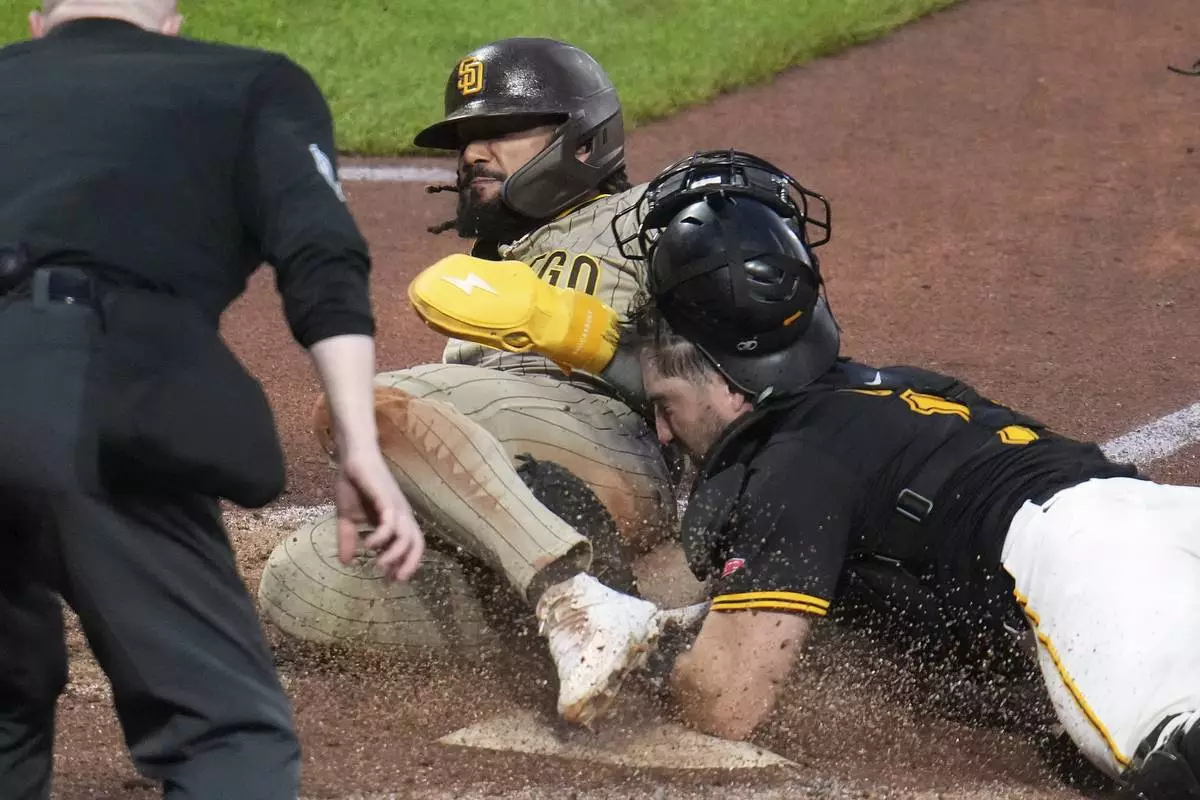
San Diego Padres' Fernando Tatis Jr., left, scores before Pittsburgh Pirates catcher Joey Bart can apply the tag on a wild pitch by pitcher David Bednar during the ninth inning of a baseball game in Pittsburgh, Saturday, May 3, 2025. (AP Photo/Gene J. Puskar)
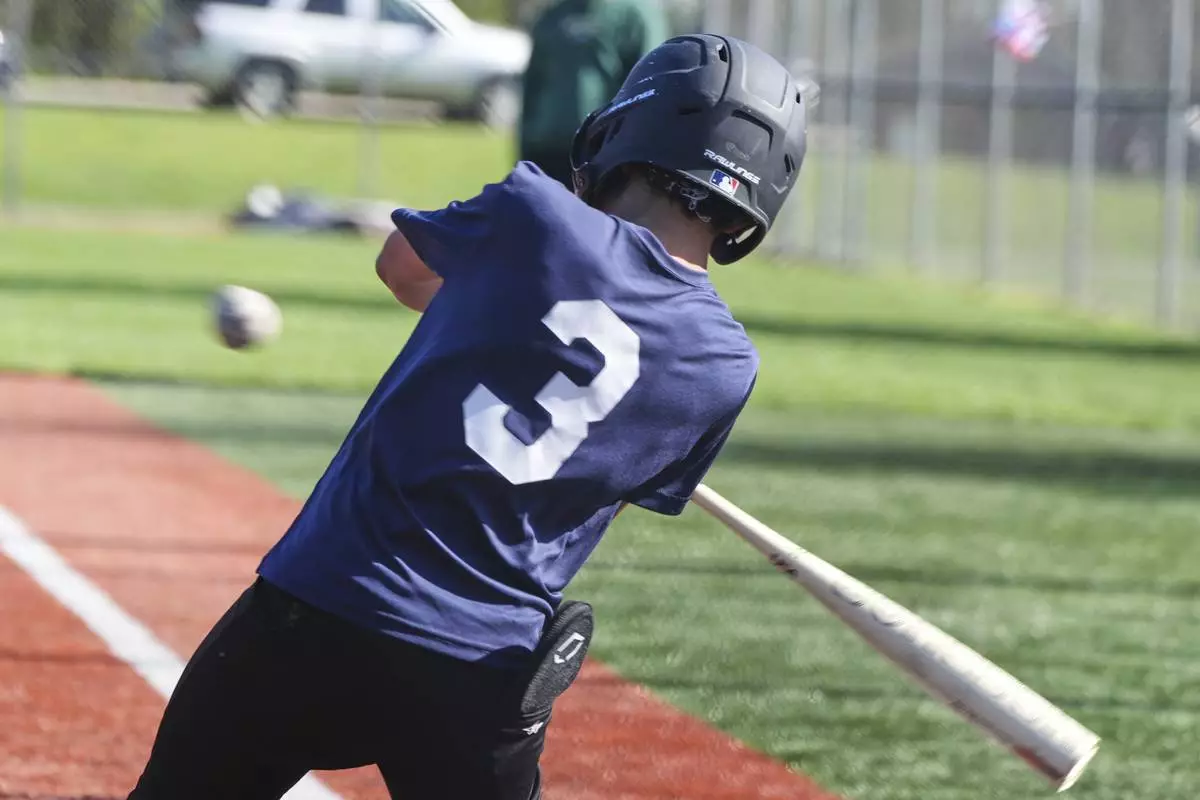
Youth ballplayer Josiah Jones bats during youth baseball game in Monroeville, Pa., with his sliding matt in his back pocket on April 27, 2025. (AP Photo/Gene J. Puskar)
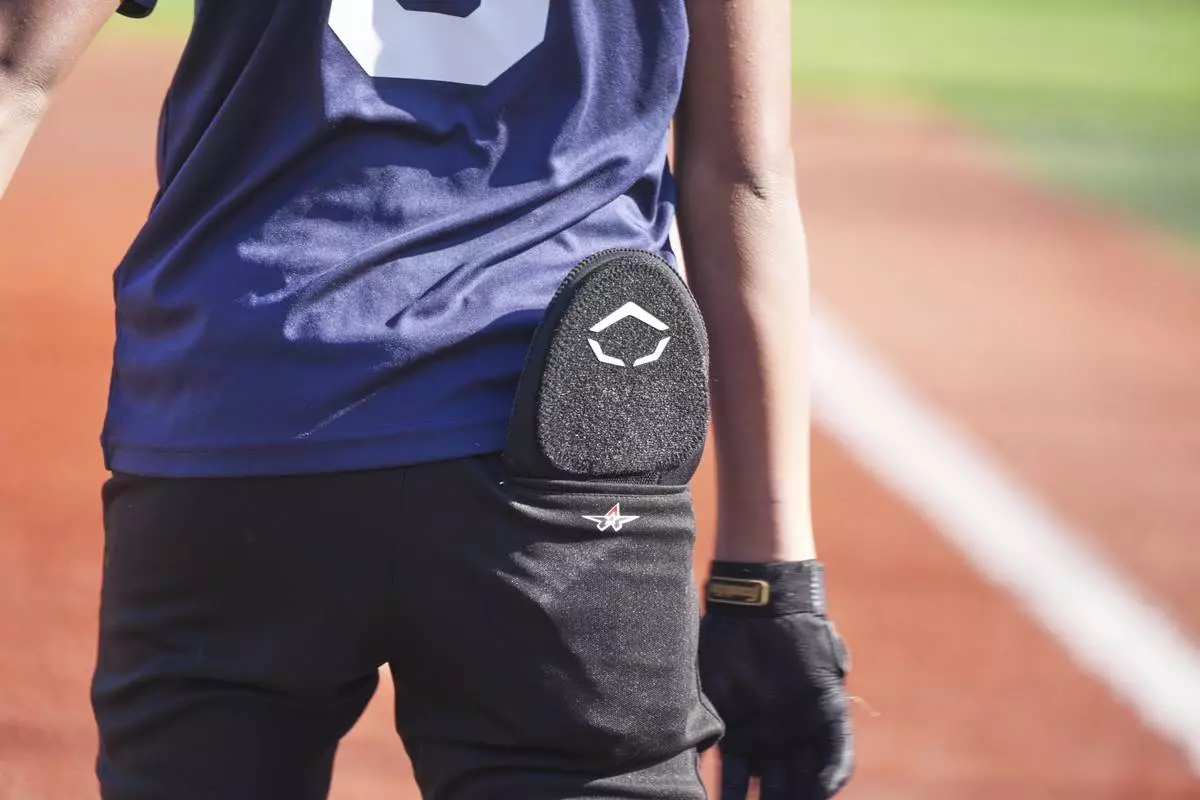
Youth ballplayer Josiah Jones bats during youth baseball game in Monroeville, Pa., with his sliding matt in his back pocket on April 27, 2025. (AP Photo/Gene J. Puskar)
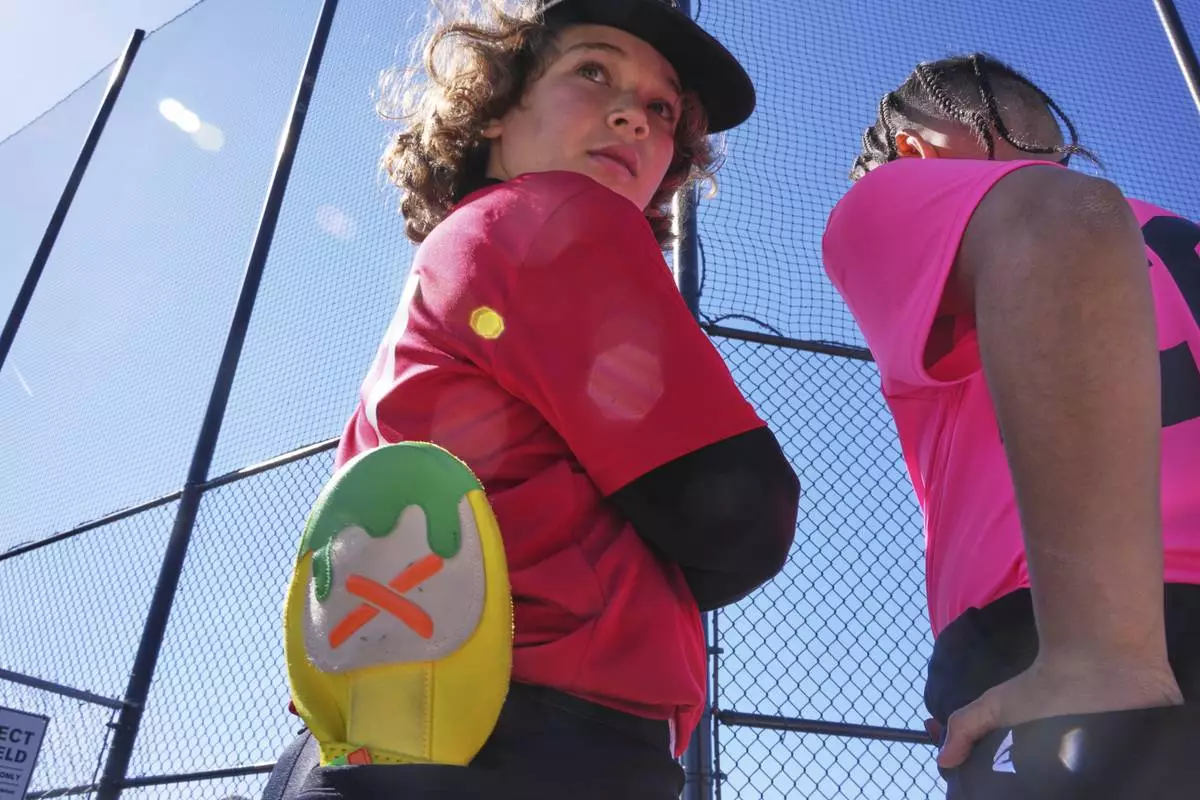
CORRECTS SPELLING TO COLES NOT COLE Youth ballplayer Grayson Coles, left, waits for his game to get underway with his Savannah Banana sliding mitt in his back pocket on April 27, 2025 in Monroeville, Pa. (AP Photo/Gene J. Puskar)