LONDON (AP) — Russian President Vladimir Putin is stalling efforts to end Russia’s war on Ukraine, and is testing the West with tactics that fall “just below the threshold of war,” the head of Britain’s MI6 spy agency said Monday.
Blaise Metreweli, the intelligence agency's new boss, said Putin is “dragging out negotiations” on stopping the conflict, and remains determined to “subjugate Ukraine and harass NATO members.”
Click to Gallery
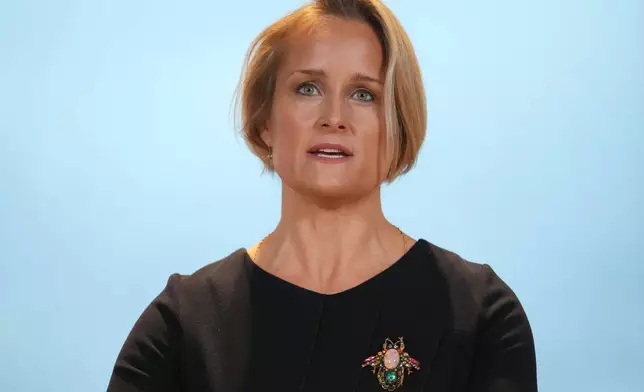
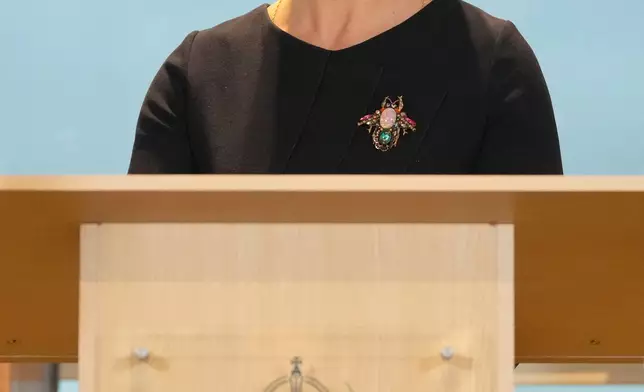
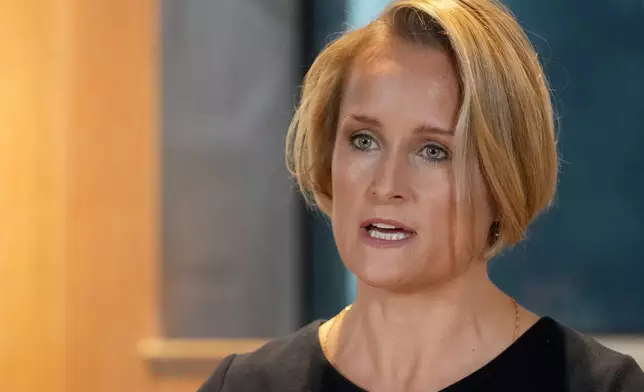
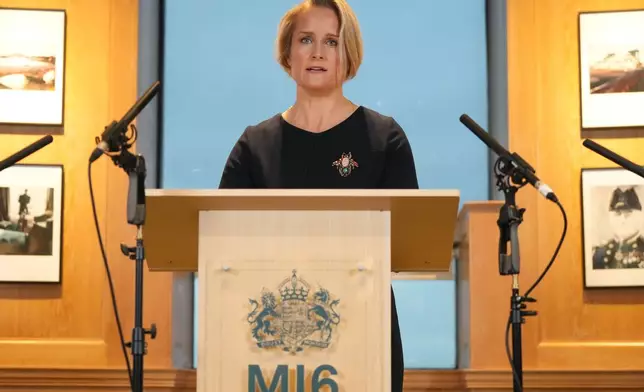
The new head of Britain's MI6 Blaise Metreweli makes her first public speech in London, Monday, Dec. 15, 2025. (AP Photo/Kirsty Wigglesworth,pool)
The new head of Britain's MI6 Blaise Metreweli makes her first public speech in London, Monday, Dec. 15, 2025. (AP Photo/Kirsty Wigglesworth,pool)
The new head of Britain's MI6 Blaise Metreweli makes her first public speech in London, Monday, Dec. 15, 2025. (AP Photo/Kirsty Wigglesworth,pool)
The new head of Britain's MI6 Blaise Metreweli makes her first public speech in London, Monday, Dec. 15, 2025. (AP Photo/Kirsty Wigglesworth,pool)
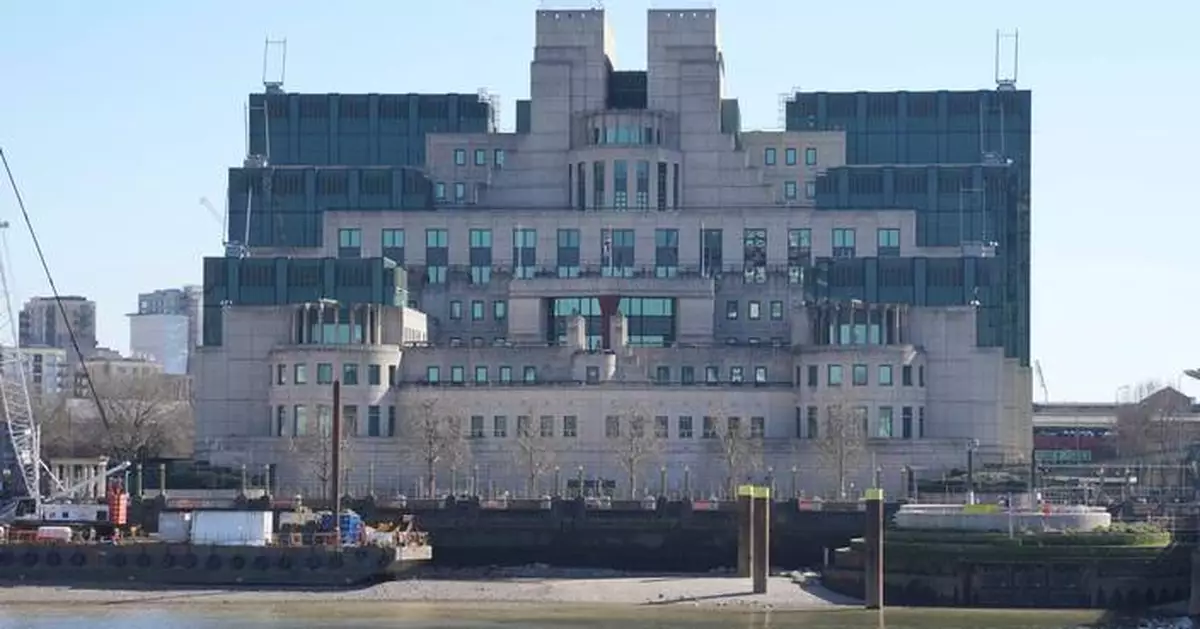
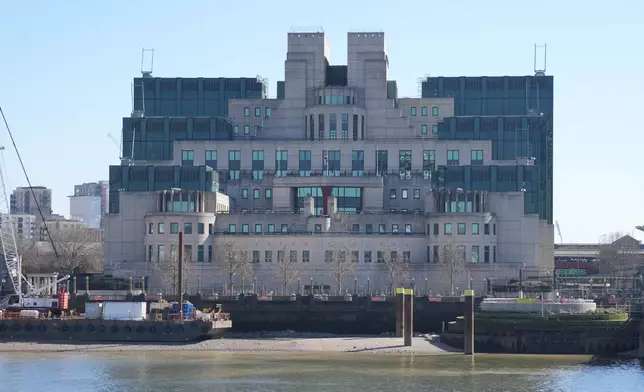
FILE - A general view of the headquarters of the Secret Intelligence Service, MI6, in London, March 18, 2025. (AP Photo/Kin Cheung, File)
“We are now operating in a space between peace and war,” Metreweli said of the wider global threat landscape in her first public speech since becoming chief of Britain’s foreign intelligence agency two months ago.
Metreweli accused Moscow of sponsoring cyberattacks on other countries’ critical infrastructure, drone incursions around European airports, campaigns of arson, sabotage and disinformation, and “aggressive activities in our seas, above and below the waves.”
“The export of chaos is a feature, not a bug, in this Russian approach to international engagement, and we should be ready for this to continue until Putin is forced to change his calculus,” she said.
Metreweli, 48, is the first woman to head the U.K.’s 116-year-old foreign intelligence service. She gave reporters a rare glimpse inside MI6 headquarters in London, which she noted was “familiar to movie fans everywhere” from the James Bond spy thrillers.
Speaking inside the spy chief’s wood-paneled dining room overlooking the River Thames, she said rapidly evolving technology is rewriting the rules of conflict, while hybrid threats from states and extremist groups mean “the front line is everywhere.”
The speech made a brief reference to China’s “implications for national security,” but Metreweli focused on the threat from an “aggressive, expansionist and revisionist Russia.”
“Russia is testing us in the gray zone with tactics that are just below the threshold of war,” she said.
The warning came amid a flurry of diplomatic meetings aimed at ending the almost four-year war sparked by Russia’s invasion of its neighbor.
Ukrainian President Volodymyr Zelenskyy was in Berlin Monday to meet U.S. envoys, and will meet later with the leaders of Germany, France and Britain. Kyiv’s allies are trying to bolster support for Ukraine amid Washington’s pressure to swiftly accept a U.S.-brokered peace deal.
The MI6 chief, known as C, is the only employee of the secretive agency whose name is made public. In a speech that, unusually, touched on her personal backstory, Metreweli said that coming “from a family shaped by devastating conflict, I grew up with a deep sense of gratitude for the U.K.’s precious democracy and freedom.”
After Metreweli’s appointment was announced in June, media reported that her grandfather, Constantine Dobrowolski, had been a Nazi spy in Ukraine during World War II.
MI6 said Metreweli never met her grandfather.
Metreweli, who has almost three decades of clandestine service and a background in anthropology, psychology and AI, was previously the MI6 director of technology and innovation — the real-world equivalent of the fictional Bond gadget-master Q.
She said technological savvy and human intelligence are both key to combating “an interlocking web” of security threats, and MI6 officers “must be as comfortable with lines of code as we are with human sources, as fluent in Python as we are in multiple languages.”
“Our world is more dangerous and contested now than it has been for decades,” she said, adding that “we are being contested from sea to space, from the battlefield to the boardroom — and even our brains, as disinformation manipulates our understanding of each other and ourselves.
“The foundations of trust in our societies are eroding. Information, once a unifying force, is increasingly weaponized,” she added.
In a warning to Britain’s adversaries, she said MI6 will “sharpen our edge” and “take calculated risks.” She said the agency should tap into “our historical, SOE instincts,” referring to the clandestine Special Operations Executive that sent agents on daring sabotage missions in Nazi-occupied Europe during World War II.
“We will never stoop to the tactics of our opponents. But we must seek to outplay them,” she said.
The speech is the latest in a series of warnings by Western defense and security authorities about the growing hybrid threat from states such as Russia, Iran and to an extent China, whose use of cyber tools, espionage and influence operations they say threatens global stability.
Last week, the U.K. imposed sanctions on several Russian media outlets for alleged information warfare and two Chinese tech firms for “vast and indiscriminate cyberactivities.”
In a separate speech, the head of the British military, Air Chief Marshal Richard Knighton, said that Putin’s aim is “to challenge, limit, divide and ultimately destroy NATO.”
Knighton said at the Royal United Services Institute think tank that the war in Ukraine shows that Putin “threatens the whole of NATO, including the U.K.” He argued that Britain needs both a stronger military and more resilient infrastructure to meet the evolving threat.
“Our objective must be to avoid war, but the price of maintaining peace is rising," he said.
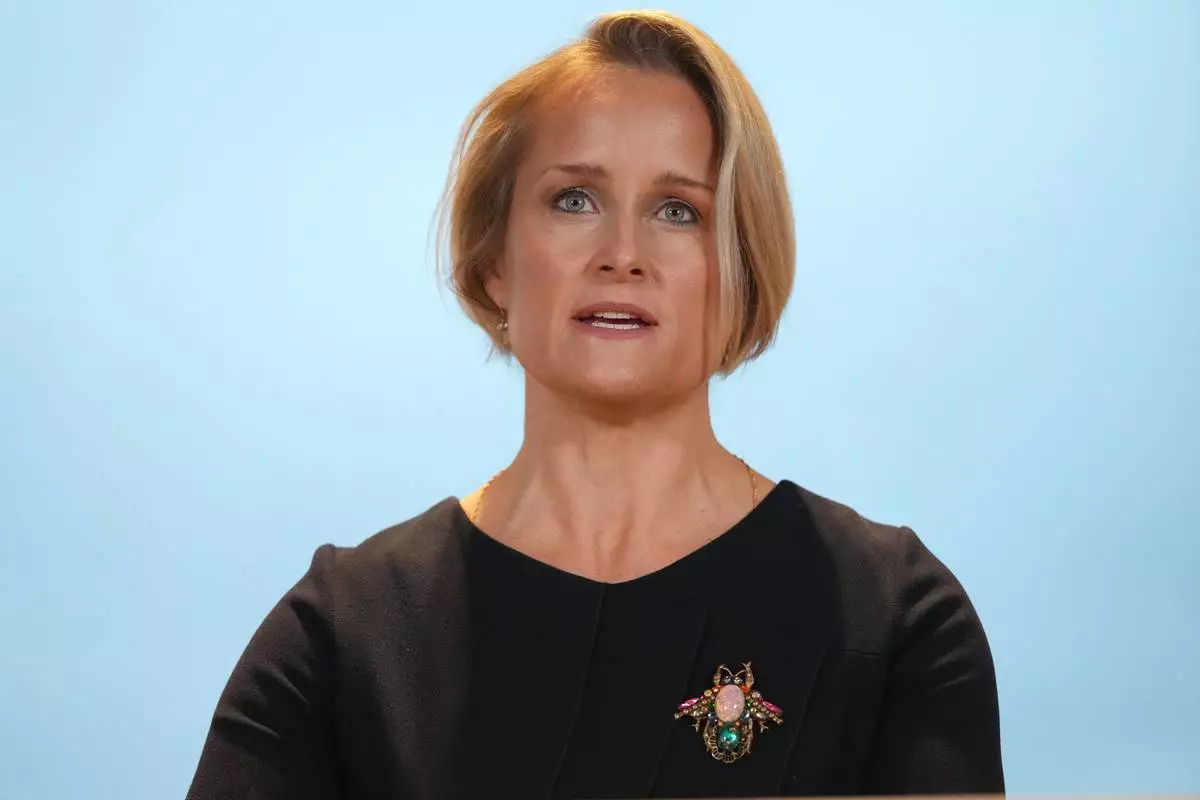
The new head of Britain's MI6 Blaise Metreweli makes her first public speech in London, Monday, Dec. 15, 2025. (AP Photo/Kirsty Wigglesworth,pool)
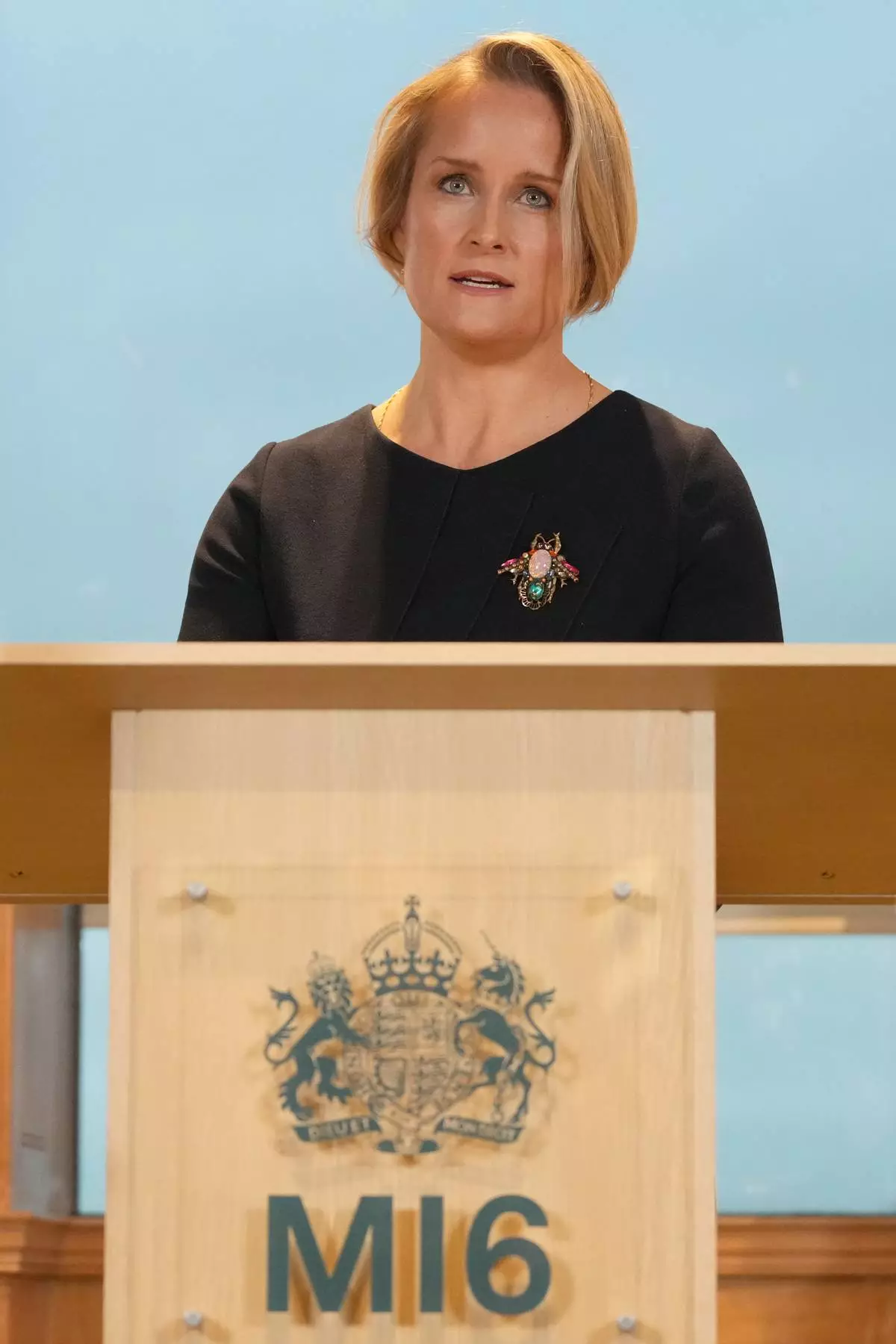
The new head of Britain's MI6 Blaise Metreweli makes her first public speech in London, Monday, Dec. 15, 2025. (AP Photo/Kirsty Wigglesworth,pool)
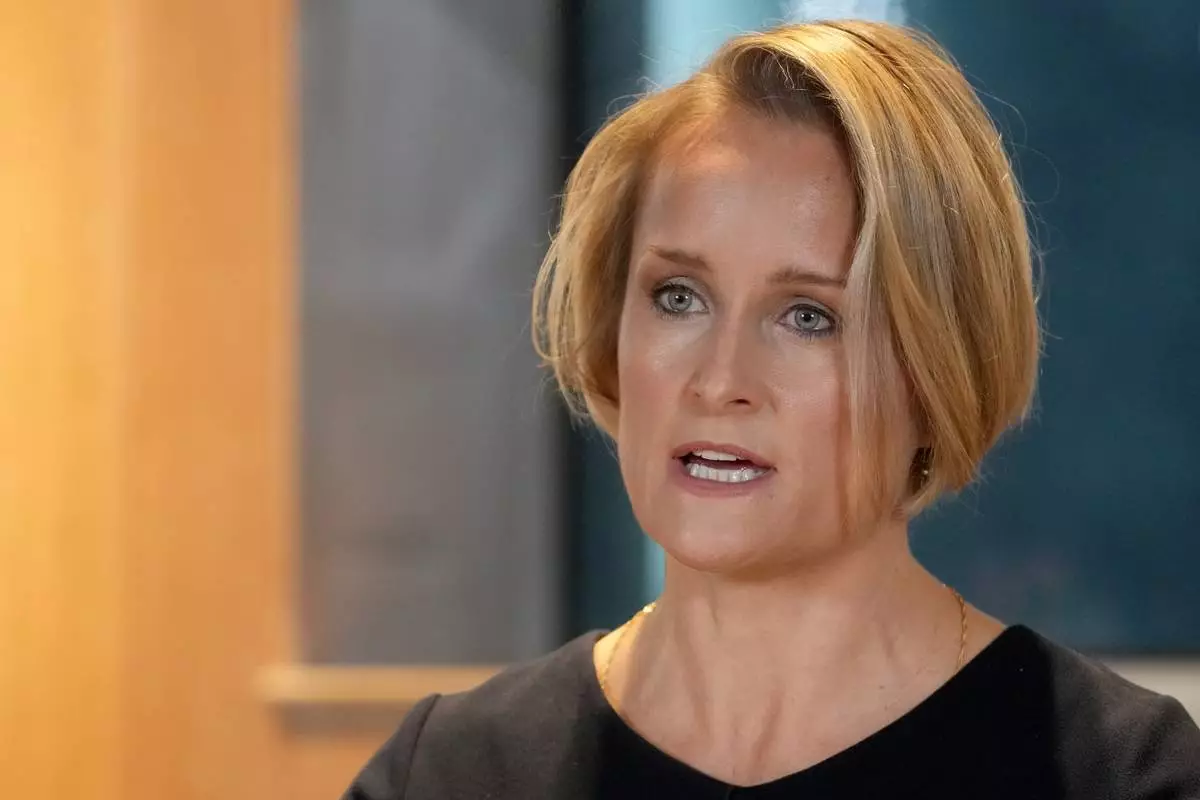
The new head of Britain's MI6 Blaise Metreweli makes her first public speech in London, Monday, Dec. 15, 2025. (AP Photo/Kirsty Wigglesworth,pool)
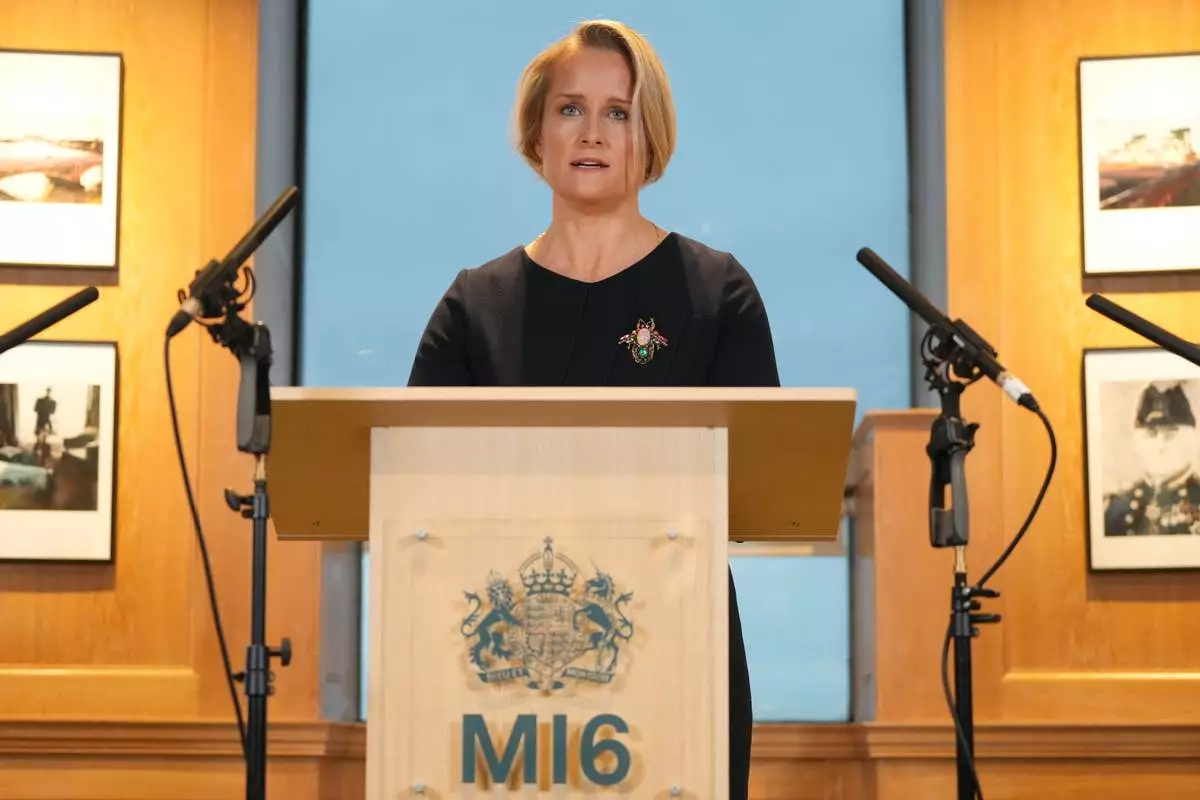
The new head of Britain's MI6 Blaise Metreweli makes her first public speech in London, Monday, Dec. 15, 2025. (AP Photo/Kirsty Wigglesworth,pool)
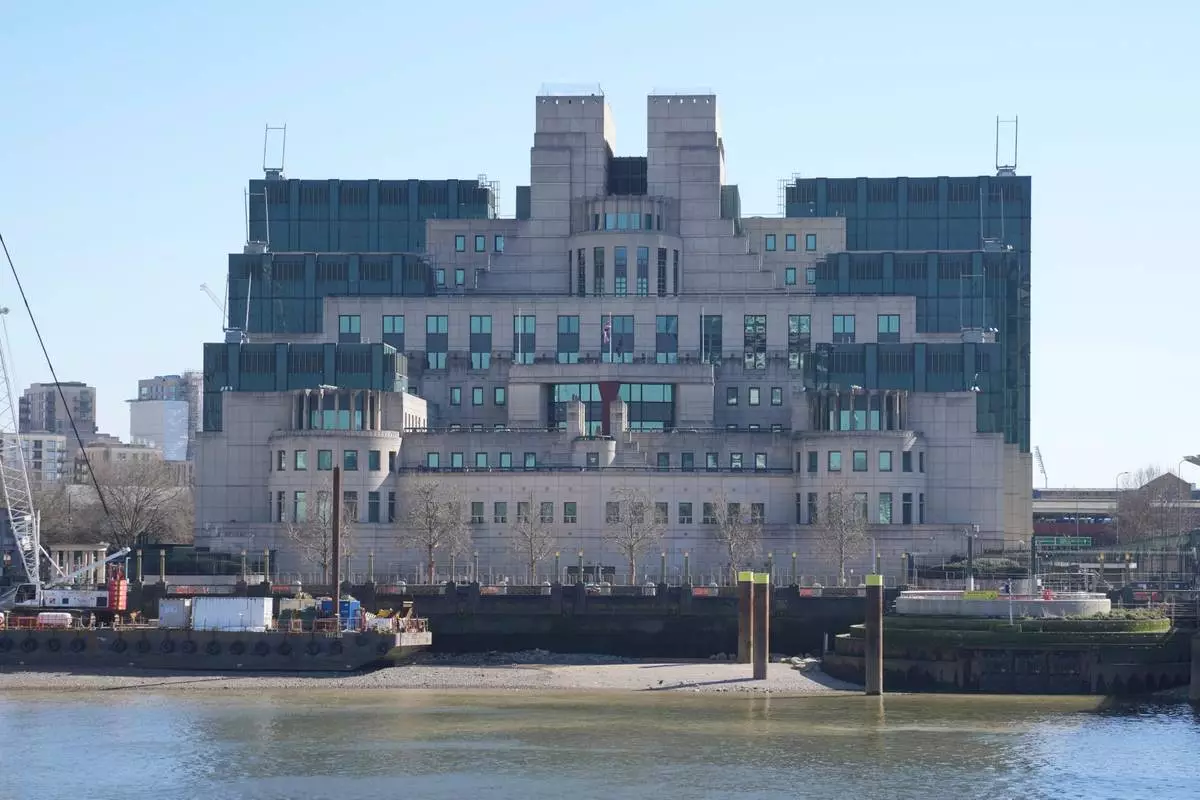
FILE - A general view of the headquarters of the Secret Intelligence Service, MI6, in London, March 18, 2025. (AP Photo/Kin Cheung, File)
L’ILE LONGUE, France (AP) — French President Emmanuel Macron announced Monday that France will increase its nuclear arsenal and, for the first time, allow the temporary deployment of its nuclear-armed aircraft to allied countries, in a new strategy aimed at strengthening Europe’s independence.
In speech planned long before the most recent outbreak of war in Iran, Macron outlined how French nuclear weapons fit into the security of Europe as leaders there express concerns over recurring tensions with U.S. President Donald Trump and Russia’s full-scale invasion of Ukraine.
France has been the only nuclear power in the European Union since Britain’s exit from the bloc in 2020.
“To be free, one needs to be feared,” Macron said at a military base at L’Ile Longue on France's Atlantic coast that hosts the country’s ballistic missile submarines.
Macron said the new posture, which he called “forward deterrence,” could “provide for the temporary deployment of elements of our strategic air forces to allied countries," but said there would be no sharing of decision-making with any other nation regarding the use of the nuclear weapons.
Talks about such deterrence cooperation have started with Britain, Germany, Poland, the Netherlands, Belgium, Greece, Sweden and Denmark, Macron said.
France also will allow partners to participate in deterrence exercises and allow allies’ non-nuclear forces to participate in France’s nuclear activities, said Macron, who is the commander-in-chief of the armed forces under the French constitution.
European partners welcomed the strategy.
In a joint statement, Macron and German Chancellor Friedrich Merz said the two countries would deepen integration in deterrence starting this year, “including German conventional participation in French nuclear exercises and joint visits to strategic sites.”
In a letter to Dutch lawmakers, Defense Minister Dilan Yesilgöz-Zegerius and Foreign Minister Tom Berendsen said the Netherlands was in strategic talks with France on nuclear deterrence as "a supplement to, and not a replacement for, NATO’s collective defense and nuclear deterrence capabilities."
Polish Prime Minister Donald Tusk wrote on X that “we are arming up together with our friends so that our enemies will never dare to attack us.”
Macron also announced that France will increase its number of nuclear warheads from the current level of below 300, but did not give a figure for the increase. It will be the first time France increases its nuclear arsenal since at least 1992.
“I have decided to increase the numbers of warheads of our arsenal,” Macron said. “My responsibility is to ensure that our deterrence maintains — and will maintain in the future — its assured destructive power."
“If we had to use our arsenal, no state, however powerful, could shield itself from it, and no state, however vast, would recover from it,” Macron said.
European leaders have voiced growing doubts about U.S. commitments to help defend Europe under the so-called nuclear umbrella, a policy long intended to ensure that allies — particularly NATO members — would be protected by American nuclear forces in the event of a threat.
Macron said that recent changes in U.S. defense strategy amid the emergence of new threats have demonstrated a refocusing of American priorities and have encouraged Europe to take more direct responsibility for its own security. He said Europeans should take their destiny more firmly into their hands.
Some European nations have already taken up an offer Macron made last year to discuss France’s nuclear deterrence.
Last month, Merz said he’d had “initial talks” with Macron on the issue and had publicly theorized about German Air Force planes possibly being used to carry French nuclear bombs. But Macron ruled out any such possibility in Monday's speech.
France and Britain also adopted a joint declaration in July that allows both nations' nuclear forces, while independent, to be “coordinated.” The U.K., no longer an EU member but a NATO ally, is the only other country in Western Europe with a nuclear deterrent.
Macron has consistently insisted any decision to use France’s nuclear weapons would remain only in the hands of the French president.
Macron added that the evolution of France competitors’ defenses, the emergence of regional powers, the possibility of coordination among adversaries, and the risks linked to proliferation led him to the conclusion that it was essential for France to enhance its nuclear arsenal.
The International Campaign to Abolish Nuclear Weapons, which won the Nobel Peace Prize in 2017, said Macron’s plan could cost billions of dollars, jeopardize France's international commitments and lead Russia to interpret it as a major provocation that could risk escalation.
“These are indiscriminate weapons that are banned under the Treaty on the Prohibition of Nuclear Weapons,” said the group’s executive director, Melissa Parke. "This announcement from French President Macron is a direct threat to the peace and security of the region, and the world.
“France already spent $6 billion on its nuclear weapons in 2024 and it is unclear how much this unexpected increase will add to that exorbitant sum. This is not progress, it’s a nuclear arms race that no one can afford,” Parke said.
Petrequin reported from Paris. Jamey Keaten in Geneva, Mike Corder in The Hague, Netherlands, and Claudia Ciobanu in Warsaw contributed to this report.
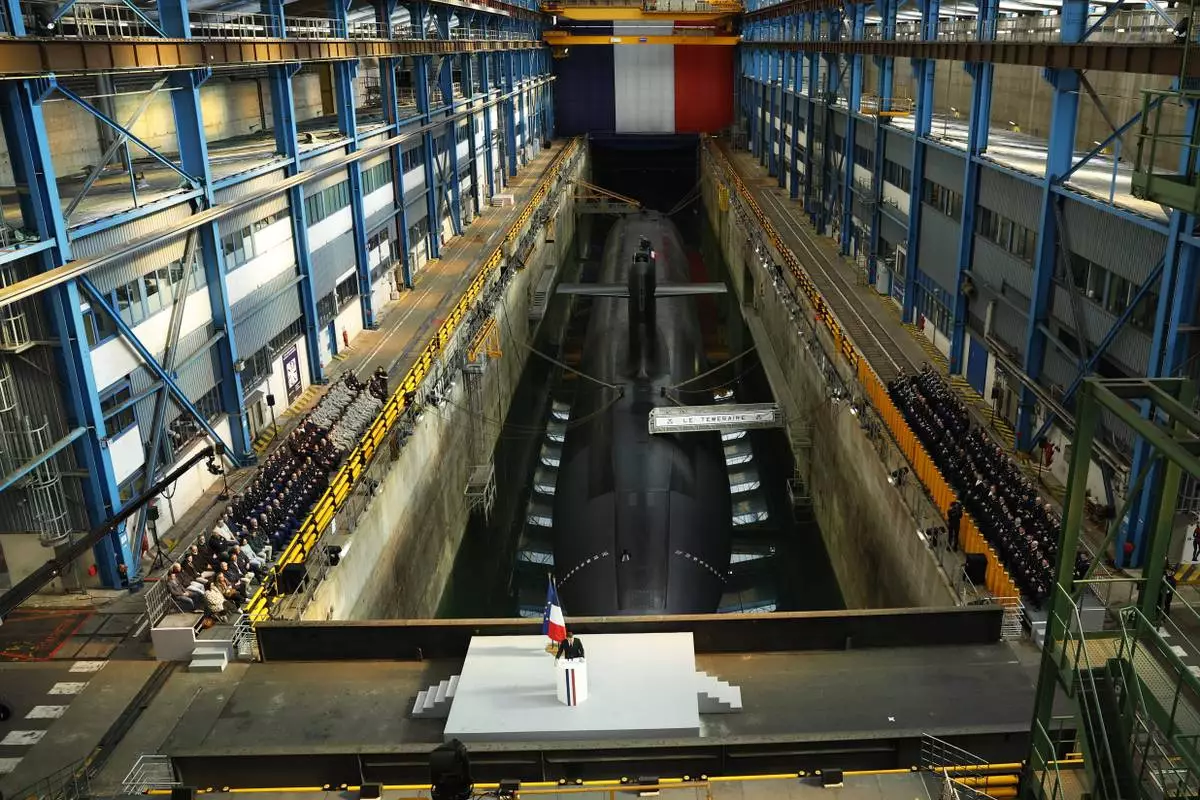
French President Emmanuel Macron delivers a speech next to the submarine 'Le Temeraire' (The Temerarious) at the Nuclear submarines Navy base of Ile Longue in Crozon, France, Monday March 2, 2026. (Yoan Valat/Pool Photo via AP)
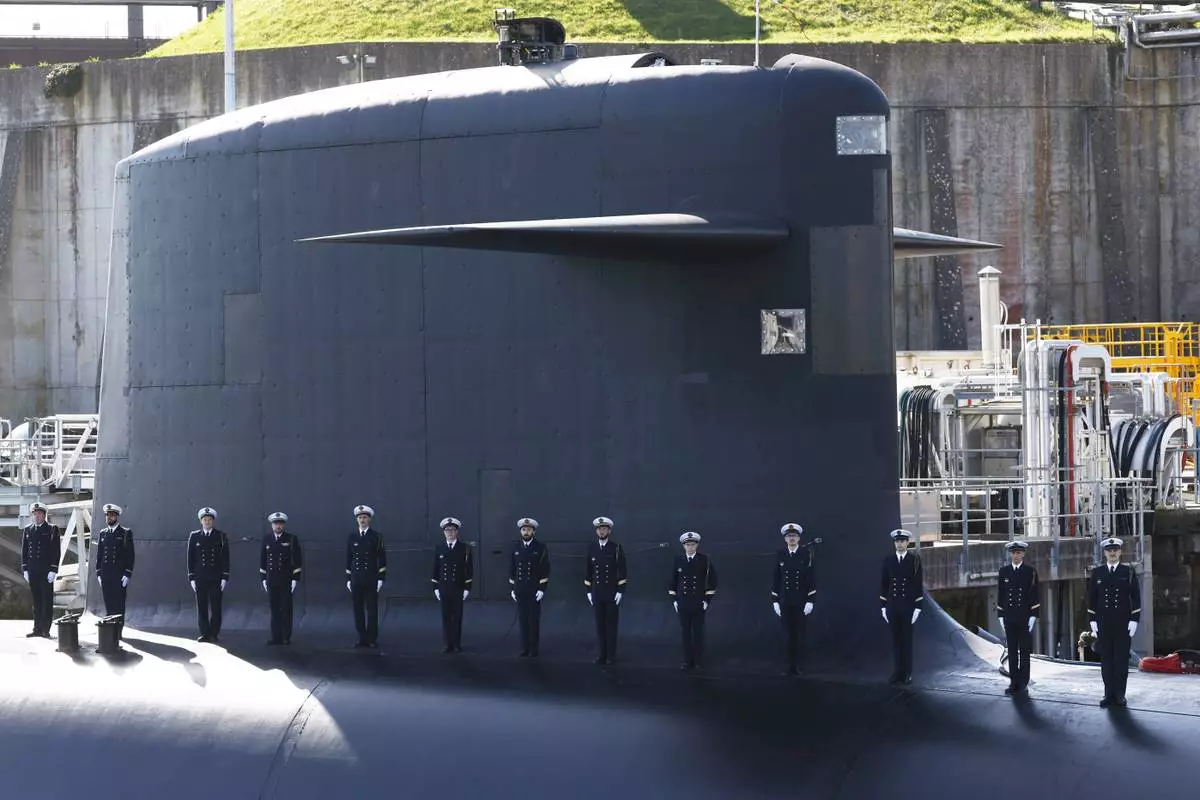
Members of the French Navy are aboard a submarine awaiting the arrival of French President Emmanuel Macron at the nuclear submarine navy base of Ile Longue in Crozon, France, Monday March 2, 2026. (Yoan Valat/Pool Photo via AP)
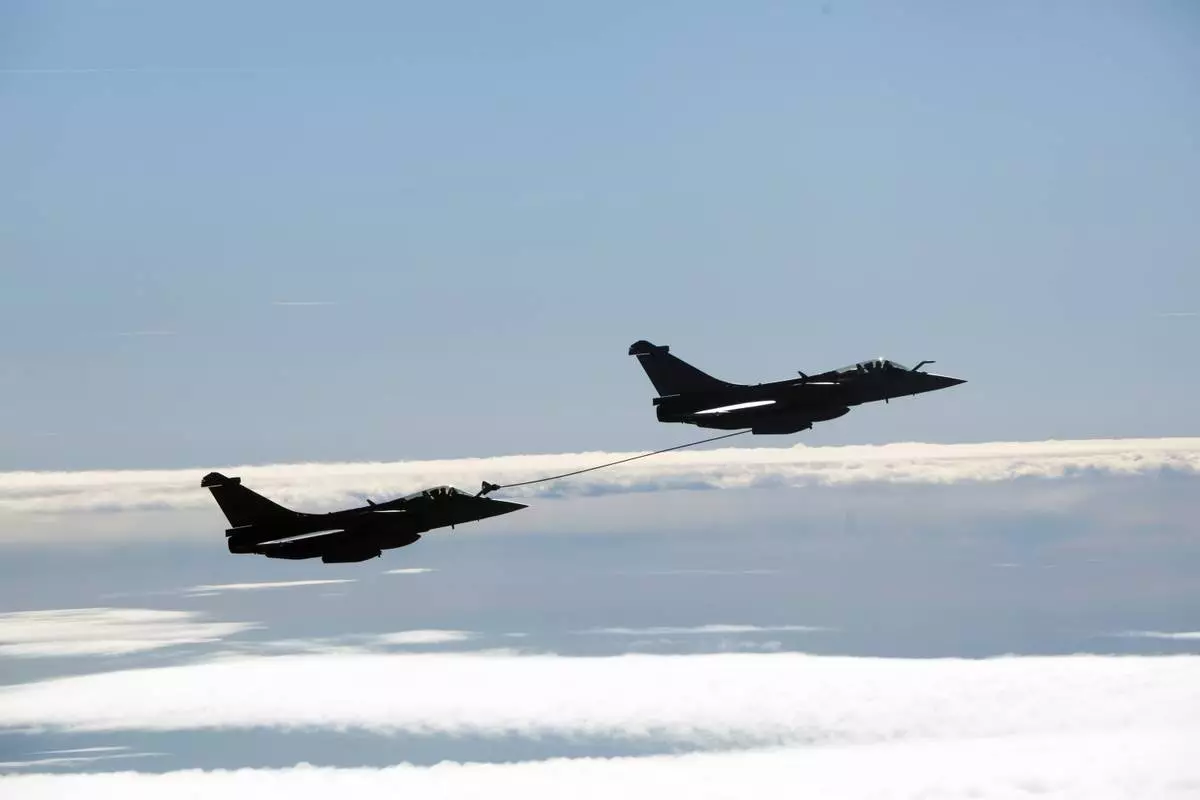
A refueling operation between two Rafale aircraft takes place moments before the arrival of French President Emmanuel Macron at the nuclear submarine navy base of Ile Longue in Crozon, France, Monday March 2, 2026.(Yoan Valat/Pool Photo via AP)
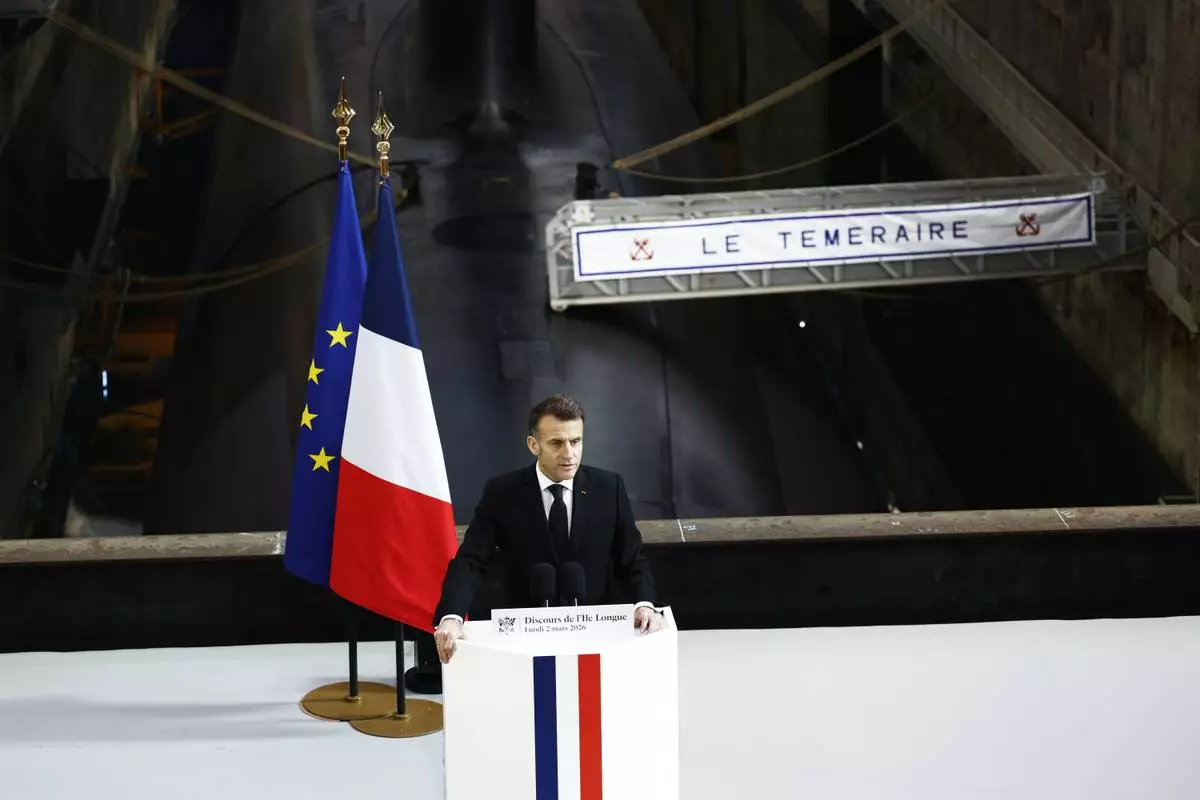
French President Emmanuel Macron delivers a speech next to the submarine 'Le Temeraire' (The Temerarious) at the Nuclear submarines Navy base of Ile Longue in Crozon, France, Monday March 2, 2026. (Yoan Valat/Pool Photo via AP)
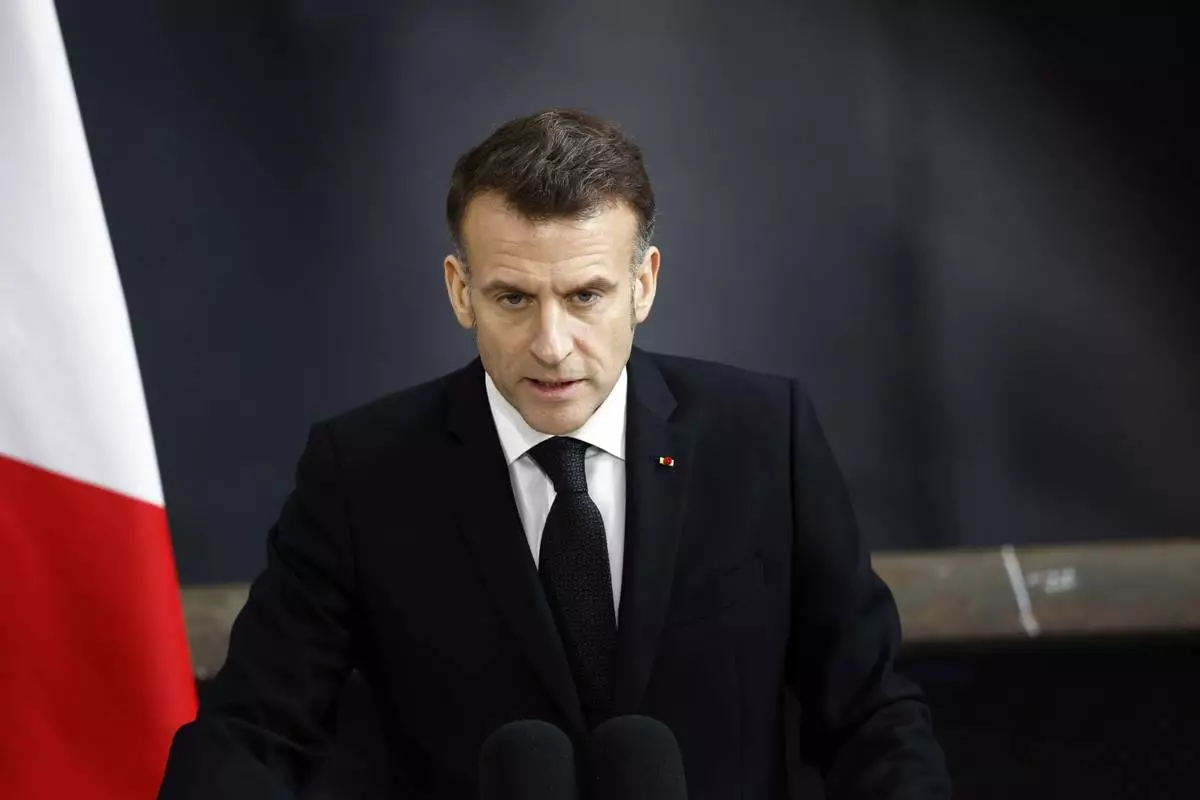
French President Emmanuel Macron delivers a speech next to the submarine 'Le Temeraire' (The Temerarious) at the Nuclear submarines Navy base of Ile Longue in Crozon, France, Monday March 2, 2026. (Yoan Valat/Pool Photo via AP)
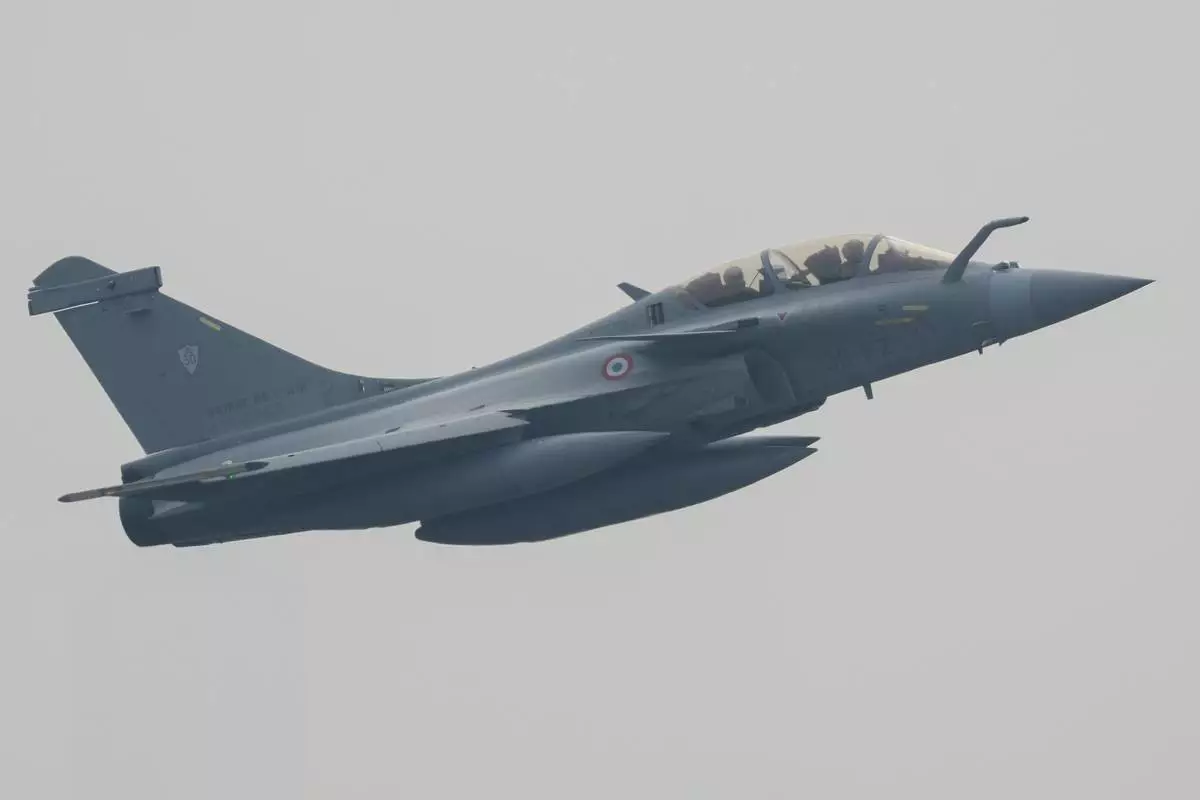
FILE - France's Rafale B twin-seat multirole fighter performs during the Pegase 2024 mission at Halim Perdanakusuma airport in Jakarta, Indonesia, Wednesday, July 24, 2024. (AP Photo/Tatan Syuflana, File)
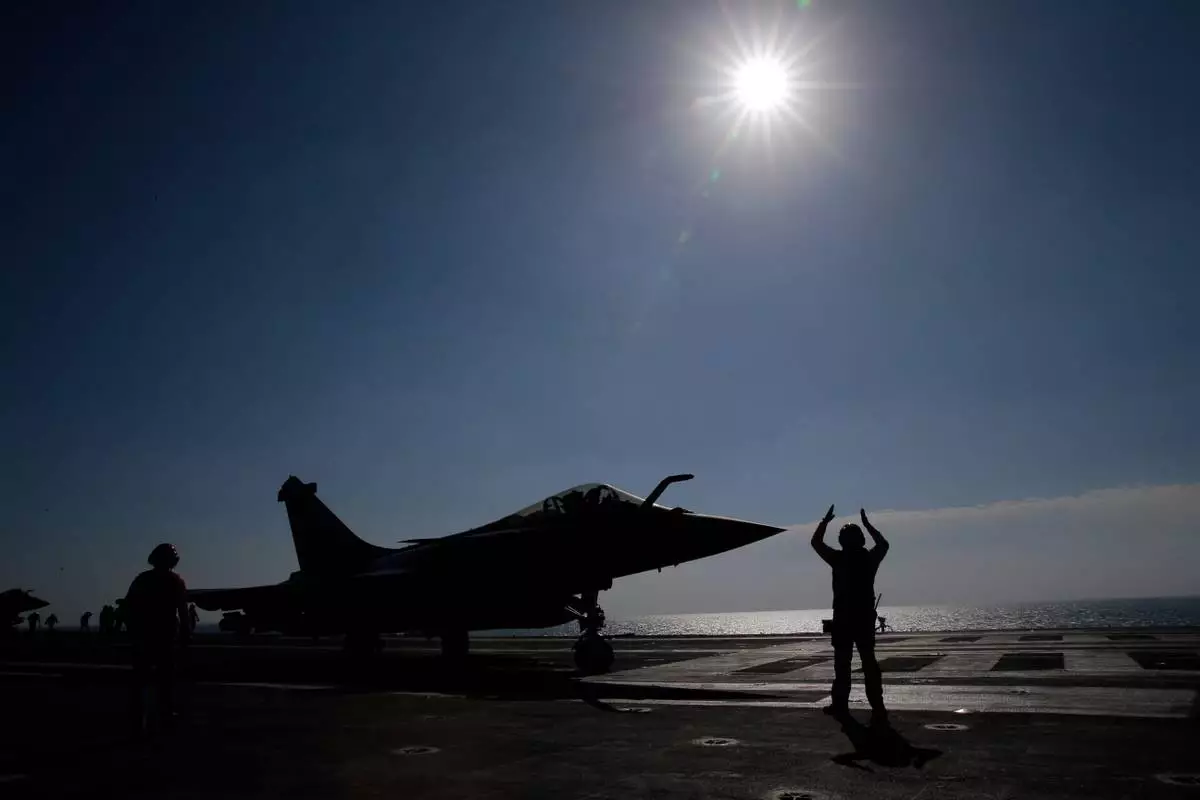
FILE - A Rafale M single seater fighter jet is catapulted on France's flagship Charles de Gaulle aircraft carrier in the Persian Gulf, Jan. 12, 2016. (AP Photo/Christophe Ena, File)
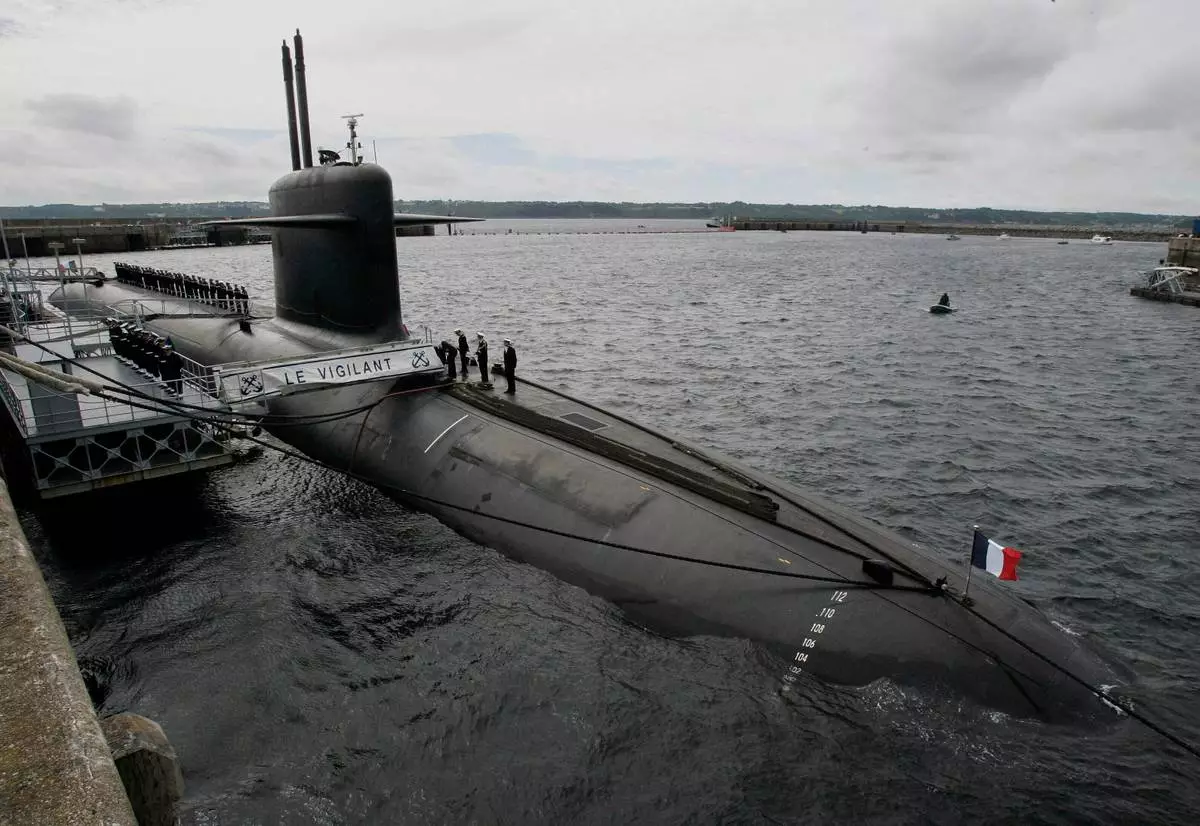
FILE - French Marine officers wait atop "Le Vigilant" nuclear submarine at L'Ile Longue military base, near Brest, Brittany, July 13, 2007. (AP Photo/Francois Mori, Pool, File)