Some of the United States' most important historical documents are beginning a first-of-its kind journey Monday as part of the country's 250th anniversary commemoration.
Typically housed in highly controlled vaults under the watch of preservation experts at the National Archives, documents such as the 1783 Treaty of Paris that formally ended the Revolutionary War and the 1774 Articles of Association that urged colonists to boycott British goods are rarely moved.
But those documents, signed by George Washington, John Adams, Benjamin Franklin and other American revolutionary leaders, will be making their way across the country and put on display for free at local museums.
“It's tangible history, and tangible history inspires,” said Jim Byron, senior adviser to the acting archivist of the United States. “These documents have not traveled, and they’ve certainly not traveled collectively, ever. They are here in vaults.”
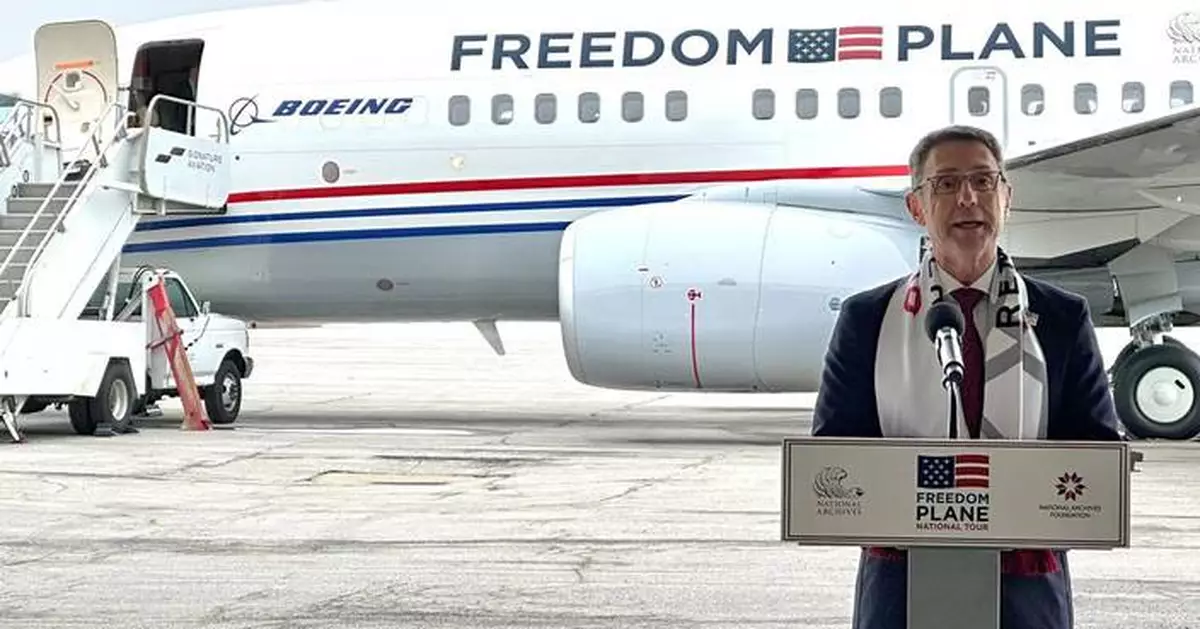
The Boeing 737 “Freedom Plane” transporting the documents is just one of many events and activities planned across the country to mark America's upcoming 250th anniversary celebrating the signing of the Declaration of Independence on July 4, 1776. A congressionally chartered commission, America 250, and a separate White House-led initiative, called Freedom 250, are both coordinating events, an overlap that has faced some criticism in Washington.
Among the planned activities are a fleet of mobile museums driving across the country, a story collection initiative and a Great American State Fair on the National Mall in Washington, D.C. President Donald Trump has even announced plans for a “ Patriot Games ” sporting event featuring high school athletes and a UFC mixed-martial arts fight at the White House.
The “Freedom Plane" is scheduled to depart Ronald Reagan Washington National Airport on Monday and head to its first stop in Kansas City, Missouri, where the documents will be transferred to the National WWI Museum and Memorial. The records include a rare original engraving of the Declaration of Independence printed in 1823 from a copperplate of the original; the Oaths of Allegiance signed in 1778 by George Washington, Alexander Hamilton and other officers of the Continental Army; and a rare draft copy of the U.S. Constitution that includes handwritten notes by the delegates.
Other planned stops will be in Atlanta, Los Angeles, Houston, Denver, Miami, the Detroit suburb of Dearborn and Seattle.
“The reality that these documents are leaving D.C. and coming to the heartland is fantastic,” said Matt Naylor, president and CEO of the National World War I Museum and Memorial, where they will be on display for a little over two weeks starting Friday. “There's a lot of excitement about that and a lot of talk in and around the city about what that means.”
Naylor said the early response has been overwhelming. Local schools have already booked visits for more than 5,000 schoolchildren.
“That’s indicating that there’s a lot of enthusiasm for this,” he said.
The "Freedom Plane" tour was inspired in part by the “American Freedom Train” that toured 48 states in 1975 and 1976 as part of the country's bicentennial celebration. It carried various pieces of American history, including the original Louisiana Purchase documents, Judy Garland's dress from The Wizard of Oz and Jesse Owens' gold medals from the 1936 Olympic Games.
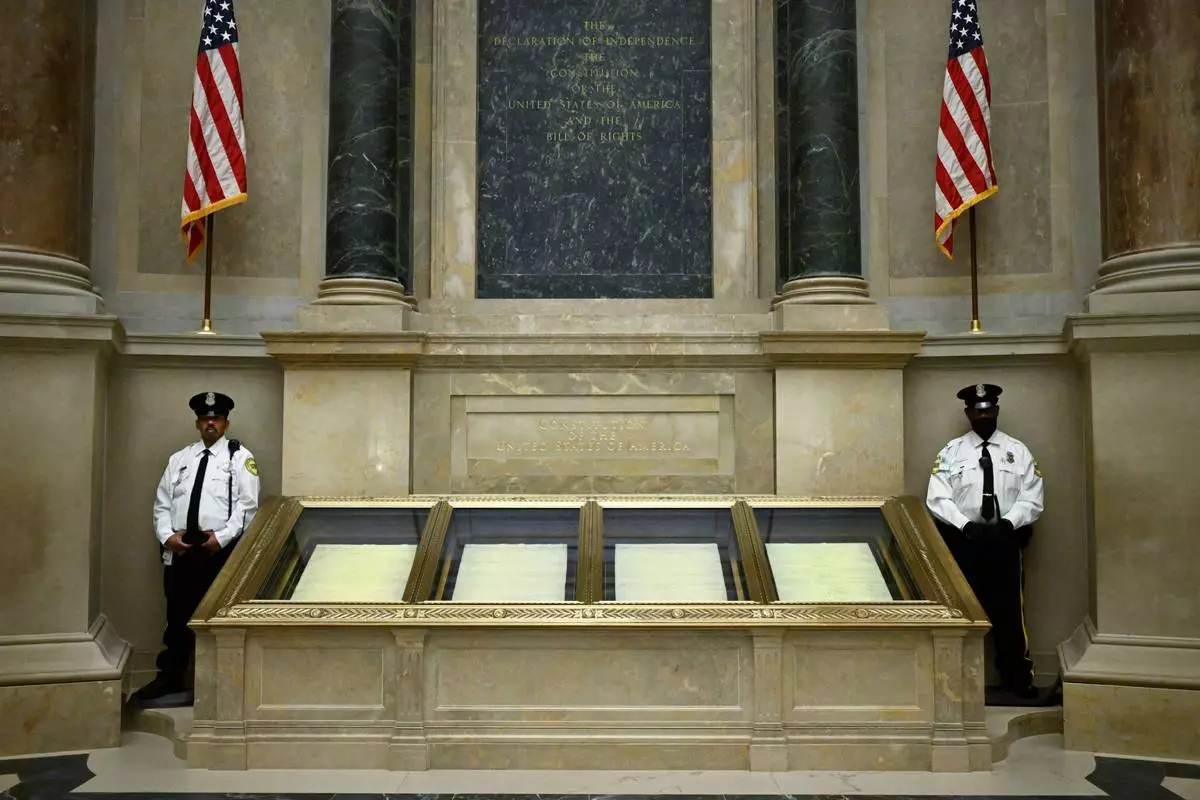
FILE - Two guards stand their posts at the cases containing the United States Constitution at the National Archives Jan. 29, 2026, in Washington. (AP Photo/John McDonnell, File)
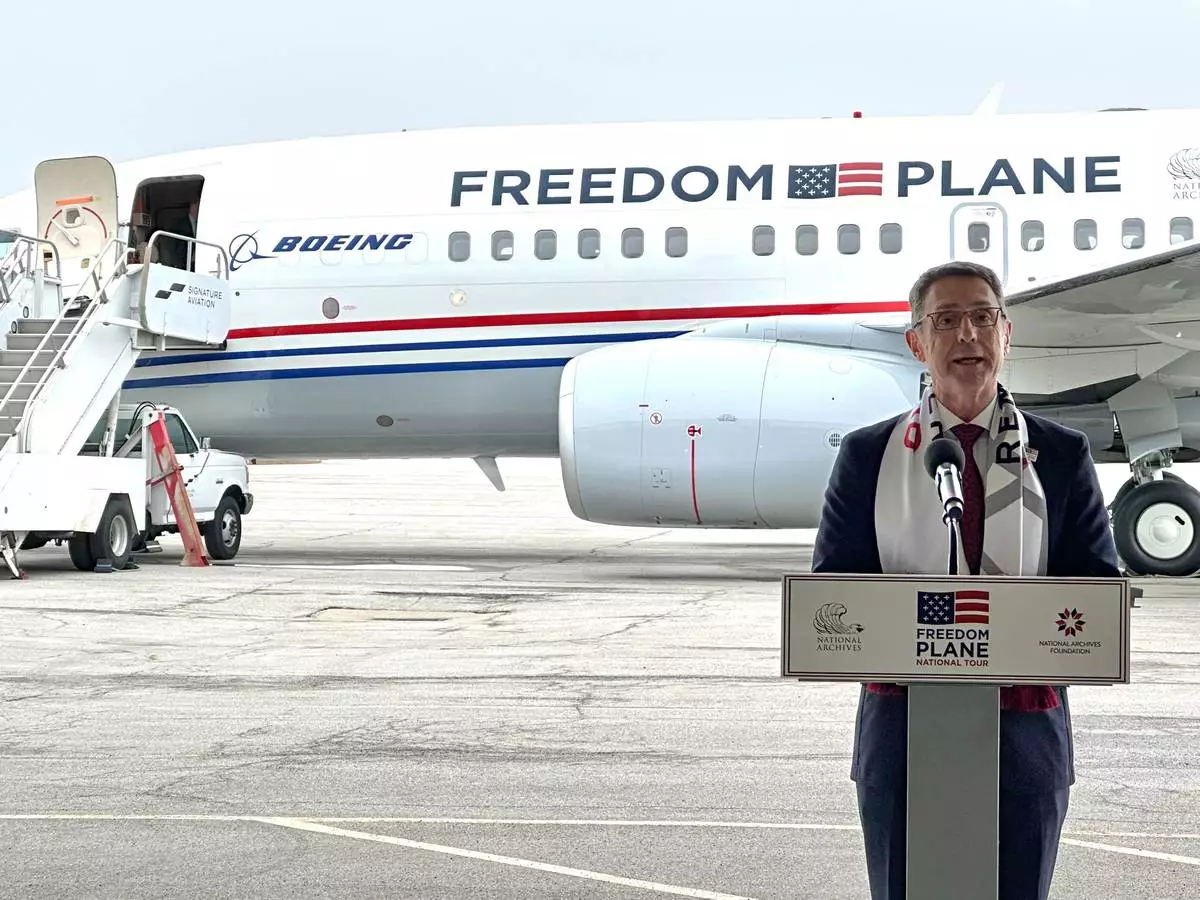
Matthew Naylor, President and CEO of the National WWI Museum and Memorial, speaks to the media after the "Freedom Plane" landed in Kansas City, Mo., Monday, March 2, 2026. (AP Photo/Nick Ingram)
L’ILE LONGUE, France (AP) — French President Emmanuel Macron announced Monday that France will increase its nuclear arsenal and, for the first time, allow the temporary deployment of its nuclear-armed aircraft to allied countries, in a new strategy aimed at strengthening Europe’s independence.
In speech planned long before the most recent outbreak of war in Iran, Macron outlined how French nuclear weapons fit into the security of Europe as leaders there express concerns over recurring tensions with U.S. President Donald Trump and Russia’s full-scale invasion of Ukraine.
France has been the only nuclear power in the European Union since Britain’s exit from the bloc in 2020.
“To be free, one needs to be feared,” Macron said at a military base at L’Ile Longue on France's Atlantic coast that hosts the country’s ballistic missile submarines.
Macron said the new posture, which he called “forward deterrence,” could “provide for the temporary deployment of elements of our strategic air forces to allied countries," but said there would be no sharing of decision-making with any other nation regarding the use of the nuclear weapons.
Talks about such deterrence cooperation have started with Britain, Germany, Poland, the Netherlands, Belgium, Greece, Sweden and Denmark, Macron said.
France also will allow partners to participate in deterrence exercises and allow allies’ non-nuclear forces to participate in France’s nuclear activities, said Macron, who is the commander-in-chief of the armed forces under the French constitution.
European partners welcomed the strategy.
In a joint statement, Macron and German Chancellor Friedrich Merz said the two countries would deepen integration in deterrence starting this year, “including German conventional participation in French nuclear exercises and joint visits to strategic sites.”
In a letter to Dutch lawmakers, Defense Minister Dilan Yesilgöz-Zegerius and Foreign Minister Tom Berendsen said the Netherlands was in strategic talks with France on nuclear deterrence as "a supplement to, and not a replacement for, NATO’s collective defense and nuclear deterrence capabilities."
Polish Prime Minister Donald Tusk wrote on X that “we are arming up together with our friends so that our enemies will never dare to attack us.”
Macron also announced that France will increase its number of nuclear warheads from the current level of below 300, but did not give a figure for the increase. It will be the first time France increases its nuclear arsenal since at least 1992.
“I have decided to increase the numbers of warheads of our arsenal,” Macron said. “My responsibility is to ensure that our deterrence maintains — and will maintain in the future — its assured destructive power."
“If we had to use our arsenal, no state, however powerful, could shield itself from it, and no state, however vast, would recover from it,” Macron said.
European leaders have voiced growing doubts about U.S. commitments to help defend Europe under the so-called nuclear umbrella, a policy long intended to ensure that allies — particularly NATO members — would be protected by American nuclear forces in the event of a threat.
Macron said that recent changes in U.S. defense strategy amid the emergence of new threats have demonstrated a refocusing of American priorities and have encouraged Europe to take more direct responsibility for its own security. He said Europeans should take their destiny more firmly into their hands.
Some European nations have already taken up an offer Macron made last year to discuss France’s nuclear deterrence.
Last month, Merz said he’d had “initial talks” with Macron on the issue and had publicly theorized about German Air Force planes possibly being used to carry French nuclear bombs. But Macron ruled out any such possibility in Monday's speech.
France and Britain also adopted a joint declaration in July that allows both nations' nuclear forces, while independent, to be “coordinated.” The U.K., no longer an EU member but a NATO ally, is the only other country in Western Europe with a nuclear deterrent.
Macron has consistently insisted any decision to use France’s nuclear weapons would remain only in the hands of the French president.
Macron added that the evolution of France competitors’ defenses, the emergence of regional powers, the possibility of coordination among adversaries, and the risks linked to proliferation led him to the conclusion that it was essential for France to enhance its nuclear arsenal.
The International Campaign to Abolish Nuclear Weapons, which won the Nobel Peace Prize in 2017, said Macron’s plan could cost billions of dollars, jeopardize France's international commitments and lead Russia to interpret it as a major provocation that could risk escalation.
“These are indiscriminate weapons that are banned under the Treaty on the Prohibition of Nuclear Weapons,” said the group’s executive director, Melissa Parke. "This announcement from French President Macron is a direct threat to the peace and security of the region, and the world.
“France already spent $6 billion on its nuclear weapons in 2024 and it is unclear how much this unexpected increase will add to that exorbitant sum. This is not progress, it’s a nuclear arms race that no one can afford,” Parke said.
Petrequin reported from Paris. Jamey Keaten in Geneva, Mike Corder in The Hague, Netherlands, and Claudia Ciobanu in Warsaw contributed to this report.
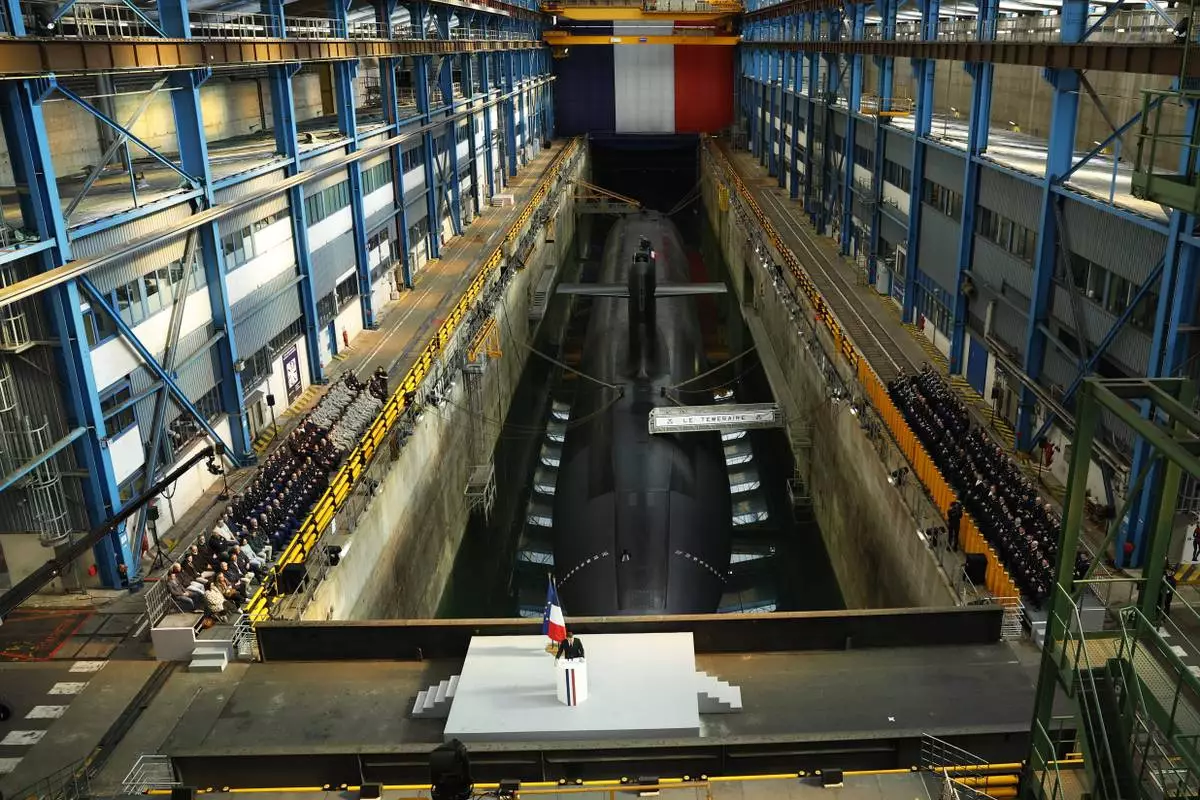
French President Emmanuel Macron delivers a speech next to the submarine 'Le Temeraire' (The Temerarious) at the Nuclear submarines Navy base of Ile Longue in Crozon, France, Monday March 2, 2026. (Yoan Valat/Pool Photo via AP)
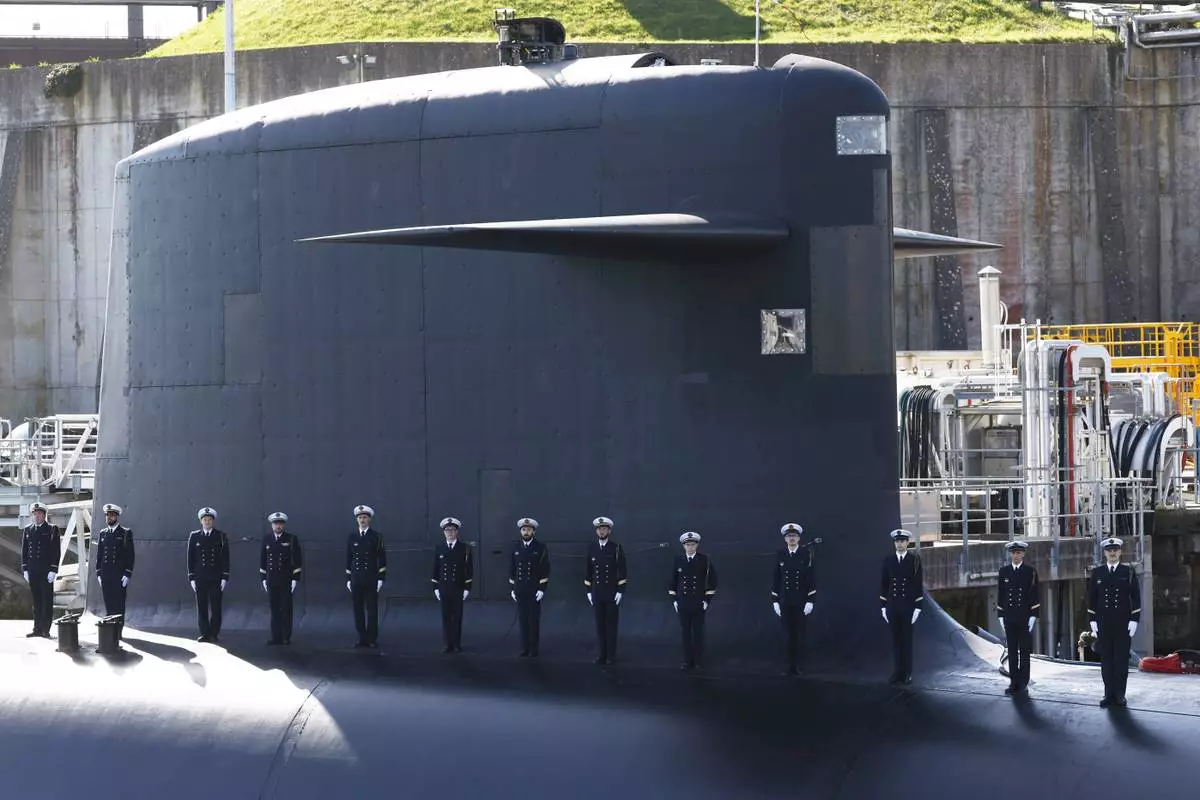
Members of the French Navy are aboard a submarine awaiting the arrival of French President Emmanuel Macron at the nuclear submarine navy base of Ile Longue in Crozon, France, Monday March 2, 2026. (Yoan Valat/Pool Photo via AP)
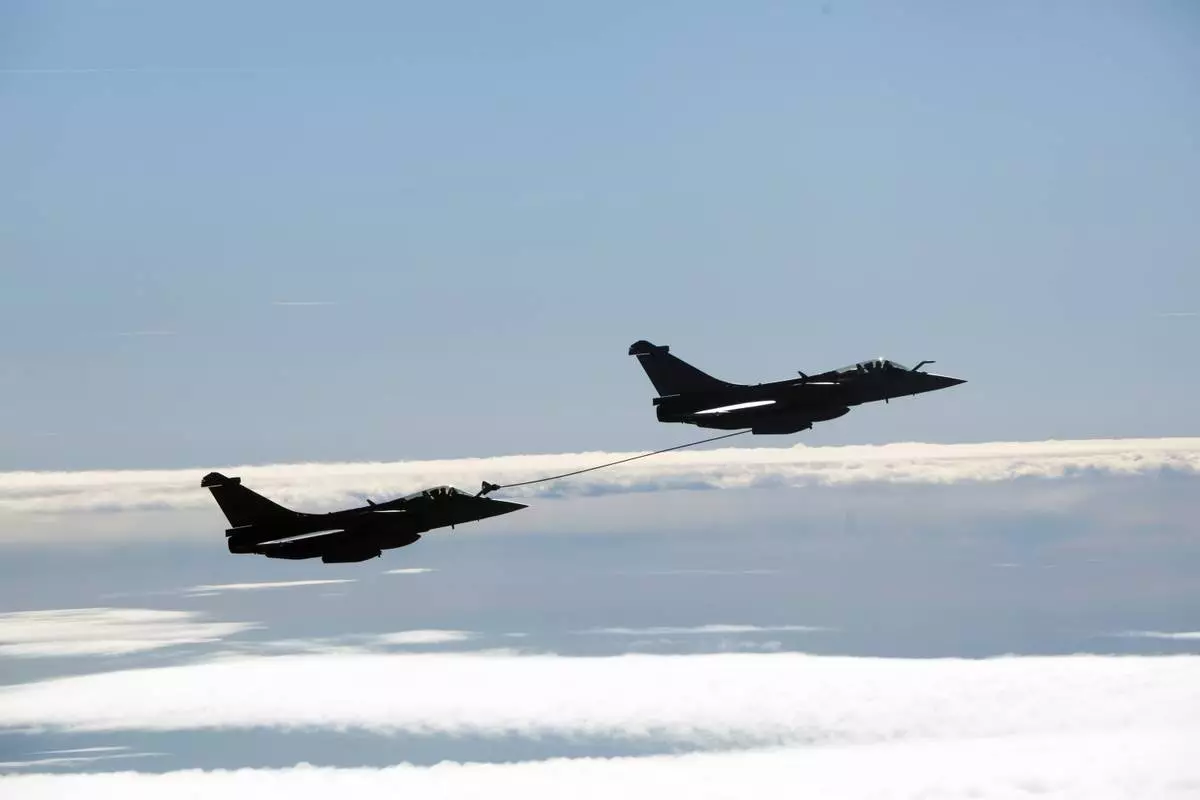
A refueling operation between two Rafale aircraft takes place moments before the arrival of French President Emmanuel Macron at the nuclear submarine navy base of Ile Longue in Crozon, France, Monday March 2, 2026.(Yoan Valat/Pool Photo via AP)
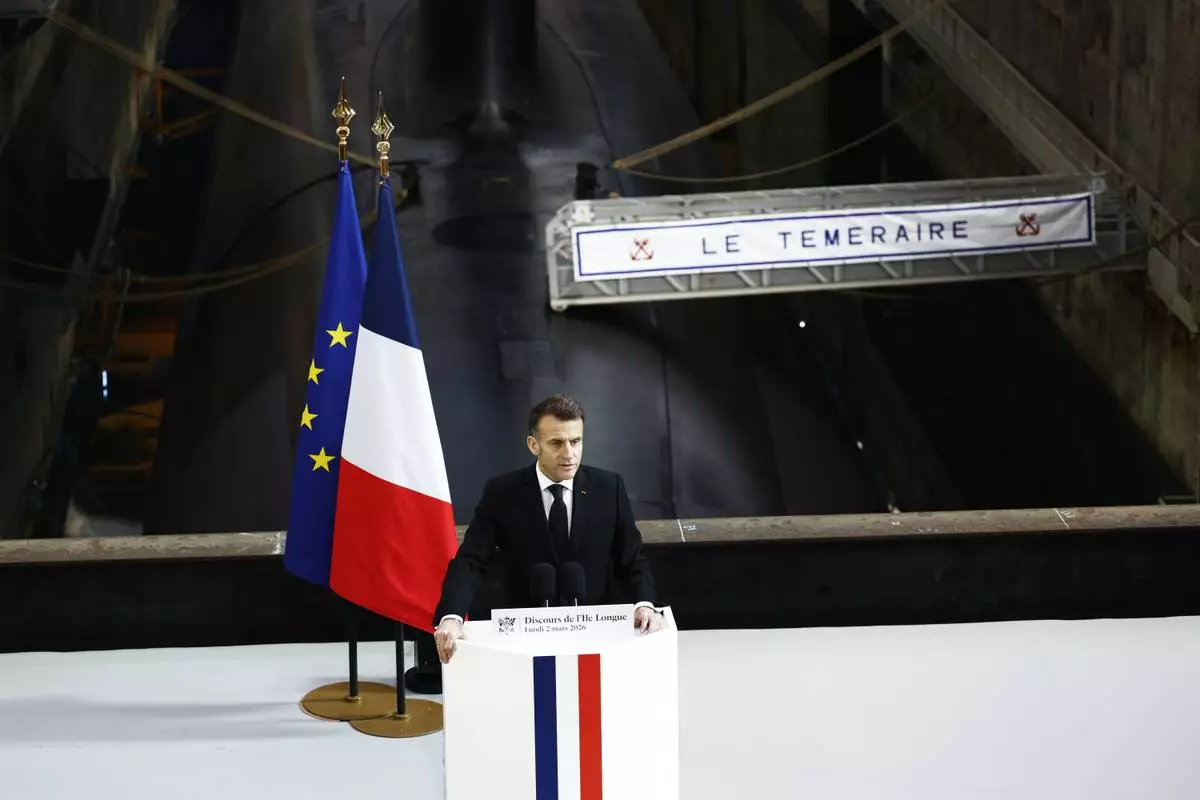
French President Emmanuel Macron delivers a speech next to the submarine 'Le Temeraire' (The Temerarious) at the Nuclear submarines Navy base of Ile Longue in Crozon, France, Monday March 2, 2026. (Yoan Valat/Pool Photo via AP)
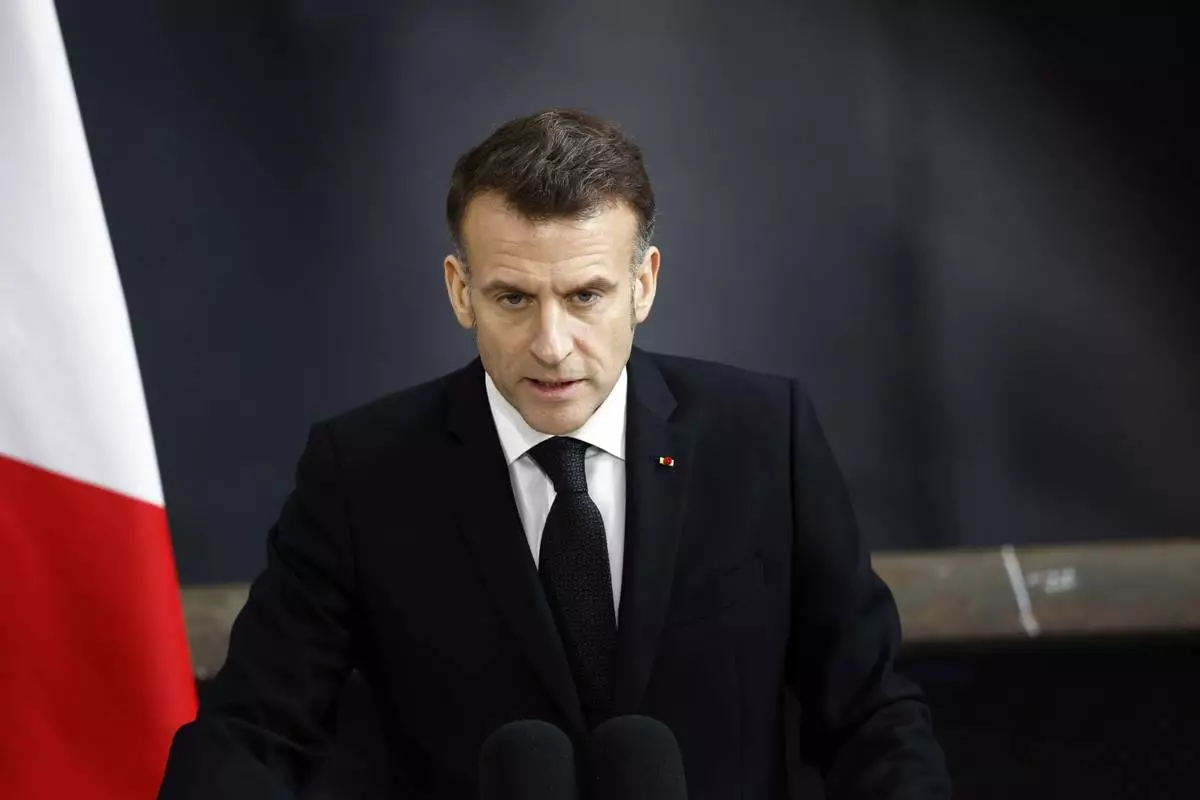
French President Emmanuel Macron delivers a speech next to the submarine 'Le Temeraire' (The Temerarious) at the Nuclear submarines Navy base of Ile Longue in Crozon, France, Monday March 2, 2026. (Yoan Valat/Pool Photo via AP)
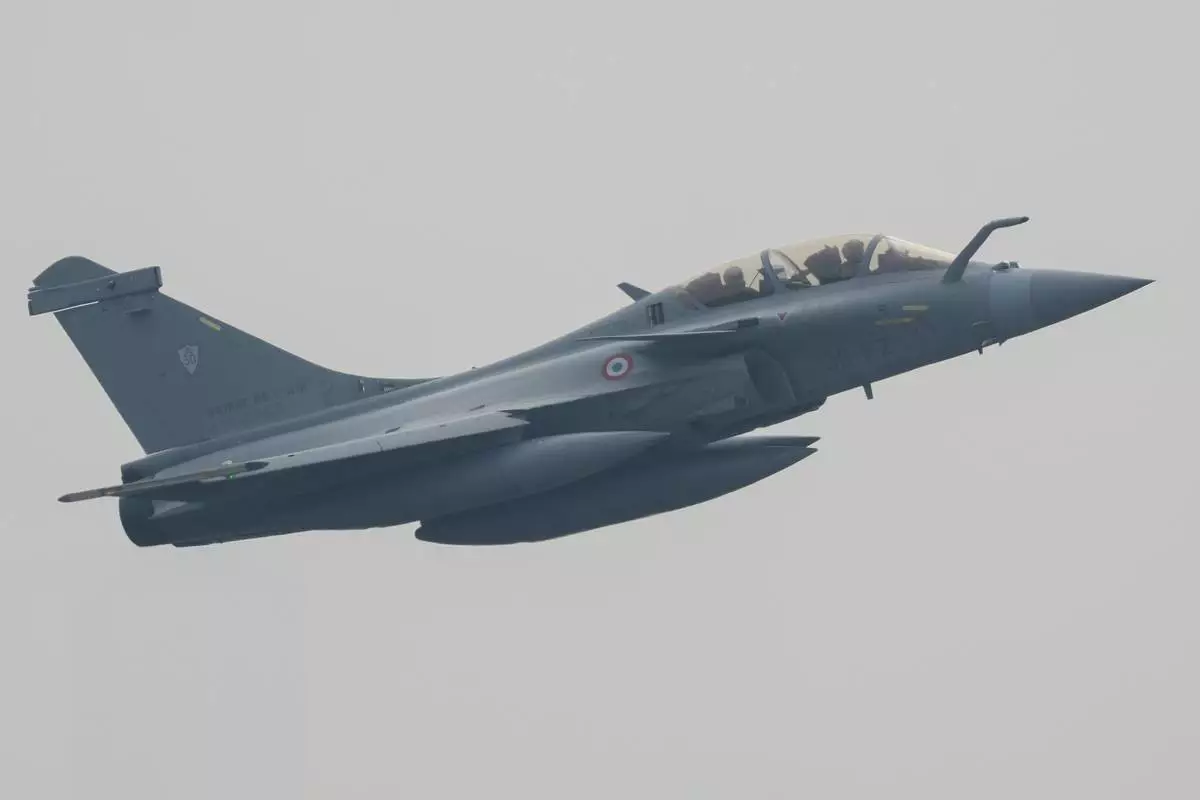
FILE - France's Rafale B twin-seat multirole fighter performs during the Pegase 2024 mission at Halim Perdanakusuma airport in Jakarta, Indonesia, Wednesday, July 24, 2024. (AP Photo/Tatan Syuflana, File)
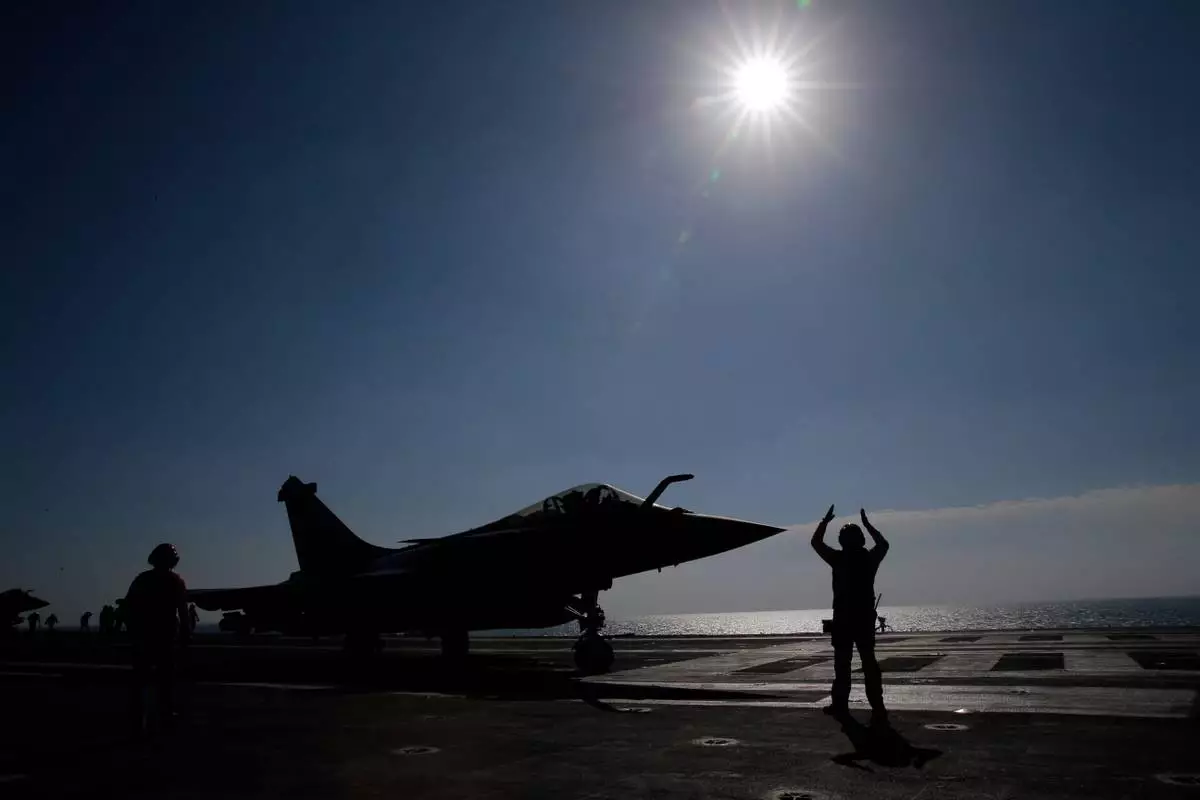
FILE - A Rafale M single seater fighter jet is catapulted on France's flagship Charles de Gaulle aircraft carrier in the Persian Gulf, Jan. 12, 2016. (AP Photo/Christophe Ena, File)
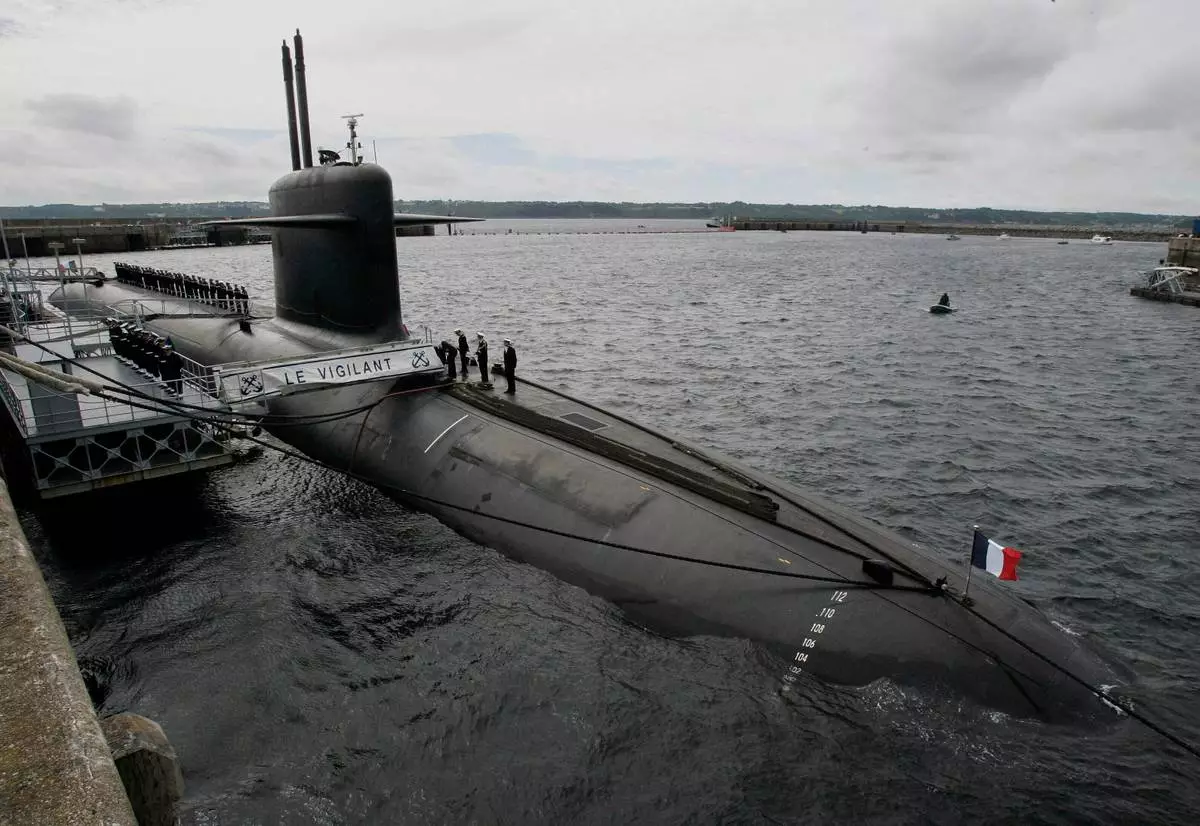
FILE - French Marine officers wait atop "Le Vigilant" nuclear submarine at L'Ile Longue military base, near Brest, Brittany, July 13, 2007. (AP Photo/Francois Mori, Pool, File)