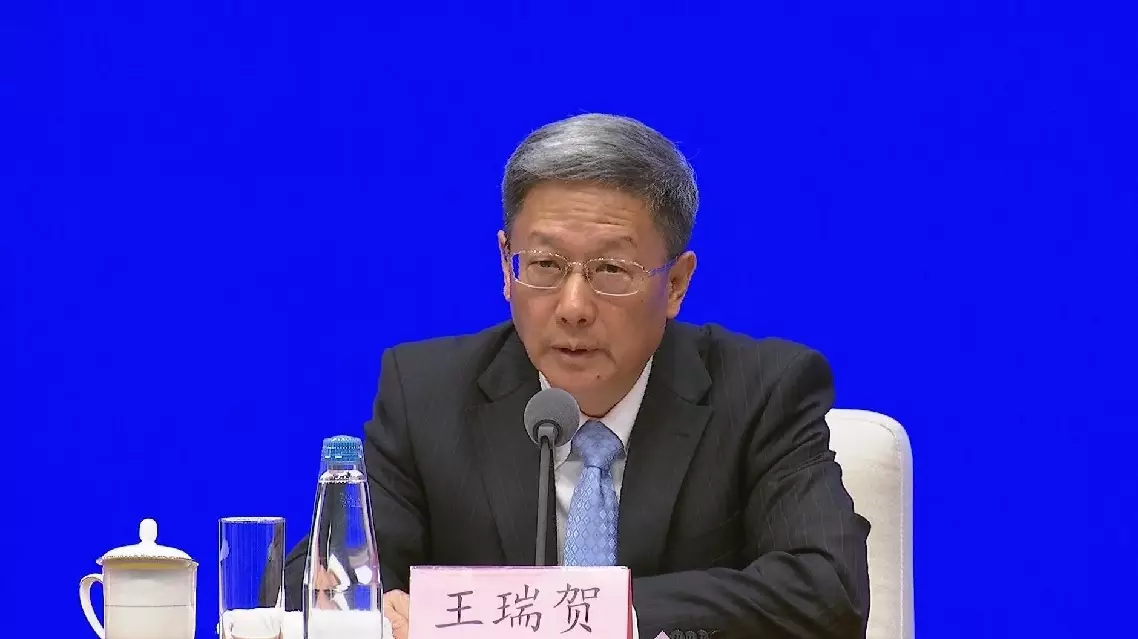
The newly adopted private sector promotion law affirms China's long-term commitment to private enterprises through a constitutional and legal framework, said Wang Ruihe, deputy director of the National People's Congress (NPC) Standing Committee's Legislative Affairs Commission, on Thursday. Chinese officials offered key insights into the country's first fundamental law aimed at promoting the private economy. The law, adopted by national lawmakers on April 30, is set to take effect on May 20 and is widely seen as a landmark move to embed private sector support within China's legal and constitutional systems.
At a press conference, Wang emphasized the law's broader legal and political significance.
"The private sector promotion law codifies the Party and the state's fundamental policies and effective practices for the development of the private economy. It incorporates legal systems supporting and safeguarding private sector development into the socialist legal framework with Chinese characteristics. From a rule-of-law perspective, this represents a meaningful innovation. The law aligns closely with the Chinese Constitution and supports its implementation by providing clear legal guarantees for private economic development," said Wang.
"The law's first article explicitly states that it is formulated 'in accordance with the Constitution.' It affirms China's commitment to improving its basic socialist economic system, unwaveringly consolidating and developing the public sector, while also unwaveringly encouraging, supporting, and guiding the development of the non-public sector. The private economy is a vital component of the socialist market economy, a driving force for Chinese modernization, a foundation for high-quality development, and a crucial force in comprehensively building a modern socialist country in all respects and realizing national rejuvenation. The law stipulates that the promotion of the sustainable, healthy, and high-quality development of the private economy is a significant and long-term policy of China," he said.
"The law sends a clear message that the Party and the state's fundamental policy toward private economic development is here to stay and cannot be altered. The legislation will undoubtedly lead to a more sound and comprehensive legal framework and a stronger, more effective support system for promoting the high-quality development of the private economy," said Wang.
From ensuring fair market access and financing support to enhancing services and protection of original innovation, the 78-article law cements efforts to encourage, support and guide the growth of the private sector. Officials and analysts view the formation and adoption of the law as "highly timely and absolutely essential," given the private sector's significant role in the country's economy.
Private enterprises have long been a key driving force behind China's economic ascendance, contributing more than 60 percent of GDP and 80 percent of urban employment. By the end of March 2025, the country's more-than-57-million registered private enterprises made up over 92 percent of all businesses in China.
Private sector promotion law holds major constitutional, legal significance: official