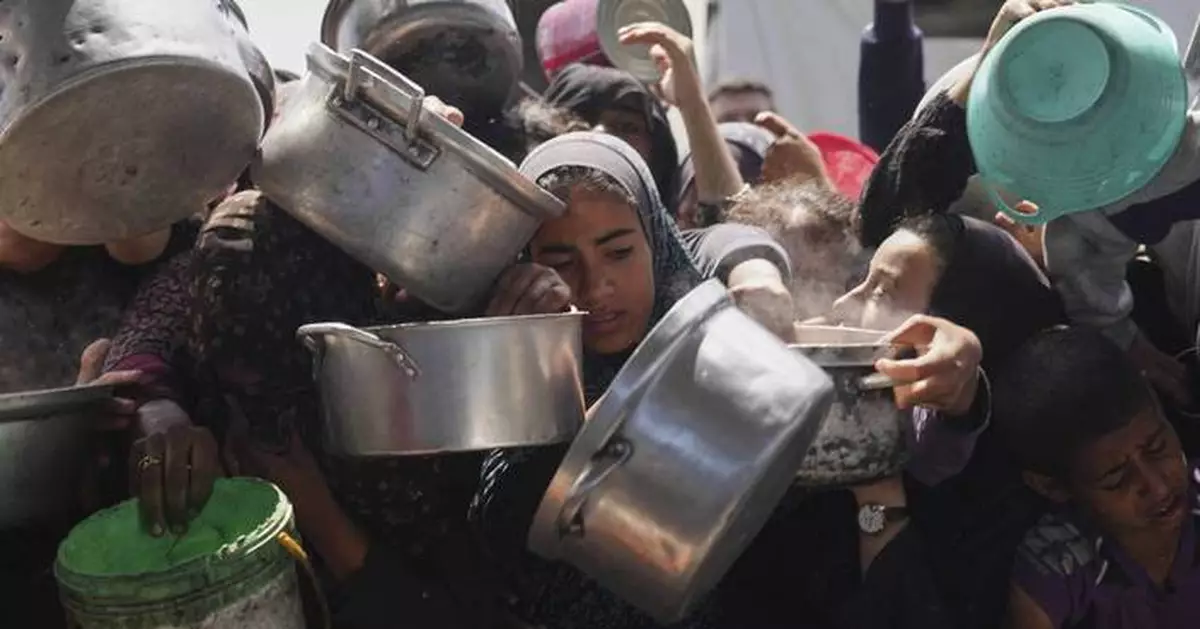
DEIR AL-BALAH, Gaza (AP) — Israel’s ongoing blockade of humanitarian assistance for Gaza forced a leading aid group to shut its community soup kitchens Thursday as it faced empty warehouses and no replenishment of supplies in the war-battered enclave.
U.S.-based World Central Kitchen, which was serving 133,000 meals per day, said there is almost no food left in Gaza with which to cook.
Click to Gallery
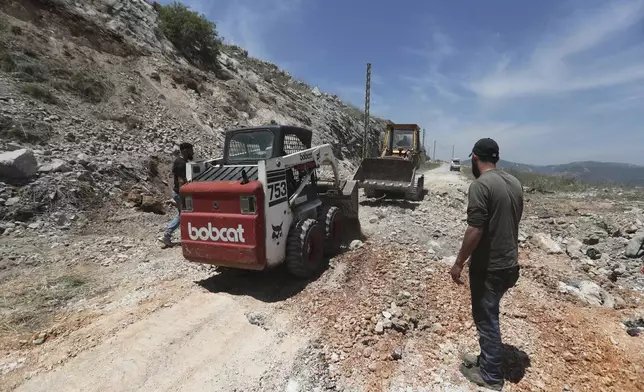
Workers close a crater following Israeli airstrikes that targeted hilltops near Nabatieh town, south Lebanon, Thursday, May 8, 2025. (AP Photo/Mohammed Zaatari)
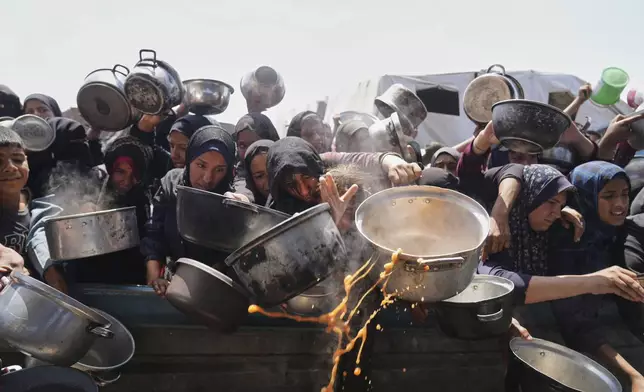
Palestinians struggle to get donated food at a community kitchen in Khan Younis, Gaza Strip, Monday, May 5, 2025. (AP Photo/Abdel Kareem Hana)
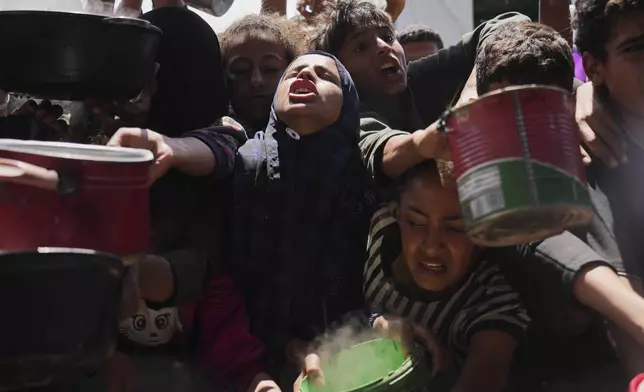
Palestinians struggle to get donated food at a community kitchen in Khan Younis, Gaza Strip, Monday, May 5, 2025. (AP Photo/Abdel Kareem Hana)
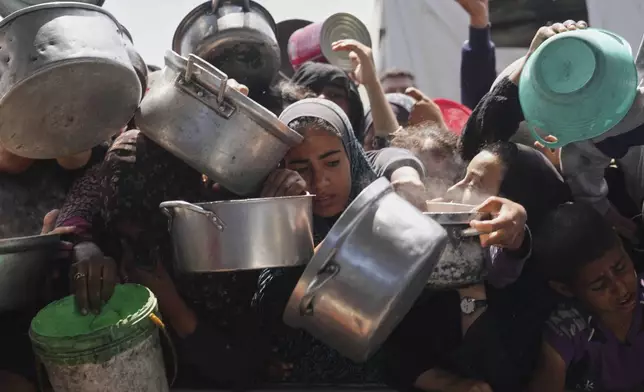
Palestinians struggle to get donated food at a community kitchen in Khan Younis, Gaza Strip, Monday, May 5, 2025. (AP Photo/Abdel Kareem Hana)
The ongoing hunger is threatening Gaza's population, already battered by 19 months of war. In April, the World Food Program said its food stocks in Gaza had run out under Israel's blockade, ending a main source of sustenance for hundreds of thousands of Palestinians in the territory.
A UNICEF spokesperson said most of Gaza’s water system is damaged, while fuel shortages make it harder to operate desalination plants or water trucks.
Malnutrition and hunger are becoming increasingly prevalent in the Gaza Strip as Israel’s total blockade enters its third month, and aid agencies say supplies to treat and prevent malnutrition are running out.
Israel imposed the blockade on March 2, then shattered a two-month ceasefire by resuming military operations in the territory on March 18. It said both steps aim to pressure the militant Hamas group to release hostages. Rights groups call the blockade a “starvation tactic” and a potential war crime.
With restaurants and bakeries closed, community kitchens are often the only way for hundreds of thousands of Palestinians in Gaza to eat a daily meal. But a third of those supported by the U.N. have closed in the past 10 days for lack of food or fuel, according to the U.N. humanitarian office, or OCHA, which said more closures could be imminent.
“The hot meals provided by these kitchens constitute one of the last remaining lifelines” for Palestinians, OCHA said.
At those still open, chaotic scenes of desperate men, women and children fighting to get meager rations are common.
UNICEF spokesperson Jonathan Crickx on Thursday said 65-70% of Gaza’s water system is damaged. Aid workers have instead set up water distribution points that rely on trucking.
But it's difficult to reach people when fuel has become scarce, Crickx told The Associated Press.
“The children are, of course, bearing the brunt of this war,” he said.
Water availability has plummeted to an average of 3-5 liters per person per day, according to the Palestinian Water Authority. That’s less than the 15 liters that the World Health Organization says people need to survive.
A pipeline operated by Israel had been supplying 70% of Gaza City’s water since the war began, but it was damaged with the renewed Israeli offensive in April. Desalination plants had supplied about 7% of Gaza’s water needs before the war, until the aquifer became contaminated and depleted.
Since the start of the war, World Central Kitchen said it has served more than 130 million meals and baked 80 million loaves of bread. On Thursday, the group said it had no flour left in their mobile bakery.
“Our trucks — loaded with food and supplies — are waiting in Egypt, Jordan and Israel, ready to enter Gaza,” said José Andrés, the celebrity chef who founded the organization. “But they cannot move without permission. Humanitarian aid must be allowed to flow.”
COGAT, the Israeli defense body overseeing aid to Gaza, said the blockade would continue unless the Israeli government changed its policy.
Israeli government spokesperson David Mencer said the government was concerned that Hamas controlled the humanitarian aid, and that Israeli officials were exploring ways to get it only to “those in need.”
Mencer said the hunger had been "engineered by Hamas,” and said the blockade would end when the group lays down its weapons, he said.
However, Israel has provided no evidence that Hamas syphons off aid. The U.N and aid workers deny there is significant diversion of aid to militants, saying the U.N. strictly monitors distribution.
Since the start of the year, more than 10,000 children have been treated for acute malnutrition, according to the World Health Organization. The number climbed dramatically in March, to 3,600 cases from 2,000 the month before, UNICEF reported.
Nearly half the 200 nutrition centers around Gaza have shut down because of displacement and bombardment.
World Central Kitchen had previously suspended operations in April of last year after seven aid workers were killed in Israeli strikes on their convoy, before resuming weeks later.
The Palestinian Health Ministry in Gaza said Thursday the bodies of 106 people killed by Israeli strikes have been brought to hospitals over the past 24 hours.
Hospitals also received 367 wounded, the ministry said in its daily report.
The overall Palestinian death toll from the Israel-Hamas war rose to at least 52,760 since Oct. 7, 2023, the ministry said. Another 119,264 have been wounded, it said.
It said the tally includes 2,651 dead and 7,223 wounded since Israel shattered the nearly two-month ceasefire on March 18.
The ministry does not differentiate between civilians and combatants, but says more than half of the dead were women and children.
The Israeli military said they are targeting Hamas infrastructure in Gaza. On Wednesday, chief of staff Lt. Gen. Eyal Zamir told commanders that Israel plans to “expand and intensify our operations” in Gaza.
Also on Thursday, a series of Israeli airstrikes hit hilltops in the vicinity of the southern Lebanese city of Nabatieh, killing at least one person and wounding eight others, according to the Lebanese Health Ministry.
The Israeli military said it bombed infrastructure that belonged to the Hezbollah militant group and included weapons and tunnels. Israel said that Hezbollah's activities at the site violated a November ceasefire.
Hezbollah did not immediately comment on the strikes. Lebanon’s state-run National News Agency said public institutions in the area were closed after the attacks as families rushed to schools to take their children home.
Since the U.S.-brokered ceasefire in November stopped the war between Israel and Hezbollah, Israeli strikes on southern Lebanon have continued. Hezbollah says its has largely disarmed south of the Litani River, while Israel insists the militants are rearming themselves. Some 4,000 people in Lebanon were killed during the war, including many civilians.
A renowned Palestinian journalist arrested by the Israeli military and suffering from multiple chronic illnesses has been placed on six months of administrative detention, the Israeli military said.
Ali Samoudi, who has worked for international news outlets including CNN and Al Jazeera, was detained late last month by the Israeli military from his family home in the city of Jenin in the Israeli-occupied West Bank, and has spent part of the time in the hospital due to chronic health issues.
The Israeli military said Samoudi was detained based on involvement in “actions endangering regional security" but that a police investigation did not find sufficient evidence against him to issue an arrest. However, on Thursday, a military court decided to place him under administrative detention for six months.
Israeli authorities can renew administrative detentions indefinitely. Detainees are held without charge or trial. Israel says the controversial tactic is necessary for security reasons, but Palestinians and rights groups say the system denies due process and is widely abused.
Chehayeb reported from Beirut. Associated Press writer Melanie Lidman in Tel Aviv, Israel, and Sally Abou AlJoud in Beirut, Lebanon contributed to this report.
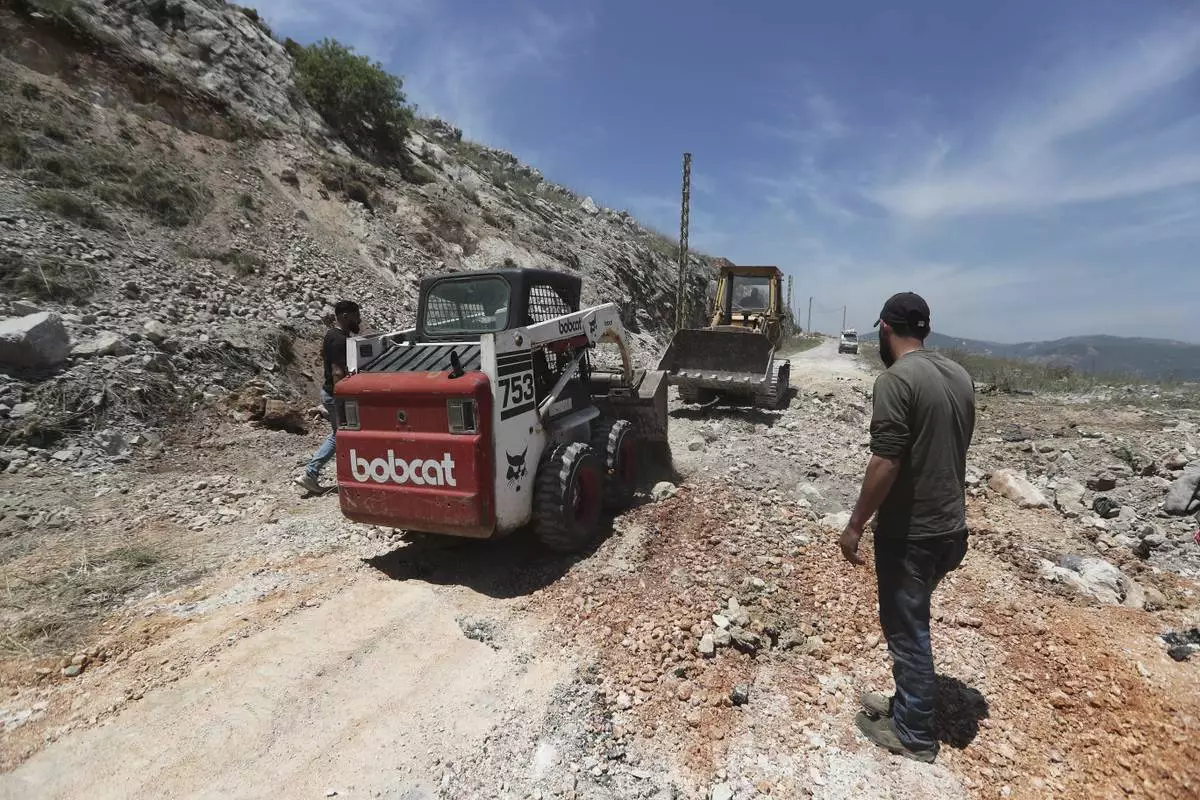
Workers close a crater following Israeli airstrikes that targeted hilltops near Nabatieh town, south Lebanon, Thursday, May 8, 2025. (AP Photo/Mohammed Zaatari)
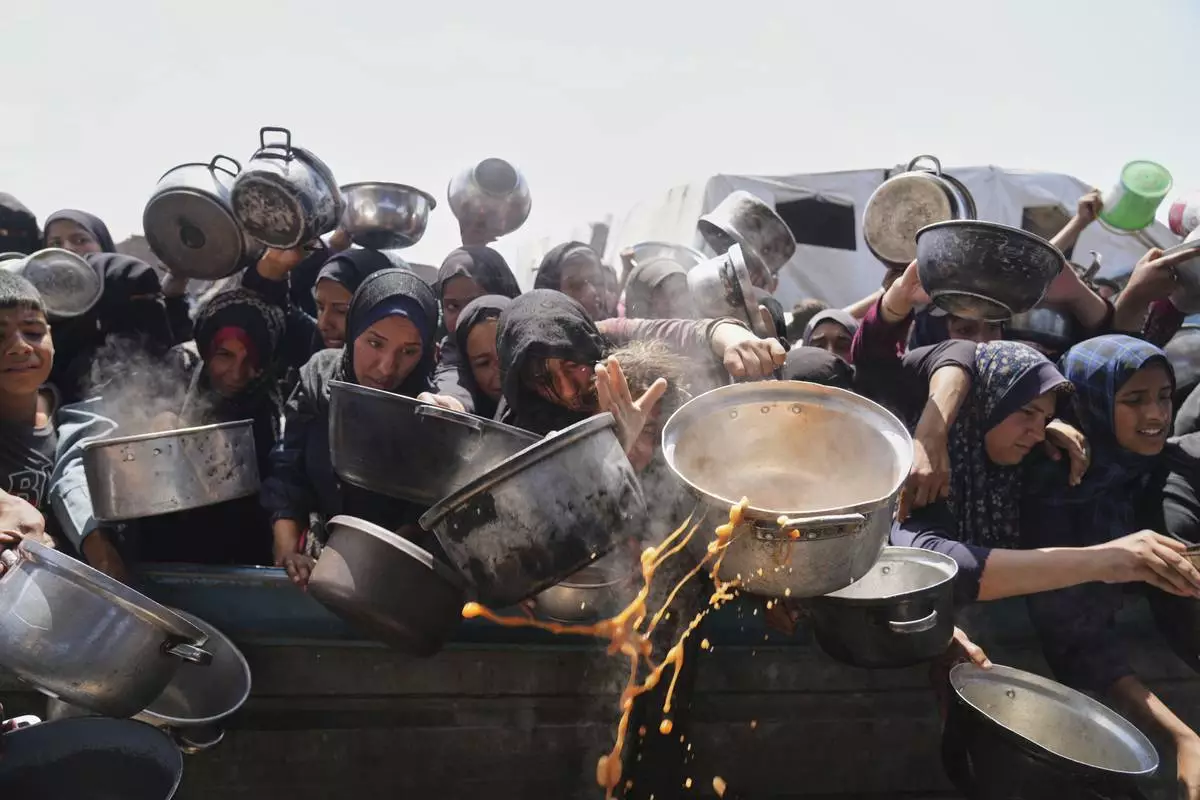
Palestinians struggle to get donated food at a community kitchen in Khan Younis, Gaza Strip, Monday, May 5, 2025. (AP Photo/Abdel Kareem Hana)
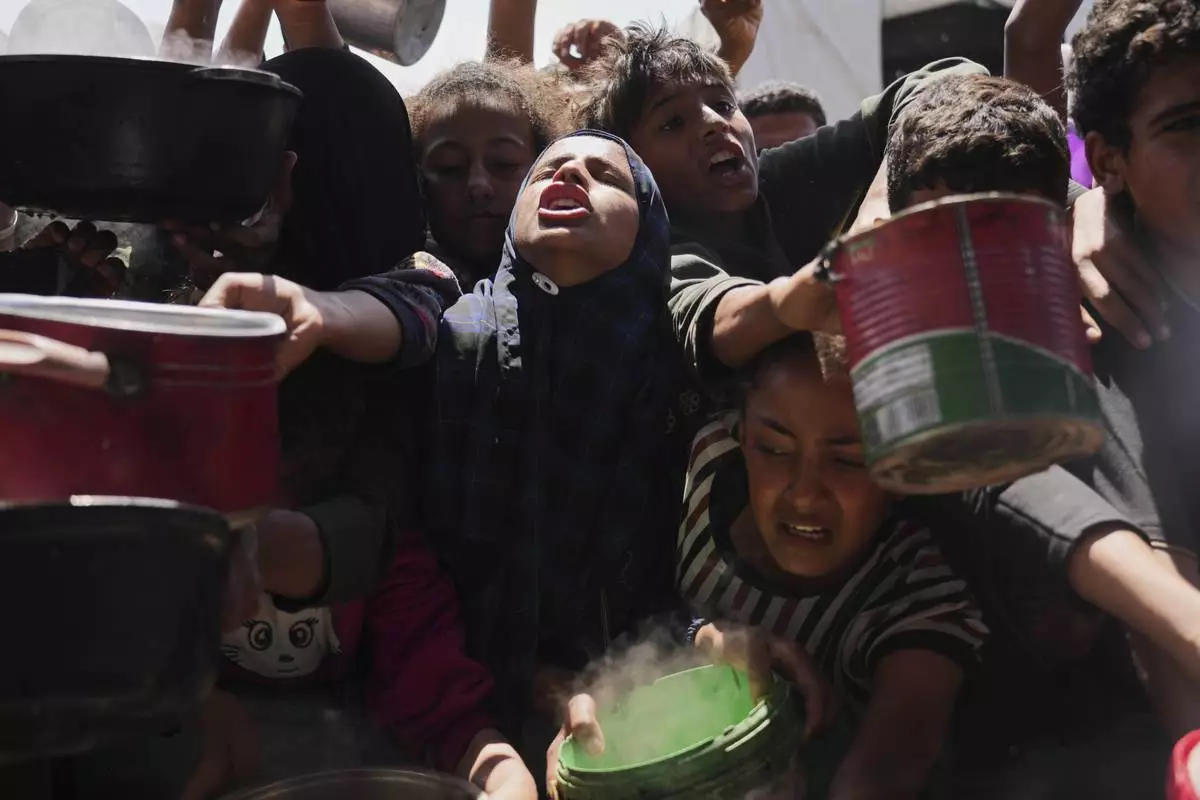
Palestinians struggle to get donated food at a community kitchen in Khan Younis, Gaza Strip, Monday, May 5, 2025. (AP Photo/Abdel Kareem Hana)
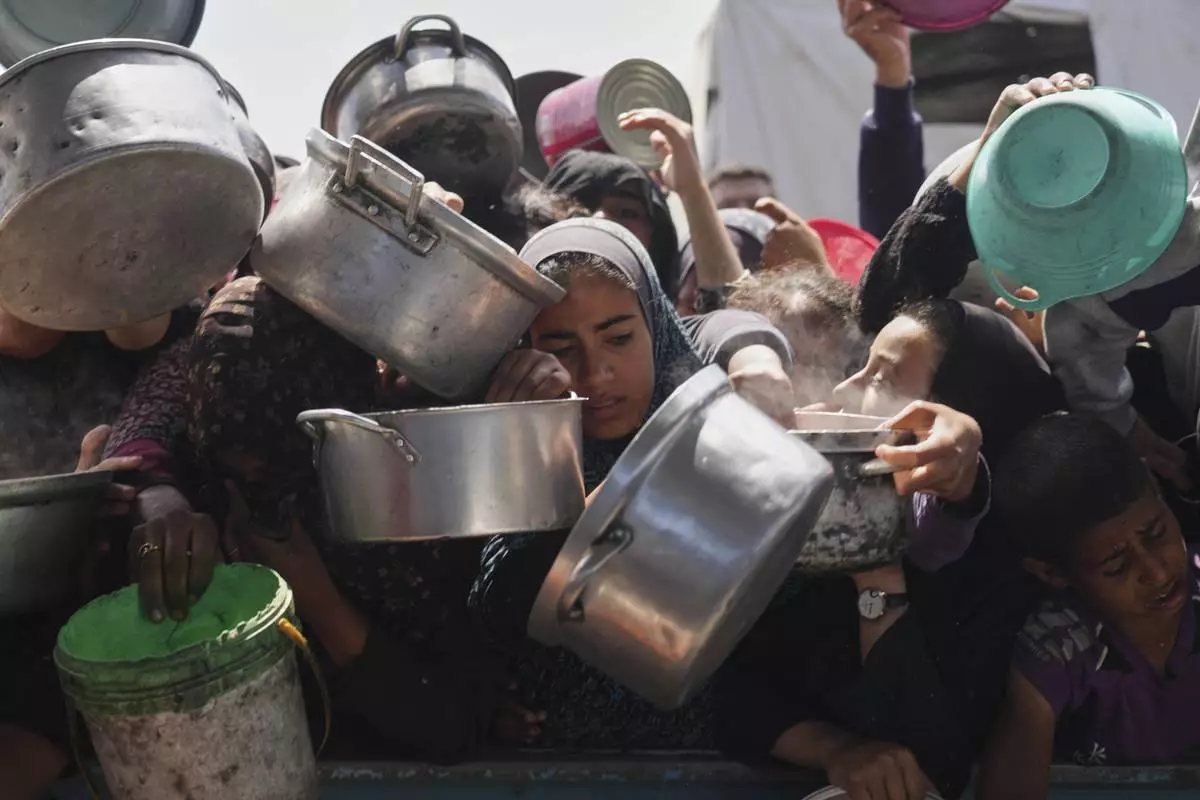
Palestinians struggle to get donated food at a community kitchen in Khan Younis, Gaza Strip, Monday, May 5, 2025. (AP Photo/Abdel Kareem Hana)