COLUMBIA, S.C. (AP) — A man who was put to death last month in South Carolina's second firing squad execution was conscious and likely suffered in extreme pain for as long as a minute after the bullets, meant to quickly stop his heart, struck him lower than expected, according to a pathologist hired by his attorneys.
The lawyers called it a botched execution because they think either the volunteer prison employees who all had live ammunition missed or the target was not placed properly.
An autopsy photo of Mikal Mahdi’s torso showed only two distinct wounds at the April 11 execution, according to the pathologist’s report, which was filed Thursday with a letter to the state Supreme Court.
Mahdi chose to be executed by firing squad over lethal injection or electrocution in the killing of an off-duty police officer in 2004.
All three guns fired simultaneously and prison officials believe all three bullets hit Mahdi with two of them entering his body at the same spot and following the same path, Corrections Department spokeswoman Chrysti Shane said Thursday. That has happened before when the firing squad team practices its job to fire at the inmate from 15 feet (4.6 meters) away.
A pathologist hired by attorneys for condemned inmates said there isn't enough independent evidence from the autopsy — where only one photo of the body was taken and Mahdi's clothes weren't examined — to make that conclusion.
“The shooters missed the intended target area and the evidence indicates that he was struck by only two bullets, not the prescribed three. Consequently, the nature of the internal injuries from the gunshot wounds resulted in a more prolonged death process,” Dr. Jonathan Arden said.
Arden said that likely meant Mahdi took 30 to 60 seconds to lose consciousness — two to four times longer than the 15 seconds that experts including Arden and ones hired by the state predicted for a properly conducted firing squad execution.
During that time Mahdi would have suffered excruciating pain as his lungs tried to expand and move into a broken sternum and ribs, as well as from “air hunger” as the damaged lungs struggled and failed to bring in needed oxygen, Arden said.
“Mr. Mahdi elected the firing squad, and this Court sanctioned it, based on the assumption that SCDC could be entrusted to carry out its straightforward steps: locating the heart; placing a target over it; and hitting that target. That confidence was clearly misplaced,” Mahdi's attorneys wrote in the letter to the South Carolina Supreme Court.
Witnesses to the execution heard Mahdi cry out as the shots were fired, groan again some 45 seconds later and let out one last low moan just before he appeared to draw his final breath at 75 seconds.
Mahdi, 42, was executed after admitting he killed Orangeburg Public Safety officer James Myers in 2004, shooting him at least eight times before burning his body. Myers’ wife found him in the couple’s Calhoun County shed, which had been the backdrop to their wedding 15 months earlier.
The official autopsy did not include X-rays to allow the results to be independently verified; only one photo was taken of Mahdi’s body, and no close-ups of the wounds; and his clothing was not examined to determine where the target was placed and how it aligned with the damage the bullets caused to his shirt, Arden said in a report summarizing his findings.
“I noticed where the target was placed on Mikal’s torso, and I remember thinking to myself, ‘I’m certainly not an expert in human anatomy, but it appears to me that target looks low,’” said David Weiss, an attorney for Mahdi who was also a witness at his death.
A prison worker performs a chest X-ray on an inmate and a medical professional uses a stethoscope to place the target over the heart, Shain said.
In the official autopsy report, pathologist Dr. Bradley Marcus wrote that the reason there were only two wounds is that one was caused by two bullets entering the body at the same spot.
Arden called that virtually unheard of in his 40 years of examining dead bodies and said Marcus told him in a conversation that the possibility was remote.
The autopsy found damage in only one of the four chambers of Mahdi's heart — the right ventricle. There was extensive damage to his liver and pancreas as the bullets continued down.
“The entrance wounds were at the lowest area of the chest, just above the border with the abdomen, which is an area not largely overlying the heart,” Arden wrote.
In their conversation Marcus also said the severe amount of liver damage was not anticipated and he “expected the entrance wounds to be higher on the chest,” Arden wrote in his report.
Marcus declined to talk about the autopsy when reached by phone Thursday morning.
In contrast the autopsy on Brad Sigmon, the first man killed by firing squad in the state, showed three distinct bullet wounds and his heart was obliterated, Arden said. He added that the autopsy report in that case included X-rays, adequate photos and a cursory examination of his clothes.
Without X-rays or other internal scans to follow the path of the bullets through Mahdi’s body, no additional light could be shed on the two-bullets-through-one-hole claim, Arden said.
Weiss said he was stunned that so little was done in the autopsy even after the pathologist saw only two holes in his chest. The apparent errors in how the execution was carried out are a major problem, he asserted.
“I think that raises incredibly difficult questions about the type of training and oversight that is going into this process,” Weiss said.
“It was obvious to me as a lay person upon reading his autopsy report that something went wrong here. We should want to figure out what it was that went wrong when you’ve got state government carrying out the most serious, most grave possible type of function,” Weiss said.
Mahdi's body was cremated preventing a second autopsy, Weiss said.
South Carolina allows condemned inmates to choose whether to die by lethal injection, electric chair or firing squad. Three in the past year have chosen lethal injection, but the past two opted for the firing squad, saying they feared the other methods — autopsies have shown that lethal injection causes a rush of fluid into the lungs, and burns have been found on bodies after electrocutions.
“The purpose of South Carolina’s choice provisions is to guarantee ‘that a condemned inmate in South Carolina will never be subjected to execution by a method he contends is more inhumane than another method that is available,’” Mahdi's lawyers wrote, quoting the state Supreme Court's decision to allow executions. “An understanding of how this botch occurred is essential for that choice to have any meaning at all.”
Twenty-six people remain on South Carolina's death row. Stephen Stanko, who has two death sentences for murders in Horry County and Georgetown County, has run out of appeals and likely will be scheduled to die in June.
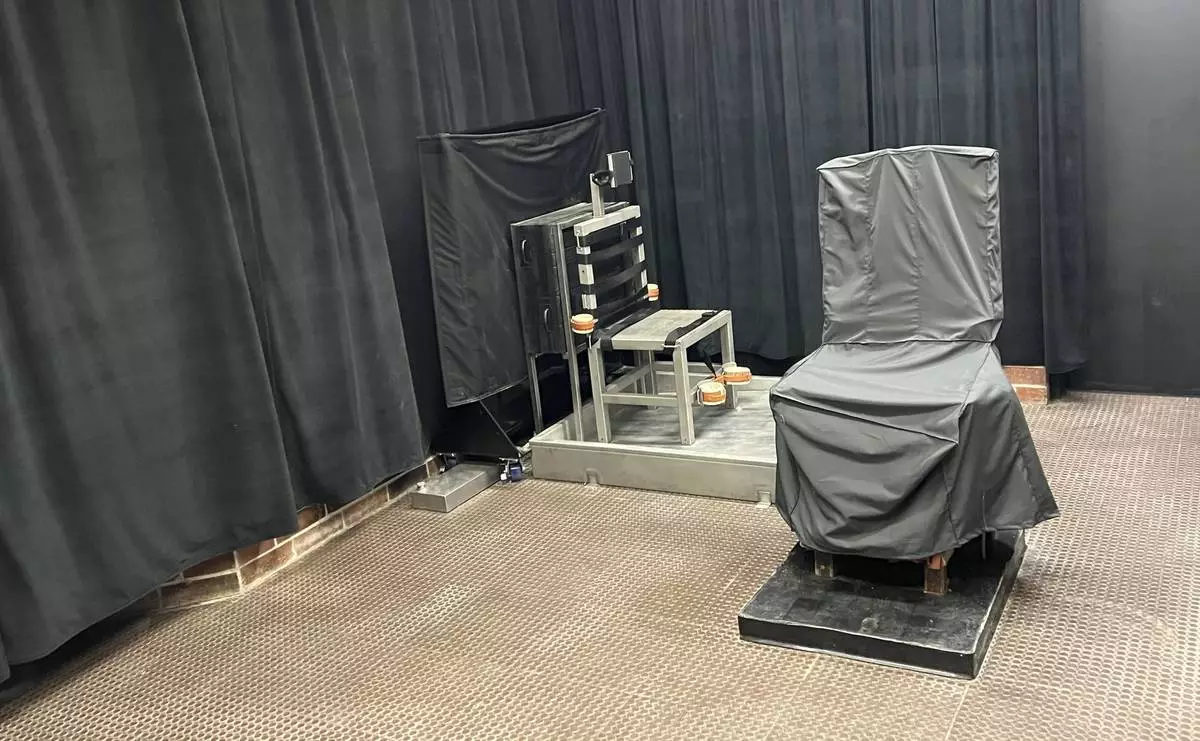
FILE - This photo provided by the South Carolina Department of Corrections shows the state's death chamber in Columbia, S.C., including the electric chair, right, and a firing squad chair, left. (South Carolina Department of Corrections via AP, File)
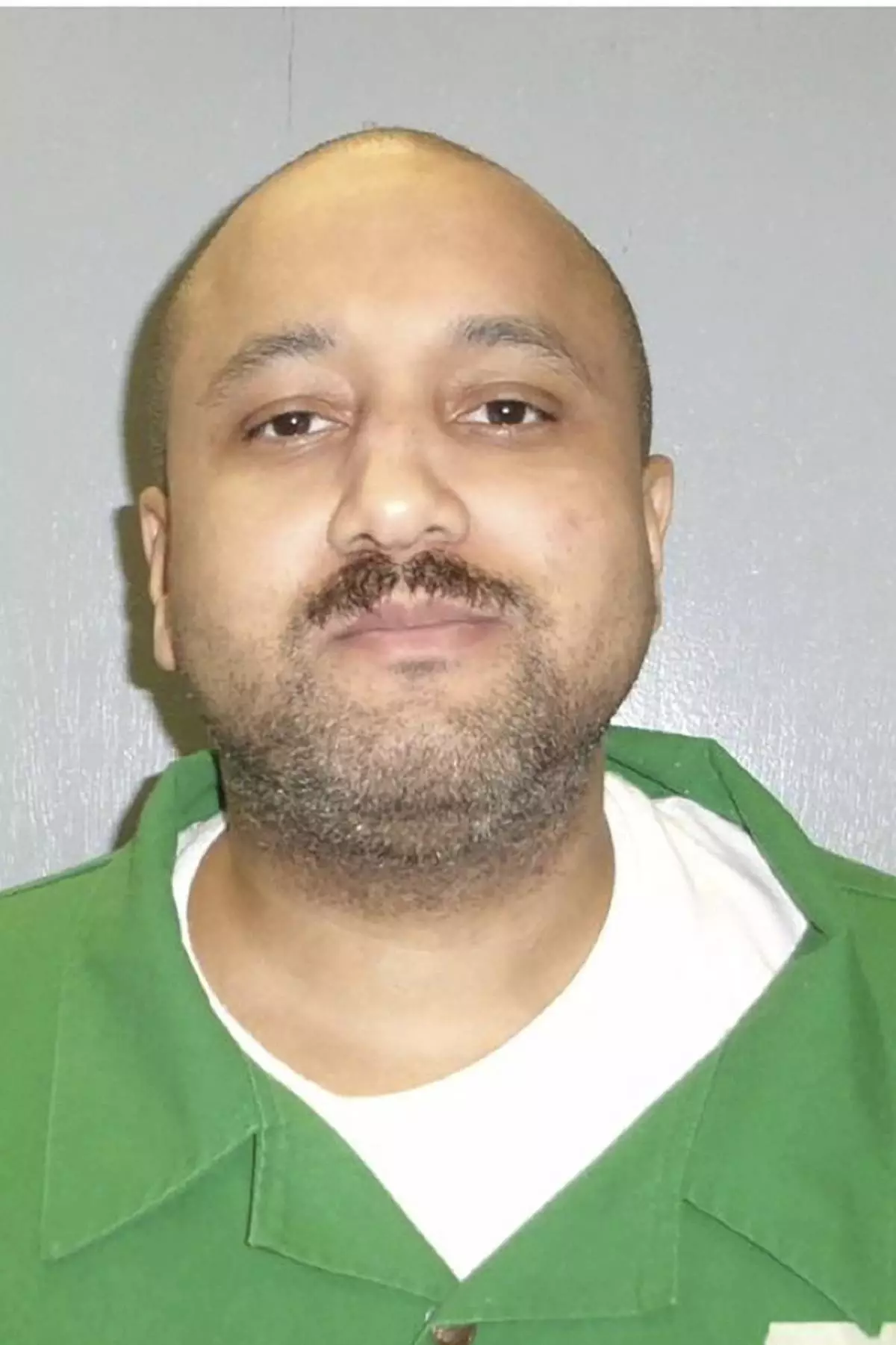
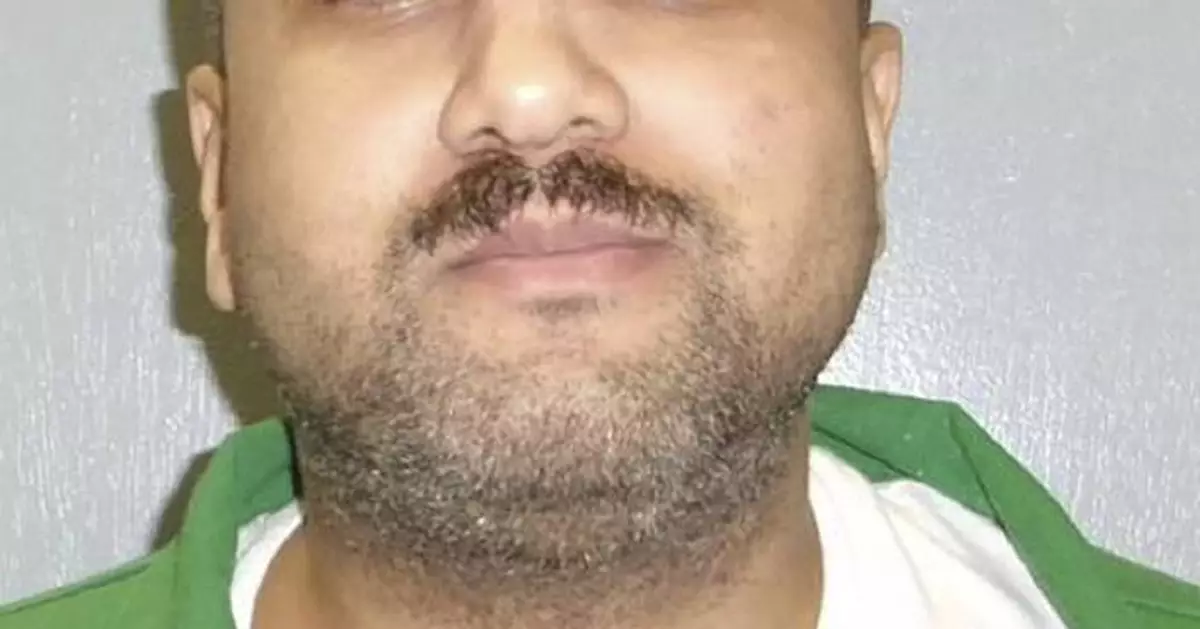
This photo provided by South Carolina Department of Corrections shows Mikal Mahdi. (South Carolina Department of Corrections via AP)
WASHINGTON (AP) — Becky Pepper-Jackson finished third in the discus throw in West Virginia last year though she was in just her first year of high school. Now a 15-year-old sophomore, Pepper-Jackson is aware that her upcoming season could be her last.
West Virginia has banned transgender girls like Pepper-Jackson from competing in girls and women's sports, and is among the more than two dozen states with similar laws. Though the West Virginia law has been blocked by lower courts, the outcome could be different at the conservative-dominated Supreme Court, which has allowed multiple restrictions on transgender people to be enforced in the past year.
The justices are hearing arguments Tuesday in two cases over whether the sports bans violate the Constitution or the landmark federal law known as Title IX that prohibits sex discrimination in education. The second case comes from Idaho, where college student Lindsay Hecox challenged that state's law.
Decisions are expected by early summer.
President Donald Trump's Republican administration has targeted transgender Americans from the first day of his second term, including ousting transgender people from the military and declaring that gender is immutable and determined at birth.
Pepper-Jackson has become the face of the nationwide battle over the participation of transgender girls in athletics that has played out at both the state and federal levels as Republicans have leveraged the issue as a fight for athletic fairness for women and girls.
“I think it’s something that needs to be done,” Pepper-Jackson said in an interview with The Associated Press that was conducted over Zoom. “It’s something I’m here to do because ... this is important to me. I know it’s important to other people. So, like, I’m here for it.”
She sat alongside her mother, Heather Jackson, on a sofa in their home just outside Bridgeport, a rural West Virginia community about 40 miles southwest of Morgantown, to talk about a legal fight that began when she was a middle schooler who finished near the back of the pack in cross-country races.
Pepper-Jackson has grown into a competitive discus and shot put thrower. In addition to the bronze medal in the discus, she finished eighth among shot putters.
She attributes her success to hard work, practicing at school and in her backyard, and lifting weights. Pepper-Jackson has been taking puberty-blocking medication and has publicly identified as a girl since she was in the third grade, though the Supreme Court's decision in June upholding state bans on gender-affirming medical treatment for minors has forced her to go out of state for care.
Her very improvement as an athlete has been cited as a reason she should not be allowed to compete against girls.
“There are immutable physical and biological characteristic differences between men and women that make men bigger, stronger, and faster than women. And if we allow biological males to play sports against biological females, those differences will erode the ability and the places for women in these sports which we have fought so hard for over the last 50 years,” West Virginia's attorney general, JB McCuskey, said in an AP interview. McCuskey said he is not aware of any other transgender athlete in the state who has competed or is trying to compete in girls or women’s sports.
Despite the small numbers of transgender athletes, the issue has taken on outsize importance. The NCAA and the U.S. Olympic and Paralympic Committees banned transgender women from women's sports after Trump signed an executive order aimed at barring their participation.
The public generally is supportive of the limits. An Associated Press-NORC Center for Public Affairs Research poll conducted in October 2025 found that about 6 in 10 U.S. adults “strongly” or “somewhat” favored requiring transgender children and teenagers to only compete on sports teams that match the sex they were assigned at birth, not the gender they identify with, while about 2 in 10 were “strongly” or “somewhat” opposed and about one-quarter did not have an opinion.
About 2.1 million adults, or 0.8%, and 724,000 people age 13 to 17, or 3.3%, identify as transgender in the U.S., according to the Williams Institute at the UCLA School of Law.
Those allied with the administration on the issue paint it in broader terms than just sports, pointing to state laws, Trump administration policies and court rulings against transgender people.
"I think there are cultural, political, legal headwinds all supporting this notion that it’s just a lie that a man can be a woman," said John Bursch, a lawyer with the conservative Christian law firm Alliance Defending Freedom that has led the legal campaign against transgender people. “And if we want a society that respects women and girls, then we need to come to terms with that truth. And the sooner that we do that, the better it will be for women everywhere, whether that be in high school sports teams, high school locker rooms and showers, abused women’s shelters, women’s prisons.”
But Heather Jackson offered different terms to describe the effort to keep her daughter off West Virginia's playing fields.
“Hatred. It’s nothing but hatred,” she said. "This community is the community du jour. We have a long history of isolating marginalized parts of the community.”
Pepper-Jackson has seen some of the uglier side of the debate on display, including when a competitor wore a T-shirt at the championship meet that said, “Men Don't Belong in Women's Sports.”
“I wish these people would educate themselves. Just so they would know that I’m just there to have a good time. That’s it. But it just, it hurts sometimes, like, it gets to me sometimes, but I try to brush it off,” she said.
One schoolmate, identified as A.C. in court papers, said Pepper-Jackson has herself used graphic language in sexually bullying her teammates.
Asked whether she said any of what is alleged, Pepper-Jackson said, “I did not. And the school ruled that there was no evidence to prove that it was true.”
The legal fight will turn on whether the Constitution's equal protection clause or the Title IX anti-discrimination law protects transgender people.
The court ruled in 2020 that workplace discrimination against transgender people is sex discrimination, but refused to extend the logic of that decision to the case over health care for transgender minors.
The court has been deluged by dueling legal briefs from Republican- and Democratic-led states, members of Congress, athletes, doctors, scientists and scholars.
The outcome also could influence separate legal efforts seeking to bar transgender athletes in states that have continued to allow them to compete.
If Pepper-Jackson is forced to stop competing, she said she will still be able to lift weights and continue playing trumpet in the school concert and jazz bands.
“It will hurt a lot, and I know it will, but that’s what I’ll have to do,” she said.
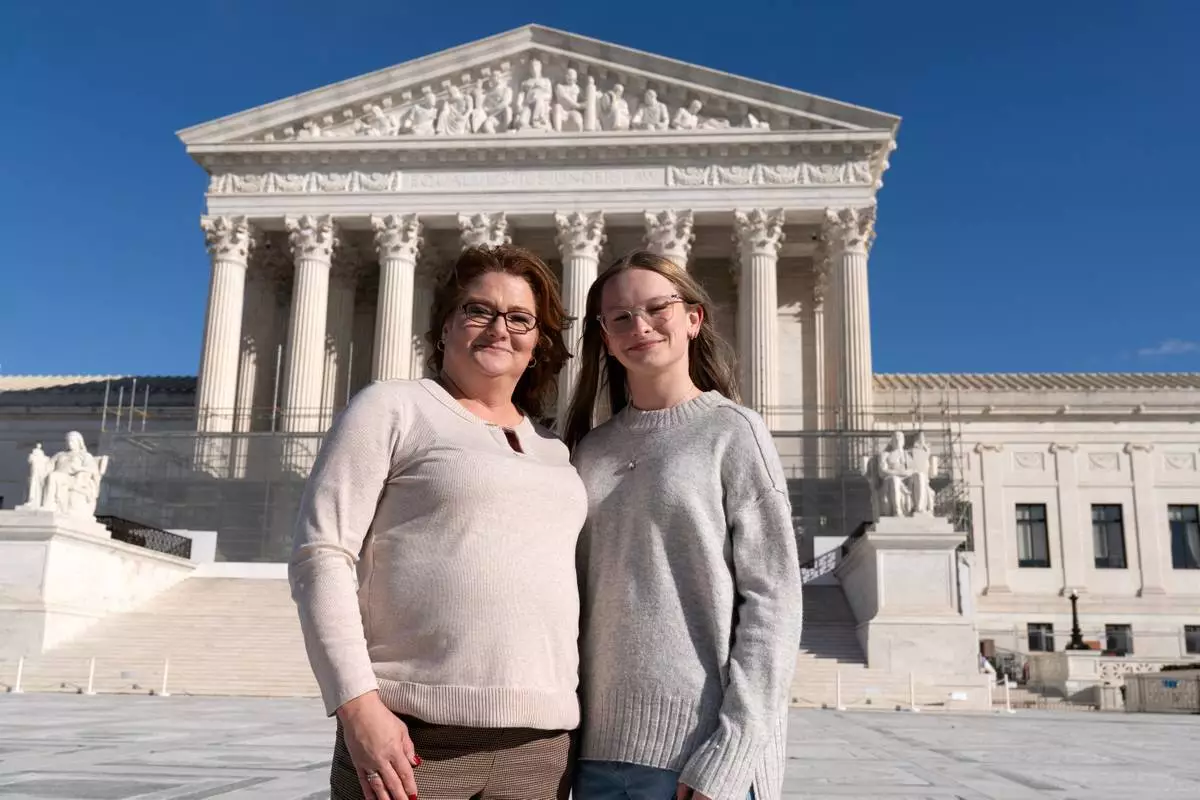
Heather Jackson, left, and Becky Pepper-Jackson pose for a photograph outside of the U.S. Supreme Court in Washington, Sunday, Jan. 11, 2026. (AP Photo/Jose Luis Magana)
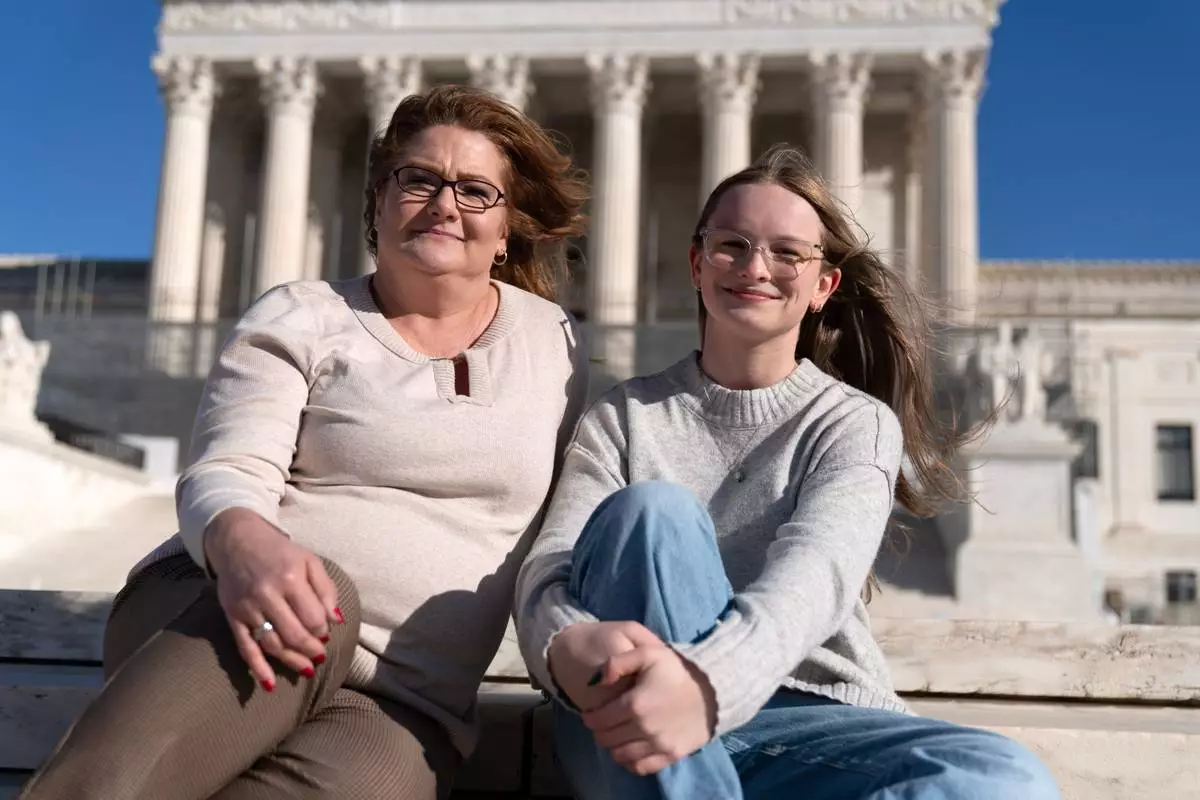
Heather Jackson, left, and Becky Pepper-Jackson pose for a photograph outside of the U.S. Supreme Court in Washington, Sunday, Jan. 11, 2026. (AP Photo/Jose Luis Magana)
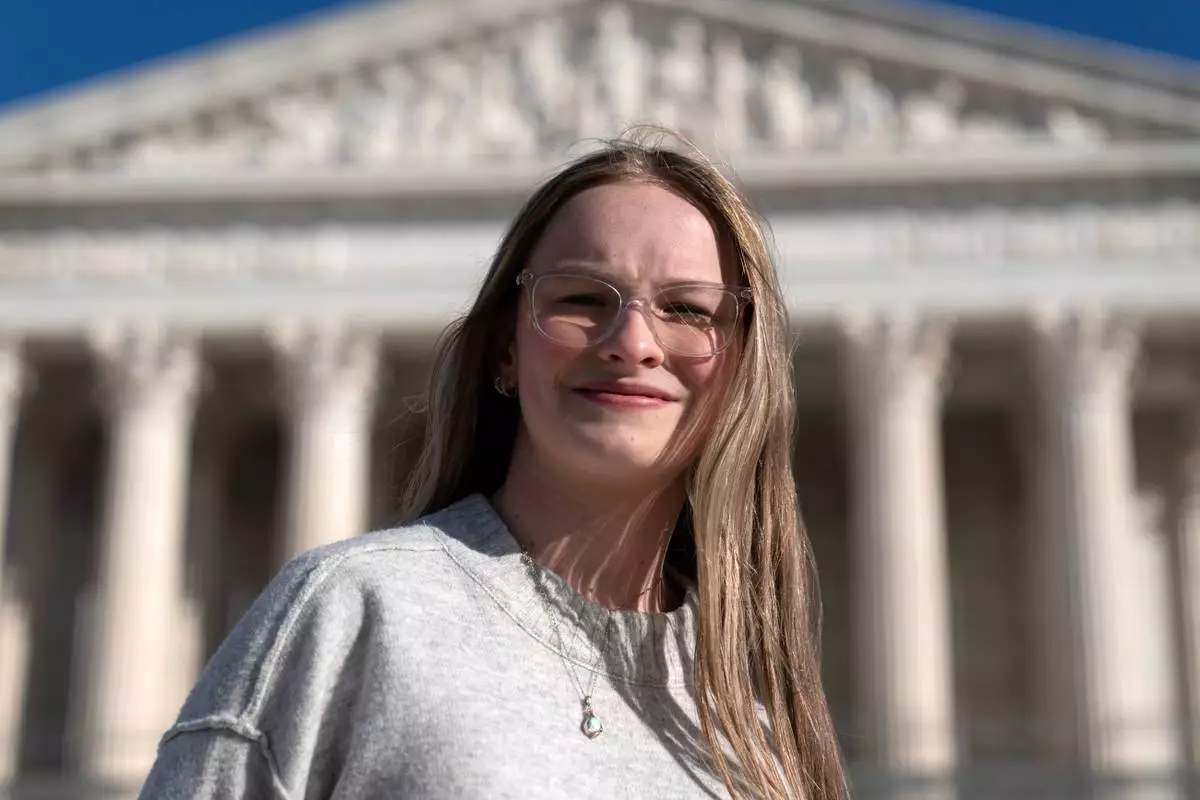
Becky Pepper-Jackson poses for a photograph outside of the U.S. Supreme Court in Washington, Sunday, Jan. 11, 2026. (AP Photo/Jose Luis Magana)
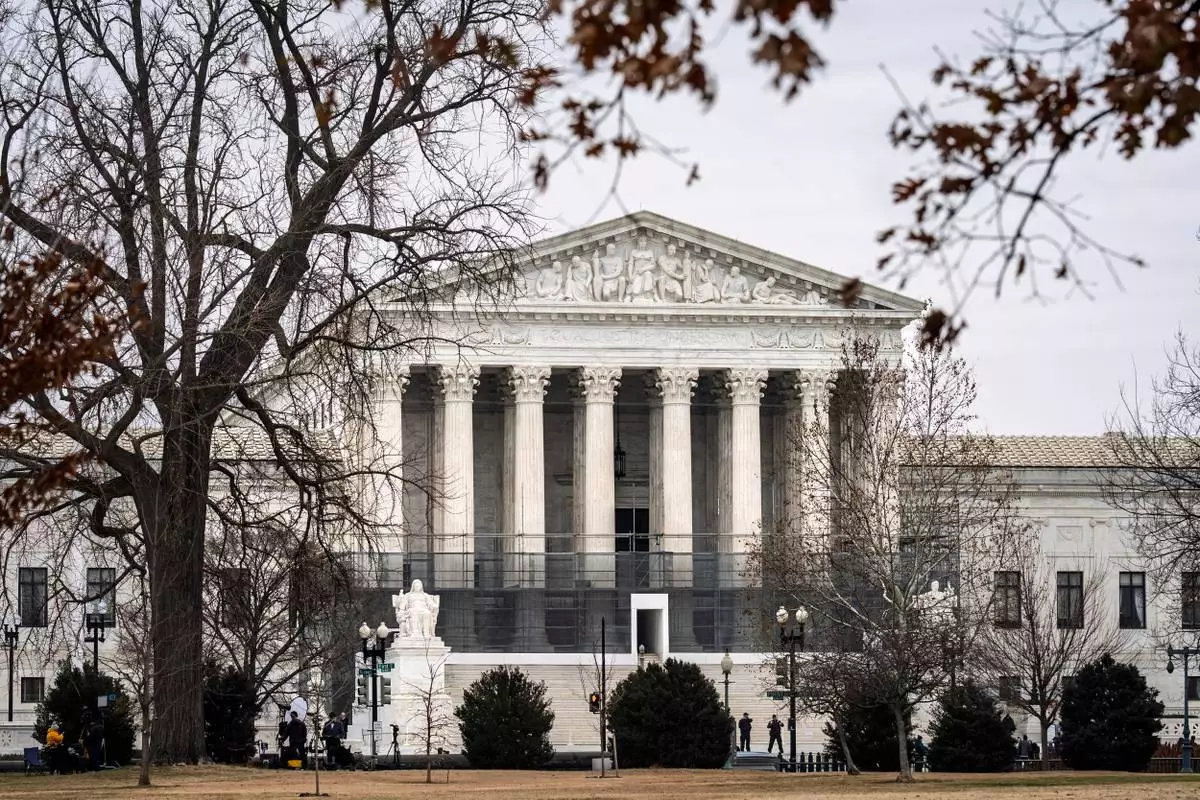
The Supreme Court stands is Washington, Friday, Jan. 9, 2026. (AP Photo/J. Scott Applewhite)
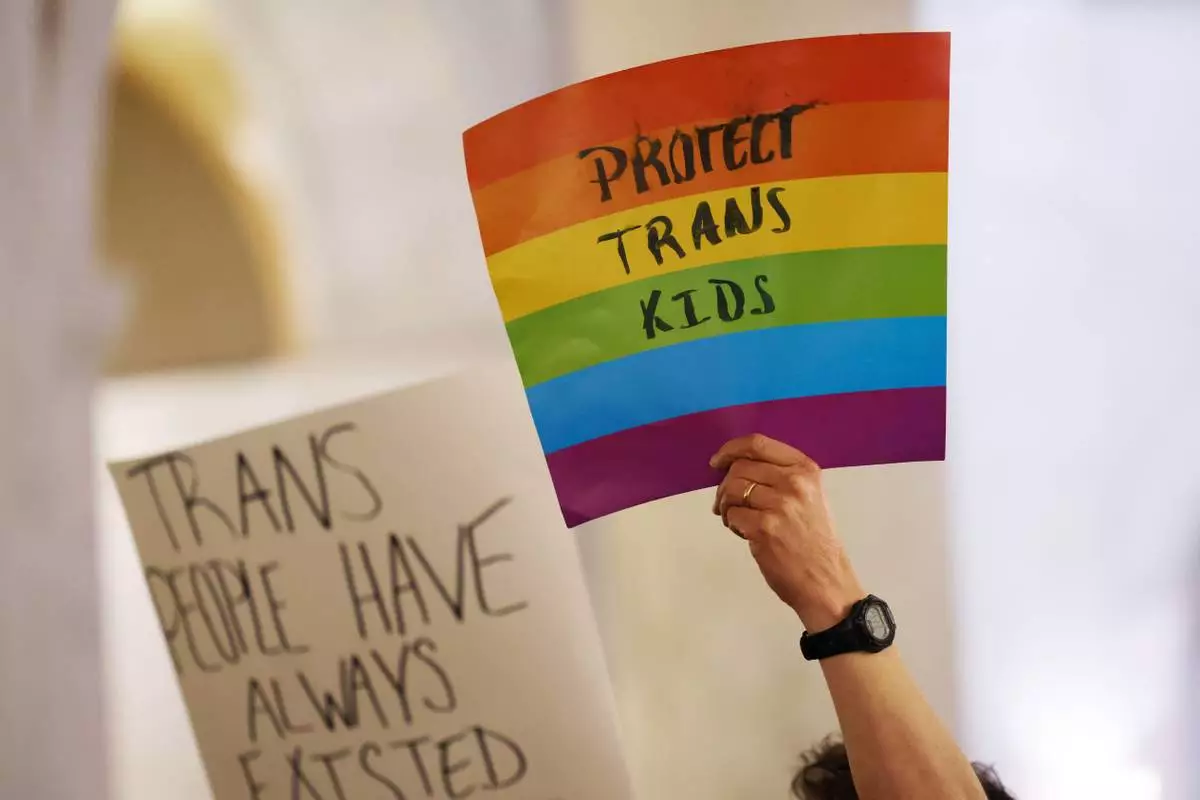
FILE - Protestors hold signs during a rally at the state capitol in Charleston, W.Va., on March 9, 2023. (AP Photo/Chris Jackson, file)