The construction of China's Huaneng Shidao Bay Nuclear Power Base Phase I expansion project Unit 2 officially began on Wednesday, marking the project's entry into the full-scale construction phase.
The phase I expansion project of Shidao Bay Nuclear Power Base aims to install two additional units in the base, with the construction work of unit 1 started in July 2024. The second unit, featuring the domestically developed third-generation nuclear reactor Hualong-1, is expected to have a designated maximum capacity of 1.2 million kilowatts and generate 10 billion kilowatt-hours (kWh) per year.
"The expansion project is planned to include four million-kilowatt-level pressurized water units, totaling five million kilowatts in installed capacity. Once completed, the annual power generation will reach 35 billion kWh, enough to meet the annual electricity needs of 17 million three-person households. It will reduce standard coal consumption by 11.5 million tonnes and cut carbon dioxide emissions by 27.6 million tonnes each year," said Zhang Yanxu, chief commander of the Phase I Expansion Project of the Shidao Bay Nuclear Power Base.
In addition to electricity, the base can also generate heat with nuclear power. The Phase I expansion project is expected to add over 20 million square meters of heating coverage, benefiting 600,000 local residents.
Equipped with the world's first high-temperature gas-cooled reactor, also known as the fourth-generation reactor, the Shidao Bay base Nuclear Power Base, located in Rongcheng City of east China's Shandong Province, is the first large-scale nuclear power base in China that simultaneously deploys both third- and fourth-generation nuclear technologies. The base went into commercial operation in December 2023.

China starts construction of Shidao Bay Nuclear Power Base expansion project
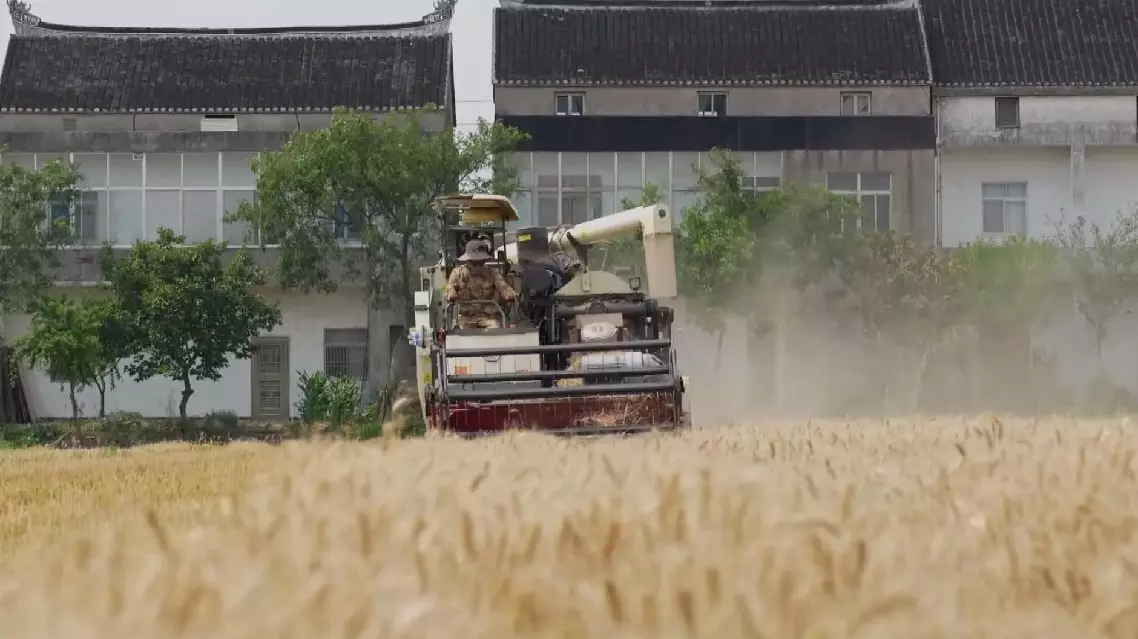
A veteran agricultural scientist and deputy to the National People's Congress (NPC), China's national legislature, shared his decades-long mission to reduce the country's reliance on food imports and safeguard its food security by developing high-yield, disease-resistant wheat varieties.
Gao Derong, a researcher from the Lixiahe Regional Institute of Agricultural Sciences in east China's Jiangsu Province, detailed his relentless pursuit of better wheat varieties while taking a question at a press conference on the sidelines of the ongoing "two sessions", a major event in China's political calendar.
He has dedicated more than 30 years to wheat breeding and succeeded in the fight against Fusarium head blight, a serious fungal disease of cereals, including wheat and other small-grain crops, by implanting "disease-resistant genes" inside seeds.
"After 30 years of countless and repeated trials, we finally developed our first Fusarium head blight resistant variety in 2021. It exhibits strong disease resistance and high yield, with a yield of up to 600 kg per mu (0.066 hectare) in a demonstration plot. This means farmers can use fewer pesticides, produce more wheats, and secure a more stable harvest," said Gao.
Addressing the tight rotation schedule in the rice-wheat rotation system in south China, his team developed time-smart varieties like "Yangmai 25," which can be sown as late as December and still achieve a yield of 6,00 kg per mu.
"We have also cultivated a high-quality weak-gluten wheat variety tailored for biscuits and pastries, reversing China's long-standing reliance on imports. These grain varieties, like elite guard teams, help us hold our rice bowl firmly and contribute to securing our food security," Gao said.
As an NPC deputy, Gao extends his research from the lab to the field, gathering farmers' concerns alongside experimental data.
"My duty as a deputy is also written in the fields. 'Can we construct high-standard farmland at an accelerated pace?' 'Can we have more targeted agricultural subsidies?' These are the voices I often heard in the fields, which I carefully recorded like experimental data and transformed into suggestions," he said. Gao said he will continue working to enable the land to yield more grain, help farmers increase their incomes, and contribute to ensuring national food security.
This year's "two sessions," the annual meetings of China's top political advisory body and national legislature, opened in Beijing Wednesday and Thursday, respectively. As the world's second-largest economy embarks on the inaugural year of its 15th Five-Year Plan (2026-2030) period, these gatherings will serve both as a review of past achievements, and as a strategic compass guiding the nation's future development.
NPC deputy vows to fortify China's food security through seed innovation