STONINGTON, Maine (AP) — Virginia Olsen has pulled lobsters from Maine's chilly Atlantic waters for decades while watching threats to the state's lifeblood industry mount.
Trade imbalances with Canada, tight regulations on fisheries and offshore wind farms towering like skyscrapers on open water pose three of those threats, said Olsen, part of the fifth generation in her family to make a living in the lobster trade.
Click to Gallery
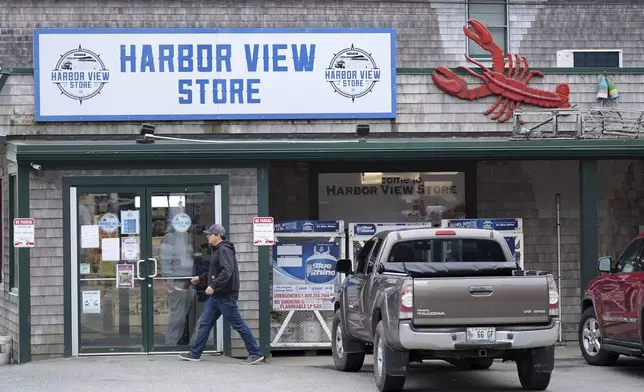
A lobster is part of the decorations at the Harbor View store in Stonington, Maine, on Friday, May 2, 2025. (AP Photo/Robert F. Bukaty)
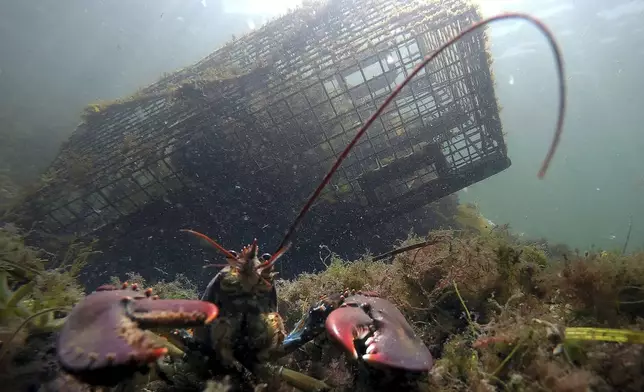
FILE - A lobster guards its territory in front of a trap off Biddeford, Maine, on Sept. 3, 2018. (AP Photo/Robert F. Bukaty, file)
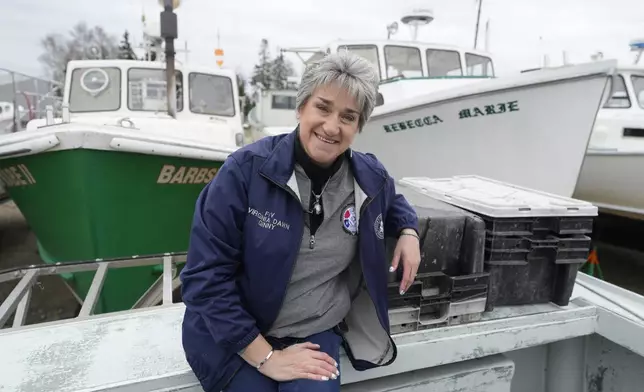
Commercial lobster fisherman Virginia Olsen sits for a portrait in Stonington, Maine, on Friday, May 2, 2025. (AP Photo/Robert F. Bukaty)
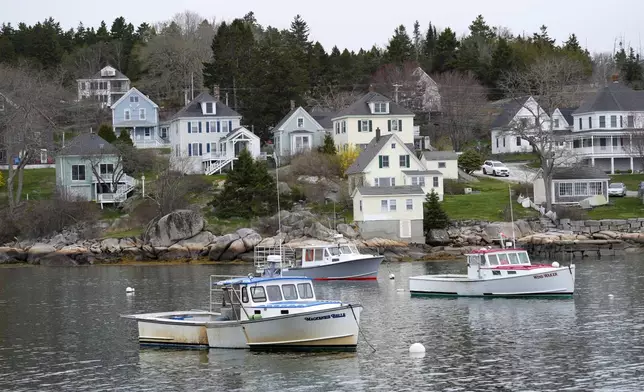
Lobster fishing boats are moored in Stonington, Maine, on Friday, May 2, 2025. (AP Photo/Robert F. Bukaty)
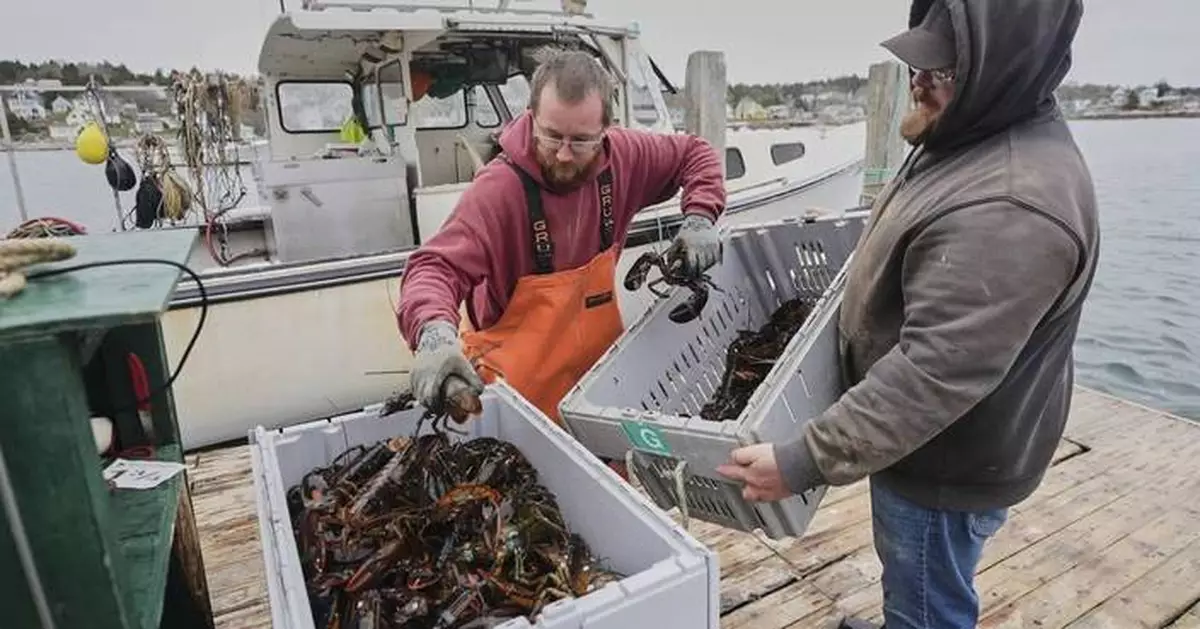
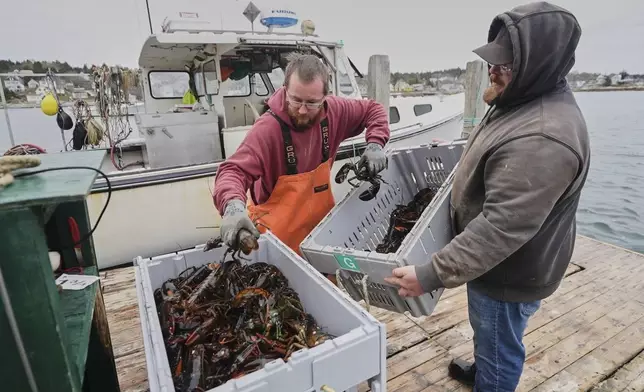
Commercial dealers weigh creates of lobsters on a dock in Stonington, Maine, on Friday, May 2, 2025. (AP Photo/Robert F. Bukaty)
That's why she was encouraged last month when President Donald Trump signed an executive order that promises to restore American fisheries to their former glory. The order promises to shred fishing regulations, and Olsen said that will allow fishermen to do what they do best — fish.
That will make a huge difference in communities like her home of Stonington, the busiest lobster fishing port in the country, Olsen said. It's a tiny island town of winding streets, swooping gulls and mansard roof houses with an economy almost entirely dependent on commercial fishing, some three hours up the coast from Portland, Maine's biggest city.
Olsen knows firsthand how much has changed over the years. Hundreds of fish and shellfish populations globally have dwindled to dangerously low levels, alarming scientists and prompting the restrictions and catch limits that Trump's order could wash away with the stroke of a pen. But she's heartened that the livelihoods of people who work the traps and cast the nets have become a priority in faraway places where they often felt their voices weren't heard.
“I do think it’s time to have the conversation on what regulations that the industry does need. We’re fishing different than we did 100 years ago," she said. “If everything is being looked at, we should be looking at the regulations within the fishing industry.”
But if fishing and lobstering interests finally have a seat at the table, the questions become how much seafood can be served there — and for how long. Trump's April 17 order, called “Restoring American Seafood Competitiveness,” promises an overhaul of the way America fishes, and cites a national seafood trade deficit of more than $20 billion as the reason to do it. The order calls on the federal government to reduce the regulatory burden on fishermen by later this month.
It arrives at a time when conservation groups and many marine scientists say the ocean needs more regulation, not less. One oft-cited 2020 study led by a scientist at the University of British Columbia looked at more than 1,300 fish and invertebrate populations and found that 82% were below levels that can produce maximum sustainable yields. The university said the study “discovered global declines, some severe, of many popularly consumed species.”
Trump's order prioritizes commerce over conservation. It also calls for the development of a comprehensive seafood trade strategy and a review of existing marine monuments, which are underwater protected zones, to see if any should be opened for fishing. At least one, the Pacific Islands Heritage Marine National Monument, has already been reopened.
Many commercial fishermen and fishing trade groups lauded the order. Members of the industry, one of the oldest in the country, have long made the case that heavy regulations — many intended to protect the health of fish populations — leave the U.S. at a competitive disadvantage to the fleets of countries that don't bear the same kind of burden. That disadvantage is a big piece of why America imports more than two-thirds of its seafood, they argue.
“The president’s executive order recognizes the challenges our fishing families and communities face, and we appreciate the commitment to reduce burdensome regulations and strengthen the competitiveness of American seafood,” said Patrice McCarron, executive director of the Maine Lobstermen’s Association.
Some fishermen, including Maine lobsterman Don McHenan, said they're looking forward to members of the industry being able to fish in areas of the ocean that have been closed off to them for years. McHenan said he's also hopeful the pace of new regulations will slow.
“As long as they don't put any more onto us,” McHenan said. “We'll see — time will tell.”
But the support for deregulation is not unanimous among fishermen. Some say strong conservation laws are critical to protecting species that fishermen rely on to make a living.
In Alaska, for example, Matt Wiebe said the executive order “terrifies” him. A commercial fisherman with more than 50 years of experience fishing for salmon, he said the order could potentially harm the Bristol Bay sockeye salmon fishery, which has received praise from sustainability organizations for careful management of the fish supply.
Absent that management, he said the world's largest sockeye salmon fishery could go the way of the New England cod fishing business, which collapsed due in large part to overfishing and has never recovered.
“Since New England fishers lost their cod fishery due to overfishing, many other fisheries came to respect and depend on conservation efforts,” Wiebe said. “We fish because it's what we do, and conservation efforts mean we and our kids can fish into the future.”
The executive order arrived at a time when America's commercial fishermen are coping with environmental challenges and the decline of some once-marketable species. Maine's historic shrimp fishery shuttered more than a decade ago, California's salmon industry is struggling through closures and the number of fish stocks on the federal overfished list has grown in recent years.
There is also the looming question of what Trump's trade war with major seafood producers such as Canada and China will mean for the U.S. industry — not to mention American consumers.
To many in Maine's lobster and fishing business, the answer is clear: Cut regulations and let them do their thing.
“We definitely feel the industry is over-regulated as a whole," said Dustin Delano, a fourth-generation Maine lobsterman who is also chief operating officer of the New England Fishermen’s Stewardship Association. “We hope that this will help for sure. It does seek to initiate that America-first strategy in the fishery.”
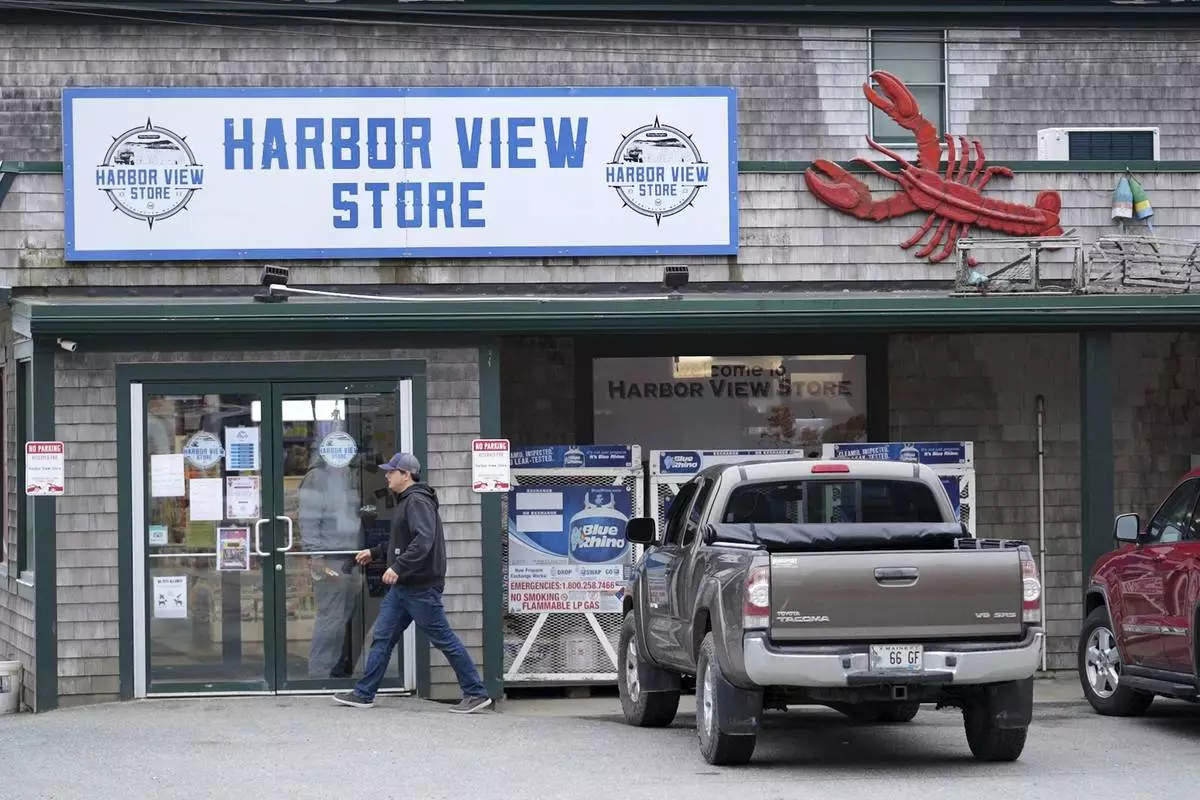
A lobster is part of the decorations at the Harbor View store in Stonington, Maine, on Friday, May 2, 2025. (AP Photo/Robert F. Bukaty)
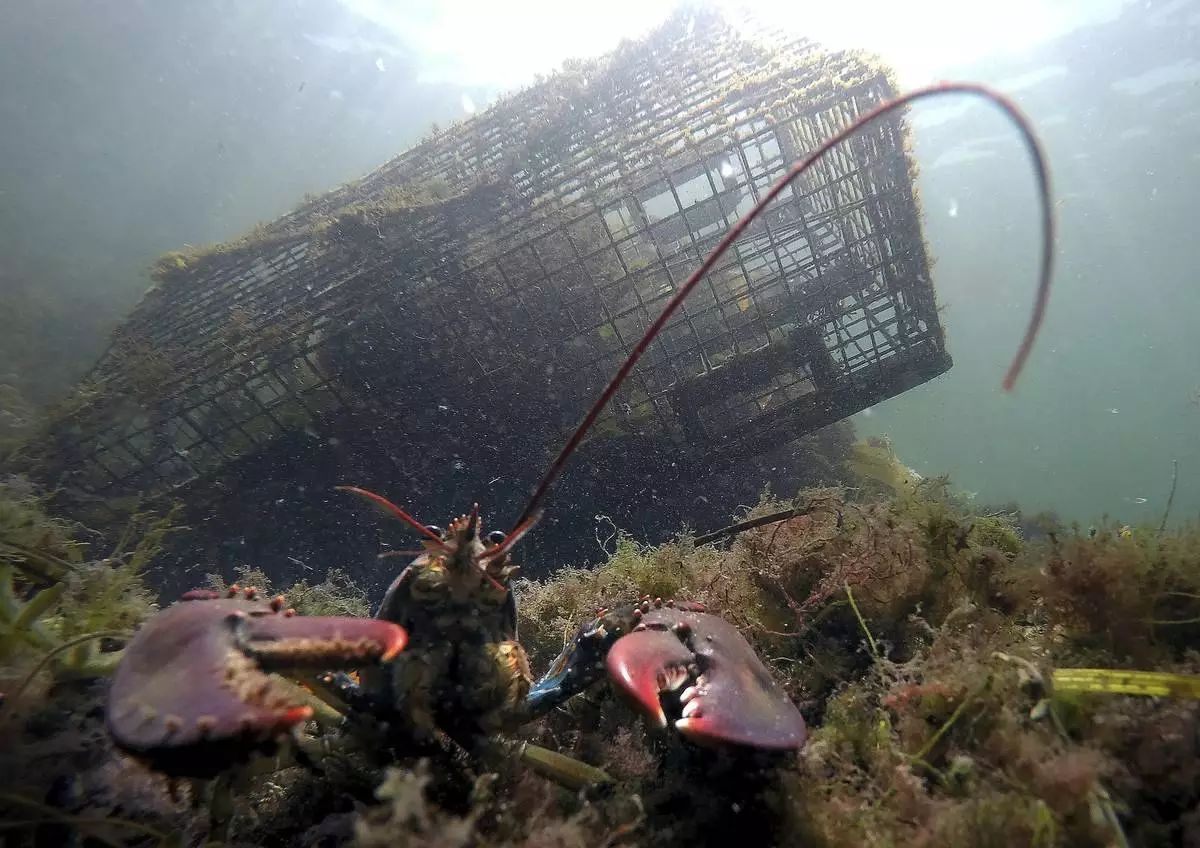
FILE - A lobster guards its territory in front of a trap off Biddeford, Maine, on Sept. 3, 2018. (AP Photo/Robert F. Bukaty, file)
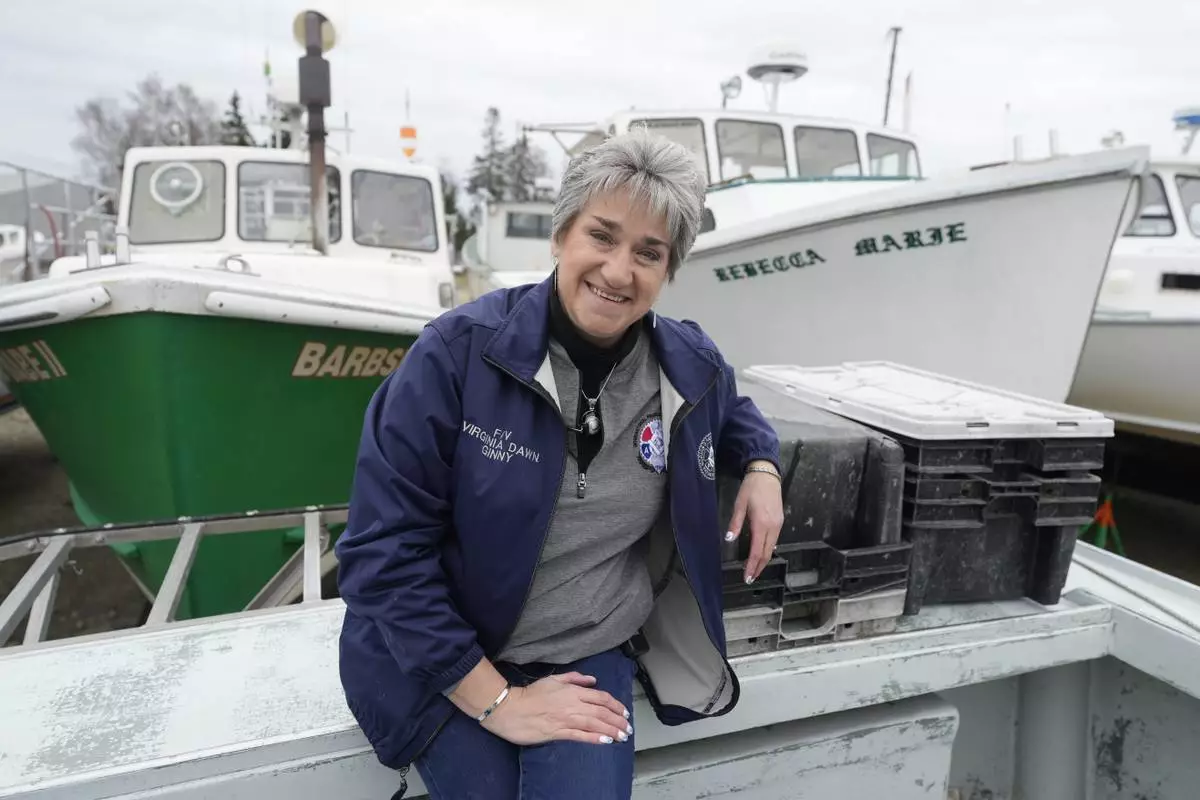
Commercial lobster fisherman Virginia Olsen sits for a portrait in Stonington, Maine, on Friday, May 2, 2025. (AP Photo/Robert F. Bukaty)
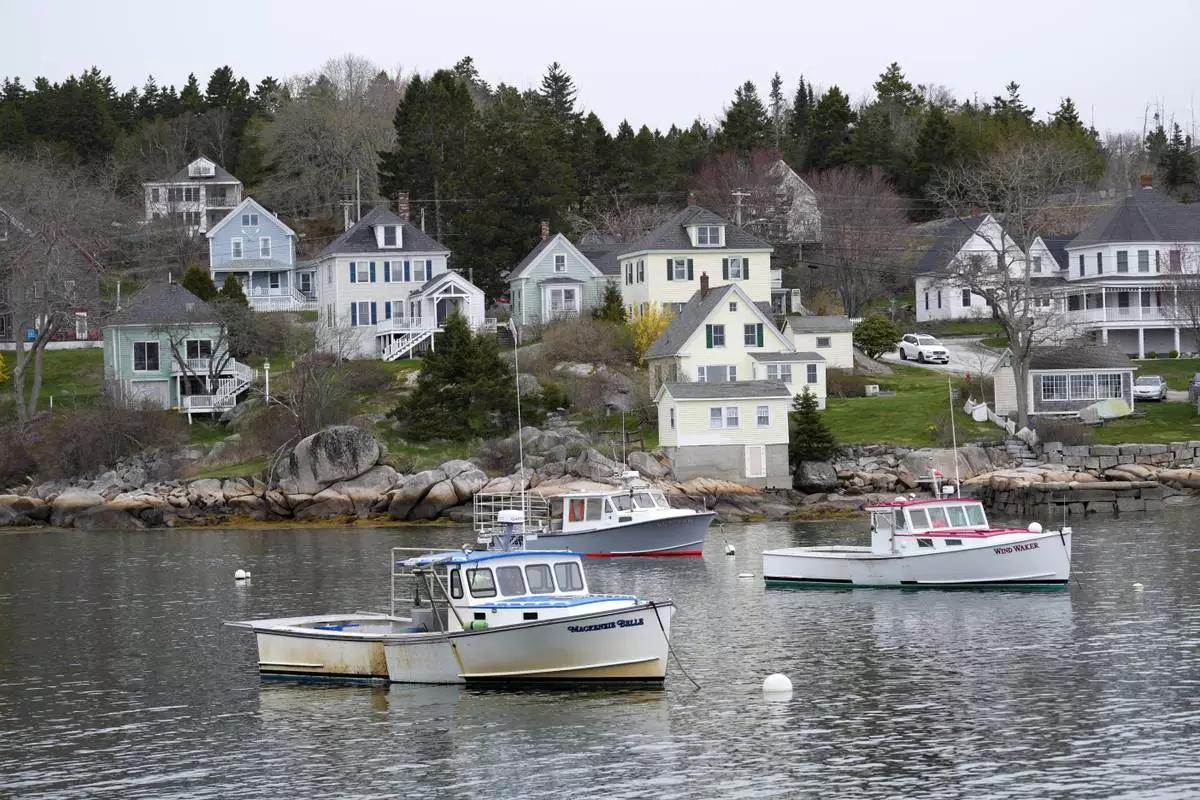
Lobster fishing boats are moored in Stonington, Maine, on Friday, May 2, 2025. (AP Photo/Robert F. Bukaty)
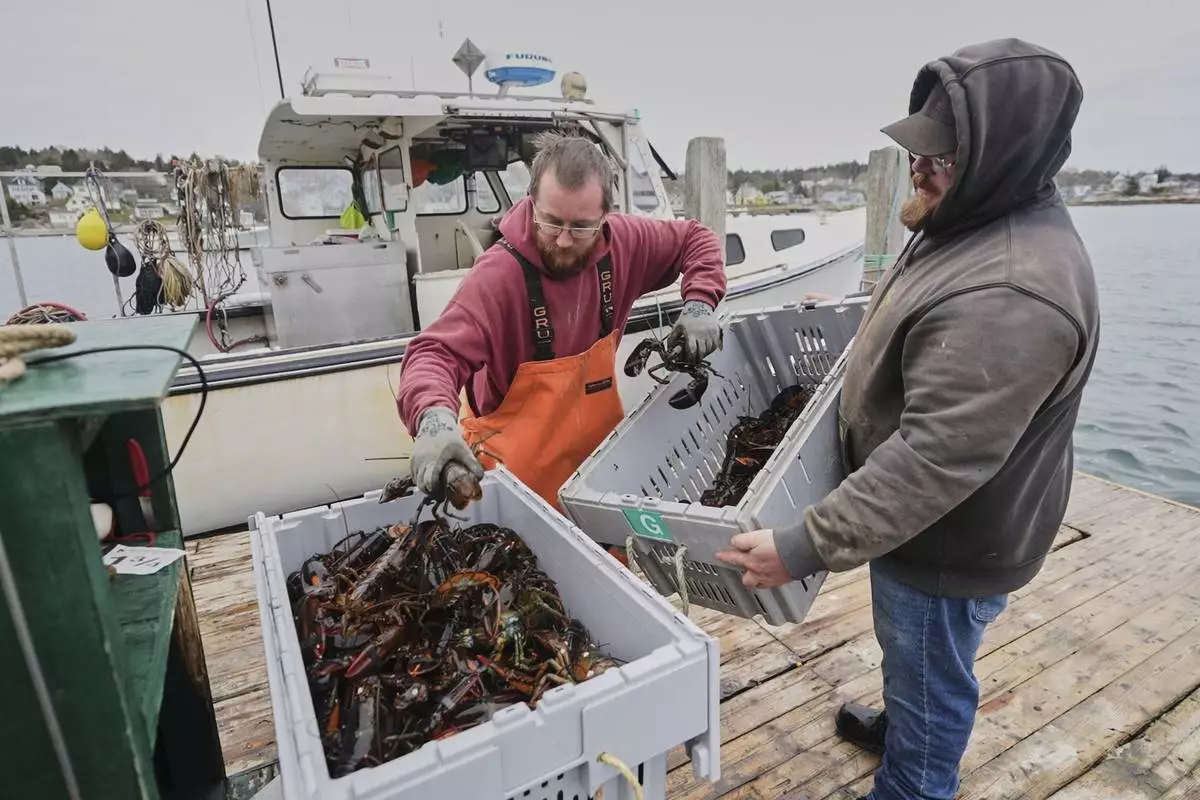
Commercial dealers weigh creates of lobsters on a dock in Stonington, Maine, on Friday, May 2, 2025. (AP Photo/Robert F. Bukaty)
VILNIUS, Lithuania (AP) — Belarus freed Nobel Peace Prize laureate Ales Bialiatski, key opposition figure Maria Kolesnikova and dozens of other prisoners on Saturday, capping two days of talks with Washington aimed at improving ties and getting crippling U.S. sanctions lifted on a key Belarusian agricultural export.
The U.S. announced earlier Saturday that it was lifting sanctions on Belarus' potash sector. In exchange, President Alexander Lukashenko pardoned 123 prisoners, Belarus' state news agency, Belta, reported.
A close ally of Russia, Minsk has faced Western isolation and sanctions for years. Lukashenko has ruled the nation of 9.5 million with an iron fist for more than three decades, and the country has been repeatedly sanctioned by the West for its crackdown on human rights and for allowing Moscow to use its territory in the 2022 invasion of Ukraine. Belarus has released hundreds of prisoners since July 2024.
John Coale, the U.S. special envoy for Belarus who met with Lukashenko in Minsk on Friday and Saturday, described the talks to reporters as “very productive" and said normalizing relations between Washington and Minsk was “our goal,” Belta reported.
“We’re lifting sanctions, releasing prisoners. We’re constantly talking to each other,” Coale said, adding that the relationship between the U.S. and Belarus was moving from “baby steps to more confident steps” as they increased dialogue, according to the Belarusian news agency.
Among the 123 prisoners were a U.S. citizen, six citizens of U.S. allied countries, and five Ukrainian citizens, a U.S. official told The Associated Press in an email. The official, who spoke on condition of anonymity to discuss private diplomatic negotiations, described the release as “a significant milestone in U.S.-Belarus engagement” and “yet another diplomatic victory” for U.S. President Donald Trump.
The official said Trump’s engagement so far “has led to the release of over 200 political prisoners in Belarus, including six unjustly detained U.S. citizens and over 60 citizens of U.S. Allies and partners.”
Pavel Sapelka, an advocate with the Viasna rights group, confirmed to the AP that Bialiatski and Kolesnikova were among those released.
Bialiatski, a human rights advocate who founded Viasna, was in jail when he was awarded the Nobel Peace Prize in 2022 along with the prominent Russian rights group Memorial and Ukraine’s Center for Civil Liberties. He was later convicted of smuggling and financing actions that violated public order — charges that were widely denounced as politically motivated — and sentenced to 10 years in 2023.
Bialiatski told the AP by phone Saturday that his release after 1,613 days behind bars came as a surprise — in the morning, he was still in an overcrowded prison cell.
“It feels like I jumped out of icy water into a normal, warm room, so I have to adapt. After isolation, I need to get information about what’s going on," said Bialiatski, who seemed energetic but pale and emaciated in post-release videos and photos.
He vowed to continue his work, stressing that “more than a thousand political prisoners in Belarus remain behind bars simply because they chose freedom. And, of course, I am their voice."
Kolesnikova, meanwhile, was a key figure in the mass protests that rocked Belarus in 2020, and is a close ally of an opposition leader in exile, Sviatlana Tsikhanouskaya.
Known for her close-cropped hair and trademark gesture of forming a heart with her hands, Kolesnikova became an even greater symbol of resistance when Belarusian authorities tried to deport her in September 2020. Driven to the Ukrainian border, she briefly broke away from security forces at the frontier, tore up her passport and walked back into Belarus.
The 43-year-old professional flautist was convicted in 2021 on charges including conspiracy to seize power and sentenced to 11 years in prison.
Among the others who were released, according to Viasna, was Viktar Babaryka — an opposition figure who had sought to challenge Lukashenko in the 2020 presidential election, widely seen as rigged, before being convicted and sentenced to 14 years in prison on charges he rejected as political.
Viasna reported that the group's imprisoned advocates, Valiantsin Stefanovic and Uladzimir Labkovich, and prominent opposition figure Maxim Znak were also freed. But it later said it was clarifying its report about Stefanovic's release, and Bialiatski told the AP that Stefanovic had not been freed, though he hopes he will be soon.
Most of those released were sent to Ukraine, Franak Viachorka, Tsikhanouskaya’s senior adviser, told the AP.
“I think Lukashenko decided to deport people to Ukraine to show that he is in control of the situation,” Viachorka said.
Eight or nine others, including Bialiatski, were being sent to Lithuania on Saturday, and more prisoners will be taken to the Baltic country in the next few days, Viachorka said.
Ukrainian authorities confirmed that Belarus had handed over 114 civilians. Ukrainian President Volodymyr Zelenskyy confirmed that five of them are Ukrainian nationals.
Freed Belarusian nationals “at their request” and “after being given necessary medical treatment” will be taken to Poland and Lithuania, Ukrainian authorities said.
When U.S. officials last met with Lukashenko in September, Washington said it was easing some of the sanctions on Belarus. Minsk, meanwhile, released more than 50 political prisoners into Lithuania, pushing the number of prisoners it had freed since July 2024 past the 430 mark.
“The freeing of political prisoners means that Lukashenko understands the pain of Western sanctions and is seeking to ease them,” Tsikhanouskaya, the opposition leader in exile, told the AP on Saturday.
She added: “But let’s not be naive: Lukashenko hasn’t changed his policies, his crackdown continues and he keeps on supporting Russia’s war against Ukraine. That’s why we need to be extremely cautious with any talk of sanctions relief, so that we don't reinforce Russia's war machine and encourage continued repressions.”
Tsikhanouskaya also described European Union sanctions against Belarusian potash fertilizers as far more painful for Minsk that the U.S. ones, saying that while easing U.S. sanctions could lead to the release of political prisoners, European sanctions should be used to push for long-term, systemic changes in Belarus and the end of the war in Ukraine.
Belarus, which previously accounted for about 20% of global potash fertilizer exports, has faced sharply reduced shipments since Western sanctions targeted state producer Belaruskali and cut off transit through Lithuania’s port in Klaipeda, the country’s main export route.
“Sanctions by the U.S., EU and their allies have significantly weakened Belarus’s potash industry, depriving the country of a key source of foreign exchange earnings and access to key markets,” Anastasiya Luzgina, an analyst at the Belarusian Economic Research Center BEROC, told the AP.
“Minsk hopes that lifting U.S. sanctions on potash will pave the way for easing more painful European sanctions; at the very least, U.S. actions will allow discussions to begin,” she said.
The latest round of U.S.-Belarus talks also touched on Venezuela, as well as Russia's ongoing invasion of Ukraine, Belta reported.
Coale told reporters that Lukashenko had given “good advice” on how to address the Russia-Ukraine war, saying that Lukashenko and Russian President Vladimir Putin were “longtime friends” with “the necessary level of relationship to discuss such issues.”
"Naturally, President Putin may accept some advice and not others,” Coale said.
The U.S. official told the AP that “continued progress in U.S.-Belarus relations" also requires steps to resolve tensions between Belarus and neighboring Lithuania, which is a member of the EU and NATO.
The Lithuanian government this week declared a national emergency over security risks posed by meteorological balloons sent from Belarus.
The balloons forced Lithuania to repeatedly shut down its main airport, stranding thousands of people. Earlier this year, Lithuania temporarily closed its border with Belarus, and Belarusian authorities responded by threatening to seize up to 1,200 Lithuanian trucks they said were stuck in Belarus.
The U.S. official said improving ties between U.S. and Belarus will require "positive action to stop the release of smuggling balloons from Belarus that affect Lithuanian airspace and resolve the impoundment of Lithuanian trucks.”
Associated Press writer Matthew Lee in Washington contributed to this report.

A woman holds an Old Belarusian flag as she stands waiting released Belarusian prisoners at the U.S. Embassy in Vilnius, Lithuania, on Saturday, Dec. 13, 2025. (AP Photo/Mindaugas Kulbis)
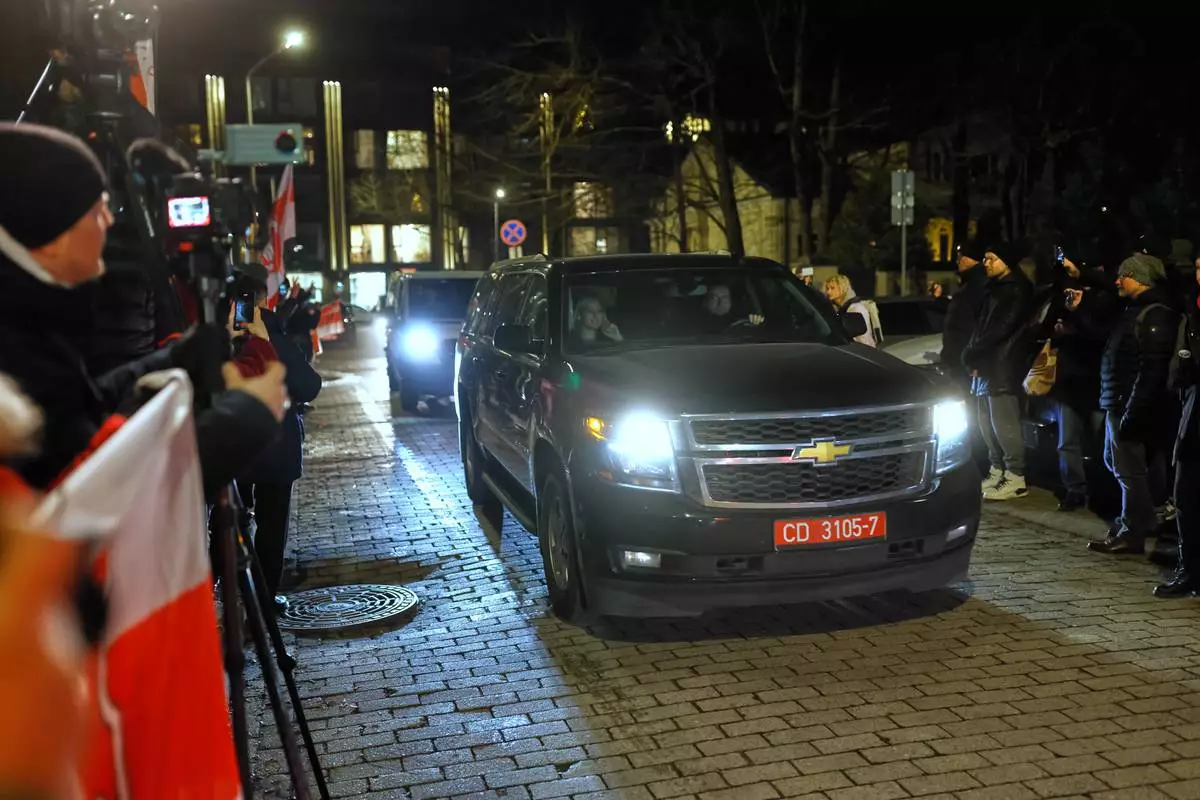
A motorcade arrives at the U.S. Embassy in Vilnius, Lithuania, on Saturday, Dec. 13, 2025. (AP Photo/Mindaugas Kulbis)
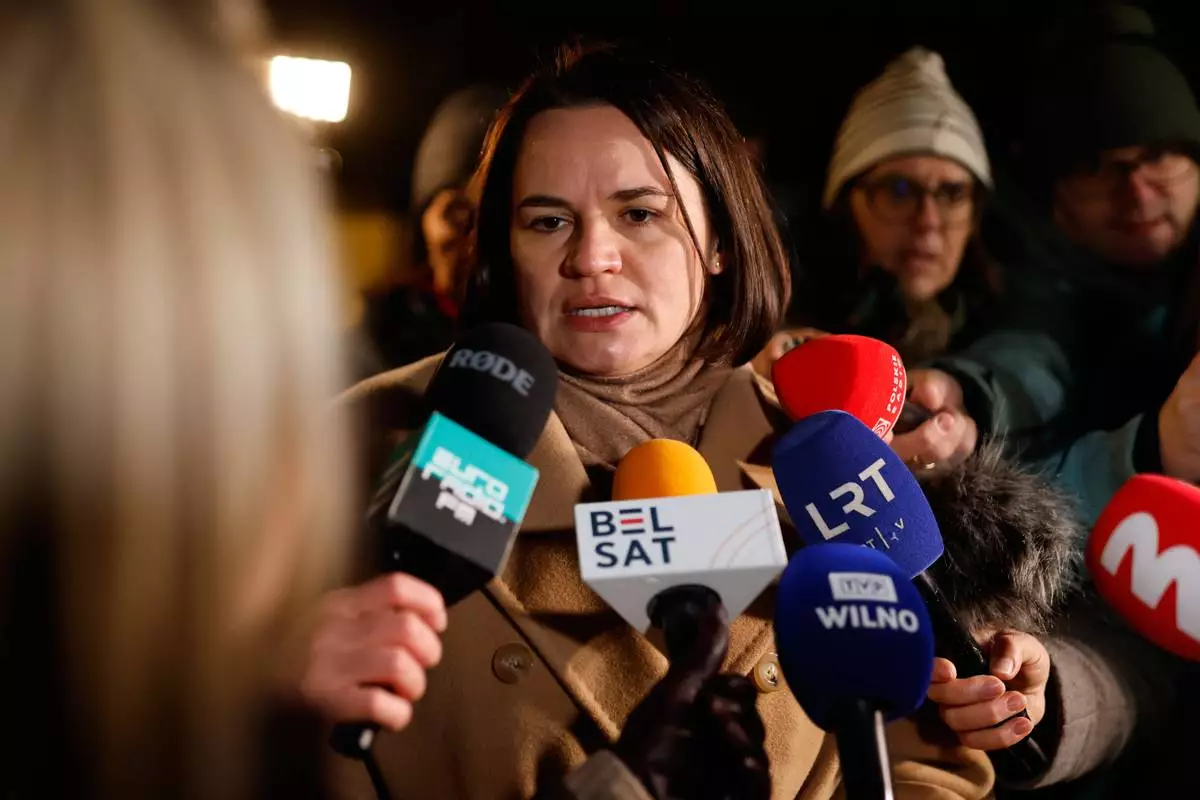
Belarusian opposition leader Sviatlana Tsikhanouskaya speaks to journalists as she waits to meet released Belarusian prisoners at the U.S. Embassy in Vilnius, Lithuania, on Saturday, Dec. 13, 2025. (AP Photo/Mindaugas Kulbis)
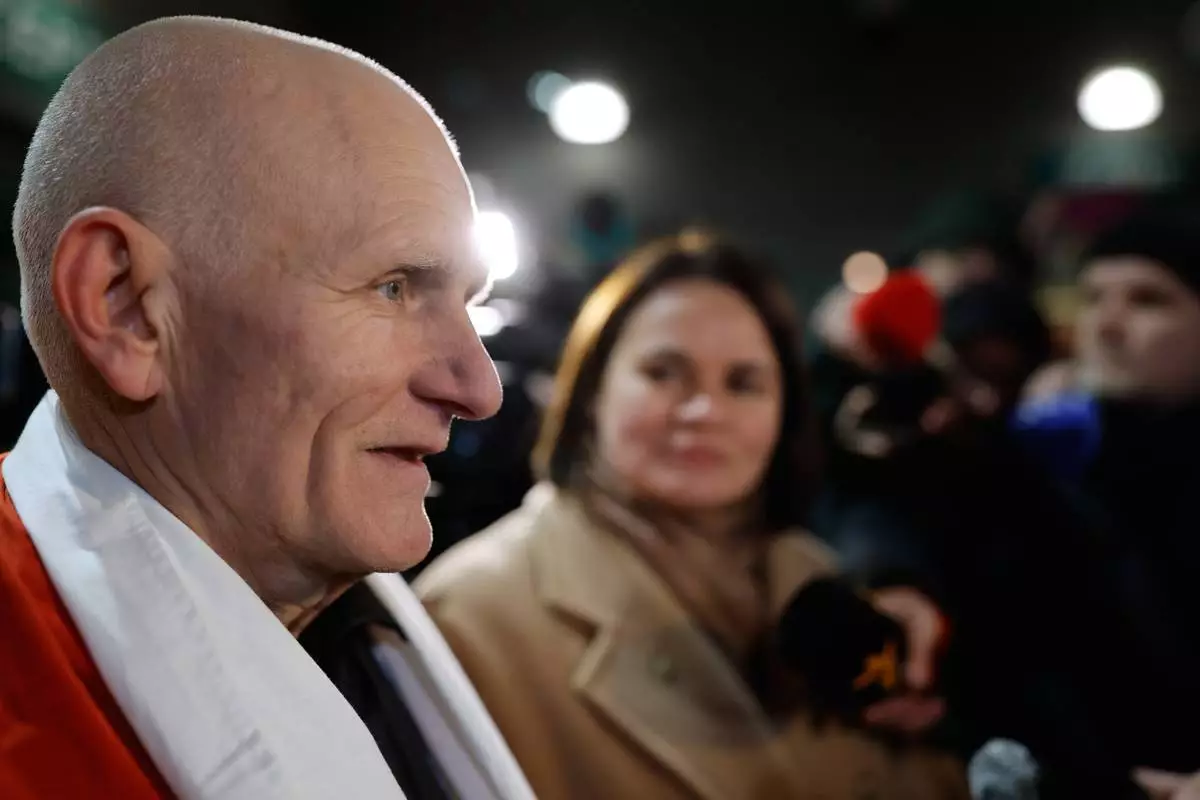
Nobel Peace Prize laureate Ales Bialiatski, one of released Belarusian prisoners, arrives at the U.S. Embassy in Vilnius, Lithuania, on Saturday, Dec. 13, 2025, as Belarusian opposition leader Sviatlana Tsikhanouskaya, background stands near. (AP Photo/Mindaugas Kulbis)
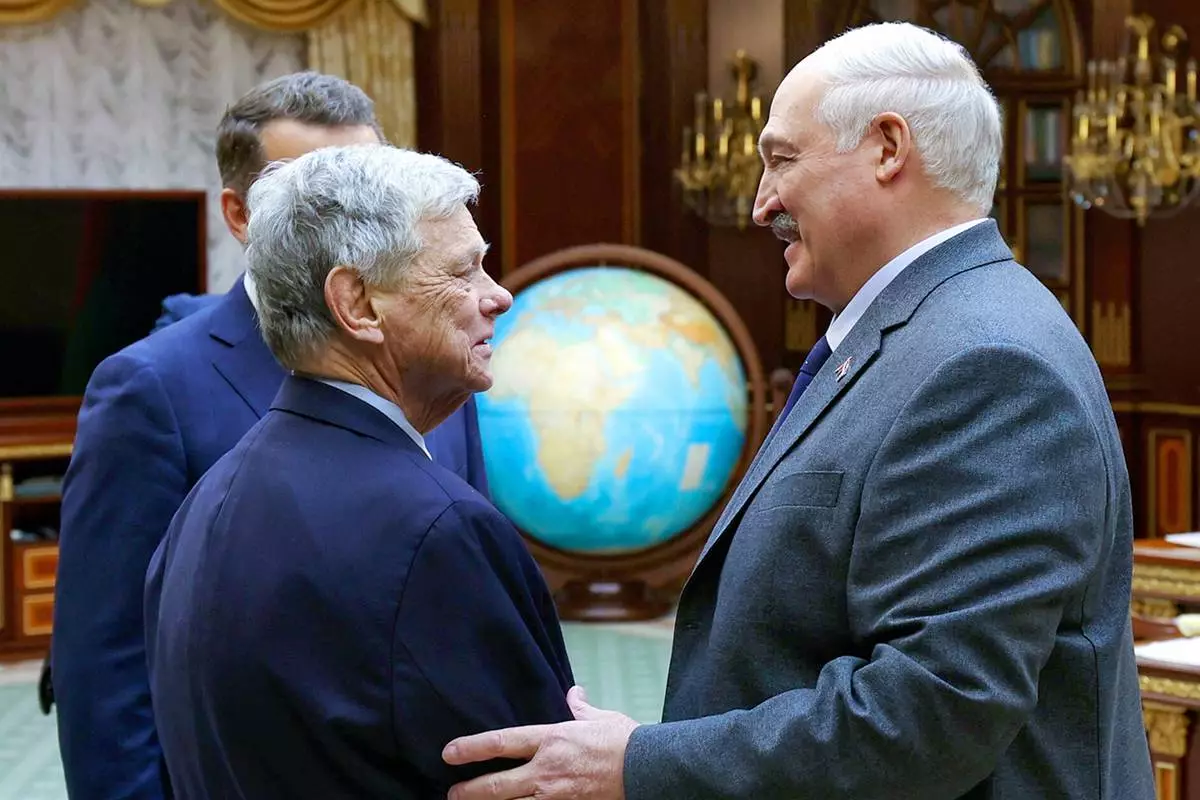
In this photo released by Belarusian presidential press service, Belarusian President Alexander Lukashenko, right, and U.S. Presidential envoy John Coale shake hands during their meeting in Minsk, Belarus, Friday, Dec. 12, 2025. (Belarusian Presidential Press Service via AP)