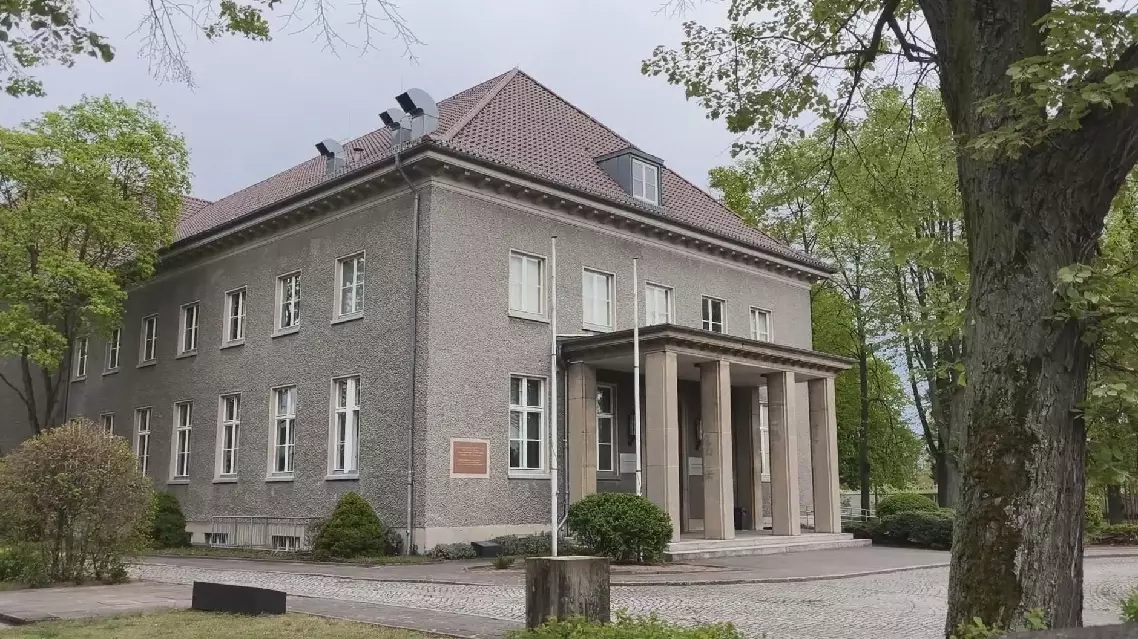
The Museum Berlin-Karlshorst, located about 15 kilometers from the city center of Berlin and on the historical site of German army's formal surrender at the end of World War II, witnessed the Nazi surrender and memorializes the ultimate triumph of anti-fascist forces.
On May 8, 1945, a surrender ceremony was held in that relatively undamaged building in Berlin, which had been selected by Soviet authorities to highlight their crucial role in the defeat of fascism.
According to the introduction of Jorg Morre, director of the museum, during the ceremony, Soviet Marshal Georgy Zhukov demanded German Field-Marshal Wilhelm Keitel sign the documents for the unconditional surrender of Nazi Germany, compelling all German forces to lay down their arms.
"Late on the night of May 8, 1945, representatives from various countries gathered in this hall to attend the ceremony that lasted around 40 minutes," Morre said.
Prior to this formal surrender, Nazi Germany had agreed to a preliminary capitulation in Reims, France, on May 7, 1945. However, the Soviet Union rejected its formality due to the absence of Soviet representatives. Therefore, the ceremony, held in Karlshorst under direct Soviet supervision, was deemed the definitive conclusion to the war. The event concluded with cheers in the signing hall, officially ending the war in Europe.
The museum now displays replicas of the three-language versions of the surrender document -- Russian, English, and German -- with the originals preserved in Freiburg. Through permanent exhibitions, the museum educates visitors on the war's devastation and the imperative of peace.
"I believe that as a museum here, its mission is to remember the events that occurred 80 years ago and present them clearly. Germany initiated World War II, and it bears historical responsibility for all the victims. Even though 80 years have passed, we should not forget this," Morre said.
German museum commemorates victory of World Anti-Fascist War