Huzhou, a major foreign trade city in east China's Zhejiang Province that used to sell 14 percent of its export products to the United States, is stepping up its efforts to help local traders affected by the U.S. abuse of tariffs turn to the domestic markets and navigate the challenges facing them.
The municipal government has organized a special event to promote the premium export products in the Chinese markets, with more than 100 businesses attended, much higher than the expected number of 70 companies.
The authorities invited foreign trade companies that have little knowledge about the domestic markets, as well as e-commerce platform operators to the event to help the former build online sales channels.
"As a brand focusing on foreign trade, we have no promotional inputs, no advertisements and no popularity in domestic markets, so it's a quite big challenge for us to switch to domestic trade. I would like to consult you for some professional advice," said Han Zhang, deputy marketing director of Binfeng Technology (Zhejiang) Company.
Zhejiang Yuante New Material Company, a wood plastic composite flooring manufacturer whose foreign trade accounts for over 80 percent of its business, has suffered an inventory backlog since U.S. President Donald Trump announced the sweeping tariffs last month.
"There are 400 or 500 tons of inventory here. We estimate 50 or 60 percent of the products need to be sold domestically. It's a very tough challenge," said Wang Yong, general manager of the company.
The other challenge for exporters is that they have to adapt to domestic standards, which are different from those in overseas markets.
"You cannot just sell European and American products here and assume they suit domestic needs. Every country has different consumption habits and needs," said Zhang Congyi, deputy director of the e-commerce office of Huzhou Municipal Bureau of Commerce.
The commerce bureau, along with the market supervision and administration bureau, have surveyed and designated exporters whose products have the same production lines, standards, and quality as those of domestic products, and instructed them one-on-one.
"We mainly analyze the differences between international standards and domestic standards, and then instruct them on various aspects such as production process and products in collaboration with professional technical institutions," said Shen Limin, director of the metrology office of the market supervision and administration bureau.
Under the scheme, businesses can finish application procedures within five days and then be approved to sell their products online, according to Shen.
Now, local exporters have become 40 percent less reliant on foreign trade.
"With the same production lines, standards, and product quality, it will be very convenient for us to switch products. This marks a leap forward in efficiency improvement and quality control, and our business will be more flexible," said Tang Haibin, deputy general manager of Noblelift, a leading Chinese manufacturer and service provider in the material handling industry.
So far, Huzhou has sorted out the first list of 887 companies that used to export products to the United States, among which 171 have been approved to sell their 272 kinds of products in the domestic markets, including motors, office chairs, textiles and clothing, flooring, and logistics equipment.
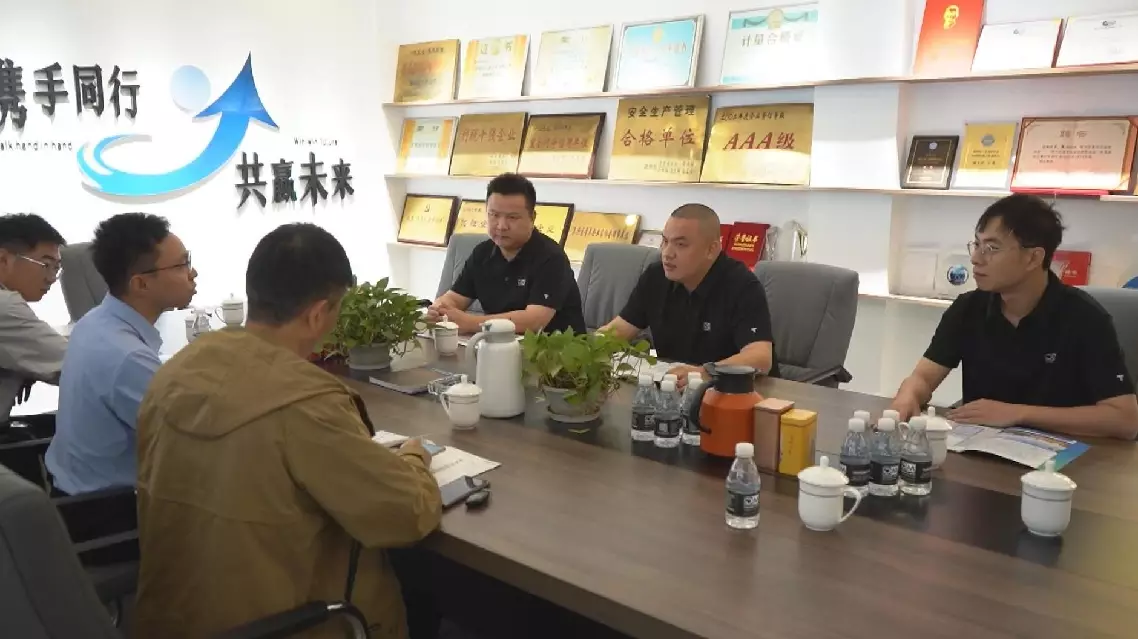
Exporters in east China city shift to domestic markets amid US tariffs