The Port of Los Angeles, one of the busiest and most vital container ports in the United States, is now facing a dramatic slowdown of some 35 percent in cargo volume year on year this week, as U.S. tariff policies take a visible toll on trade flows.
Long a key gateway for trans-Pacific shipping, the port typically handles massive volumes of cargo from Asia, with about half of its incoming vessels coming from China under normal conditions. But that rhythm has been disrupted.
Gene Seroka, executive director of the Port, has warned repeatedly that U.S. tariffs are forcing companies to slash import orders, threatening a sharp drop in inbound cargo volumes.
This week, the first Chinese ships affected by the fresh U.S. tariffs under the Trump administration arrived at the port, signaling what's to come: rising prices and potential product shortages for U.S. consumers.
"I'm very concerned about [it] because everything is high. Everywhere you go it costs a lot of money. And I think it's not just me, a lot of people, you know. I mean everything even if I look at [almost everything], is made in China. So, you know, it [is] just anything I think going around not just here in the U.S., around the world. I think nobody likes it because you know, businesses are closing down," said Oscar, a local resident.
"It is very hard. The crisis is very hard. Everything is expensive. It's very difficult to buy things. It is almost little, what one earns, compared to everything which is expensive. Now that the president's [tariff policy makes it] all very expensive. We pay more than we should before probably with these laws," said Christina, another local resident.
The numbers tell the story of a port under pressure. Chinese vessel traffic has fallen by more than 50 percent.
Of the 80 ships originally expected in May, one in five bookings have already been canceled. June isn't looking better -- 13 ship calls have been canceled well in advance.
The ripple effects are stark. Truck drivers who once moved four to five containers daily are now averaging just two to three containers. From dockworkers, warehouse crews to maintenance technicians, many port employees are seeing workloads slashed in half. If the downturn continues, job losses could follow.
Industry-wide forecasts are equally grim. According to the National Retail Federation, U.S. imports could fall by at least 20 percent in the second half of 2025.
But the drop in Chinese imports may be far worse. JPMorgan estimates a 75-percent to 80-percent plunge.
For the Port of Los Angeles and ports across the country, the economic fallout may be severe and long lasting.
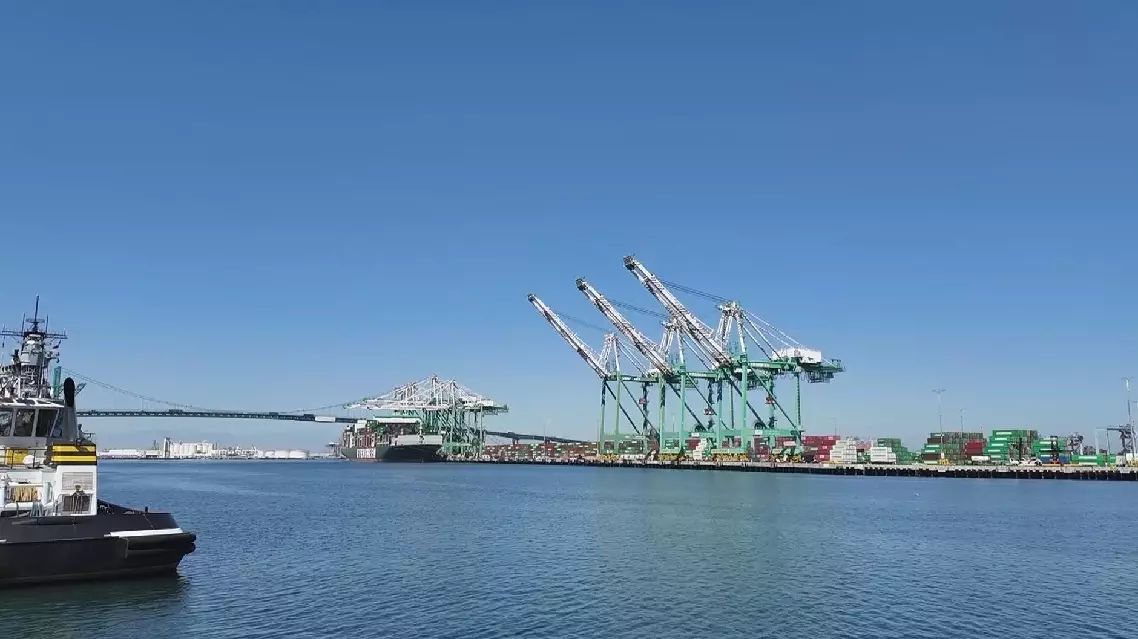
Cargo volume plunges 35 pct at Port of Los Angeles in wake of fresh tariffs