WASHINGTON (AP) — Retired Supreme Court Justice David H. Souter, the ascetic bachelor and New Hampshire Republican who became a favorite of liberals during his nearly 20 years on the bench, has died. He was 85.
Souter died Thursday at his home in New Hampshire, the court said in a statement Friday.
Click to Gallery
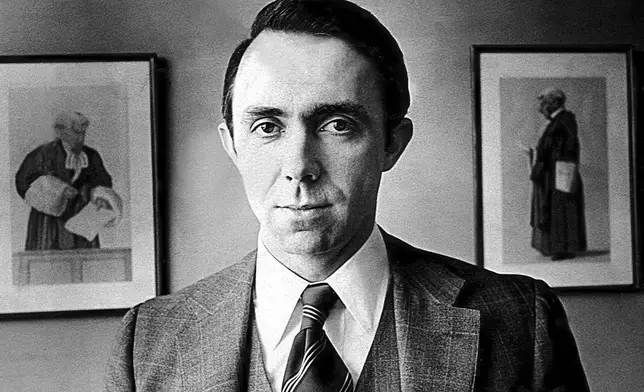
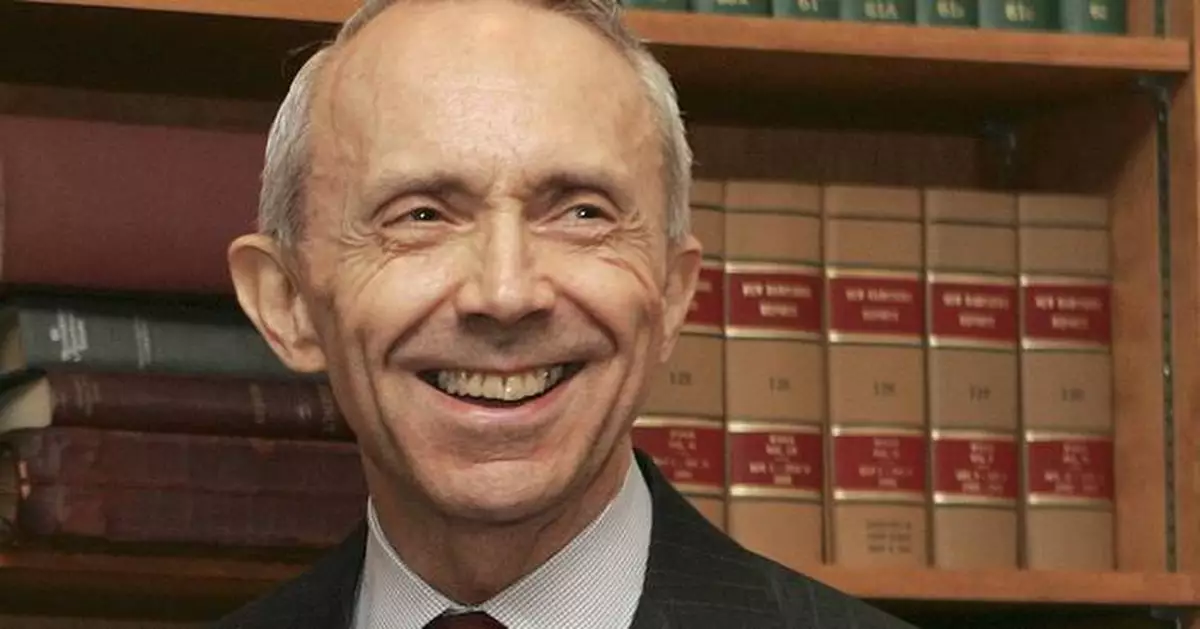
FILE - New Hampshire Attorney General David Souter is seen in this undated photo in Concord, N.H. (Ken Williams/The Concord Monitor via AP)
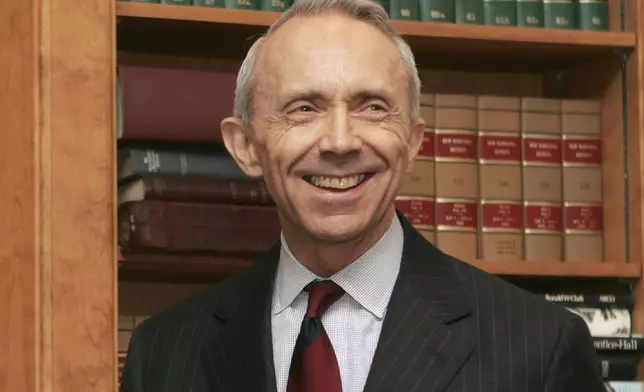
FILE - U.S. Supreme Court Justice David Souter, smiles after speaking during a dedication ceremony at the State Supreme Courthouse in Concord, N.H., July 9, 2008. (AP Photo/Jim Cole, File)
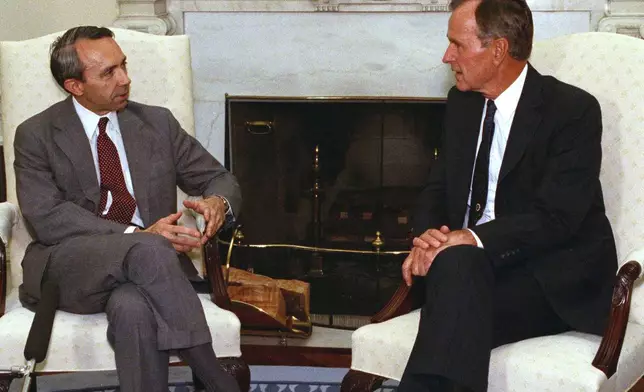
FILE - President George H.W. Bush talks with Supreme Court nominee Judge David Souter in the Oval Office of the White House, Sept. 13, 1990. (AP Photo/Charles Tasnadi, File)

FILE - Retired U.S. Supreme Court Justice David Souter works with his group to promote civics education in New Hampshire schools during a meeting in Concord, N.H., Sept. 16, 2009. (AP Photo/Jim Cole, File)
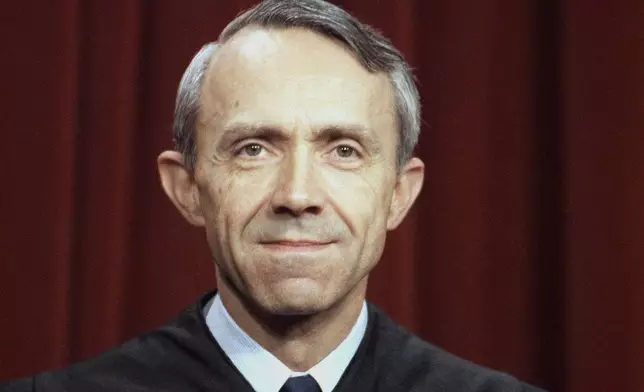
FILE - David Souter, Associate Justice of the U.S. Supreme Court, is shown, Dec. 1993. (AP Photo/Marcy Nighswander, File)
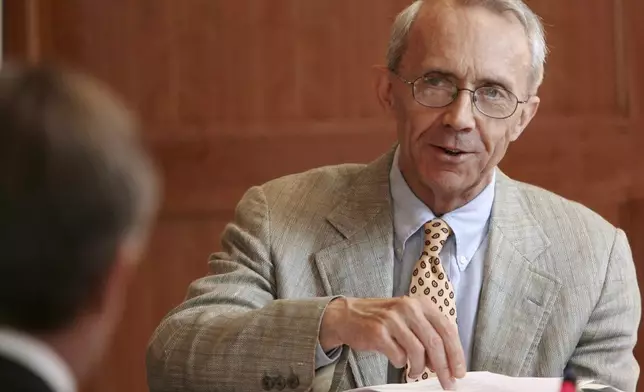
FILE - In this Sept. 16, 2009 file photo, retired Supreme Court Justice David Souter works with his group to promote civics education in New Hampshire schools during a meeting in Concord, N.H. (AP Photo/Jim Cole, FILE)

FILE - In this Dec. 5, 2003 file photo, U.S. Supreme Court Associate Justice David Souter poses during a group portrait session with the members of the U.S. Supreme Court, at the Supreme Court Building in Washington. (AP Photo/J. Scott Applewhite, File)
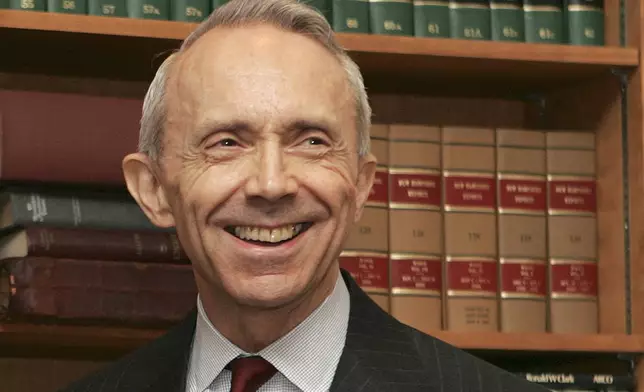
FILE - In this July 9, 2008 file photo, Supreme Court Justice David Souter, reacts after speaking at a dedication ceremony at the State Supreme Courthouse in Concord, N.H. (AP Photo/Jim Cole, File)
He retired from the court in June 2009, giving President Barack Obama his first Supreme Court vacancy to fill. Obama, a Democrat, chose Sonia Sotomayor, the court’s first Latina justice.
Souter was appointed by Republican President George H.W. Bush in 1990. He was a reliably liberal vote on abortion, church-state relations, freedom of expression and the accessibility of federal courts. Souter also dissented from the decision in Bush v. Gore in 2000, which effectively handed the presidency to George W. Bush, the son of the man who put him on the high court.
While liberals were delighted with a justice they initially feared, conservatives turned Souter's appointment into a rallying cry, “No more Souters,” that fueled their successful drive to move the court more firmly to the right.
In retirement, Souter warned that ignorance of how government works could undermine American democracy.
"What I worry about is that when problems are not addressed, people will not know who is responsible. And when the problems get bad enough ... some one person will come forward and say, ‘Give me total power and I will solve this problem.’ That is how the Roman republic fell,” Souter said in a 2012 interview.
His lifestyle was spare — yogurt and an apple, consumed at his desk, was a typical lunch — and he shunned Washington’s social scene. He couldn’t wait to leave town in early summer. As soon as the court finished its work in late June, he climbed into his Volkswagen Jetta for the drive back to the worn farmhouse where his family moved when he was 11.
Yet for all his reserve, Souter was beloved by colleagues, court employees and friends. He was a noted storyteller and generous with his time.
“Justice David Souter served our Court with great distinction for nearly twenty years. He brought uncommon wisdom and kindness to a lifetime of public service," Chief Justice John Roberts said. Souter continued hearing cases on the 1st U.S. Circuit Court of Appeals for more than a decade after he left the high court, Roberts said.
Sotomayor recalled the kindness of the man she succeeded on the Supreme Court. “When I arrived at the court, no one was more welcoming to me than David,” she said in a statement. “After his retirement, he periodically sent me notes, which I will forever treasure for their insightfulness and beautiful turns of phrase.”
When Bush plucked Souter from obscurity in 1990, liberal interest groups feared he would be the vote that would undo the court’s Roe v. Wade ruling in favor of abortion rights. He was called a stealth nominee by some.
Bush White House aide John Sununu, the former conservative governor of New Hampshire, hailed his choice as a “home run.” And early in his time in Washington, Souter was called a moderate conservative.
But he soon joined in a ruling reaffirming women’s right to an abortion, a decision from 1992 that is his most noted work on the court. Thirty years later, a more conservative court overturned that decision and the constitutional right to abortion.
Souter asked precise questions during argument sessions, sometimes with a fierceness that belied his low-key manner. “He had an unerring knack of finding the weakest link in your argument,” veteran Supreme Court advocate Carter Phillips said.
Souter was history’s 105th Supreme Court justice and only its sixth bachelor.
Although hailed by The Washington Post as the capital city’s most prominently eligible single man when he moved from New Hampshire, Souter resolutely resisted the social whirl.
“I wasn’t that kind of person before I moved to Washington, and, at this age, I don’t see any reason to change,” the intensely private Souter told an acquaintance.
He worked seven days a week through most of the court’s term from October to early summer, staying at his Supreme Court office for more than 12 hours a day. He said he underwent an annual “intellectual lobotomy” at the start of each term because he had so little time to read for pleasure.
Souter rented an apartment a few miles from the court and jogged alone at Fort McNair, an Army installation near his apartment building. He was once mugged while on a run, an apparently random act.
Souter returned to his well-worn house in Weare, New Hampshire, for a few months each summer and was given the use of an office in a Concord courthouse.
An avid hiker, Souter spent much of his time away from work trekking through the New Hampshire mountains.
When Souter in 2005 joined an unpopular 5-4 decision on eminent domain allowing a Connecticut city to take several waterfront homes for a private development, a group angered by the decision tried to use it to evict him from his Weare farmhouse to make way for the “Lost Liberty Hotel.” But Weare residents rejected the proposal.
Shortly after his retirement, Souter bought a 3,500-square-foot Cape Cod-style home in Hopkinton, New Hampshire. It was reported, though perhaps it was just part of Souter’s lore, that he worried that the foundation of the house in Weare would give way under the weight of all the books he owned.
Souter had been a federal appellate judge for just over four months when picked for the high court. He had heard but one case as a federal judge, and as a state judge previously had little chance to rule on constitutional issues.
Though liberals were initially wary of his appointment, it was political conservatives who felt betrayed when, in two 1992 rulings, Souter helped forge a moderate-liberal coalition that reaffirmed the constitutional right of abortion and the court’s longtime ban on officially sponsored prayers in public schools.
Yet as Souter biographer Tinsley Yarbrough noted, the justice did not take “extreme positions.”
Indeed, in June 2008, Souter sided with Exxon Mobil Corp. and broke with his liberal colleagues in slashing the punitive damages the company owed Alaskan victims of the Exxon Valdez oil spill.
Before serving as a New Hampshire judge, Souter was his state’s attorney general for two years. He worked on the attorney general’s staff for the previous eight years, after a brief stint in private practice.
Souter earned his undergraduate and law degrees from Harvard University, and a master’s degree from Oxford as a Rhodes scholar.
Associated Press writer Kathy McCormack contributed to this report from Concord, New Hampshire.
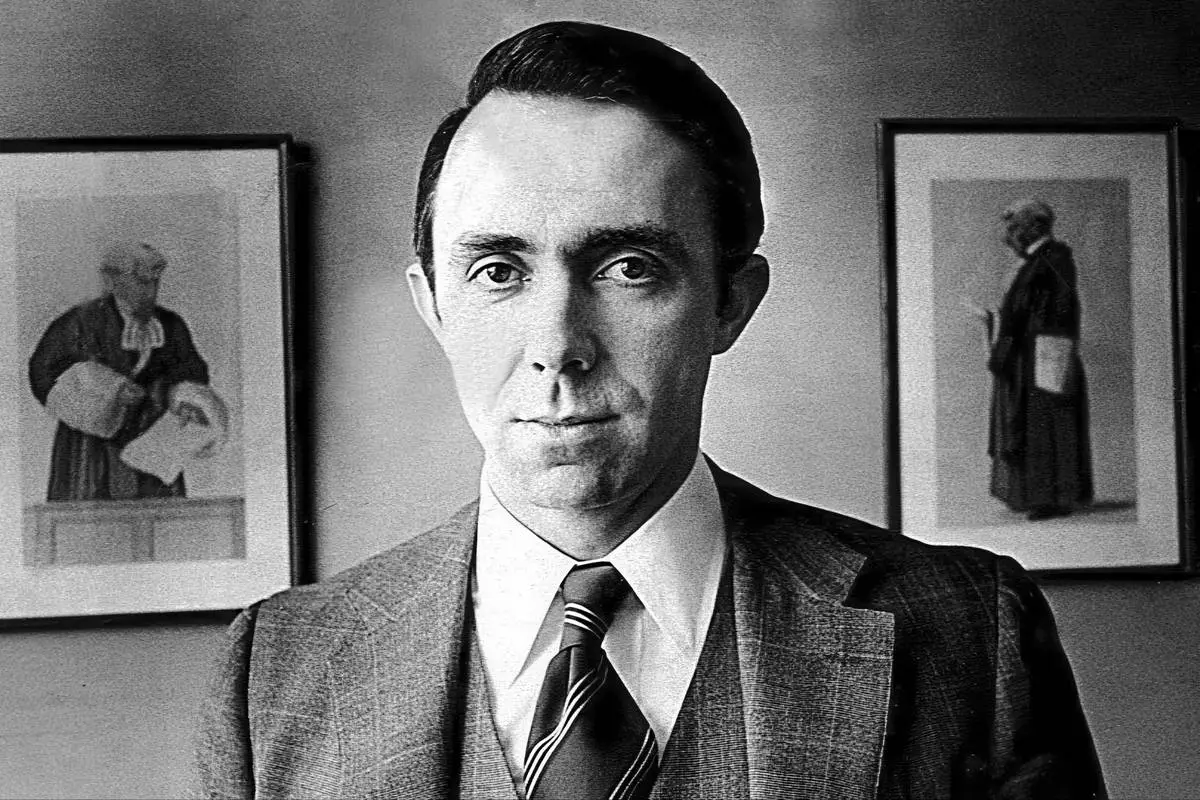
FILE - New Hampshire Attorney General David Souter is seen in this undated photo in Concord, N.H. (Ken Williams/The Concord Monitor via AP)
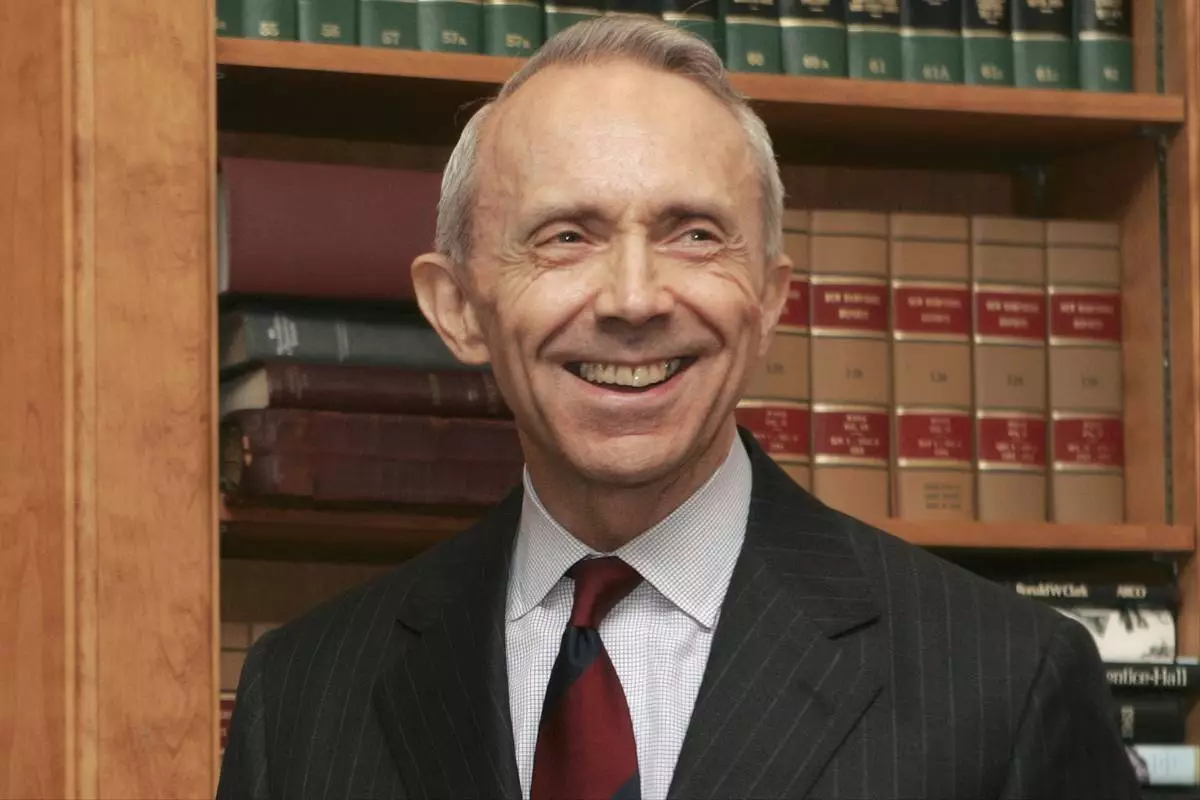
FILE - U.S. Supreme Court Justice David Souter, smiles after speaking during a dedication ceremony at the State Supreme Courthouse in Concord, N.H., July 9, 2008. (AP Photo/Jim Cole, File)
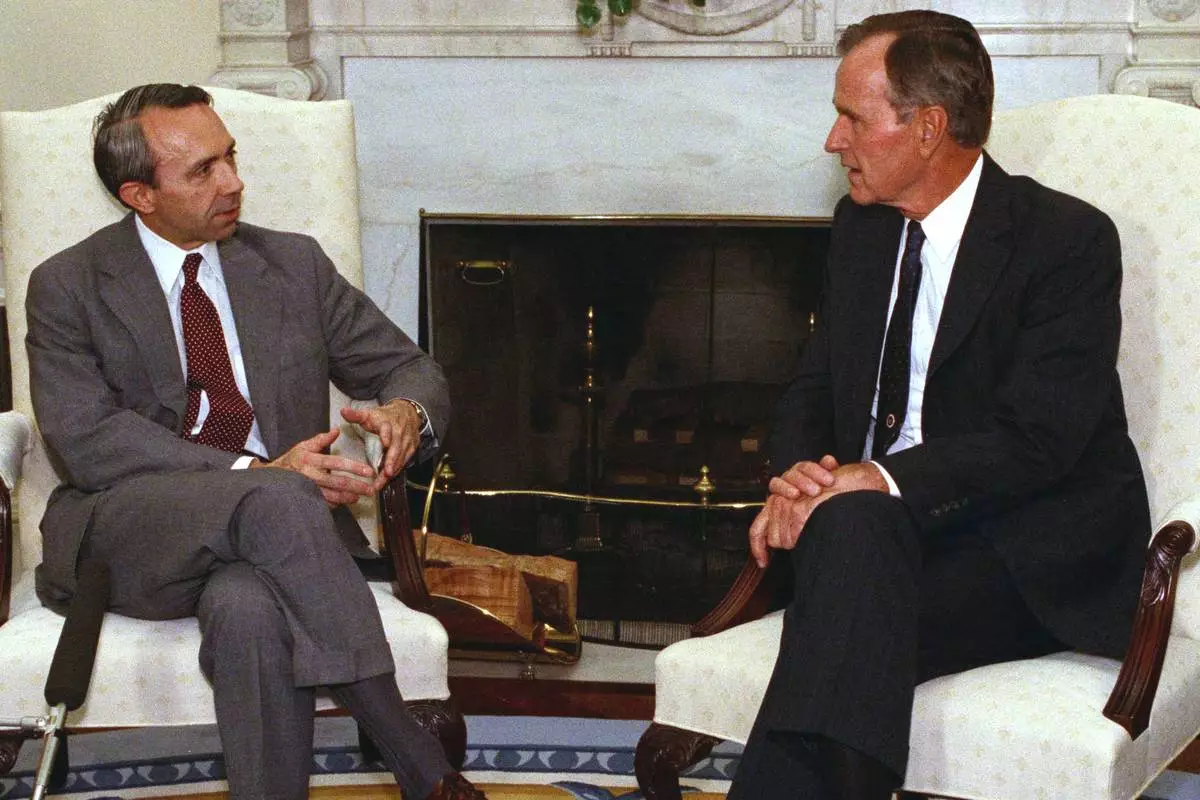
FILE - President George H.W. Bush talks with Supreme Court nominee Judge David Souter in the Oval Office of the White House, Sept. 13, 1990. (AP Photo/Charles Tasnadi, File)

FILE - Retired U.S. Supreme Court Justice David Souter works with his group to promote civics education in New Hampshire schools during a meeting in Concord, N.H., Sept. 16, 2009. (AP Photo/Jim Cole, File)
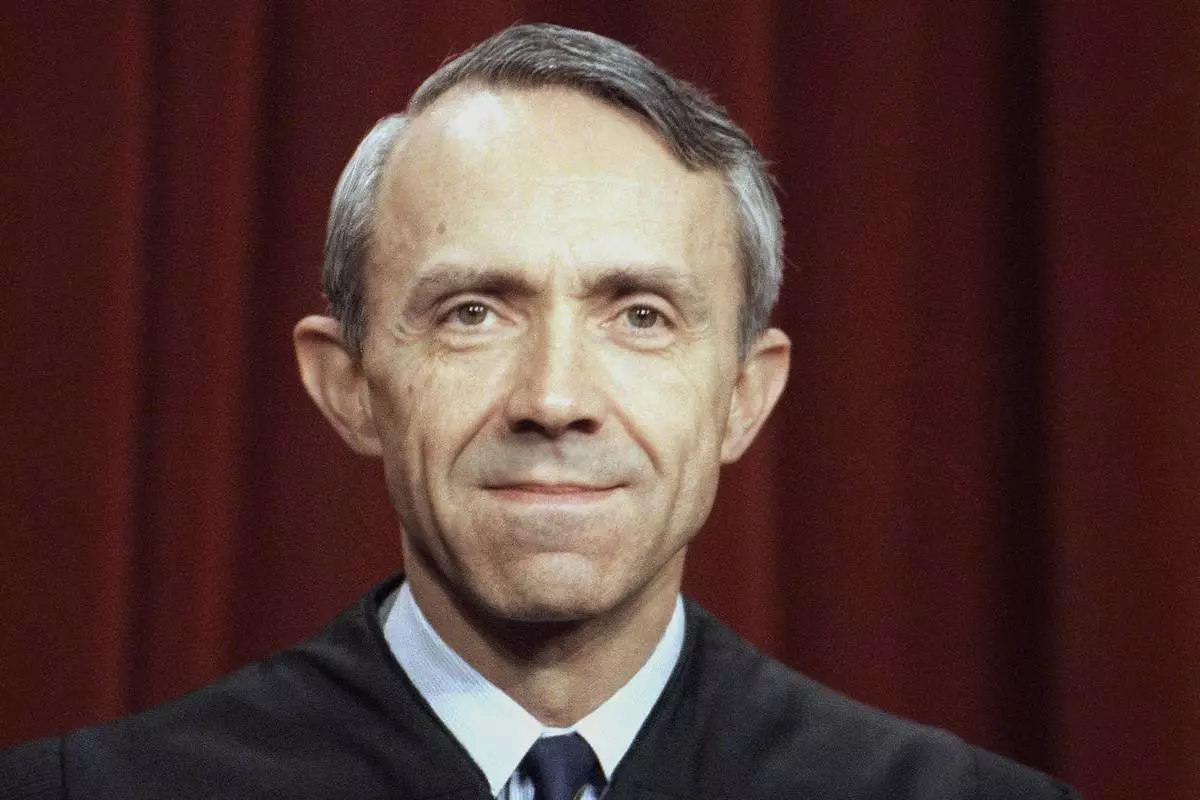
FILE - David Souter, Associate Justice of the U.S. Supreme Court, is shown, Dec. 1993. (AP Photo/Marcy Nighswander, File)
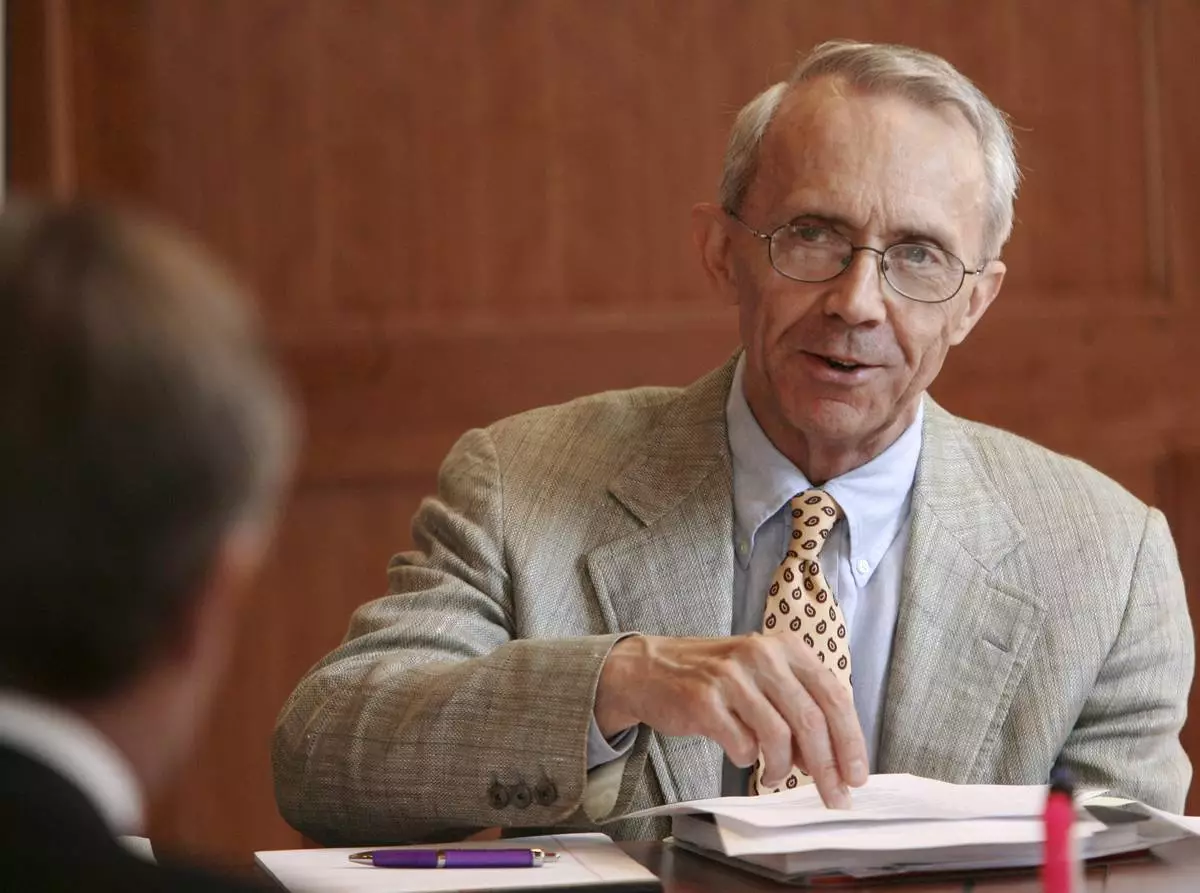
FILE - In this Sept. 16, 2009 file photo, retired Supreme Court Justice David Souter works with his group to promote civics education in New Hampshire schools during a meeting in Concord, N.H. (AP Photo/Jim Cole, FILE)
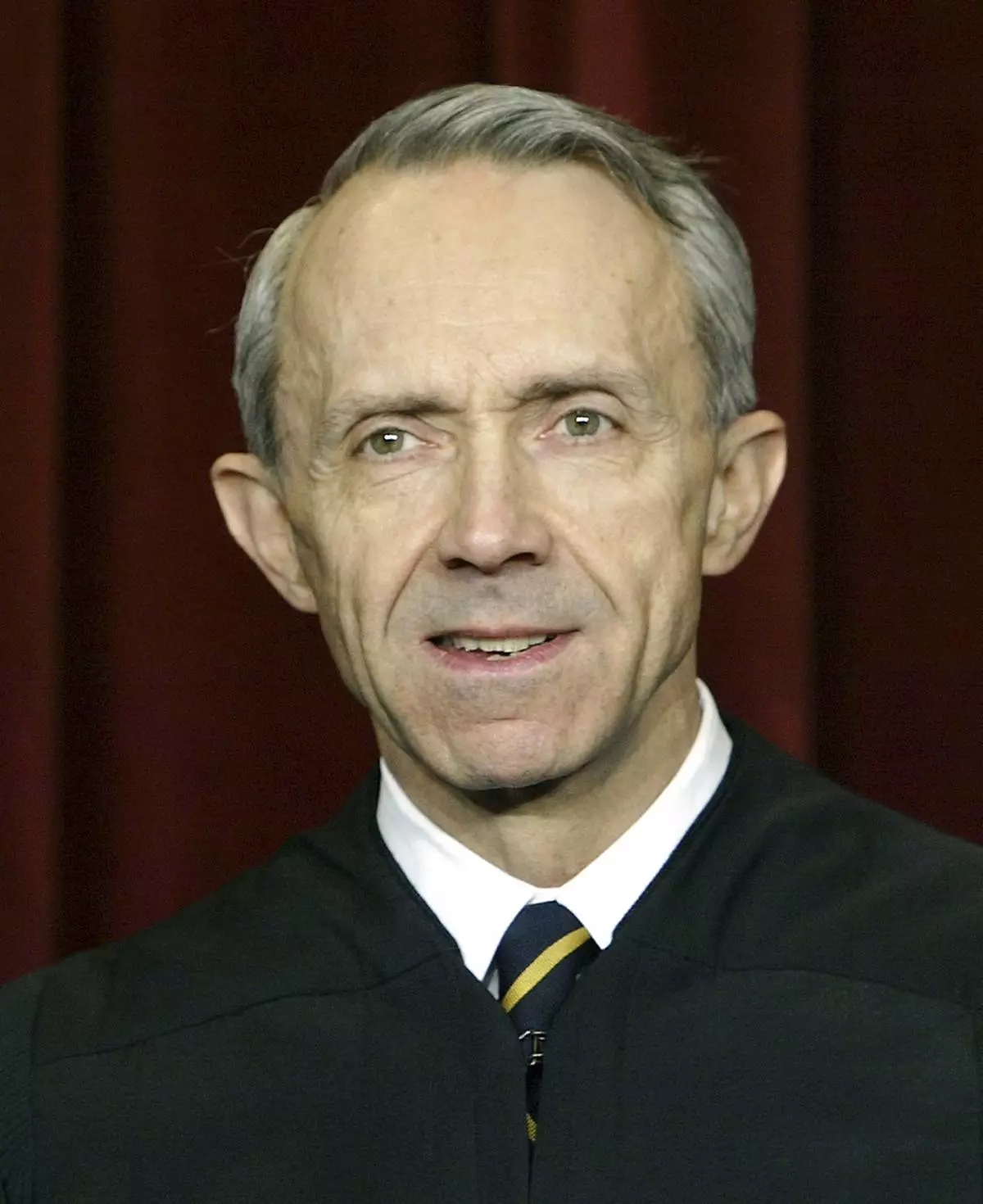
FILE - In this Dec. 5, 2003 file photo, U.S. Supreme Court Associate Justice David Souter poses during a group portrait session with the members of the U.S. Supreme Court, at the Supreme Court Building in Washington. (AP Photo/J. Scott Applewhite, File)
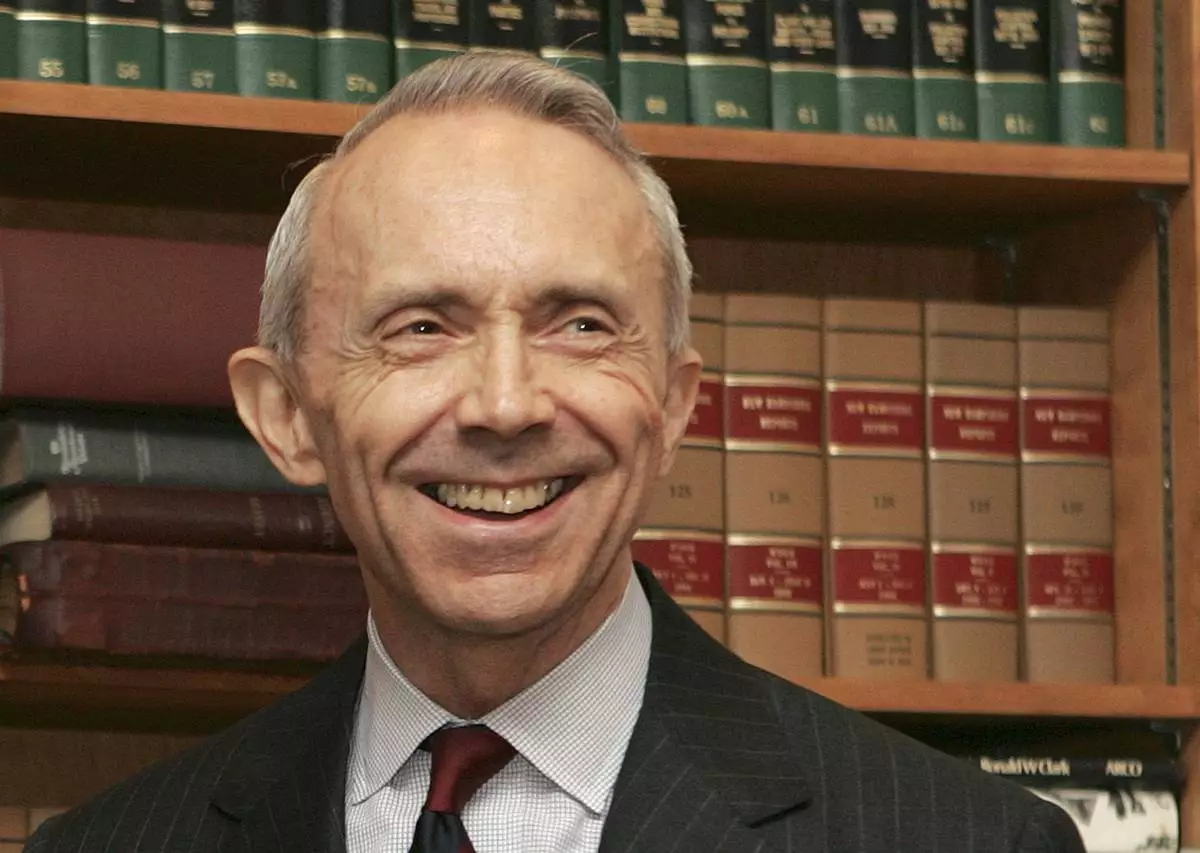
FILE - In this July 9, 2008 file photo, Supreme Court Justice David Souter, reacts after speaking at a dedication ceremony at the State Supreme Courthouse in Concord, N.H. (AP Photo/Jim Cole, File)