A major new bridge linking Brazil and Paraguay is nearing completion, forming a critical part of the Bi-Oceanic Corridor.
Rising over the Paraguay River, this strategic trade route is designed to connect the Atlantic and Pacific Oceans, similar to the Panama Canal.
The Porto Murtinho to Carmelo Peralta Bridge is part of the 3,300-km Bi-Oceanic Corridor, a series of interconnected roads stretching across South America, from the Atlantic to the Pacific.
The goal - when construction is complete next year, is bridging not just a physical gap between Brazil and Paragua, but also to make trade with Asia faster and more competitive.
The Agriculture Secretary of Mato Grosso do Sul - one of Brazil's top agricultural states that is also home to a major section of the corridor - says the route could become a viable competitor to the Panama Canal.
"At first, we didn't expect soy to move through here - but higher-value goods like pulp, ethanol, and especially meat products are already showing demand. That's our focus. We believe that within two years, this will be a competitive ocean route in terms of cost - directly challenging the Panama Canal," said Jaime Elias Verruck.
The mayor of Porto Murtinho, the Brazilian town at the border, has championed this project for decades - and says he's thrilled to see it finally taking shape.
"I'm the mayor but also a businessman, and I know how to calculate costs. I truly believe this is Brazil's path to redemption. This is where the meat we export to Asia will pass through," said Mayor Nelson Cintra.
Across the river, in the Paraguayan town of Carmelo Peralta, its mayor says the bridge and corridor represent long-awaited progress for a landlocked country.
"We always say Paraguay is the heart of South America. But we never had direct access to the sea. This will finally give us the route to the ocean we've always dreamed of," said Silverio Adorno.
The bi-oceanic corridor, with one side sit Paraguay, Argentina, Chile while the other holds Brazil and the Atlantic, is designed to integrate global production chains - while boosting the economies of towns and local communities along the way.
Workplace safety officer Cesar Fretez - who brought CGTN's crew along for a thrilling ride with stunning views, suspended by a steel cable 80 meters above the Paraguay River - says he's proud to be part of such a meaningful project.
"I've been here since the beginning. The binational consortium gave many job opportunities to locals. Thousands of people have worked here," said Fretez, adding that it's a big economic boost for the community.
This Brazilian couple has businesses on both sides of the border. This is their duty-free store right on the riverbank in Paraguay - and they're optimistic about the new road's impact.
"I think this will attract a lot of people. It's not just for transporting goods - it's also a tourist route. I really believe it will be important for the region," said the shop owner Omar Heredia.
But challenges remain - including paving long stretches of unsealed road in difficult terrains like Paraguay's Chaco region and repairing heavily damaged portions for example in several sections in Brazil.
Still, anticipation is high for the opportunities this corridor will unlock - when vehicles, people and goods - begin flowing along its route.
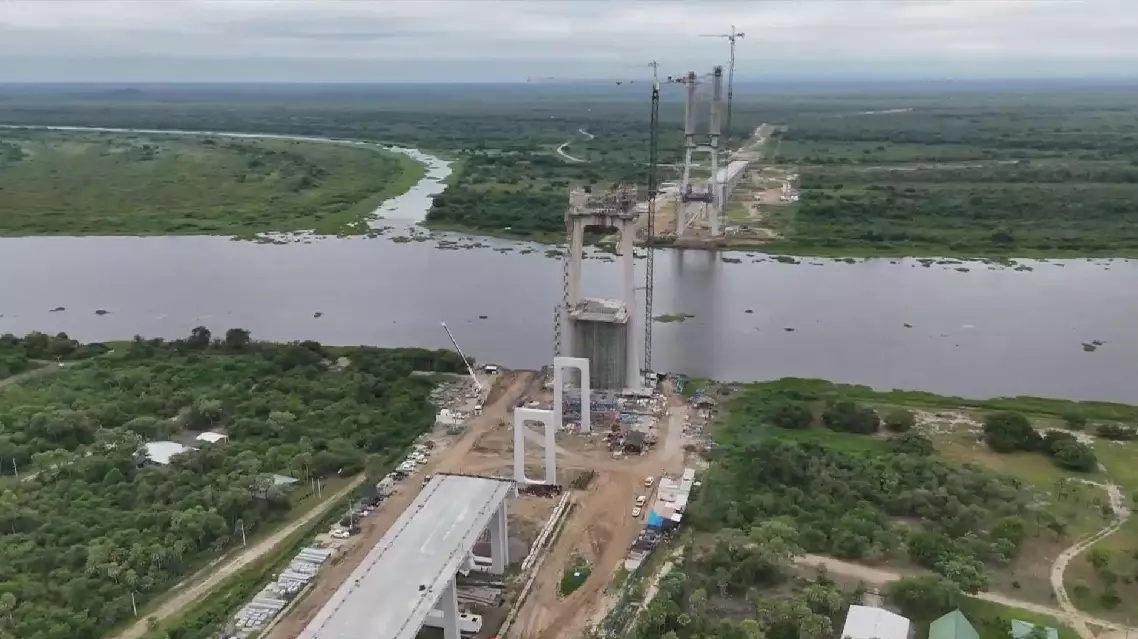
Brazil-Paraguay bridge expected to facilitate Atlantic-Pacific trade route in 2026