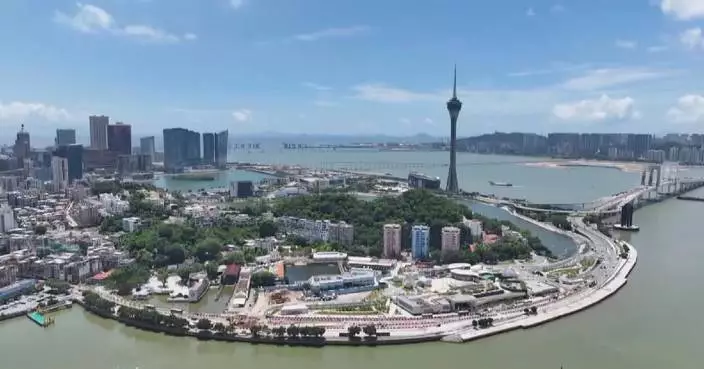
Passenger traffic through Hengqin Port in south China's Guangdong Province exceeded 10 million on Friday, a 32-percent increase from the same period last year.
The milestone was achieved 46 days earlier than last year, the fastest on record since the port's opening, according to the Hengqin immigration inspection station in Zhuhai, a city that neighbors Macao.
Statistics show that mainland travelers made over 6.9 million crossings, a 22-percent rise compared to the same period last year, driving the overall passenger flow surge. Weekends and holidays saw particularly high traffic, with a daily record of 128,000 crossings on May 2, the second day of the five-day May Day holiday.
With increasingly convenient customs clearance procedures, more Macao residents are choosing to live, work and start businesses in Hengqin, leading to a steady increase in cross-border travel. This year, over 2.77 million cross-border trips were made through the port by Hong Kong and Macao residents, up 60 percent year on year.
China's expanding visa-free travel policies, along with measures such as a Hengqin-Macao tour group program and multiple-entry permits, have significantly facilitated cross-border travel. Foreign cross-border trips through Hengqin Port have surpassed 130,000 this year, a 73-percent increase from 2024.
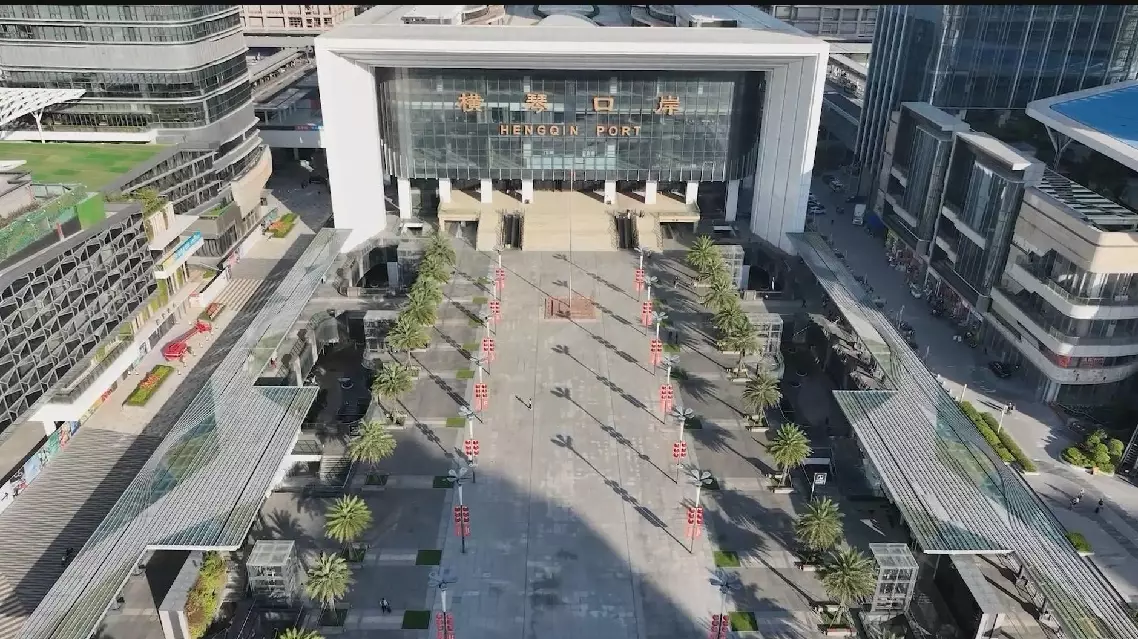
China's Hengqin Port reports 10-millionth passenger of this year in record time
The Shenzhen Science and Technology Museum in south China's Guangdong Province has received over four million visitors since opening on May 1 last year.
In addition to gaining astounding popularity, the museum has been selected as one of the "World's Most Beautiful Museums" by UNESCO.
One morning during the first anniversary period of its opening, the museum was already packed with student groups and family visitors as early as 10:00.
To the delight of the hundreds of children attending on that day, the museum is filled with highly interactive exhibits that are as fun as they are educational. In the AI ping-pong robot zone, visitors play matches against a robot, which adjusts its difficulty level in real time according to human opponent's skill, precisely matching ball speed and strength.
"I tried seven or eight exhibits. My favorite is the ping-pong. The experience showed me how powerful science can be, and the ping-pong robot made me realize that machines can be so amazing," said Mo Jiquan, a young student from Guangdong's Zhongshan City.
In the "Smart Industry" hall, a group of students from Singapore learned to race model cars controlled by brainwaves.
By pressing foreheads against an electroencephalogram (EEG) signal collection device and concentrating, the students used the power of their minds to propel the cars forward.
"Science fiction has become reality. These things are different from what we learn at school. For example, these brainwave-control devices, we have never seen anything like them. So I think it's a new and very meaningful experience," said Chen Mengfanglin, a student from Singapore.
Among the museum's 950 innovative exhibits, such as brain-computer interfaces, simulated space capsules, dexterous hands, 80 percent offer deep interactive experiences.
More importantly, these exhibits are dynamically updated as industrial technologies evolve.
"I think this place is very futuristic and fun. This is my second time here. I feel that there are more exhibits, and the technology has advanced," said Wu Zining, a Shenzhen student.
According to the museum, visitor numbers remain steady on weekdays, surge significantly during holidays, and overseas visitors have seen a notable increase since the beginning of this year.
"Our museum receives between 2,000 and 5,000 visitors on weekdays. On holidays, we get around 30,000 visitors per day. Since the beginning of this year, the number of overseas visitors has also risen significantly," Zhang Haitian, director of the Exchange and Cooperation Center of the museum.
Unlike traditional science museums that simply display items alongside written explanations, the Shenzhen Science and Technology Museum has pioneered an approach that combines innovation, public outreach, and education into one seamless experience.
Over the past year, it has collected 39 technology transfer projects, held 10 "deep science and technology" project matchmaking events, and brought research institutes, leading enterprises, investors, and the public together, creating a new ecosystem linking government, enterprises, research institutes, and the museum.
"On the basis of the original basic functions of a science and technology museum, we have taken a bolder step forward. We have extensive links with sci-tech innovation companies, so a steady stream of new technologies, achievements, products and ideas flow into the museum. We also have close interactions with science fiction and cultural heritage sectors, integrating science and technology with culture and art. Through flexible cooperation with various industries, this approach has opened up unlimited possibilities for the entire science and technology museum," said Zheng Yongchun, head of the museum.
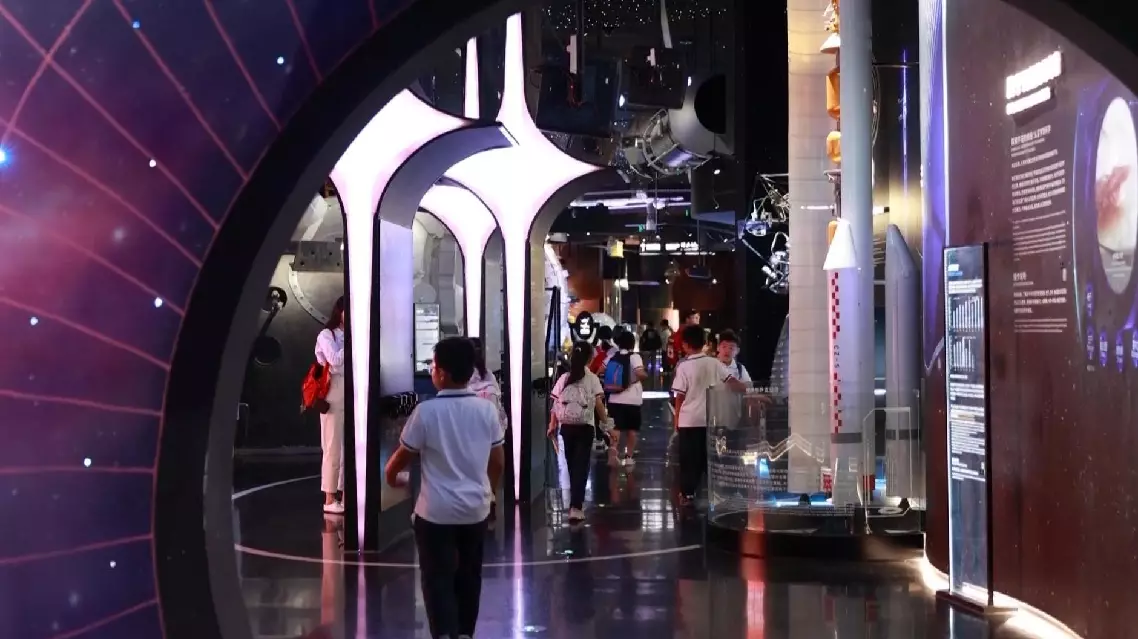
Interactive sci-tech museum in south China hosts 4 million visitors in first year