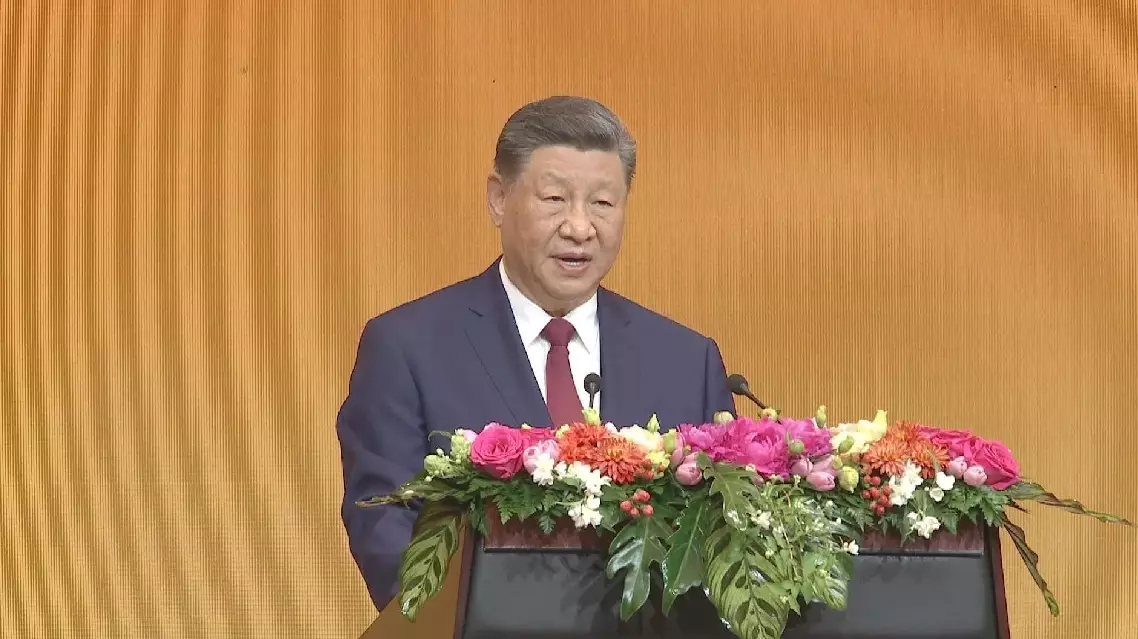
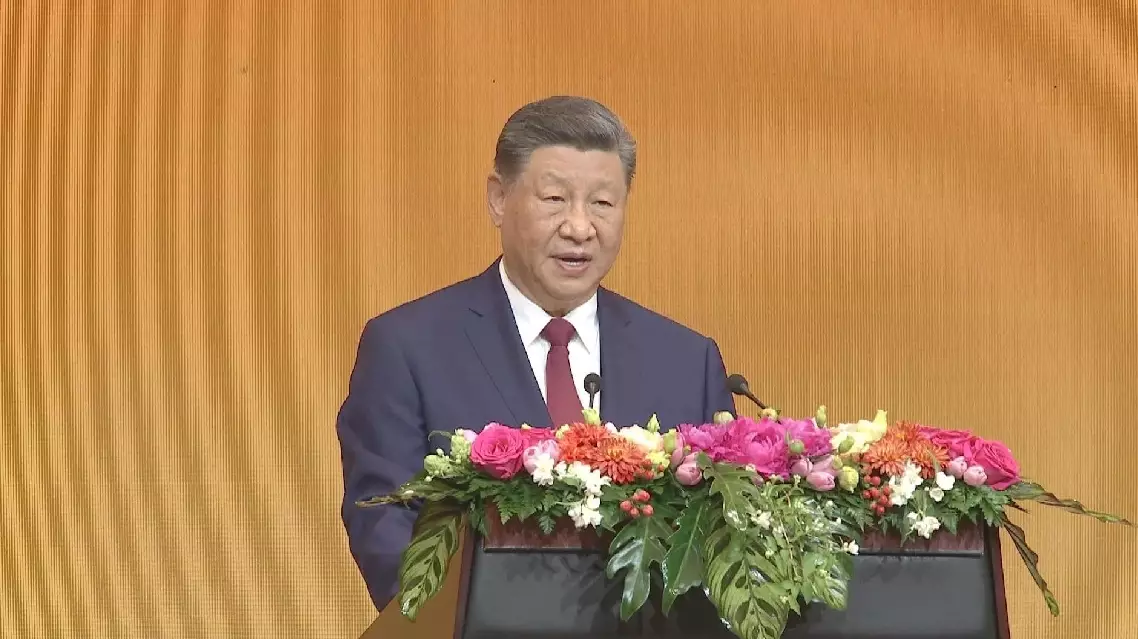
Chinese President Xi Jinping called on China and the United States to be partners instead of rivals at a banquet welcoming the visiting U.S. President Donald Trump in Beijing on Thursday evening.
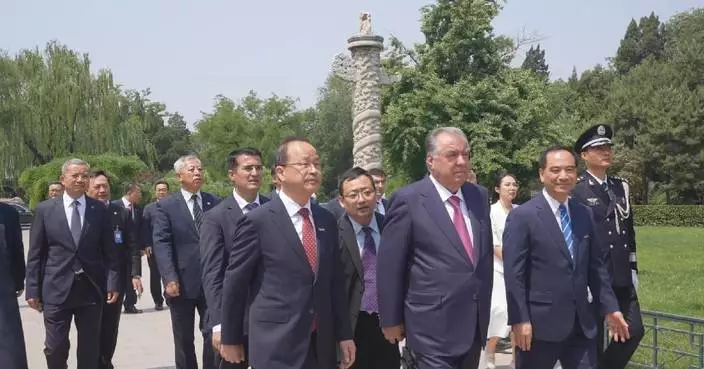
The banquet took place at the Great Hall of the People, where the two leaders had held talks earlier in the day.
Addressing the banquet, Xi said that both Trump and he agreed the China-U.S. relationship is currently the most important bilateral relationship in the world today. "We must make it work, and never mess it up. Both China and the United States stand to gain from cooperation and lose from confrontation. Our two countries should be partners rather than rivals. We agreed to build a constructive China-U.S. relationship of strategic stability to promote the steady, sound, and sustainable development of China-U.S. relations, and bring more peace, prosperity and progress to the world," Xi said.
Trump is on a state visit to China from Wednesday to Friday. It marks the first U.S. presidential visit to China in almost nine years, after President Xi previously hosted Trump in Beijing in November 2017.
China, US should be partners, not rivals: Xi
China, US should be partners, not rivals: Xi
Scholars from several Latin American countries have underscored the importance of the bilateral relationship between China and the United States, particularly expressing hope for cooperation in technology and climate change response.
At the invitation of Chinese President Xi Jinping, U.S. President Donald Trump is on a state visit to China from Wednesday to Friday, marking the first visit by a U.S. president to China in nearly nine years, since President Xi hosted Trump in the Chinese capital in November 2017.
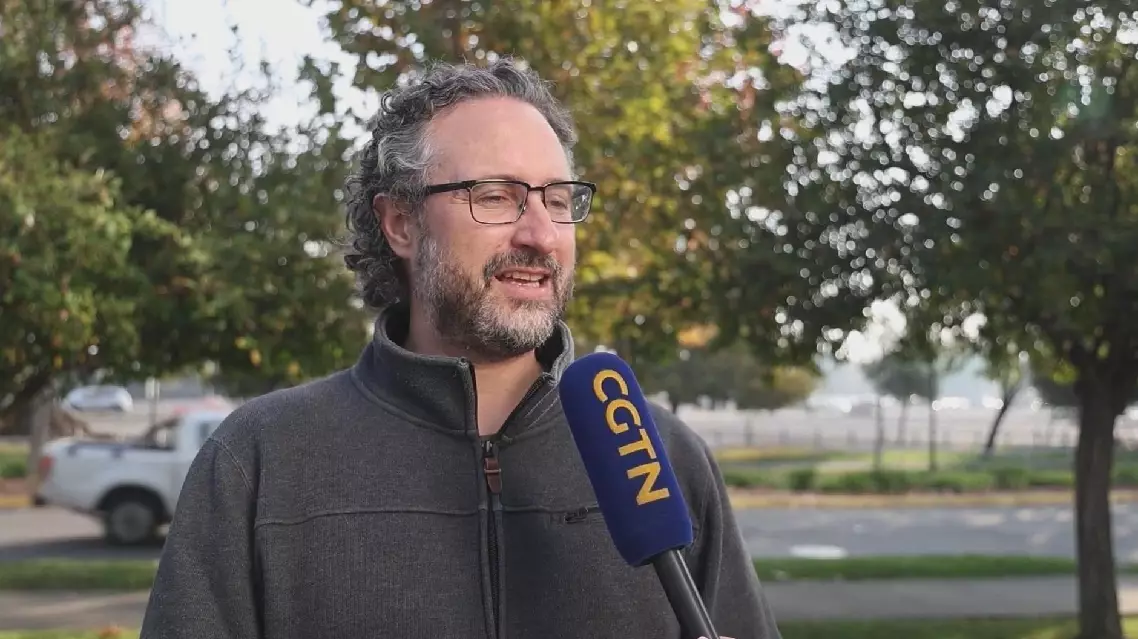
In a recent interview with China Global Television Network (CGTN), Cecilia Ibarra, a researcher and professor at the Faculty of Government of the University of Chile, emphasized that China and the United States both represent great hope for developing concrete and cost-effective solutions to global crises.
"Right now, China and the United States are technological and scientific powers, which is where we can find hope for concrete solutions, for solutions that will be cost-effective. Therefore, given the urgency, all possible alliances, all wisdom, funds, innovation, and intelligence need to be made available and coordinated by those who ultimately have the power and legitimacy to convene these solutions," she said.
Without collaboration between the two countries, it will be difficult to address climate change, said Cristóbal de la Maza, director of the Center for Economics for Sustainable Development at San Sebastián University in Chile.
"If the two countries reduce their collaboration, we are in a position where there is no progress. China has built a renewable energy, battery, and low-carbon technology industry. The United States, on the other hand, has resisted this and has strengthened its oil industry over time. For powers like China and the United States, making progress in reducing their dependence on fossil fuels is key and part of their global leadership strategy," he said.
Juan Carlos Gachúz Maya, a researcher at Mexico's University of the Americas Puebla, praised Beijing's strategy in the face of trade pressure, saying that its stance paves the way for a possible rapprochement.
"The Chinese government has taken a somewhat correct stance within this complicated situation of trade tensions and the trade war with the United States, and I believe that, eventually, bilateral negotiations could yield concrete results," he said.
Gachúz, also a member of the National System of Researchers, highlighted the major issues on the agenda and the areas where there may be room for cooperation.
"We hope that scientific, technological, and academic cooperation can also be a relevant point for dialogue between both countries, and that these restrictions can eventually be nuanced or renegotiated on other terms," he added.
Rasel Tomé, former vice president of the National Congress of Honduras, emphasized that cooperation between the two sides in science and technology benefits all humanity.
"Beijing and Washington must maintain a fundamental link to ensure that competition does not lead to a disconnect that affects the international system and global access to knowledge. We believe this is a great step, and that multilateral solutions should always be the path forward. They must be attentive to climate change, the food security situation, and public health issues, and the major powers must always maintain these multilateral relationships," he said.
Latin American scholars stress importance of China-U.S. cooperation on climate, technology