Chinese President Xi Jinping has on multiple occasions highlighted the traditional family virtues of the Chinese nation, especially a mother's care, as a spiritual force supporting the nation's development and prosperity.
On the Mother's Day, the second Sunday of May, China Media Group (CMG) released a video featuring Xi's remarks and quotes on motherhood and family ties, in tribute to these cherished traditions.
When delivering his Spring Festival greetings in 2015, Xi quoted the poem "Song of the Parting Son" by Meng Jiao in the Tang Dynasty (618-907) to explain how the tradition of strong family ties remains unchanged throughout history.
"From the threads a mother's hand weaves, a gown for parting son is made. Sown stitch by stitch before he leaves, for fear his return be delayed. Such kindness as young grass receives, from the warm sun can't be repaid," Xi quoted.
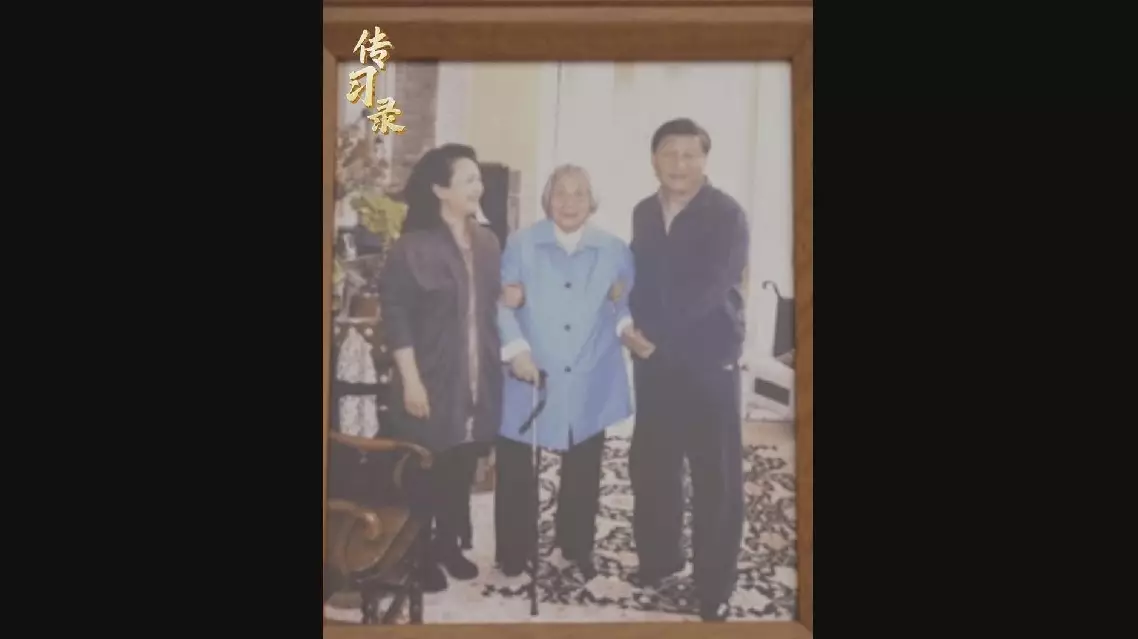
Xi was born into a revolutionary family and his mother Qi Xin joined the Communist Party of China at the initial phase of the War of Resistance against Japanese Aggression. With a strong sense of righteousness, Qi has set a good example for her children.
In 1969, 15-year-old Xi Jinping was sent to Liangjiahe, a small rural village in northwest China's Shaanxi Province, as an "educated youth" -- urban youth sent to remote rural areas to "learn from farmers" during the Cultural Revolution (1966-1976).
Upon learning this, his mother, who was then working at a farm in central China's Henan Province, carefully made a sewing kit for him. On the coarse cloth of the kit bag, Qi used red threads to stitch the words "niang de xin (mother's heart)" on it.
Having grown up in a warm family atmosphere, the Chinese president often emphasizes the importance of family ties, saying that the future of families is closely tied to the future of the country and the nation, and calling on Chinese households to integrate their love for the family with their love for the country.
"Motherly love and filial piety are traditional virtues of the Chinese nation. They are deeply rooted in the hearts of the Chinese people and woven into their very bloodline, serving as a vital spiritual force that supports the nation's thriving development and continuity across generations," Xi said.
At the Spring Festival gathering in 2017, Xi's words on family reunion struck the heartfelt chords of hundreds of millions of people.
"People may devote themselves to work, sacrificing sleep and meals. They may rush to different places to make a living. However, they should not forget about genuine human connections, nor should they allow distance to sever those connections. In the midst of daily busyness, one should not forget about genuine human connections. In the relentless pursuit day and night, one should not overlook such connections," he said.
Xi highlights traditional family virtues of Chinese nation