A 24-year-old Brazilian student studying in China has found that practicing the traditional Chinese martial art known as Wushu, or Chinese Kungfu, not only fosters personal growth through self-breakthrough but also fuels his enthusiasm to delve deeper into Chinese culture. Miguel De Oliveira Manacero, a student currently studying at Hubei University in central China's Hubei Province, said he took up Wushu when he was little back in his hometown, and set his sights on China in 2019 as the place to bring his Wushu dream to life.
"I've been studying at Hubei University for five years. I started learning martial arts -- Wushu when I was 10 years old. I started learning southern styles of Wushu when I was back in Brazil. After I came to China, I started learning Tai Chi. I also started learning Wudang, one of the styles that most represents here, Hubei Province. I also trained a few of the northwest styles," he said.
Saying that he didn't think he had a natural talent for Wushu when he first started learning, Manacero said he knew he had to put a lot of effort into practicing, which has helped him improve over time. Reflecting on his Wushu journey, he emphasized that while progress can be slow, it ultimately rewards those who remain dedicated.
After delving into the study of Wushu, he also realized that these practices impart valuable lessons in traditional Chinese culture, fostering personal growth and a flourishing spirit.
"Not only we learn movements, but also we're learning a lot of things about ancient traditions from China. For example, when we practice Wushu, the most important thing to show respect to someone is the Baoquanli (fist-and-palm salute). If you see it like it's just one palm, one fist, you put them together – if you explain it like that, it's very superficial. But if you know all of the meanings behind that and what it really represents, that's a whole lot of culture and also history involved in it," he said.
Manacero said he trained alongside all of his Chinese classmates and friends.
At the beginning, he didn't know how to speak Chinese very well, but they managed to understand each other through body movements, combined with language practice, which helped him significantly improve his Chinese over his five years at Hubei University.
Now pursuing his master's degree in physical education, he says his experience has taught him not only martial arts techniques, but also the art of teaching.
"I learned a lot about not only Wushu, but also how to teach. If you have a high level as an athlete, it's one thing, but know how to teach and how to be someone's coach -- that's a whole different thing. That's one of the most valuable things that I learned here," he said.
Shaped by his journey in Wushu, Manacero now hopes to spread this passion far and wide.
"My goal is to get everything that I learned in Wushu and dragon and lion dancing, and spread it to the most people that I can all around the world, so more people get to know this art that changed my life," he said.
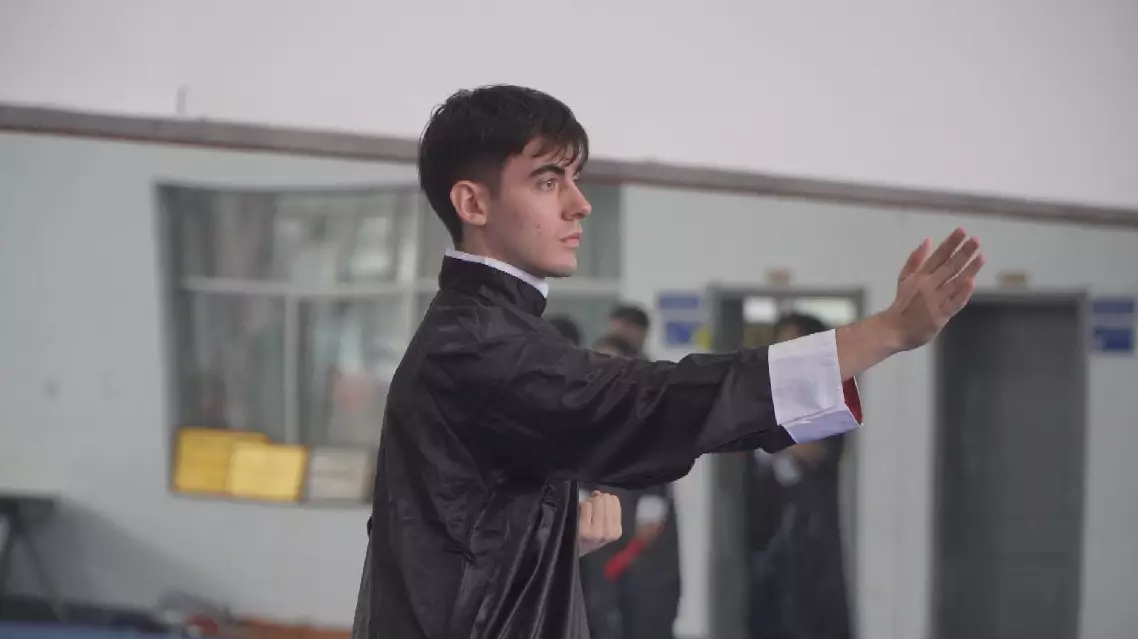
Brazilian student's Wushu dream flourishes in China