China is constructing several major water conservancy projects in the north and south, with scheduled progress.
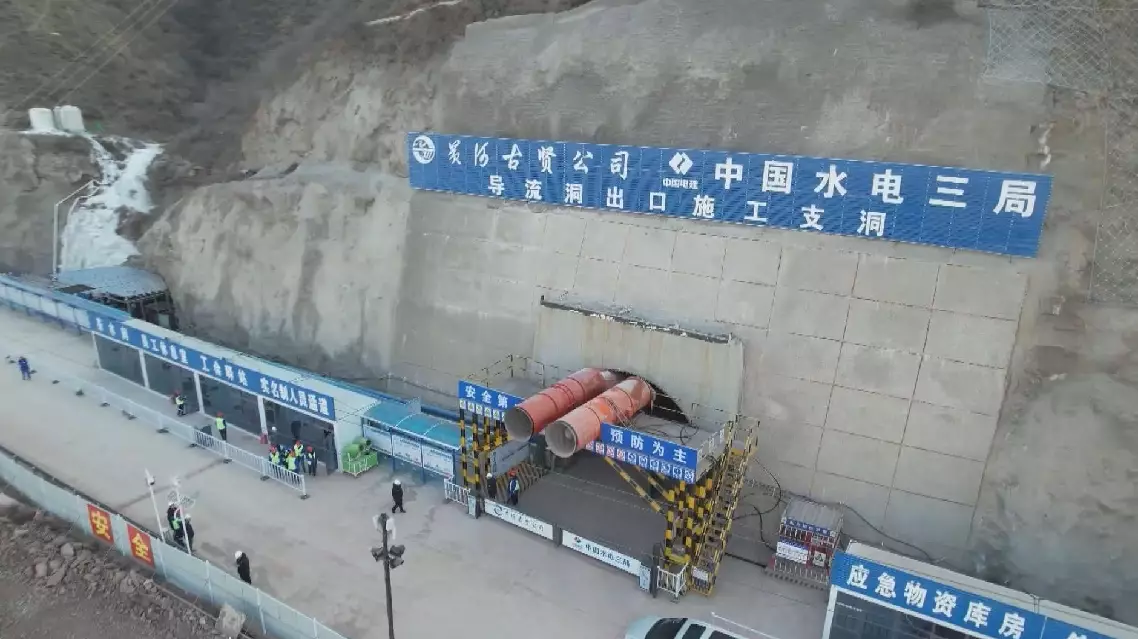
The Yellow River Guxian Water Conservancy Hub Project, stretching across two counties in western China's Shanxi and northern China's Shaanxi Province, is the core of the Yellow River water and sediment regulation system and a key node in the national water network. Completing the dual diversion tunnels is the top priority for constructing the Guxian project this year.
Currently, the construction of the diversion tunnels is at a critical stage. To improve construction efficiency, the builders have innovatively adopted a dual-direction excavation and dynamic support method, ensuring the steady progress of the project.
"Duel-direction excavation refers to drilling, loading explosives, and blasting simultaneously at both the upstream and downstream sections of the project, significantly improving construction efficiency. Dynamic support involves using self-advancing pre-stressed anchor bolts for reinforcement, effectively strengthening the surrounding rock and greatly enhancing safety," said Tan Kaihong, deputy manager of the Production Department, Yellow River Guxian Diversion Tunnel, Sinohydro Bureau 14 Co., Ltd.
Guangdong Beibu Gulf Rim Water Resources Allocation Project in southern China's Guangdong Province is the largest, longest, and most complex inter-basin water diversion project in the province's history, with the highest total investment.
Over 10,000 construction workers and more than 2,000 large equipment units are fully deployed to ensure the progress of the project.
Currently, 80 kilometers of tunnel excavation have been completed across the entire project, with 16 out of 23 branch tunnels already connected.
Over half of the pipeline installation has been completed, reaching 138 kilometers, and the cofferdam for the intake pump station has been successfully constructed, marking the beginning of the main construction phase.
"This year is a critical year for the Guangdong Beibu Gulf Rim Water Resources Allocation Project, and we are expected to complete an approximately 200 kilometers of pipeline installation by the end of this year, achieving 80 percent of the overall project goals," said Li Daimao, deputy general manager of Guangdong Yuehai Yuexi Water Supply Co., Ltd.
The dam hub of the Zhejiang Jingling Reservoir Project, a major national water network initiative in eastern China's Zhejiang Province, recently completed its blasting phase.
There is also simultaneous construction of the dam hub and 11 water diversion engineering sections, and all tasks progress as planned. This work lays a solid foundation for the subsequent main construction phase.
Major water conservancy projects on scheduled progress across China