Skip to Content Facebook Feature Image

IQM’s First Quantum Computer in Asia-Pacific Goes Online, Set to Open Office in Seoul

News

IQM’s First Quantum Computer in Asia-Pacific Goes Online, Set to Open Office in Seoul
News

News

IQM’s First Quantum Computer in Asia-Pacific Goes Online, Set to Open Office in Seoul

2025-05-13 17:08 Last Updated At:17:10

SEOUL, South Korea--(BUSINESS WIRE)--May 13, 2025--

IQM Quantum Computers, a global leader in superconducting quantum computers, has announced expanding its presence in Asia-Pacific with a new office opening in South Korea in June 2025, following the installation of its first quantum system at Chungbuk National University (CBNU).

This press release features multimedia. View the full release here: https://www.businesswire.com/news/home/20250513710683/en/

The office in Seoul reinforces IQM’s dedication to collaborating with research and academic institutions, high-performance computing (HPC) centers, and enterprises in advancing quantum technology. It also supports South Korea in building a vibrant quantum ecosystem and achieving the goals of its national quantum strategy.

As part of the expansion, IQM has appointed Youngsim Kim as a Country Manager for South Korea. “We are excited to welcome Youngsim, and with a wealth of quantum knowledge, leadership experience and regional expertise, we are confident she will drive our growth and strategic initiatives in Korea,” said Mikko Välimäki, Co-CEO of IQM Quantum Computers.

Kim has over a decade of experience in various industries and a track record in sales, business transformations and change, and people leadership.

“I am particularly impressed with IQM’s innovative technology approach and strategic focus on its global expansion. I am eager to contribute to the company’s growth by driving new business opportunities and supporting customers,” she stated.

This expansion builds on IQM’s delivery of IQM Spark, a 5-qubit superconducting on-premises quantum computer at Chungbuk National University, marking a significant achievement for the company in deploying the system within four months.

Cho Young-chul, Head of Chungbuk National University’s Industry-Academic Cooperation Foundation, said, "We hope that it will serve as a bridgehead to strengthen the competitiveness of future industries by carrying out practical R&D and spreading academic results using quantum computers," adding, "We will integrate quantum computing with various fields to support the development of talented people and the leading development of the quantum industry in Chungbuk."

“This latest deployment and record lead time further cements our role as a global leader in accelerating the adoption of quantum computing by making quantum computers more open, accessible and practical for researchers and university students worldwide,” added Välimäki.

About IQM Quantum Computers:

IQM is a global leader in superconducting quantum computers. IQM provides both on-premises full-stack quantum computers and a cloud platform to access its computers. IQM customers include the leading high-performance computing centres, research labs, universities and enterprises which have full access to IQM's software and hardware. IQM has over 300 employees with headquarters in Finland and a global presence in France, Germany, Italy, Japan, Poland, Spain, Singapore, South Korea and the United States.
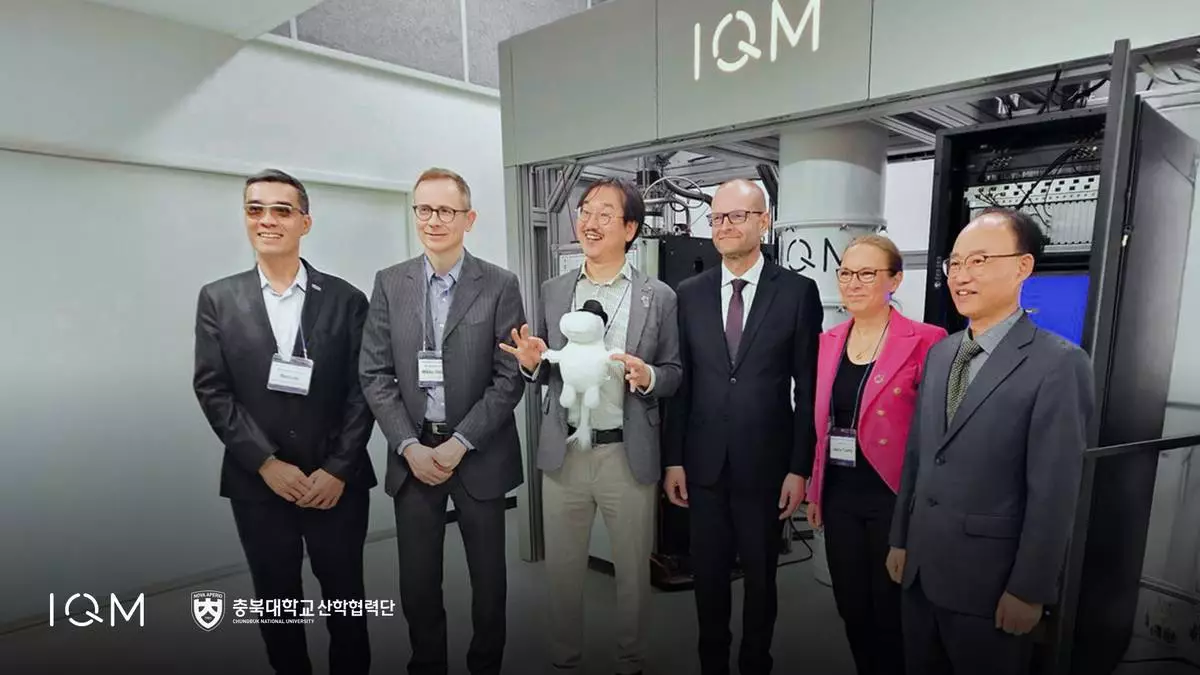
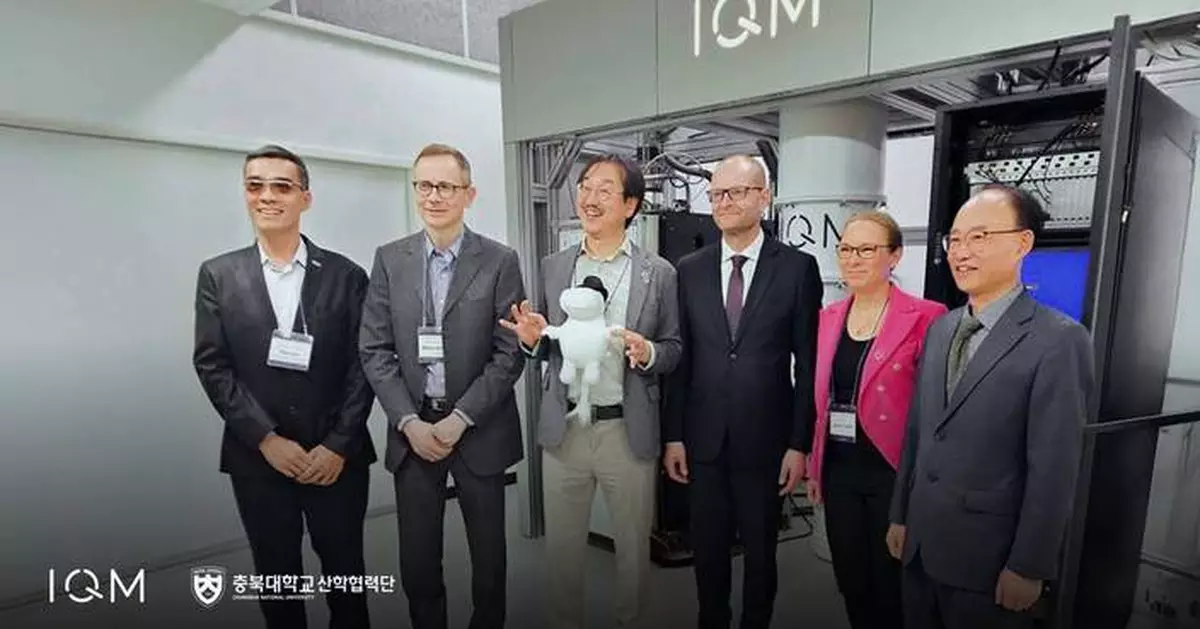
From left to right: Ben Lee and Mikko Välimäki of IQM Quantum Computers, Professor Kim Kiwoong of Chungbuk National University, Jyri Järviaho, Ambassador of Finland to South Korea, Jaana Tuomi, of Enter Espoo, Guensuk Ko of CBIST

From left to right: Ben Lee and Mikko Välimäki of IQM Quantum Computers, Professor Kim Kiwoong of Chungbuk National University, Jyri Järviaho, Ambassador of Finland to South Korea, Jaana Tuomi, of Enter Espoo, Guensuk Ko of CBIST

BALTIMORE (AP) — Federal prosecutors announced charges Tuesday in the 2024 collapse of Baltimore’s Francis Scott Key Bridge, accusing the Singapore-based operator of a ship and a key employee of making critical decisions that led to the disaster and the deaths of six people.

The indictment names Synergy Marine Pte Ltd., based in Singapore, and Synergy Maritime Pte Ltd., based in Chennai, India. Radhakrishnan Karthik Nair, 47, an Indian national who was technical superintendent for the Dali container ship, was also charged.

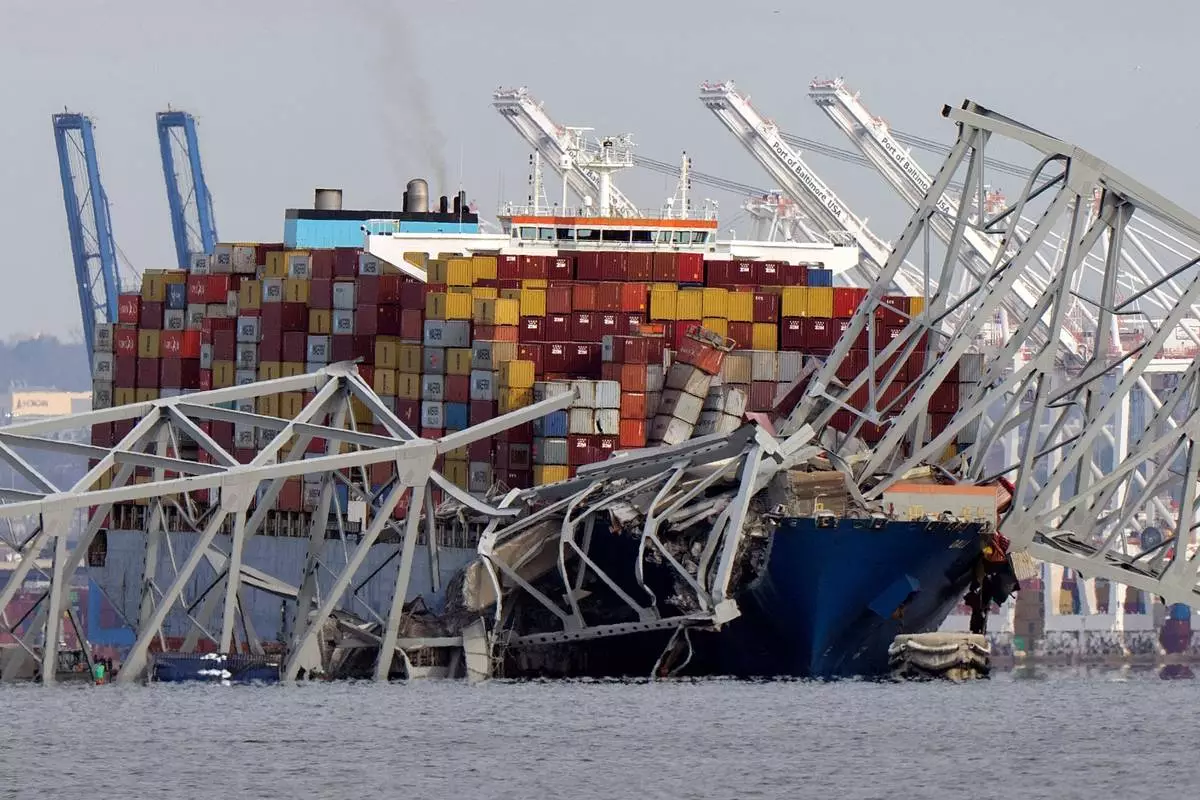
The Dali crashed into the Francis Scott Key Bridge on March 26, 2024, killing six construction workers who had been filling potholes.

“The collapse of the Francis Scott Key Bridge was a preventable tragedy of enormous consequence,” said Acting Attorney General Todd Blanche.

The companies and Nair are charged with conspiracy, willfully failing to immediately inform the U.S. Coast Guard of a known hazardous condition, obstruction of an agency proceeding and false statements.

An FBI investigation into the crash focused on the vessel’s operations and whether the crew knew of critical systems issues before leaving port.

The National Transportation Safety Board found last year that two electrical blackouts — one caused by a loose wire aboard the Dali and another by problems with a fuel pump — disabled the controls of the huge cargo ship before it crashed into the bridge.

The Dali was leaving Baltimore bound for Sri Lanka when its steering failed because of the power loss. The ship crashed into a supporting column of the bridge at about 1:30 a.m.

Maryland officials estimate it could cost between $4.3 billion and $5.2 billion to replace the bridge, which is expected to be open to traffic in late 2030.

But the true cost of the collapse was far greater, according to the Maryland Attorney General’s Office. It halted shipping at the Port of Baltimore, disrupted the livelihoods of thousands, rerouted road traffic through communities already bearing disproportionate burdens and triggered economic problems statewide.

The indictment comes on the heels of a settlement in principle between the State of Maryland, Synergy Marine and Grace Ocean Private Limited, the Singapore-based ship owner, Attorney General Anthony Brown announced in April.

That lawsuit alleged the crash was the result of negligence, mismanagement and the reckless operation of a vessel that was not seaworthy and should never have left port. Plaintiffs include the families of the six construction workers who died, owners of cargo that was on the ship and local governments seeking damages for economic losses. The details of the settlement haven’t been disclosed and some portions of the lawsuit remain unresolved.

The state sought damages on behalf of its agencies for the destruction of the bridge, harm to the Patapsco River and surrounding environment, lost revenues and economic losses to Maryland and its residents.

The settlement does not resolve any claims the state has against the shipbuilder, Hyundai, the attorney general’s office said in April.

The bridge, a longstanding Baltimore landmark, was a vital piece of transportation infrastructure that allowed drivers to easily bypass downtown. The original 1.6-mile (2.6-kilometer) steel span took five years to build and opened to traffic in 1977.

White reported from Detroit.

FILE - The cargo ship Dali is stuck under part of the Francis Scott Key Bridge after the ship hit the bridge, March 26, 2024, as seen from Pasadena, Md. (AP Photo/Mark Schiefelbein, File)

FILE - The cargo ship Dali is stuck under part of the Francis Scott Key Bridge after the ship hit the bridge, March 26, 2024, as seen from Pasadena, Md. (AP Photo/Mark Schiefelbein, File)

Recommended Articles