WASHINGTON (AP) — Tax breaks tallying more than $5 trillion — but also sizable reductions in Medicaid health care, food stamps and green energy strategies to fight climate change — faced sharp debate as House lawmakers slogged through marathon overnight hearings on Republicans' “big, beautiful bill.”
Tensions rose and emotions flared as the hours dragged on into early Wednesday morning. House Republicans are working to push President Donald Trump's signature legislative package through a gauntlet of committees and mounting opposition from Democrats, advocacy groups and even some wary Republicans themselves.
Right from the start, one meeting was immediately disrupted by protesters shouting down what the panel's top Democrat called “cruel” cuts to Medicaid.
“People feel very strong because they know they’re losing their health care,” said Rep. Frank Pallone, D-N.J., on the Energy & Commerce Committee, Tuesday afternoon.
And on it went. As midnight passed, two panels were still going, processing more than 100 amendments from Democrats that were largely failing, as Republicans marched ahead with their plan.
It’s the biggest political and legislative debate for the Republicans leading Congress since Trump’s first term, setting up a career-defining clash over the nation’s priorities, all coming at a time of economic unease with Trump's trade war and other uncertainties.
Trump, speaking at a forum in the Middle East, struck an ambitious chord, saying Congress was “on the verge of passing the largest tax cut and regulation cut in American history."
"If we get that, that will be like a rocket ship for our country,” Trump said in Saudi Arabia.
But to be sure, there are many more steps before the package becomes law.
At its core, the goal for GOP lawmakers is to extend — and enhance — tax cuts approved in 2017, adding the president’s 2024 campaign promises for no taxes on tips, Social Security income and car loan interest.
There's also larger standard deduction, $32,000 for couples, a boost to the Child Tax Credit and a potentially higher cap of $30,000 on state and local tax deductions, known as SALT, that's still being negotiated.
That’s offset by $1.9 trillion in savings largely from the rollback of green energy tax credits, for a net tally of $3.7 trillion in costs over the decade, according to the most recent estimates — along with billions more in savings from the safety net cuts
Additionally, the Republicans are boosting spending on their GOP priorities, with $350 billion for Trump’s mass deportation plans and funding for the Pentagon.
At the same time, the Republicans are seeking to defray the lost tax revenue and avoid skyrocketing national deficits by with another GOP goal, which is scaling back federal spending.
The Republicans are proposing cuts of nearly $800 billion over the decade to the Medicaid health care program, which is used by 70 million Americans; $290 billion to food aid in the Supplemental Nutrition Assistance Program, known as SNAP; and others.
Tucked into the package is a smattering of other provisions important to the White House — including one that would allow the Trump administration to yank the tax exempt status of groups it says support terrorists, sending a chill through civil society organizations who warn it's a way to punish opponents.
House Democratic Leader Hakeem Jeffries accused Republicans of “jamming another GOP tax scam” that benefits the wealthy at the expense of programs and services used by many Americans.
Speaker Mike Johnson is determined to push the package through the House by Memorial Day, sending it to the Senate, where Republicans are working on their own version.
Johnson and his leadership team have been conferring constantly with Trump at every step.
Rep. Jason Smith, the Republican chairman of the Ways & Means tax writing committee said he met with Trump on Friday and went over the tax provisions “line by line.”
“He was very happy with what we’re delivering,” Smith said.
On Tuesday, the final three of 11 House committees working on the package launched what would become lengthy meetings drilling down on some of the largest components.
Early on, Rep. Brett Guthrie, the Republican chairman of the Energy & Commerce Committee, banned lawmakers from accusing colleagues of “lying.”
As the minority party in Congress, Democrats are unable to stop the bill on their own, but used the procedural tools to slow down the process.
Democrats put up posters of constituents with the words “Medicaid Matters.” One, Rep. Marc Veasey of Texas, put one on speakerphone to share her story — until her testimony was ruled out of order.
The U.S. Capitol Police said 26 people were arrested in the Rayburn House Office Building where the panel was meeting.
Estimates from the nonpartisan Congressional Budget Office show that at least 7.6 million people could lose health insurance with the Medicaid cuts, and potentially more with the changes to the Affordable Care Act. Mostly, the health care changes involve imposing new work requirements for aid recipients, starting Jan. 1, 2029.
But Republican Rep. Gary Palmer of Alabama said his side is trying to make the health care program work better by rooting out waste and inefficiencies.
“We're trying to save Medicaid,” he said.
At the Ways & Means committee Democrats offered amendments into the night — to provide taxpayers relief from Trump’s tariff policies, enhance a child tax credit, and others that were all being turned back by Republicans.
As the Agriculture Committee began its work, CBO also told lawmakers the work requirements for SNAP would reduce participation by roughly 3 million people in an average month.
Republicans are working to resolve dissent within their own ranks, which shows the pressure points ahead.
Smith suggested that some changes could be made to the bill to win over those high-tax state lawmakers from New York and California who believe the proposed SALT cap is inadequate.
“There’s a little bit of wiggle room there to try to deliver additional priorities," Smith said.
But Rep. Nick LaLota, R-N.Y., said after an hourlong meeting with the speaker and staff that they were “still far from a deal.”
With the slimmest majority in the House, Johnson has just a few votes to spare, and is running into resistance from his party, including lawmakers in the Senate, which also has thin GOP margins.
The lawmakers are racing for a July 4 deadline to have the whole package sent to Trump’s desk in time to also avoid a dangerous debt default. The Treasury Secretary has said federal tax revenues are running short and Congress needs to raise the spending limit to keep paying the bills.
The package includes a $4 trillion boost to the nation’s now $36 trillion debt limit, enough to fund operations past the 2026 midterm election.
Associated Press writers Darlene Superville and Leah Askarinam contributed to this report.
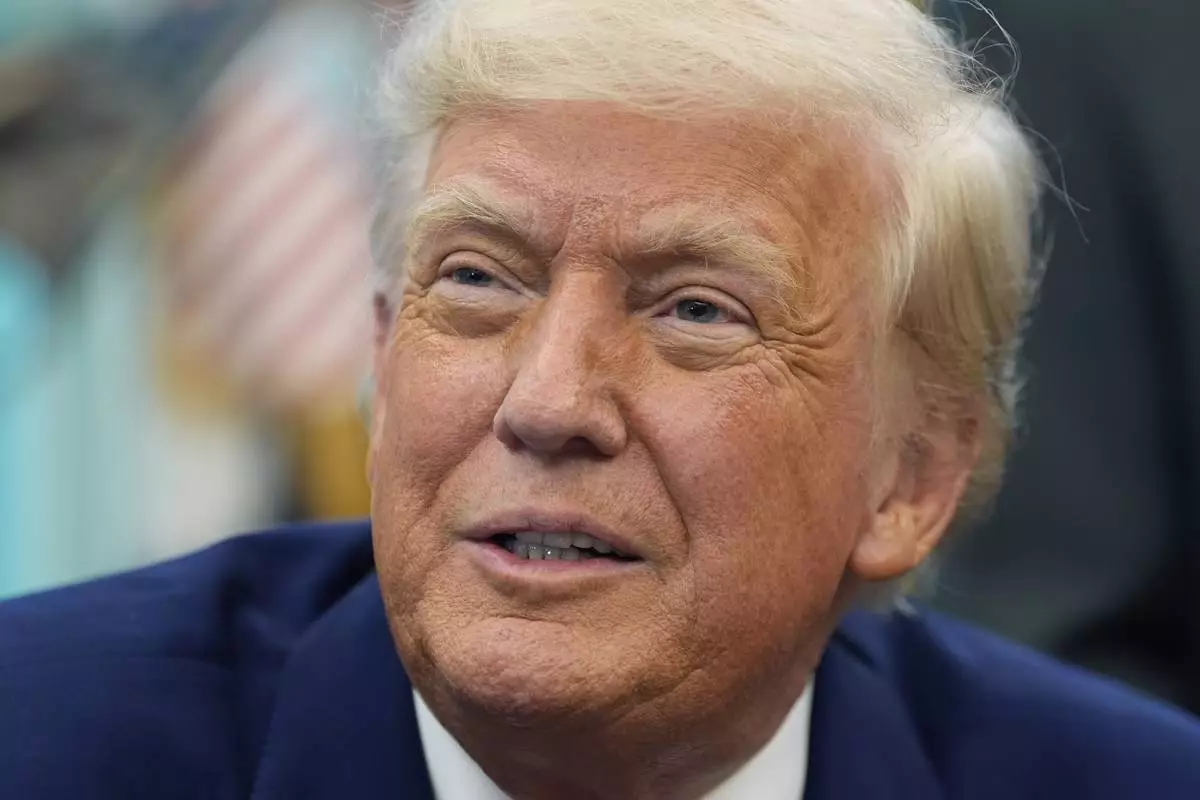
President Donald Trump speaks with reporters as he signs an executive order in the Oval Office of the White House, Friday, May 9, 2025, in Washington. (AP Photo/Alex Brandon)
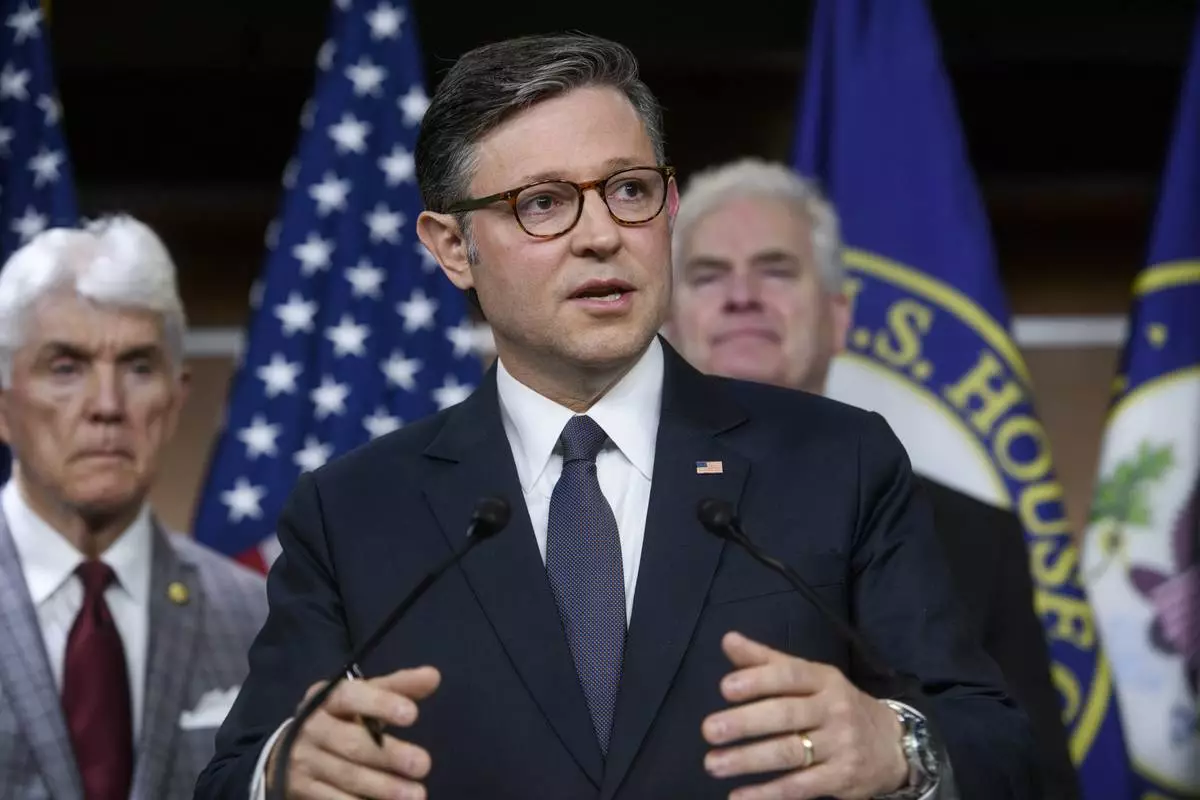
Speaker of the House Mike Johnson, R-La., speaks during a news conference at the Capitol, Tuesday, May 6, 2025, in Washington. (AP Photo/Rod Lamkey, Jr.)