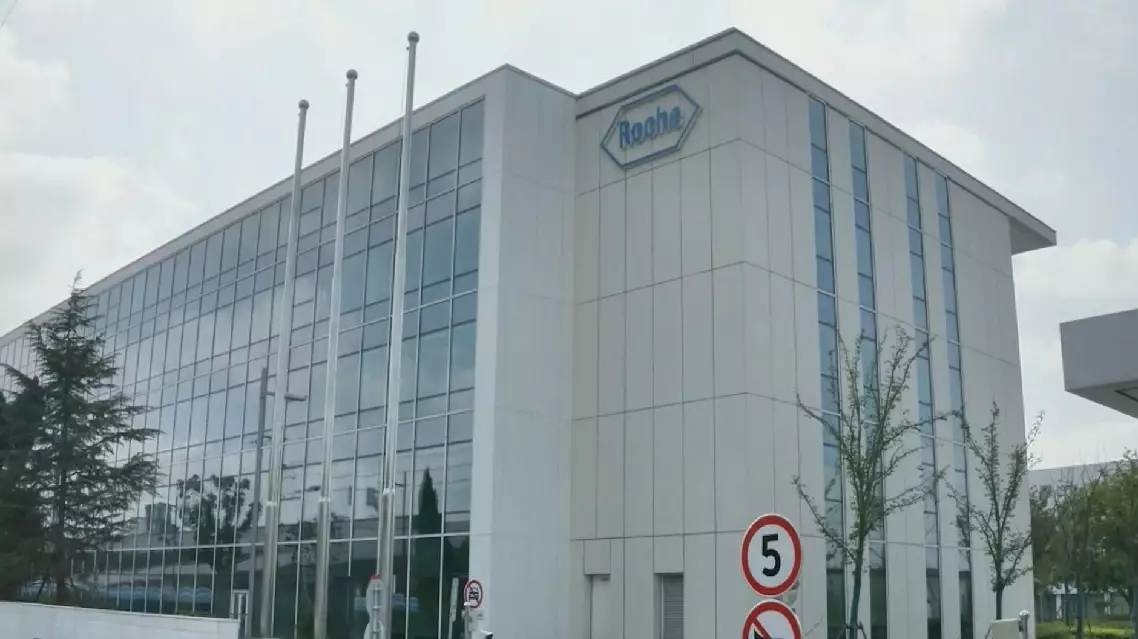
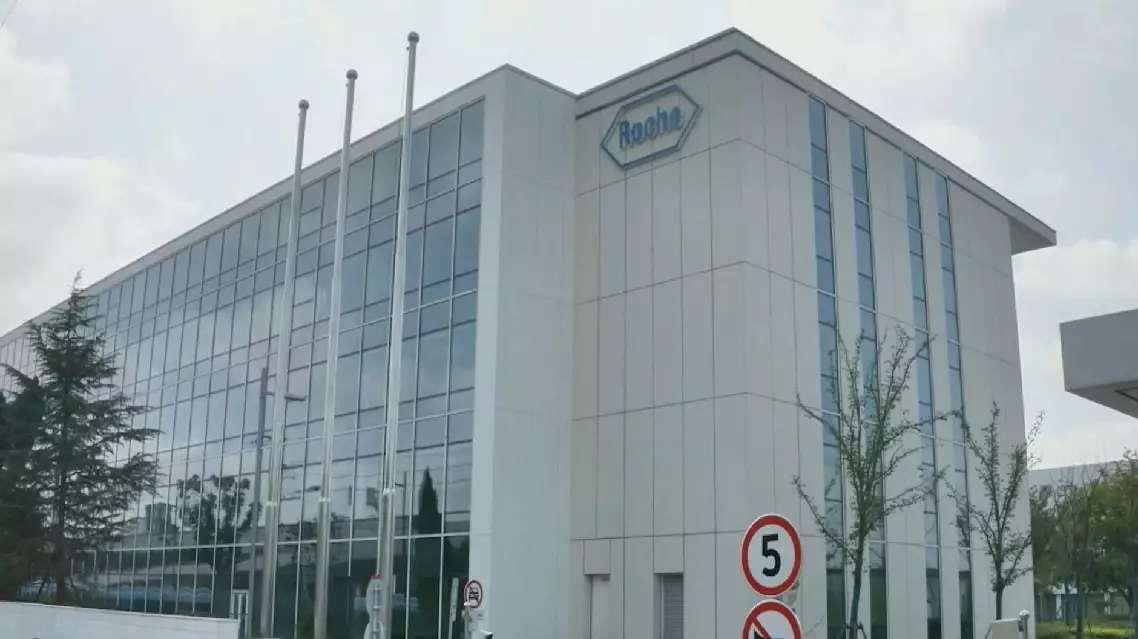
Swiss pharmaceutical giant Roche on Thursday announced plans to invest 2.04 billion yuan (about 280 million U.S. dollars) in building a new biopharmaceutical manufacturing facility in Shanghai, demonstrating the multinational company's confidence in pursuing long-term operation in China as the country keeps expanding opening up to attract foreign investors.
Established in 1994, Roche Pharmaceuticals was the first multinational company in Shanghai's Zhangjiang Hi-Tech Park and over the past three decades, the pharma company has established a complete pharma value chain including research and development, manufacturing and commercialization in China.
The company's success in achieving stable operation in the country was aided by China's efforts to enlarge its opening up to international investors, including the field of biomedicine.
In October last year, China's National Medical Products Administration released a work plan, allowing pilot zones to be set to explore the establishment of a whole-process system to regulate the segmented production of biological products.
The effort aims at helping the country's biopharmaceutical industry optimize resource allocation, integrate into the international industrial chain in an orderly manner, and achieve high-quality development.
In February this year, China issued an action plan to stabilize foreign investment in 2025, announcing it will further promote the orderly opening up of its biomedicine industry and will support qualified foreign-invested enterprises in joining the segmented production of biological products.
This means companies like Roche Pharmaceuticals can allocate their business operation across the world according to their needs, for instance, putting some sections of manufacturing in one country and others in the countries close to the markets.
Bian Xin, CEO of Roche Pharma China, said Roche's new project proves that China has been making efforts to reform its drug supervision system.
"China pursues reform and opening up and keeps aligning its standards with those used globally, which allow us to move some critical sections of our manufacturing to China instead of manufacturing completely in China. Roche's new project is not an isolated example. It stands as an example of the companies that benefit from China's efforts to reform its drug supervision system," said Bian.
The municipal government of Shanghai also helped Roche implement its new project, providing more services and giving guidance in sections like site selection and environment assessment.
"Throughout the whole process, the government helped us address problems and challenges in a practical and thoughtful manner and it also gave us some helpful guidance. As China deepens reform, expands opening up, and improves its policies, I think right now is a perfect moment to increase investment in the country," said Bian.
Swiss drugmaker enlarges operation in Shanghai as China expands opening up
Swiss drugmaker enlarges operation in Shanghai as China expands opening up
The Shenzhen Science and Technology Museum in south China's Guangdong Province has received over four million visitors since opening on May 1 last year.
In addition to gaining astounding popularity, the museum has been selected as one of the "World's Most Beautiful Museums" by UNESCO.
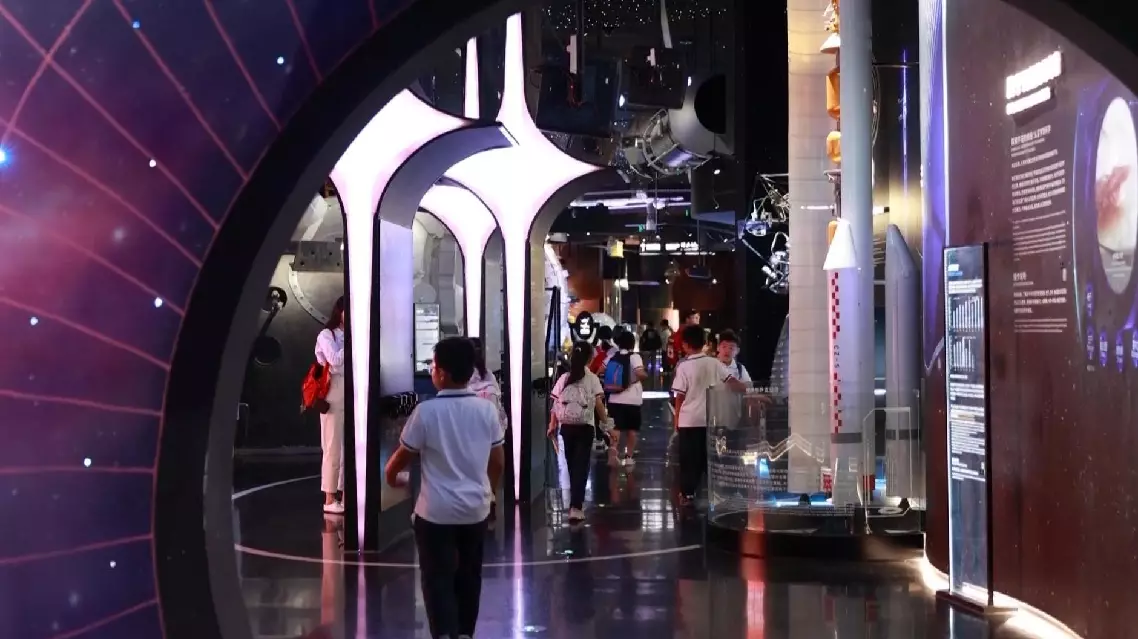
One morning during the first anniversary period of its opening, the museum was already packed with student groups and family visitors as early as 10:00.
To the delight of the hundreds of children attending on that day, the museum is filled with highly interactive exhibits that are as fun as they are educational. In the AI ping-pong robot zone, visitors play matches against a robot, which adjusts its difficulty level in real time according to human opponent's skill, precisely matching ball speed and strength.
"I tried seven or eight exhibits. My favorite is the ping-pong. The experience showed me how powerful science can be, and the ping-pong robot made me realize that machines can be so amazing," said Mo Jiquan, a young student from Guangdong's Zhongshan City.
In the "Smart Industry" hall, a group of students from Singapore learned to race model cars controlled by brainwaves.
By pressing foreheads against an electroencephalogram (EEG) signal collection device and concentrating, the students used the power of their minds to propel the cars forward.
"Science fiction has become reality. These things are different from what we learn at school. For example, these brainwave-control devices, we have never seen anything like them. So I think it's a new and very meaningful experience," said Chen Mengfanglin, a student from Singapore.
Among the museum's 950 innovative exhibits, such as brain-computer interfaces, simulated space capsules, dexterous hands, 80 percent offer deep interactive experiences.
More importantly, these exhibits are dynamically updated as industrial technologies evolve.
"I think this place is very futuristic and fun. This is my second time here. I feel that there are more exhibits, and the technology has advanced," said Wu Zining, a Shenzhen student.
According to the museum, visitor numbers remain steady on weekdays, surge significantly during holidays, and overseas visitors have seen a notable increase since the beginning of this year.
"Our museum receives between 2,000 and 5,000 visitors on weekdays. On holidays, we get around 30,000 visitors per day. Since the beginning of this year, the number of overseas visitors has also risen significantly," Zhang Haitian, director of the Exchange and Cooperation Center of the museum.
Unlike traditional science museums that simply display items alongside written explanations, the Shenzhen Science and Technology Museum has pioneered an approach that combines innovation, public outreach, and education into one seamless experience.
Over the past year, it has collected 39 technology transfer projects, held 10 "deep science and technology" project matchmaking events, and brought research institutes, leading enterprises, investors, and the public together, creating a new ecosystem linking government, enterprises, research institutes, and the museum.
"On the basis of the original basic functions of a science and technology museum, we have taken a bolder step forward. We have extensive links with sci-tech innovation companies, so a steady stream of new technologies, achievements, products and ideas flow into the museum. We also have close interactions with science fiction and cultural heritage sectors, integrating science and technology with culture and art. Through flexible cooperation with various industries, this approach has opened up unlimited possibilities for the entire science and technology museum," said Zheng Yongchun, head of the museum.
Interactive sci-tech museum in south China hosts 4 million visitors in first year