WASHINGTON (AP) — Israel Vail’s entire life in the small western Guatemalan town of Cajolá is built off the money that his three children send home from the United States.
The money from their construction jobs paid for the two-story white home where Vail now lives — and where his children, who are in the U.S. illegally, would also reside if they ever get deported. Vail, 53, invested some of the money in opening a local food shop, which he uses to keep his family afloat.
Click to Gallery

Ex-migrant Eduardo Jimenez saws wood in a carpentry workshop in Cajola, Guatemala, Nov. 29, 2021. Jimenez’s project creates doors and woodwork for homes paid for with money sent home from the U.S. (AP Photo/Megan Janetsky)
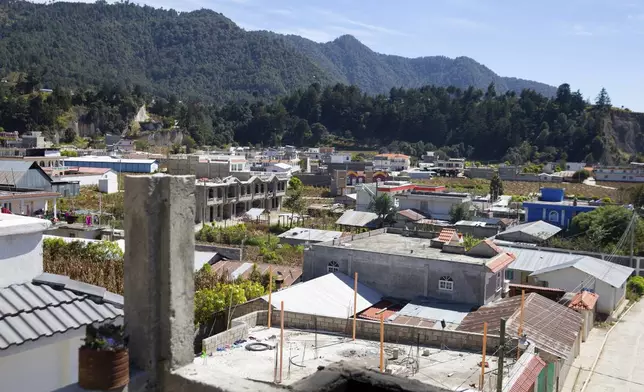
Money sent home to Cajola, Guatemala, from the U.S. paid for the construction of dozens of homes, as shown, Nov. 29, 2021. (AP Photo/Megan Janetsky)
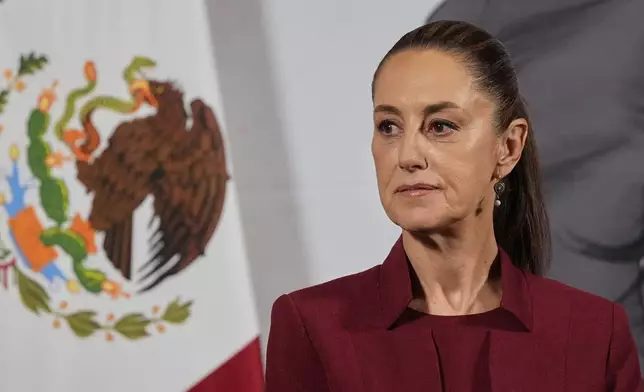
FILE - Mexican President Claudia Sheinbaum attends her morning press conference at the National Palace in Mexico City, April 2, 2025. (AP Photo/Marco Ugarte, File)
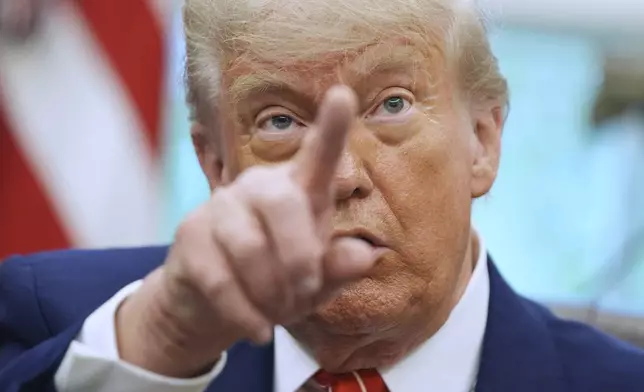
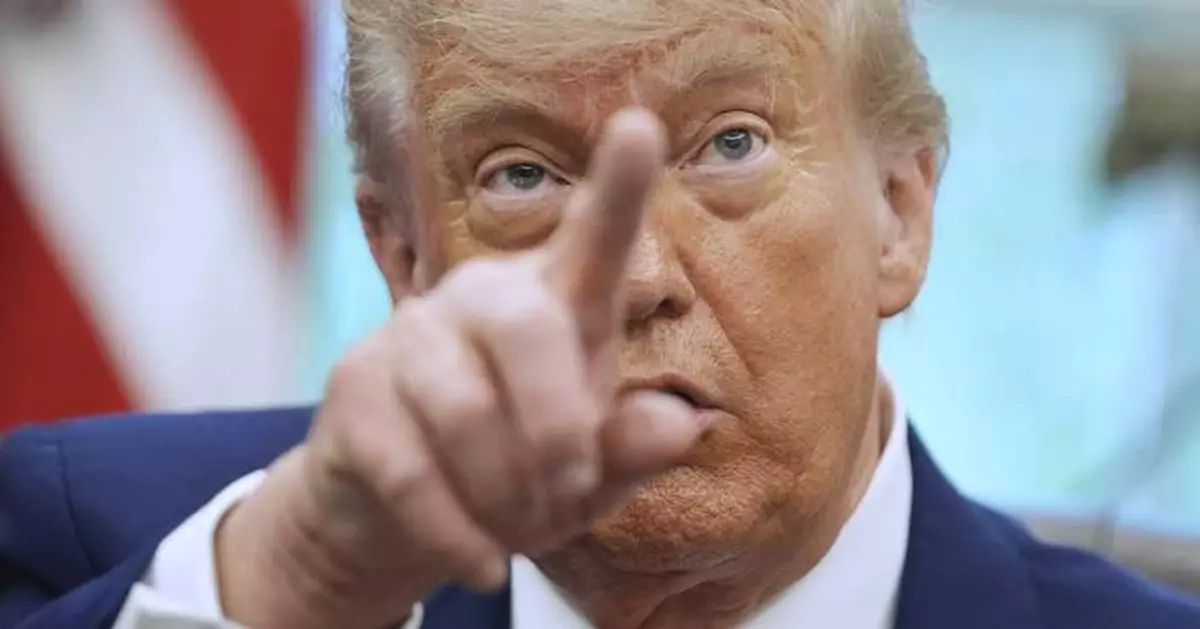
FILE - President Donald Trump gestures as he speaks with reporters in the Oval Office of the White House, May 8, 2025, in Washington. (AP Photo/Evan Vucci, FIle)
In small migratory towns like Cajolá, it is not unusual for the entire economy to be built off remittances, the funds sent by migrant workers back to their home countries.
“People here, they don’t live luxuriously, but they live off remittances,“ Vail said.
House Republicans have included in President Donald Trump’s big priority bill a 5% excise tax on remittance transfers that would cover more than 40 million people, including green card holders and nonimmigrant visa holders, such as people on H-1B, H-2A and H-2B visas. U.S. citizens would be exempt.
Trump also recently announced that he is finalizing a presidential memorandum to “shut down remittances” sent by people in the U.S. illegally. White House and Treasury officials have not responded to requests for comment from The Associated Press on specifics of the presidential memorandum that Trump previewed in an April 25 Truth Social post and how it would work.
Mexican President Claudia Sheinbaum shot back against the measure and called on Republican lawmakers to reconsider it, saying it “would damage the economy of both nations and is also contrary to the spirit of economic freedom that the U.S. government claims to defend.”
“Remittances are the fruit of the efforts of those who, through their honest work, strengthen not only the Mexican economy but also the United States', which is why we consider this measure to be arbitrary and unjust,” she said.
Remittance experts, local leaders and former migrants say that banning, limiting or adding a tax on certain remittances could damage communities that rely on them, prove burdensome to American citizens and firms and, paradoxically, end up causing even more illegal migration to the U.S.
The influx of money provides an important economic lifeline to residents of poorer towns that often have little access to jobs or income. Remittances provide opportunities for people in their home country, making it less likely they would take the risk of migrating to the United States, the experts say.
”Any measure to reduce remittances will have a negative impact on the U.S. national interest,” said Manuel Orozco, director of the Migration, Remittances, and Development Program at the Inter-American Dialogue. “It will have an effect on the homeland.”
Proponents of efforts to target remittances say they are an effective tax on people in the U.S. illegally and could be a revenue generator for the U.S. government.
Mark Krikorian, executive director of the Center for Immigration Studies, an anti-immigration think tank, acknowledges that limiting, banning or taxing remittances would make it more difficult for immigrants in the U.S. illegally.
“One of the main reasons people come here is to work and send money home,” Krikorian said. “If that’s much more difficult to do, it becomes less appealing to come here.”
Legislation to control remittances — through taxes on money transfers, both internationally and domestically — has been proposed in 18 states in the past few years. Almost all of those efforts have been voted down.
The exception is Oklahoma, which in 2009 passed a tax on remittances: a $5 fee on any wire transfer under $500 and 1% on any amount in excess of $500.
Steven Yates, who is now a senior research fellow at the Heritage Institute, wrote for the America First Policy Institute that every state should adopt this policy as a way to combat the impact of illegal immigration.
Other high-ranking Trump administration officials have also supported efforts to tighten controls on remittances. Vice President JD Vance, as an Ohio senator in 2023, co-sponsored the WIRED Act, which would have imposed a 10% fee on remittances out of the U.S.
The intention of the bill — which would allow people who could prove their citizenship to get the fee back as a refundable tax credit — was “penalizing illicit activity, such as drug and human smuggling." The bill did not make it out of committee.
“This legislation is a common sense solution to disincentivize illegal immigration and reduce the cartels’ financial power," Vance said at the time of the bill's introduction.
According to the World Bank, remittances sent to home countries in 2023 totaled about $656 billion — equivalent to the gross domestic product of Belgium. The money that Mexican migrants send home to their relatives grew by 7.6% in 2023 to reach a record $63.3 billion for the year.
Remittances are also a major factor in the global economy, often sent from American wire services rather than banks and credit unions. India, Mexico and China are the biggest recipients of those funds, according to the World Bank.
In response to the proposal to tax remittances in the new Republican House bill, Orozco said: "Some senders would find ways to send money differently, through unauthorized channels. Others would send less.”
“Sending less would have an impact on the receiving households, limiting the capacity to save, and in turn may increase the intention to migrate," said Orozco, who also serves as a senior fellow at Harvard University’s Center for International Development.
Western Union said last month that while remittances have risen worldwide in recent months, payments sent from the U.S. to other countries in the Americas have taken a sharp dip. In the past year, remittance payments through Western Union have dipped 8%, something CEO Devin McGranahan attributed to falling migration levels.
Vail, the Guatemalan resident, said his small grocery business has been struggling since Trump took office in January and his sales of things like eggs, beans, sugar and more have slipped.
“When Donald Trump won, many people stopped sending remittances or they began to save money,” he said. “Business dropped off a lot.”
In Cajolá, local leaders say that has raised concerns as remittance flow has stopped young people from migrating because they see economic opportunities they otherwise wouldn’t have. Vail said losing that lifeline would deal a devastating blow to families like his and even cause his small business to fold.
“There’s a lot of fear,” Vail said. “Fear that for the people that live here in Guatemala, there won’t be work because the businesses will be all gone.”
Associated Press writer Charles Sheehan contributed to this report from New York. Janetsky reported from Mexico City.

Ex-migrant Eduardo Jimenez saws wood in a carpentry workshop in Cajola, Guatemala, Nov. 29, 2021. Jimenez’s project creates doors and woodwork for homes paid for with money sent home from the U.S. (AP Photo/Megan Janetsky)
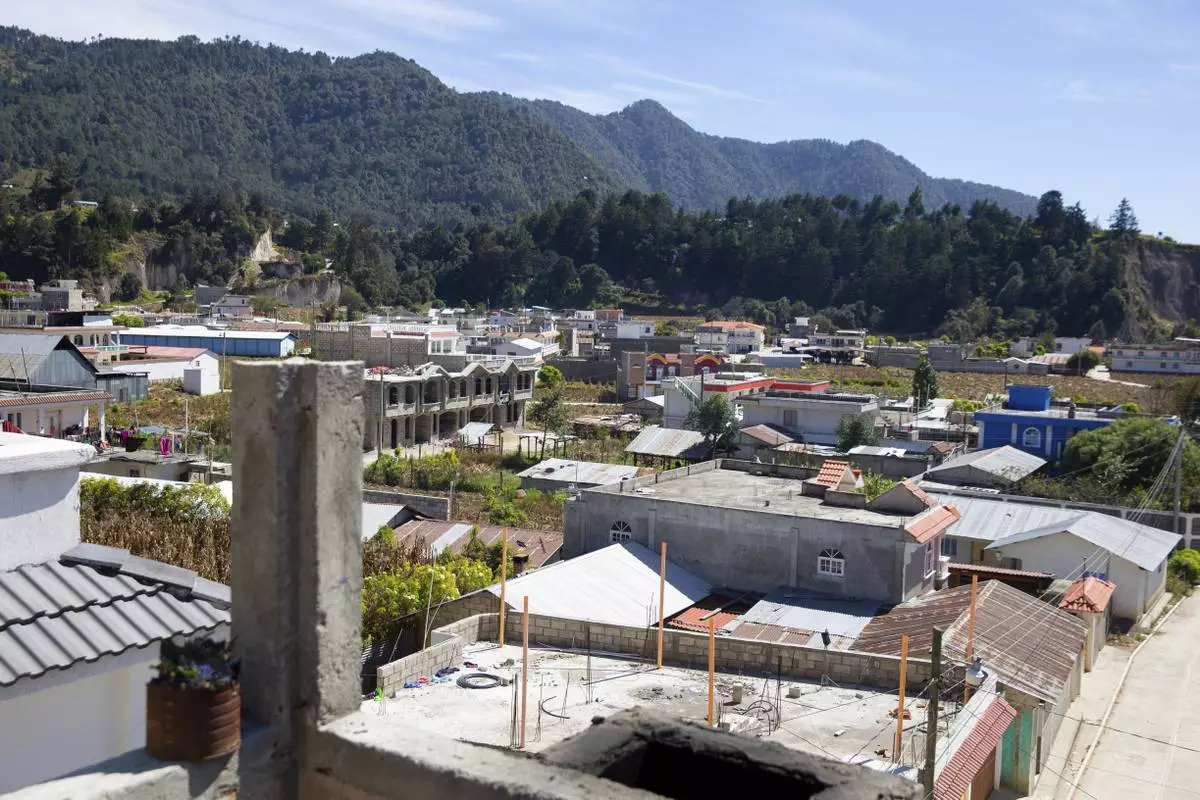
Money sent home to Cajola, Guatemala, from the U.S. paid for the construction of dozens of homes, as shown, Nov. 29, 2021. (AP Photo/Megan Janetsky)

FILE - Mexican President Claudia Sheinbaum attends her morning press conference at the National Palace in Mexico City, April 2, 2025. (AP Photo/Marco Ugarte, File)

FILE - President Donald Trump gestures as he speaks with reporters in the Oval Office of the White House, May 8, 2025, in Washington. (AP Photo/Evan Vucci, FIle)