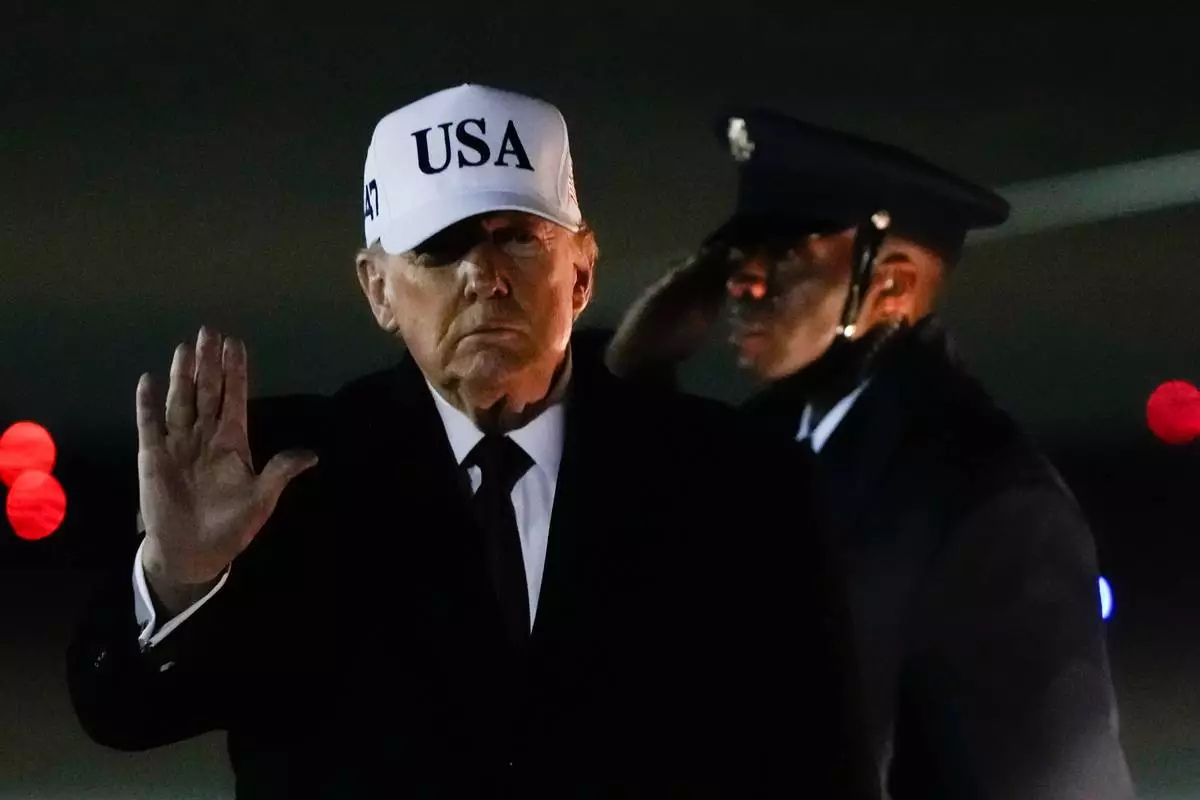
BEIRUT (AP) — President Donald Trump’s announcement that the U.S. will ease sanctions on Syria could eventually facilitate the country’s recovery from years of civil war and transform the lives of everyday Syrians.
But experts say it will take time, and the process for lifting the sanctions — some of which were first introduced 47 years ago — is unclear.
Click to Gallery
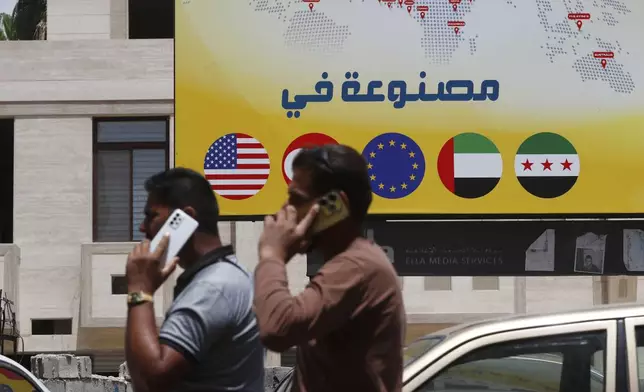
Syrian men speak on their phones on a street in Damascus, Syria, Wednesday, May 14, 2025. (AP Photo/Omar Sanadiki)
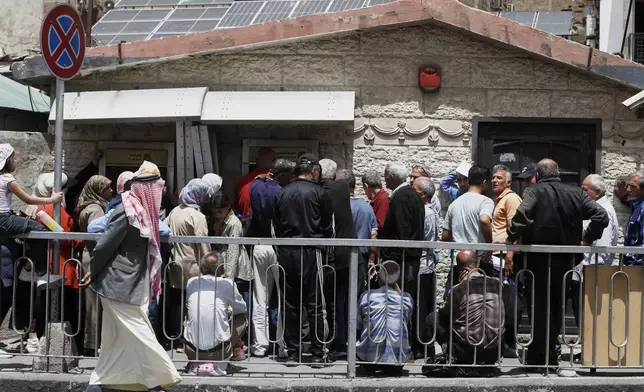
Syrians line up to retrieve money from an ATM in Damascus, Syria, Wednesday, May 14, 2025. (AP Photo/Omar Sanadiki)
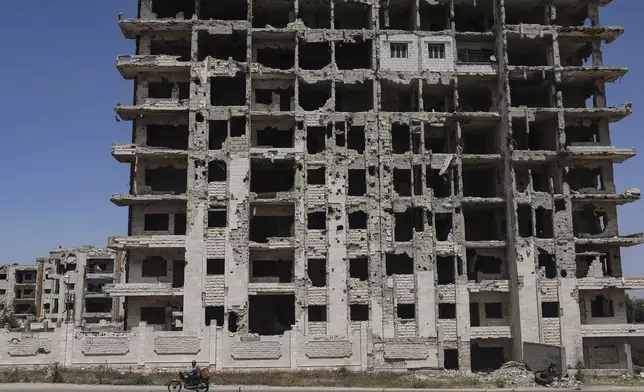
A restored apartment, top center, can be seen in an otherwise severely damaged apartment building in the Al-Waer neighborhood of Homs, Syria, Tuesday, May 13, 2025. (AP Photo/Ghaith Alsayed)
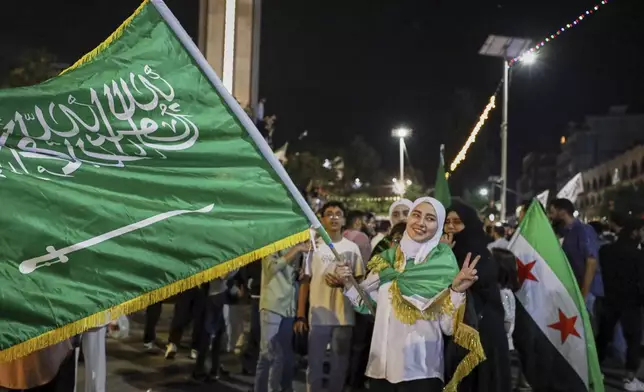
A girl holds a Saudi flag in Homs, Syria, Tuesday, May 13, 2025, as she celebrates U.S. President Donald Trump's plan to ease sanctions on Syria and normalize relations with its new government. Trump made the announcement on a visit to Saudi Arabia. (AP Photo/Omar Albam)
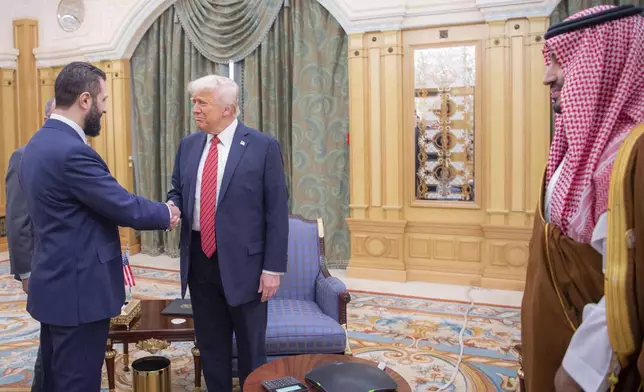
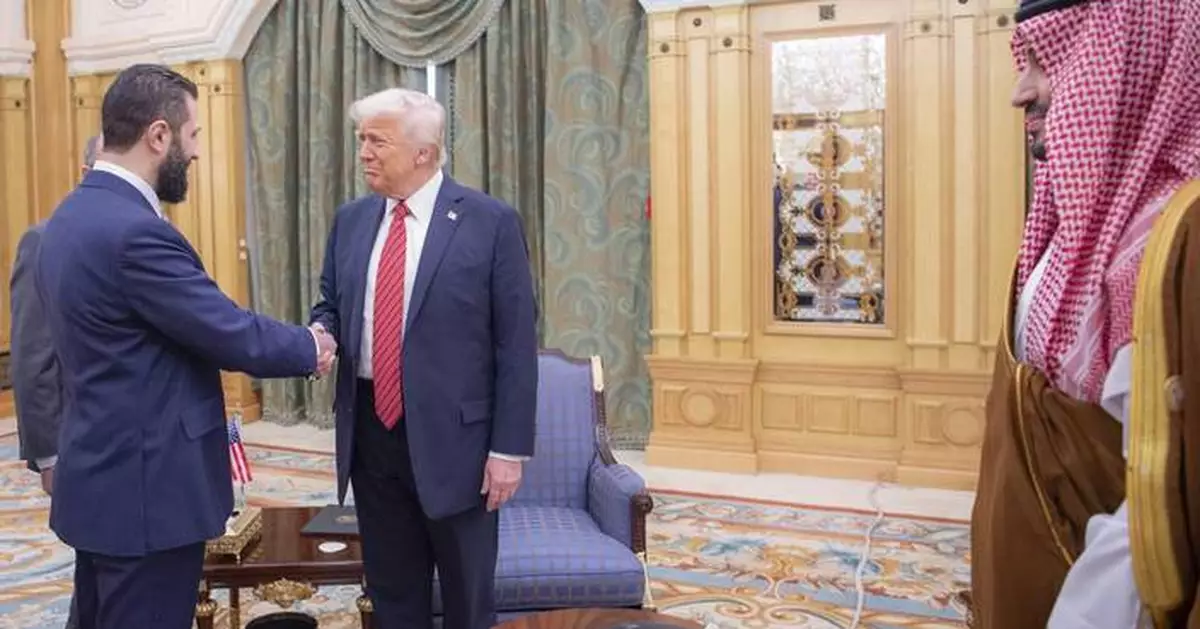
In this photo released by the Saudi Royal Palace, interim Syrian President Ahmad al-Sharaa shakes hands with U.S. President Donald Trump in Riyadh, Saudi Arabia, Wednesday, May 14, 2025. At right is Saudi Crown Prince Mohammed bin Salman. (Bandar Aljaloud/Saudi Royal Palace via AP)
“I think people view sanctions as a switch that you turn on and off,” said Karam Shaar, a Syrian economist who runs the consultancy firm Karam Shaar Advisory Limited. “Far from it.”
Still, the move could bring much-needed investment to the country, which is emerging from decades of autocratic rule by the Assad family as well as the war. It needs tens of billions of dollars to restore its battered infrastructure and pull an estimated 90% of population out of poverty.
And Trump’s pledge has already had an effect: Syrians celebrated in streets across the country, and Arab leaders in neighboring nations that host millions of refugees who fled Syria’s war praised the announcement.
Washington has imposed three sanctions programs on Syria. In 1979, the country was designated a “state sponsor of terrorism” because its military was involved in neighboring Lebanon's civil war and had backed armed groups there, and eventually developed strong ties with the powerful militant Hezbollah group.
In 2003, then-President George W. Bush signed the Syria Accountability Act into law, as his administration faced off with Iran and Tehran-backed governments and groups in the Mideast. The legislation focused heavily on Syria's support of designated terror groups, its military presence in Lebanon, its alleged development of weapons of mass destruction, as well as oil smuggling and the backing of armed groups in Iraq after the U.S.-led invasion.
In 2019, during Trump's first term, he signed the Caesar Act, sanctioning Syrian troops and others responsible for atrocities committed during the civil war.
Caesar is the code name for a Syrian photographer who took thousands of photographs of victims of torture and other abuses and smuggled them out of the country. The images, taken between 2011 and 2013, were turned over to human rights advocates, exposing the scale of the Syrian government’s brutal crackdown on political opponents and dissidents during countrywide protests.
The sanctions — along with similar measures by other countries — have touched every part of the Syrian economy and everyday life in the country.
They have led to shortages of goods from fuel to medicine, and made it difficult for humanitarian agencies responding to receive funding and operate fully.
Companies around the world struggle to export to Syria, and Syrians struggle to import goods of any kind because nearly all financial transactions with the country are banned. That has led to a blossoming black market of smuggled goods.
Simple tasks like updating smartphones are difficult, if not impossible, and many people resort to virtual private networks, or VPNs, which mask online activity, to access the internet because many websites block users with Syrian IP addresses.
The impact was especially stark after a devastating 7.8 magnitude earthquake hit Turkey and northern Syria in February 2023, compounding the destruction and misery that the war had already brought.
Though the U.S. Treasury issued a six-month exemption on all financial transactions related to disaster relief, the measures had limited effect since banks and companies were nervous to take the risk, a phenomenon known as over-compliance.
Interim Syrian President Ahmad al-Sharaa — who led the insurgency that ousted President Bashar Assad — has argued the sanctions have outlived their purpose and are now only harming the Syrian people and ultimately preventing the country from any prospect of recovery.
Trump and al-Sharaa met Wednesday.
Washington eased some restrictions temporarily in January but did not lift the sanctions. Britain and the European Union have eased some of their measures.
After Trump’s announcement, Syria's currency gained 60% on Tuesday night — a signal of how transformational the removal of sanctions could be.
Still, it will take time to see any tangible impact on Syria's economy, experts say, but removing all three sanctions regimes could bring major changes to the lives of Syrians, given how all-encompassing the measures are.
It could mean banks could return to the international financial system or car repair shops could import spare parts from abroad. If the economy improves and reconstruction projects take off, many Syrian refugees who live in crowded tented encampments relying on aid to survive could decide to return home.
“If the situation stabilized and there were reforms, we will then see Syrians returning to their country if they were given opportunities as we expect,” says Lebanese economist Mounis Younes.
The easing of sanctions also has an important symbolic weight because it would signal that Syria is no longer a pariah, said Shaar.
Mathieu Rouquette, Mercy Corps’ country director for Syria, said the move "marks a potentially transformative moment for millions of Syrians who have endured more than 13 years of economic hardship, conflict, and displacement.”
But it all depends on how Washington goes about it.
“Unless enough layers of sanctions are peeled off, you cannot expect the positive impacts on Syria to start to appear,” said Shaar. “Even if you remove some of the top ones, the impact economically would still be nonexistent.”
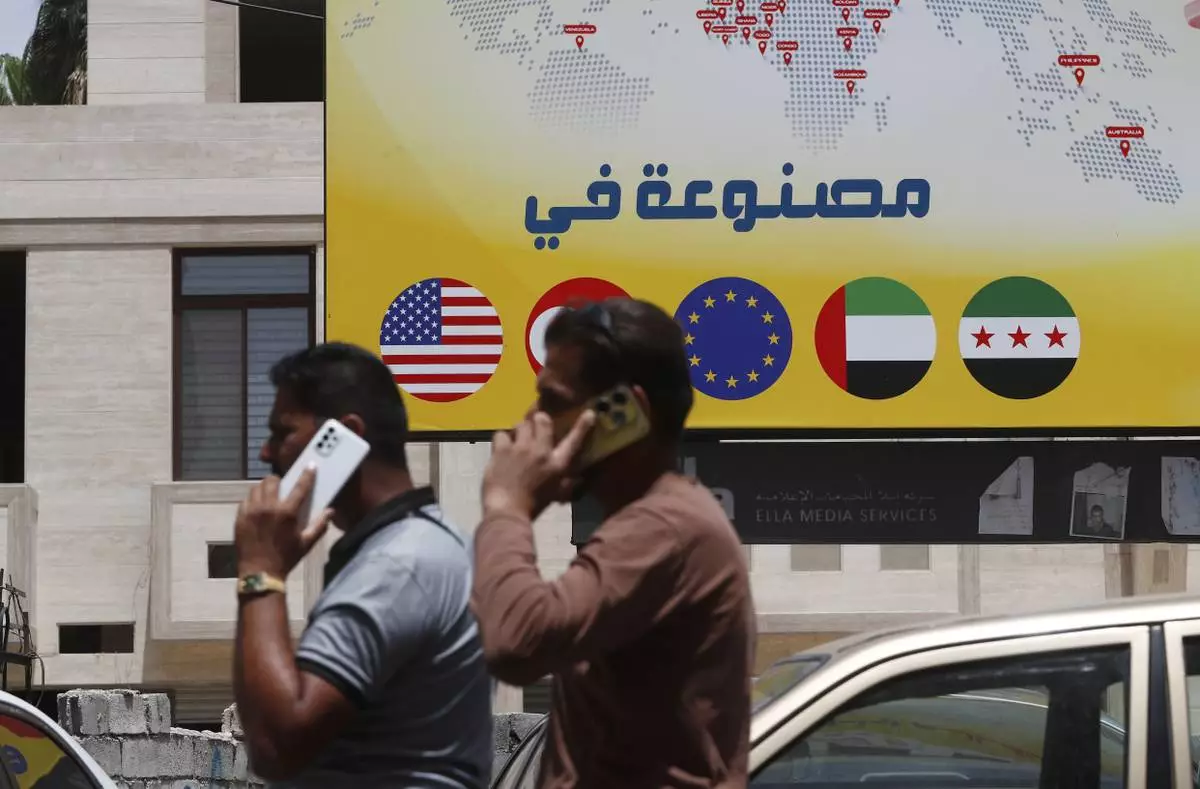
Syrian men speak on their phones on a street in Damascus, Syria, Wednesday, May 14, 2025. (AP Photo/Omar Sanadiki)
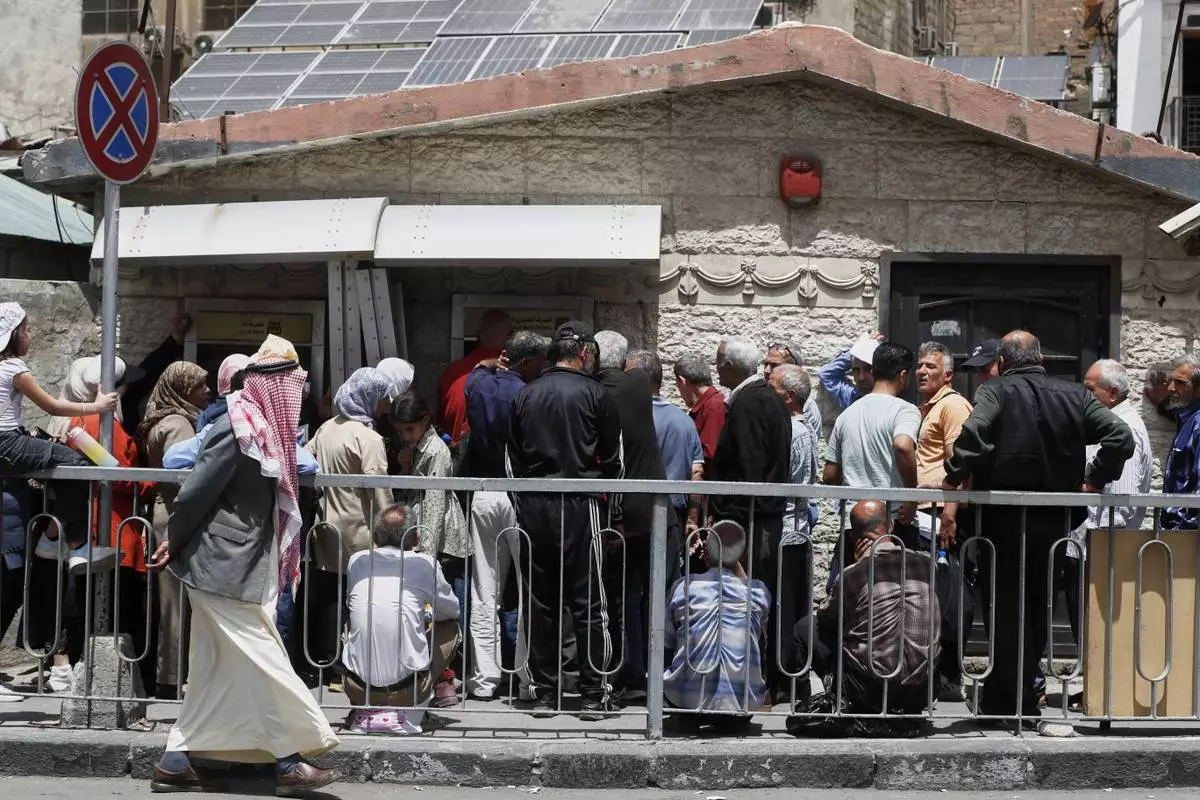
Syrians line up to retrieve money from an ATM in Damascus, Syria, Wednesday, May 14, 2025. (AP Photo/Omar Sanadiki)
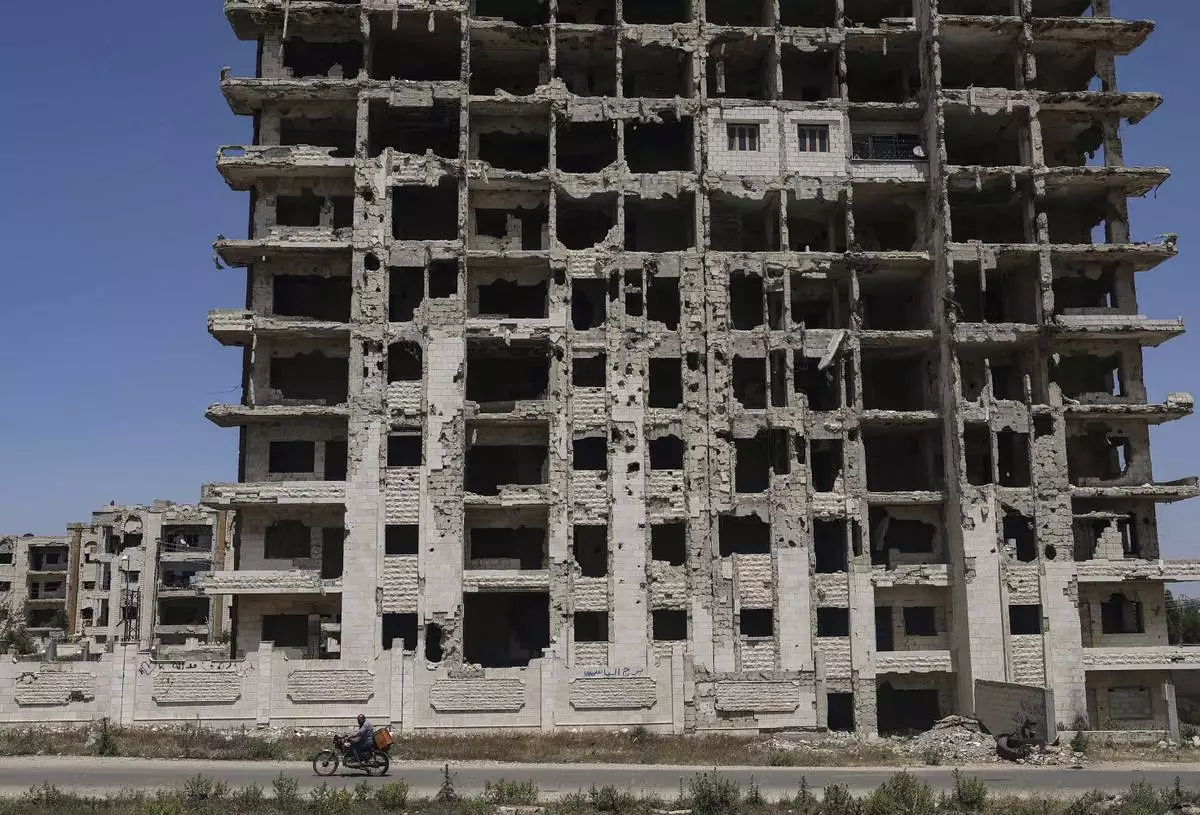
A restored apartment, top center, can be seen in an otherwise severely damaged apartment building in the Al-Waer neighborhood of Homs, Syria, Tuesday, May 13, 2025. (AP Photo/Ghaith Alsayed)
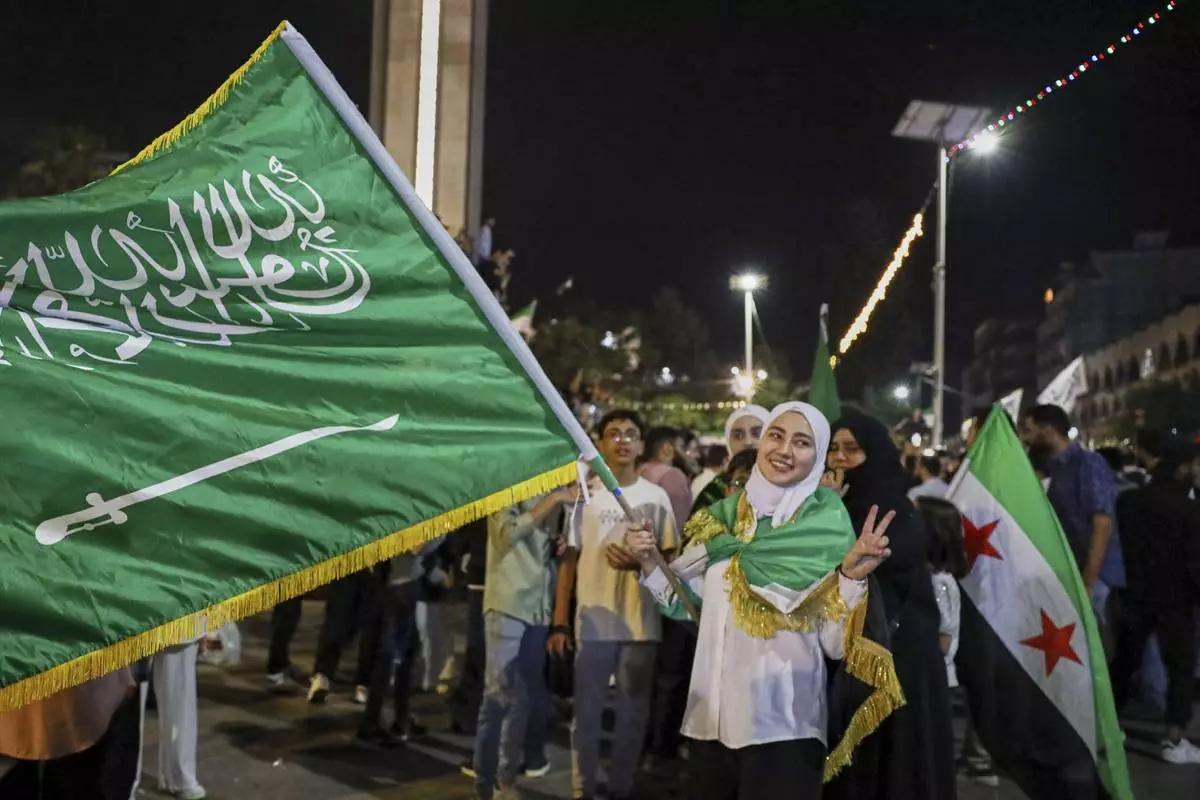
A girl holds a Saudi flag in Homs, Syria, Tuesday, May 13, 2025, as she celebrates U.S. President Donald Trump's plan to ease sanctions on Syria and normalize relations with its new government. Trump made the announcement on a visit to Saudi Arabia. (AP Photo/Omar Albam)
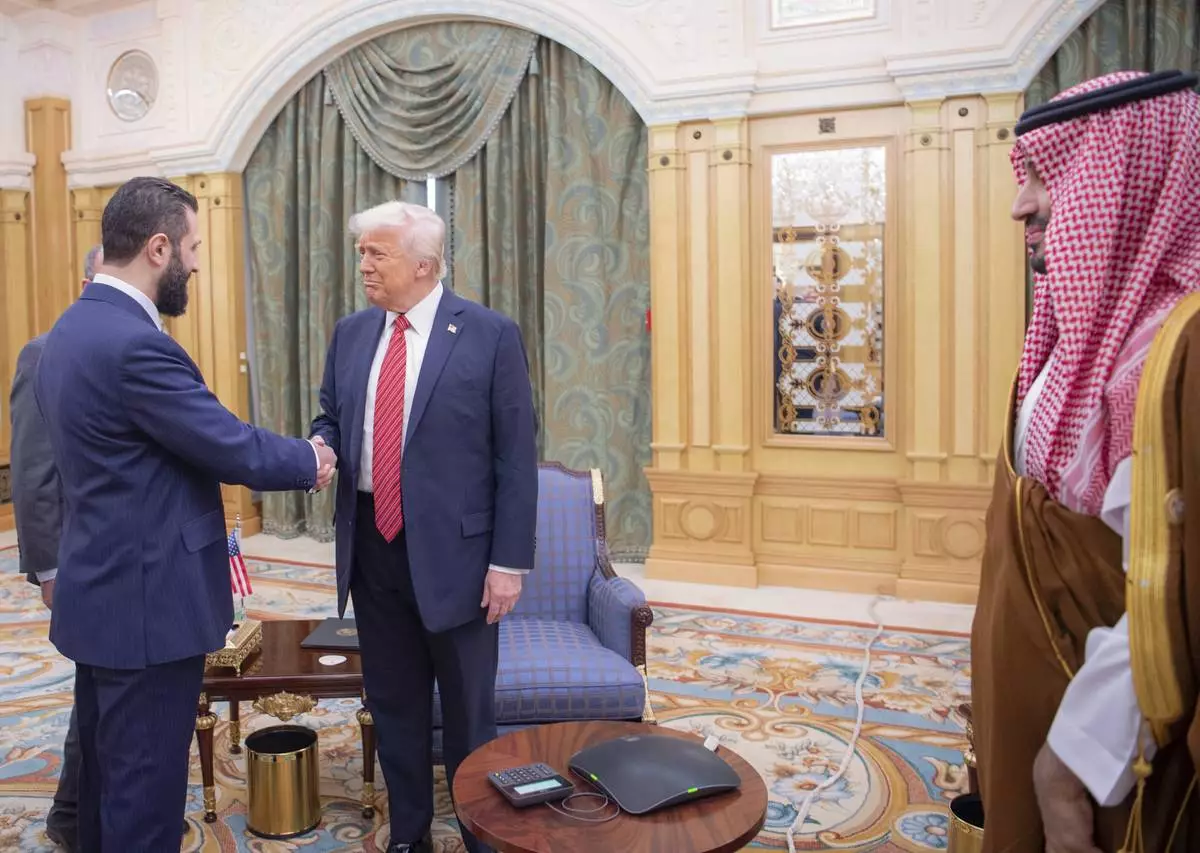
In this photo released by the Saudi Royal Palace, interim Syrian President Ahmad al-Sharaa shakes hands with U.S. President Donald Trump in Riyadh, Saudi Arabia, Wednesday, May 14, 2025. At right is Saudi Crown Prince Mohammed bin Salman. (Bandar Aljaloud/Saudi Royal Palace via AP)