BALTIMORE (AP) — The wrecking ball is coming to Pimlico Race Course, a long-awaiting demolition of the dilapidated racetrack that opened in 1870 and for decades has seen better days.
A section of grandstand has been condemned since 2019, ceiling tiles are missing from the part of the structure that is still safe to occupy and there is a crack in one of the large windows looking out at the track. The Preakness Stakes will move to nearby Laurel Park in 2026 while construction of the new Pimlico takes place, with the aim of the second jewel of horse racing returning to its historic home in Baltimore in 2027.
Click to Gallery
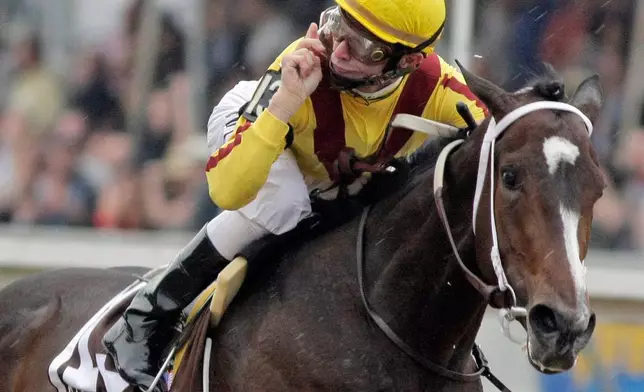
FILE - Jockey Calvin Borel gestures as he rides Rachel Alexandra to victory in the 134th running of the Preakness Stakes horse race at Pimlico Race Course, Saturday, May 16, 2009, in Baltimore. (AP Photo/Garry Jones, File)
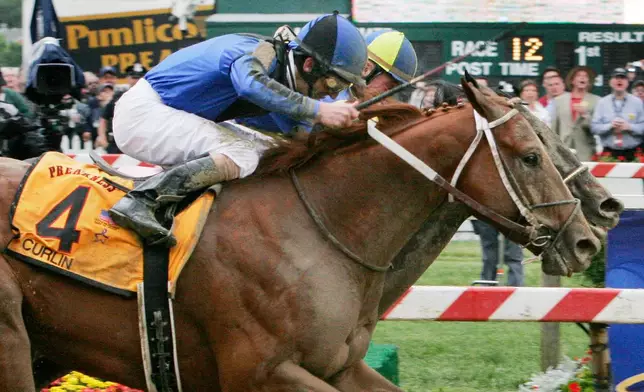
FILE - Curlin (4), ridden by Robby Albarado, passes Street Sense, ridden by Calvin Borel, to win the 132nd running of the Preakness Stakes horse race at Pimlico Race Course in Baltimore, Saturday, May 19, 2007. (AP Photo/J. David Ake, File)
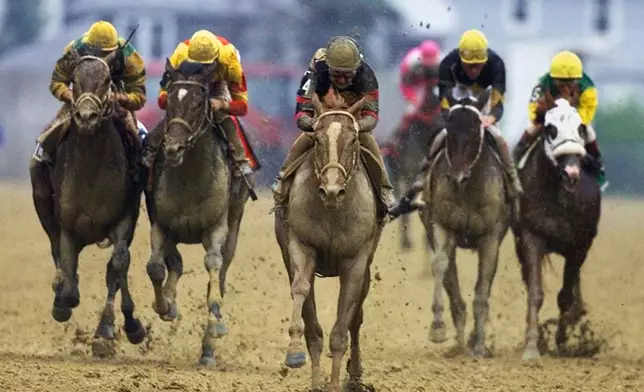
FILE- Red Bullet (4), with jockey Jerry Bailey aboard, center, breaks away from the field in the stretch to win 125th running of the Preakness Stakes at Pimlico Race Course in Baltimore, Saturday, May 20, 2000. (AP Photo/Roberto Borea, File)
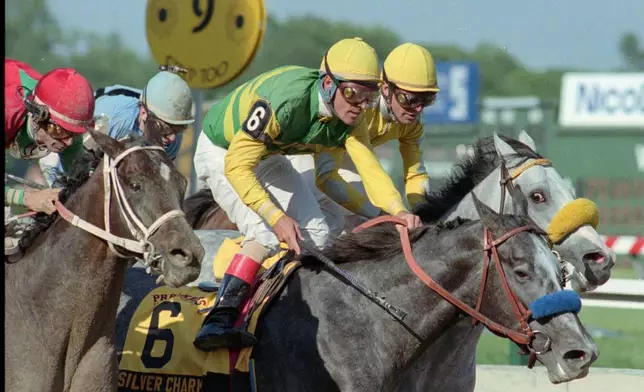
FILE - Jockey Gary Stevens is up in the stirrups of Silver Charm just past the finish line after beating out Captain Bodgit, left, with Alex Solis up, and Free House, right rear, with Paco Gonzalez up, to win the 122nd running of the Preakness Stakes horse race, Saturday, May 17, 1997, at Pimlico Race Course in Baltimore. (AP Photo/Steve Nesius File)
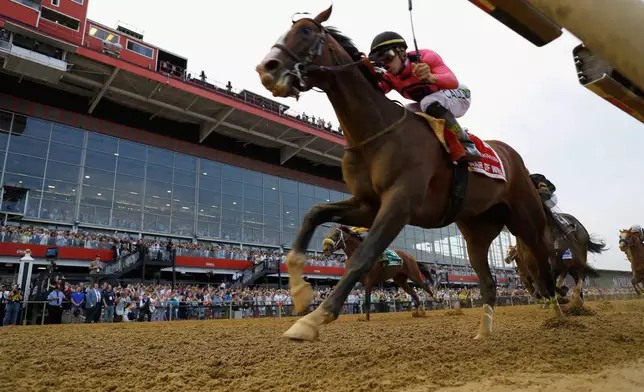
FILE - War of Will, ridden by Tyler Gaffalione, right, crosses the finish line first to win the Preakness Stakes horse race at Pimlico Race Course, Saturday, May 18, 2019, in Baltimore. (AP Photo/Steve Helber, File)
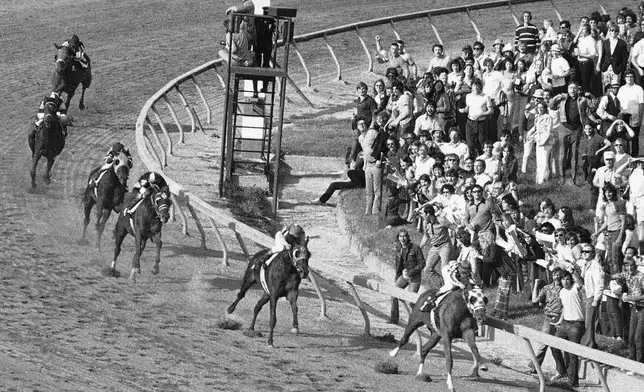
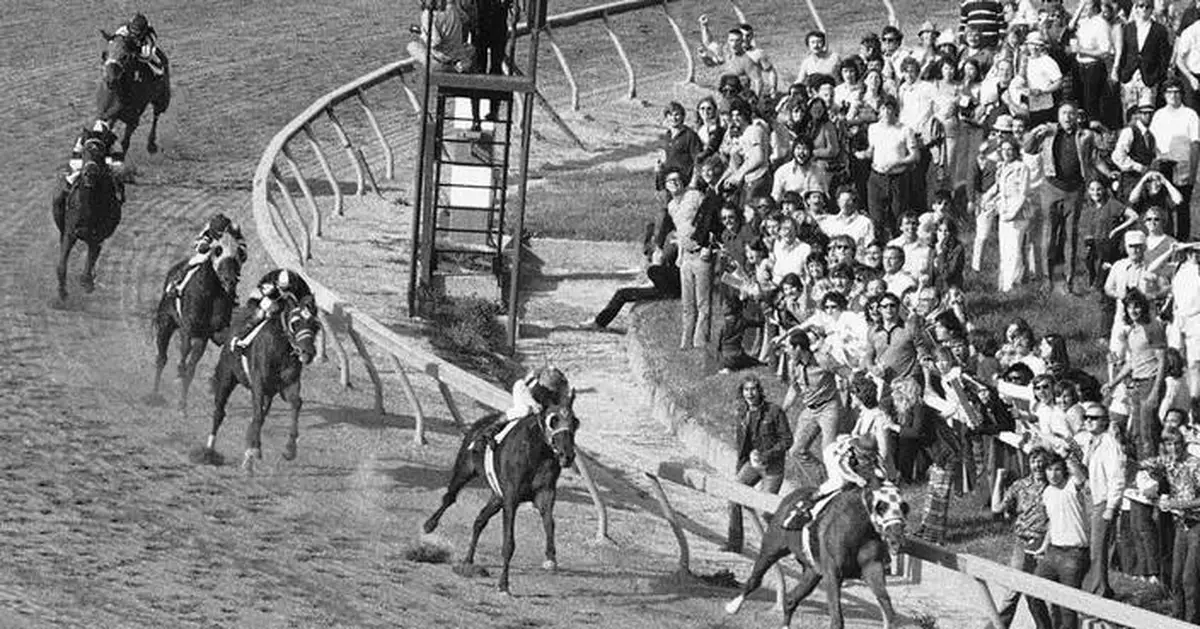
FILE - Secretariat, right, leads the field coming out of the final turn as he heads for the finish line to wn in the 98th Preakness Stakes Saturday, May 19, 1973 at at Pimlico Race Course in Baltimore. (AP Photo/File)
But first is the 150th running of the Preakness this Saturday, one that without the Kentucky Derby winner will be a tribute to a century and a half of some legendary races and horses who made their mark on the sport. Much like Belmont Park in New York when it reopens after getting knocked down and rebuilt, Pimlico will not be the same.
“I’m going to really miss it,” 89-year-old Hall of Famer D. Wayne Lukas said. “It’s always been one of my favorites, and I speak for the other trainers, too. I have never talked to a trainer that worked through the Preakness that didn’t enjoy this the most."
Two-time Triple Crown-winning trainer Bob Baffert had to make sure, “They’re keeping the track, right?” Most horsemen would love to see the old-fashioned, close-together barns stay the same, as well.
“It’s a different vibe: It’s chill," Baffert said. “It has a lot of charm to it.”
Before contemplating the future, five Preakness champions share their favorite memories at the place nicknamed “Old Hilltop.”
No one has won the Preakness more times than Baffert's eight, from Silver Charm in 1997 through National Treasure in 2023.
“Five of them were really exciting because we went for the Triple Crown,” Baffert said. “When Silver Charm won, I was just hoping to hit the board. And then he wins it and then I’m like, ‘Oh wow, what do I do now?’ I’ll never forget that.”
Silver Charm finished second in the Belmont Stakes, then Real Quiet the next year gave Baffert consecutive Kentucky Derby and Preakness winners. The 1998 race was just as memorable for the power outage caused by a transformer fire in the area and another smaller blaze in an air conditioner in the jockeys' room on a 96 degree day.
“It was so hot,” Baffert said. “I loved Real Quiet coming in. He was doing so well. ... I just really felt really confident about him, and for him to win it and we were going for the Triple Crown and I’d just gone through it with Silver Charm. It was just weird that back to back, like, ‘Wow, how lucky am I?’”
Real Quiet was also second in the Belmont, and in 2002 Baffert hit the Derby-Preakness double with War Emblem before an eighth-place finish stopped the Triple Crown bid. Baffert was lucky enough to sweep all three races in 2015 with American Pharoah and then again with Justify in 2018 — a Preakness run in sloppy, foggy conditions.
“I hope that big white face is in front when we come out of the fog,” Baffert said during the race. “And he was.”
Entering thoroughbred racing from the sprinting world, Lukas at the 1980 Preakness was referred to by his fellow trainers as “the quarter-horse guy.” That year brought his first of seven wins, saddling a record 48 horses in the race through 2024, as he became a staple of the race.
“The one that probably made the biggest impact on me was Tabasco Cat (in 1994),” Lukas said this week. “That was the horse that ran over my son and eventually cost him his life."
Jeff Lukas was run over when Tabasco Cat got loose in the stable area at Santa Anita in California on Dec. 15, 1993, and the 36-year-old was still in a coma for the Preakness. He suffered permanent injuries, dying nearly three decades later in 2016.
“When he won, it was kind of unexpected,” Lukas said of Tabasco Cat. "For them to lead that horse in (to the winner’s circle) and everything, that probably had the biggest impact. There was a lot of emotion with it with Jeff involved.”
The Hall of Fame jockey had not won a Triple Crown race more than a decade into his riding career when he had the Kentucky Derby favorite in Hansel in 1991. They finished 10th.
“Never showed up at all,” Bailey said. “He was such a disappointment."
Trainer Frank Brothers initially wanted to skip the Preakness before deciding to run Hansel after all. Bailey didn't know what to expect, and Hansel galloped away from the field, winning by one of the biggest margins in the race's history.
“He was so dominant,” said Bailey, now an NBC Sports analyst. “I won by seven lengths or something, and I was embarrassed that I hit him as many times as I did because he didn’t need it, obviously, but maybe I did.”
“You want to know my worst one?" Casse said. "Classic Empire getting beaten at the wire.”
That was 2017, when Cloud Computing finished a head in front of Casse's Classic Empire. Two years later came a rollercoaster ride of a lifetime.
Son Norm put his arm around his father during the Kentucky Derby and told him he's about to win it with War of Will. Then Mark Casse's horse clipped heels with Maximum Security, who crossed the finish line first and was disqualified for interference.
War of Will miraculously stayed up and kept running on the way to finishing eighth.
“I was just happy that he was safe,” Casse said about avoiding what could have been a series of horses and jockeys going down. “That would’ve been just devastating for racing. I was just happy that he was OK.”
OK but not without some pain. Each of War of Will's front feet were bruised, and he was almost scratched from the Preakness unbeknownst to everyone but his trainer.
"The week after the Derby was pretty nip and tuck," Casse said. "You know when I decided for sure — I never told anybody — that I was going to run him? About 10 o’clock Preakness morning. Until that point, I was not 100% sure I was going to run him.”
During the week, D. Wayne Lukas, from his usual seat in the corner of the stakes barn, defended War of Will when someone looked at the horse and said he had no chance.
“Wayne said, ‘You just watch him run,'” Casse recalled. “And Wayne was right.”
Curlin beating Street Sense in the 2007 Preakness was the “turning point in our barn’s trajectory,” according to Asmussen, who now has the most career wins of any trainer in North America. It got even better two years later when he won it with filly Rachel Alexandra.
“I had never experienced when we walked out of the barn with Rachel for the 2009 Preakness: Everybody was on her side,” Asmussen said. “You go to the races and people have their favorites and who they’re rooting for. But running Rachel was different than anything I had done previously or since.”
AP horse racing: https://apnews.com/hub/horse-racing
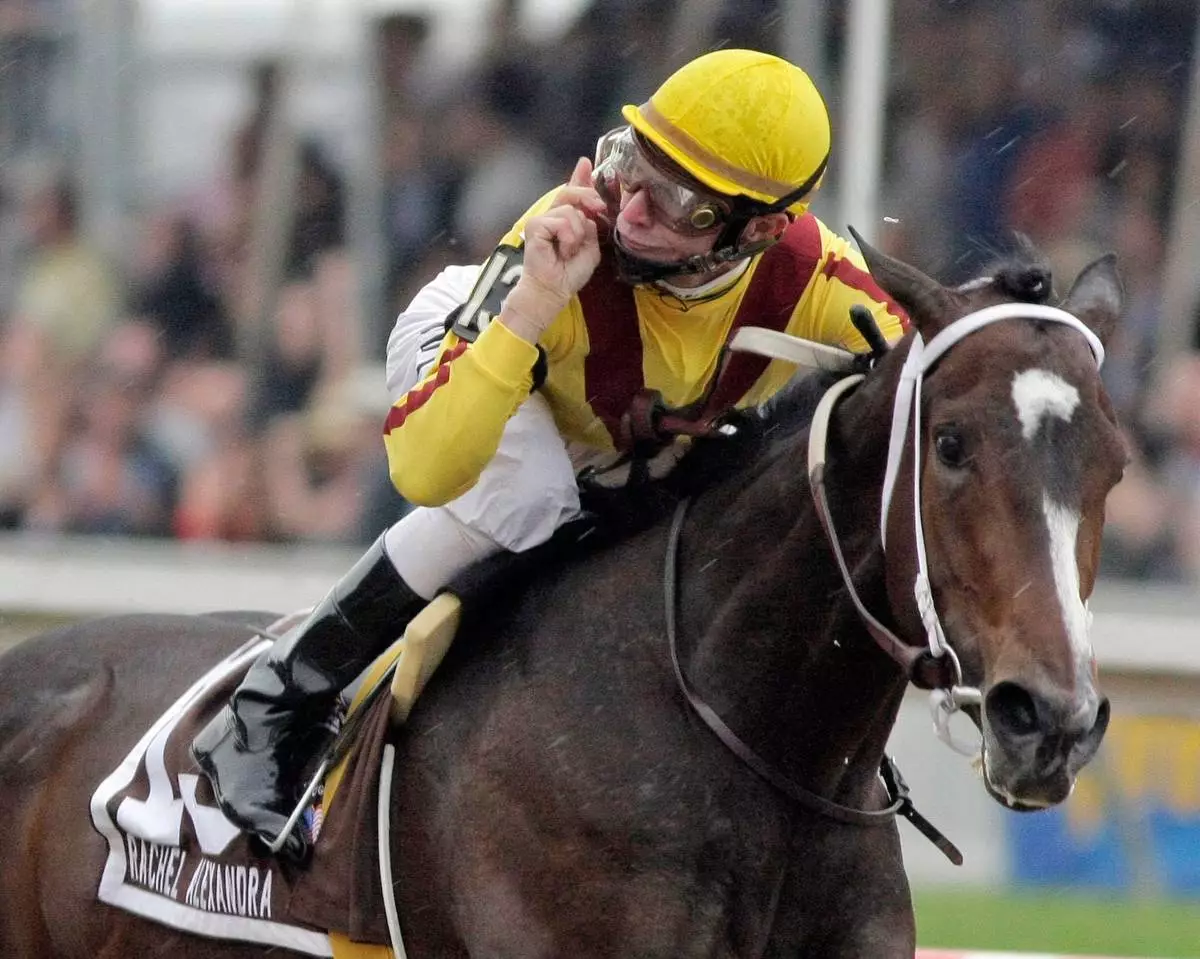
FILE - Jockey Calvin Borel gestures as he rides Rachel Alexandra to victory in the 134th running of the Preakness Stakes horse race at Pimlico Race Course, Saturday, May 16, 2009, in Baltimore. (AP Photo/Garry Jones, File)
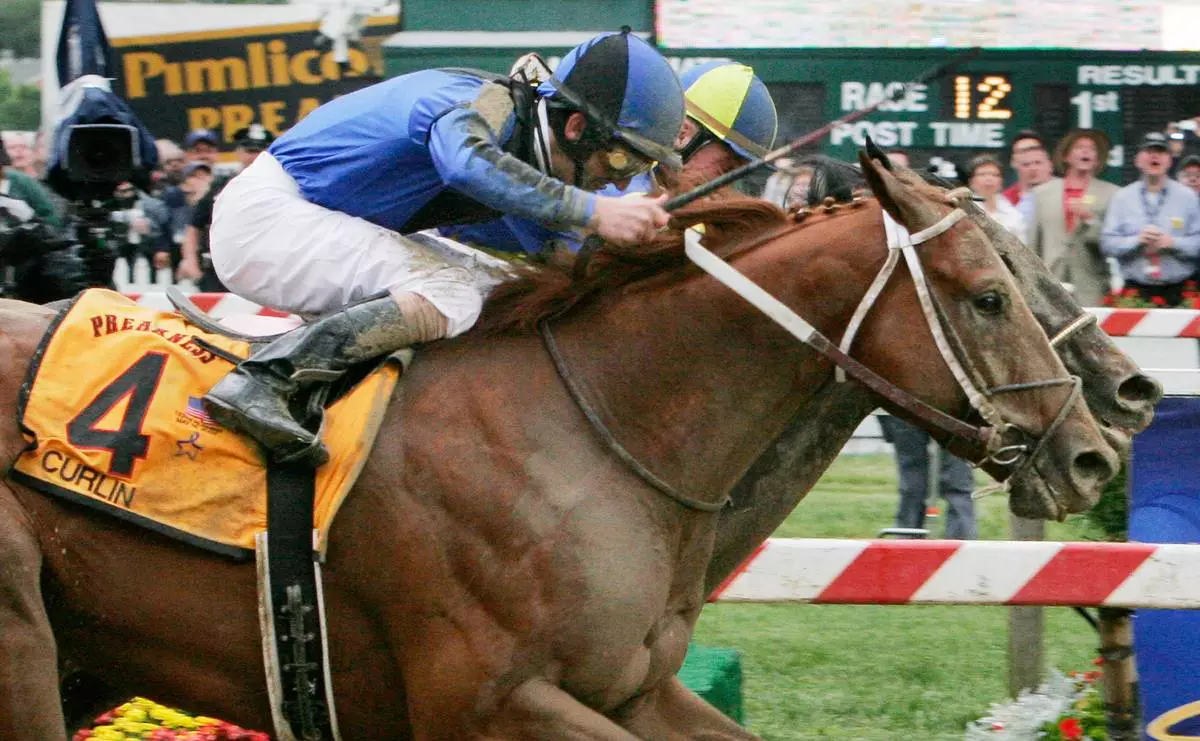
FILE - Curlin (4), ridden by Robby Albarado, passes Street Sense, ridden by Calvin Borel, to win the 132nd running of the Preakness Stakes horse race at Pimlico Race Course in Baltimore, Saturday, May 19, 2007. (AP Photo/J. David Ake, File)
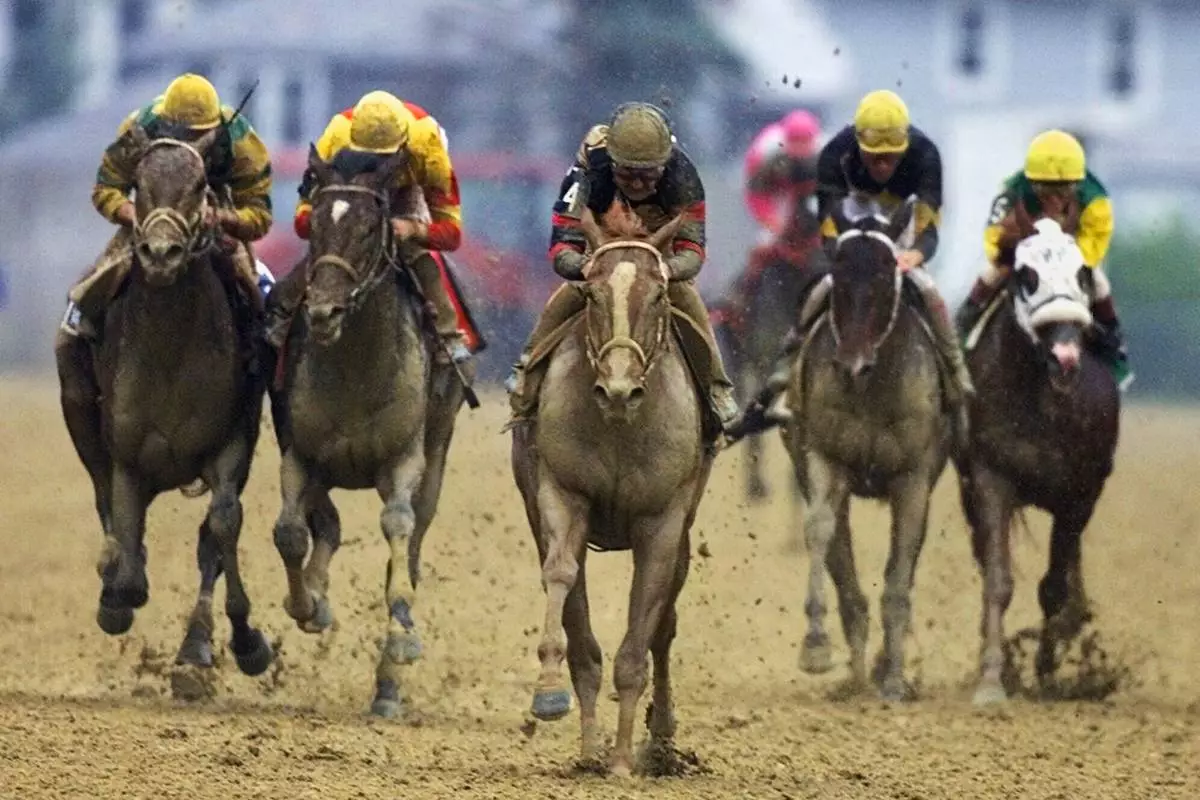
FILE- Red Bullet (4), with jockey Jerry Bailey aboard, center, breaks away from the field in the stretch to win 125th running of the Preakness Stakes at Pimlico Race Course in Baltimore, Saturday, May 20, 2000. (AP Photo/Roberto Borea, File)
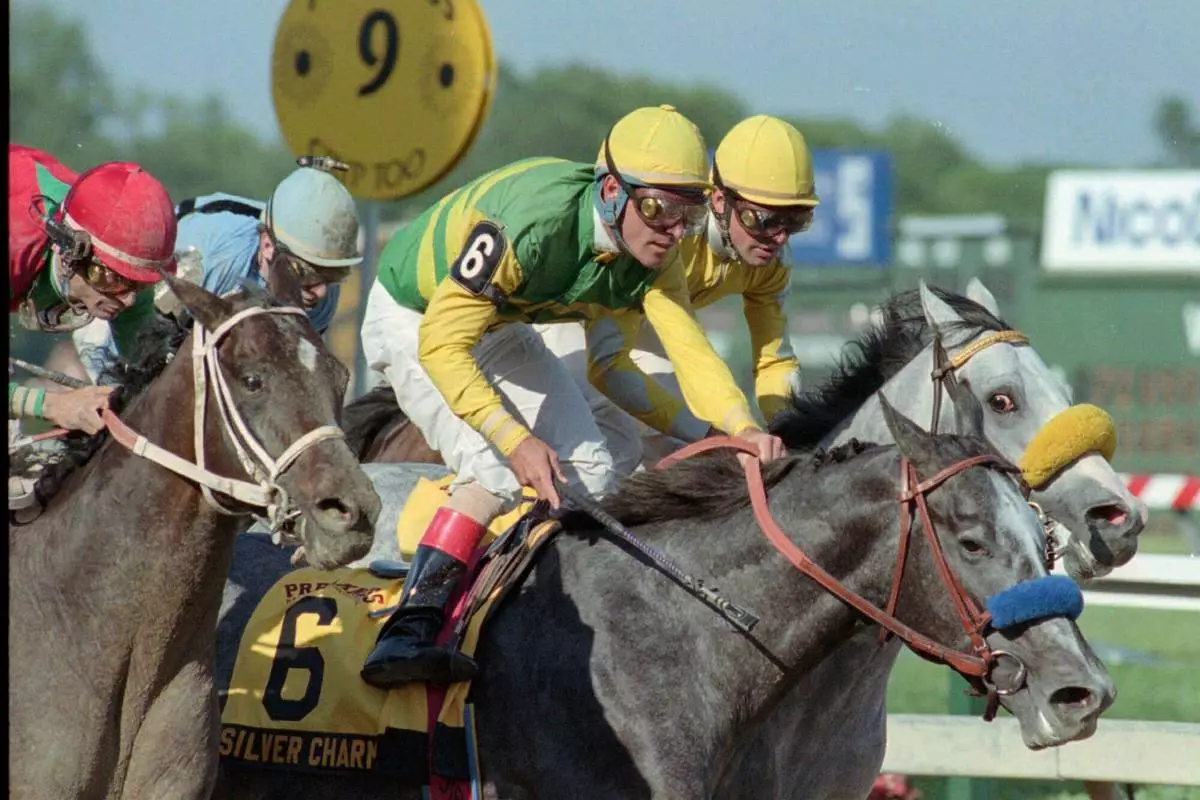
FILE - Jockey Gary Stevens is up in the stirrups of Silver Charm just past the finish line after beating out Captain Bodgit, left, with Alex Solis up, and Free House, right rear, with Paco Gonzalez up, to win the 122nd running of the Preakness Stakes horse race, Saturday, May 17, 1997, at Pimlico Race Course in Baltimore. (AP Photo/Steve Nesius File)
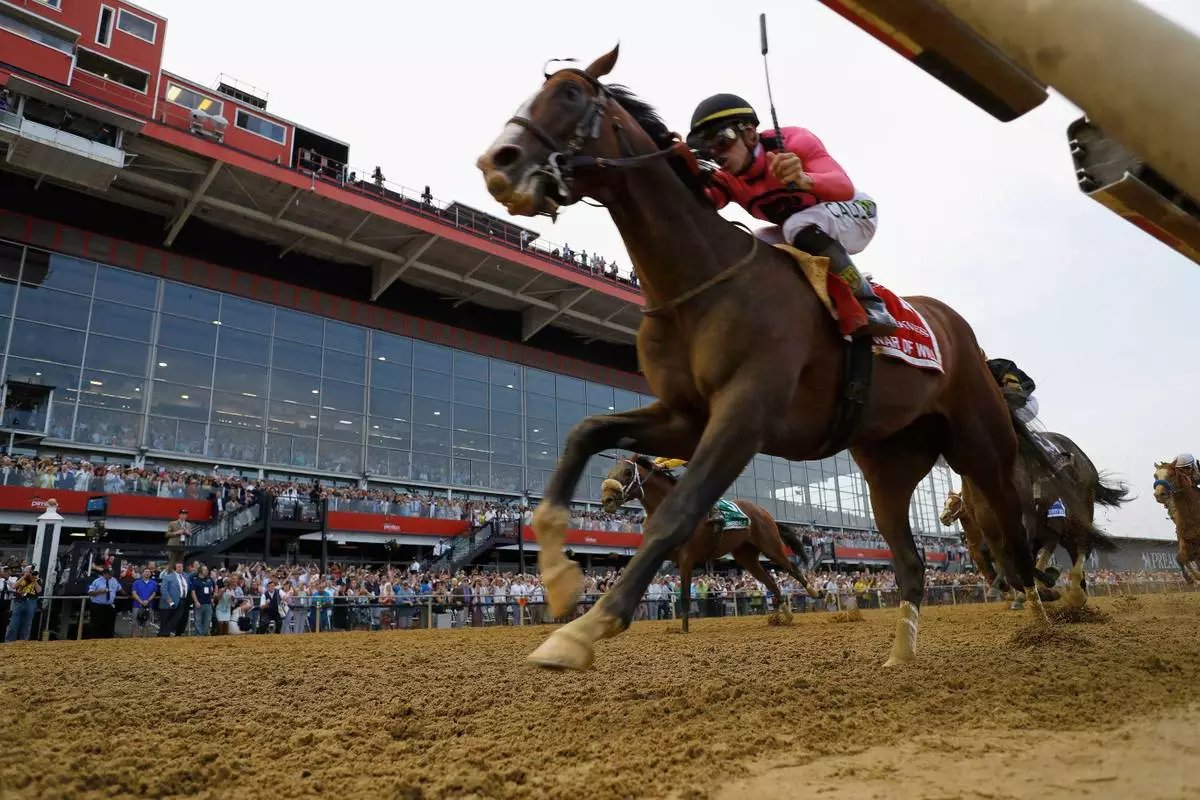
FILE - War of Will, ridden by Tyler Gaffalione, right, crosses the finish line first to win the Preakness Stakes horse race at Pimlico Race Course, Saturday, May 18, 2019, in Baltimore. (AP Photo/Steve Helber, File)
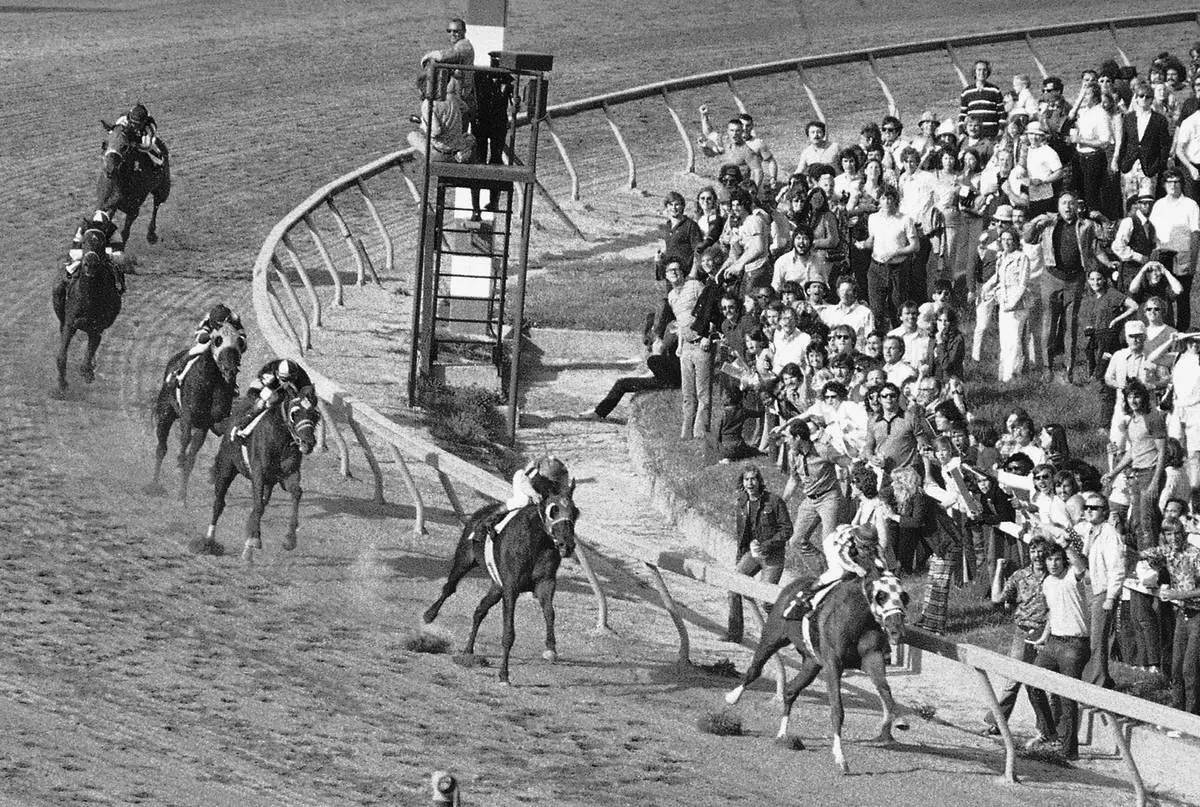
FILE - Secretariat, right, leads the field coming out of the final turn as he heads for the finish line to wn in the 98th Preakness Stakes Saturday, May 19, 1973 at at Pimlico Race Course in Baltimore. (AP Photo/File)