MELBOURNE, Australia--(BUSINESS WIRE)--May 14, 2025--
Compumedics Limited (ASX: CMP), a world leading supplier of innovative medical technology for patient monitoring, has in collaboration with Beijing Fistar and TJNU performed recordings of both adults and children. The site at TJNU is equipped with an Orion LifeSpan™ MEG.
Click to Gallery
Child in Adult Helmet: The response from the same child measured in the adult MEG helmet. The traces show much lower amplitude and the map is muddied as a result of the lower signal-to-noise ratio.
Child in Pediatric Helmet: Green traces show the signals from the MEG sensors during the child’s listening to tones. The stimulus occurs at time 0 and the clear first response peaks about 0.09 seconds later. The upper color map shows the magnetic fields across the entire head during the recording and the lower shows CURRY®’s calculation of dipolar output that would account for the measured signals.
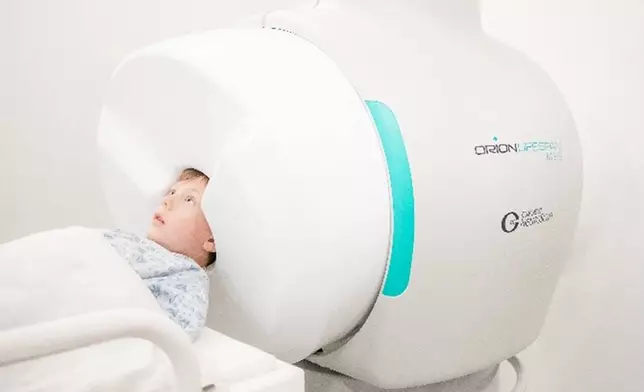
The same child in a helmet optimized for pediatric measurements.

Five-year-old child in an adult sized MEG helmet.
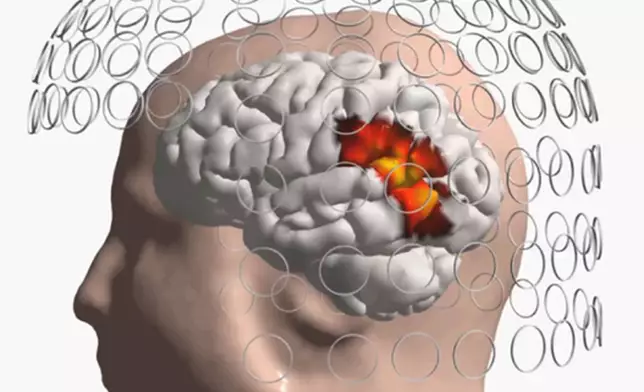
The resulting functional brain image as shown by CURRY software.
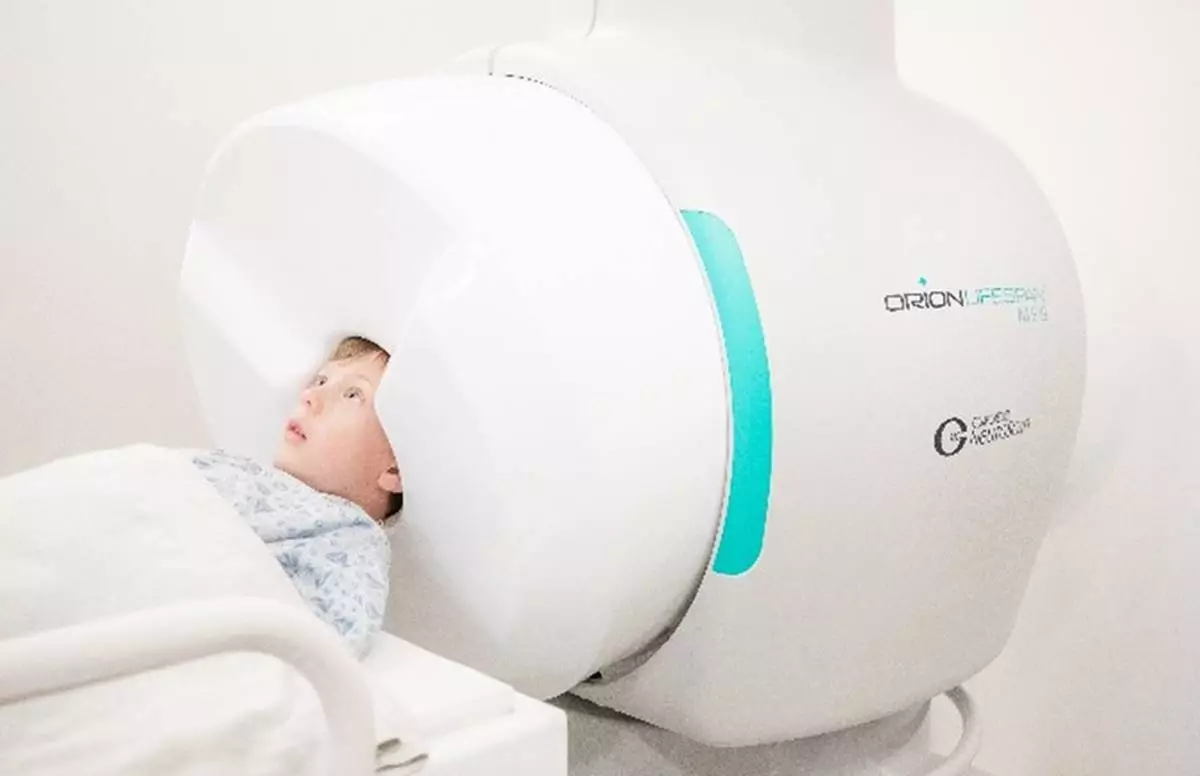
Compumedics Orion LifeSpan MEG system during recording.
This press release features multimedia. View the full release here: https://www.businesswire.com/news/home/20250514323453/en/
‘Most advanced MEG capability anywhere in the world’
Professor Xuejun Bai is Vice President of TJNU, Head of the MEG Laboratory, Director of the Brain Functional Imaging Centre and former Director of the Chinese Psychological Society. He has published more than 300 scientific papers and has been awarded ten patents. Prof. Bai commented:
“ The Orion LifeSpan MEG recently installed by Compumedics at TJNU has been a revolution in our ability to study mental processes of both children and adults, or even the two simultaneously. The system has already proven itself to be extremely sensitive, accurate and reliable. My team have been hard at work doing MEG measurements, analyzing the resulting data and uncovering new neuroscientific findings. I can say without reservation that the Orion LifeSpan has given TJNU the most advanced MEG capability anywhere in the world.”
Ability to Accurately Scan Both Children and Adults
MEG is a functional neuroimaging technique for mapping brain activity. It uses highly sensitive detectors to record the naturally occurring magnetic fields produced by electrical current flows within the brain. Because magnetic fields drop off very rapidly with distance, the sensors should be as close as possible to the sources of the brain signals. A child’s small head in an adult size helmet results in sensors far from the brain, leading to small signals. A dedicated smaller helmet yields clearer and more accurate data. More precise data always leads to better research understanding and improved patient outcomes.
World’s First Recordings
After installation of the Orion LifeSpan™ MEG at TJNU, a series of measurements were undertaken to demonstrate that the theoretical advantage of the system during pediatric recordings would be borne out in practice.
Founder and Executive Chairman Dr David Burton commented: “These recordings represented the first time a single MEG system had delivered high-quality scans for both children and adults. This breakthrough was at the world’s most advanced MEG lab at TJNU, which is equipped with a Compumedics Orion LifeSpan MEG system.
“Compumedics has invested nearly a decade and many millions of dollars to develop the Orion LifeSpan MEG,” he said. “The system represents a major leap in magnetoencephalography, with dual-helmet capability for pediatric and adult brain scanning, fully integrated with our gold-standard brain analytics CURRY software.
“It’s incredibly rewarding to see these efforts translating into strong initial sales, global interest and the potential for improved brain health, among both children and adults worldwide.”
A four-year-old female was presented with a series of tones and measured with both the adult and pediatric helmet. The results showed significantly stronger detection in the pediatric helmet. Localizations showed more precise determination of where the brain had been activated by the tones. The physics of magnetic field decay and the design philosophy of the Orion LifeSpan™ MEG were confirmed
For more information about this study, the Orion LifeSpan™ MEG and Compumedics, visit:https://www.compumedics.com.au/en/blog/compumedics-demonstrates-worlds-first-adult-and-pediatric-optimized-recordings-from-a-single-meg-system-2/
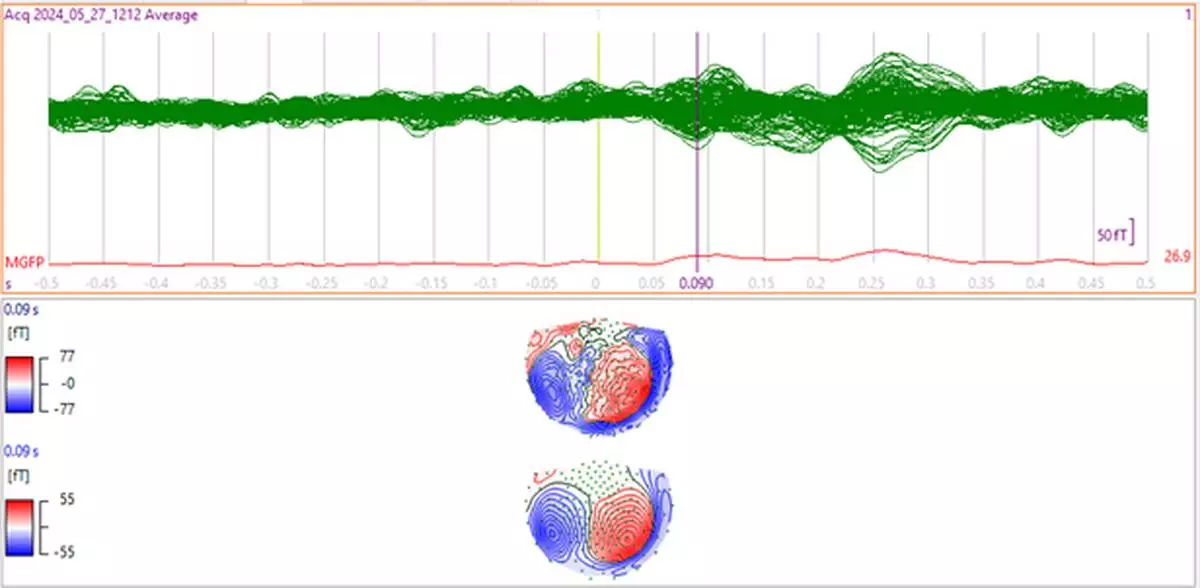
Child in Adult Helmet: The response from the same child measured in the adult MEG helmet. The traces show much lower amplitude and the map is muddied as a result of the lower signal-to-noise ratio.
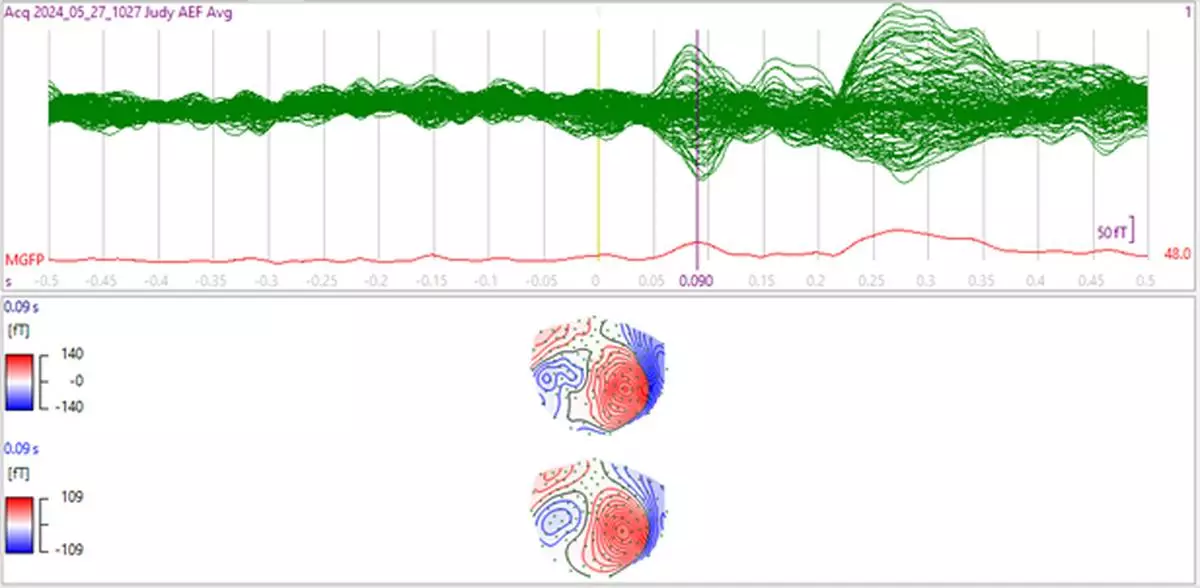
Child in Pediatric Helmet: Green traces show the signals from the MEG sensors during the child’s listening to tones. The stimulus occurs at time 0 and the clear first response peaks about 0.09 seconds later. The upper color map shows the magnetic fields across the entire head during the recording and the lower shows CURRY®’s calculation of dipolar output that would account for the measured signals.

The same child in a helmet optimized for pediatric measurements.

Five-year-old child in an adult sized MEG helmet.
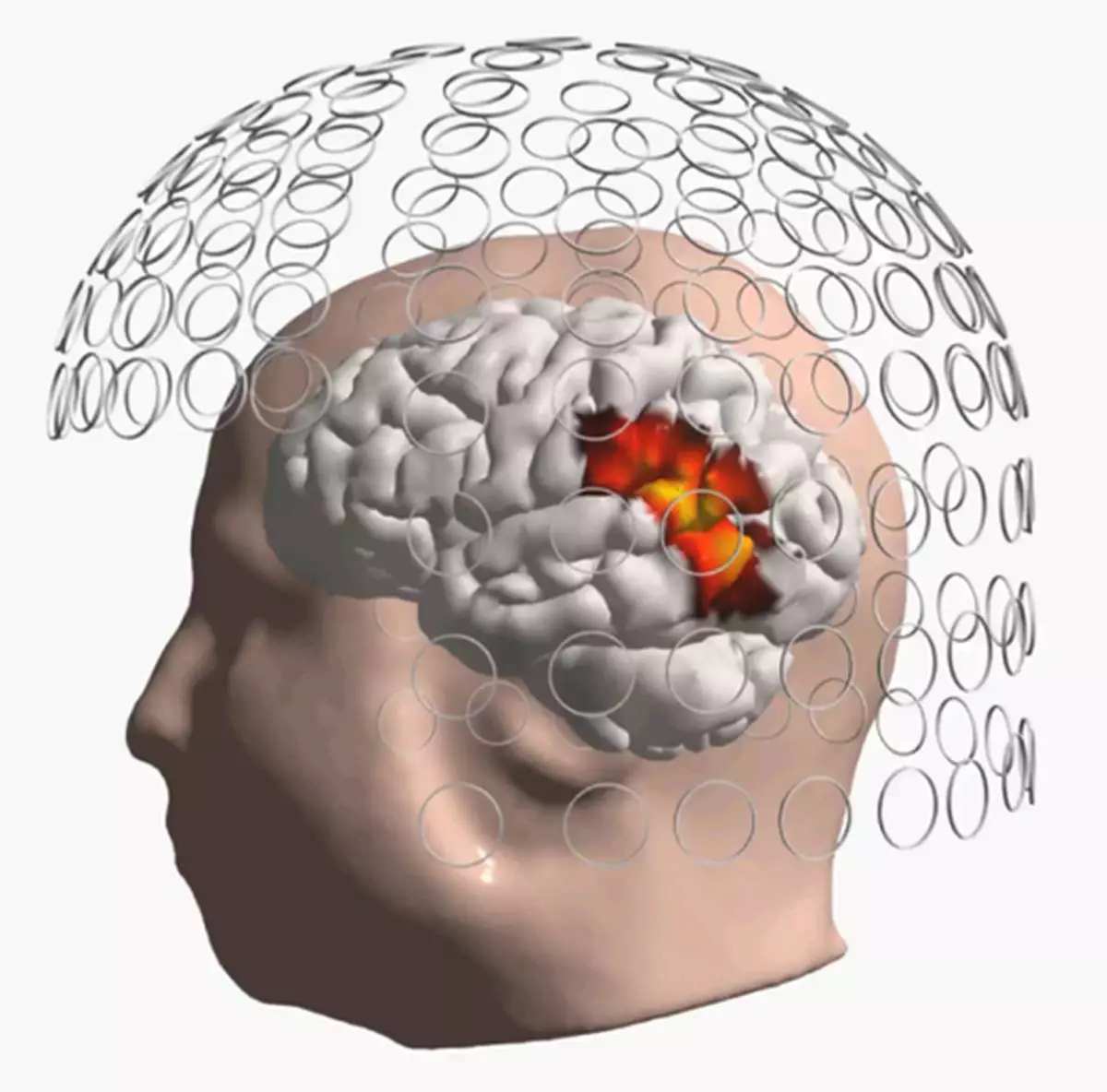
The resulting functional brain image as shown by CURRY software.
Compumedics Orion LifeSpan MEG system during recording.

LOS ANGELES (AP) — Christina Chavarria had already prepared almost 200 tamales, but she was back at Amapola Market in Southern California early Tuesday morning for more masa.
The dough made from ground corn was the best there, so it didn't bother her that the line was wrapped around the parking lot.
“It's always seasoned perfect, ready to go,” Chavarria said.
During the holiday season, tens of thousands of people head to one of three market locations in the Los Angeles area seeking the freshly produced masa that's a staple ingredient for tamales. Many Latin American families will gather to make them assembly-line style, spreading the paste on dried corn husks and filling them with sweet and savory ingredients.
Chavarria is excited to make them with her mother and 26-year-old daughter this year, who's “at that age where she doesn't always want to do stuff with me.” Her mother will bring roasted chiles from El Paso, Texas, infusing their tamales with a touch of the family heritage from Chihuahua, Mexico.
Amapola Market calls it the annual “masa pilgrimage.”
“We want them to have a good Christmas,” said CEO Rolando Pozos. “It kind of becomes more of a responsibility than a job.”
Some of the market's customers travel from as far as Bakersfield, California, or Las Vegas. Many arrive well before dawn to get in line, hours before the store opens. One group drove from Hesperia, about 60 miles (95 kilometers) away and camped overnight to be at the Downey location early Tuesday.
Pozos doesn't take the grocer's now 64-year responsibility lightly. The dough is so crucial to the holidays that in 2016, when the grocer sold masa made with the wrong corn, loyal customers declared Christmas was ruined when their tamales wouldn’t cook properly. Some people said they got sick. The company said it cut ties with the corn supplier and vowed to do better.
With his slicked back salt-and-pepper hair, Pozos is well-known to the store's regulars, doling out handshakes and personal greetings in Spanish. Pozos, himself, is a regular on local TV networks demonstrating the art of making tamales. He took charge of the company five years ago and says he's proud of keeping prices stable for the third year in a row, as families feel the pinch from inflation.
Prices matter for families that generally making hundreds of tamales at a time and need a lot of masa, said Melissa Perkins, who was waiting in line with her father. Her family has used Amapola's masa for nearly 30 years, since before she was born. The production line now includes almost two dozen siblings, nephews, aunts and uncles.
“This is my mom's favorite masa,” Perkins said.
The store sells prepared masas for savory tamales like pork and chile to sweeter versions that are pineapple and strawberry flavored. There are other uses, too, for tortillas and champurrado, a thick Mexican hot chocolate.
In the busy season, employees begin churning out bags of masa at 3 a.m. daily, producing them as quickly as they fly out the door.
In the back, cooked corn is delivered to be ground up in massive vats in combination with salt, lard, and other ingredients in industrial mixers. The bowls are lifted eight feet (2.4 meters) into the air and poured into a giant funnel that fills bags that are then double-bagged by a worker. Behind them, fresh tortillas spill out onto a conveyor belt by the hundreds.
After arriving at 4:15 a.m. in pajamas, Giselle Salazar waited with her sister and cousin, bundled up in blankets while catching up from college. Some families sent sleepy kids to hold their place in line while looking for parking blocks away, bringing chairs and snacks when they returned.
The three women were waiting again two hours later in a separate line for more pineapple masa.
“At first it was just our moms together," Salazar said. “They passed the torch down to us basically. We're the new generation of aunties.”
They had already filled up a small wagon and shopping cart with almost 100 pounds (45 kilos) of masa. Cousin Alexa Campos examined each bag carefully, exchanging one that looked watery at the bottom. Consistency is key for tamales to cook through properly, she said.
“After Christmas we're done with tamales for the rest of the year,” Campos said. “(Be)cause we make a lot and eat them for a week straight.”
As the sun rose, the line outside Amapola moved along, but more people arrived just as quickly.
Mark Monroy was passing on the tradition to his 9-year-old daughter Avery, bringing her on the masa trek for the first time. They drove 1 1/2 hours from Riverside.
Raised in the Los Angeles area, Monroy has memories of going to Amapola as a child so his family returns every year despite moving away.
“You can have a little bit of presents or maybe not even any presents for certain years, but you'll always have a tamale to unwrap,” Monroy said.
People wait in line to buy masa, a dough used to make tamales, outside Amapola Market in Downey, Calif., early Tuesday morning, Dec. 23, 2025. (AP Photo/Jae C. Hong)
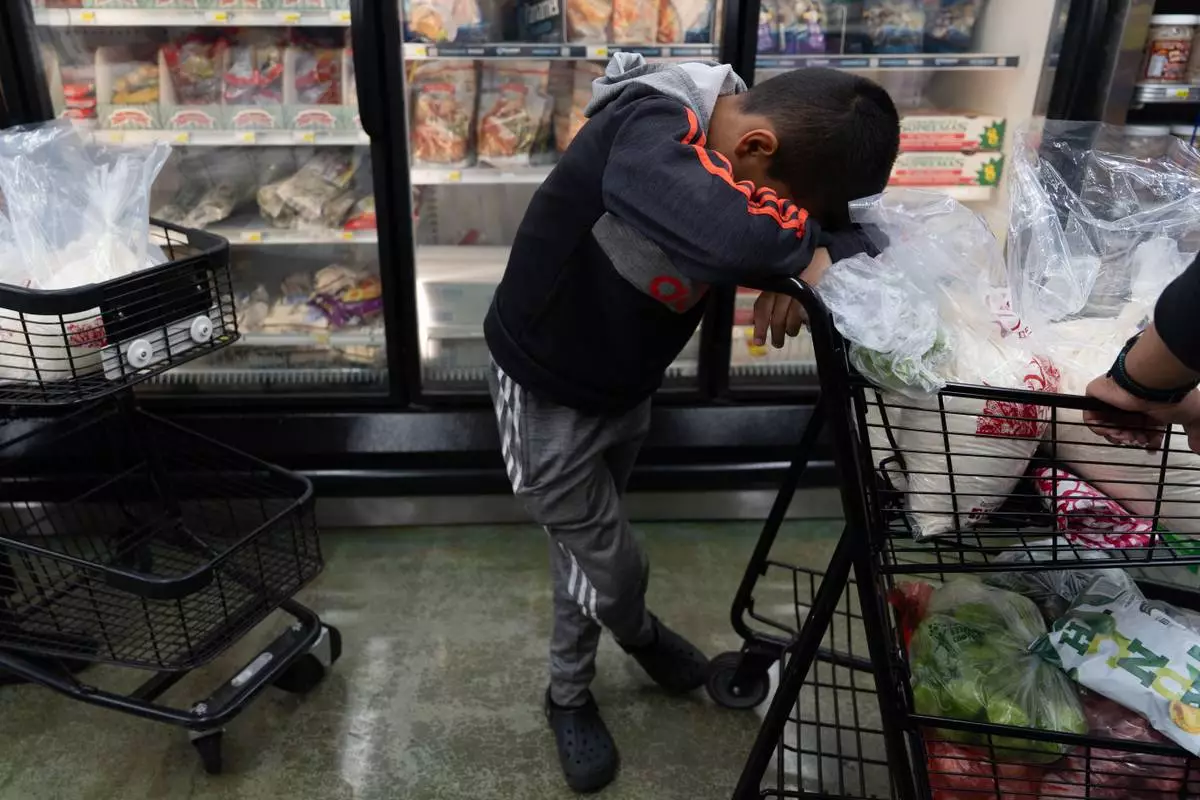
Antonio Alvarez, 11, rests his head on a shopping cart as he and his mother wait in line to buy masa, a dough used to make tamales, at Amapola Market in Downey, Calif., early Tuesday morning, Dec. 23, 2025. (AP Photo/Jae C. Hong)
Bags of masa, a dough used to make tamales, are stacked on a counter at Amapola Market in Downey, Calif., Tuesday, Dec. 23, 2025. (AP Photo/Jae C. Hong)
People wait in line to buy masa, a dough used to make tamales, outside Amapola Market in Downey, Calif., early Tuesday morning, Dec. 23, 2025. (AP Photo/Jae C. Hong)
Alex Diaz, left, reaches for a bag of masa, a dough used to make tamales, as shoppers wait in line at Amapola Market in Downey, Calif., Tuesday, Dec. 23, 2025. (AP Photo/Jae C. Hong)