Skip to Content Facebook Feature Image

In India, Indigenous women and their 'dream maps' seek to protect lands from climate change

News

In India, Indigenous women and their 'dream maps' seek to protect lands from climate change
News

News

In India, Indigenous women and their 'dream maps' seek to protect lands from climate change

2025-05-15 10:47 Last Updated At:11:51

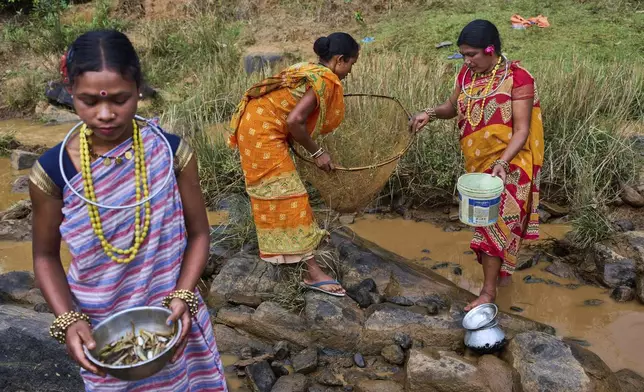
KORAPUT, India (AP) — At a small stream in India's eastern state of Odisha, Indigenous villagers catch eels and fish for a dinner celebrating an annual harvest festival. The bounty of communal farming, foraging and fishing marks the start of a new season.

But the fish and other resources have been dwindling.

More Images
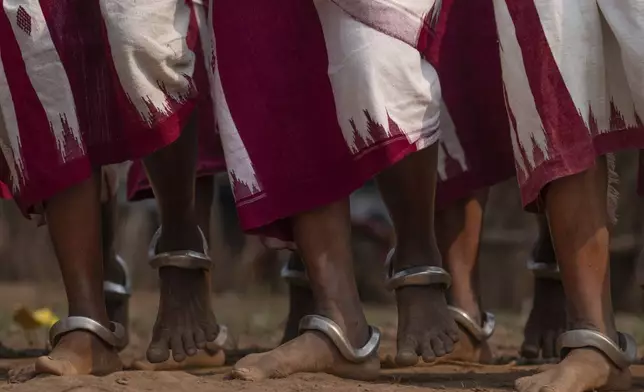
Members of the Durua tribe, part of India's Indigenous Adivasis communities, perform traditional dances during the Chaitra Parab festival, a month long harvest celebration in Hatipakna village, Koraput district, in India's eastern state of Odisha, Thursday, April 17, 2025. (AP Photo/Rafiq Maqbool)
Members of the Durua tribe, part of India's Indigenous Adivasis communities, perform traditional dances during the Chaitra Parab festival, a month long harvest celebration in Hatipakna village, Koraput district, in India's eastern state of Odisha, Thursday, April 17, 2025. (AP Photo/Rafiq Maqbool)
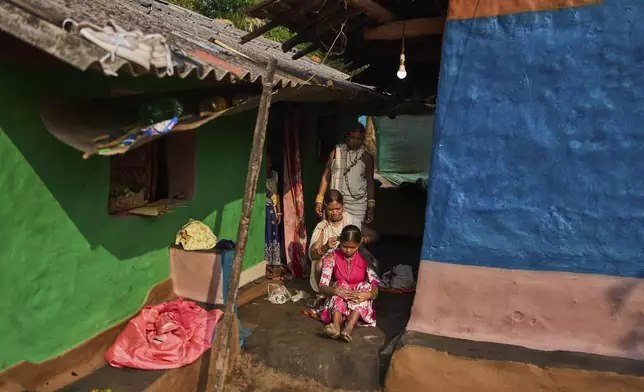
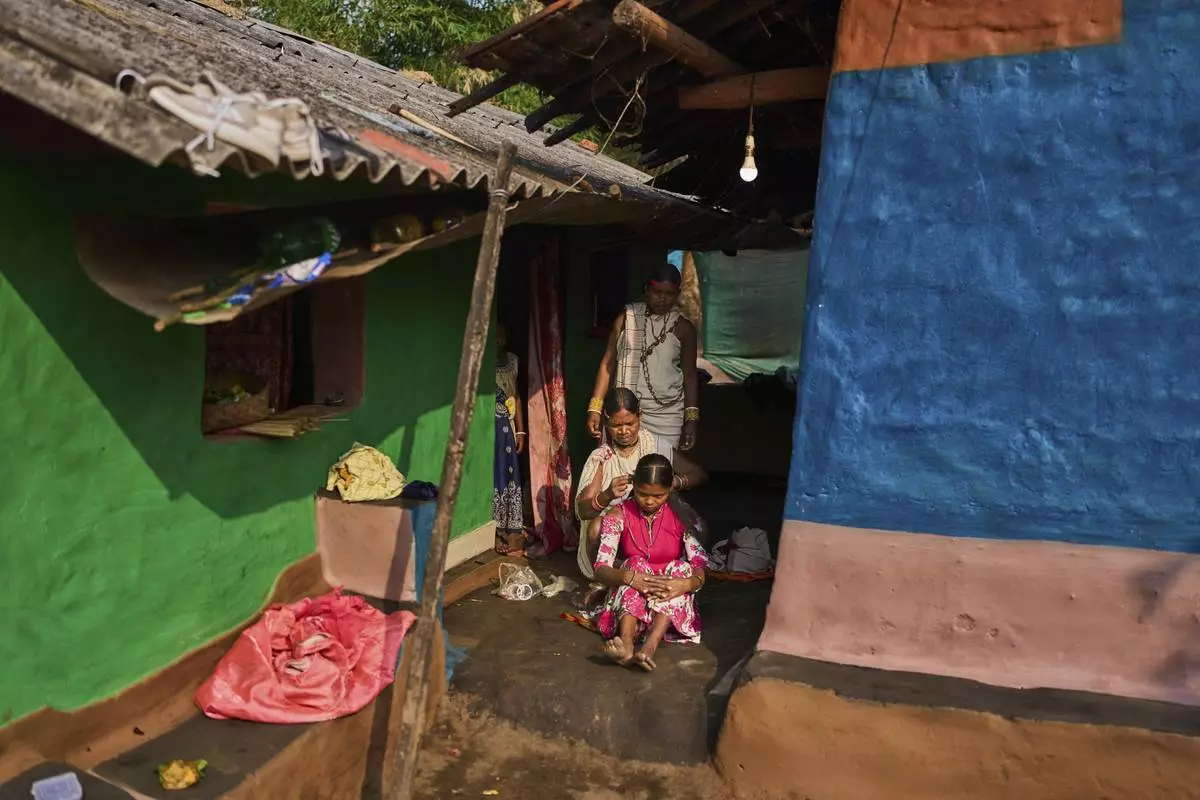
A woman, from the Durua Indigenous community, combs her daughter's hair as she dresses to take part in the Chaitra Parab festival, a monthlong harvest celebration, in Hatipakna village, Koraput district, in India's eastern state of Odisha, Thursday, April 17, 2025. (AP Photo/Rafiq Maqbool)

A woman, from the Durua Indigenous community, combs her daughter's hair as she dresses to take part in the Chaitra Parab festival, a monthlong harvest celebration, in Hatipakna village, Koraput district, in India's eastern state of Odisha, Thursday, April 17, 2025. (AP Photo/Rafiq Maqbool)

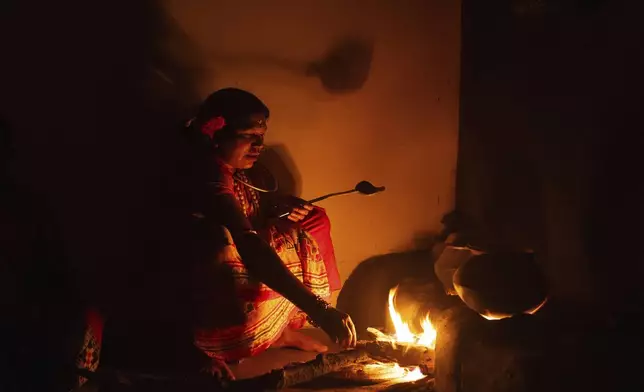
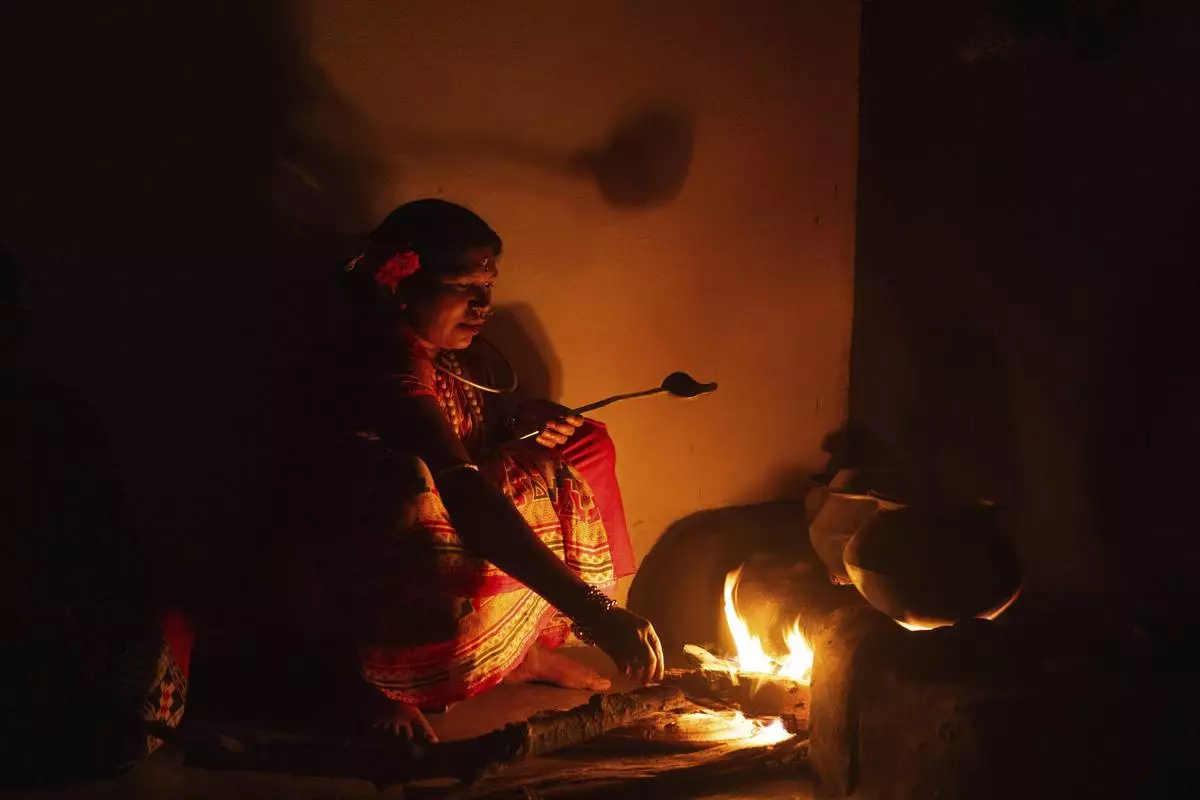
Sunita Muduli, 34, from the Paroja Indigenous community cooks on a clay oven in Putpondi village, Koraput district, in India's eastern state of Odisha, Tuesday, April 15, 2025. (AP Photo/Rafiq Maqbool)
Sunita Muduli, 34, from the Paroja Indigenous community cooks on a clay oven in Putpondi village, Koraput district, in India's eastern state of Odisha, Tuesday, April 15, 2025. (AP Photo/Rafiq Maqbool)

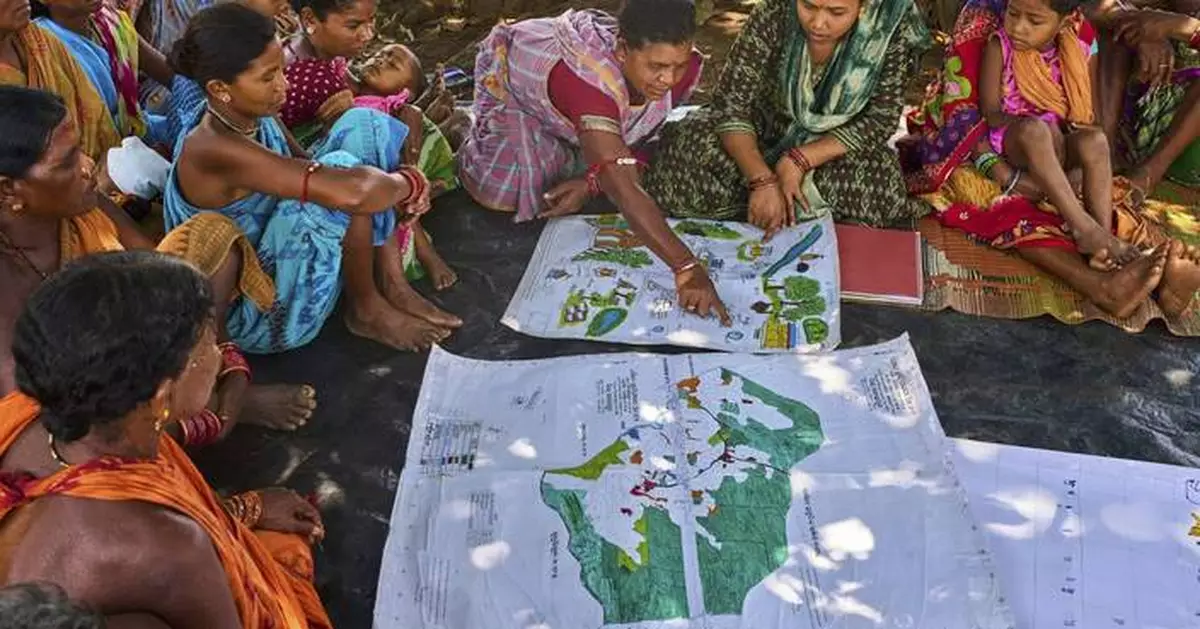
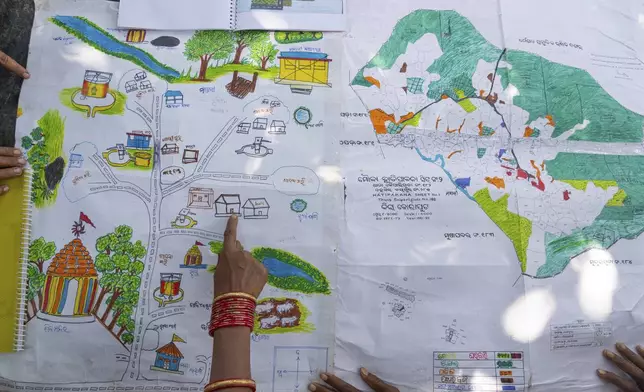
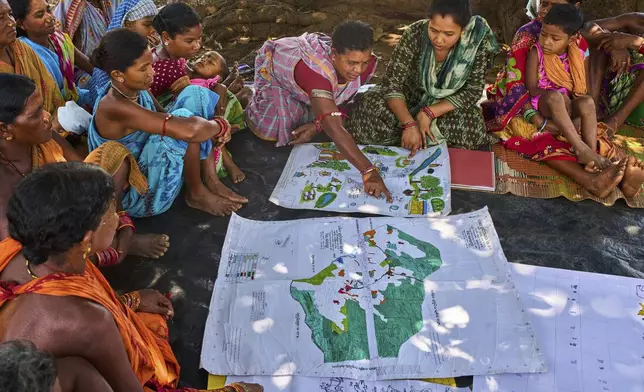
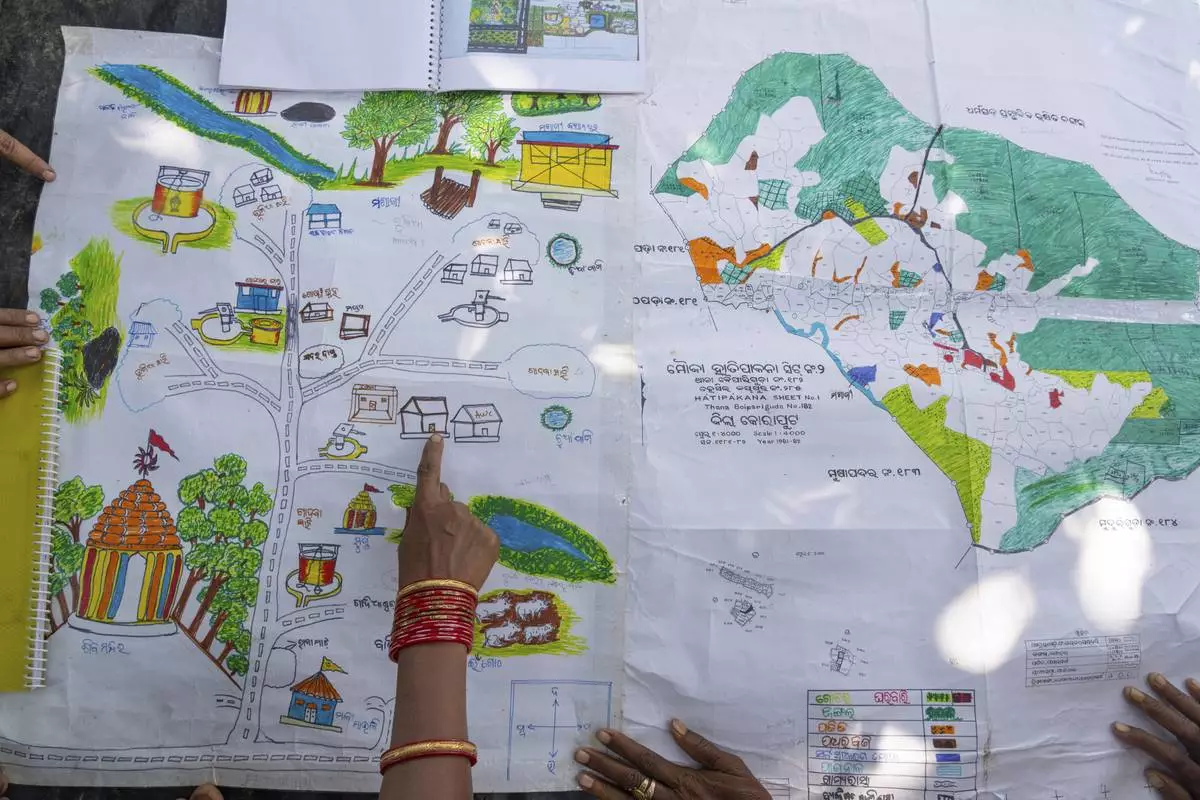
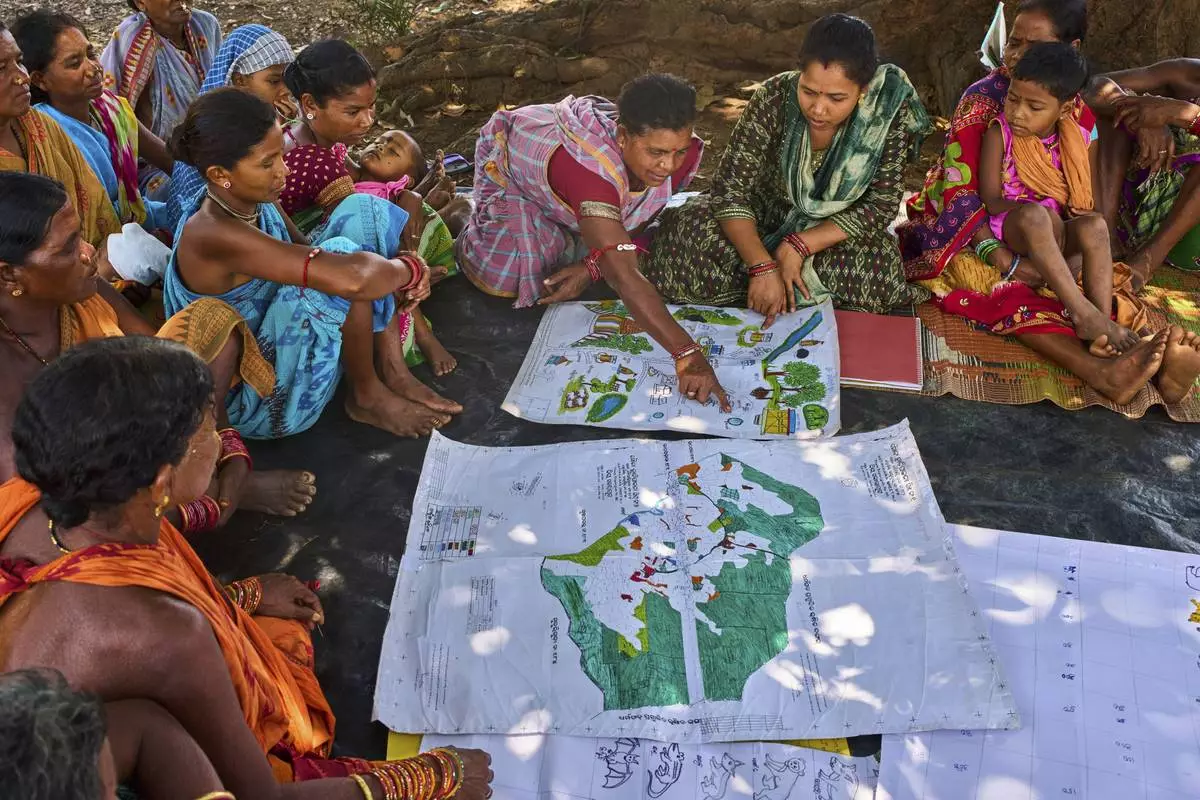
Kamala Kadria, a woman from the Gadaba Indigenous community, points to a spot on a map they made in Hatipakna village, Koraput district, in India's eastern state of Odisha, Wednesday, April 16, 2025. (AP Photo/Rafiq Maqbool)
Kamala Kadria, a woman from the Gadaba Indigenous community, points to a spot on a map they made in Hatipakna village, Koraput district, in India's eastern state of Odisha, Wednesday, April 16, 2025. (AP Photo/Rafiq Maqbool)
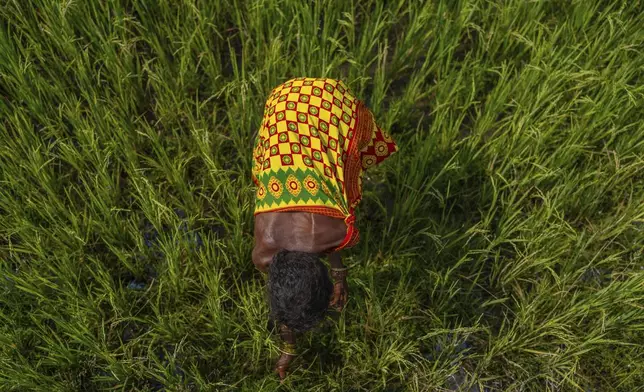
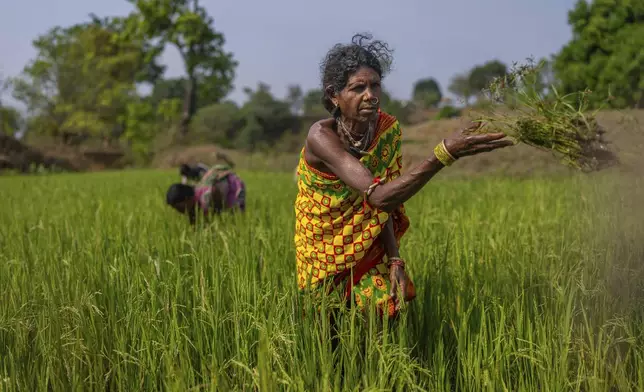
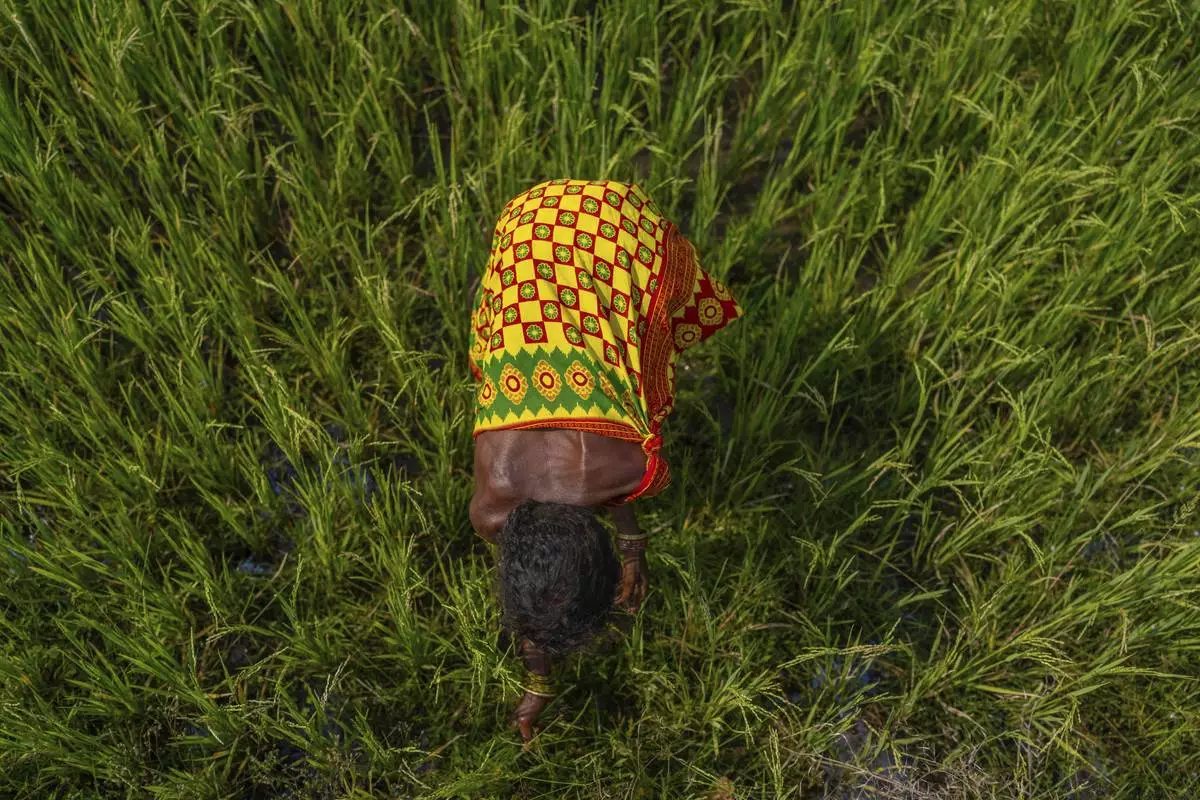
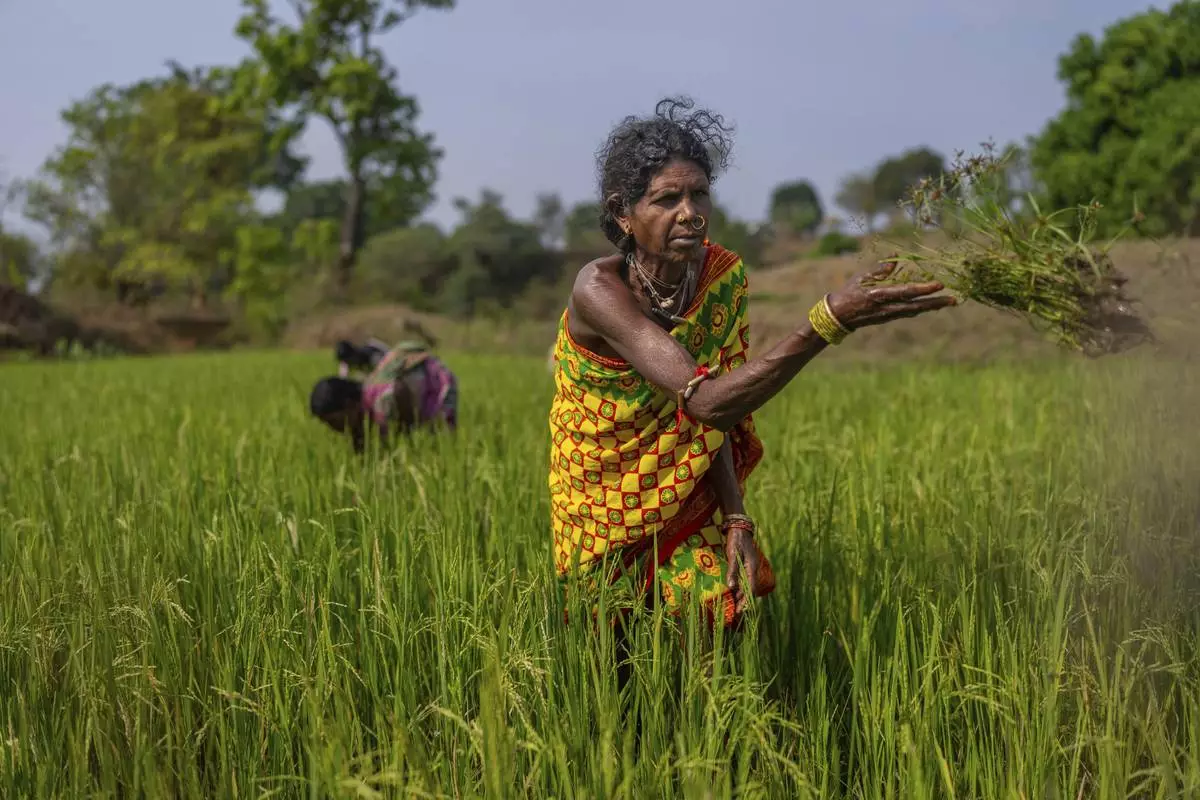
Budri Munduli, a Gadaba Indigenous woman, tends to her paddy fields outside near her homestead in Hatipakhna village, Koraput district, in India's eastern state of Odisha, Wednesday, April 16, 2025. (AP Photo/Rafiq Maqbool)
Budri Munduli, a Gadaba Indigenous woman, tends to her paddy fields outside near her homestead in Hatipakhna village, Koraput district, in India's eastern state of Odisha, Wednesday, April 16, 2025. (AP Photo/Rafiq Maqbool)

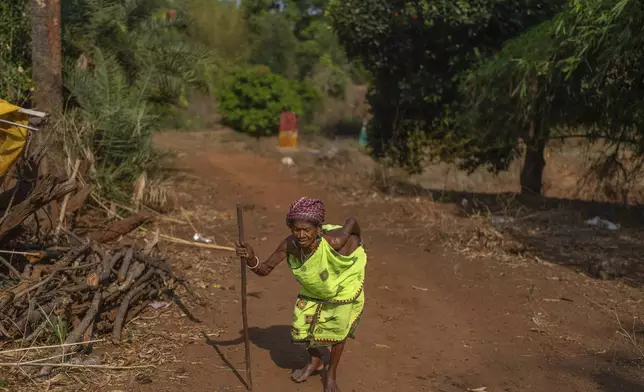
A woman, from the Durua tribe, which is part of the Indigenous Adivasis communities, walks toward her house in Pongan Pani village, Koraput district, in India's eastern state of Odisha, Wednesday, April 16, 2025. (AP Photo/Rafiq Maqbool)

A woman, from the Durua tribe, which is part of the Indigenous Adivasis communities, walks toward her house in Pongan Pani village, Koraput district, in India's eastern state of Odisha, Wednesday, April 16, 2025. (AP Photo/Rafiq Maqbool)

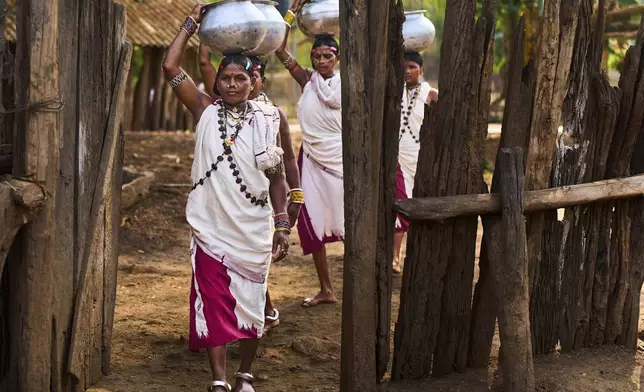
Women from the Durua tribe carry water vessels in Hatipakna village, Koraput district, in India's eastern state of Odisha, Thursday, April 17, 2025. (AP Photo/Rafiq Maqbool)
Women from the Durua tribe carry water vessels in Hatipakna village, Koraput district, in India's eastern state of Odisha, Thursday, April 17, 2025. (AP Photo/Rafiq Maqbool)
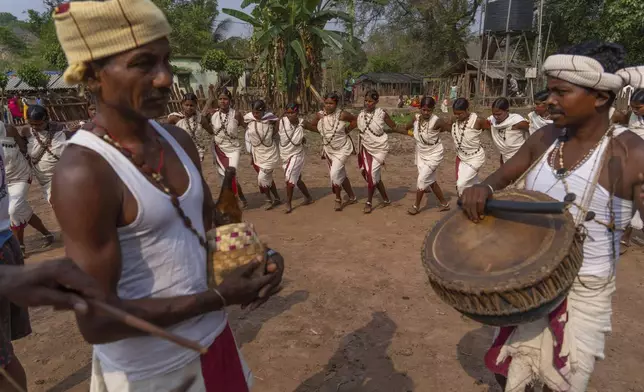
Members of the Durua tribe, part of India's Indigenous Adivasis communities, perform traditional dances during the Chaitra Parab festival, a month long harvest celebration in Hatipakna village, Koraput district, in India's eastern state of Odisha, Thursday, April 17, 2025. (AP Photo/Rafiq Maqbool)

Members of the Durua tribe, part of India's Indigenous Adivasis communities, perform traditional dances during the Chaitra Parab festival, a month long harvest celebration in Hatipakna village, Koraput district, in India's eastern state of Odisha, Thursday, April 17, 2025. (AP Photo/Rafiq Maqbool)

Members of the Durua tribe, part of India's Indigenous Adivasis communities, perform traditional dances during the Chaitra Parab festival, a month long harvest celebration in Pongan Pani village, Koraput district, in India's eastern state of Odisha, Wednesday, April 16, 2025. (AP Photo/Rafiq Maqbool)
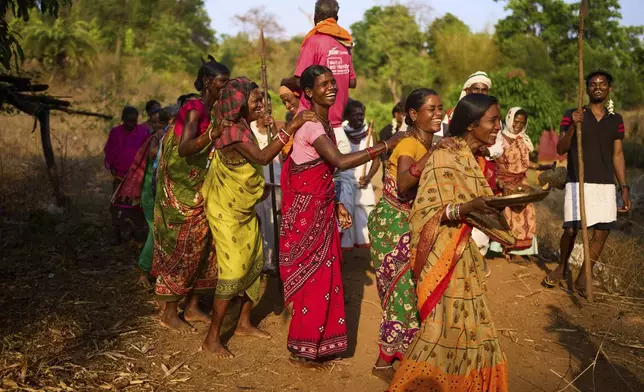
Members of the Durua tribe, part of India's Indigenous Adivasis communities, perform traditional dances during the Chaitra Parab festival, a month long harvest celebration in Pongan Pani village, Koraput district, in India's eastern state of Odisha, Wednesday, April 16, 2025. (AP Photo/Rafiq Maqbool)
Members of the Durua tribe, part of India's Indigenous Adivasis communities, perform traditional dances during the Chaitra Parab festival, a month long harvest celebration in Pongan Pani village, Koraput district, in India's eastern state of Odisha, Wednesday, April 16, 2025. (AP Photo/Rafiq Maqbool)

Members of the Durua tribe, part of India's Indigenous Adivasis communities, perform traditional dances during the Chaitra Parab festival, a month long harvest celebration in Pongan Pani village, Koraput district, in India's eastern state of Odisha, Wednesday, April 16, 2025. (AP Photo/Rafiq Maqbool)

A woman from Gadaba Indigenous community grinds millet in Badakichaba village of Koraput district, in India's eastern state of Odisha, Friday, April 18, 2025. (AP Photo/Rafiq Maqbool)
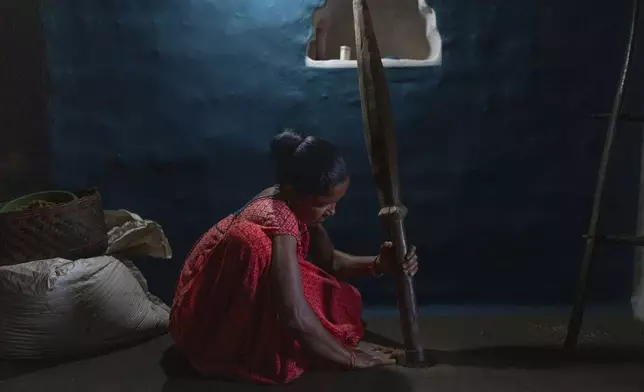
A woman from Gadaba Indigenous community grinds millet in Badakichaba village of Koraput district, in India's eastern state of Odisha, Friday, April 18, 2025. (AP Photo/Rafiq Maqbool)

A woman, from the Durua Indigenous community, prepares to take part in the Chaitra Parab festival, a monthlong harvest celebration, in Hatipakna village, Koraput district, in India's eastern state of Odisha, Thursday, April 17, 2025. (AP Photo/Rafiq Maqbool)
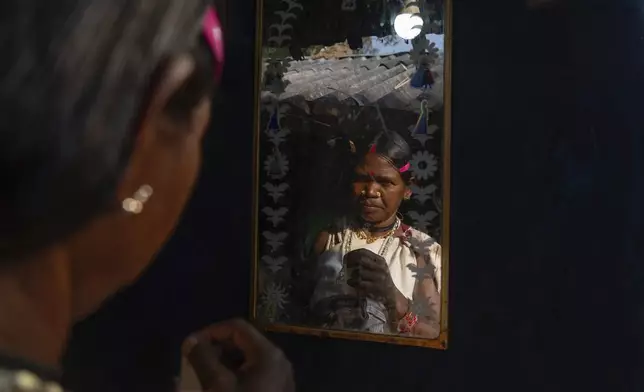
A woman, from the Durua Indigenous community, prepares to take part in the Chaitra Parab festival, a monthlong harvest celebration, in Hatipakna village, Koraput district, in India's eastern state of Odisha, Thursday, April 17, 2025. (AP Photo/Rafiq Maqbool)

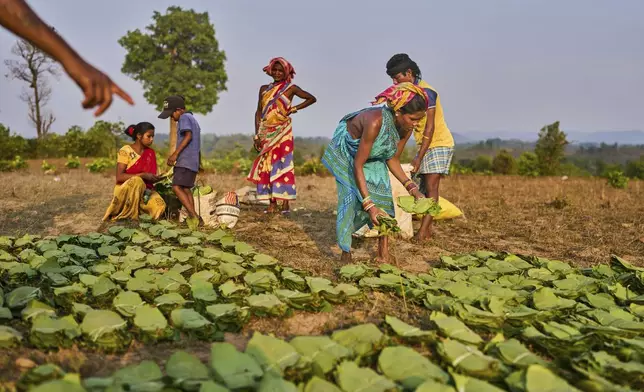
Women, from the Gadaba Indigenous communities, gather tendu leaves to sell in Hatipakna village, Koraput district, in India's eastern state of Odisha, Wednesday, April 16, 2025. (AP Photo/Rafiq Maqbool)
Women, from the Gadaba Indigenous communities, gather tendu leaves to sell in Hatipakna village, Koraput district, in India's eastern state of Odisha, Wednesday, April 16, 2025. (AP Photo/Rafiq Maqbool)

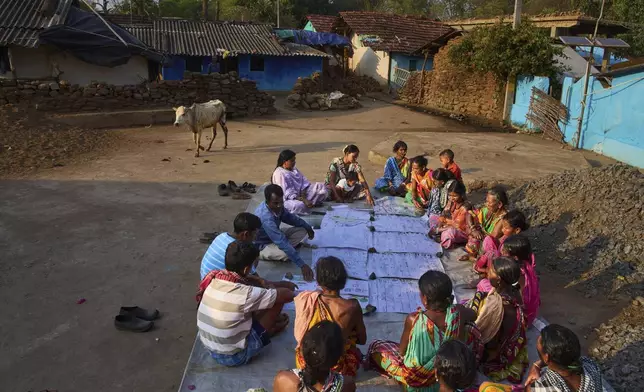
Members of Paroja Indigenous community discuss the maps they have made in Hatipakna village, Koraput district, in India's eastern state of Odisha, Thursday, April 17, 2025. (AP Photo/Rafiq Maqbool)
Members of Paroja Indigenous community discuss the maps they have made in Hatipakna village, Koraput district, in India's eastern state of Odisha, Thursday, April 17, 2025. (AP Photo/Rafiq Maqbool)

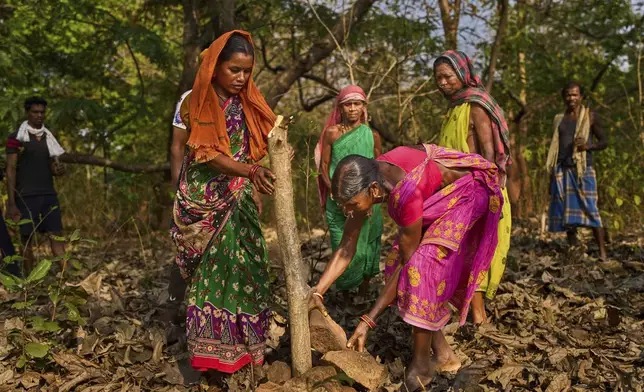
Saita Dhangada Majhiin, right, from the Gadaba Indigenous community marks the boundary of her village area with the help of others in Pangan Pani village in Koraput district, in India's eastern state of Odisha, Wednesday, April 16, 2025. (AP Photo/Rafiq Maqbool)
Saita Dhangada Majhiin, right, from the Gadaba Indigenous community marks the boundary of her village area with the help of others in Pangan Pani village in Koraput district, in India's eastern state of Odisha, Wednesday, April 16, 2025. (AP Photo/Rafiq Maqbool)
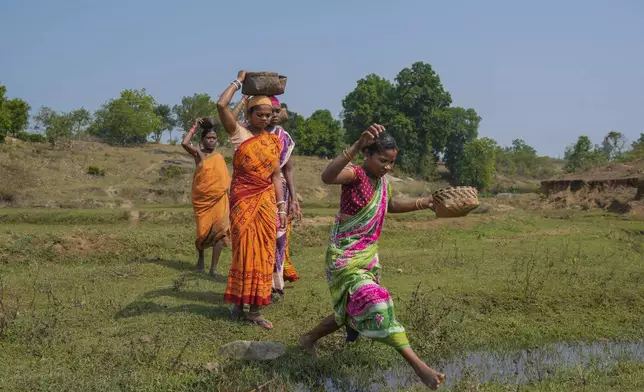
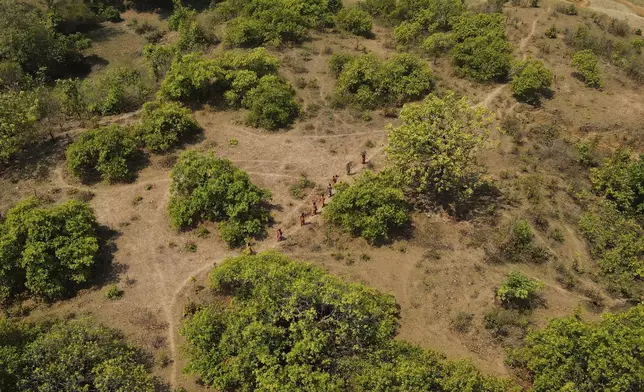
Women from Gadaba Indigenous community walk to collect vegetables and wood from the forest in Hatipakna village, Koraput district, in India's eastern state of Odisha, Wednesday, April 16, 2025. (AP Photo/Rafiq Maqbool)
Women from Gadaba Indigenous community walk to collect vegetables and wood from the forest in Hatipakna village, Koraput district, in India's eastern state of Odisha, Wednesday, April 16, 2025. (AP Photo/Rafiq Maqbool)
Women from Gadaba Indigenous community walk to collect vegetables and wood from the forest in Hatipakna village, Koraput district, in India's eastern state of Odisha, Wednesday, April 16, 2025. (AP Photo/Rafiq Maqbool)

Women from Gadaba Indigenous community walk to collect vegetables and wood from the forest in Hatipakna village, Koraput district, in India's eastern state of Odisha, Wednesday, April 16, 2025. (AP Photo/Rafiq Maqbool)

Budri Munduli, a Gadaba Indigenous woman, tends to her paddy fields outside near her homestead in Hatipakhna village, Koraput district, in India's eastern state of Odisha, Wednesday, April 16, 2025. (AP Photo/Rafiq Maqbool)

Budri Munduli, a Gadaba Indigenous woman, tends to her paddy fields outside near her homestead in Hatipakhna village, Koraput district, in India's eastern state of Odisha, Wednesday, April 16, 2025. (AP Photo/Rafiq Maqbool)

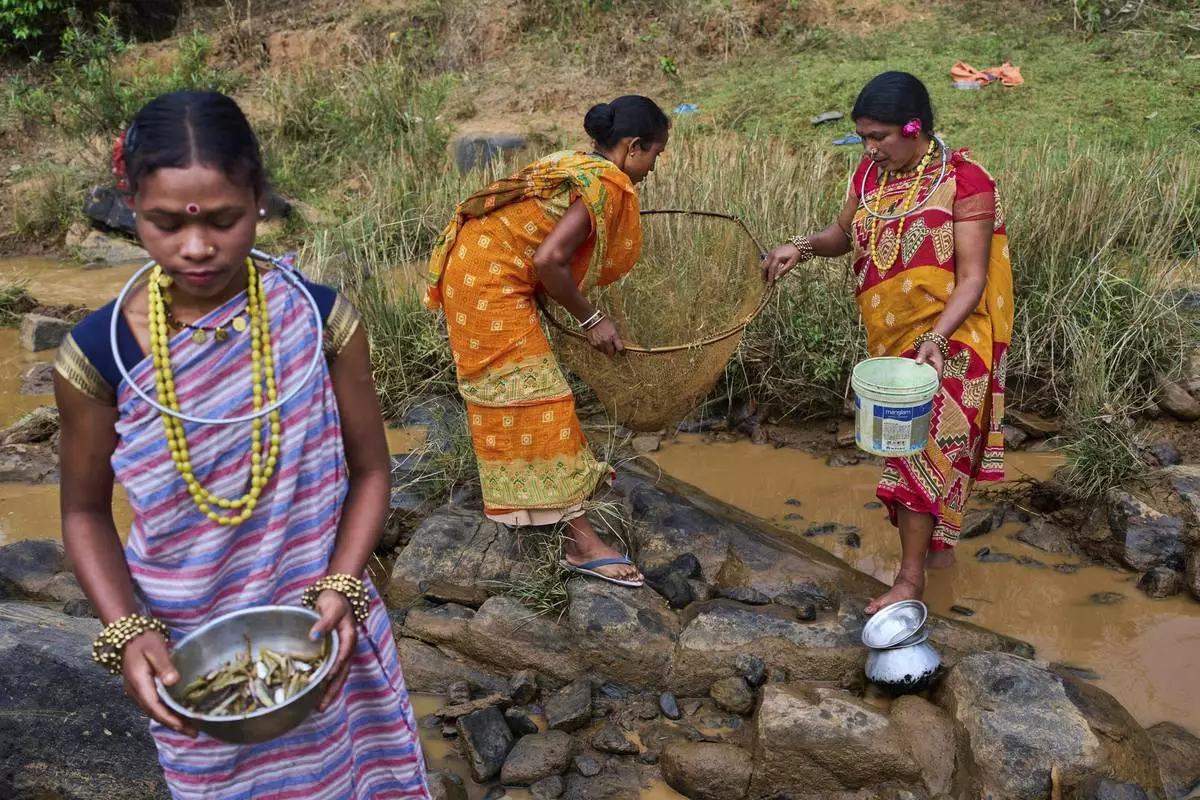
Sunita Muduli, right, from the Paroja Indigenous community, along with others, tries to catch fish in a stream during the Chaitra Parab festival, a monthlong harvest celebration in Putpondi village, Koraput district, in India's eastern state of Odisha, Tuesday, April 15, 2025. (AP Photo/Rafiq Maqbool)
Sunita Muduli, right, from the Paroja Indigenous community, along with others, tries to catch fish in a stream during the Chaitra Parab festival, a monthlong harvest celebration in Putpondi village, Koraput district, in India's eastern state of Odisha, Tuesday, April 15, 2025. (AP Photo/Rafiq Maqbool)

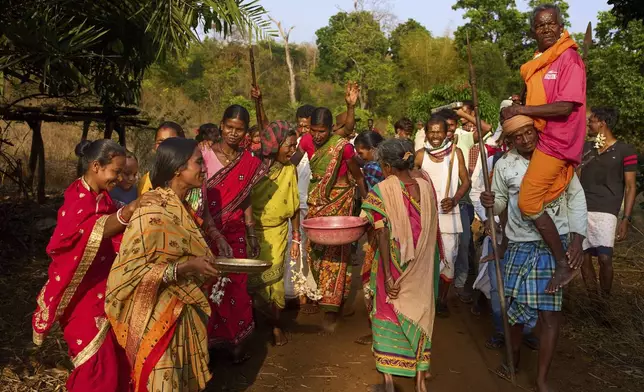
Kamala Kadria, third from right, a woman from the Gadaba Indigenous community, points to a spot on a map they made as others look on in Hatipakna village, Koraput district, in India's eastern state of Odisha, Wednesday, April 16, 2025. (AP Photo/Rafiq Maqbool)

Kamala Kadria, third from right, a woman from the Gadaba Indigenous community, points to a spot on a map they made as others look on in Hatipakna village, Koraput district, in India's eastern state of Odisha, Wednesday, April 16, 2025. (AP Photo/Rafiq Maqbool)

“Nowadays, the rains come late, affecting our farming, leading to a decrease in production,” said Sunita Muduli, a Paraja tribeswoman from Putpondi village. She stood on freshly tilled fields that would be sown again with millet before the increasingly unpredictable monsoon rains.

The Indigenous Adivasis have lived in these villages for millennia. They continue traditional practices of farming millet and rice and foraging leaves and fruit from the forest to make plates, the local brew and more.

With those practices under pressure from a changing climate, they are making their most significant effort yet to speak up for their community's needs, advocating for Indian authorities to protect and restore their lands as the nation of more than 1.4 billion people tries to adapt to a warming world.

Women are leading the way. Muduli and others from 10 villages, with help from a local nongovernmental organization, have surveyed and mapped out resources that are dwindling and what needs restoring.

Comparing state government data from the 1960s with their results, they found that common areas in many of their villages had shrunk by up to 25%.

The women have created what are known as dream maps, showing their villages in their ideal states. The most prominent of their bright colors is green.

Muduli and others plan to submit their maps and surveys to local government officials, the first step in requesting village development funds to preserve or restore their common areas. The women estimate that $2 million might be needed — an ambitious ask when India's poorer regions often struggle to secure and implement government projects.

Still, the women believe they have a 50-50 chance of success.

“We want to make sure these resources are available for our children,” Muduli said.

This is the first time that many of the women are formally leading an outward-facing community effort. They say it's giving them more confidence in speaking up about community needs.

“Our forest contains an abundance of diverse resources. Unfortunately, rainfall has reduced, temperatures have risen and our forest cover has dwindled. However, once we acquire the rights we deserve, our priority will be to revitalize and flourish our forest," said Saita Dhangada Majhi of Pangan Pani village.

They seek rights over their common lands that will require outsiders, including authorities, to seek villagers' permission to make any changes to them.

India is among the world's most vulnerable countries to climate impacts. According to the 2025 Climate Risk Index, the country between 1993 and 2022 was subject to 400 extreme events — including floods, heat waves and cyclones — causing 80,000 deaths and economic losses nearing $180 billion.

Odisha is one of India's poorest states and among the most vulnerable to climate impacts. A study by researchers from Odisha's Fakir Mohan University published in 2023 found that food production there had decreased by 40% in the last 50 years due to climate change.

Most Indian farmers rely on rain-fed agriculture, with about half of all farmed land dependent on downpours. As the monsoons become more unpredictable, livelihoods are affected.

India's Indigenous people feel those impacts the most as their traditions depend greatly on forests and natural produce, said Bidyut Bidyut Mohanty of the Odisha-based nonprofit Society for Promotion of Rural Education and Development. The organization helped the Odisha villages with the dream mapping process.

Climate change is affecting “their very existence,” Mohanty said, asserting that they have not contributed to the problem but are paying the price.

The forest commons are “not only considered the lungs but are also a hidden kitchen for Indigenous communities,” he said.

The women's survey found that resources available a decade earlier had either dwindled or disappeared. In Muduli's village, the number of fruits such as mango, guava, java plum and Indian gooseberry had dropped drastically. Resources used to make traditional instruments and other items had become more rare.

Climate experts said the Odisha project can be a model to be replicated across India and other nations. United Nations reports have said 80% of the world's biodiversity lies in regions controlled by Indigenous peoples.

Women from marginalized and vulnerable communities are affected the most by climate change, and the Indigenous women of Odisha are an inspiration, said Neha Saigal, a gender and climate expert at Bengaluru-based Asar Social Impact Advisors who is familiar with the mapping project.

“They are actually leading from the front,” she said.

Their work could be critical in deciding where India’s efforts on climate change should be focused, Saigal added, noting that the country is working on a national adaptation plan.

It is not clear whether the dream maps will become part of that plan. The women behind them say their project has given them formal understanding of what they and their communities have long known intuitively.

They want to pass that on for generations to come.

“Forest is our life," said Purnima Sisa of Badakichab village. "We have taken birth in this forest, and one day we will die in the forest. It is our life and livelihood.”

Follow Sibi Arasu on X at @sibi123

The Associated Press’ climate and environmental coverage receives financial support from multiple private foundations. AP is solely responsible for all content. Find AP’s standards for working with philanthropies, a list of supporters and funded coverage areas at AP.org.
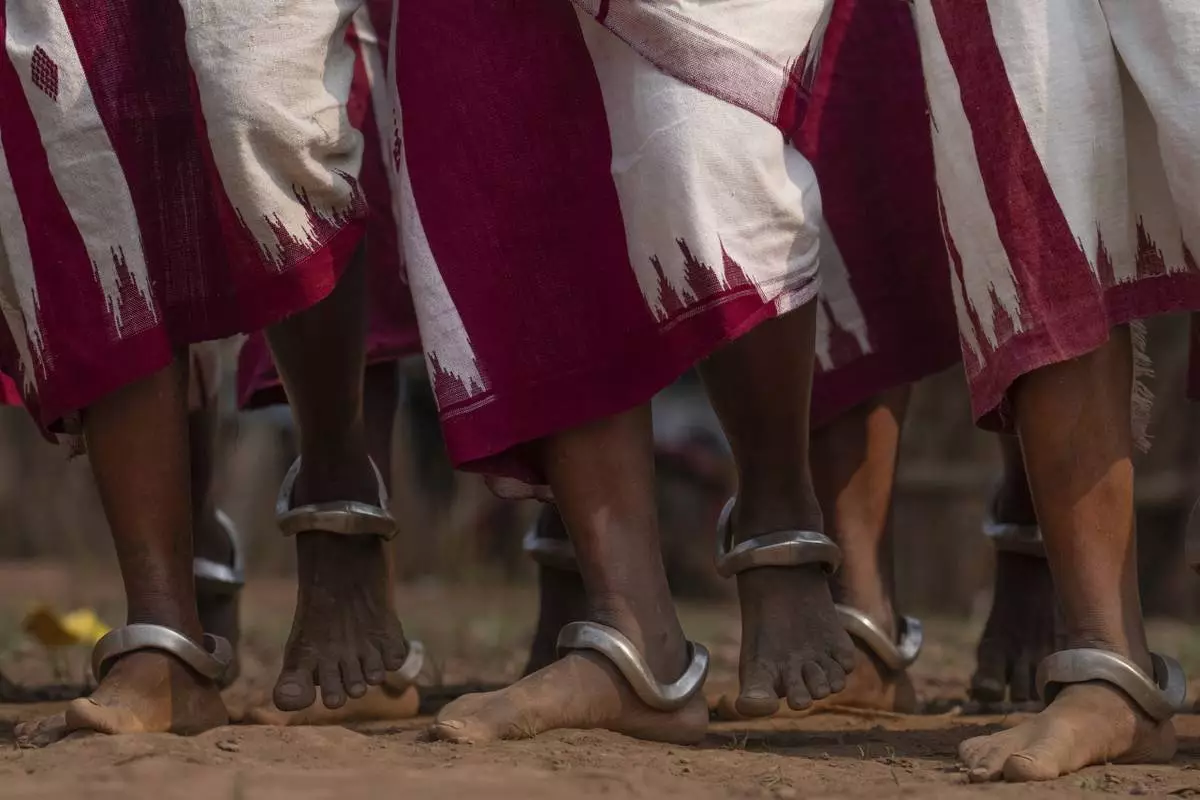
Members of the Durua tribe, part of India's Indigenous Adivasis communities, perform traditional dances during the Chaitra Parab festival, a month long harvest celebration in Hatipakna village, Koraput district, in India's eastern state of Odisha, Thursday, April 17, 2025. (AP Photo/Rafiq Maqbool)
Members of the Durua tribe, part of India's Indigenous Adivasis communities, perform traditional dances during the Chaitra Parab festival, a month long harvest celebration in Hatipakna village, Koraput district, in India's eastern state of Odisha, Thursday, April 17, 2025. (AP Photo/Rafiq Maqbool)
A woman, from the Durua Indigenous community, combs her daughter's hair as she dresses to take part in the Chaitra Parab festival, a monthlong harvest celebration, in Hatipakna village, Koraput district, in India's eastern state of Odisha, Thursday, April 17, 2025. (AP Photo/Rafiq Maqbool)

A woman, from the Durua Indigenous community, combs her daughter's hair as she dresses to take part in the Chaitra Parab festival, a monthlong harvest celebration, in Hatipakna village, Koraput district, in India's eastern state of Odisha, Thursday, April 17, 2025. (AP Photo/Rafiq Maqbool)

Sunita Muduli, 34, from the Paroja Indigenous community cooks on a clay oven in Putpondi village, Koraput district, in India's eastern state of Odisha, Tuesday, April 15, 2025. (AP Photo/Rafiq Maqbool)
Sunita Muduli, 34, from the Paroja Indigenous community cooks on a clay oven in Putpondi village, Koraput district, in India's eastern state of Odisha, Tuesday, April 15, 2025. (AP Photo/Rafiq Maqbool)

Kamala Kadria, a woman from the Gadaba Indigenous community, points to a spot on a map they made in Hatipakna village, Koraput district, in India's eastern state of Odisha, Wednesday, April 16, 2025. (AP Photo/Rafiq Maqbool)
Kamala Kadria, a woman from the Gadaba Indigenous community, points to a spot on a map they made in Hatipakna village, Koraput district, in India's eastern state of Odisha, Wednesday, April 16, 2025. (AP Photo/Rafiq Maqbool)
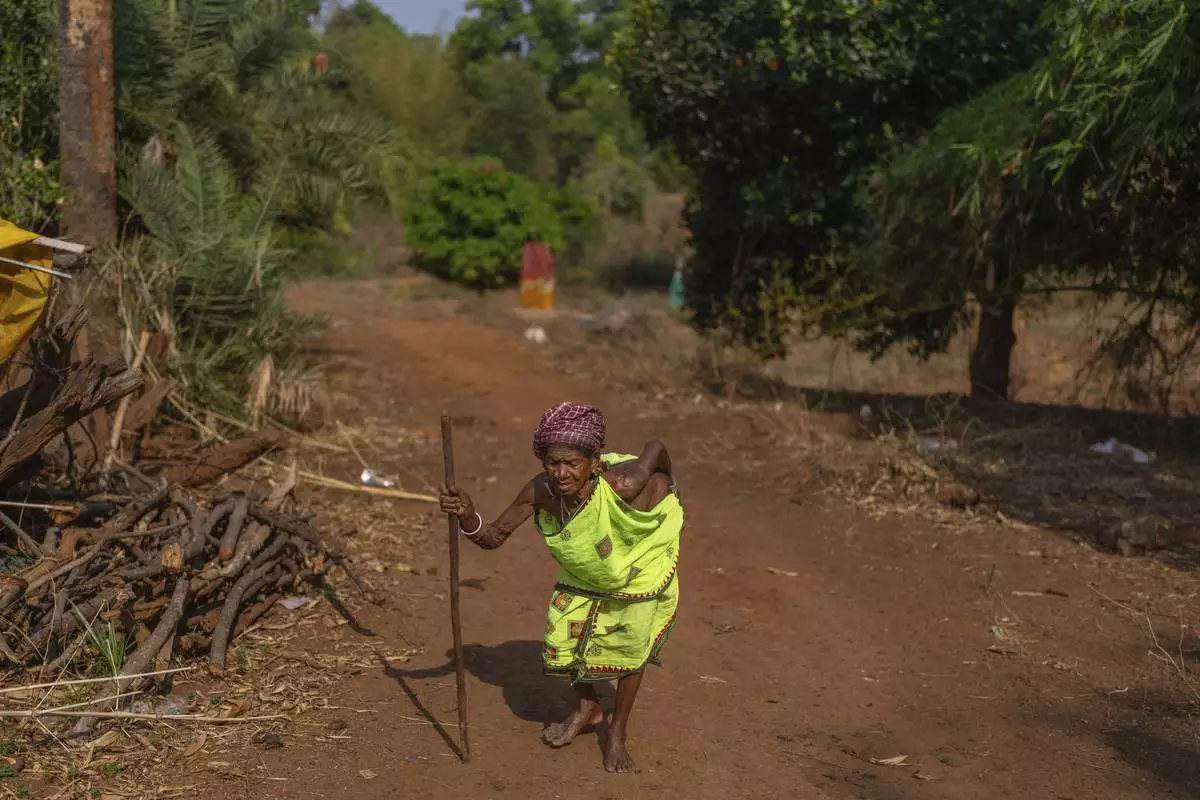
Budri Munduli, a Gadaba Indigenous woman, tends to her paddy fields outside near her homestead in Hatipakhna village, Koraput district, in India's eastern state of Odisha, Wednesday, April 16, 2025. (AP Photo/Rafiq Maqbool)
Budri Munduli, a Gadaba Indigenous woman, tends to her paddy fields outside near her homestead in Hatipakhna village, Koraput district, in India's eastern state of Odisha, Wednesday, April 16, 2025. (AP Photo/Rafiq Maqbool)

A woman, from the Durua tribe, which is part of the Indigenous Adivasis communities, walks toward her house in Pongan Pani village, Koraput district, in India's eastern state of Odisha, Wednesday, April 16, 2025. (AP Photo/Rafiq Maqbool)

A woman, from the Durua tribe, which is part of the Indigenous Adivasis communities, walks toward her house in Pongan Pani village, Koraput district, in India's eastern state of Odisha, Wednesday, April 16, 2025. (AP Photo/Rafiq Maqbool)

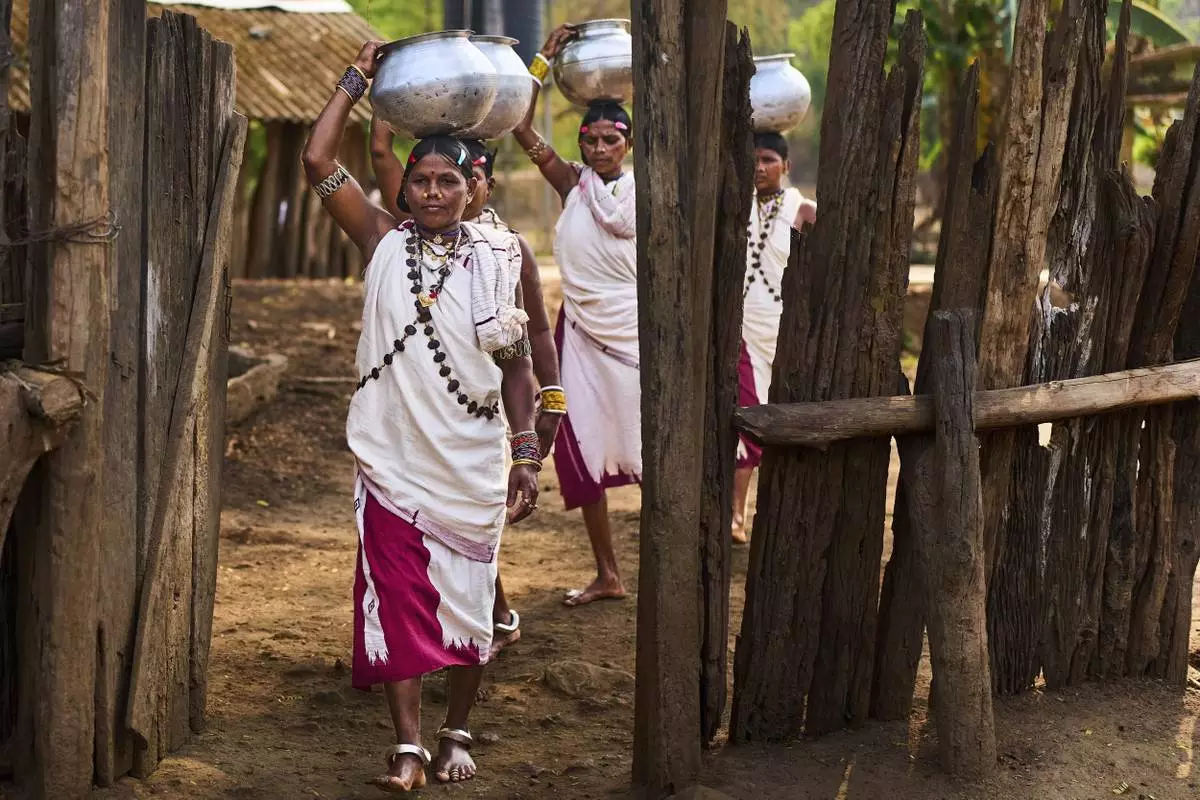
Women from the Durua tribe carry water vessels in Hatipakna village, Koraput district, in India's eastern state of Odisha, Thursday, April 17, 2025. (AP Photo/Rafiq Maqbool)
Women from the Durua tribe carry water vessels in Hatipakna village, Koraput district, in India's eastern state of Odisha, Thursday, April 17, 2025. (AP Photo/Rafiq Maqbool)
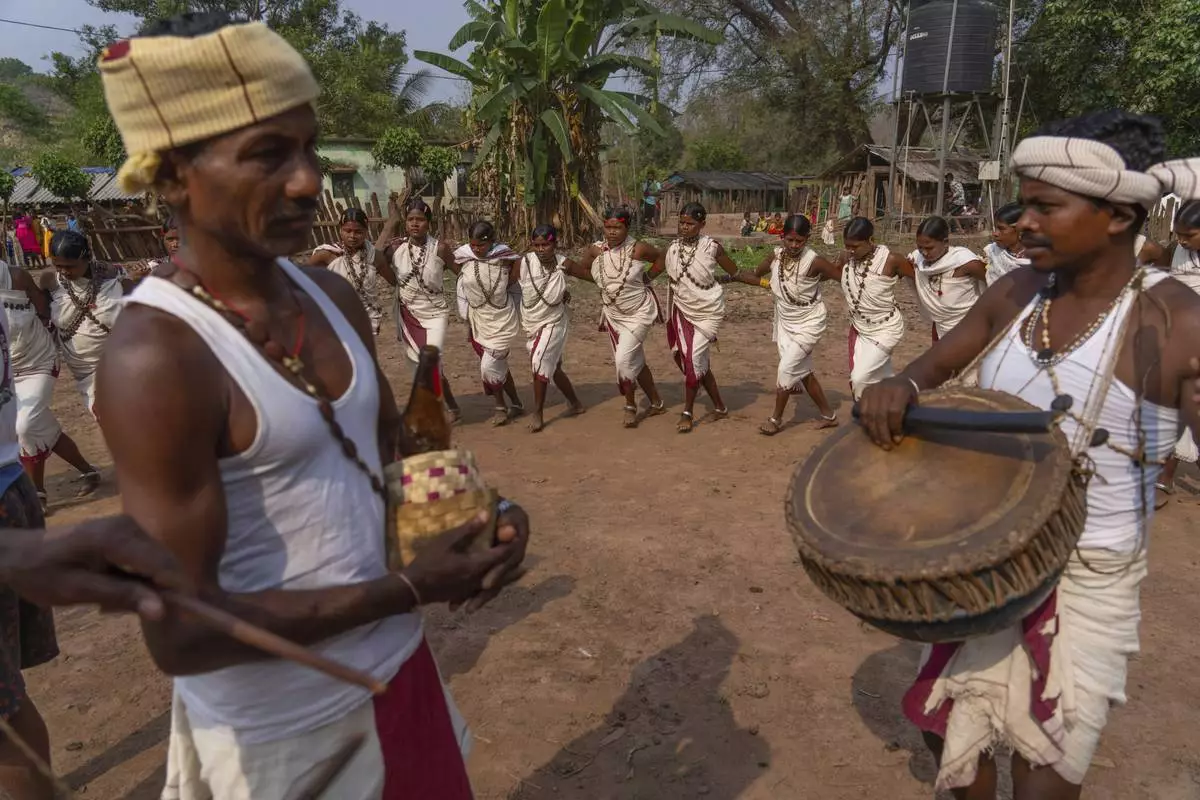
Members of the Durua tribe, part of India's Indigenous Adivasis communities, perform traditional dances during the Chaitra Parab festival, a month long harvest celebration in Hatipakna village, Koraput district, in India's eastern state of Odisha, Thursday, April 17, 2025. (AP Photo/Rafiq Maqbool)

Members of the Durua tribe, part of India's Indigenous Adivasis communities, perform traditional dances during the Chaitra Parab festival, a month long harvest celebration in Hatipakna village, Koraput district, in India's eastern state of Odisha, Thursday, April 17, 2025. (AP Photo/Rafiq Maqbool)

Members of the Durua tribe, part of India's Indigenous Adivasis communities, perform traditional dances during the Chaitra Parab festival, a month long harvest celebration in Pongan Pani village, Koraput district, in India's eastern state of Odisha, Wednesday, April 16, 2025. (AP Photo/Rafiq Maqbool)
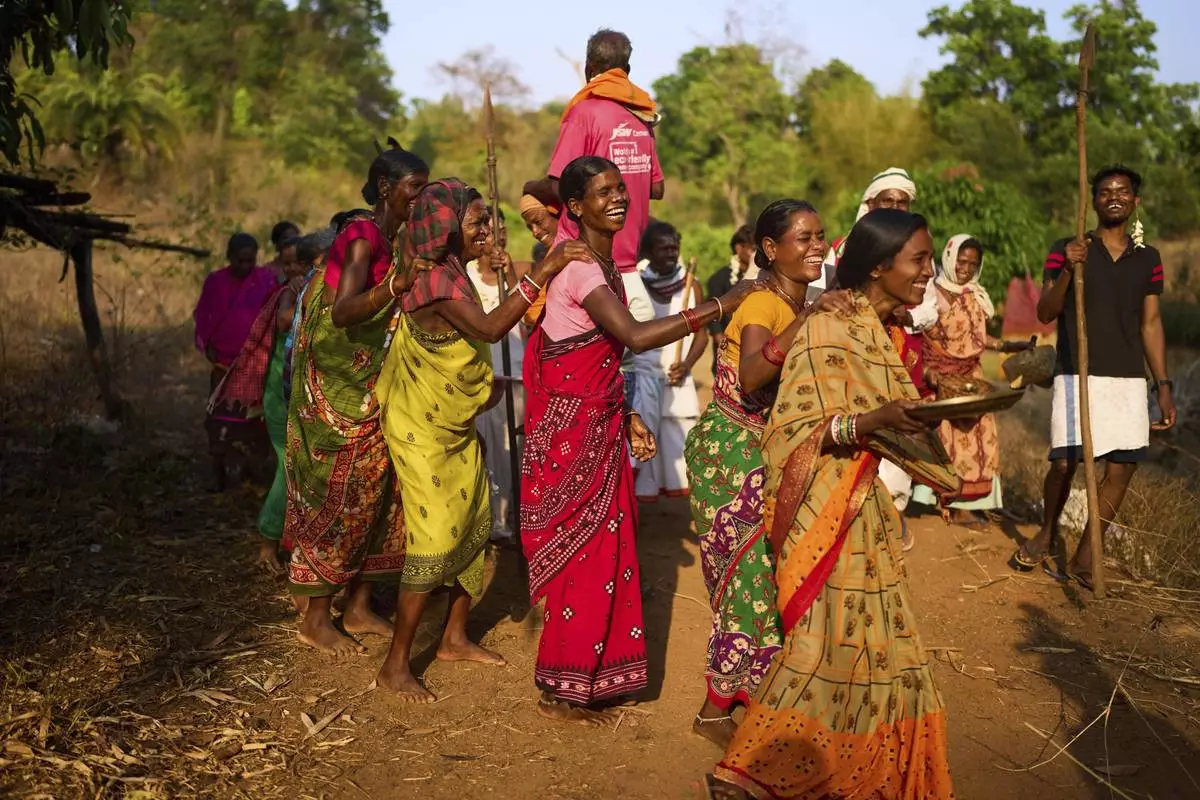
Members of the Durua tribe, part of India's Indigenous Adivasis communities, perform traditional dances during the Chaitra Parab festival, a month long harvest celebration in Pongan Pani village, Koraput district, in India's eastern state of Odisha, Wednesday, April 16, 2025. (AP Photo/Rafiq Maqbool)
Members of the Durua tribe, part of India's Indigenous Adivasis communities, perform traditional dances during the Chaitra Parab festival, a month long harvest celebration in Pongan Pani village, Koraput district, in India's eastern state of Odisha, Wednesday, April 16, 2025. (AP Photo/Rafiq Maqbool)

Members of the Durua tribe, part of India's Indigenous Adivasis communities, perform traditional dances during the Chaitra Parab festival, a month long harvest celebration in Pongan Pani village, Koraput district, in India's eastern state of Odisha, Wednesday, April 16, 2025. (AP Photo/Rafiq Maqbool)

A woman from Gadaba Indigenous community grinds millet in Badakichaba village of Koraput district, in India's eastern state of Odisha, Friday, April 18, 2025. (AP Photo/Rafiq Maqbool)
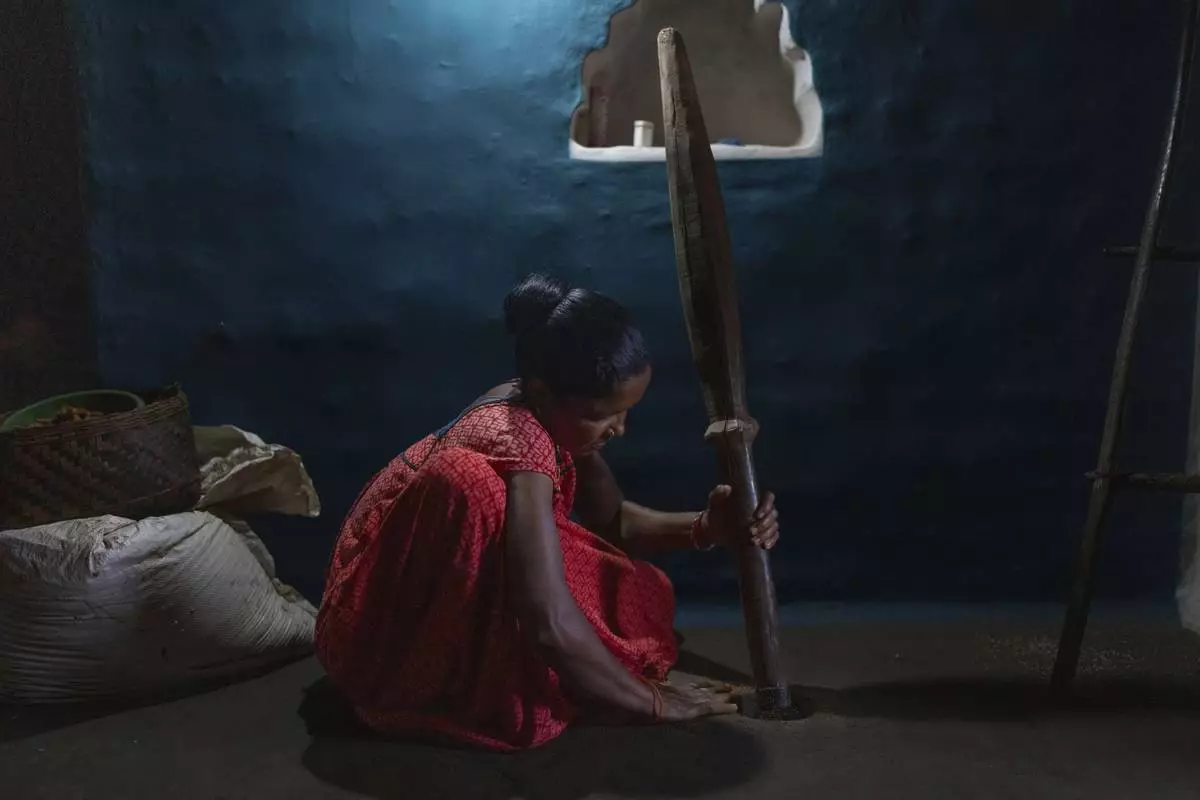
A woman from Gadaba Indigenous community grinds millet in Badakichaba village of Koraput district, in India's eastern state of Odisha, Friday, April 18, 2025. (AP Photo/Rafiq Maqbool)

A woman, from the Durua Indigenous community, prepares to take part in the Chaitra Parab festival, a monthlong harvest celebration, in Hatipakna village, Koraput district, in India's eastern state of Odisha, Thursday, April 17, 2025. (AP Photo/Rafiq Maqbool)
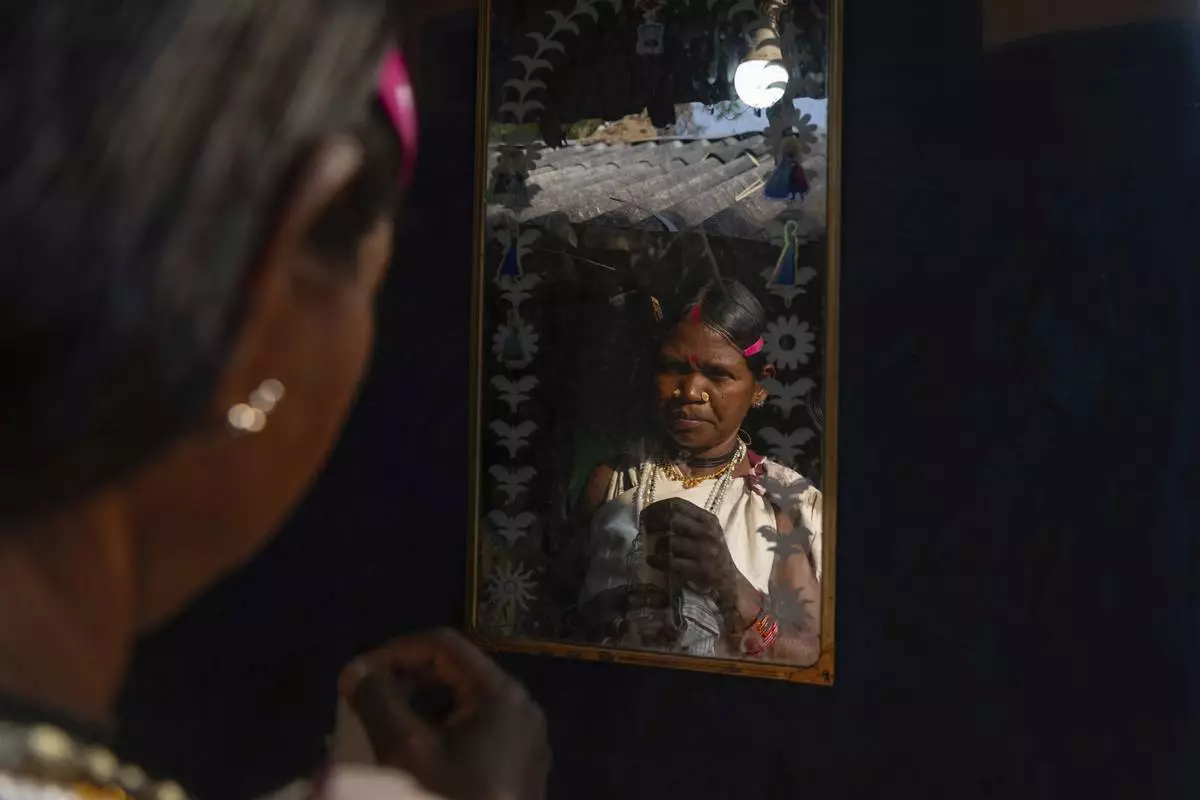
A woman, from the Durua Indigenous community, prepares to take part in the Chaitra Parab festival, a monthlong harvest celebration, in Hatipakna village, Koraput district, in India's eastern state of Odisha, Thursday, April 17, 2025. (AP Photo/Rafiq Maqbool)

Women, from the Gadaba Indigenous communities, gather tendu leaves to sell in Hatipakna village, Koraput district, in India's eastern state of Odisha, Wednesday, April 16, 2025. (AP Photo/Rafiq Maqbool)
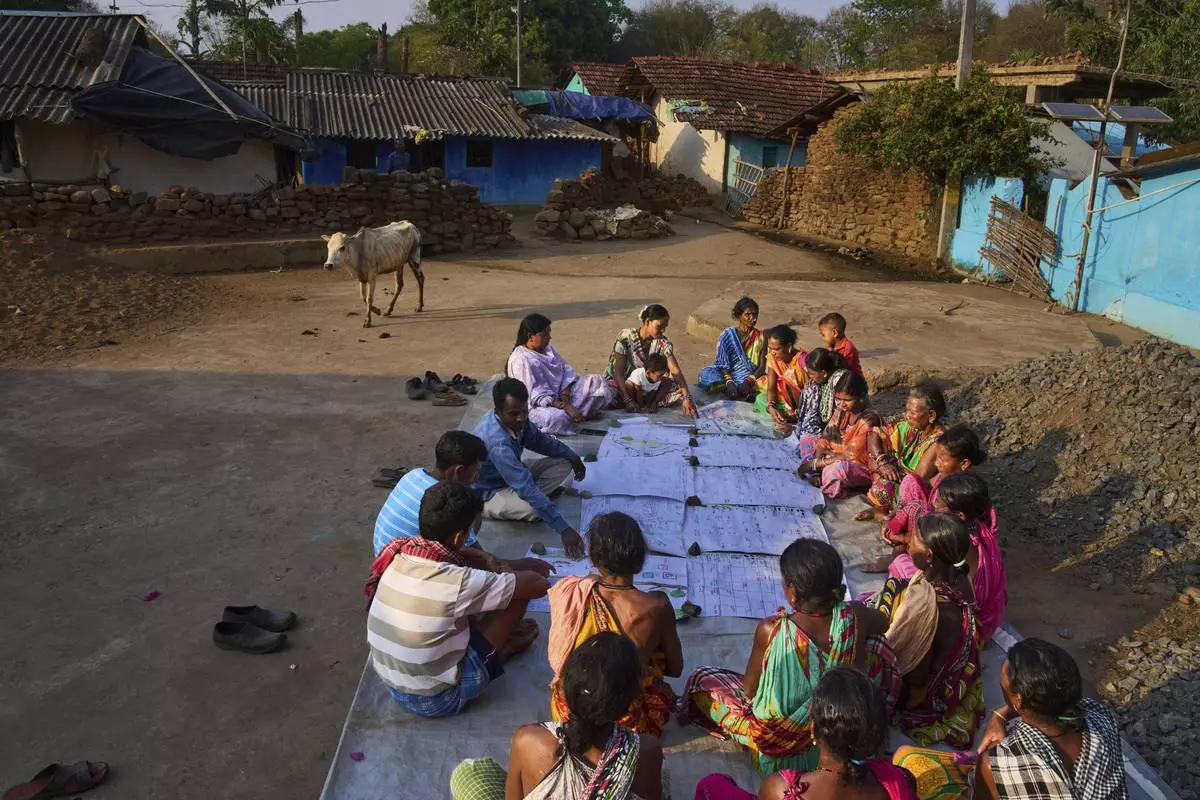
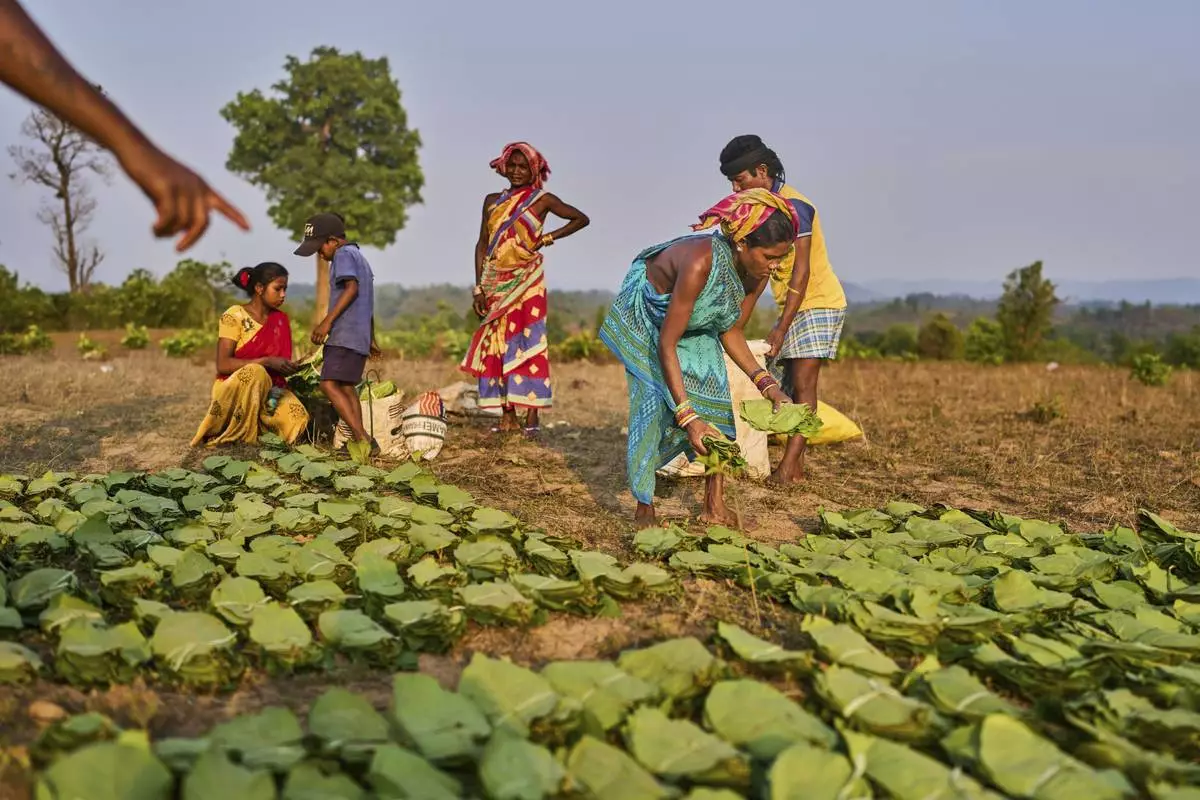
Women, from the Gadaba Indigenous communities, gather tendu leaves to sell in Hatipakna village, Koraput district, in India's eastern state of Odisha, Wednesday, April 16, 2025. (AP Photo/Rafiq Maqbool)

Members of Paroja Indigenous community discuss the maps they have made in Hatipakna village, Koraput district, in India's eastern state of Odisha, Thursday, April 17, 2025. (AP Photo/Rafiq Maqbool)
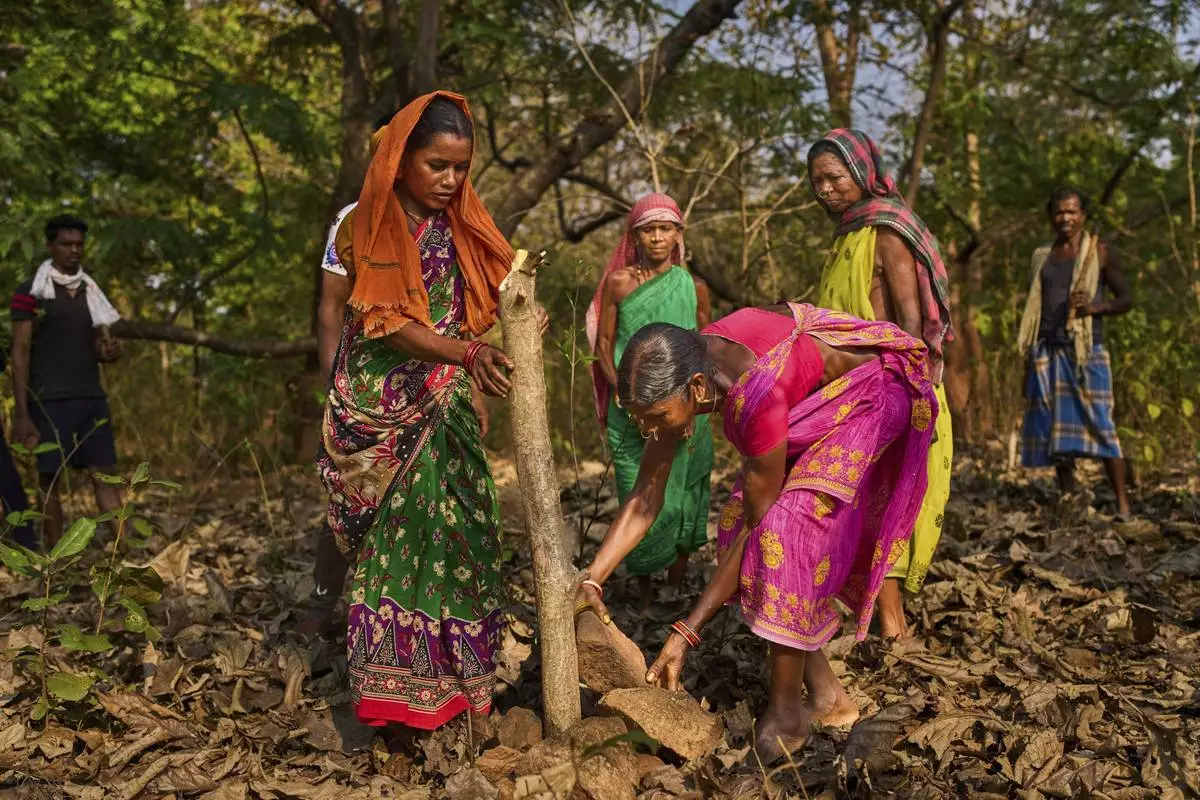
Members of Paroja Indigenous community discuss the maps they have made in Hatipakna village, Koraput district, in India's eastern state of Odisha, Thursday, April 17, 2025. (AP Photo/Rafiq Maqbool)

Saita Dhangada Majhiin, right, from the Gadaba Indigenous community marks the boundary of her village area with the help of others in Pangan Pani village in Koraput district, in India's eastern state of Odisha, Wednesday, April 16, 2025. (AP Photo/Rafiq Maqbool)
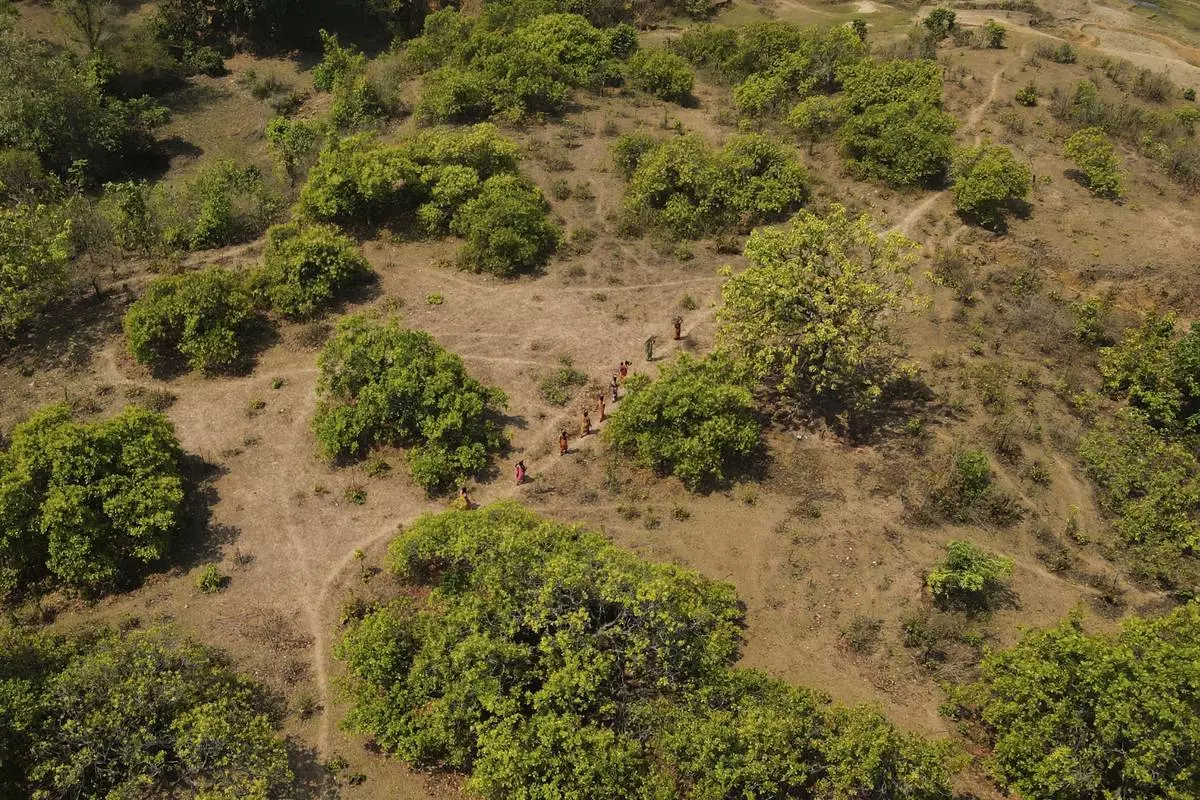
Saita Dhangada Majhiin, right, from the Gadaba Indigenous community marks the boundary of her village area with the help of others in Pangan Pani village in Koraput district, in India's eastern state of Odisha, Wednesday, April 16, 2025. (AP Photo/Rafiq Maqbool)
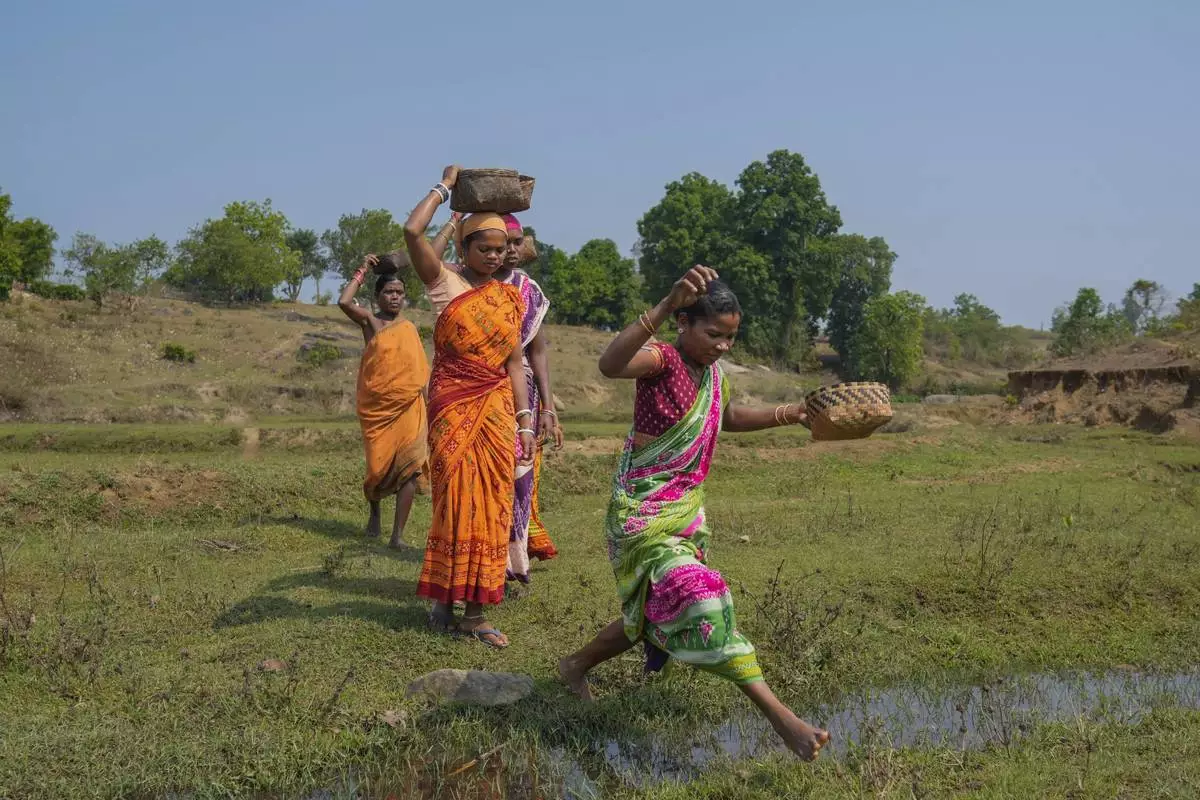
Women from Gadaba Indigenous community walk to collect vegetables and wood from the forest in Hatipakna village, Koraput district, in India's eastern state of Odisha, Wednesday, April 16, 2025. (AP Photo/Rafiq Maqbool)
Women from Gadaba Indigenous community walk to collect vegetables and wood from the forest in Hatipakna village, Koraput district, in India's eastern state of Odisha, Wednesday, April 16, 2025. (AP Photo/Rafiq Maqbool)
Women from Gadaba Indigenous community walk to collect vegetables and wood from the forest in Hatipakna village, Koraput district, in India's eastern state of Odisha, Wednesday, April 16, 2025. (AP Photo/Rafiq Maqbool)

Women from Gadaba Indigenous community walk to collect vegetables and wood from the forest in Hatipakna village, Koraput district, in India's eastern state of Odisha, Wednesday, April 16, 2025. (AP Photo/Rafiq Maqbool)

Budri Munduli, a Gadaba Indigenous woman, tends to her paddy fields outside near her homestead in Hatipakhna village, Koraput district, in India's eastern state of Odisha, Wednesday, April 16, 2025. (AP Photo/Rafiq Maqbool)

Budri Munduli, a Gadaba Indigenous woman, tends to her paddy fields outside near her homestead in Hatipakhna village, Koraput district, in India's eastern state of Odisha, Wednesday, April 16, 2025. (AP Photo/Rafiq Maqbool)

Sunita Muduli, right, from the Paroja Indigenous community, along with others, tries to catch fish in a stream during the Chaitra Parab festival, a monthlong harvest celebration in Putpondi village, Koraput district, in India's eastern state of Odisha, Tuesday, April 15, 2025. (AP Photo/Rafiq Maqbool)
Sunita Muduli, right, from the Paroja Indigenous community, along with others, tries to catch fish in a stream during the Chaitra Parab festival, a monthlong harvest celebration in Putpondi village, Koraput district, in India's eastern state of Odisha, Tuesday, April 15, 2025. (AP Photo/Rafiq Maqbool)

Kamala Kadria, third from right, a woman from the Gadaba Indigenous community, points to a spot on a map they made as others look on in Hatipakna village, Koraput district, in India's eastern state of Odisha, Wednesday, April 16, 2025. (AP Photo/Rafiq Maqbool)

Kamala Kadria, third from right, a woman from the Gadaba Indigenous community, points to a spot on a map they made as others look on in Hatipakna village, Koraput district, in India's eastern state of Odisha, Wednesday, April 16, 2025. (AP Photo/Rafiq Maqbool)

DUBAI, United Arab Emirates (AP) — U.S. President Donald Trump said Iran wants to negotiate with Washington after his threat to strike the Islamic Republic over its bloody crackdown on protesters, a move coming as activists said Monday the death toll in the nationwide demonstrations rose to at least 544.

Iran had no immediate reaction to the news, which came after the foreign minister of Oman — long an interlocutor between Washington and Tehran — traveled to Iran this weekend. It also remains unclear just what Iran could promise, particularly as Trump has set strict demands over its nuclear program and its ballistic missile arsenal, which Tehran insists is crucial for its national defense.

Meanwhile Monday, Iran called for pro-government demonstrators to head to the streets in support of the theocracy, a show of force after days of protests directly challenging the rule of 86-year-old Supreme Leader Ayatollah Ali Khamenei. Iranian state television aired chants from the crowd, who shouted “Death to America!” and “Death to Israel!”

Trump and his national security team have been weighing a range of potential responses against Iran including cyberattacks and direct strikes by the U.S. or Israel, according to two people familiar with internal White House discussions who were not authorized to comment publicly and spoke on condition of anonymity.

“The military is looking at it, and we’re looking at some very strong options,” Trump told reporters on Air Force One on Sunday night. Asked about Iran’s threats of retaliation, he said: “If they do that, we will hit them at levels that they’ve never been hit before.”

Trump said that his administration was in talks to set up a meeting with Tehran, but cautioned that he may have to act first as reports of the death toll in Iran mount and the government continues to arrest protesters.

“I think they’re tired of being beat up by the United States,” Trump said. “Iran wants to negotiate.”

He added: “The meeting is being set up, but we may have to act because of what’s happening before the meeting. But a meeting is being set up. Iran called, they want to negotiate.”

Iran through country's parliamentary speaker warned Sunday that the U.S. military and Israel would be “legitimate targets” if America uses force to protect demonstrators.

More than 10,600 people also have been detained over the two weeks of protests, said the U.S.-based Human Rights Activists News Agency, which has been accurate in previous unrest in recent years and gave the death toll. It relies on supporters in Iran crosschecking information. It said 496 of the dead were protesters and 48 were with security forces.

With the internet down in Iran and phone lines cut off, gauging the demonstrations from abroad has grown more difficult. The Associated Press has been unable to independently assess the toll. Iran’s government has not offered overall casualty figures.

Those abroad fear the information blackout is emboldening hard-liners within Iran’s security services to launch a bloody crackdown. Protesters flooded the streets in the country’s capital and its second-largest city on Saturday night into Sunday morning. Online videos purported to show more demonstrations Sunday night into Monday, with a Tehran official acknowledging them in state media.

In Tehran, a witness told the AP that the streets of the capital empty at the sunset call to prayers each night. By the Isha, or nighttime prayer, the streets are deserted.

Part of that stems from the fear of getting caught in the crackdown. Police sent the public a text message that warned: “Given the presence of terrorist groups and armed individuals in some gatherings last night and their plans to cause death, and the firm decision to not tolerate any appeasement and to deal decisively with the rioters, families are strongly advised to take care of their youth and teenagers.”

Another text, which claimed to come from the intelligence arm of the paramilitary Revolutionary Guard, also directly warned people not to take part in demonstrations.

“Dear parents, in view of the enemy’s plan to increase the level of naked violence and the decision to kill people, ... refrain from being on the streets and gathering in places involved in violence, and inform your children about the consequences of cooperating with terrorist mercenaries, which is an example of treason against the country,” the text warned.

The witness spoke to the AP on condition of anonymity due to the ongoing crackdown.

The demonstrations began Dec. 28 over the collapse of the Iranian rial currency, which trades at over 1.4 million to $1, as the country’s economy is squeezed by international sanctions in part levied over its nuclear program. The protests intensified and grew into calls directly challenging Iran’s theocracy.

Nikhinson reported from aboard Air Force One.

In this frame grab from video obtained by the AP outside Iran, a masked demonstrator holds a picture of Iran's Crown Prince Reza Pahlavi during a protest in Tehran, Iran, Friday, January. 9, 2026. (UGC via AP)

In this frame grab from video obtained by the AP outside Iran, a masked demonstrator holds a picture of Iran's Crown Prince Reza Pahlavi during a protest in Tehran, Iran, Friday, January. 9, 2026. (UGC via AP)

In this frame grab from footage circulating on social media from Iran shows protesters taking to the streets despite an intensifying crackdown as the Islamic Republic remains cut off from the rest of the world in Tehran, Iran, Friday, Jan. 9, 2026.(UGC via AP)

In this frame grab from footage circulating on social media from Iran shows protesters taking to the streets despite an intensifying crackdown as the Islamic Republic remains cut off from the rest of the world in Tehran, Iran, Friday, Jan. 9, 2026.(UGC via AP)

In this frame grab from footage circulating on social media from Iran showed protesters once again taking to the streets of Tehran despite an intensifying crackdown as the Islamic Republic remains cut off from the rest of the world in Tehran, Iran, Saturday Jan. 10, 2026. (UGC via AP)

In this frame grab from footage circulating on social media from Iran showed protesters once again taking to the streets of Tehran despite an intensifying crackdown as the Islamic Republic remains cut off from the rest of the world in Tehran, Iran, Saturday Jan. 10, 2026. (UGC via AP)

Recommended Articles