NEW YORK (AP) — Most U.S. stocks drifted higher in quiet trading Thursday following a jumble of mixedreports that offered little clarity on how the U.S. economy is managing through President Donald Trump’s trade war.
The S&P 500 rose 0.4%, enough to extend its winning streak to a fourth day and to pull within 3.7% of its all-time high set earlier this year. The Dow Jones Industrial Average added 271 points, or 0.6%, and the Nasdaq composite slipped 0.2%.
Click to Gallery
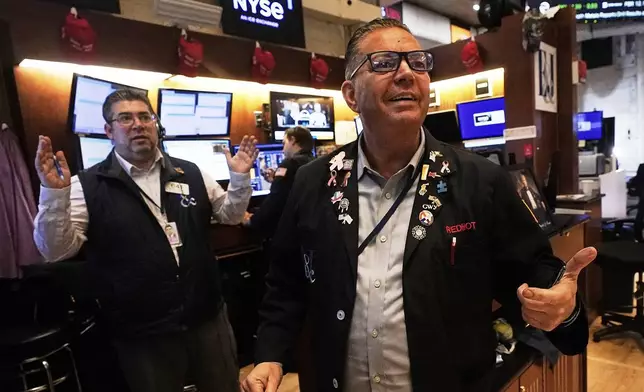
Traders Jonathan Mueller, right, and Michael Capolino work on the floor of the New York Stock Exchange, Wednesday, May 14, 2025. (AP Photo/Richard Drew)
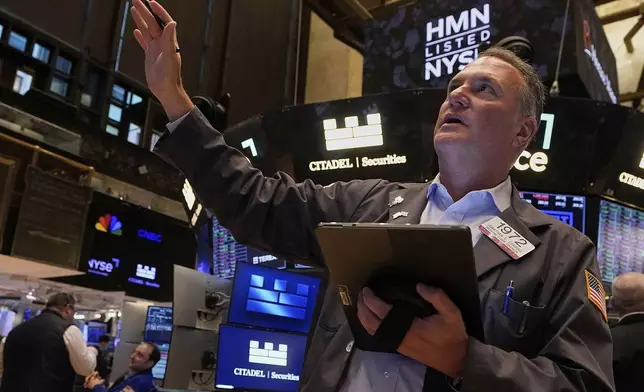
Trader Jonathan Corpina works on the floor of the New York Stock Exchange, Wednesday, May 14, 2025. (AP Photo/Richard Drew)
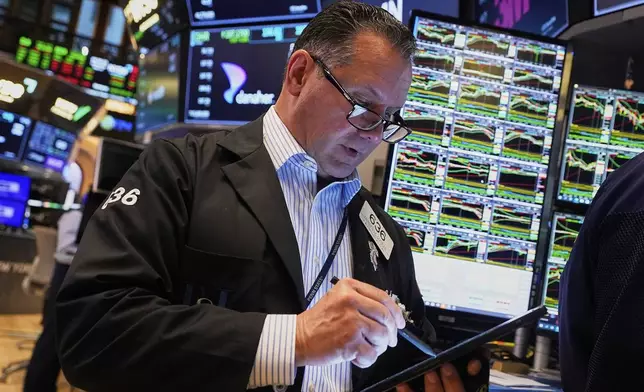
Trader Edward Curran works on the floor of the New York Stock Exchange, Wednesday, May 14, 2025. (AP Photo/Richard Drew)

Currency traders watch monitors near a screen showing the Korea Composite Stock Price Index (KOSPI) and the foreign exchange rate between U.S. dollar and South Korean won, top right, at the foreign exchange dealing room of the KEB Hana Bank headquarters in Seoul, South Korea, Thursday, May 15, 2025. (AP Photo/Ahn Young-joon)
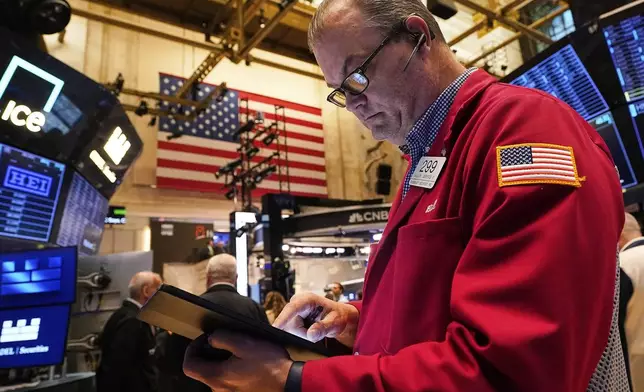
Trader William Lawrence works on the floor of the New York Stock Exchange, Wednesday, May 14, 2025. (AP Photo/Richard Drew)

Currency traders watch monitors near a screen showing the Korea Composite Stock Price Index (KOSPI), top left, and the foreign exchange rate between U.S. dollar and South Korean won, top center, at the foreign exchange dealing room of the KEB Hana Bank headquarters in Seoul, South Korea, Thursday, May 15, 2025. (AP Photo/Ahn Young-joon)

Currency traders watch monitors near a screen showing the Korea Composite Stock Price Index (KOSPI) in Seoul, South Korea, Thursday, May 15, 2025. (AP Photo/Ahn Young-joon)
Stocks got a lift from easing Treasury yields in the bond market. They fell after the economic reports suggested the Federal Reserve may have more room to cut interest rates later this year to bolster the U.S. economy if it weakens under the weight of high tariffs.
But the reports did little to spell out whether the economy is falling toward a recession, as many investors had been fearing, or shaking off the uncertainty after Trump called off many of his tariffs temporarily. The headliner reports said shoppers spent less at U.S. retailers last month than expected, while inflation was better at the wholesale level than economists forecast. Other updates said U.S. manufacturing looks like it’s still contracting but fewer U.S. workers are applying for unemployment benefits than expected.
Even though China and the United States recently agreed on a 90-day stand-down for many of their tariffs, “the trade story isn’t over, and it’s still going to take time for tariffs to make themselves felt in economic data,” according to Ellen Zentner, chief economic strategist for Morgan Stanley Wealth Management.
Such uncertainty showed itself in Walmart’s stock, which slipped 0.5% even though it reported a bigger profit for the latest quarter than analysts expected.
Like other U.S. companies struggling through Trump’s on-again-off-again rollout of tariffs, Walmart said it decided not to offer a forecast for how much profit it will make in the current quarter.
Chief Financial Officer John David Rainey pointed to “the range of near-term outcomes being exceedingly wide and difficult to predict,” though the company did say it expects sales to grow between 3.5% and 4.5%, not including the swings that shifting values of foreign currencies can bring.
The nation’s largest retailer also said that it must raise prices due to higher costs caused by Trump’s tariffs.
Equipment maker Deere said it’s seeing “near-term market challenges” and called the situation “dynamic,” as many other companies have. It lowered the bottom end of its forecasted range of profit for the full year. But Deere's stock nevertheless rose 3.8% after it reported a stronger profit for the latest quarter than analysts expected.
Cisco Systems was another winner and rose 4.8% after the tech giant likewise topped expectations for profit. Analysts said they’re optimistic about Cisco’s artificial-intelligence prospects.
Elsewhere on Wall Street, Dick’s Sporting Goods tumbled 14.6% after it said it would buy the struggling Foot Locker chain for $2.4 billion. Dick’s also said that it made a better profit for the latest quarter than analysts expected.
Foot Locker soared 85.7% after coming into the day with a loss of nearly 41% for the year so far.
All told, the S&P 500 rose 24.35 points to 5,916.93. The Dow Jones Industrial Average added 271.69 to 42,322.75, and the Nasdaq composite fell 34.49 to 19,112.32.
In the oil market, crude prices sank roughly 2% on expectations that more petroleum could be set to flow into global markets because of a possible deal between the United States and Iran over that country’s nuclear program. Such a deal could help ease sanctions against Iran, which is a major producer of oil.
Elsewhere, China moved to reverse some of its “non-tariff” measures against the U.S. as agreed with Washington in their temporary trade war truce, while demanding that the U.S. side “immediately correct its wrong practices.”
A Chinese Commerce Ministry spokesperson accused the Trump administration of violating world trade rules by announcing that use of Ascend computer chips made by China’s Huawei Technologies violates U.S. export controls.
Stock indexes fell 0.8% in Hong Kong and 0.7% in Shanghai, while indexes were mixed elsewhere in Asia and Europe.
In the bond market, the yield on the 10-year Treasury fell to 4.44% from 4.53% late Wednesday. Falling bond yields can encourage investors to pay higher prices for stocks and other investments.
The two-year Treasury yield, which more closely tracks expectations for Fed action, dropped to 3.96% from 4.05% as traders built bets that the Fed will resume cutting its main interest rate as soon as September.
The Fed has been keeping its main interest rate on hold this year as it waits to see how Trump’s trade policies play out for the economy. Cutting rates would juice the economy by making it easier for U.S. households and companies to borrow and spend. But it would also push upward on inflation when worries are high that Trump’s tariffs will do the same thing.
Fed Chair Jerome Powell warned in a speech on Thursday that the world “may be entering a period of more frequent, and potentially more persistent, supply shocks” that could goose inflation higher and present a “difficult challenge for the economy and for central banks.”
AP Business Writers Matt Ott and Elaine Kurtenbach contributed.
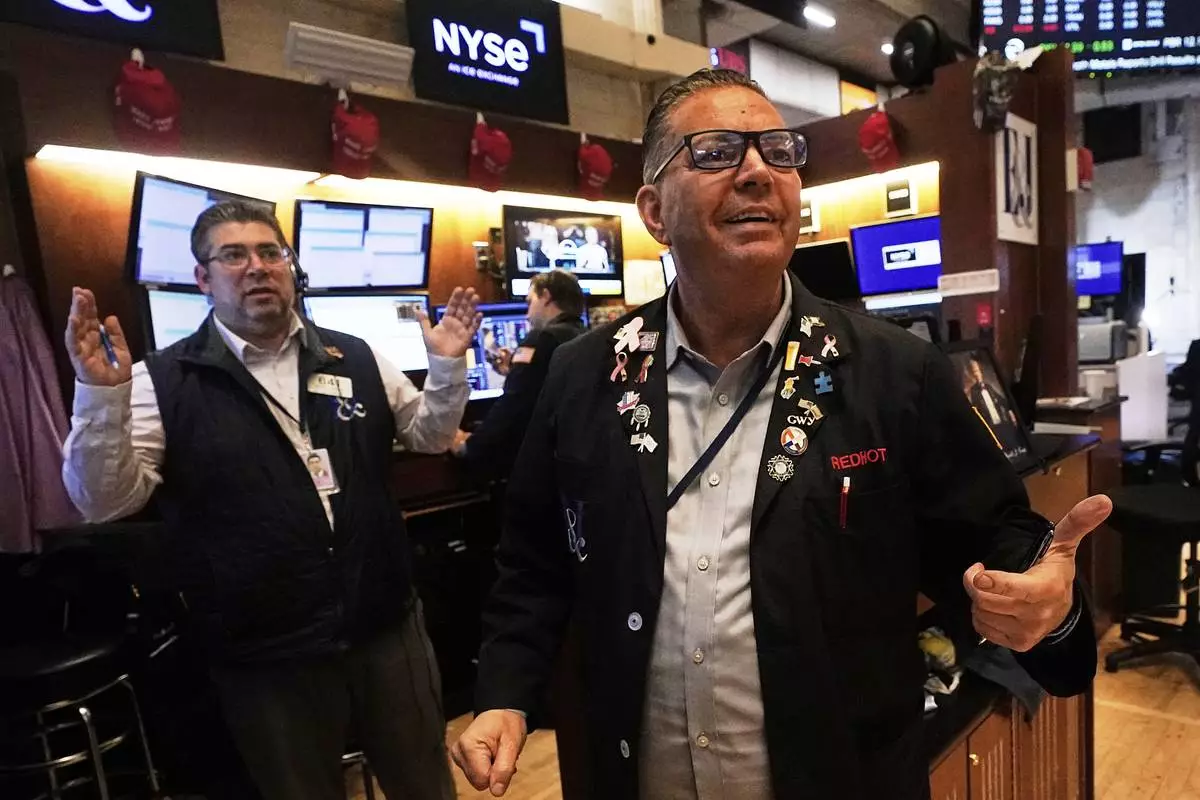
Traders Jonathan Mueller, right, and Michael Capolino work on the floor of the New York Stock Exchange, Wednesday, May 14, 2025. (AP Photo/Richard Drew)
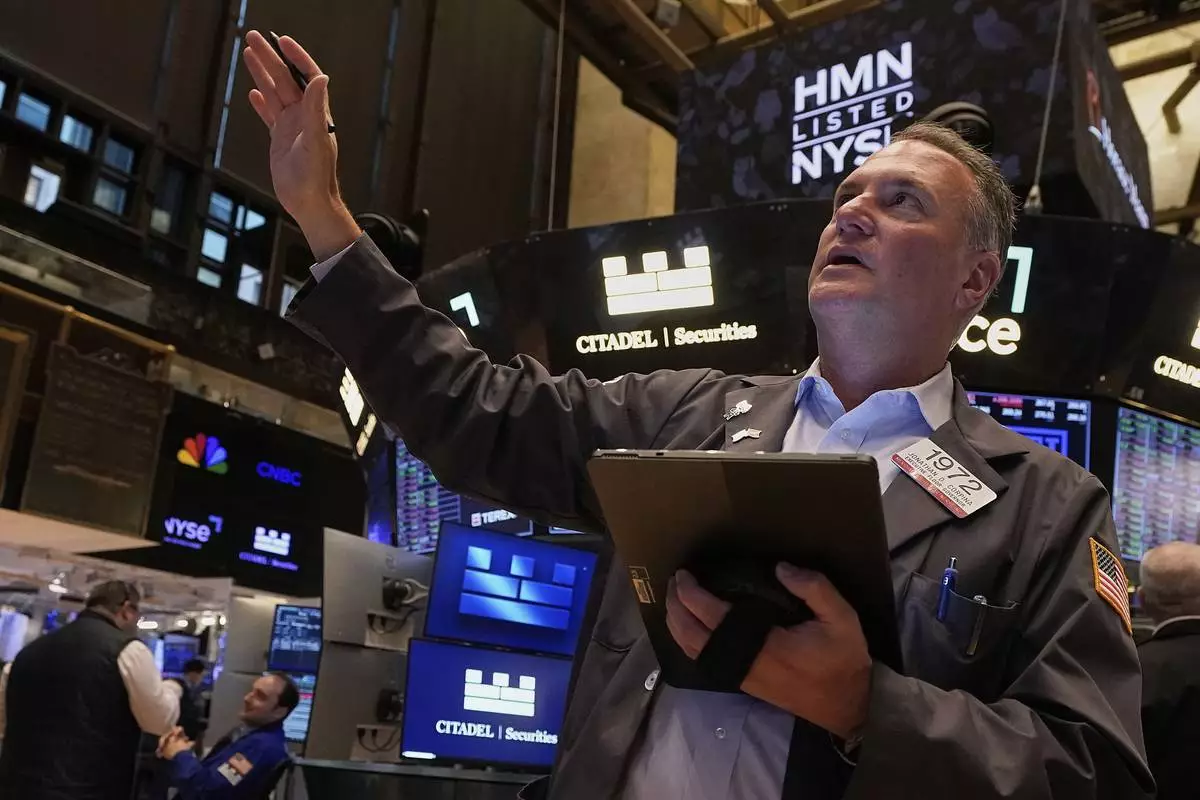
Trader Jonathan Corpina works on the floor of the New York Stock Exchange, Wednesday, May 14, 2025. (AP Photo/Richard Drew)

Trader Edward Curran works on the floor of the New York Stock Exchange, Wednesday, May 14, 2025. (AP Photo/Richard Drew)
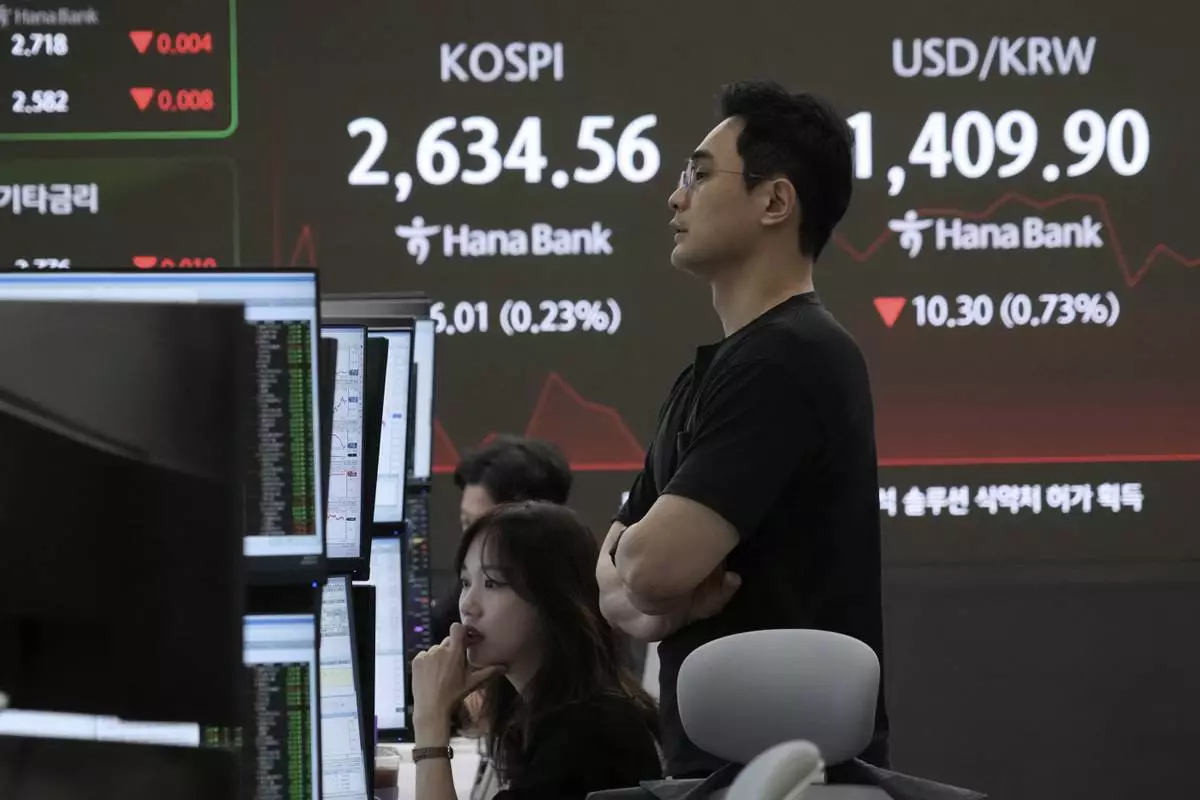
Currency traders watch monitors near a screen showing the Korea Composite Stock Price Index (KOSPI) and the foreign exchange rate between U.S. dollar and South Korean won, top right, at the foreign exchange dealing room of the KEB Hana Bank headquarters in Seoul, South Korea, Thursday, May 15, 2025. (AP Photo/Ahn Young-joon)
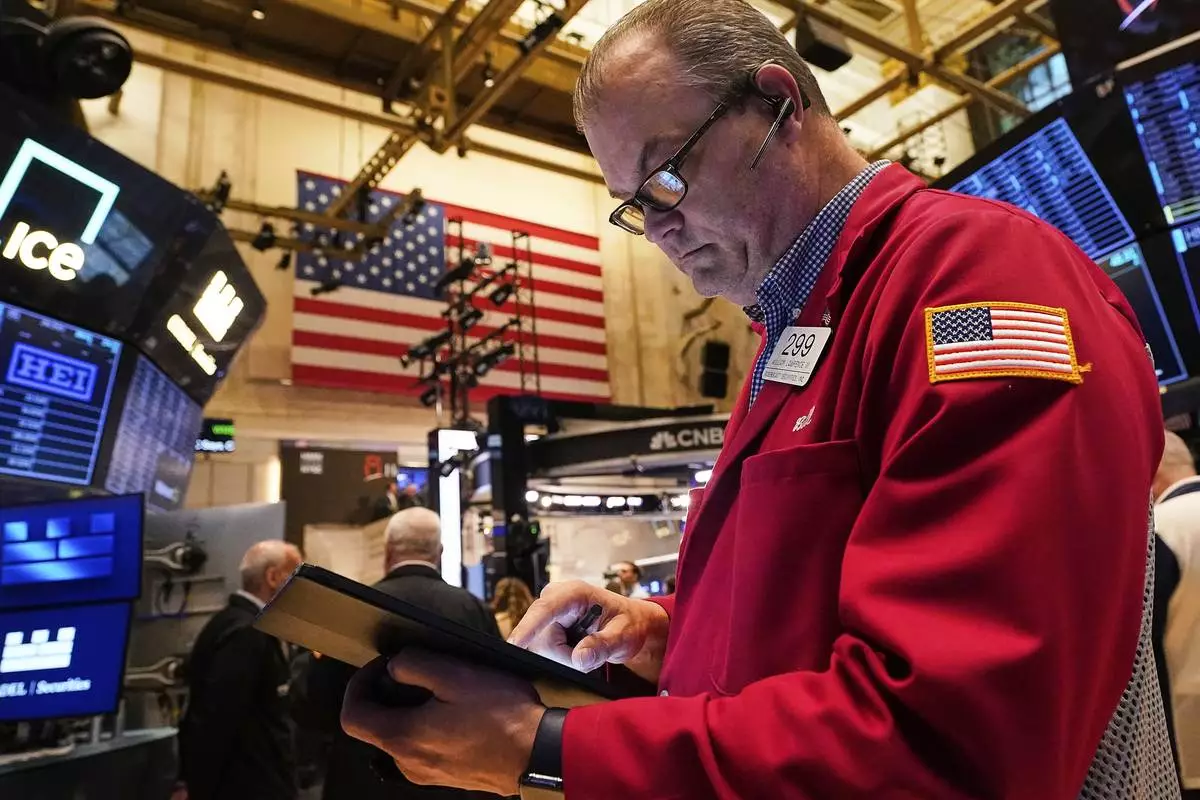
Trader William Lawrence works on the floor of the New York Stock Exchange, Wednesday, May 14, 2025. (AP Photo/Richard Drew)
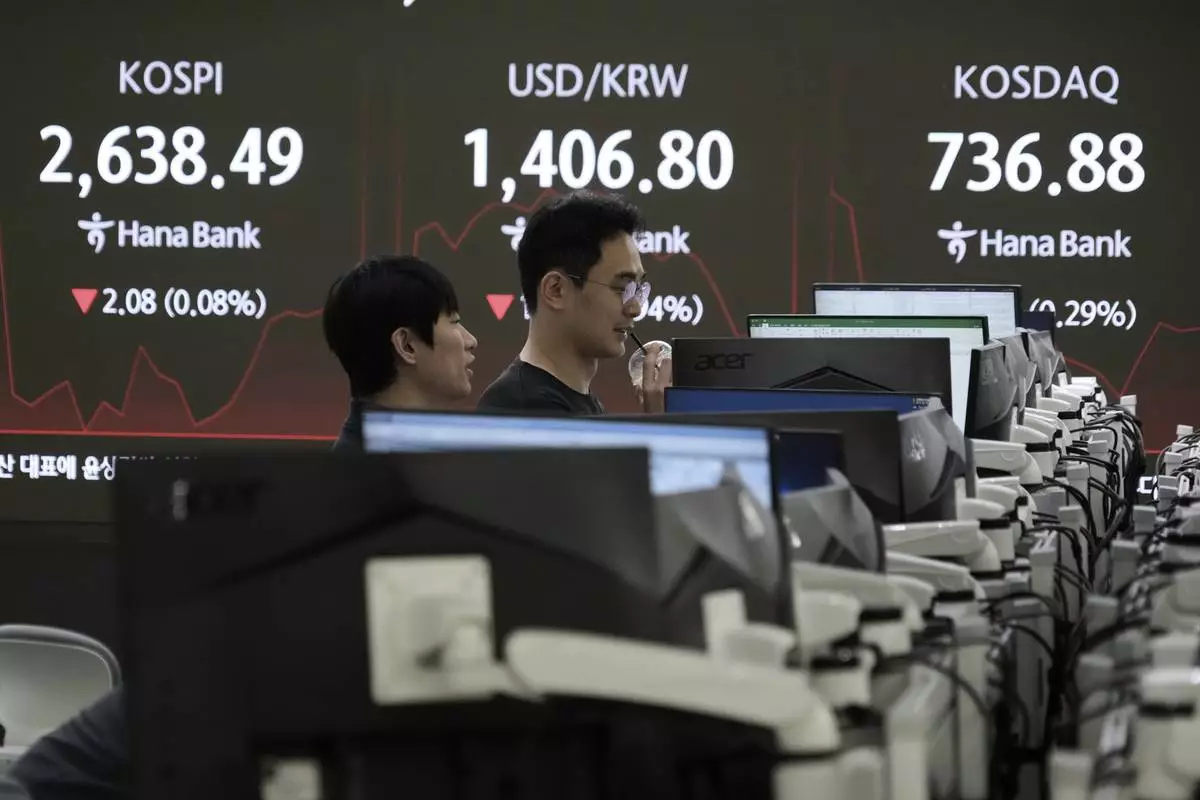
Currency traders watch monitors near a screen showing the Korea Composite Stock Price Index (KOSPI), top left, and the foreign exchange rate between U.S. dollar and South Korean won, top center, at the foreign exchange dealing room of the KEB Hana Bank headquarters in Seoul, South Korea, Thursday, May 15, 2025. (AP Photo/Ahn Young-joon)
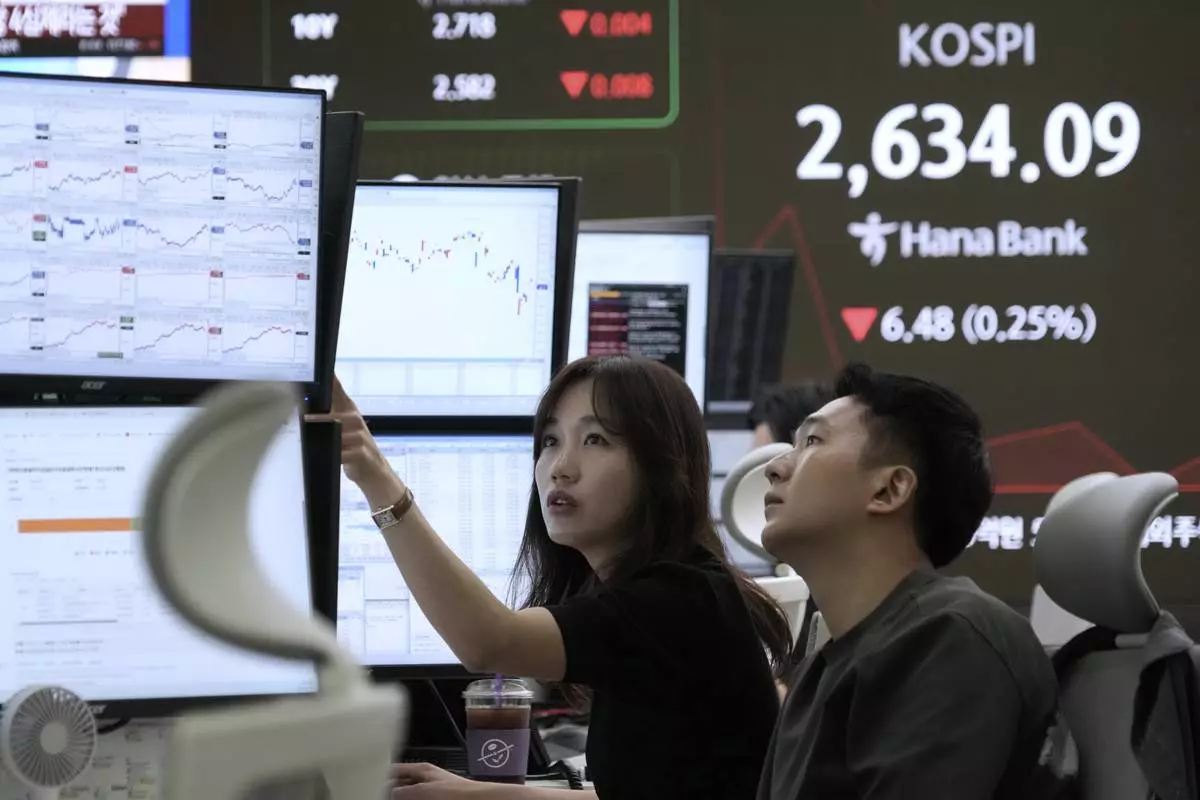
Currency traders watch monitors near a screen showing the Korea Composite Stock Price Index (KOSPI) in Seoul, South Korea, Thursday, May 15, 2025. (AP Photo/Ahn Young-joon)