Skip to Content Facebook Feature Image

MLT Board Revises Clinical Practice Hours to Enhance Training Flexibility for Medical Laboratory Technologists.

HK

MLT Board Revises Clinical Practice Hours to Enhance Training Flexibility for Medical Laboratory Technologists.
HK

HK

MLT Board Revises Clinical Practice Hours to Enhance Training Flexibility for Medical Laboratory Technologists.

2025-05-15 20:54 Last Updated At:21:08

Medical Laboratory Technologists Board responds to requests for clinical practice/attachment hours

​The following is issued on behalf of the Medical Laboratory Technologists (MLT) Board:

The MLT Board is aware of a statement made by individual groups and training institutions regarding the hours required for clinical practice/attachment for medical laboratory technologists and responds today (May 15) as follows:

The MLT Board, established under the Supplementary Medical Professions Ordinance (Cap. 359), is a statutory body that reviews the training arrangements of MLT from time to time to enhance their professional development. The MLT Board has started to discuss and review the requirement for clinical practice/attachment in the curriculum since 2023. It has agreed to strengthen the training of students in different medical laboratory-related areas under the principle that the overall number of training hours should remain unchanged. The objective is to ensure that the curriculum keeps abreast of the times and aligns with the latest developments in the medical field.

Since 2023, the Registration Committee of MLT Board has been discussing and reviewing the hours required for clinical practice/attachment, which were formulated in 2013. Subsequently, at the MLT Board meeting of February 5, 2024, the MLT Board endorsed revising the required hours for clinical practice/attachment from 400 hours, covering only four basic areas, namely "Clinical Microbiology & Infection", "Anatomical Pathology", "Chemical Pathology" and "Haematology", to 200 hours. This change will enable the institutions to allocate the released 200 hours to elective study modules according to the characteristics of their respective curricula without affecting the total number of hours. Under this arrangement, institutions can optimise the released training time to strengthen students' learning in the basic areas or arrange for the students to explore other medical laboratory-related subjects beyond the basic areas, such as clinical immunology, molecular techniques and genetic testing etc. This encourages the diversified development of different institutions while maintaining their professional standards. Contrary to the allegation made in the statement, it is not a hasty reduction of clinical practice/attachment hours from 400 to 200 before graduation.

Before making the decision, the MLT Board has been in close liaison with the industry through its Registration Committee (which comprises institutions, members of the associations and practitioners from different work backgrounds) and has held in-depth discussions on various accreditation requirements. Meetings were held to discuss the above issues and a Working Group on Review of Accreditation Criteria and Checklist was set up to invite experts to provide views in optimising the accreditation criteria and to continuously review both the local and international situations. The allegation that "academic institutions and industry stakeholders were not adequately consulted" is off the mark. The MLT Board stands ready to further explain to the MLT industry and training institutions the rationale of revising the required hours for clinical practice/attachment , and will work closely with stakeholders on the implementation details to facilitate the smooth execution of the resolution.

The MLT Board is a statutory body established under the Supplementary Medical Professions Ordinance (Cap. 359) to promote adequate standards of professional practice and of professional conduct in the MLT professions. The MLT Board members (see Annex) comprises a wide representation of stakeholders, who are from the medical laboratory testing and medical professions, professional education, the Government, the Hospital Authority, and private sector.
CHP investigates two suspected food poisoning clusters with epidemiological linkage

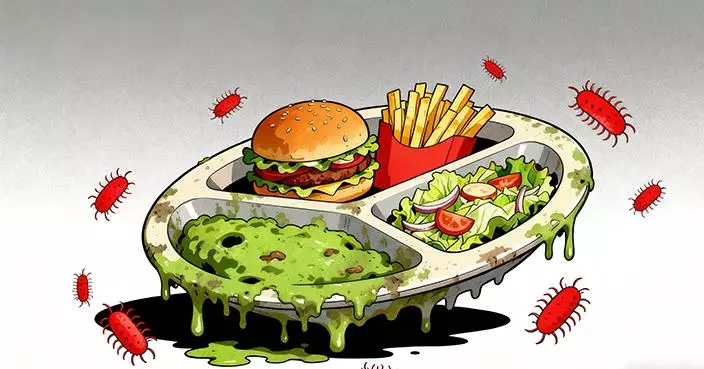
The Centre for Health Protection (CHP) of the Department of Health (DH) is today (January 9) investigating two epidemiologically linked suspected food poisoning clusters affecting 39 students from two primary schools. The students developed symptoms after consuming lunch provided by the Sailing Boat Luncheon Production Limited. The CHP reminded the public to maintain good personal, food and environmental hygiene to prevent foodborne diseases.

The first cluster involves 12 boys and 16 girls aged between 6 and 11. They attend a primary school in Sham Shui Po. The investigation revealed that the affected students developed abdominal pain and diarrhoea approximately three to 31 hours after eating school lunch containing fish, chicken cutlets, sauce, garnish and rice, which was provided by the abovementioned school lunch supplier on January 6.

While investigating the first cluster, the CHP of the DH traced the supply chain of the school lunch supplier and identified another cluster, involving eight boys and three girls, aged between 10 and 12, who attend a primary school in Diamond Hill. The investigation revealed that the affected students developed abdominal pain and diarrhoea approximately five to 15 hours after eating lunch containing chicken, cervelat sausage, sauce and fusilli at school yesterday (January 8). The food concerned was also provided by the same school lunch supplier.

None of the affected students required hospitalisation and they are all currently in stable condition.

Officers of the CHP and the Food and Environmental Hygiene Department, including personnel of the Centre for Food Safety (CFS) and the Environmental Hygiene Branch, have inspected the food factory of the school lunch supplier concerned and the kitchen of the first school. They inspected the food storage, the food preparation process and environmental hygiene. Investigation revealed that some food items, such as meat and sauce, were prepared at the food factory, while the other food items, such as rice and garnish, were prepared at the school kitchen. It is suspected that some food items were prepared too early in advance. The CFS immediately instructed the premises concerned to suspend operations for thorough cleaning and disinfection, improve food preparation process and hygiene standards. The CFS has provided food safety and environmental hygiene education to the staff. Food and environmental samples were collected for testing.

The investigation of the CHP and CFS is ongoing.

To prevent foodborne diseases, members of the public are reminded to maintain personal, food and environmental hygiene at all times. When dining out, one should:

  • Avoid eating raw seafood;
  • Be a discerning consumer in choosing cold dishes, including sashimi, sushi and raw oysters at a buffet;
  • Choose pasteurised eggs, egg products or dried egg powder for dishes that often use undercooked eggs;
  • Patronise only reliable and licensed restaurants;
  • Ensure food is thoroughly cooked before eating during a hotpot or barbecue meal;
  • Handle raw and cooked foods carefully and separate them completely during the cooking process;
  • Use two sets of chopsticks and utensils to handle raw and cooked foods;
  • Avoid patronising illegal food hawkers;
  • Drink boiled water;
  • Susceptible populations, including those with weakened immunity, the elderly, pregnant women and young children are at a higher risk of foodborne diseases, so they should not consume raw or undercooked foods;
  • Refrain from trying to use salt, vinegar, wine or wasabi to kill bacteria as they are not effective; and
  • Always wash hands before eating and after going to the toilet.
  • Source: AI-found images

    Source: AI-found images

    Recommended Articles