CHARLOTTE, N.C. (AP) — Alex Smalley was on the putting green at Quail Hollow, going through his drills and looking like any of the other 156 players at the PGA Championship. But he wasn't. On the eve of the major, Smalley wasn't sure he would have a tee time.
And then in a span of about 20 hours, the North Carolina native went from first alternate to a 4-under 67 that kept his name around the top of the leaderboard Thursday.
“I really prepared just like any other week,” Smalley said. “Obviously, it's interesting being first alternate. I was losing hope after every passing hour. And you know, you hear about everybody's ailments being first alternate.”
In this case it was Sahith Theegala who had to withdraw during the Truist Championship last week at Philadelphia Cricket Club. And his neck injury never got better for the Californian to play the PGA Championship, a major he finished in the top 15 a year ago. So he was out.
Smalley was in.
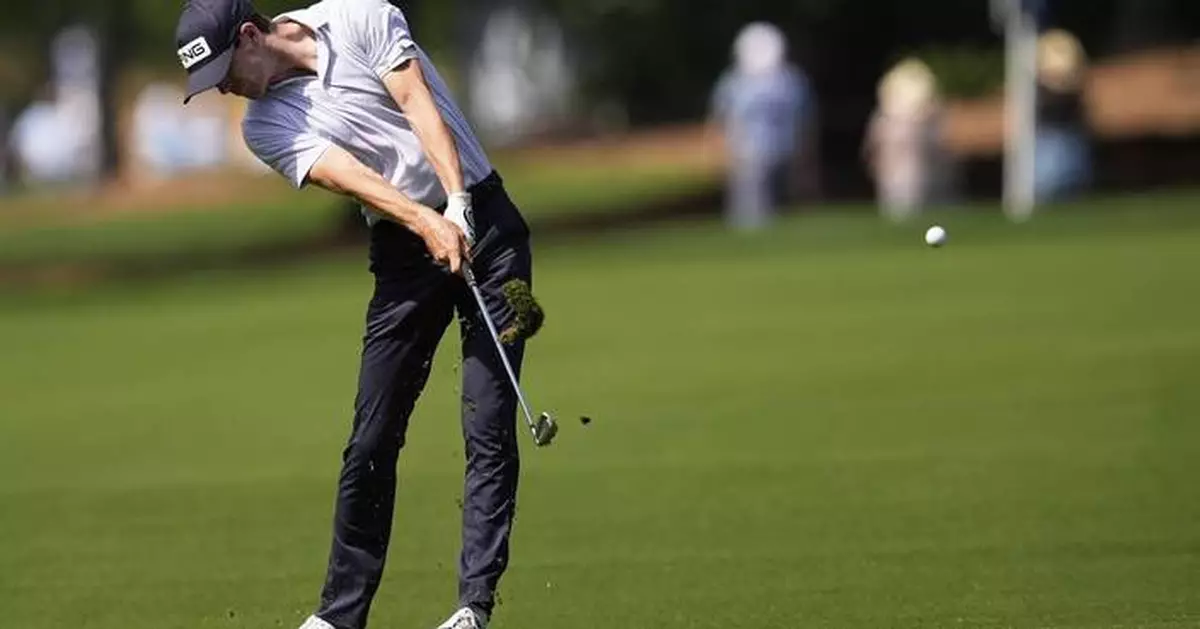
He had three birdies in a four-hole stretch on the back nine (after starting on No. 10), dropped a pair of shots on tough par 4s on the front nine and then shot his way back into the mix by holing a 70-foot putt across the green on the par-5 seventh for eagle.
Smalley made a short birdie putt on the short par-4 eighth, managed par on the brutal par-4 ninth hole and had his lowest score in his third appearance at the PGA Championship.
He felt bad for Theegala, but only to a point.
“I wish him the best and hope to have him back out here as quick as possible because us players and I know the fans really like him a lot,” Smalley said. “It was a shame to see him not be able to play this week. But it was nice to get an opportunity to play.”
Smalley already had one close call getting into Quail Hollow. The PGA Championship takes all PGA Tour winners, and Smalley was two shots out of the lead on the back nine at the Myrtle Beach Classic on Sunday. He didn't make up ground, but there was still hope.
The PGA Championship kept a spot open in case the Myrtle Beach winner had already qualified for Quail Hollow. The tournament came down to Ryan Fox, Mackenzie Hughes and Harry Higgs. Hughes was already in the PGA, so if he won then Smalley would be in as first alternate.
Hughes made bogey on the last hole and Fox won the playoff. Smalley was still an alternate.
Smalley drove home to Greensboro and didn't bother coming over until Monday night. And then he treated it like any other tournament, playing nine holes when he could because of rain, practice, another nine holes Wednesday morning, more waiting and hoping.
What helped make it feel normal was getting notice on Wednesday afternoon. Otherwise, he would have had to be around the practice area from 7 a.m. until 2:37 p.m., the last tee time.
The PGA Championship alternates come off a special PGA Tour money list. Smalley was the fifth alternate when the field was announced last week.
Unlike other majors that have an alternate list, this group typically is PGA Tour players capable of hanging with the best. John Daly famously won the 1991 PGA Championship as the ninth alternate in his rookie season on the PGA Tour.
Smalley has been first alternate a few times on the PGA Tour, getting the call predawn of the opening rounds.
“I guess I’ve had decent luck at first alternate before, but I don’t really want to be in that position anymore,” he said.
AP golf: https://apnews.com/hub/golf
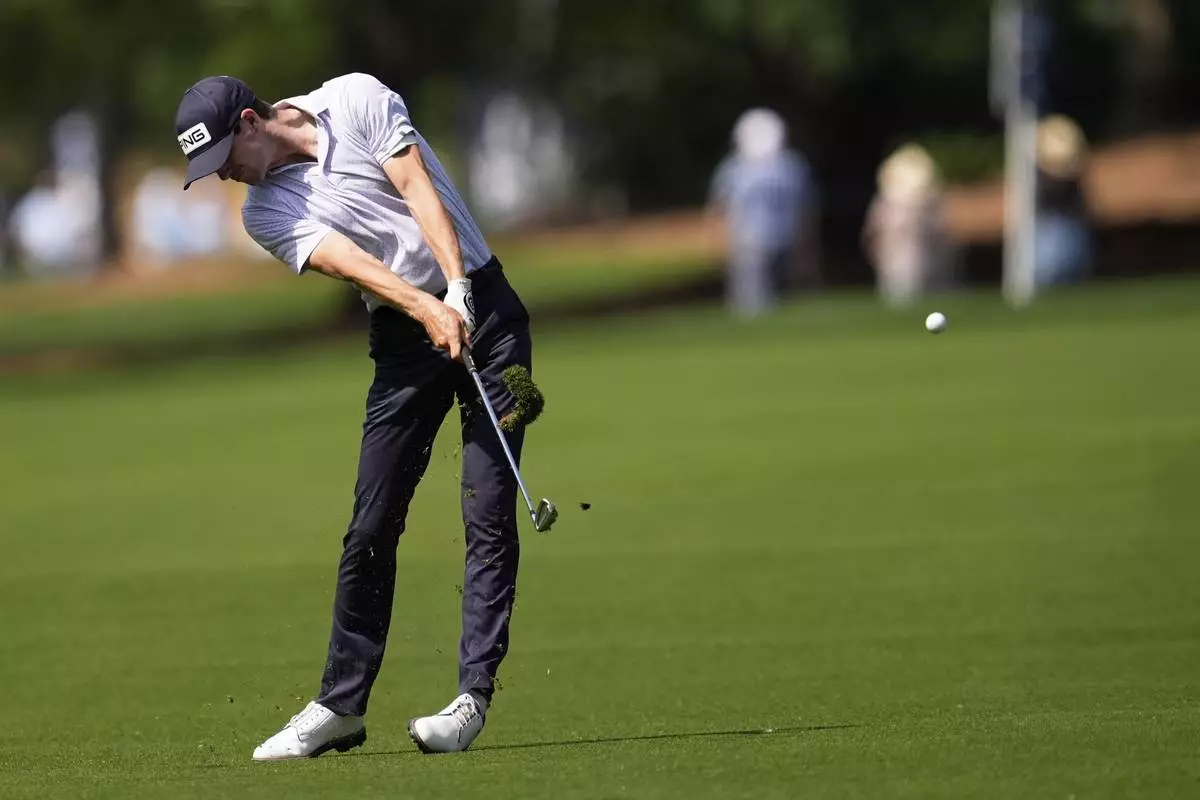
Alex Smalley hits from the fairway on the second hole during the first round of the PGA Championship golf tournament at the Quail Hollow Club, Thursday, May 15, 2025, in Charlotte, N.C. (AP Photo/George Walker IV)
The U.S. government admitted Wednesday that the Federal Aviation Administration and the Army played a role in causing the collision last January between an airliner and a Black Hawk helicopter near the nation's capital, killing 67 people in the deadliest crash on American soil in more than two decades.
The official response to the first lawsuit filed by one of the victims’ families said that the government is liable in the crash partly because the air traffic controller violated procedures about when to rely on pilots to maintain visual separation that night. Plus, the filing said, the Army helicopter pilots' “failure to maintain vigilance so as to see and avoid” the airline jet makes the government liable.
But the filing suggested that others, including the pilots of the jet and the airlines, may also have played a role. The lawsuit also blamed American Airlines and its regional partner, PSA Airlines, for roles in the crash, but those airlines have filed motions to dismiss.
At least 28 bodies were pulled from the icy waters of the Potomac River after the helicopter apparently flew into the path of the American Airlines regional jet while it was landing at Ronald Reagan National Airport in northern Virginia, just across the river from Washington, D.C., officials said. The plane carried 60 passengers and four crew members, and three soldiers were aboard the helicopter.
Robert Clifford, one of the attorneys for the family of victim Casey Crafton, said the government admitted “the Army’s responsibility for the needless loss of life” and the FAA’s failure to follow air traffic control procedures while “rightfully” acknowledging others –- American Airlines and PSA Airlines -– also contributed to the deaths.
The families of the victims “remain deeply saddened and anchored in the grief caused by this tragic loss of life,” he said.
The government's lawyers said in the filing that “the United States admits that it owed a duty of care to plaintiffs, which it breached, thereby proximately causing the tragic accident.”
An American spokesman declined to comment on the filing, but in the airlines motion to dismiss, the airline said "plaintiffs’ proper legal recourse is not against American. It is against the United States government ... The Court should therefore dismiss American from this lawsuit.” The airline said that since the crash it has focused on supporting the families of the victims.
The National Transportation Safety Board will release its report on the cause of the crash early next year, but investigators have already highlighted a number of factors that contributed, including the helicopter flying 78 feet higher (24 meters) than the 200-foot (61-meter) limit on a route that allowed only scant separation between planes landing on Reagan's secondary runway and helicopters passing below. Plus, the NTSB said, the FAA failed to recognize the dangers around the busy airport even after 85 near misses in the three years before the crash.
Before the collision, the controller twice asked the helicopter pilots whether they had the jet in sight, and the pilots said they did and asked for visual separation approval so they could use their own eyes to maintain distance. FAA officials acknowledged at the NTSB’s investigative hearings that the controllers at Reagan had become overly reliant on the use of visual separation. That’s a practice the agency has since ended.
Witnesses told the NTSB that they have serious questions about how well the helicopter crew could spot the plane while wearing night vision goggles and whether the pilots were even looking in the right spot.
Investigators have said the helicopter pilots might not have realized how high they were because the barometric altimeter they were relying on was reading 80 to 100 feet (24 to 30 meters) lower than the altitude registered by the flight data recorder.
The crash victims included a group of elite young figure skaters, their parents and coaches who had just attended a competition in Wichita, Kansas, and four union steamfitters from the Washington area.
.

FILE - Attorney Bob Clifford speaks during a news conference regarding the Jan. 29, 2025, mid-air collision between American Eagle flight 5342 and a U.S. Army Black Hawk Helicopter, at the National Press Club, Sept. 24, 2025, in Washington. (AP Photo/Rod Lamkey, Jr., File)
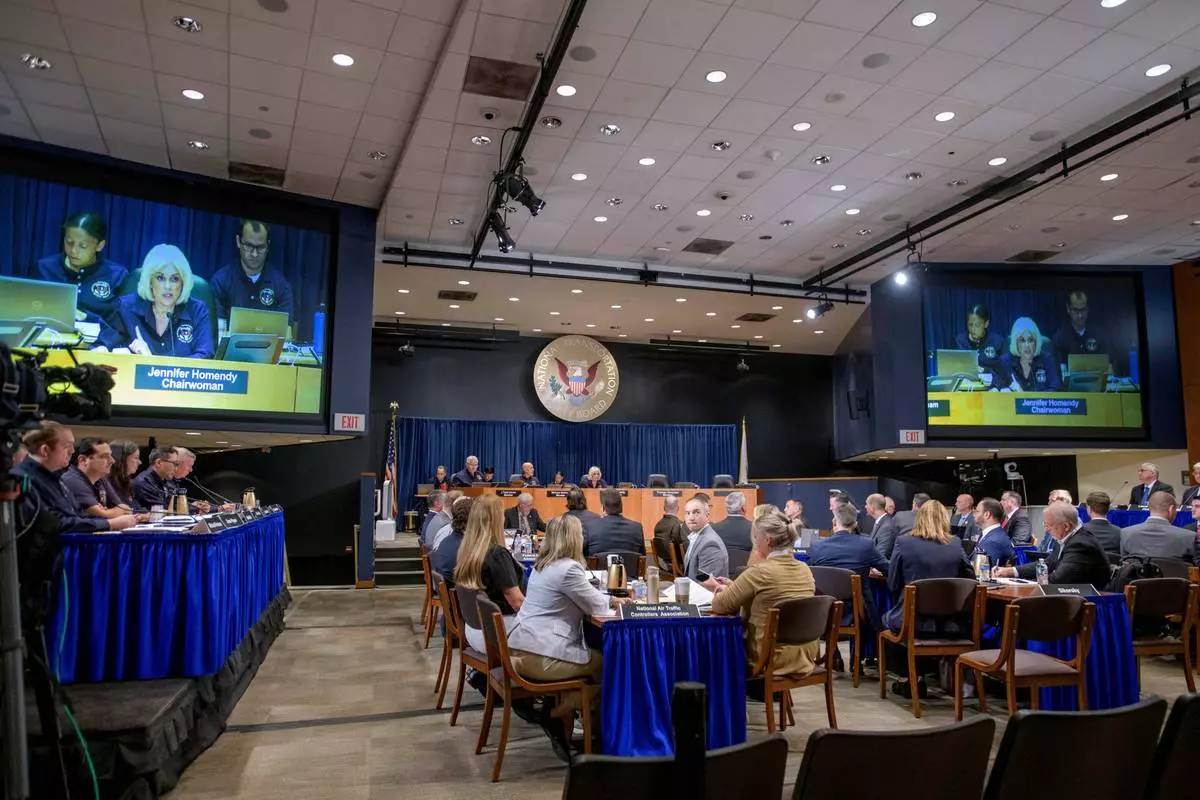
FILE - National Transportation Safety Board Chairwoman Jennifer Homendy speaks during the NTSB fact-finding hearing on the DCA midair collision accident, at the National Transportation and Safety Board boardroom, July 30, 2025, in Washington. (AP Photo/Rod Lamkey, Jr., File)