Skip to Content Facebook Feature Image

US government admits role in causing helicopter-plane collision that killed 67 in Washington

News

US government admits role in causing helicopter-plane collision that killed 67 in Washington
News

News

US government admits role in causing helicopter-plane collision that killed 67 in Washington

2025-12-18 11:59 Last Updated At:12:10

The U.S. government admitted Wednesday that the actions of an air traffic controller and Army helicopter pilot played a role in causing a collision last January between an airliner and a Black Hawk near the nation's capital, killing 67 people.

It was the deadliest plane crash on American soil in more than two decades.

The official response to the first lawsuit filed by one of the victims’ families said that the government is liable in the crash partly because the air traffic controller violated visual separation procedures that night. Plus, the filing said, the Army helicopter pilots’ “failure to maintain vigilance so as to see and avoid” the airline jet makes the government liable.

But the filing suggested that others, including the pilots of the jet and the airlines, may also have played a role. The lawsuit also blamed American Airlines and its regional partner, PSA Airlines, for roles in the crash, but those airlines have filed motions to dismiss.

And the government denied that any air traffic controllers or officials at the Federal Aviation Administration or Army were negligent.

At least 28 bodies were pulled from the icy waters of the Potomac River after the helicopter collided with the American Airlines regional jet while it was landing at Ronald Reagan National Airport in northern Virginia, just across the river from Washington, D.C., officials said. The plane carried 60 passengers and four crew members, and three soldiers were aboard the helicopter.

Robert Clifford, one of the attorneys for the family of victim Casey Crafton, said the government admitted “the Army’s responsibility for the needless loss of life” and the FAA’s failure to follow air traffic control procedures while “rightfully” acknowledging others –- American Airlines and PSA Airlines -– also contributed to the deaths.

The families of the victims “remain deeply saddened and anchored in the grief caused by this tragic loss of life,” he said.

The government's lawyers said in the filing that “the United States admits that it owed a duty of care to plaintiffs, which it breached, thereby proximately causing the tragic accident.”

An American spokesman declined to comment on the filing, but in the airline's motion to dismiss, American said "plaintiffs’ proper legal recourse is not against American. It is against the United States government ... The Court should therefore dismiss American from this lawsuit.” The airline said that since the crash it has focused on supporting the families of the victims.

The lawsuit had accused the airlines of not doing enough to mitigate the risks of flying so close to helicopters around Washington, D.C., and not adequately training their pilots to handle it.

The National Transportation Safety Board will release its report on the cause of the crash early next year, but investigators have already highlighted a number of factors that contributed, including the helicopter flying 78 feet higher (24 meters) than the 200-foot (61-meter) limit on a route that allowed only scant separation between planes landing on Reagan's secondary runway and helicopters passing below. Plus, the NTSB said, the FAA failed to recognize the dangers around the busy airport even after 85 near misses in the three years before the crash.

The government admitted in its filing that the United States “was on notice of certain near-miss events between its Army-operated Black Hawk helicopters and aircraft traffic transiting in and around helicopter routes 1 and 4” around Washington.

Before the collision, the controller twice asked the helicopter pilots whether they had the jet in sight, and the pilots said they did and asked for visual separation approval so they could use their own eyes to maintain distance. FAA officials acknowledged at the NTSB’s investigative hearings that the controllers at Reagan had become overly reliant on the use of visual separation. That’s a practice the agency has since ended.

Witnesses told the NTSB that they have serious questions about how well the helicopter crew could spot the plane while wearing night vision goggles and whether the pilots were even looking in the right spot.

Investigators have said the helicopter pilots might not have realized how high they were because the barometric altimeter they were relying on was reading 80 to 100 feet (24 to 30 meters) lower than the altitude registered by the flight data recorder.

The crash victims included a group of elite young figure skaters, their parents and coaches who had just attended a competition in Wichita, Kansas, and four union steamfitters from the Washington area.

Retired pilot Richard J. Levy, an aviation litigation expert witness, said the government's admission of some responsibility less than a year after the crash is unusual, especially considering the amount of money that could be involved in the case.

“They would not have done that if there was a doubt in their mind about anything the controller did or that the Army did,” said Levy.

Associated Press writer Audrey McAvoy contributed to this report.

FILE - Attorney Bob Clifford speaks during a news conference regarding the Jan. 29, 2025, mid-air collision between American Eagle flight 5342 and a U.S. Army Black Hawk Helicopter, at the National Press Club, Sept. 24, 2025, in Washington. (AP Photo/Rod Lamkey, Jr., File)
FILE - Attorney Bob Clifford speaks during a news conference regarding the Jan. 29, 2025, mid-air collision between American Eagle flight 5342 and a U.S. Army Black Hawk Helicopter, at the National Press Club, Sept. 24, 2025, in Washington. (AP Photo/Rod Lamkey, Jr., File)

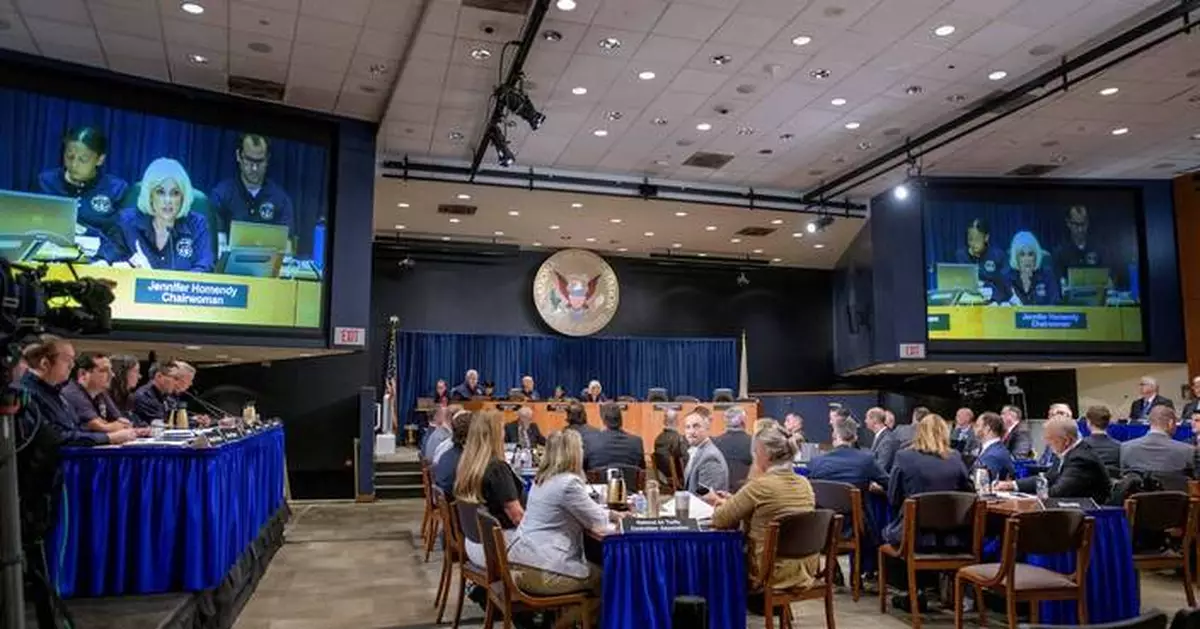
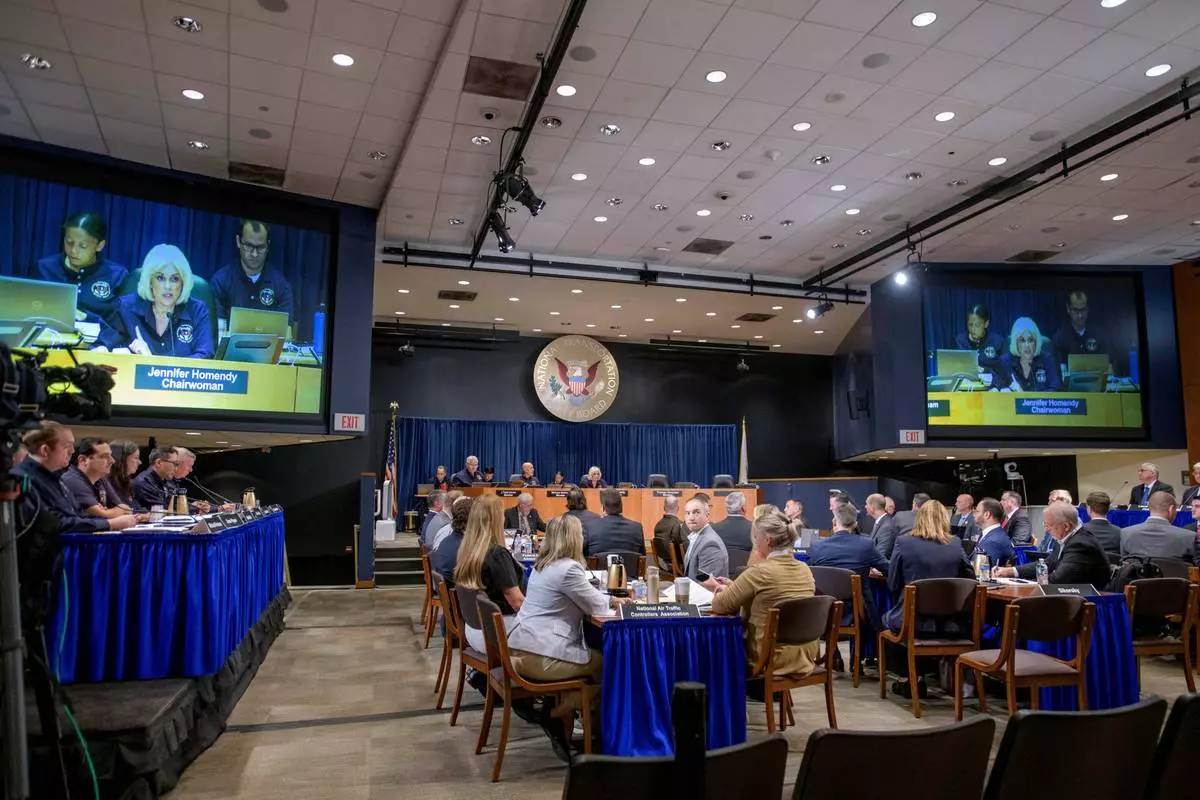
FILE - National Transportation Safety Board Chairwoman Jennifer Homendy speaks during the NTSB fact-finding hearing on the DCA midair collision accident, at the National Transportation and Safety Board boardroom, July 30, 2025, in Washington. (AP Photo/Rod Lamkey, Jr., File)
FILE - National Transportation Safety Board Chairwoman Jennifer Homendy speaks during the NTSB fact-finding hearing on the DCA midair collision accident, at the National Transportation and Safety Board boardroom, July 30, 2025, in Washington. (AP Photo/Rod Lamkey, Jr., File)
COPENHAGEN, Denmark (AP) — More than 200 years after being sunk by Adm. Horatio Nelson and the British fleet, a Danish warship has been discovered on the seabed of Copenhagen Harbor by marine archaeologists.

Working in thick sediment and almost zero visibility 15 meters (49 feet) beneath the waves, divers are working against the clock to unearth the 19th-century wreck of the Dannebroge before it becomes a construction site in a new housing district being built off the Danish coast.

Denmark’s Viking Ship Museum, which is leading the monthslong underwater excavations, announced its findings on Thursday, 225 years to the day since the Battle of Copenhagen in 1801.

“It’s a big part of the Danish national feeling,” said Morten Johansen, the museum’s head of maritime archaeology.

A great deal has been written about the battle “by very enthusiastic spectators, but we actually don’t know how it was to be onboard a ship being shot to pieces by English warships and some of that story we can probably learn from seeing the wreck, Johansen said.

In the Battle of Copenhagen, Nelson and the British fleet attacked and defeated Denmark’s navy as it formed a protective blockade outside the harbor.

Thousands were killed and wounded during the brutal hourslong naval clash, considered one of Nelson’s “great battles.” The intention was to force Denmark out of an alliance of Northern European powers, including Russia, Prussia and Sweden.

At the center of the fighting was the Danish flagship, the Dannebroge, commanded by Commodore Olfert Fischer.

The 48-meter (157-foot) Dannebroge was Nelson’s main target. Cannon fire tore through its upper deck before incendiary shells sparked a fire aboard.

“(It was) a nightmare to be on board one of these ships,” Johansen said. “When a cannonball hits a ship, it’s not the cannonball that does the most damage to the crew, it’s wooden splinters flying everywhere, very much like grenade debris.”

The battle also is believed to have inspired the phrase “to turn a blind eye.” After deciding to ignore a superior’s signal, Nelson, who had lost sight in his right eye, reportedly remarked: “I have only one eye, I have a right to be blind sometimes.”

Nelson eventually offered a truce and a ceasefire was later agreed with Denmark’s Crown Prince Frederik.

The stricken Dannebroge slowly drifted northward and exploded. Records say the sound created a deafening roar across Copenhagen.

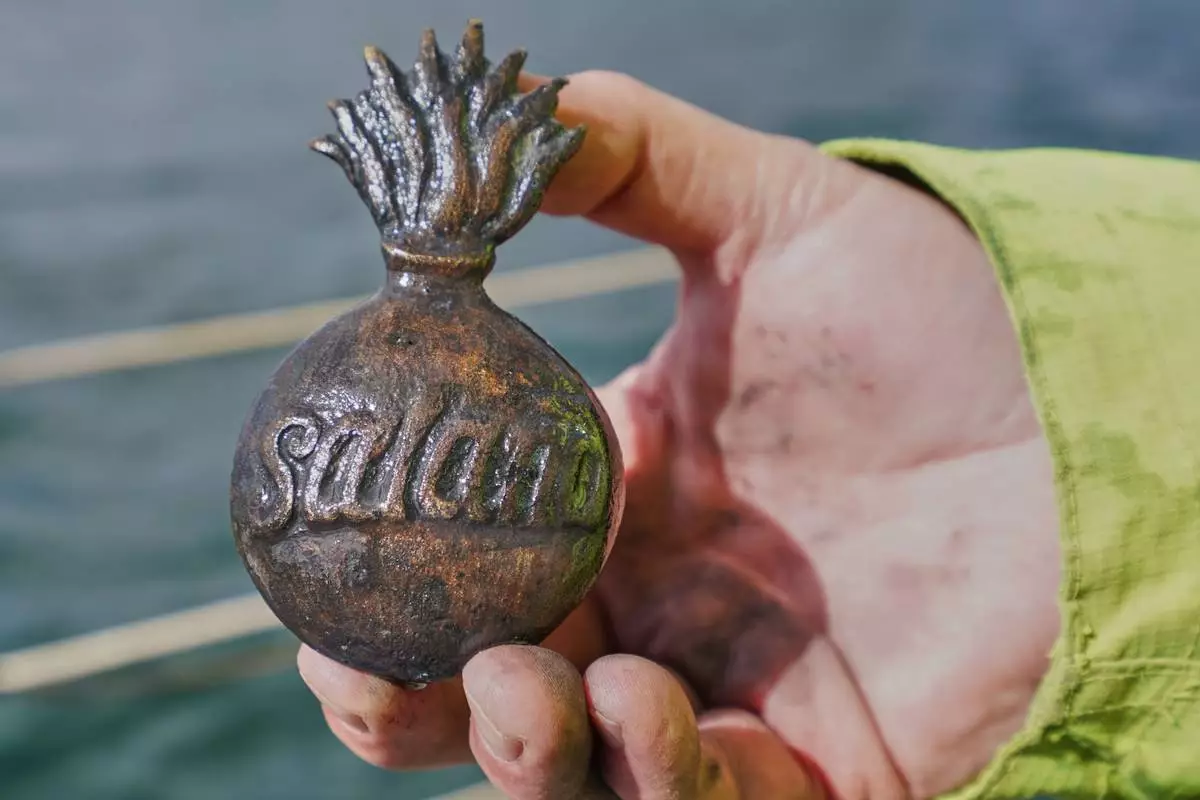
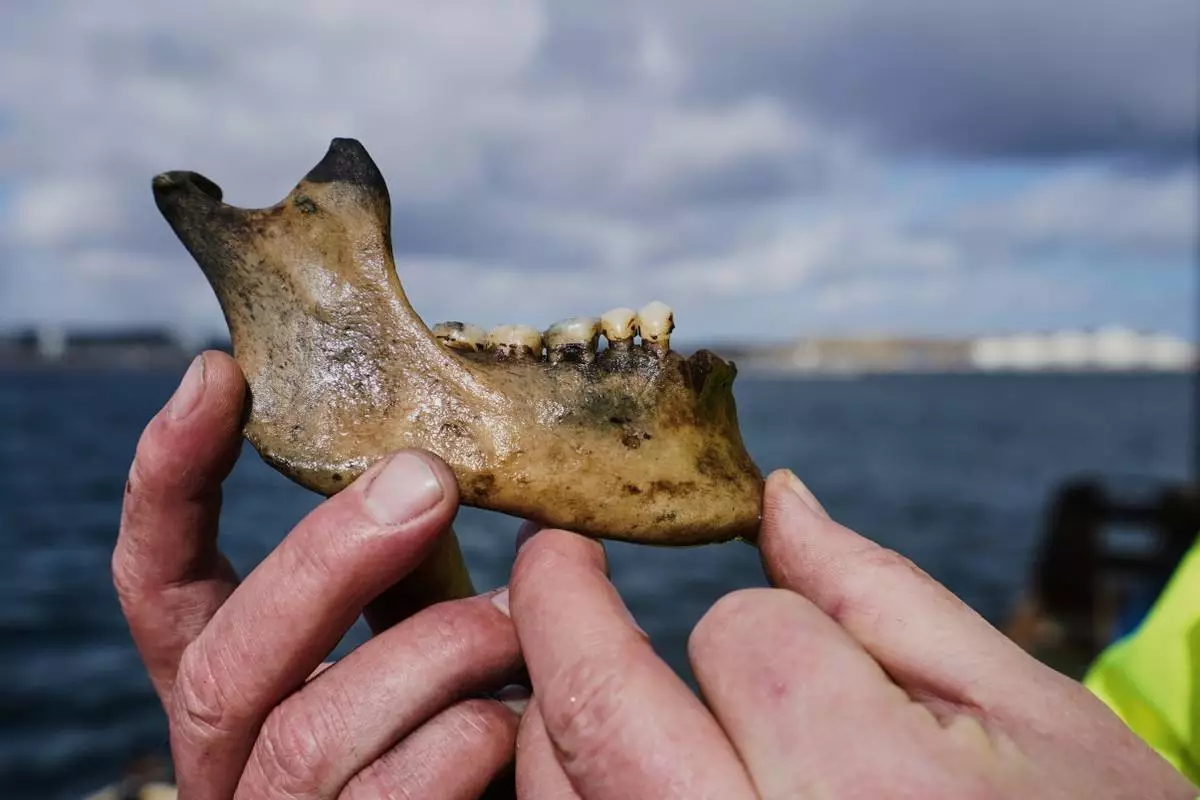
Marine archaeologists have discovered two cannons, uniforms, insignia, shoes, bottles and even part of a sailor’s lower jaw, perhaps one of the 19 unaccounted-for crew members who likely lost their lives that day.

The dig site will soon be enveloped by construction work for Lynetteholm, a megaproject to build a new housing district in the middle of Copenhagen Harbor that is expected to be completed by 2070.

Marine archaeologists began surveying the area late last year, targeting a spot thought to match the flagship’s final position.

Experts say the sizes of the wooden parts found match old drawings. Dendrochronological dating, the method of using tree rings to establish the age of wood, match the year the ship was built. They also say the darkened dig site is full of cannonballs, a hazard for divers navigating waters darkened by clouds of silt stirred up from the seabed.

“Sometimes you can’t see anything, and then you really have to just feel your way, look with your fingers instead of with your eyes,” diver and maritime archaeologist Marie Jonsson said.

Chronicled in books and painted on canvases, the 1801 battle is deeply embedded in Denmark’s national story.

Archaeologists hope their discoveries may help reexamine the event that shaped the Scandinavian country and perhaps uncover personal stories of those who went into battle on that day 225 years ago.

“There are bottles, there are ceramics, and even pieces of basketry,” Jonsson said. “You get closer to the people onboard.”

Morten Johansen, head of maritime archaeology at Denmark's Viking Ship Museum, shows part of a human lower jawbone recovered from the wreck of Danish flagship "Dannebroge" that sank during the Battle of Copenhagen in 1801, in Copenhagen, Denmark, Tuesday, March 31, 2026. (AP Photo/James Brooks)

Morten Johansen, head of maritime archaeology at Denmark's Viking Ship Museum, shows part of a human lower jawbone recovered from the wreck of Danish flagship "Dannebroge" that sank during the Battle of Copenhagen in 1801, in Copenhagen, Denmark, Tuesday, March 31, 2026. (AP Photo/James Brooks)

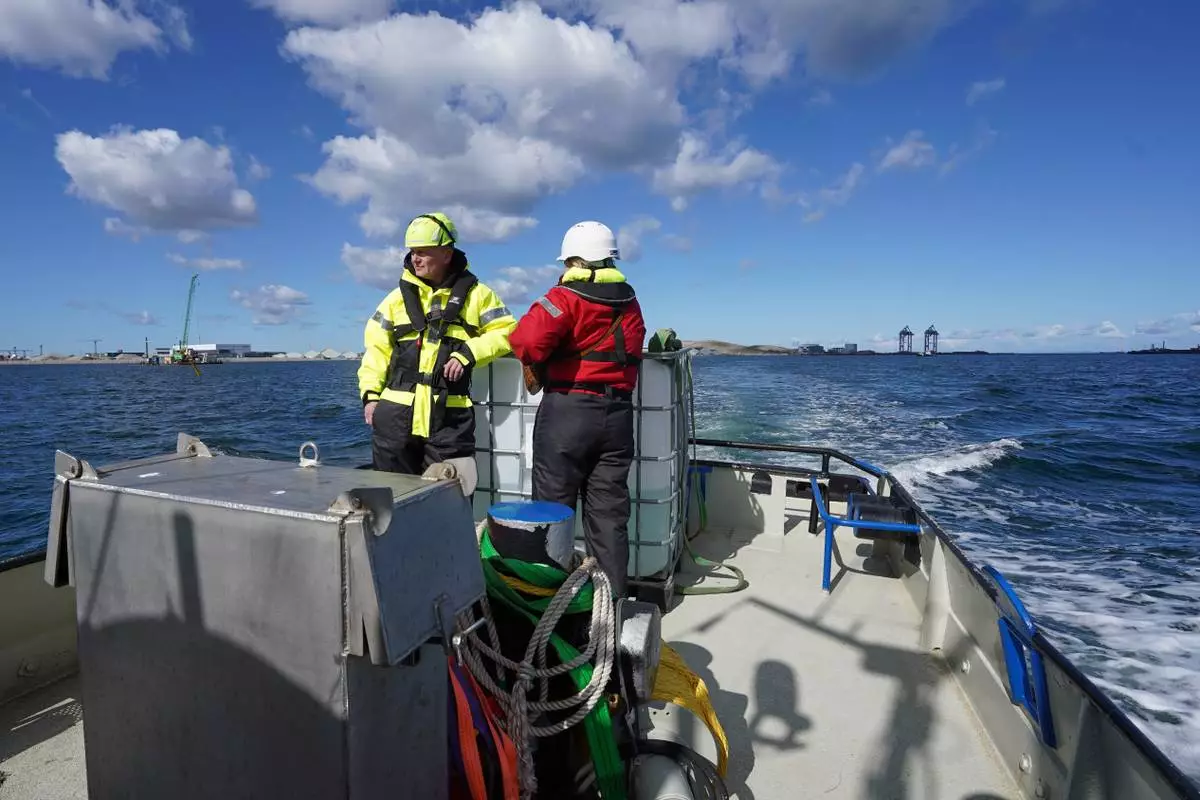
Archaeologists sail with boat through the harbor in Copenhagen, Denmark, Tuesday, March 31, 2026. (AP Photo/James Brooks)

Archaeologists sail with boat through the harbor in Copenhagen, Denmark, Tuesday, March 31, 2026. (AP Photo/James Brooks)

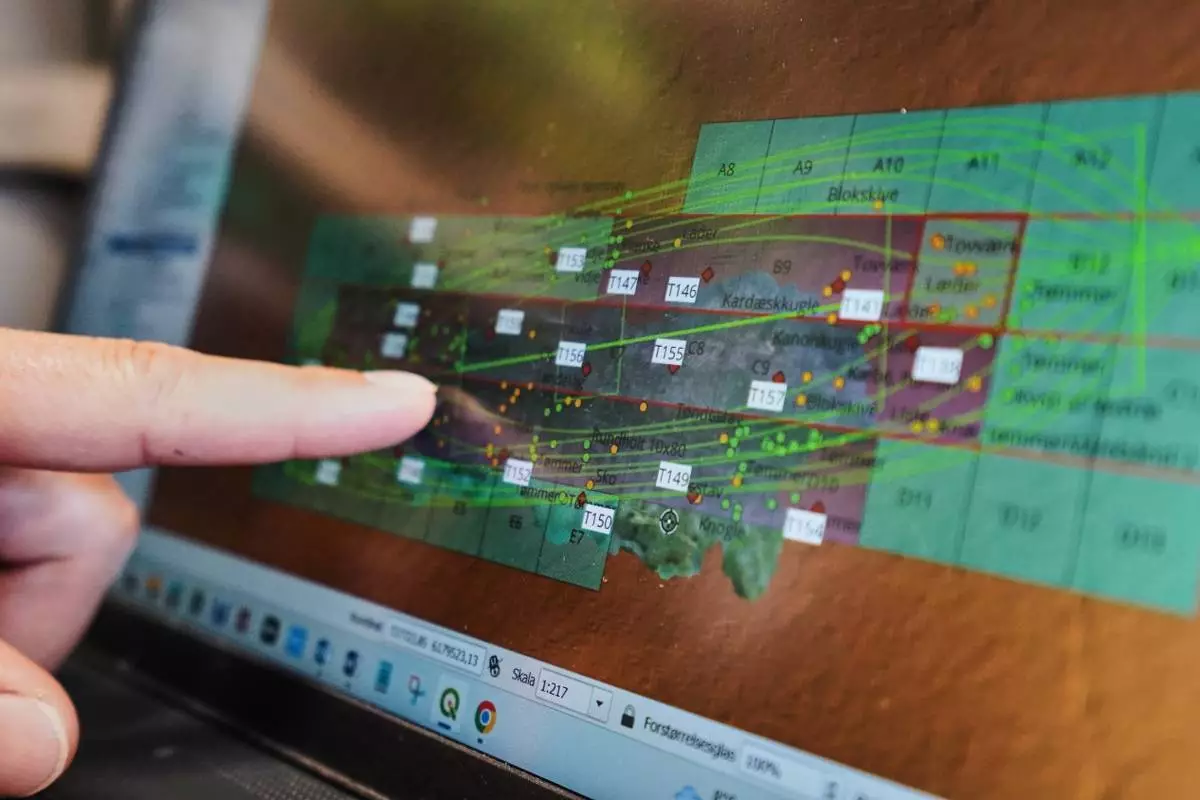
An archaeologist points to a computer screen, showing a map of the wreck of Danish flagship "Dannebroge" that sank during the Battle of Copenhagen in 1801. in Copenhagen, Denmark, Tuesday, March 31, 2026. (AP Photo/James Brooks)

An archaeologist points to a computer screen, showing a map of the wreck of Danish flagship "Dannebroge" that sank during the Battle of Copenhagen in 1801. in Copenhagen, Denmark, Tuesday, March 31, 2026. (AP Photo/James Brooks)

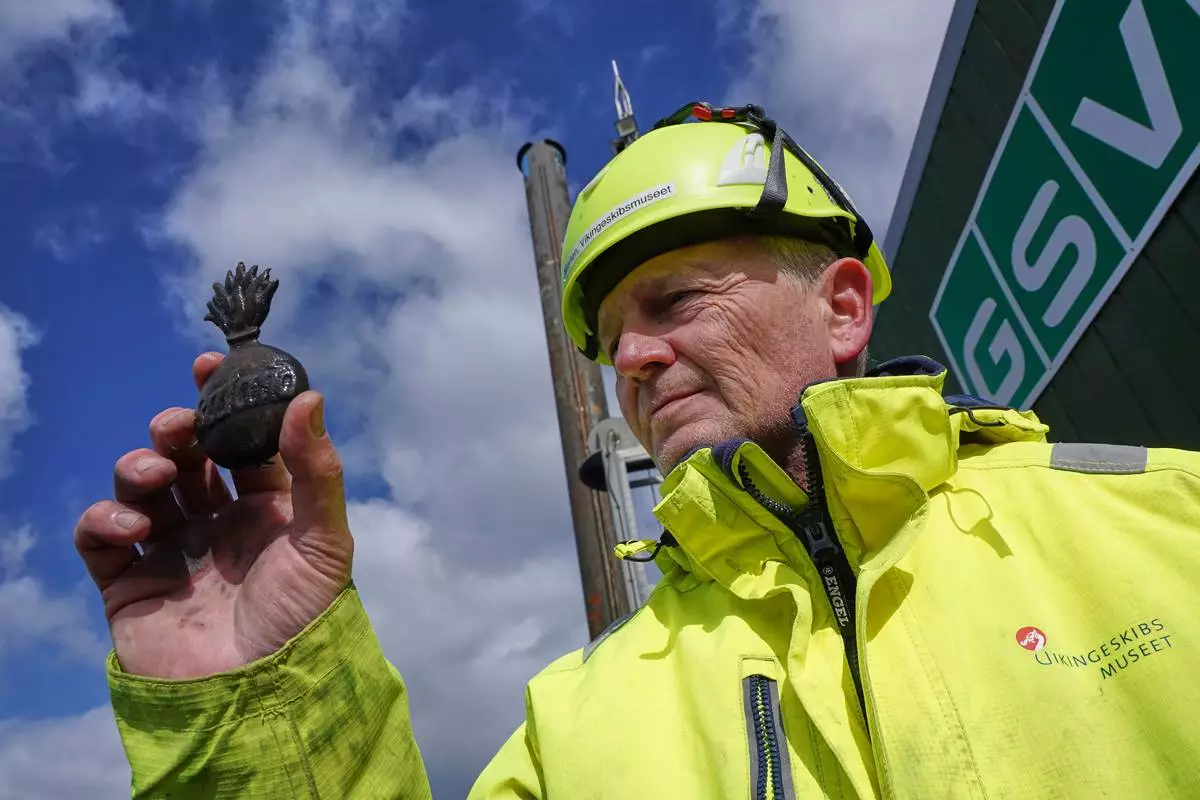
Morten Johansen, head of maritime archaeology at Denmark's Viking Ship Museum, shows a metal insignia recovered from the wreck of Danish flagship "Dannebroge" that sank during the Battle of Copenhagen in 1801, in Copenhagen, Denmark, Tuesday, March 31, 2026. (AP Photo/James Brooks)

Morten Johansen, head of maritime archaeology at Denmark's Viking Ship Museum, shows a metal insignia recovered from the wreck of Danish flagship "Dannebroge" that sank during the Battle of Copenhagen in 1801, in Copenhagen, Denmark, Tuesday, March 31, 2026. (AP Photo/James Brooks)

Morten Johansen, head of maritime archaeology at Denmark's Viking Ship Museum, shows a metal insignia recovered from the wreck of Danish flagship "Dannebroge" that sank during the Battle of Copenhagen in 1801, in Copenhagen, Denmark, Tuesday, March 31, 2026. (AP Photo/James Brooks)

Morten Johansen, head of maritime archaeology at Denmark's Viking Ship Museum, shows a metal insignia recovered from the wreck of Danish flagship "Dannebroge" that sank during the Battle of Copenhagen in 1801, in Copenhagen, Denmark, Tuesday, March 31, 2026. (AP Photo/James Brooks)

Recommended Articles