NAIROBI, Kenya (AP) — Before dawn in the narrow alleys of Mathare, an informal settlement in Kenya's capital, Agnes Mbesa flicks on a single bulb hanging from her tin roof. For years, the mother of three relied on smoky kerosene lamps. Now electricity lights her home and powers the small shop she runs from her veranda.
“Before the power came, we closed early because it was too dark,” Mbesa said. “Now people come even at night, and I can earn something.”
Click to Gallery
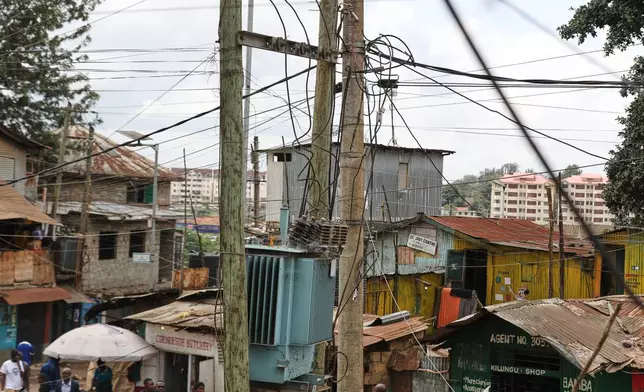
A view of electric wire poles and cables towering over the Kibera informal settlement in Nairobi, Kenya, Tuesday, March 31, 2026. (AP Photo/Henry Naminde)
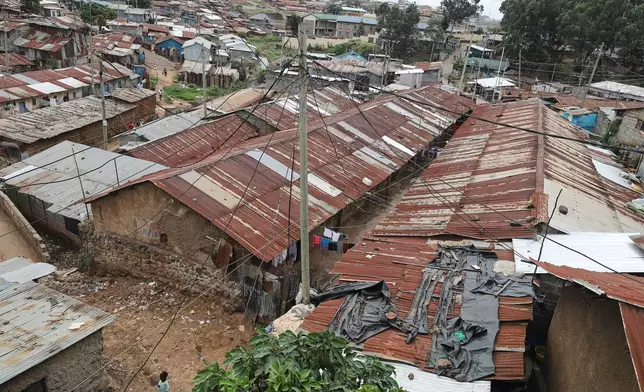
A view of electric wire poles and cables towering over the Kibera informal settlement in Nairobi, Kenya, Tuesday, March 31, 2026. (AP Photo/Henry Naminde)
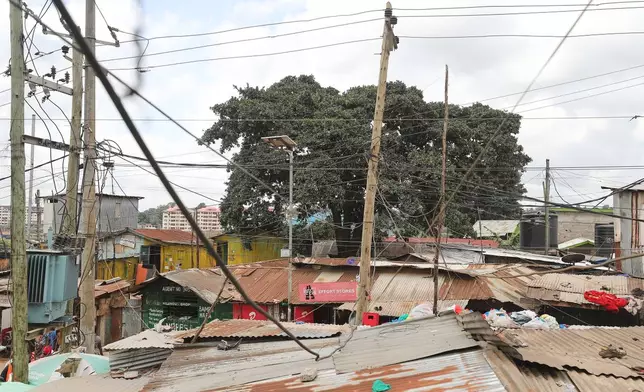
A view of electric wire poles and cables towering over the Kibera informal settlement in Nairobi, Kenya, Tuesday, March 31, 2026. (AP Photo/Henry Naminde)
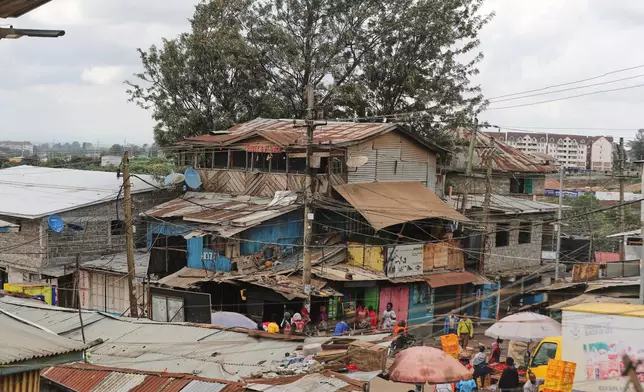
A view of electric wire poles and cables towering over the Kibera informal settlement in Nairobi, Kenya, Tuesday, March 31, 2026. (AP Photo/Henry Naminde)
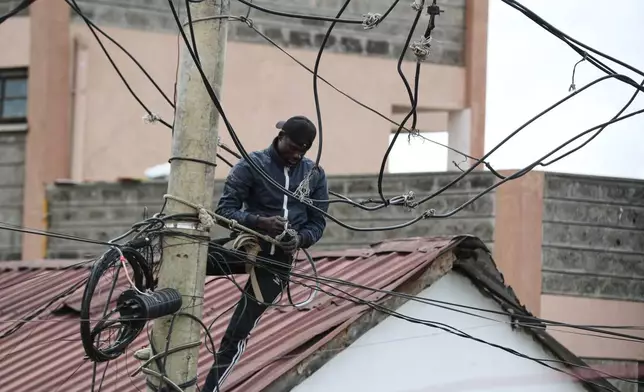
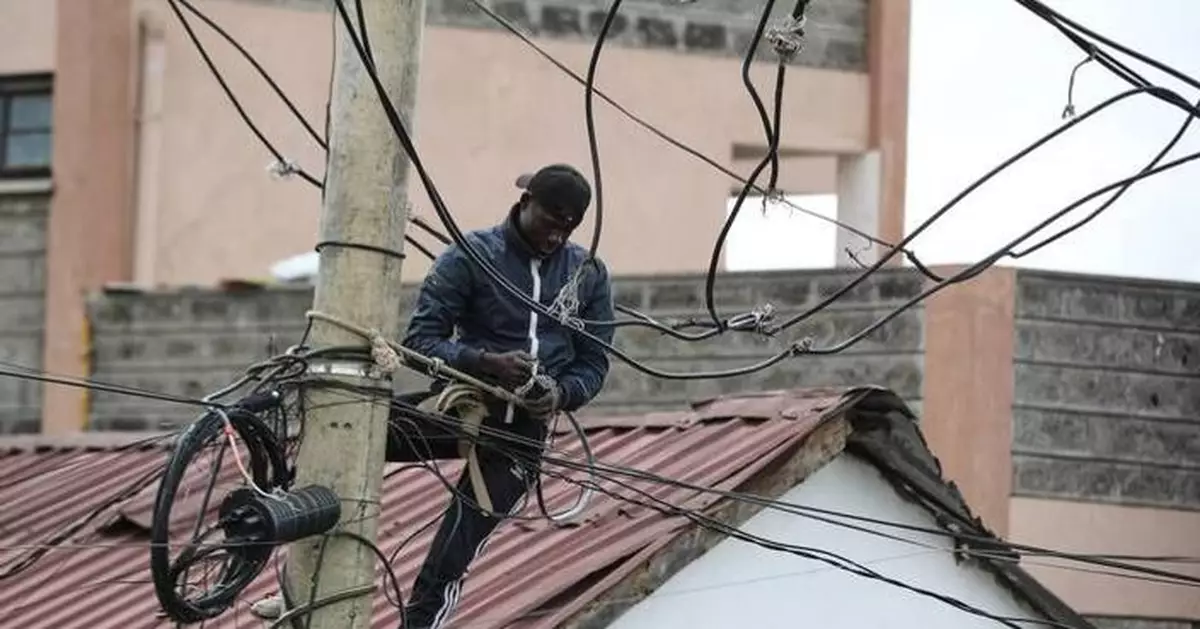
A man connects electric cables on a pole above the Kibera informal settlement in Nairobi, Kenya, Tuesday, March 31, 2026. (AP Photo/Henry Naminde)
Hundreds of kilometers (miles) from Nairobi in Sori, western Kenya, fisherman Samuel Oketch tells a similar story. After a solar mini-grid reached his village, he bought a freezer to store his catch. Fish that once had to be sold quickly at low prices can now be preserved and transported to nearby towns.
“These small changes mean a lot,” Oketch said. “Electricity gives us options. My wife can now sell (fish) without being taken advantage of by brokers who had the freezers.”
Their experiences with electrification funded by philanthropic and government sources highlight how expanded energy access can transform the lives and improve livelihoods. More than 730 million people worldwide still lack access to electricity, about 600 million of them in Africa. Limited access constrains health care, education, digital connectivity and job creation.
New financing aims to accelerate progress. The European Investment Bank pledged more than $1.15 billion in March for renewable energy projects across sub-Saharan Africa, including hydropower, solar, wind and grid expansion.
“This funding is Europe’s commitment to provide cleaner, more affordable, and reliable energy for hundreds of millions of people in Africa,” said European Investment Bank President Nadia Calviño.
The Rockefeller Foundation also announced in March at the Africa Energy Indaba in Cape Town, South Africa, that it will invest an additional $10 million to support electrification programs in at least 15 African countries. The funding will be deployed with the Global Energy Alliance for People and Planet to strengthen national programs and support government reforms.
“African governments are choosing to transform their energy sectors by committing to national energy compacts and investing in African-led solutions,” said William Asiko, senior vice president at the Rockefeller Foundation.
The investments support the Mission 300 initiative led by the World Bank and the African Development Bank, which aims to connect 300 million people in sub-Saharan Africa to electricity by 2030 through grid expansion and decentralized solutions such as mini-grids and off-grid solar. Across much of Africa, where national electricity grids are often unreliable, mini-grids have emerged as a key alternative. These small, community-level systems, typically powered by solar or hybrid energy, generate and distribute electricity locally.
Off-grid systems, by contrast, operate independently at the household level. These include stand-alone solar kits that provide direct access to power, helping bridge electricity gaps in remote and underserved areas.
The initiative is providing governments in Malawi and Liberia with technical assistance to support national energy plans, expand transmission networks and improve the reliability and efficiency of distribution systems. Efforts in Côte d’Ivoire, Nigeria, and Senegal include local currency financing and pooled procurement support.
Andrew Herscowitz, CEO of the Mission 300 Accelerator at RF Catalytic Capital, said scaling access will require sustained financing and stronger implementation capacity, including improved monitoring and better-aligned support to accelerate connections.
“Energy access is key to unlocking human potential and economic development,” Herscowitz said.
Kenya has received funding since 2017 from the World Bank, African Development Bank and partners under Mission 300 to support its Last Mile Connectivity program, which targets households near existing transformers, particularly in rural areas and informal settlements, as it pushes toward universal electricity access by 2030. Rural access rose to about 68% in 2023 from just under 7% in 2010.
Across eastern and southern Africa, where only about 48% of the population and 26% in rural areas have access to electricity, World Bank programs aim to expand access in up to 20 countries over the next seven years through renewable energy projects.
Mbesa, the shopkeeper in Mathare, was connected to electricity in 2021 under the Last Mile Connectivity Project. The initiative provided free connections to households and small businesses located near transformers, with funders covering the standard $115 connection fee. In more remote areas like Oketch's, the project incorporated off-grid solutions, including providing mini-grids and solar systems, to reach communities beyond the national grid.
For Mbesa, the impact is already clear. The single bulb above her shop has extended her working hours and allowed her children to study at night.
“Electricity changes everything,” she said. “Once you have it, life starts moving forward.”
The Associated Press’ climate and environmental coverage receives financial support from multiple private foundations. AP is solely responsible for all content. Find AP’s standards for working with philanthropies, a list of supporters and funded coverage areas at AP.org.
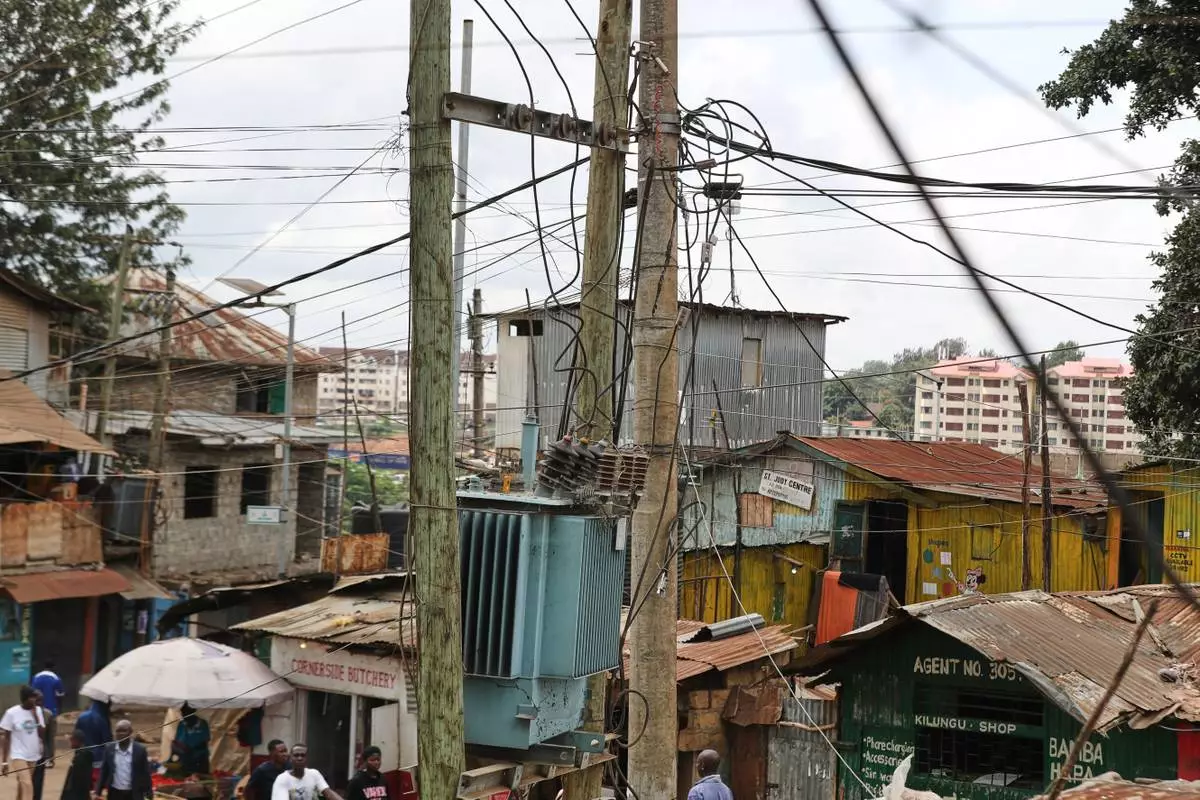
A view of electric wire poles and cables towering over the Kibera informal settlement in Nairobi, Kenya, Tuesday, March 31, 2026. (AP Photo/Henry Naminde)
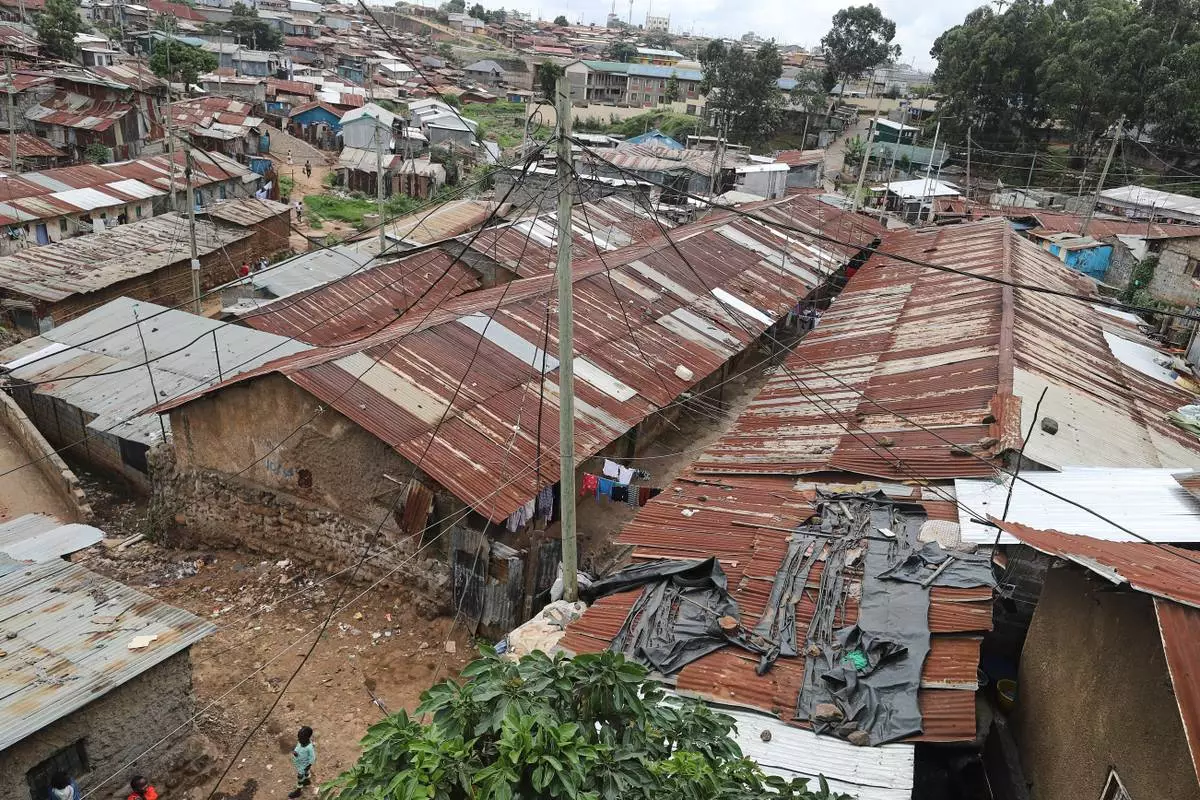
A view of electric wire poles and cables towering over the Kibera informal settlement in Nairobi, Kenya, Tuesday, March 31, 2026. (AP Photo/Henry Naminde)
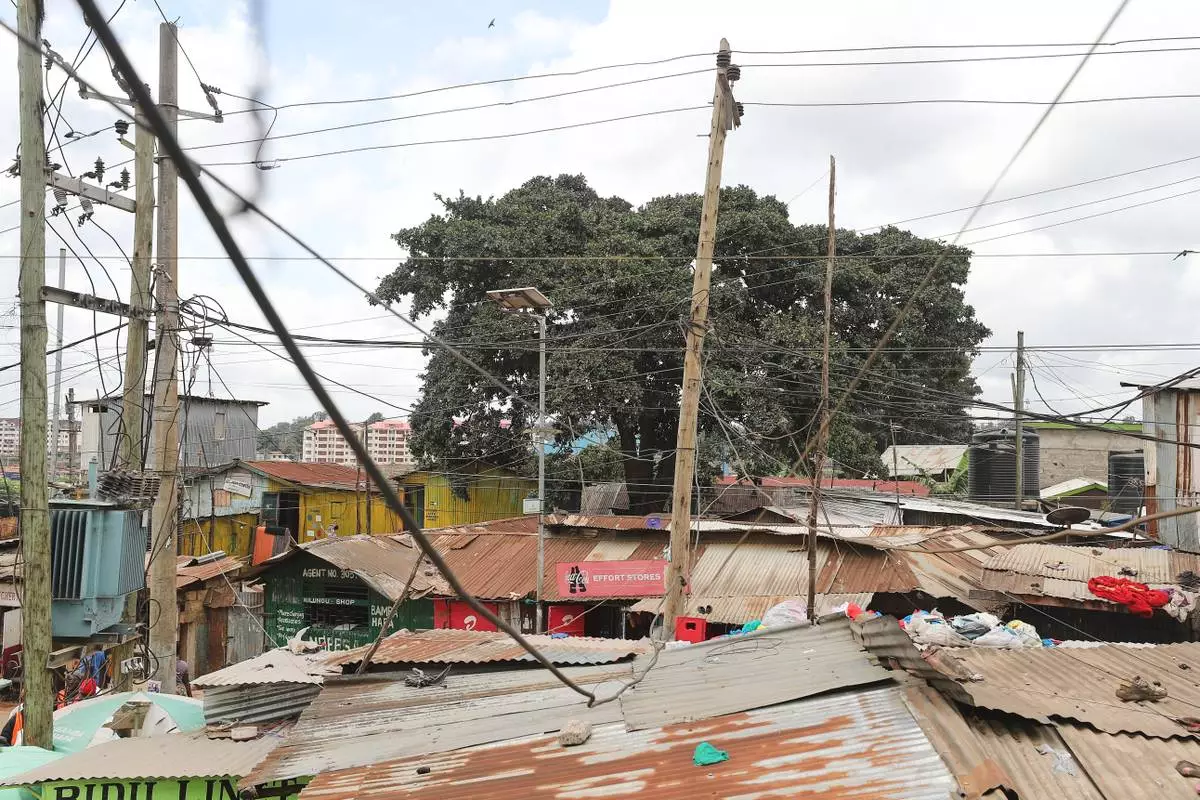
A view of electric wire poles and cables towering over the Kibera informal settlement in Nairobi, Kenya, Tuesday, March 31, 2026. (AP Photo/Henry Naminde)
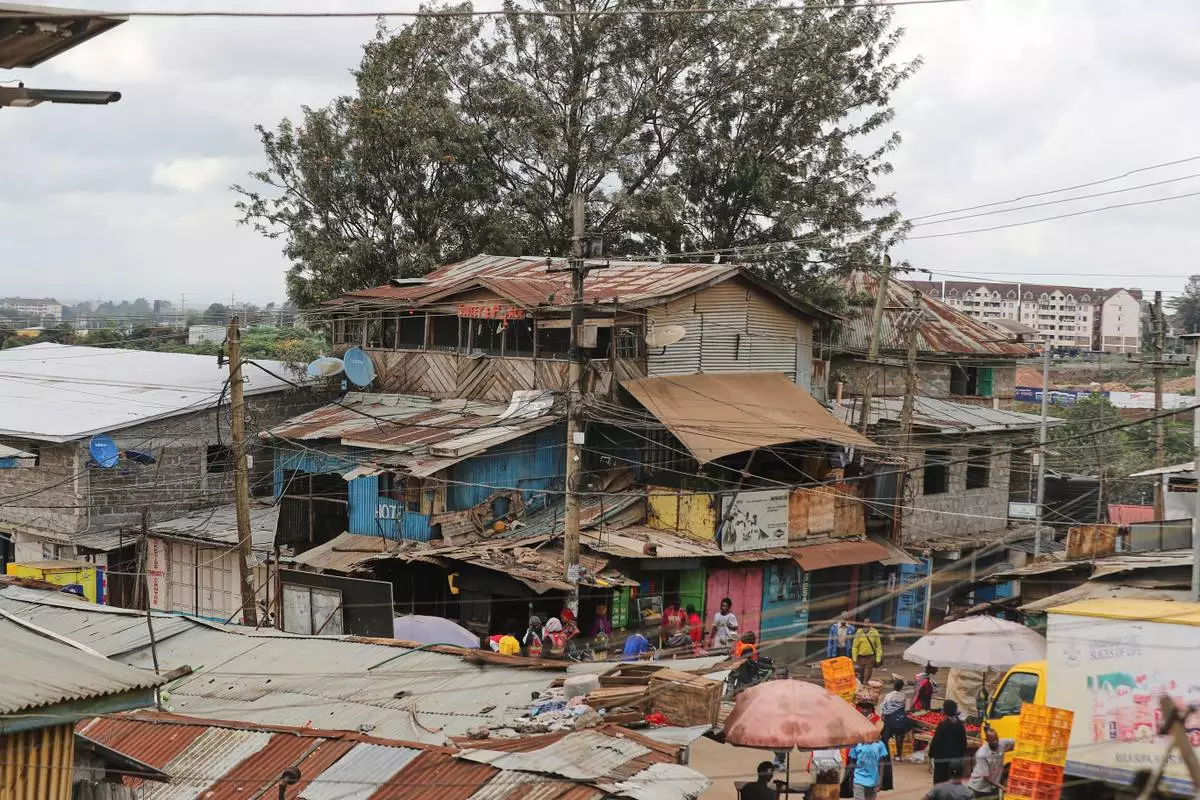
A view of electric wire poles and cables towering over the Kibera informal settlement in Nairobi, Kenya, Tuesday, March 31, 2026. (AP Photo/Henry Naminde)
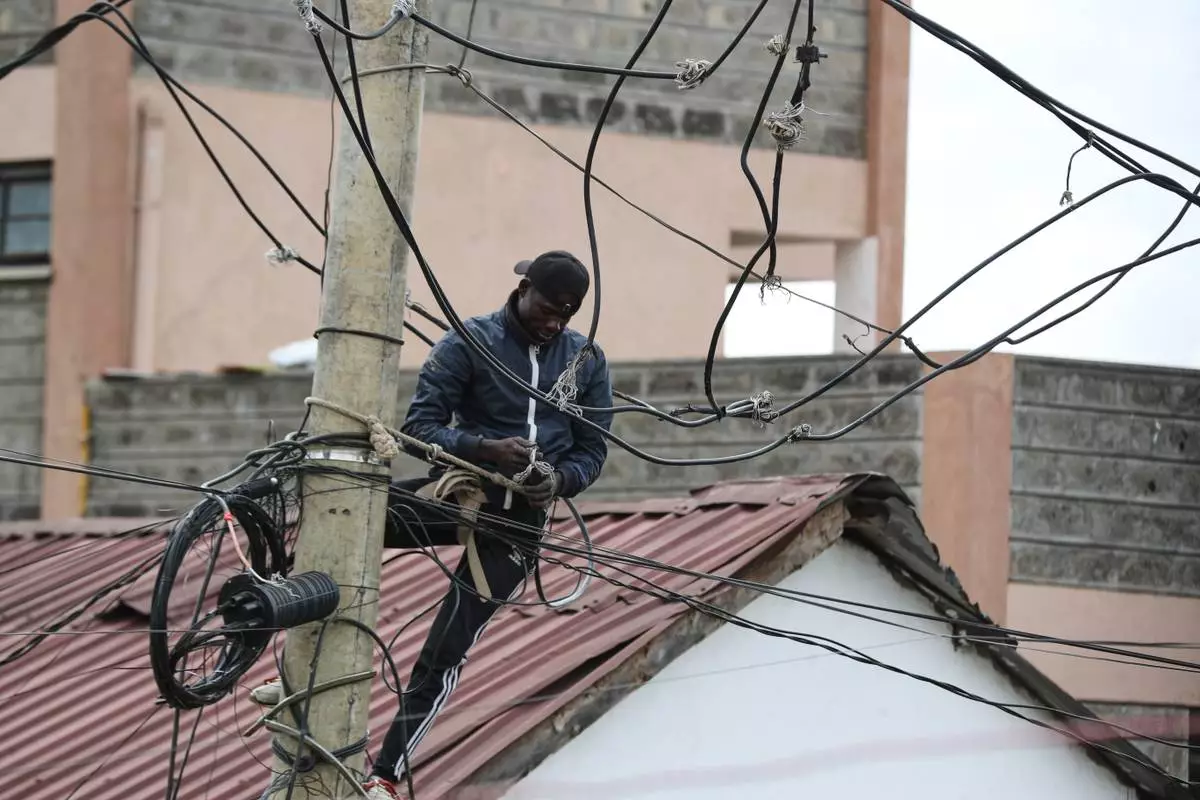
A man connects electric cables on a pole above the Kibera informal settlement in Nairobi, Kenya, Tuesday, March 31, 2026. (AP Photo/Henry Naminde)