NEW YORK (AP) — Everlane, the retailer that bucked the fast-fashion industry by promising affordable ethically sourced and sustainable clothing, is being acquired by the king of fast-fashion Shein, founded in China.
A letter to Everlane employees from CEO Alfred Chang confirming the deal was obtained by The Associated Press on Friday.
Everlane, based in San Francisco, didn't disclose a purchase price. Shein declined to comment. Everlane's majority owner L Catterton couldn't be immediately reached for comment.
Everlane was founded in 2011 by Michael Preysman and Jesse Farmer with a mission to produce eco friendly and affordable clothing. The company publicized regular audits of its pay and working conditions, as well as the brand's environmental impact. The online retailer opened its first physical store in 2017.
But the company in recent years has been embroiled in controversies surrounding treatment of its workers, according to media reports.
Everlane, which was joined by other eco-friendly brands like Allbirds, also found that offering a more transparent look at its factories wasn't enough for consumers, according to independent retail analyst Bruce Winder. Winder said shoppers were also seeking more affordable prices, and “the novelty wore off.” He cited Allbirds. After sales of the once highly popular shoe tumbled, it rebranded itself “NewBird AI,” and is now focused on artificial intelligence and cloud-computing services.
L Catterton began acquiring significant stakes in Everlane in September 2020. becoming its majority owner. It also owns a significant stake in brands Boll & Branch, Etro and Birkenstock.
Preysman officially stepped down in 2022.
The online retailer Shein was founded in China in 2012 and become extremely popular with teens and young shoppers with $15 trendy dresses and sandals, A majority of items are mass produced and stitched together by workers in a web of factories in China. It has moved its headquarters in Singapore.
“Like many brands, we’ve faced increasing pressure in a rapidly changing retail landscape,” Chang wrote in the letter. “This partnership allows us to remain independent, and gives us the stability and resources to make a larger impact, without compromising on the quality and standards that make Everlane, Everlane.”
Chang, who became CEO in 2024, wrote that the deal will enable the business to invest more in its product, innovation and staff. He emphasized that Everlane will remain an independent brand, staying true to its “sustainability” commitments.
Chang said he will continue as CEO and its leadership will remain in place.
The takeover bid arrives at a time when Everlane is struggling. Sales are down and debt has mounted, according to Neil Saunders, managing director of GlobalData Retail. The company needs new ownership to survive, and Shein can provide that financial stability, he said.
Shein can establish a presence outside of fast fashion through Everlane, Saunders said, as growth within the industry becomes more difficult. Tariffs and other trade restrictions under the Trump administration have upended imports of the inexpensive clothing that dominates fast fashion.
Winder noted that Shein also has an opportunity to redefine its brand by creating a portfolio of eco-friendly brands like Everlane.
But Everlane and Shein are an odd couple, analysts noted.
Shein is unlikely to completely retool Everlane's supply network, Saunders said, but even being associated with the Shein group may be “somewhat jarring for core Everlane customers. ”
“Ultimately, the deal likely saves Everlane,” he said. “But that salvation comes at a price.”
Chang seemed to allude in his memo to some of the negative responses on social media when rumors of the deal were swirling, stating that the “past week has been a hard one. Seeing our company in the media, and in that light, was painful.”
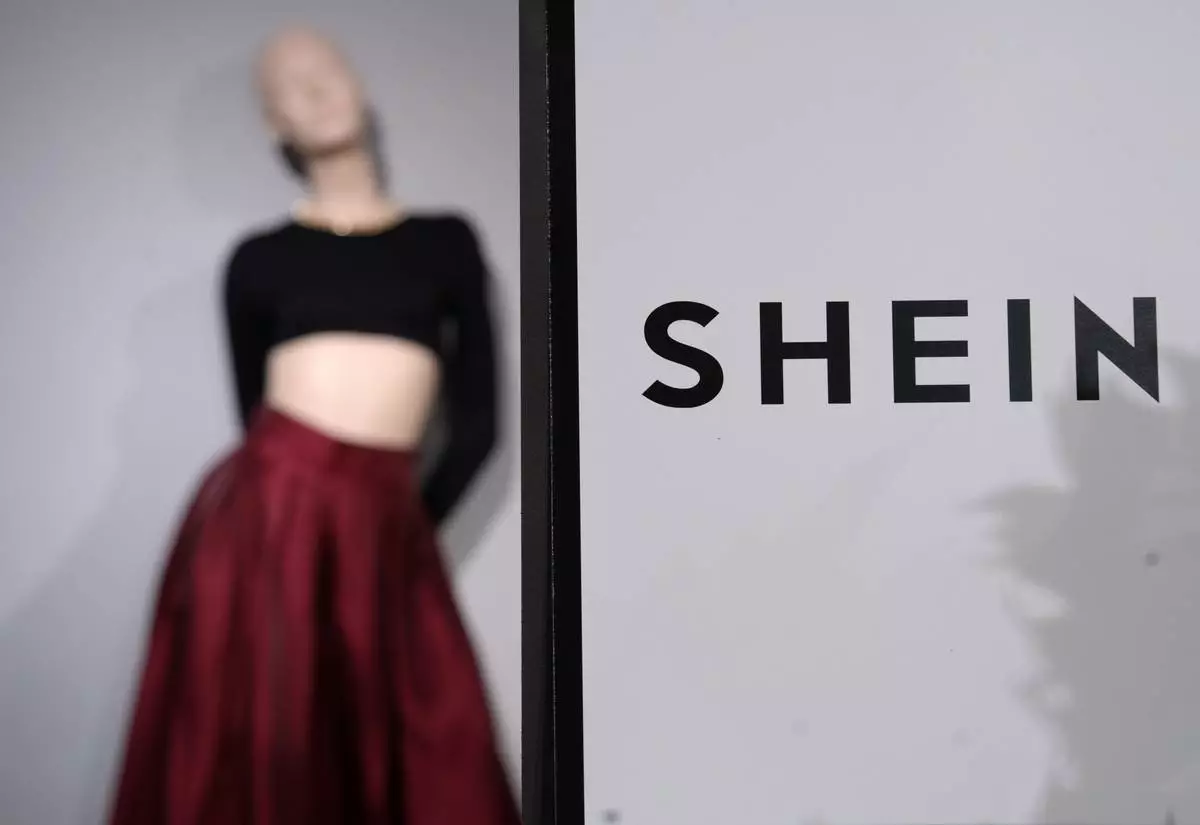
FILE - Clothes by Chinese company Shein are seen in the BHV (Bazar de l'Hotel de Ville) department store, Tuesday, Nov. 4, 2025 in Paris. (AP Photo/Aurelien Morissard, File)
NEW YORK (AP) — The split between Wall Street and most U.S. households grew wider Friday, as U.S. stocks rose toward the finish of an eighth straight winning week, their best such streak since 2023. That's even though a survey showed U.S. consumers are feeling even worse about the economy.
The S&P 500 added 0.7% and pulled closer to its all-time high set in the middle of last week. The Dow Jones Industrial Average was up 408 points, or 0.8%, as of noon Eastern time, and the Nasdaq composite was 0.6% higher.
Ross Stores helped drive the market and rose 6.5% after the off-price retailer reported profit and revenue for the latest quarter that easily cleared analysts’ expectations. CEO Jim Conroy said it saw strong customer traffic through the three months, and the company may have benefited from households spending their tax refunds.
Estee Lauder jumped 9.9% after saying it was no longer considering a possible merger with Puig, the Spanish fragrance and beauty products company.
Workday rose 3.9%, and Zoom Communications jumped 11.1% after both delivered better profit reports for the latest quarter than analysts expected.
They’re the latest companies to top analysts’ expectations for profits for the start of 2026, and the cavalcade of such reports has helped U.S. stocks remain near their records. Stock prices tend to follow the path of corporate profits over the long term.
The strength is coming even after a survey of U.S. consumers by the University of Michigan found sentiment fell to a record low, piercing below a bottom in 2022 when inflation peaked above 9%. Households are feeling worried about how bad inflation is now because of expensive oil created by the war with Iran.
U.S. consumers are forecasting inflation will worsen to 4.8% in the coming 12 months, up from a forecast of 4.7% last month, according to the survey. In the longer run, their forecasts for inflation jumped to 3.9% from 3.5% last month. Such rising expectations are a concern for economists because they can drive behavior that creates a vicious cycle that makes inflation worse.
Sentiment dropped in particular for lower-income consumers who are least able to absorb more expensive essentials, and it fell for Republicans as well, according to the survey.
Helping to keep uncertainty high have been continued swings for oil prices. They yo-yoed again on Friday, like they did through the week on uncertainty about when the United States and Iran may find a deal to reopen the Strait of Hormuz. Its closure has prevented oil tankers from exiting the Persian Gulf and delivering crude to customers worldwide.
The price for a barrel of Brent crude oil, the international standard, was last up 1% to $103.60. Benchmark U.S. crude, meanwhile, rose 0.7% to $97.04 per barrel after both erased earlier losses.
Worries about inflation staying high have pushed bond yields higher worldwide, threatening to slow economies and undercut prices for stocks, bitcoin and all kinds of other investments. High yields have already forced the average long-term U.S. mortgage rate to its most expensive level since last summer, and they could curtail companies’ borrowing to build the AI data centers that have supported the U.S. economy’s growth recently.
Yields had been down Friday morning, offering some relief, but they climbed after oil prices erased their losses and the survey on consumer sentiment showed worsening inflation expectations.
The yield on the 10-year Treasury pulled back to 4.57%, where it was late Thursday, and remains well above its 3.97% level from before the war.
Worries about inflation have climbed so high that traders on Wall Street have eliminated bets that the Federal Reserve will resume its cuts to interest rates this year. Lower rates would give the economy a boost, but they could also worsen inflation.
An important member of the Fed, Gov. Christopher Waller, said in a speech Friday, “If I believe inflation expectations start to become unanchored, I would not hesitate to support an increase in the target range for the federal funds rate.”
But he also said that is not the case now, and it “is time to simply sit and watch how the conflict and the data evolve” in his speech titled “Policy Risks Have Changed.”
In stock markets abroad, indexes rose across much of Europe and Asia.
Japan’s Nikkei 225 climbed 2.7% to another record after a report showed inflation hitting a four-year low in April, at 1.4%, despite higher prices for oil and gas due to the war.
AP Business Writers Chan Ho-him and Matt Ott contributed to this report.
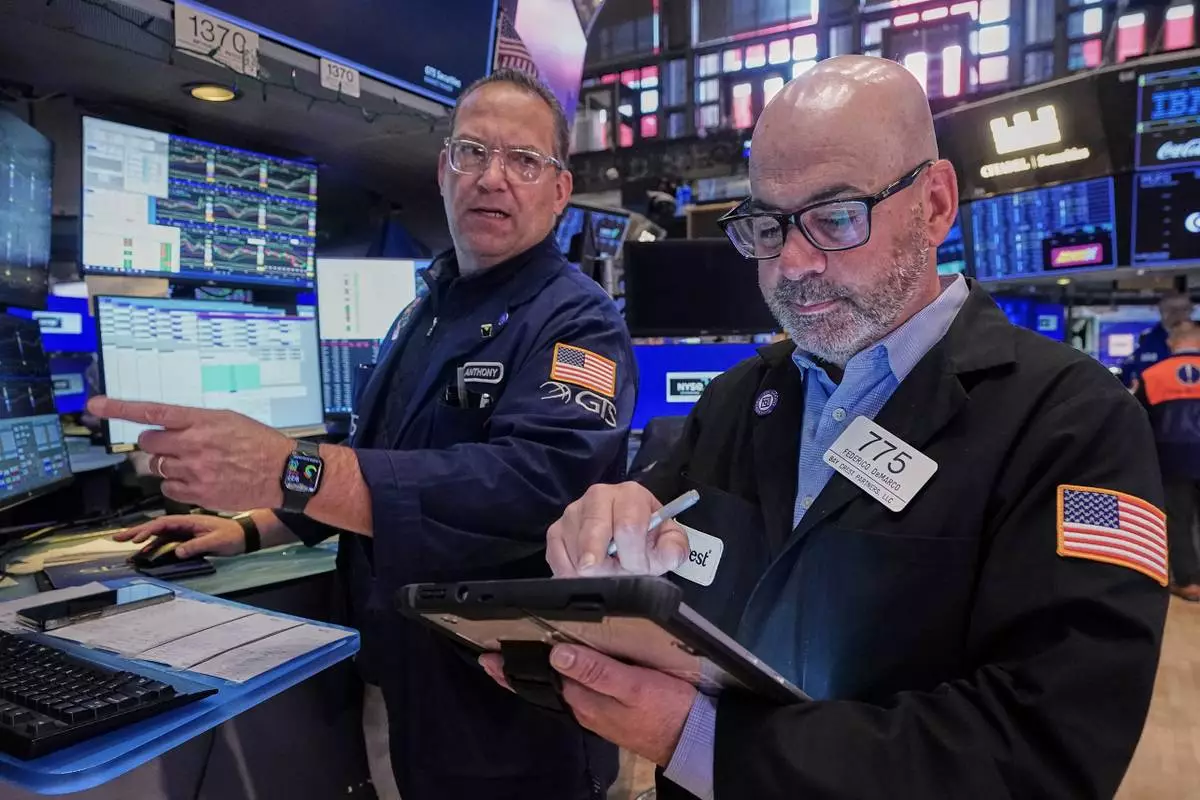
Specialist Anthony Matesic, left, and trader Fred Demarco work on the floor of the New York Stock Exchange, Friday, May 22, 2026. (AP Photo/Richard Drew)
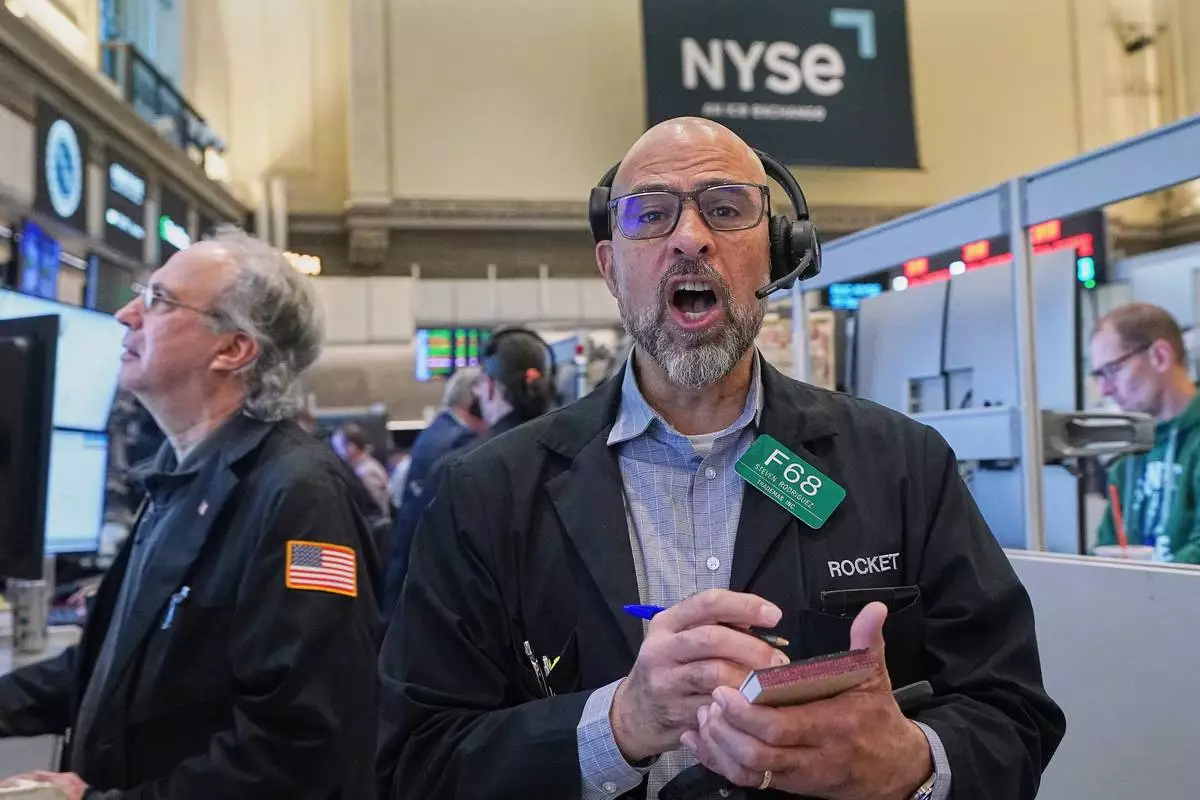
Options trader Steven Rodriguez, center, works on the floor of the New York Stock Exchange, Monday, May 11, 2026. (AP Photo/Richard Drew)

A dealer talks on the phone at a dealing room of Hana Bank in Seoul, South Korea, Wednesday, May 13, 2026. (AP Photo/Lee Jin-man)
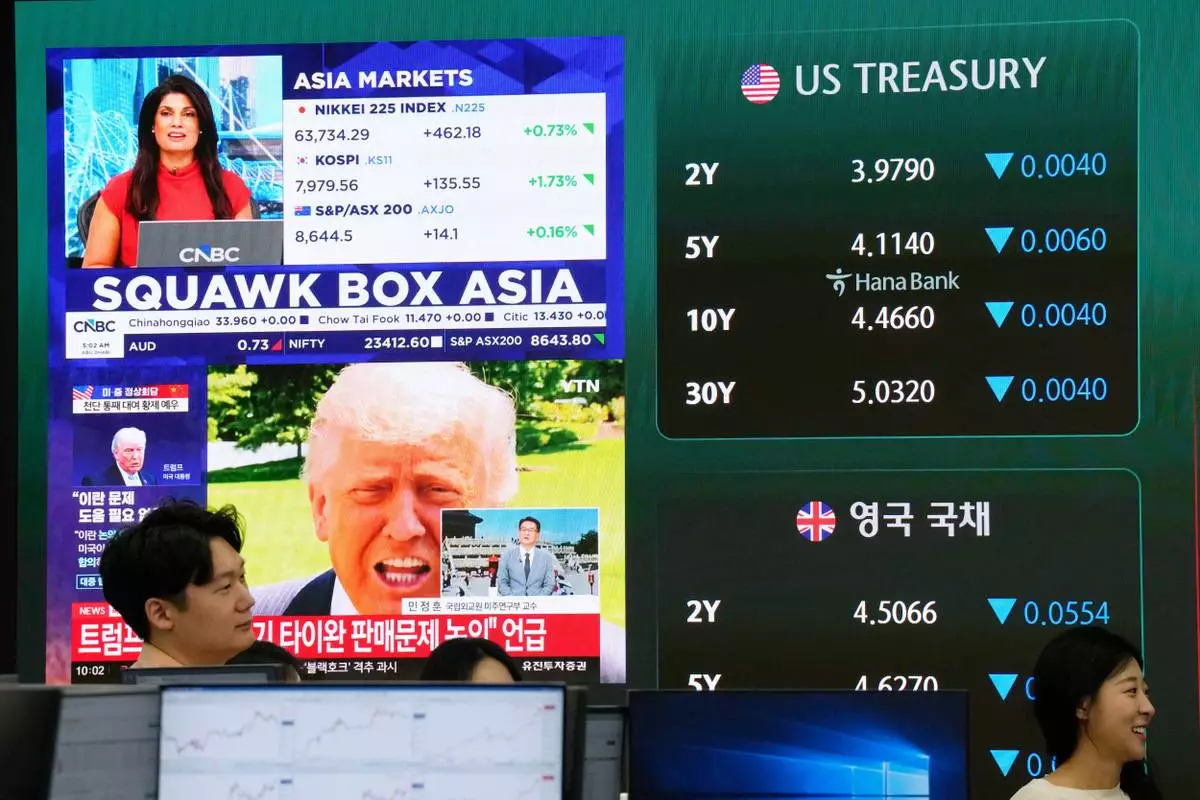
Asia markets index of Japan, South Korea and Australia is seen on a screen at the foreign exchange dealing room of the Hana Bank headquarters in Seoul, South Korea, Thursday, May 14, 2026. (AP Photo/Ahn Young-joon)

Currency traders watch monitors at the foreign exchange dealing room of the Hana Bank headquarters in Seoul, South Korea, Wednesday, May 20, 2026. (AP Photo/Ahn Young-joon)